
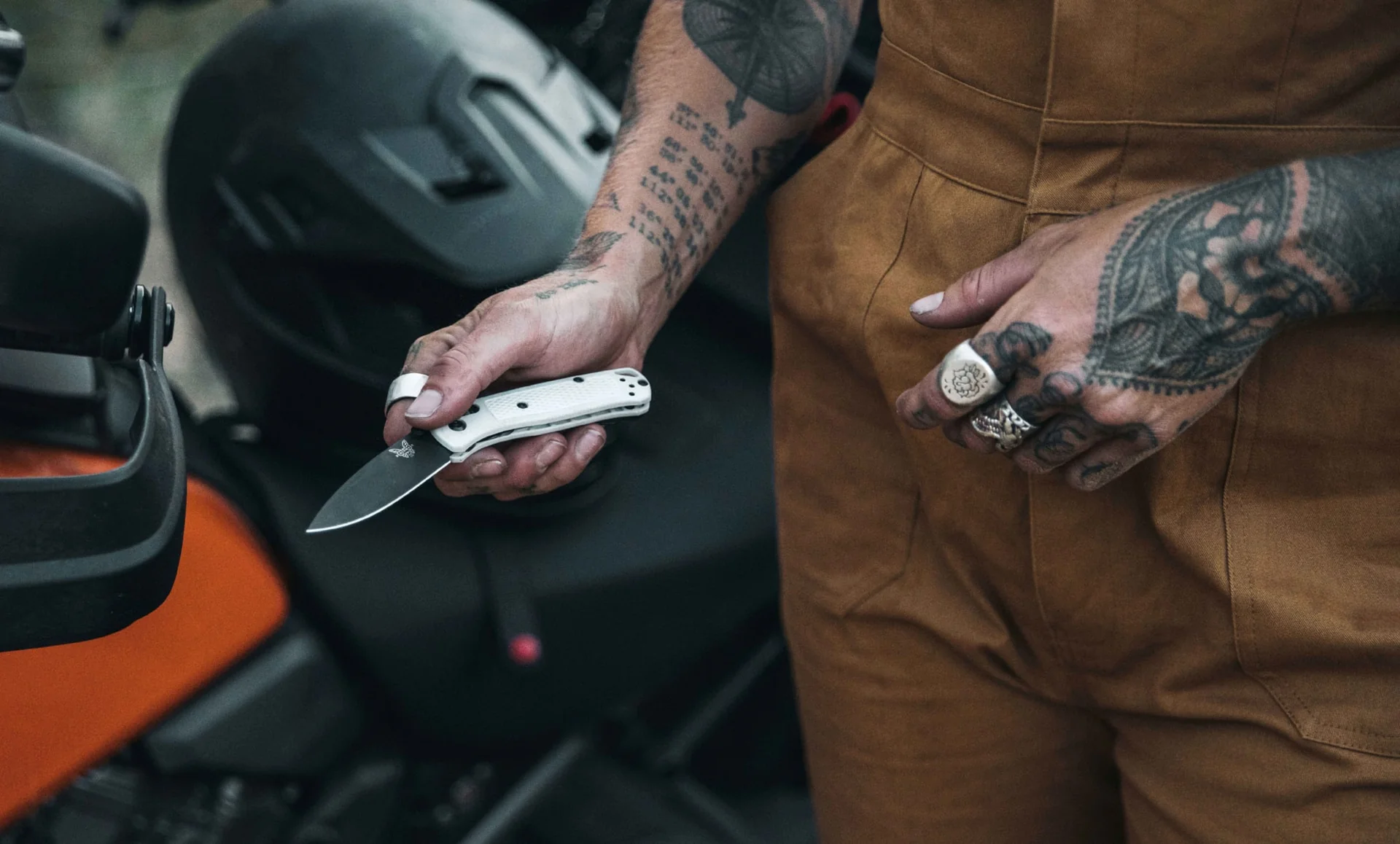
I bought this white Grivory and black-bladed Benchmade Mini Bugout 533BK-1 myself for $180 USD after tax. Benchmade did not sponsor the review, provide the knife or know it was being tested. I carried it for a month of hiking and backpacking in Quebec's Laurentides, using it for food preparation, cutting cord and light camp work alongside daily package opening.
Quick verdict
The Mini Bugout succeeds spectacularly at its central purpose. It gives you a genuinely useful 2.82 in S30V blade in a 1.5 oz package that disappears into running gear, gym shorts or an ultralight backpacking setup. Its thin drop-point geometry cuts beautifully and the AXIS lock is safely ambidextrous. The compromise is not performance so much as ownership value: flexible Grivory scales feel inexpensive, factory grind and pivot tuning can be inconsistent, and the knife needed a break-in period before its action felt right. At $180 after tax, I would not buy it again.
What works
- Exceptional 1.5 oz carry that vanishes in light clothing
- Thin, high-flat-ground blade slices food and cardboard extremely well
- Reliable CPM-S30V edge retention and corrosion resistance
- Safe, fully ambidextrous AXIS lock
- Huge aftermarket for replacement scales and hardware
What to know
- Grivory scales feel plasticky and visibly flex under a hard grip
- Short handle leaves a large-hand pinky unsupported
- Action required tuning and several hundred cycles to settle
- Uneven factory bevels and finicky centering undermine the price
- Omega-spring durability remains an ownership concern, though mine have not failed
The verdict
The Mini Bugout is a knife built around one uncompromising idea: remove every gram that does not directly help it cut. Benchmade succeeded. At 1.5 oz, it is closer in weight to a small keychain tool than most full-featured locking folders, yet the blade is long enough for normal everyday work and the AXIS lock allows confident one-handed operation.
That ruthless weight saving explains both the knife's brilliance and its weaknesses. The Grivory handle is light, chemically resistant and tougher than its hollow plastic feel suggests, but it does not feel premium. When I bear down on a difficult cut, I can feel the scales flex under my fingers. The knife keeps working; it simply does not deliver the solid feedback I expect from something costing more than $150.
Whether the Mini Bugout is worth buying depends heavily on your priorities. If pocket weight is the deciding factor, it remains excellent. If material quality, rigidity or price-to-performance matters equally, modern competitors make the Benchmade difficult to justify.
How I tested the Mini Bugout
I carried the knife for a month while hiking and backpacking in the Laurentides. Its field work was intentionally light and realistic for a folder this size: preparing food, cutting cord and taking care of small camp tasks. Daily life added package opening, cardboard and other routine utility cuts.
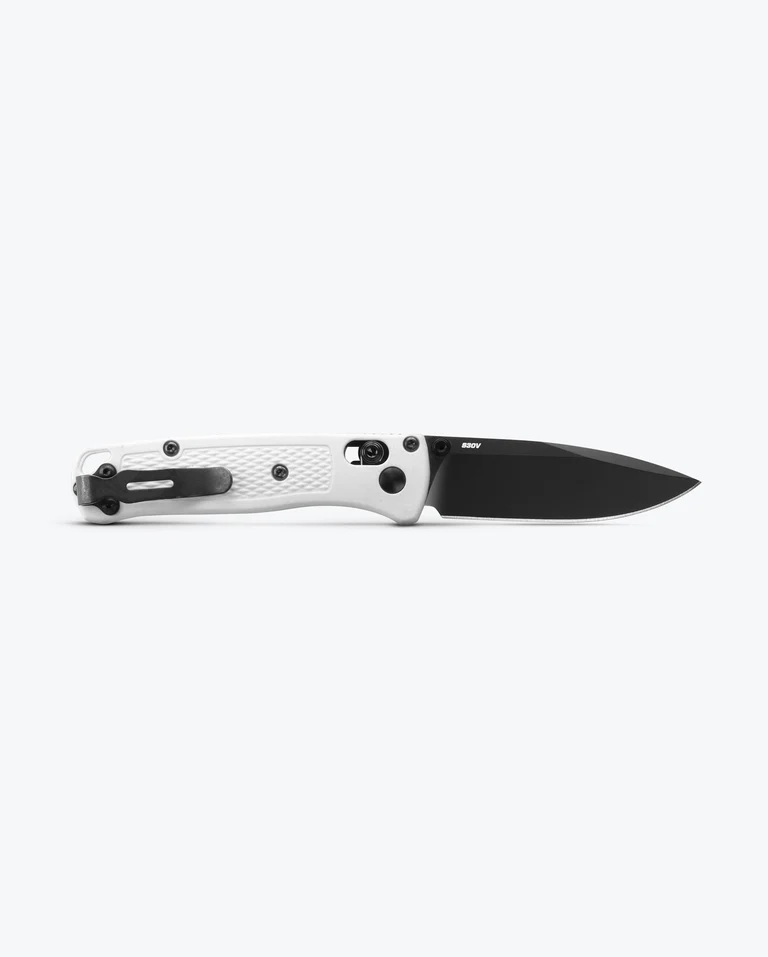
I also evaluated it against the Hogue Deka and Spyderco Para 3 Lightweight, both of which I have carried extensively. Those comparisons matter because they expose how much of the Mini Bugout's price pays for extreme portability, and how much performance its rivals now offer for less.
Excellent blade geometry, imperfect factory edge
My factory edge was decently sharp. It passed a paper test without drama, but the bevels were not perfectly even. That fits my broader experience of Benchmade edges: the knife may arrive excellent, or it may require some corrective sharpening before it looks and cuts as consistently as it should.
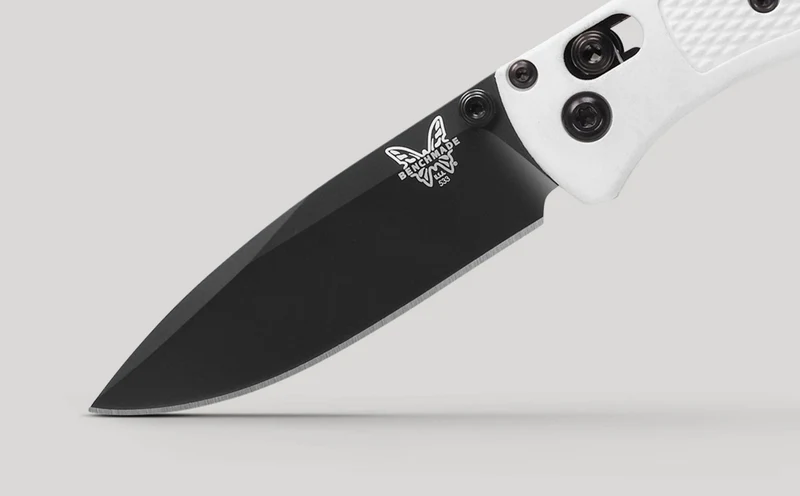
The geometry itself is fantastic. A thin blade, conventional drop point and high flat grind make the Mini Bugout an absolute laser through cardboard and apples. It has enough belly for useful draw cuts, a practical point for packages and a thin cross-section that does not wedge unnecessarily in food. This is exactly the kind of geometry an ultralight EDC knife should have.
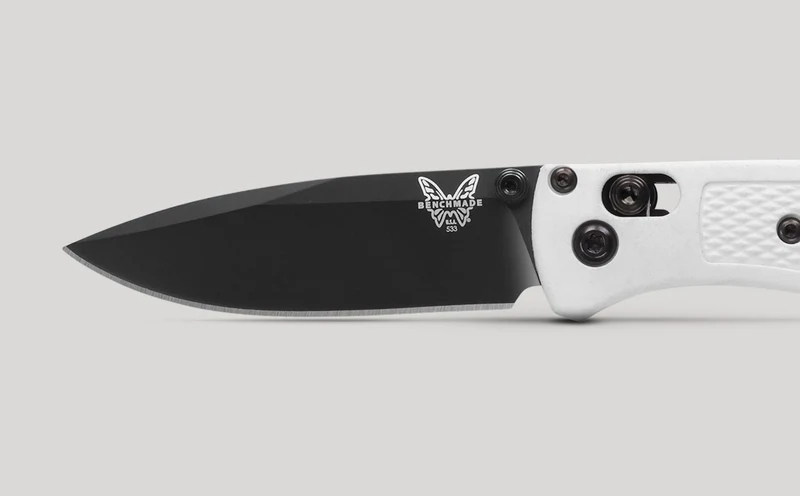
CPM-S30V remains dependable
CPM-S30V is no longer exotic, but it remains a highly reliable premium stainless steel. The Mini Bugout held a useful working edge through weeks of package opening, food preparation and light utility work. Pocket sweat produced no staining or corrosion, and the black coating adds another layer of protection to most of the blade.
S30V's balance is easy to live with. When it eventually loses bite, I can restore it with a ceramic rod or ordinary sharpening stone without turning maintenance into a project. Steels such as MagnaCut may now offer a more attractive overall combination of toughness and corrosion resistance, but there is nothing obsolete about the way S30V performs in this thin blade.
Thumb-stud action needs patience and tuning
The thumb studs are easy to reach and the action becomes smooth, but mine did not feel perfectly tuned from the box. The familiar compromise appeared at the pivot: loosen it enough for the blade to drop shut and some side-to-side play emerges; tighten it for completely solid lockup and deployment becomes stiffer.
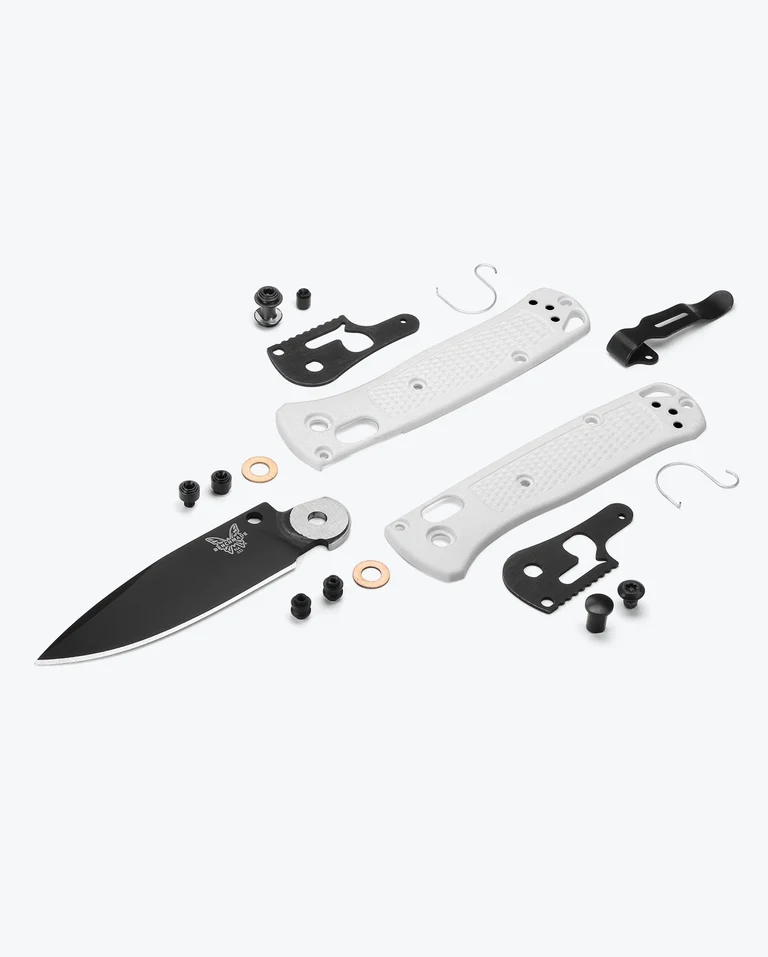
A break-in period helped. After flicking the knife open and closed several hundred times, the washers polished into their working surfaces and the action became more consistent. Careful pivot adjustment can find a good middle ground, but a knife at this price should not make the owner perform the final stage of factory tuning.
AXIS lock, lock stick and Omega springs
The AXIS lock remains one of the Mini Bugout's best functional features. It is fully ambidextrous, keeps fingers away from the blade path and makes one-handed closing safe and intuitive. Fresh from the box, mine displayed the lock stick common to this mechanism: opening the blade hard could make the lock bar grind against the tang and resist release. It smoothed with use rather than becoming a lasting problem.
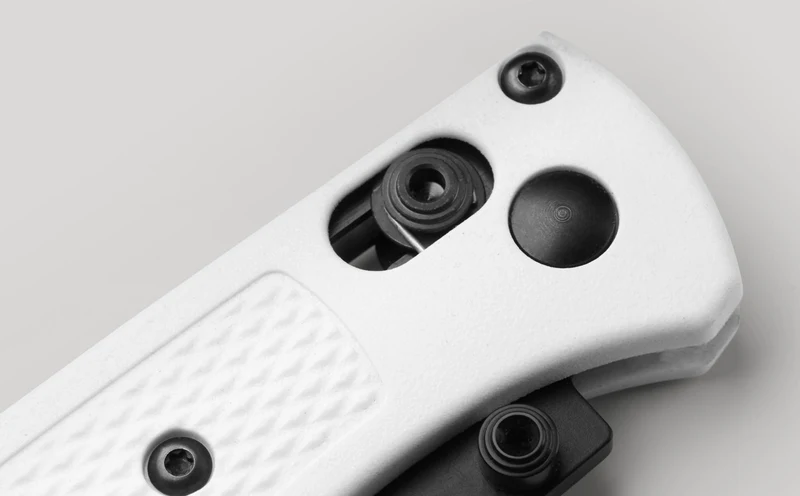
The Omega springs are the concern that follows the design around. My springs have not broken, and I am not scoring the knife as though they have. Nevertheless, the possibility of a small spring disabling the lock remains in the back of my mind in a way it does not with simpler lock designs. Benchmade's warranty and LifeSharp service provide useful support, but they do not remove the inconvenience of a field failure.
Grivory grip and handle ergonomics
The molded texture provides adequate traction with wet or sweaty bare hands. Grivory also tolerates chemicals and normal outdoor neglect well, so the criticism is not that the material is fragile. It is the way the scales feel and move under pressure. They are thin, hollow-sounding and flexible enough to make an expensive knife feel cheaper than it is.
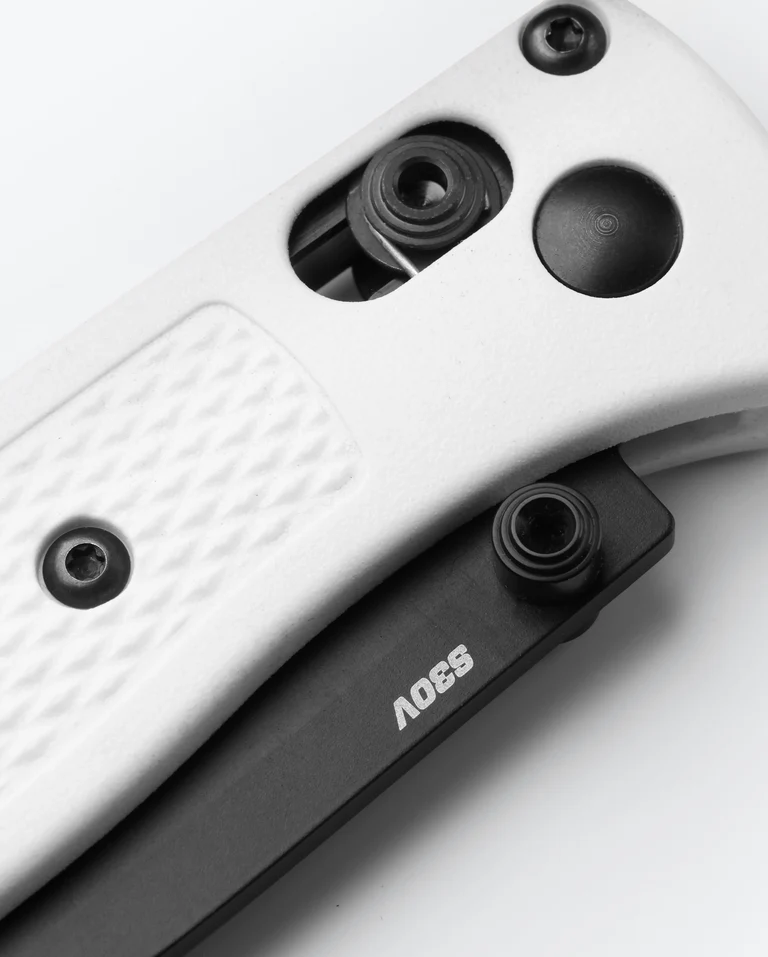
The short handle creates another unavoidable compromise. With large hands, my pinky hangs completely off the back. That is acceptable for opening a parcel or slicing an apple, but it reduces control and comfort during prolonged or forceful cutting. Bulky work gloves make matters worse because there is not enough surface area to lock the knife securely into the palm.
The aftermarket is the answer for owners who love the design but dislike the stock scales. Few folders have such a broad choice of replacement aluminum, titanium, carbon-fiber, G10 and Micarta scales, along with clips, screws and backspacers. Customization can transform the feel, though spending more money to correct a $180 knife's weakest material also reinforces the value criticism.
Pocket carry is the reason to buy it
The Mini Bugout carries beautifully. At 1.5 oz and 3.7 in closed, it disappears in gym shorts, a suit pocket, running gear or the hip-belt pocket of an ultralight pack. Its reversible mini deep-carry clip is secure without drawing attention to the knife, and the narrow handle leaves room for everything else in the pocket.
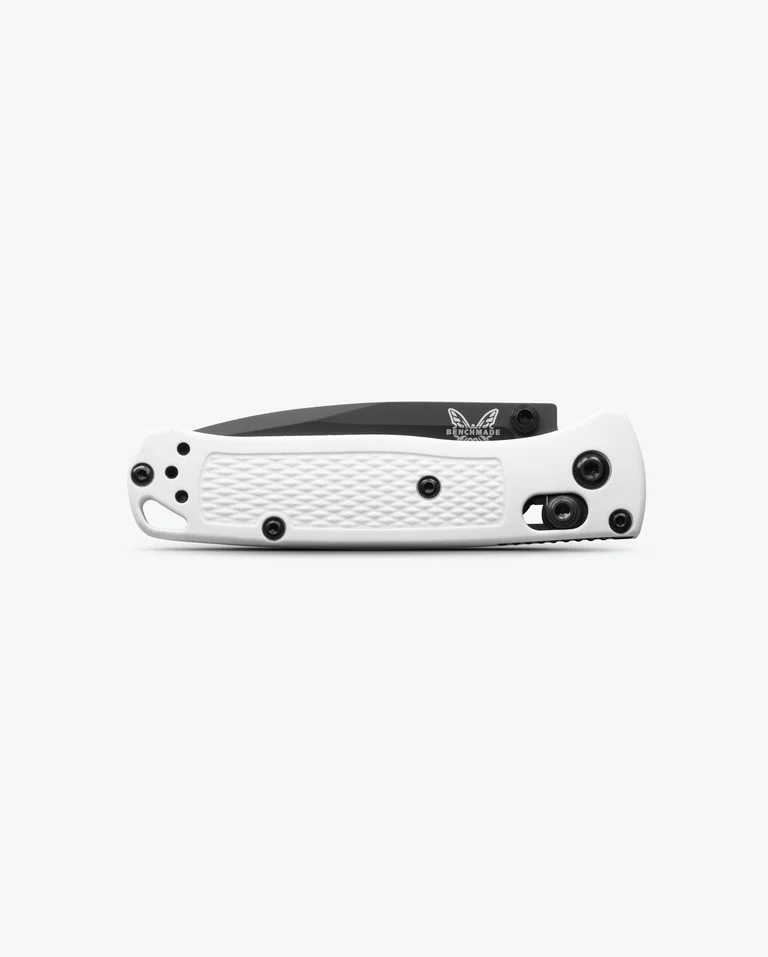
The near-zero carrying burden is a substantial advantage. A heavier or more capable knife left at home cuts nothing. For runners, office workers and ultralight backpackers, the Mini Bugout places a proper locking blade in clothing that would sag under an ordinary folder. No competitor entirely erases that accomplishment.
Factory quality control does not match the price
My uneven bevels, break-in requirement and finicky pivot capture the broader issue: the Mini Bugout feels like a design that depends on the owner completing the setup. Blade centering can also require careful pivot adjustment. Each problem is manageable in isolation, but the total is difficult to excuse when Benchmade charges a premium.
The phrase “butterfly tax” is blunt but appropriate here. The money buys an excellent design, USA manufacture, a strong warranty and access to LifeSharp servicing. It does not buy premium handle material or guaranteed perfect tuning. Buyers who expect an expensive knife to arrive solid, centered and refined may be disappointed.
Mini Bugout vs Hogue Deka and Para 3 Lightweight
The Spyderco Para 3 Lightweight fills my hand much better and feels sturdier during actual work. Its broader handle is less discreet in the pocket, but the added purchase pays off when a cut lasts longer than a few seconds. I would choose the Spyderco when ergonomics and working control matter more than minimum weight.
The Hogue Deka challenges the Mini Bugout more directly. It offers a similarly lightweight crossbar-lock format, but current MagnaCut versions provide a more modern steel package for considerably less money. The Mini Bugout still has the more mature customization ecosystem and an exceptionally polished carry profile. On pure value, the Deka is the more convincing purchase.
Value and who should buy it
The Mini Bugout is best for office workers, ultralight backpackers, runners and anyone who spends most days in lightweight athletic clothing. For those buyers, 1.5 oz is not a marketing number; it is the reason the knife fits into daily life better than a more substantial folder.
Tradespeople, bushcrafters and buyers who want $150-plus construction to feel premium and rigid should look elsewhere. The knife can perform more work than its weight suggests, but the short, flexible handle is not designed for sustained force.
Would I buy it again at the $180 USD after-tax price I paid? No. I appreciate the warranty, blade design and almost absurd portability, but a plastic-handled S30V knife at this price feels detached from its current competition. The Mini Bugout remains a clever and capable product. It is simply no longer a strong value.
Benchmade Mini Bugout 533BK-1 specifications
| Category | Knives & tools |
|---|---|
| Model | 533BK-1 |
| Blade steel | CPM-S30V |
| Blade shape | Drop point, plain edge, black Cerakote finish |
| Blade length | 2.82 in / 7.16 cm |
| Blade thickness | 0.09 in / 2.29 mm |
| Closed length | 3.7 in / 9.40 cm |
| Overall length | 6.49 in / 16.48 cm |
| Handle | White Grivory |
| Handle thickness | 0.41 in / 10.46 mm |
| Weight | 1.5 oz / 42.5 g |
| Opening and lock | Manual thumb studs, phosphor-bronze washers, AXIS lock |
| Pocket clip | Reversible mini deep carry |
| Country of origin | USA |
| Price paid | $180 USD after tax |
| Test status | Purchased by reviewer; carried for one month |
| Manufacturer involvement | None. No free sample, sponsorship or copy approval. |
Scoring breakdown

Sources & context
What we checked
This review is based on Adam's month of ownership and field use. We checked Benchmade's official 533BK-1 product listing and LifeSharp information for the model designation, specifications and service context. The performance findings and comparisons are Adam's own.
Editorial disclosure: Adam bought this Benchmade Mini Bugout for $180 USD after tax. Gear Reviews received no payment, free product or editorial approval from Benchmade.