
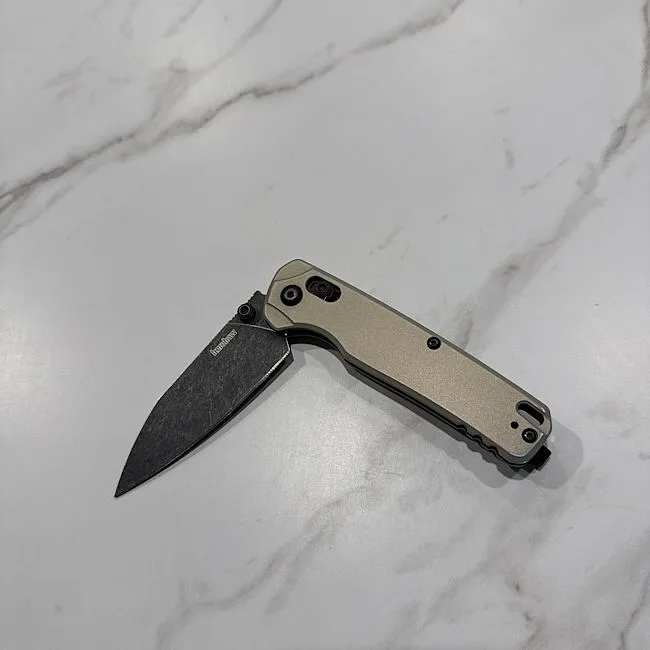
I bought the Kershaw Bel Air myself for $207 USD and carried it for three months of hiking and camping across Quebec. Kershaw did not sponsor the review, provide the knife or know that it was being reviewed. I used it for food prep, cord, packages, whittling and light bushcraft-style jobs in the Laurentides, Hautes-Gorges, Saguenay National Park and around the Gulf of St Lawrence.
Quick verdict
The Bel Air is a remarkably complete everyday-carry knife. Its thin reverse-tanto MagnaCut blade cuts far better than its compact dimensions suggest, the KVT action is consistently fast and the DuraLock is both solid and ambidextrous. At 2.9 oz, it delivers the rigidity of aluminum without the usual weight penalty. Mine did arrive with unacceptable blade play from a loose pivot, and its smooth Cerakote handle loses too much traction when wet or gloved. A tiny amount of blue threadlocker fixed the pivot permanently; there is no similarly easy fix for the grip.
What works
- Exceptionally thin, slicey MagnaCut blade geometry
- Excellent working-edge retention and corrosion resistance
- Buttery KVT bearing action with reliable thumb-stud deployment
- Rigid aluminum construction at only 2.9 oz
- Deep-carry clip and fully ambidextrous DuraLock
What to know
- Smooth aluminum handle becomes slippery when wet or sweaty
- Limited traction with leather and rubberized work gloves
- My pivot arrived loose enough to create horizontal and vertical play
- Angled scale edges can scrape knuckles when reaching past it
- MagnaCut takes more patience to resharpen than softer steels
The verdict
Kershaw has hit a difficult balance with the Bel Air. It feels precise and premium, carries like a much less substantial knife and still has the rigidity I want when I bear down on a cut. The reverse-tanto blade is genuinely useful rather than merely distinctive. Its long, nearly straight working edge makes controlled push cuts and detail work easy, while the reinforced point gives me more confidence when piercing packaging or tougher material.
The cutting geometry is the headline. This blade is ground vanishingly thin behind the edge, and the profile uses a consistent, flat rocker instead of a dramatic belly sweep. That combination made my Bel Air an effortless slicer from the first paper test onward. A belly-heavy drop point can feel more natural when breaking down a long sheet of cardboard, but the Bel Air's thin stock still glides through it.
The main qualification is traction. The bright nickel Cerakote looks excellent and feels silky in a dry hand, but wet weather exposes the lack of texture. That poor wet grip is especially frustrating because the knife's corrosion resistance otherwise suits use around water. The blade shrugged off the Gulf of St Lawrence; the handle was the part that made me cautious.
How I tested the Kershaw Bel Air
I carried the Bel Air for three months while hiking and camping across Quebec, including the Laurentides, Hautes-Gorges, Saguenay National Park and the Gulf of St Lawrence. It handled everyday jobs such as opening packages and breaking down cardboard alongside camp tasks: food preparation, cutting cord, whittling and some light bushcraft-style messing around.
The marine portion of the test was more than a token splash. The knife took heavy salt spray and several brief submersions while I was handling wet rigging on a catamaran and using a dinghy to reach shore. It was not left soaking, but it was repeatedly coated in seawater. My maintenance was simple: a freshwater rinse at the end of the day, then blowing water out of the pivot. I did not oil the blade.
I also tested grip with bare wet hands, leather work gloves and rubberized utility gloves. Comparisons with the Benchmade Bugout and Kershaw Iridium come from long-term personal ownership and daily carry of both knives, not brief shop handling.
Blade geometry and cutting performance
My Bel Air arrived razor-sharp and sailed through the standard paper-slicing test. More important, the factory edge was backed by unusually good production geometry. The blade stock is only 0.09 in thick, and Kershaw has kept the grind very thin behind the edge. That makes the knife feel eager rather than merely sharp: it parts food, cord and cardboard without the wedging sensation of a thicker EDC blade.
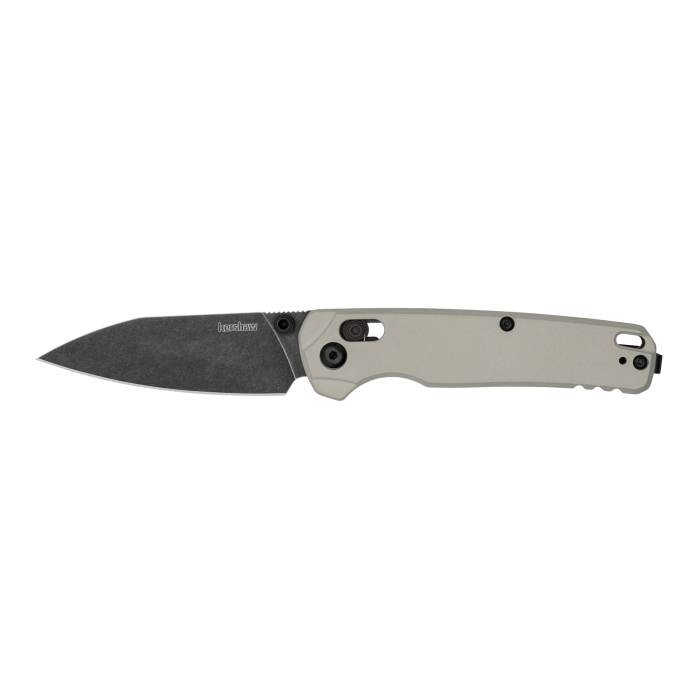
The reverse tanto excels at precision work. Its straight section is particularly effective for push cuts and whittling, and the point is robust enough for controlled piercing. It is not the ideal profile for every cutting motion. When making a long draw cut through cardboard, I notice the absence of the pronounced belly found on a traditional drop point. For the mixed work I actually do, the precision and slicing efficiency matter more.
MagnaCut edge retention and saltwater resistance
Edge retention has been phenomenal in this test. The CPM MagnaCut blade held a useful working edge for weeks through cardboard, rope and routine camp jobs, and I have not needed to strop or sharpen it yet. MagnaCut generally asks for more time on the stones than a softer, simpler steel, but the interval between sharpening sessions is long enough that I consider the trade worthwhile.
Corrosion resistance was equally convincing. After repeated salt spray and brief seawater submersions, the blade showed no pitting, spotting or discoloration. A freshwater rinse and a blown-out pivot were enough. That result does not make maintenance optional forever, but it demonstrates why MagnaCut is so attractive for an outdoor knife: excellent edge stability does not come at the expense of confidence around water.
The BlackWash finish has also hidden normal carry marks and scratches extremely well. After three months the knife still looks composed rather than precious, which suits a tool I want to use.
KVT action, DuraLock and the loose pivot
The Bel Air's opening action is buttery smooth. Kershaw's KVT ball-bearing system and well-positioned thumb studs produce a clean, snappy flick without the false starts I sometimes get from less carefully tuned stud placement. The DuraLock is completely ambidextrous, keeps fingers out of the blade path and lets the blade drop shut smoothly.
My knife did have a significant quality-control issue out of the box. The pivot was loose enough to create noticeable side-to-side and up-and-down blade play. Tightening the pivot screw removed it immediately. I added a tiny drop of blue Loctite, a medium-strength threadlocker, because bearing pivots and constant flicking can encourage a screw to back out again.
Once the threadlocker cured, the pivot stayed tight for the full three months without a second adjustment. The blade remains centered, the action still drops shut and lockup is dead solid. I have experienced no lock stick or accidental disengagement. The fix was simple and durable; the knife still should not have left the factory that loose.
Handle comfort, wet grip and gloves
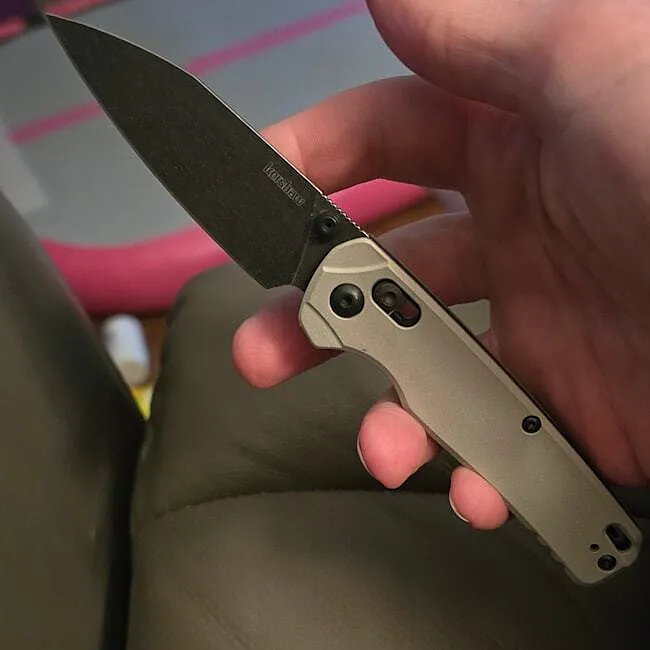
In dry conditions, the slim 6061-T6 aluminum handle is comfortable. The flat profile and subtle jimping locate the hand well, and I did not develop hot spots even during sustained cutting. Aluminum also gives the knife a rigidity that is immediately noticeable next to ultralight folders built around flexible polymer scales.
Wet performance is the Bel Air's clearest weakness. The bright nickel Cerakote is smooth enough that water or sweat noticeably reduces security. Gloves do not solve it. With both leather work gloves and rubberized utility gloves, the scale offers little surface texture for the material to bite into. During harder cuts I had to over-grip to stop the knife twisting in my hand.
Kershaw has also offered a Factory Special Series Bel Air with canvas Micarta scales, which should provide more texture. That model is not simply a grippier version of this exact knife: Kershaw specifies CPM Cru-Wear rather than MagnaCut, and lists it as discontinued. Anyone attracted to the alternative should account for that steel change as well as availability.
Pocket carry and everyday usability
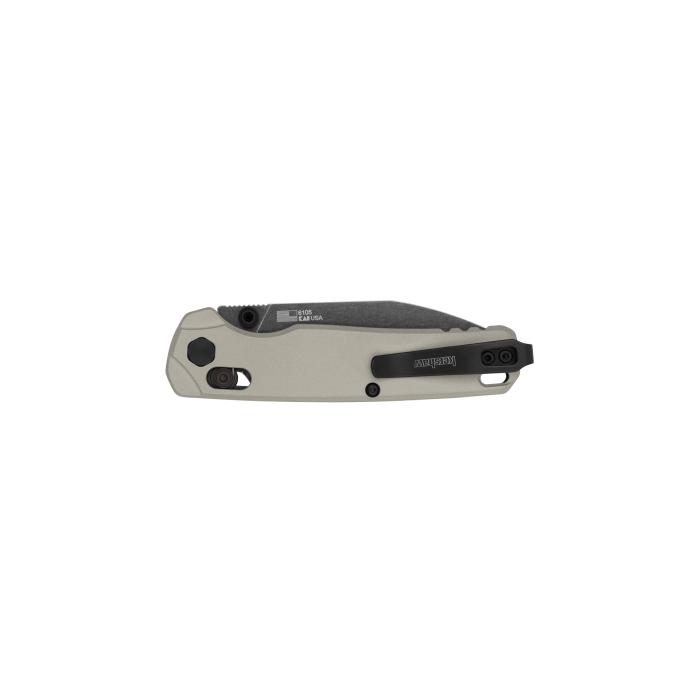
At 2.9 oz, the Bel Air practically disappears in a pocket. The reversible stamped-steel clip carries it deep enough that the knife sits below the pocket line, and the narrow 0.44 in handle does not consume much space beside keys or a phone.
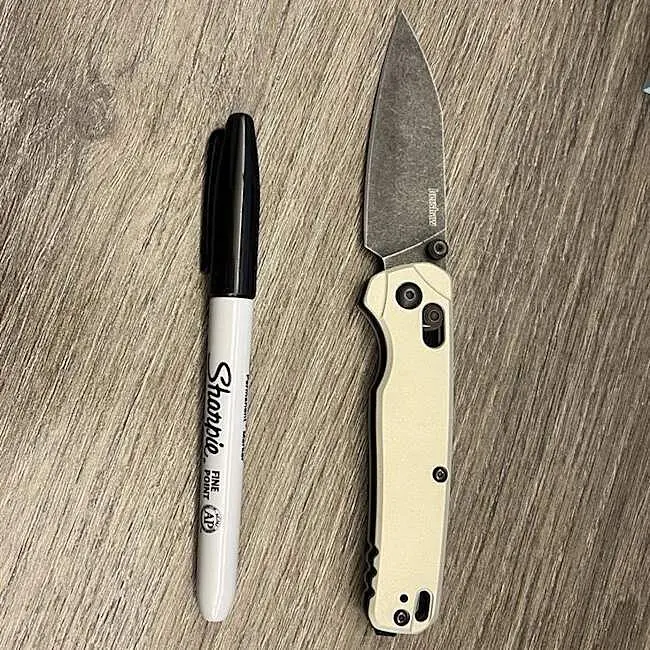
My only pocket complaint comes from the scale edges. They are angled and chamfered rather than fully rounded, so the interior edge can occasionally scrape my knuckles when I reach past the knife for keys. It is a small ergonomic irritation, not a cutting-comfort problem, but I notice it because the rest of the carry experience is so polished.
Kershaw Bel Air vs Benchmade Bugout and Kershaw Iridium
Compared with the Benchmade Bugout, the Bel Air feels like a direct upgrade in rigidity. The Bugout's Grivory scales can flex when squeezed hard during real work, while the Bel Air's aluminum frame remains solid. The Bel Air is only a fraction heavier, and in my view MagnaCut is a meaningful step up from the S30V in my Bugout. The Bugout still has a proven lightweight formula and more handle texture, but the Kershaw feels more substantial without carrying that way.
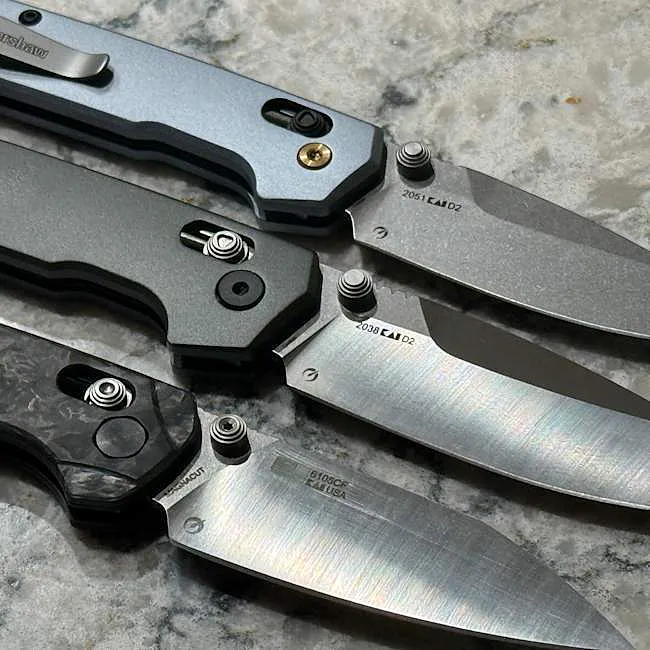
The Kershaw Iridium remains an excellent budget alternative, but the Bel Air is significantly lighter and more refined. Its MagnaCut blade is a major upgrade over the Iridium's D2, particularly when corrosion resistance matters, and the overall finish feels more premium. Long daily carry makes the weight difference obvious: the Iridium's stainless-steel construction pulls at a pocket in a way the Bel Air simply does not.
Value and who should buy it
I paid $207 USD and would absolutely buy the Bel Air again at that price. It is one of the strongest values I have used for a USA-made MagnaCut folder because the steel is supported by excellent blade geometry, not used as a specification-sheet trophy. The action, low weight and construction quality make the premium apparent every day.
This knife is best for EDC enthusiasts who want the light carry of a Bugout but prefer rigid aluminum scales, top-tier stainless blade steel and a fidget-friendly crossbar action. Buy something else if most of your cutting happens in heavy rain, around wet marine work or in gloves. A more deeply textured G10 or Micarta handle will sacrifice some of the Bel Air's sleekness but give you the traction the Kershaw lacks.
Kershaw Bel Air 6105 specifications
| Category | Knives & tools |
|---|---|
| Model | 6105, Bright Nickel |
| Blade steel | CPM MagnaCut, 62–64 HRC |
| Blade shape | Reverse tanto, plain edge, BlackWash finish |
| Blade length | 3.1 in / 7.9 cm |
| Blade thickness | 0.09 in / 2.3 mm |
| Closed length | 4.2 in / 10.7 cm |
| Overall length | 7.3 in / 18.5 cm |
| Handle | 6061-T6 aluminum with Bright Nickel Cerakote |
| Handle thickness | 0.44 in / 11.2 mm |
| Weight | 2.9 oz / 82 g |
| Opening and lock | Manual KVT ball bearings, thumb studs, DuraLock |
| Pocket clip | Reversible, deep carry |
| Country of origin | USA |
| Price paid | $207 USD |
| Test status | Purchased by reviewer; carried for three months |
| Manufacturer involvement | None. No free sample, sponsorship or copy approval. |
Scoring breakdown

Sources & context
What we checked
This review is based on Adam's three months of ownership and field use. We checked Kershaw's current product specifications for the standard Bel Air 6105 and the separate Factory Special Series Micarta model. The performance findings and comparisons are Adam's own.
Editorial disclosure: Adam bought this Kershaw Bel Air for $207 USD. Gear Reviews received no payment, free product or editorial approval from Kershaw.