
I carried the Myerchin WF300P Captain Pro through four years of liveaboard sailing around the Mediterranean. It rode on my PFD for hundreds of hours of passagemaking and spent the rest of its time doing the everyday jobs a cruising boat produces: cutting line, picking apart tight knots, preparing food and occasionally dealing with fish. Myerchin provided this knife as a free sample. It normally sells for US$117.95 plus tax. The company had no say in this review.
Quick verdict
After four years on a liveaboard boat, the WF300P is the sailing knife I want close to hand. Its serrated edge tears through line, the plain section stays keen, and the marlinspike gives me a proper grip for working knots that have been pulled tight under load. Salt, sand, fish blood and a hard knock against a prop shaft have not spoiled the blade or its action. It is a little heavy, and a multitool gives you pliers and drivers this cannot, but overall we loved this knife.
What works
- The serrated edge cuts line quickly, while the plain section stays very sharp
- The marlinspike is strong, comfortable to grip and always close at hand
- Four years of saltwater use have left no rust, staining or loose hardware
- Blade and spike remain easy to open with wet hands or gloves
- The wood handle still looks and feels excellent after hard boat use
What to know
- It has some weight, especially beside a small pocketknife
- It has no pliers or drivers if you need a general-purpose multitool
The verdict
One night we motored over a line and wrapped it around the propeller. I ended up in the sea, in the dark, cutting it away. I remember the nerves more clearly than the cutting. The WF300P went through the fouled line quickly enough that I could concentrate on getting the job done and getting back aboard. The blade hit the metal prop shaft during the work. It did not chip, and it kept an edge that still impressed me afterward.
That incident is the dramatic example, but the ordinary jobs tell me more about a knife. I have cut line with this one so often that counting individual uses would be pointless. I have reached for the marlinspike to loosen knots set hard by gale-force winds or by the pull of a towed dinghy. I have opened the blade with wet hands, put it away after long days aboard and found it ready the next time. After four years, the pivot, screws and clip still feel sound. I cannot see rust or staining on mine.
I would give it 4.9 out of 5. The slight deduction reflects its weight and the limits of any dedicated sailing knife: you may still want pliers or a driver somewhere on the boat. Those are buying considerations, not failures I found in the WF300P. If I were choosing one knife for a long stint living aboard, this is the one I would take.
Four years on a liveaboard sailboat
I spent more than a thousand days in an aggressive saltwater environment over four years of liveaboard sailing around the Mediterranean.
I used it for routine rope work on an almost daily basis, occasional food preparation, dispatching fish and a few spearfishing dives. It got wet, collected sand and grit, and came into contact with diesel, oil and fish blood. It has been on my body or within reach through an enormous amount of sailing, many hundreds of hours, and its condition now is unusually good for a tool I have treated this hard.
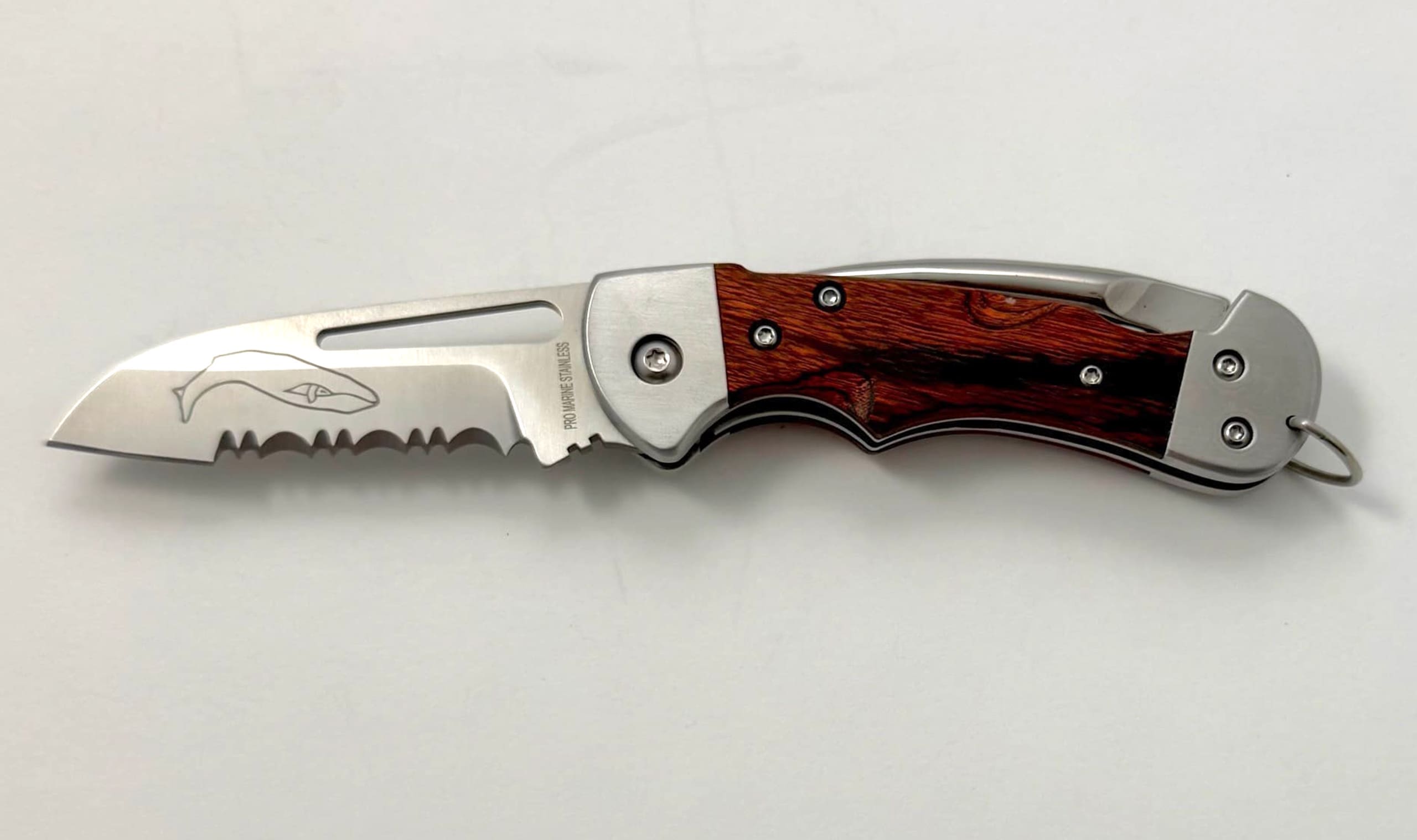
A blade I trust on line
Line cutting is the WF300P's main job on my boat, and the Pro blade is superb at it. The serrations bite quickly. When rope is wet, under tension or awkward to reach, I do not want to saw away for ages before anything happens. This edge makes short work of it. The plain section is also sharper than I expected from a knife built for regular exposure to seawater. I have used that section for smaller, cleaner cuts and for food preparation without feeling that I am making do with a blunt work blade.
It arrived razor sharp. Four years and a lot of rope later, its ability to hold a useful edge still surprises me. The encounter with the prop shaft should have been the sort of abuse that left a mark. I could not find a chip. I have also knocked it around in the course of normal work and have never had a piece break away from the edge. That is the combination I care about afloat: an edge that cuts immediately, but does not become delicate the moment it meets something harder than line.
I would still choose the proper tool for a planned, delicate kitchen job. A folding sailing knife brings its handle, pivot and serrations along with the blade, and none of those make washing up after fish or food especially pleasant. But on a boat, sometimes the knife already on your PFD is the one you have. Mine has prepared food and dispatched fish perfectly well. The strong cutting performance carries across those jobs even though rope is where the design feels most at home.
The wrapped-prop night also taught me something about access. I did not have to rummage through a locker or borrow a knife from someone else while a problem developed beneath the boat. The WF300P was the tool I had to hand and it did that job admirably. I was very thankful for a sharp, familiar blade in my hand.
The marlinspike earns its place
I use the marlinspike all the time. On a cruising boat, a knot can tighten far beyond what you can undo with your fingers. A line loaded by a blow or by towing a dinghy can leave a stubborn little lump of rope that needs a firm, narrow tool worked into it. The WF300P's spike has enough strength for that job. I have never felt as though it was a decorative extra attached to a knife.
In practice I like it better than the separate spikes we have owned. The wooden handle fills my hand and gives me something comfortable to turn and push. I can guide the point into the knot, work it around and pull against the rope without fighting a skinny metal shaft in my palm. I also know where this spike is. We seem to lose standalone marlinspikes at an alarming rate; a whole knife clipped to my PFD is harder to misplace.
That convenience changes how often I use it. If a tool lives in a drawer below, I sometimes try to pick a knot apart with cold fingers first. When the spike comes with the knife I already carry, I reach for it straight away. Some knots still take patience, especially when wind or load has cinched them down for hours, but this one gives me enough control to do the work without mangling the rope unnecessarily.
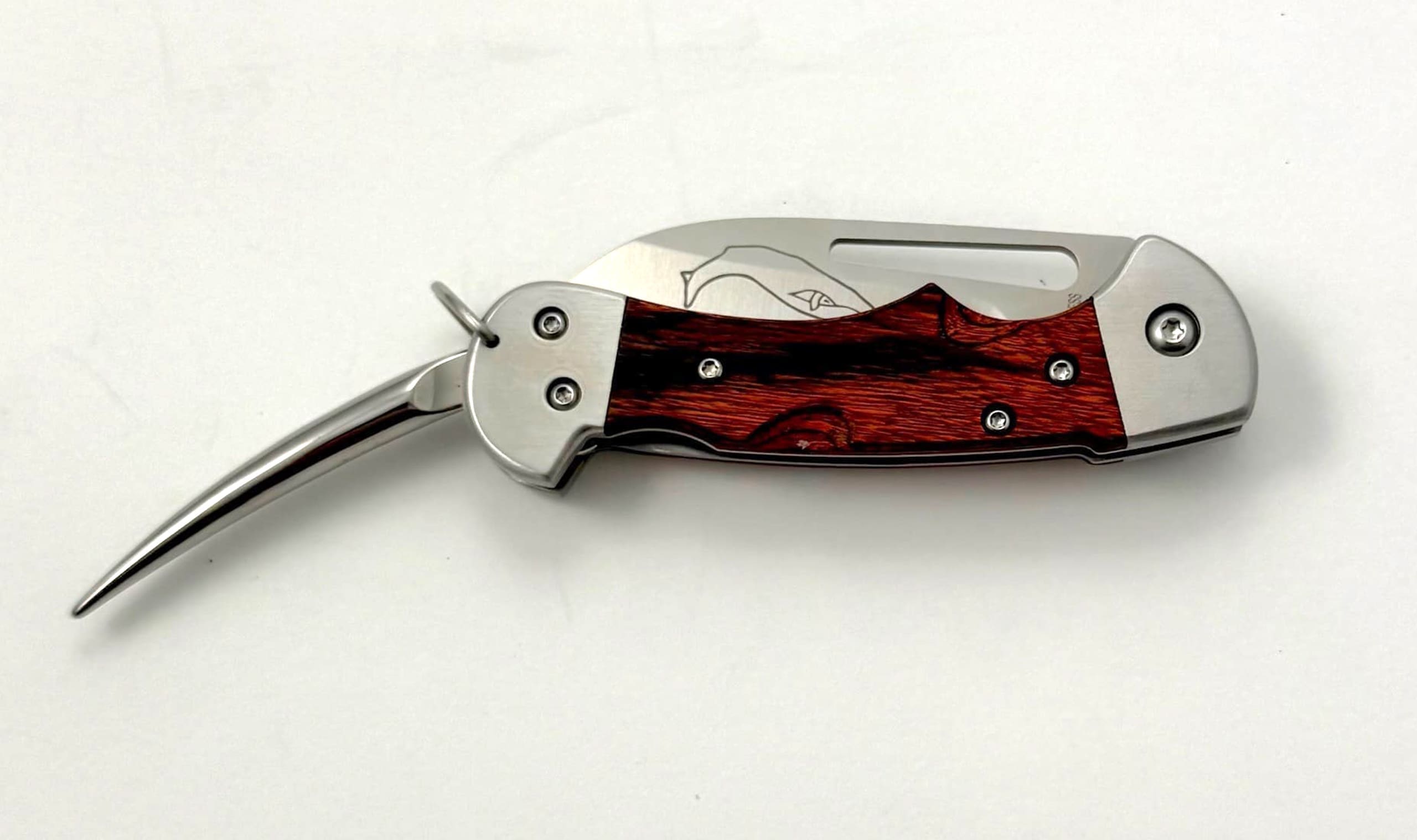
Opening it with wet hands or gloves
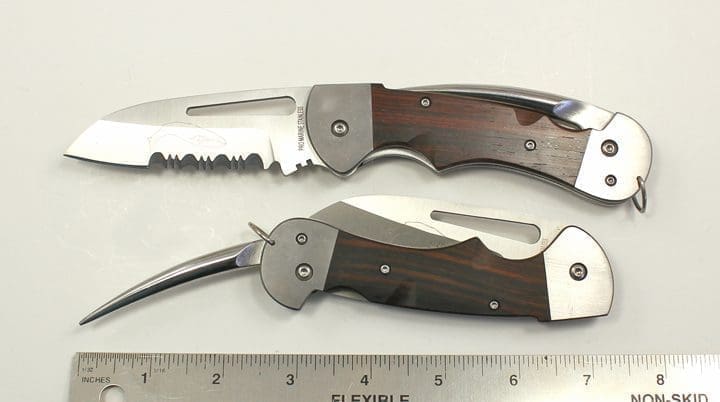
Tools on a boat spend a lot of time being used by wet hands. The WF300P makes both implements easy to find and open, even when I have gloves on. The scalloped cutouts in the wooden handle give my fingers a place to get hold of the tools. The blade has a small opening projection that I can catch without fiddling, and it swings out with a smooth, confident action.
I expected grit and salt to make that action rougher over time. I have dropped the knife in sand, carried it through salt air for years and put it away after dirty work. It still opens and closes cleanly. There has been no developing looseness around the pivot and no sense that the mechanism has become fragile. The spike is just as straightforward to deploy and fold away.
I appreciate this most when the job is small. Cutting one tail of line or opening one stubborn knot should take seconds, and with this knife it does. There is enough grip to work confidently without having to stare at the handle and work out where each tool begins. The smooth action also makes the knife pleasant to use, which matters when you reach for it several times a day.
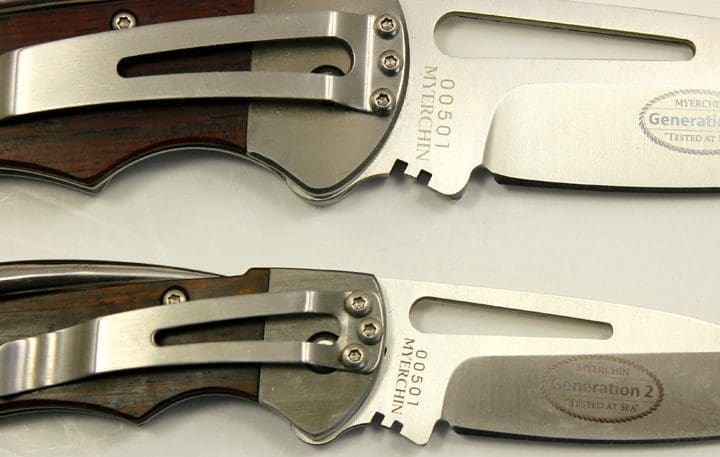
The wood handle has survived boat life
I liked the look of the wooden scales when the knife arrived, but I expected to have a more complicated opinion after years afloat. Wood on a tool that sees salt spray, wet decks and fish blood could easily become a reason to choose something more utilitarian. On my WF300P, the handle has stayed handsome and feels as good in my hand as it did early on.
It has been wet for days at a time. Diesel and oil have got on it; so has blood from fish. None of that has turned the grip into a slippery, unpleasant object or given me a reason to retire it. I like the warmth and shape of it when I am putting pressure through the marlinspike, and it is comfortable when I need to bear down on a cut. The scallops also make a practical difference to tool access, so the handle earns its space beyond appearance.
The metal parts have held up just as well on my example. After years in a marine environment I have not found rust or staining on the blade, clip, screws or pivot. Repeated saltwater use and rough treatment have left mine looking much better than I expected.
Carry on a PFD and in the sheath
The Captain Pro has some heft. I notice that when I pick it up next to a small pocketknife, but it has never stopped me carrying it. It spent hundreds of hours on my PFD during passages and more or less disappeared there. The weight felt like a fair exchange for a handle I could really grip and two full-size working implements.
The belt clip and the supplied sheath give me options for keeping it close. I favour the position that lets me get to it quickly without having to empty a pocket. What matters to me is that it stays with my sailing gear instead of being left below just because it feels too big. I can think of plenty of lighter knives that I would be more likely to forget on a chart table.
For someone who carries only a tiny everyday knife and rarely handles rope, the Captain Pro may feel more substantial than necessary. For a liveaboard sailor it earns the room. A grip that works when wet and a marlinspike that can shift a loaded knot would be much less useful if I kept leaving the knife behind.
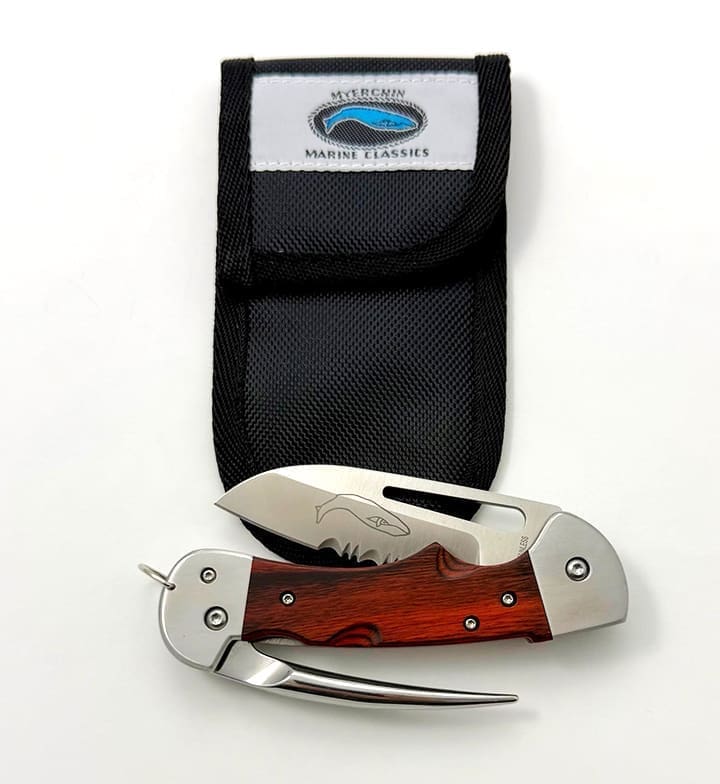
How it compares with a smaller sailing knife
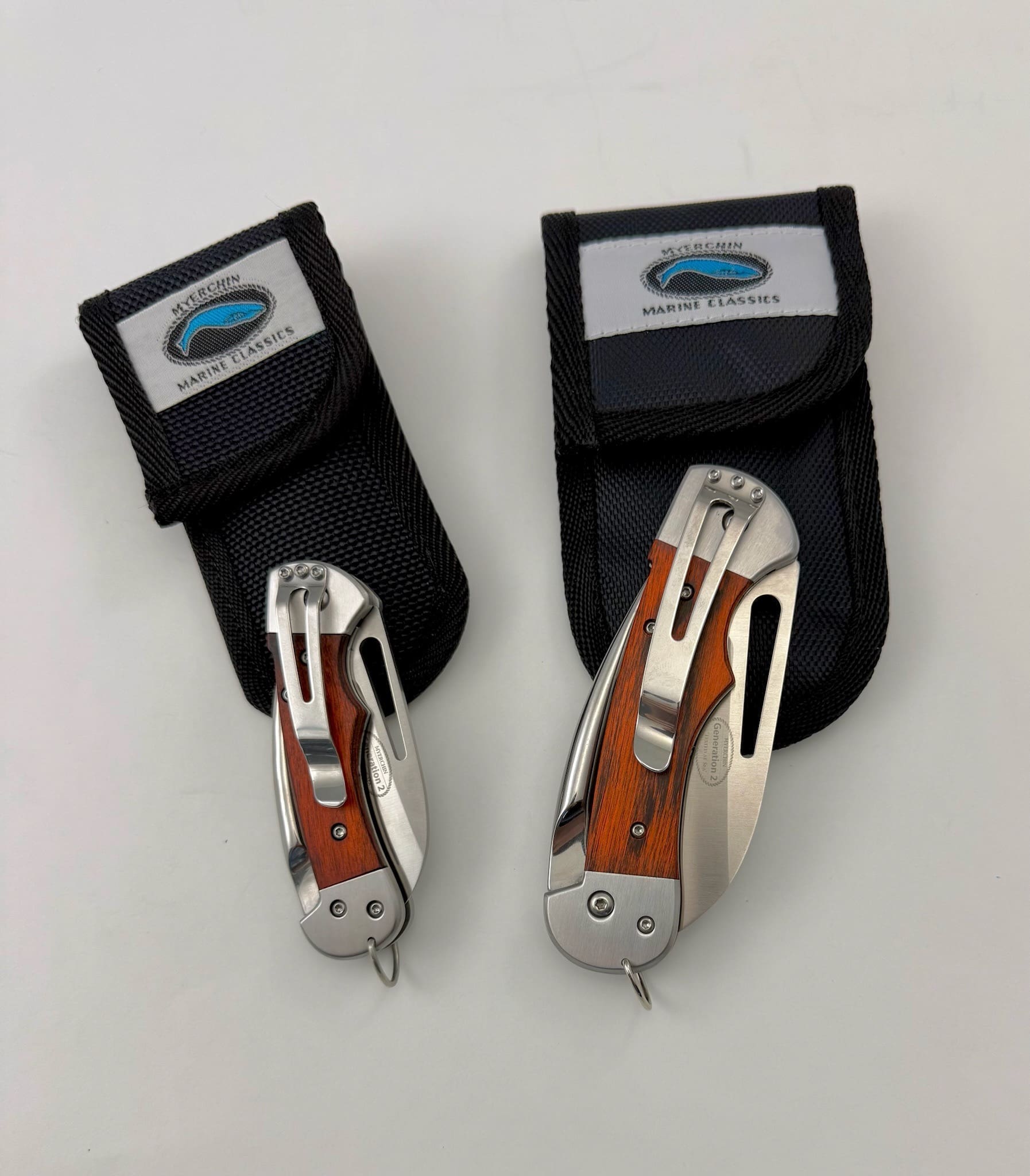
The photographs show the Captain Pro next to the smaller Crew version of the same knife. I prefer the larger one on a working boat: its handle gives me more to hold while I cut or work the spike into a knot.
There are days when a smaller knife would be easier to slip into ordinary clothing. That is a reasonable trade if most of your cutting consists of light dockside chores. My own four years were full of wet line, loaded knots and jobs where I needed a firm grip. The Captain Pro's extra size never became the reason I left it behind, and I benefited from that grip too many times to wish I had downsized.
Where a multitool fits
I have used plenty of multitools aboard, and I would still carry one if I needed pliers, a driver or a collection of small implements in my pocket. A full Leatherman can cover jobs the WF300P cannot. My Leatherman Surge review, for example, comes from hard work on a sailing-catamaran refit and shows why substantial pliers can be useful around a boat.
When the job is cutting rope or working a knot, I reach for this knife. Its marlinspike feels better in my hand than a skinny improvised pick, and the serrated blade is ready for line without opening a multitool and finding the right edge. The Leatherman ARC is a more versatile object if I need a portable collection of tools. It would not make me leave the Myerchin behind on a passage.
Those tools can live on the same boat without duplicating each other. A sailor who mostly tightens fittings and cuts wire may get more from a multitool. Someone who handles line day after day will understand why I keep a purpose-built knife and spike close even when the toolbox is nearby.
Value and who should carry it
Myerchin supplied this WF300P as a free sample, so I did not personally pay the usual US$117.95 plus tax. I have still carried and used the same knife for four years, long enough to see whether its edge, pivot, handle and metal finish held up in ordinary liveaboard life. They have.
At that price, I would buy one for myself if this knife vanished. Someone liked mine enough to try to steal it. I keep a closer eye on it now. It is also an unusually good gift for a sailor who will use the spike. The wood makes it feel special, and the construction has proved far more than decorative on my boat.
I recommend it most strongly to liveaboard cruisers and other sailors who regularly cut line and undo stubborn knots. It suits someone who wants one dependable knife on a PFD during passages and will keep using it ashore or at anchor. If you seldom work with rope, you may not get much value from the marlinspike, and a lighter pocketknife could be enough. If pliers are your first priority, add a multitool rather than asking this knife to do a different job.
Four years in, mine still opens smoothly, still cuts with authority and still looks like a tool I want to carry. The fouled prop was the moment I was most grateful for it. The hundreds of less memorable cuts and knots are why it continues to come sailing with me.
Myerchin WF300P Captain Pro details
| Model | WF300P Gen 2, Wood Handle, Captain Pro |
|---|---|
| Type | Folding sailing knife with marlinspike |
| Blade | Partly serrated Pro blade with plain-edge section |
| Handle | Wood scales with scalloped tool access |
| Carry | Clip and sheath |
| Usual US price cited | $117.95 plus tax |
| Test period | Four years of liveaboard sailing in the Mediterranean |
| Review sample | Provided free by Myerchin |
Scoring breakdown

Sources & context
What this review draws on
Adam used this WF300P for four years while living aboard and sailing in the Mediterranean. The US price cited here was supplied with the review and may change.
Editorial disclosure: Myerchin provided Adam Whistler with the WF300P as a free sample. The company did not pay for this review or approve its text. The usual US price cited for the knife is $117.95 plus tax.