
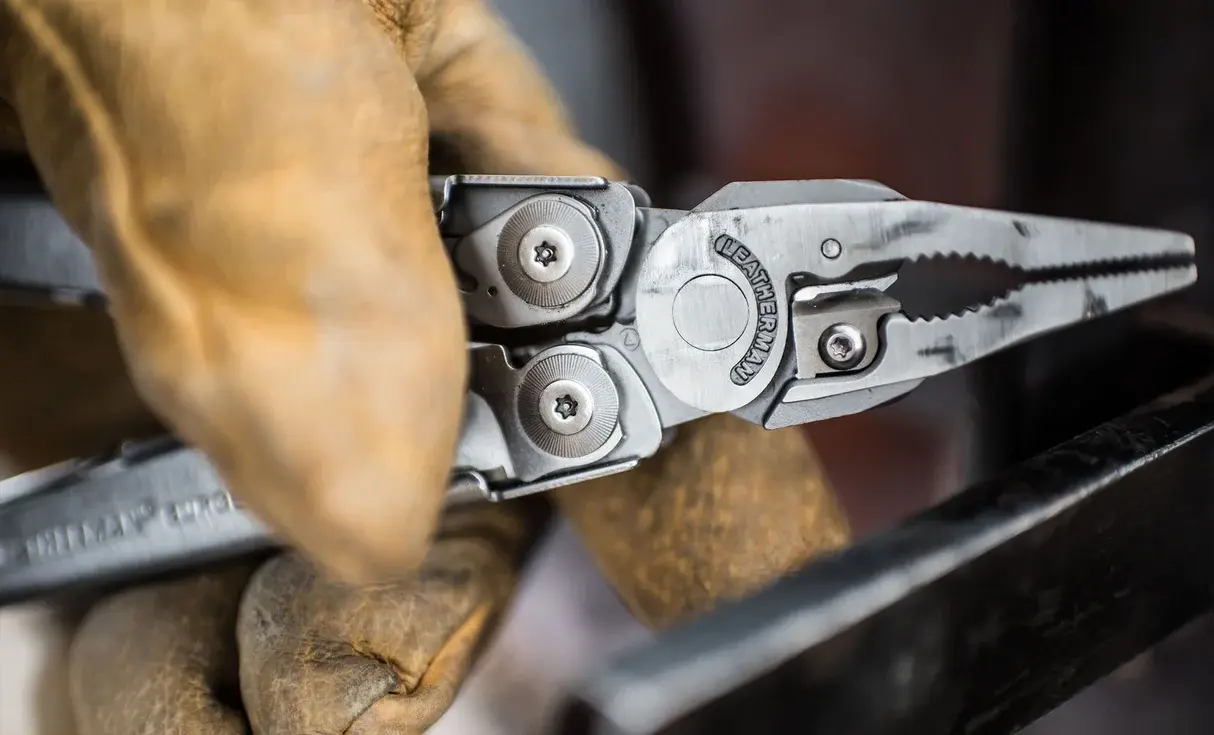
I bought this stainless-steel Leatherman Surge for £130 and carried it through roughly two years of manual work while refitting a sailing catamaran from the hull up. The workload centred on heavy 12-volt DC electrical jobs: stripping and cutting wire, making temporary repairs, opening materials, fitting hardware and dealing with the endless small problems that appear during a complete boat rebuild. Leatherman did not supply the tool, sponsor the review or know it was taking place.
Quick verdict
The Surge is the Leatherman to choose when plier strength, leverage and tool versatility matter more than weight. Its rigid handles, replaceable cutters, genuinely useful serrated blade and standard T-shank compatibility made it a dependable portable toolbox for two years of hard work. But 12.5 ounces is miserable in a pocket, the drivers turn off-axis, 420HC needs frequent attention around saltwater and my supposedly excellent scissors developed a bad spring. I would not buy it again for this job: a small roll of dedicated pliers, cutters and knives would be lighter and better at each task.
What works
- Massive, rigid pliers provide much more leverage than a Wave+ or Signal
- Replaceable 154CM cutters are practical for everyday copper-wire work
- T-shank exchanger accepts common Bosch and other jigsaw blades
- Dedicated serrated blade excels on marine rope and nylon webbing
- All four outside tools are accessible one-handed, even in work gloves
What to know
- At 12.5 oz, pocket carry is uncomfortable even in workwear
- Wide plier handles can fatigue smaller hands
- Proprietary flat bits and an offset driver make screwdriving clumsy
- My scissor spring failed and requires a warranty repair
- Saltwater or sweat can produce surface rust quickly without maintenance
The verdict
The Surge earns its reputation as Leatherman's brute. The frame does not flex, the plier head inspires confidence and the long handles provide leverage that smaller multitools cannot match. After two years of dirty, repetitive boat-refit work, there was no looseness in the pivots, no blade play and remarkably little visible wear. That durability is the central reason to consider it.
It is also a multitool whose compromises are impossible to ignore. The Surge is too heavy for comfortable pocket carry, too wide for some hands and less precise than dedicated tools. Its drivers are serviceable rather than elegant, the thick plain blade is poor in a kitchen and the 420HC tool steel needs vigilance in a marine environment. My scissors—the feature usually described as among Leatherman's best—will not spring open without being manually reset.
For a rigger, mechanic, farmer or tradesperson who needs one self-contained object on a belt or in a bag, it remains compelling. For a known, planned project such as a complete boat refit, I would now spend the same money on several dedicated tools. That comparison is not entirely fair to a multitool, but it reflects the actual decision a working owner has to make.
How I tested the Leatherman Surge
This was not a short camping test. I carried the Surge for roughly two years while rebuilding a sailing catamaran from the bare hull upward. Heavy DC electrical work dominated: stripping and cutting copper conductors, trimming zip ties, making temporary crimps, opening boxes and clamshell packaging, cutting rope and webbing, fitting fasteners, scraping and punching materials, and handling countless quick repairs where walking back to the main toolbox was inconvenient.
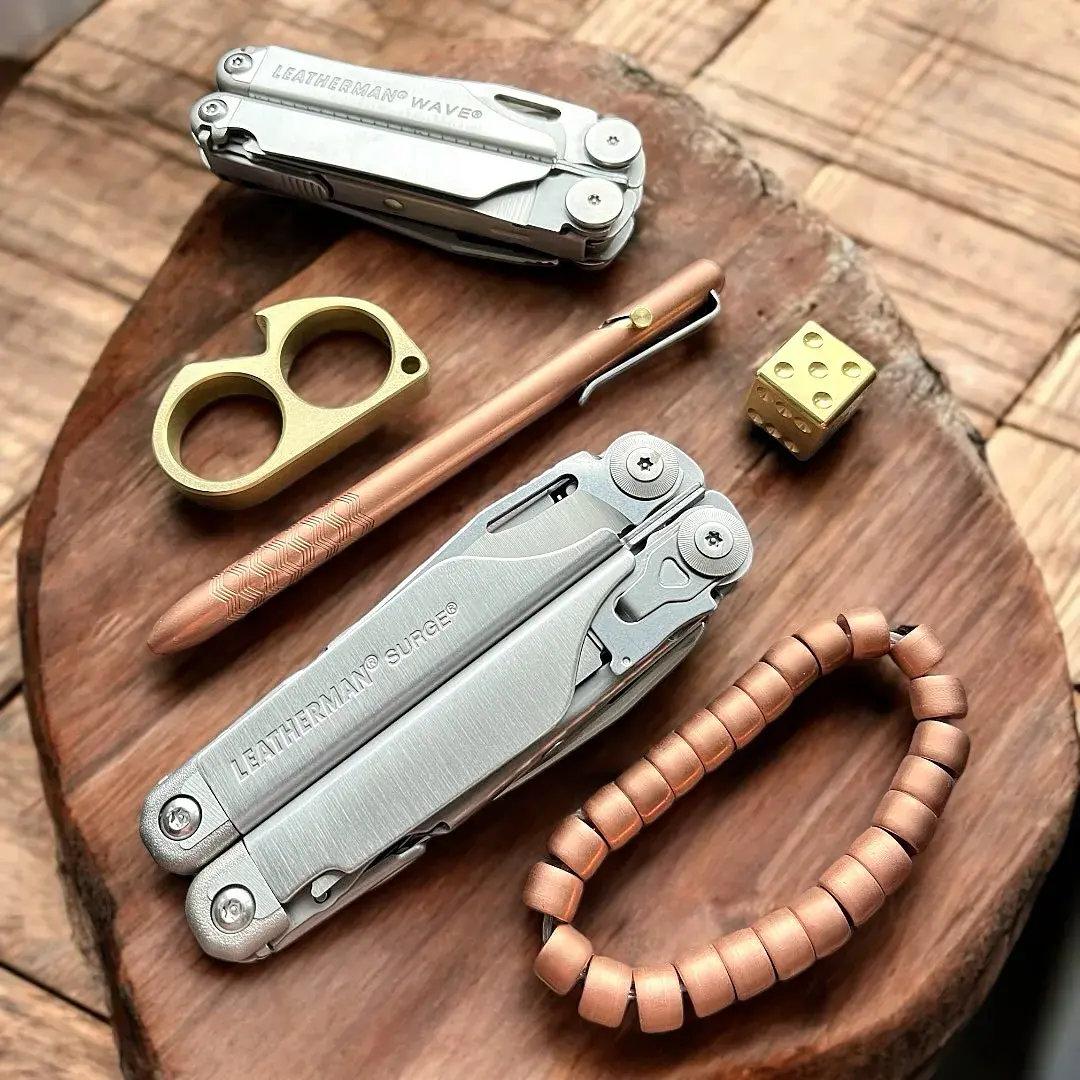
I also used the blades on cardboard, food, wood and marine rope; fitted third-party T-shank saw blades; cut branches with the supplied saw; touched up knives and axes with the diamond file; and operated the outside tools in heavy leather gloves. The tool was bought personally for £130. The performance observations below come from this single long-term example.
Pliers, leverage and hand comfort
The pliers are the best argument for the Surge. The needlenose tips remain precise enough for small components, while the broader regular jaws and long handles generate meaningfully more force than the Wave+ or Signal. I used them on stubborn hardware and could squeeze hard without feeling the stainless handles flex.
A daily-work multitool needs that rigidity. Smaller Leatherman frames can feel as though the user is approaching their limit during an obstinate job; the Surge simply feels more secure. It does not make the needle tips a pry bar, nor does it replace locking pliers on rounded or heavily seized fittings, but it tolerates hard legitimate plier work unusually well.
The ergonomic price is width. Open the pliers fully and the handles spread far enough to fatigue smaller hands. My own hands could use them without pinching or hot spots, but this is not automatically the most comfortable Leatherman simply because it is the strongest. With wet bare hands, the smooth stainless steel also becomes slightly slick, although the sheer amount of handle provides enough purchase to remain controllable.
Wire cutters and crimpers
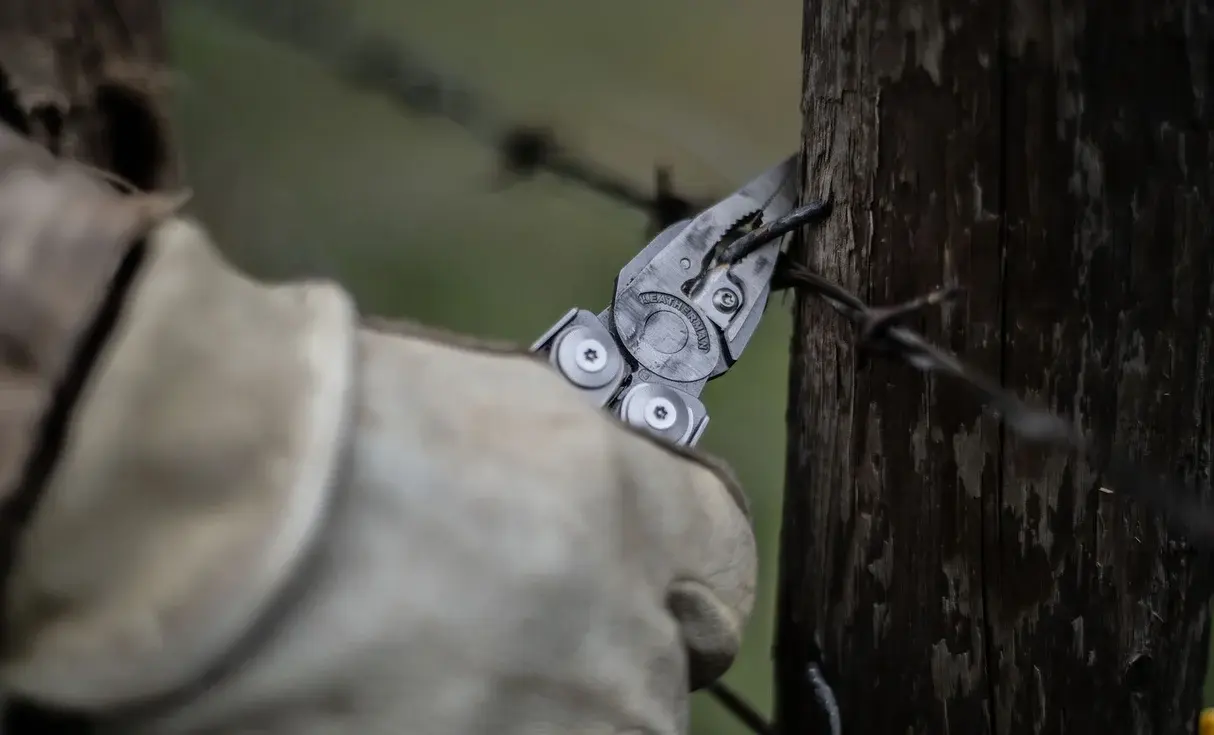
The replaceable 154CM cutter inserts handled copper conductors and thick zip ties reliably. They are consumable parts: if an edge is damaged, the inserts can be replaced without retiring the entire plier head. That is an important advantage over Leatherman models with integral cutters.
Their limit arrives around hard material such as a steel coat hanger. Force one through and the edges can dent. Replaceability reduces the financial consequence; it does not turn the Surge into bolt cutters. For recurring hardened-wire work, use the dedicated tool.
The electrical crimper behind the pivot and the stranded-wire crimper in the jaws are acceptable for a temporary field repair. They are not an appropriate substitute for a regulated marine electrical installation. The permanent heavy connections on our catamaran were made with a proper eight-ton-plus hydraulic crimper, which produces the consistent compression required for serious high-current work. The Surge can get a circuit functioning; it should not define the finished standard.
Plain and serrated 420HC blades
Both blades arrived decently sharp with even factory grinds. The edge geometry was typical of a heavy Leatherman blade: a little thick behind the bevel, prioritising toughness over fine slicing. The plain 420HC blade became a dependable workhorse on cardboard, packaging and wood. It whittles well and does not immediately chip if it finds a hidden staple.
Food preparation exposes the design's worst geometry. When the Surge is used like a kitchen knife, the cutting edge sits high along one side of a thick, doubled handle. On a board, the lower half of that handle reaches the work surface before the edge can finish its stroke. Combined with thick blade stock, that makes the knife split apples and carrots instead of slicing cleanly, while the pivot fills with food residue. It will prepare lunch in an emergency; it is a bad camp-kitchen knife.
The dedicated serrated blade justifies its space. Its full-length teeth rip through thick salt-crusted marine rope, seatbelt material and tough nylon webbing without the awkward transition of a half-serrated combo edge. On a working boat, it is far more useful than the Signal's compromised combo blade.
Leatherman specifies 420HC at 55–59 HRC. Edge retention is average: abrasive work removes the shaving edge quickly, but the steel is tough and takes a good working edge again in about three minutes on a pocket stone. Corrosion resistance is similarly ordinary. Put the Surge away wet with seawater or sweat and surface rust can appear by the next morning.
Excellent scissors undermined by a failed spring
The Surge's large, spring-action scissors should be a headline feature. Their blade length and leverage let them chew through clamshell packaging, heavy canvas, zip ties and thick cardboard in a way that the small scissors on most multitools cannot.
My example developed a bad spring. The blades stay closed after every cut and must be reset manually, destroying the quick repeating action that makes scissors useful. The cutting edges still meet and cut, but the mechanism is plainly defective and belongs in a warranty claim. That single failure is the largest blemish on an otherwise impressively durable two-year record.
The T-shank exchanger is the smartest feature
The Blade Exchanger is the Surge's most versatile design decision. Rather than trapping the owner inside one proprietary saw and file arrangement, it accepts standard T-shank jigsaw blades. I routinely fitted Bosch metal-cutting and wood-scrolling blades, choosing tooth patterns and lengths for the actual material.
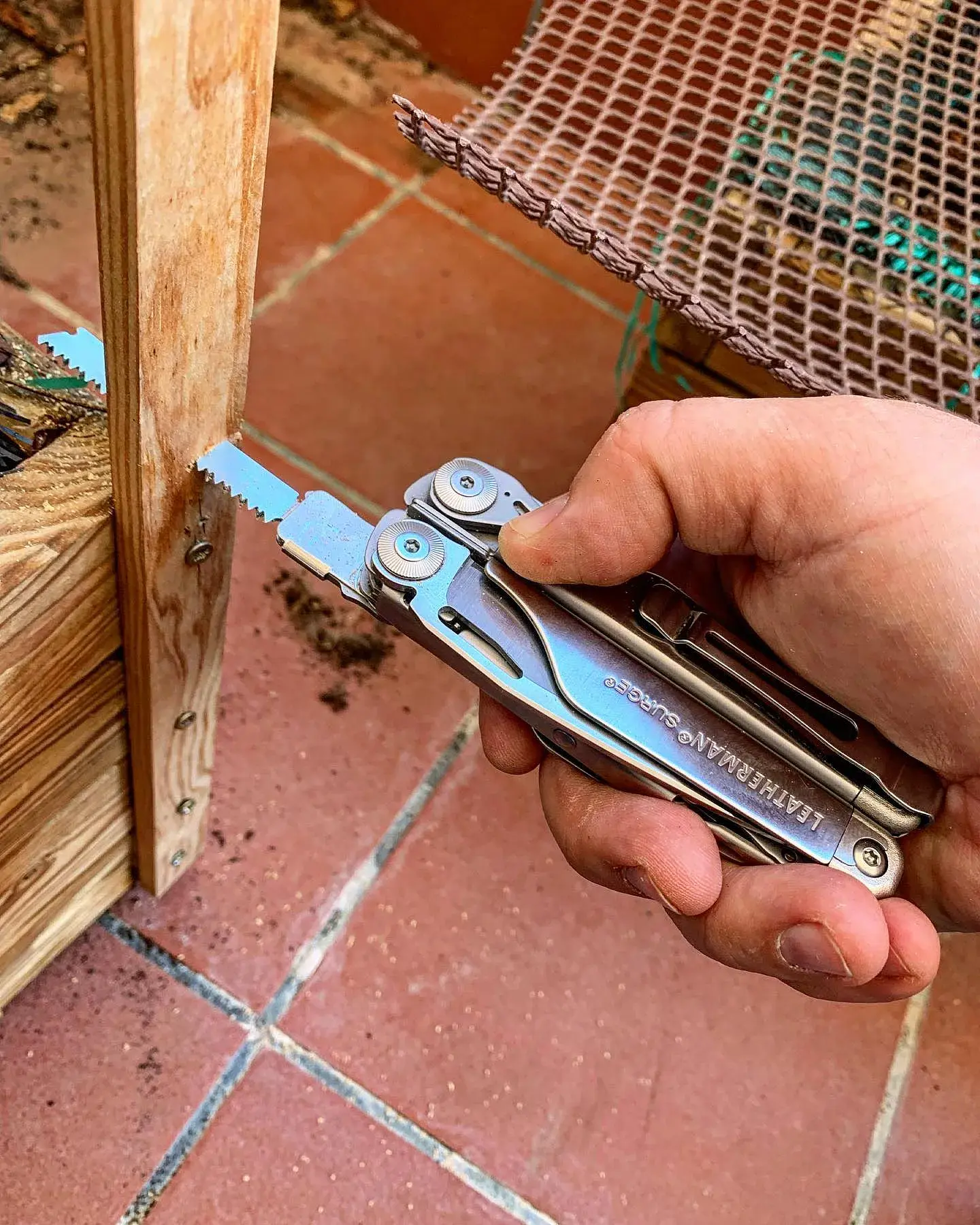
The retention spring in this tool kept thin aftermarket blades from wobbling excessively. The holder remained secure and reliable throughout the refit. It does not transform the short Surge handle into a full jigsaw, but it lets a damaged or unsuitable blade be replaced almost anywhere and allows harder cutting jobs without sacrificing the multitool itself.
The supplied wood saw is aggressive enough for dry branches around three inches in diameter. The double-sided file is also useful: its diamond-coated face quickly touches up axes and knives, while the cross-cut side removes material from plastic and softer metals. I did not use either supplied insert constantly, yet the fact that they are removable makes their tool slot much more valuable.
Drivers, awl and internal tools
The large bit driver works, but Leatherman's proprietary flattened bits remain irritating. They save thickness inside a multitool, yet they create another small ecosystem to buy into and are less readily replaced than ordinary quarter-inch bits. The large fixed flat driver is stout enough for very light prying within reason.
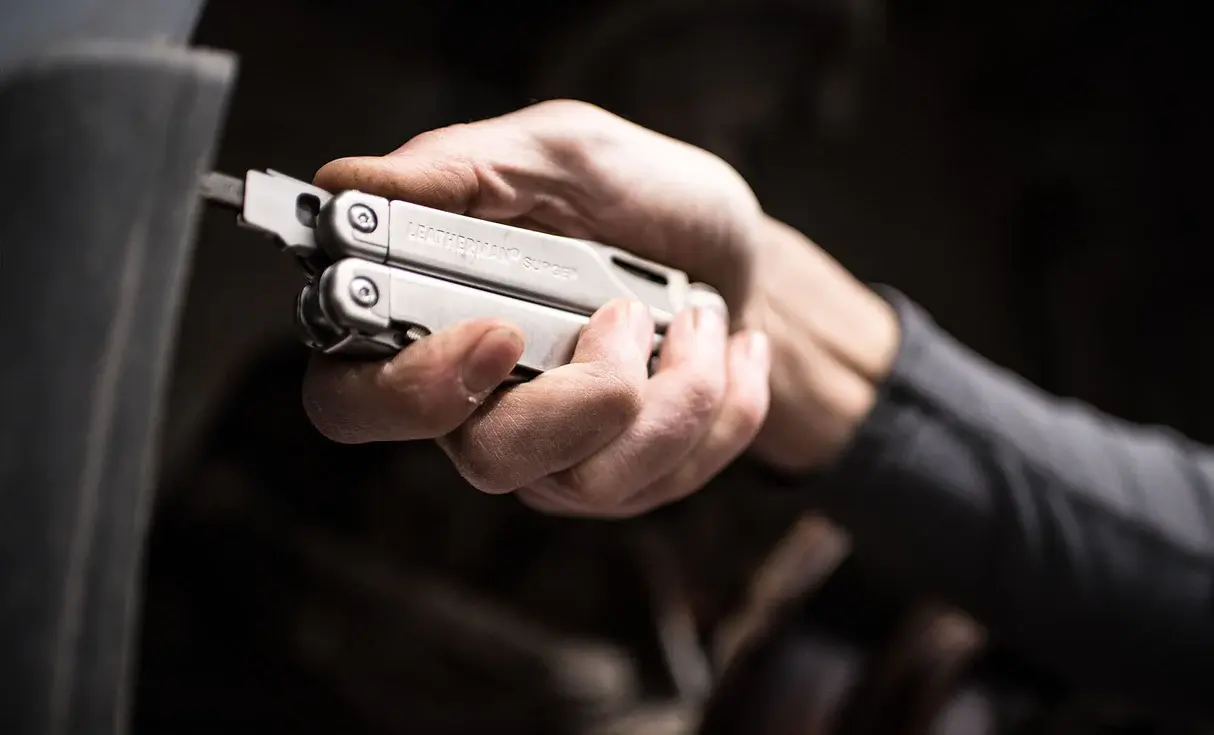
Because the driver unfolds from one side rather than the centreline, torque arrives slightly off-axis. Add a 12.5-ounce body and screwdriving feels clumsy compared with even a basic dedicated driver. The mass can help with torque, but it also amplifies wobble and makes repeated rotations awkward.
The awl is strong and useful for punching drywall or leather, starting holes in wood and scraping debris from existing holes. The can and bottle opener performs exactly as expected. All inner tools require the handles to be opened first and remained somewhat gritty and sticky even after two years, despite extensive cycling and lubrication.
One-handed access, break-in and locks
All four outside tools—the plain blade, serrated blade, scissors and T-shank holder—have large thumb openings and can be deployed one-handed. I could access them in heavy leather work gloves, which is a material advantage on dirty or cold jobs.
The pivots were stiff and gritty from the box. I spent a few hundred cycles opening and closing everything while watching a film, then lubricated the tool with Ballistol before the butterfly action became smooth. Even after two years, several individual implements retained some sticky resistance rather than becoming genuinely frictionless.
Lock security was excellent. The outside tools use substantial liner locks and the internal implements use Leatherman's spring-bar locks. I experienced no blade play, lock stick or accidental disengagement, and no loosening developed across the test.
Carry: a bag or belt tool masquerading as pocket gear
I carried the Surge in the oversized tool pockets found on work shorts rather than a sheath. Even there, it was not good. The 12.5-ounce block swung against my leg, pulled at the fabric and made its presence known with every step. In conventional jeans pockets, the experience is worse.
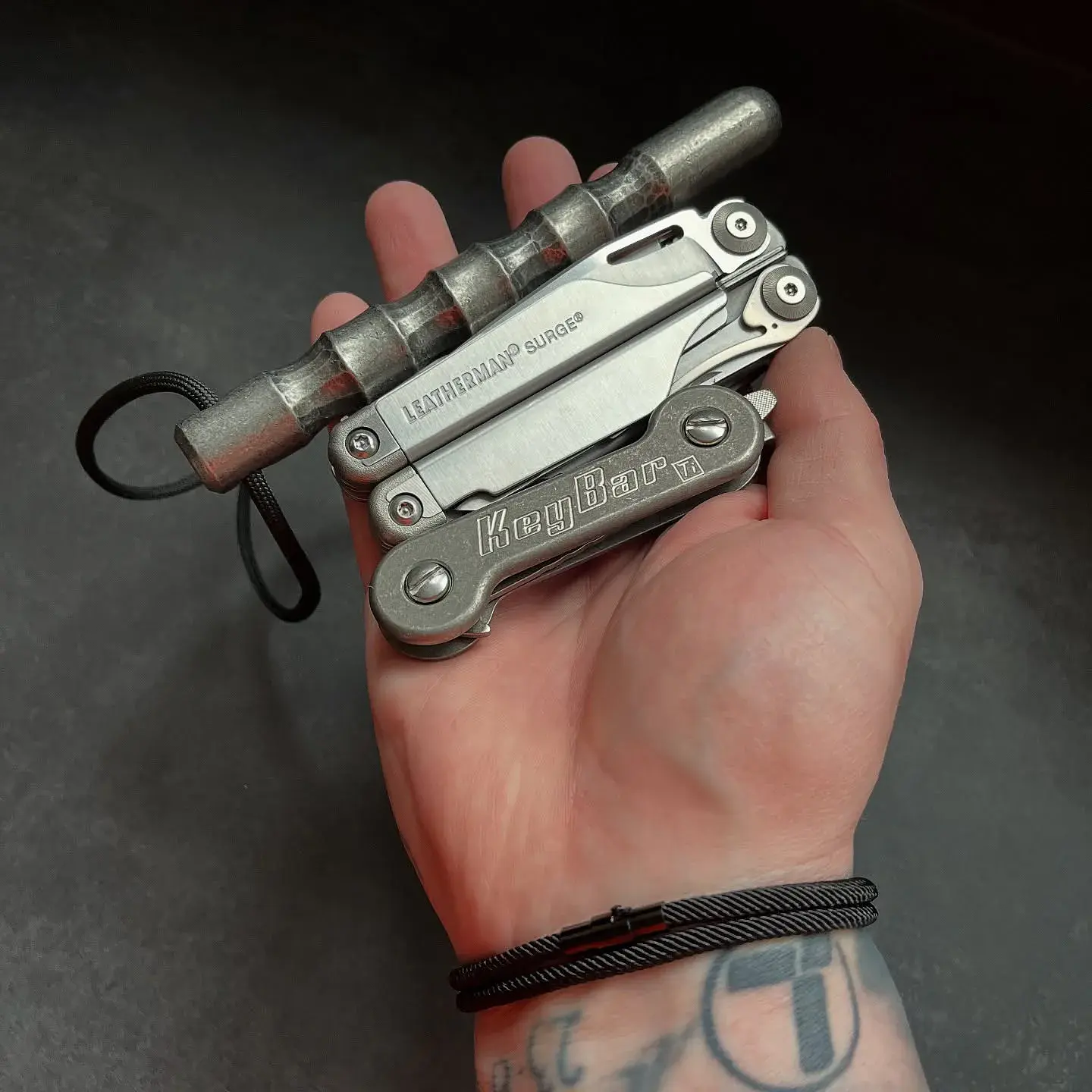
This is fundamentally a belt-sheath, work-bag or toolbox multitool. Anyone choosing it for strength should budget for an external carry method. If the tool must disappear into ordinary clothing, the Wave+, ARC or Charge TTi makes far more sense.
Two-year durability and marine corrosion
The frame, plier head, locks, cutters, T-shank holder and bit driver all remained mechanically reliable. There was no developing looseness and surprisingly little wear for the amount of labour involved. The thick stainless frame still felt like a serious tool after two years.
The scissor spring is the exception. It did not make the entire Surge unusable, but a spring-action implement that has to be reopened manually has failed in practical terms. Leatherman's 25-year warranty should cover the repair, and this example should be sent in.
Marine ownership also demands maintenance. The Surge is stainless, not rustproof. Saltwater trapped around pivots or tools can leave orange spotting overnight. Rinse contamination away, dry the tool thoroughly, blow moisture from the pivots and apply a light protective oil. The average corrosion resistance of 420HC is acceptable in a workshop; on a boat, neglect becomes visible quickly.
Surge vs Wave+, Super Tool 300, ARC and Charge TTi
The Wave+ is dramatically easier to carry and more sensible for everyday use, but its smaller frame cannot match the Surge's leverage or confidence under hard plier work. If weight matters most, choose the Wave+. If the pliers will be pushed regularly and the tool lives on a belt, the Surge earns its mass.
The Surge beats the Super Tool 300 through access. The ST300 is strong, but burying its blades inside the handles makes routine cutting slower and clumsier. Four one-handed outside tools give the Surge a decisive usability advantage without surrendering its heavy-duty construction.
The ARC is much more refined. Its FREE mechanism provides near-frictionless access and the MagnaCut blade decisively outperforms 420HC. It is lighter and more pleasant to manipulate, yet the Surge remains the tool I would trust more readily for brutal, dirty leverage-heavy jobs.
The Signal does not belong in the same working category. It is a lighter camping tool with a hammer and compact emergency features; the Surge is a portable toolbox. For my own use, however, the Charge TTi is the more satisfying balance. I prefer it by a wide margin because it combines a more premium blade and materials with a far more manageable carry profile.
Value and who should buy it
I paid £130. At that price, the Surge delivered two years of dependable service, survived hard use with almost no mechanical wear and placed an unusual range of tools in one hand. Judged purely as a rugged multitool, that is sound value.
I still would not buy it again for the same project. With hindsight, I would use the money for a dedicated knife, proper pliers and purpose-built cutters. The resulting kit would be less convenient as one object, but each tool would be lighter in the hand, more precise and better suited to sustained work. The comparison is imperfect, but it exposes the Surge's central question: do you need maximum integration, or maximum tool quality?
Buy the Surge if you are a tradesperson, rigger, farmer, mechanic or serious DIYer who routinely overwhelms lighter multitools and will carry it on a belt or in a work bag. Avoid it if you work in an office, hike light, have smaller hands or already know which three dedicated tools a job requires.
Leatherman Surge specifications
| Category | Knives & tools |
|---|---|
| Tool count | 21 |
| Primary blade | 420HC modified drop point, plain edge |
| Second blade | 420HC fully serrated |
| Blade hardness | 55–59 HRC, manufacturer specification |
| Blade length | 3.1 in / 7.87 cm |
| Closed length | 4.5 in / 11.43 cm |
| Open length | 7 in / 17.78 cm |
| Width | 1.7 in / 4.32 cm |
| Thickness | 0.8 in / 2.03 cm |
| Weight | 12.5 oz / 354.4 g |
| Frame | 420 stainless steel |
| Cutters | Premium replaceable wire and hard-wire cutters |
| Exchanger | Blade Exchanger with supplied saw and file; accepts compatible T-shank blades |
| Included bit | Phillips #1–2 and 3/16 in screwdriver |
| Price paid | £130 GBP |
| Current US list price | $159.95 at time of review |
| Warranty | 25-year limited warranty |
| Test status | Personally purchased; used for approximately two years during a complete sailing-catamaran refit |
| Manufacturer involvement | None. No Leatherman sample, sponsorship or copy approval. |
Scoring breakdown

Sources & context
What we checked
This review is based on Adam's two years of ownership and manual work during a complete catamaran refit. We checked Leatherman's current official listing for dimensions, materials, tool count, warranty and US list price. Performance findings and comparisons are Adam's own.
Editorial disclosure: Adam Whistler bought this Leatherman Surge for £130 and used it for approximately two years. Leatherman had no involvement. Gear Reviews received no payment, free product or editorial approval.