
I bought the men's Patagonia Torrentshell 3L in size large and Smoulder Blue with my own money for £160. Patagonia did not provide the jacket, support the trip or know I was testing it. It came around Quebec for three months of hiking and travel, during which I walked about 900 km and wore the jacket for roughly 150 km. Four proper downpours, plenty of wind, an offshore whale-watching trip and a 2°C night gave it more useful work than a polite walk around the block.
Quick verdict
The Torrentshell 3L is a dependable storm shell with a sensible cut, excellent hood and enough toughness for regular backpack use. It kept me dry through sustained Quebec rain and blocked hard wind off the Gulf of St Lawrence. The pit zips deal with heat better than the fabric can on its own, while the dry-touch inner face is unusually pleasant over short sleeves. Pocket placement is the weak spot: a loaded hip belt covers much of both hand pockets, and there is no chest or internal stash pocket to compensate. Around 14 ounces, it is too substantial for committed ultralight hikers and still light enough to live in the bottom of a normal hiking pack. At £160, the balance is very good.
What works
- Reliable protection in prolonged heavy rain
- Substantial three-layer fabric feels built for regular use
- Excellent fit and unrestricted movement
- Hood stays secure in strong wind
- Pit zips release heat quickly
- Strong value beside premium shells
What to know
- Hand pockets are partly blocked by a backpack hip belt
- No chest pocket or internal stash pocket
- Clammy during hard uphill efforts
- Fabric feels slightly stiff
- Hood is not designed around a climbing helmet
- DWR needs maintenance after sustained use
The verdict
Rain jackets can become oddly complicated purchases. Fabric numbers, membrane names and laboratory breathability claims pile up quickly, while the basic test remains fairly blunt: a jacket must keep water and wind out without becoming miserable to wear.
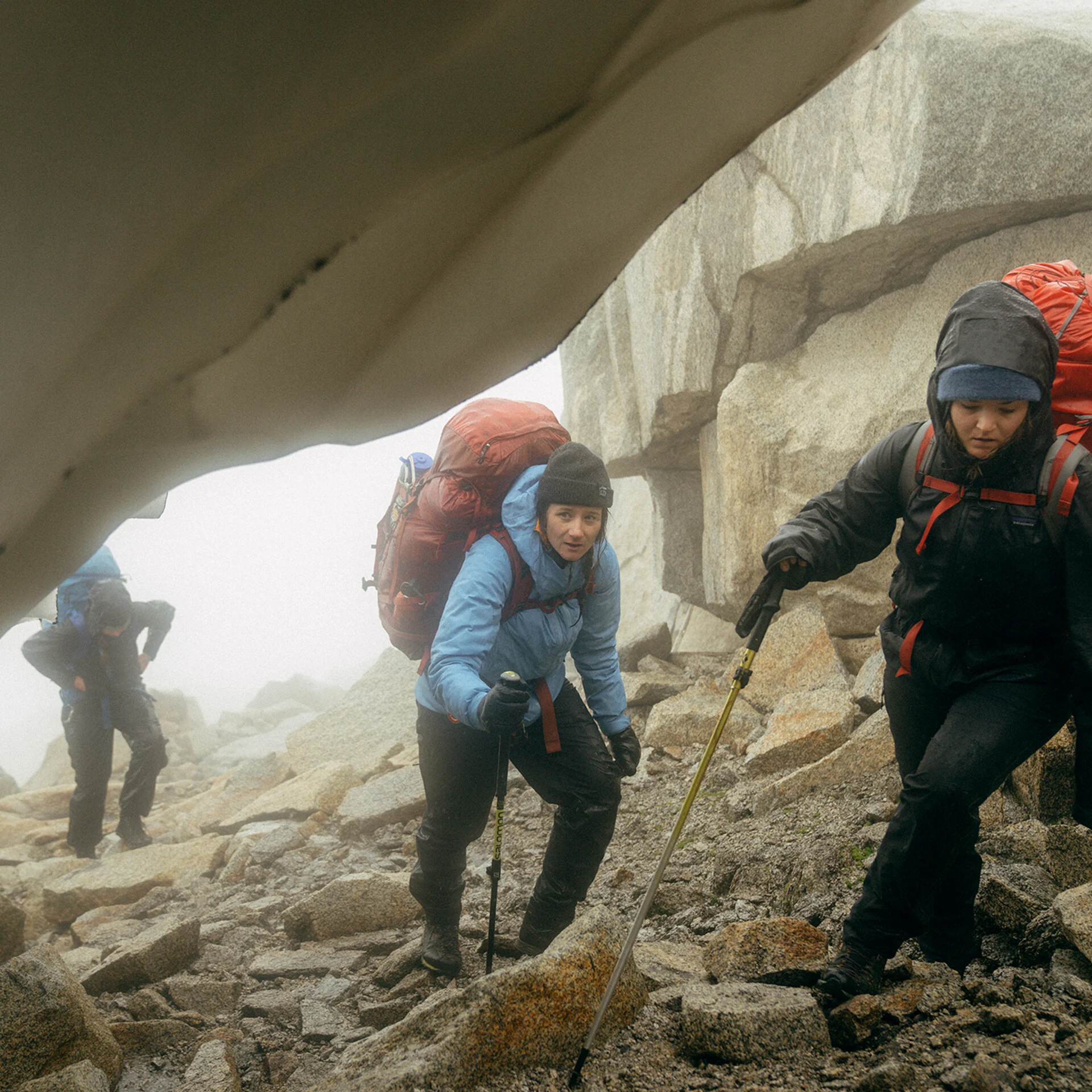
The Torrentshell answered that well. During four long, heavy downpours, rain stayed on the outside. The shell also dealt comfortably with exposed wind during an offshore whale-watching trip in the Gulf of St Lawrence. Spray, rain and cold air were all part of that day, and the jacket handled it wihtout drama.
Its limitations are mostly easy to understand before buying. The robust hardshell construction feels a long way from a barely-there emergency layer. It is a little stiff, runs warm when you are climbing hard and weighs more than a minimalist 2.5-layer jacket. In return, the tougher fabric coped with backpack straps and daily travel without needing delicate treatment.
How I tested the Torrentshell 3L
The jacket travelled around Quebec for 90 days. That included serious hiking in the Laurentides, casual sightseeing, urban walking, windy shorelines and time on the water. I covered about 900 km across the trip. The Torrentshell was on my back for approximately 150 km of that distance, either because rain had arrived, the wind was doing enough to justify a shell or the temperature had fallen.
Four rain events were sustained enough to matter. Each one lasted for hours, including time under a loaded pack, rather than ending with a quick dash into a café. One cold night while camping dropped to 2°C, and I slept in the shell for additional wind protection. Worn over warm layers, that wind barrier made a noticeable difference. The jacket itself provides no insulation.
The offshore trip added a different test. Strong wind can expose a loose hood, weak cuffs and a collar that refuses to stay comfortable. The Torrentshell kept its shape, let me look around without the hood covering my eyes and prevented cold air from cutting through.
Waterproofing in sustained rain
The face fabric shed water cleanly through most of the trip. In the four worst downpours, the membrane kept moisture from passing through and the seam construction gave me no trouble around the shoulders, hood or front zip. Wearing a backpack did not create obvious pressure points where water worked through.
Near the end of the 90 days, the outer surface began wetting out slightly during prolonged saturation. The waterproof membrane kept working, although the face fabric had stopped beading as efficiently and held more surface moisture. The jacket felt heavier and less breathable when that happened, while my layers underneath remained dry.
A technical wash and DWR refresh is due after a trip of that length. There was no bubbling, peeling or sign of delamination. The modest loss of beading looked like normal maintenance rather than material failure, especially after months of pack straps, sweat and general travel grime.
Breathability and the pit zips
At a walking pace in cool rain, internal comfort was good. Start pushing hard uphill and the limits of a three-layer hardshell arrive. Some clamminess is unavoidable when your body is producing more moisture than any waterproof membrane can move. This jacket did not perform a magic trick there.
The long pit zips are the practical answer. Opening both wide created enough airflow to dump heat quickly, and I could operate them while wearing the jacket. They are much more useful than a small mesh vent or a marketing claim about breathability. If the rain was falling vertically, I could leave them partly open without inviting much water inside.
The dry-touch inner scrim improves matters when the jacket is worn over a T-shirt. It does not have the sticky plastic feel of some lighter shells, so brief skin contact around the forearms and neck is tolerable. That small comfort feature mattered during humid summer weather.
Fit, movement and layering
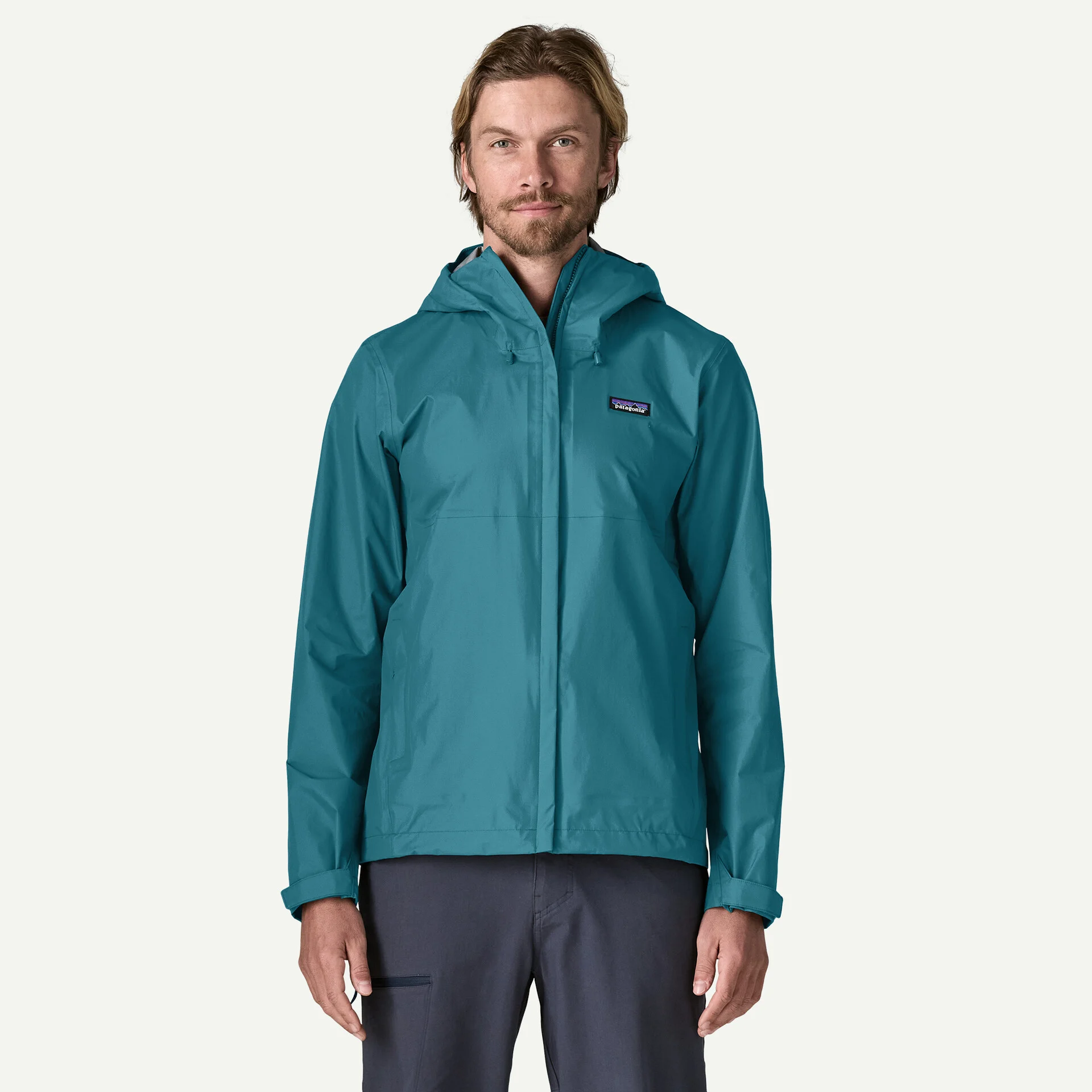
My men's large fitted exactly as I hoped. The cut is modern and slightly tailored, avoiding the shapeless bin-bag look that still appears on some rain shells. There was room for sensible layers underneath without excess fabric flapping around the torso.
Movement was excellent. Reaching overhead for branches, stepping high over fallen timber and scrambling across boulders did not pull the hem up or tighten across my shoulders. The sleeves stayed long enough when my arms were extended, and the body did not ride above the backpack waist belt.
That balance makes the jacket easy to use beyond hiking. It looks tidy enough for travel and sightseeing, but there is no obvious fashion-led compromise in the pattern. I could wear it for a wet day in town, then put a pack over it the next morning.
Hood, collar and cuffs
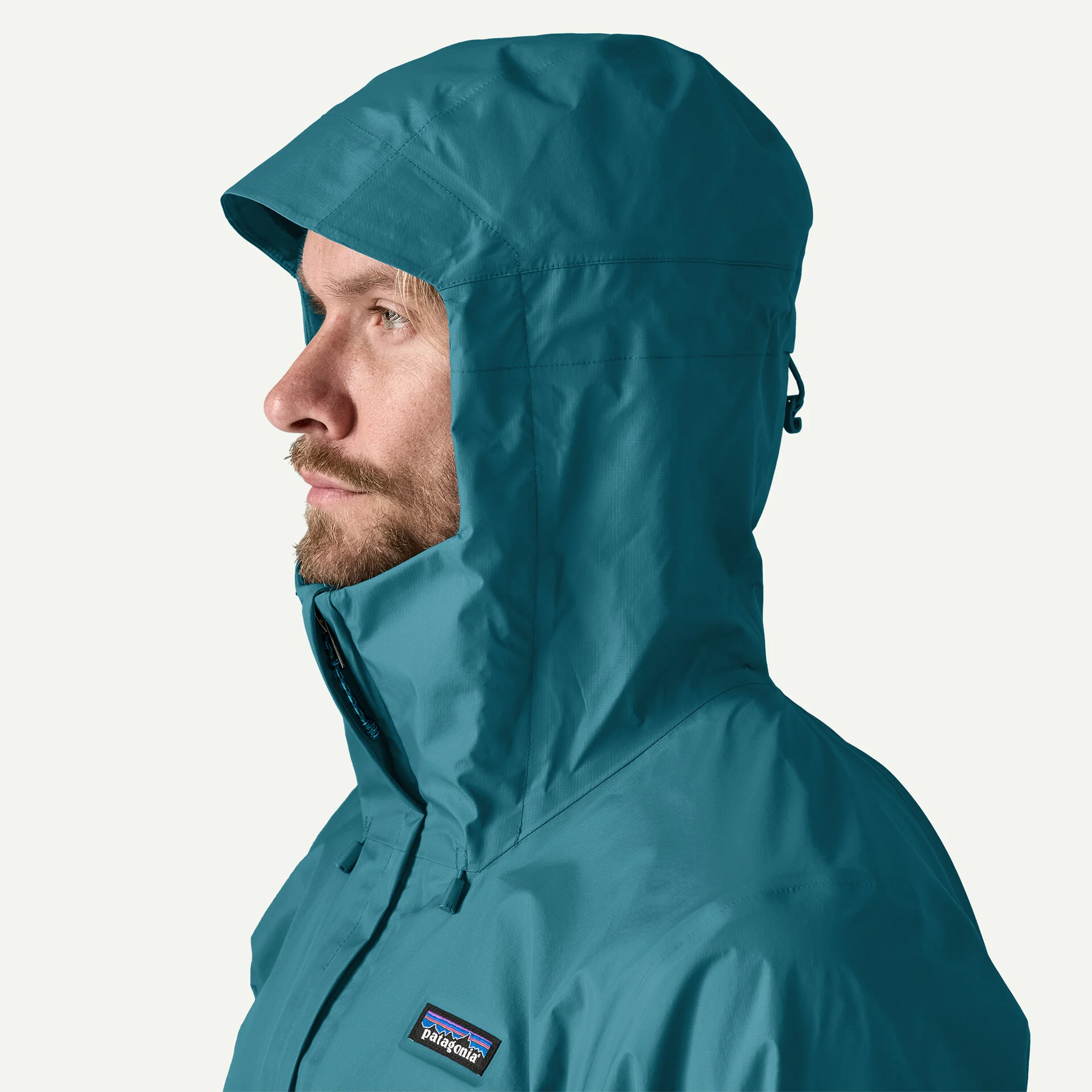
The hood is one of the jacket's strongest details. Front drawcords control the opening while a rear adjuster removes excess volume. Once tightened, it turned with my head and stayed clear of peripheral vision in high wind. The laminated brim held its shape and kept driven rain away from my eyes.
It cinched comfortably around a baseball cap. A bulky climbing helmet would be a squeeze, so climbers and mountaineers should look at shells designed with that use in mind. For ordinary hiking, travel and paddling-adjacent use, the lower-volume design is easier to live with.
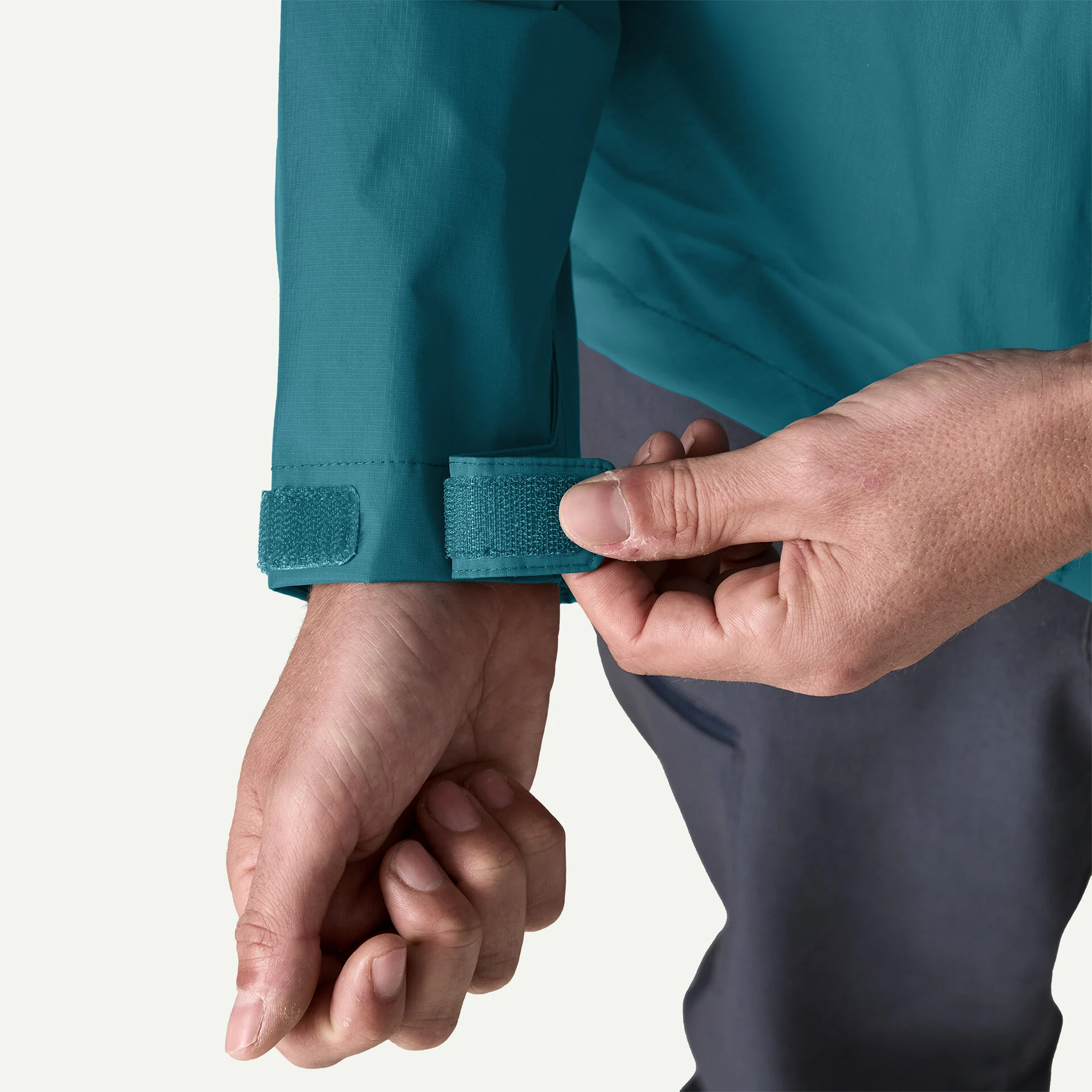
The microfleece chin guard stopped the upper zip and garage rubbing against stubble. Hook-and-loop cuff tabs are simple and secure, letting me close the sleeves over bare wrists or open them around gloves. The front zip also ran smoothly throughout the test.
The pocket problem
Both handwarmer pockets are spacious and easy to use without a pack. Add a large backpack and the hip belt runs across their lower half. I could still reach into them, but access became awkward and anything bulky inside sat under the belt.
Higher pocket openings would help, or a chest pocket could provide quick storage for a phone, compass or folded map. The Torrentshell has neither a chest pocket nor an internal stash pocket. That leaves fewer options than I would like on a hiking shell, particularly when the waist belt is closed.
This was my main daily irritation, although it never affected storm protection. Users carrying small daypacks may barely notice. Anyone hiking with a full backpack should expect to keep essential items in the pack's hip pockets instead.
Fabric, durability and noise
The three-layer material feels substantial in the hand and gives the jacket a slightly structured shape. It is stiffer and noisier than the soft, stretchy fabrics used in expensive premium shells. I did not find that restrictive because the pattern provides enough movement, but people who prioritise a quiet, fabric-like feel will notice the difference.
Durability was excellent over three months. Backpack straps, rock contact and being repeatedly stuffed into luggage produced no tears, seam damage or delamination. The cuffs and hem remained tidy, while the adjusters and hook-and-loop tabs continued working normally.
Sleeping in it for one cold night was not especially luxurious, though the dry inner face helped. More importantly, that use did not leave the fabric creased or damaged. The Torrentshell feels built to be used, which is a large part of its appeal.
Weight and packability
At roughly 14 ounces, the men's jacket is light enough to carry every day but does not disappear like an ultralight emergency shell. It compresses into its own pocket or rolls into a compact bundle for the bottom of a pack. I carried it throughout the trip with no drama.
The extra weight buys a proper inner scrim and a more durable face fabric. For repeated use, I prefer that trade. A thru-hiker counting every gram can save meaningful weight with a simpler 2.5-layer design, although those jackets often feel less pleasant and may demand more careful treatment.
Packability is also helped by the clean feature set. There are no bulky external pockets, powder skirt or helmet hardware. The jacket is easy to roll around the hood and tuck into an available corner.
Price and value
My jacket cost £160. That is real money for a raincoat, yet well below the £300 to £500 territory occupied by many premium technical shells. The Torrentshell delivered the protection I needed without making me feel I had paid for a specialist feature set I would never use.
Its value comes from competence rather than novelty. The hood adjusts properly, the pit zips are large, the cut works under a pack and the fabric survived a long trip. There are lighter shells and stretchier shells. Few at this price combine three-layer construction, useful design and Patagonia's established repair-minded approach so convincingly.
The missing storage prevents the features score climbing higher. An extra chest pocket would add little conceptual complexity and make the jacket much easier to use with a heavy pack.
Who should buy it
The Torrentshell 3L suits hikers, backpackers and outdoor travellers who need dependable storm protection and expect to use their jacket regularly. It is a particularly strong choice for wet climates, mixed trips and people who want one shell for the trail and ordinary travel.
Fast-and-light thru-hikers may prefer a lighter 2.5-layer option, especially where rain is intermittent and pack weight dominates every decision. Mountaineers should choose a jacket with a helmet-compatible hood and higher pockets. People who run hot may also want a more breathable, air-permeable shell, accepting that it may give up some sustained weather protection.
For my use, the compromises were sensible. I would take the Torrentshell on another long trip, refresh the water-repellent treatment before leaving and keep my phone in the backpack hip belt. It stayed dry when the rain became serious, fitted well enough to forget about and emerged from three months looking ready for more.
Patagonia Torrentshell 3L test details
| Tested model | Men's Patagonia Torrentshell 3L |
|---|---|
| Size and colour | Large, Smoulder Blue |
| Construction | Three-layer waterproof hardshell |
| Approximate weight | About 14 oz |
| Ventilation | Two-way pit zips |
| Hood | Front drawcords, rear volume adjustment and laminated brim |
| Pockets | Two zippered handwarmer pockets; no chest or internal stash pocket |
| Price paid | £160 |
| Test period | Three months in Quebec; approximately 150 km worn during a 900 km trip |
| Conditions | Four sustained downpours, strong wind, offshore whale watching and a 2°C camping night |
| Manufacturer involvement | None. No free sample, sponsorship or copy approval. |
Scoring breakdown
Sources & context
What we checked
This review is grounded in Adam's three-month trip through Quebec. Test distance, conditions, fit, durability and performance observations come from that field use.
Editorial disclosure: Adam bought this Patagonia Torrentshell 3L with his own money for £160. Gear Reviews received no payment, free product or editorial approval from Patagonia.