
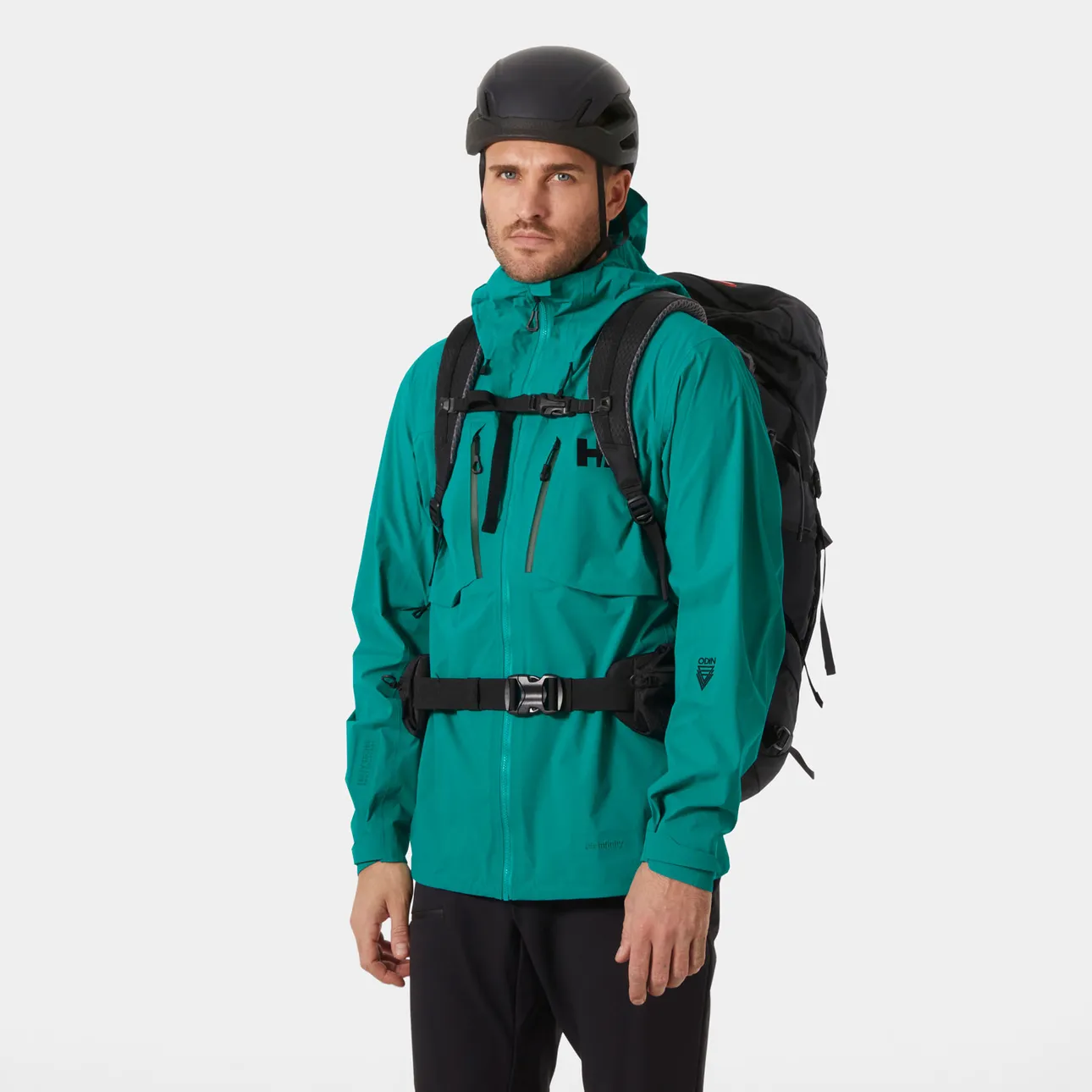
By the third day of almost uninterrupted rain in Quebec, water was running down the shoulder straps of my pack and grit had been ground into the jacket beneath them for hours. My base layer was still dry. That was the point at which the Helly Hansen Odin Ultimate Infinity stopped feeling like an expensive experiment in PFAS-era alternatives and started earning its place as a serious mountain shell.
Gear Reviews bought the men’s jacket for £450. Helly Hansen did not provide it, support the test, approve this article or know the review was taking place. Adam Whistler wore it through a 90-day hiking, camping and biking trip across the Laurentides, Parc national des Hautes-Gorges-de-la-Rivière-Malbaie, Saguenay National Park and the Gulf of St Lawrence. It spent most days under a loaded Hyperlite Mountain Gear Unbound 40, met rock, trees and gravel, and once became an impromptu ground blanket.
Quick verdict
The Helly Hansen Men’s Odin Ultimate Infinity Shell Jacket is a burly, highly protective three-layer shell for people who expect long rain, violent wind and rough contact. Its waterproofing, helmet hood, pit zips and early durability are excellent. The measured 580 g weight, rigid hand, loud fabric and limited comfort during high-output or warm-weather use make it the wrong jacket for ultralight objectives. It also uses LIFA Infinity, not LIFA Infinity Pro, an important distinction when assessing the environmental claims. At £450 it is expensive, specialised protection rather than a universal rain jacket.
What works
- Stayed dry through nearly three days of persistent rain
- Total wind protection with very little fabric flapping
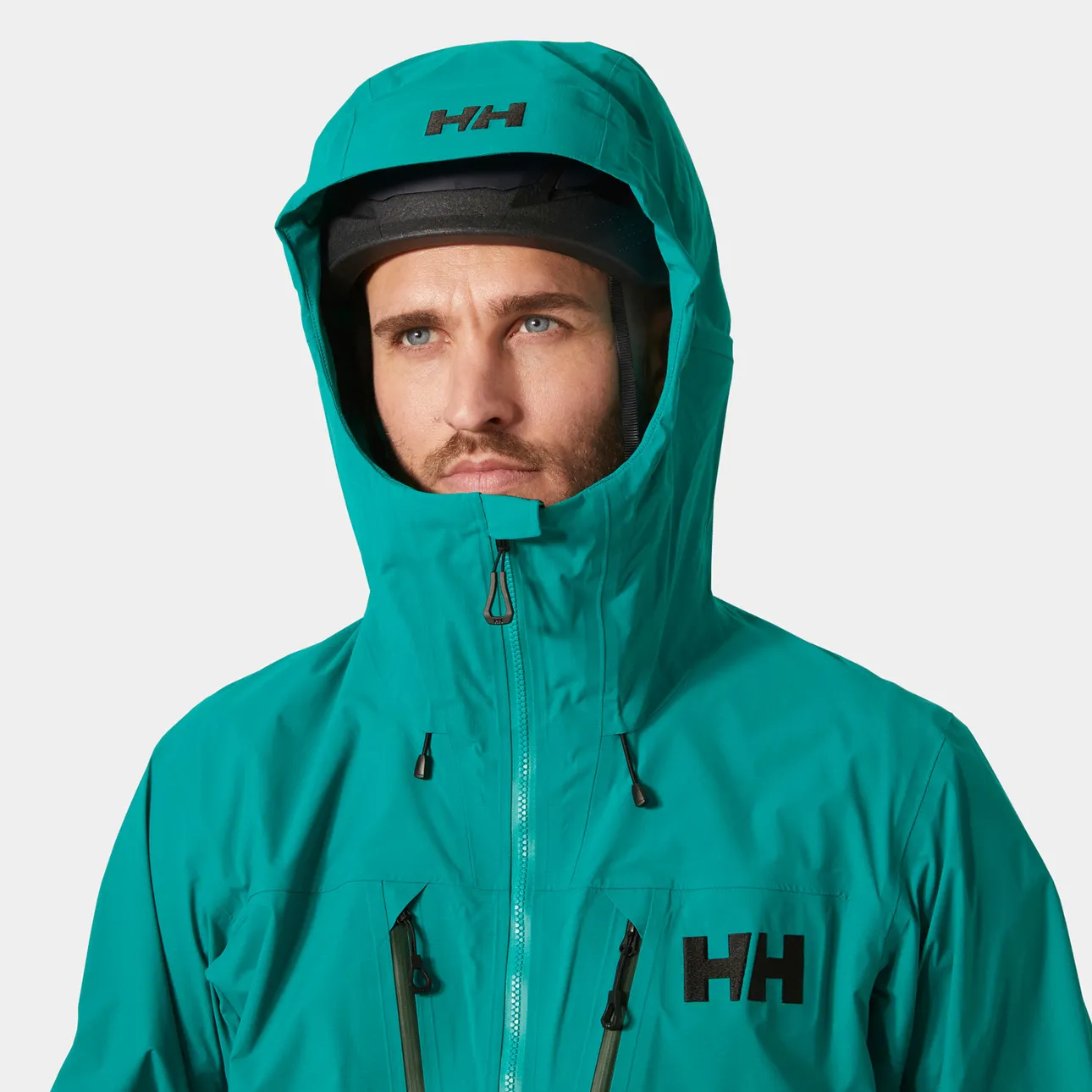
- Excellent helmet-compatible hood and protective peak
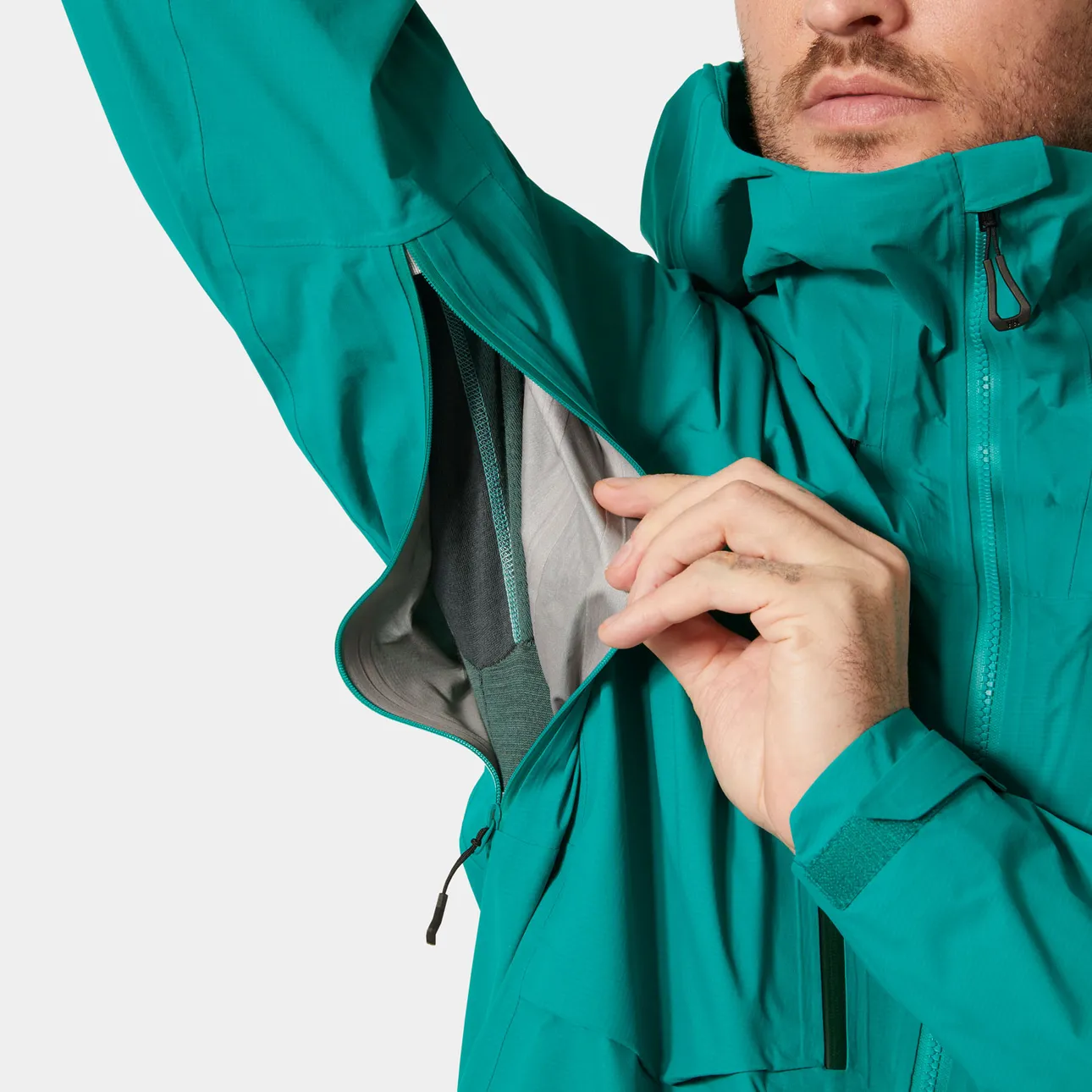
- Large two-way pit zips provide effective manual venting
- Strong abrasion resistance under packs and against rock
- Chest pockets remain accessible above a hipbelt or harness
What to know
- Large weighed about 580 g and packs to roughly melon size
- Fabric is stiff, loud and only softens slightly with use
- Can feel clammy on hard climbs or in warm rain
- No conventional lower hand pockets
- Not the DWR-free LIFA Infinity Pro construction
- £450 is hard to justify for occasional fair-weather use
The verdict
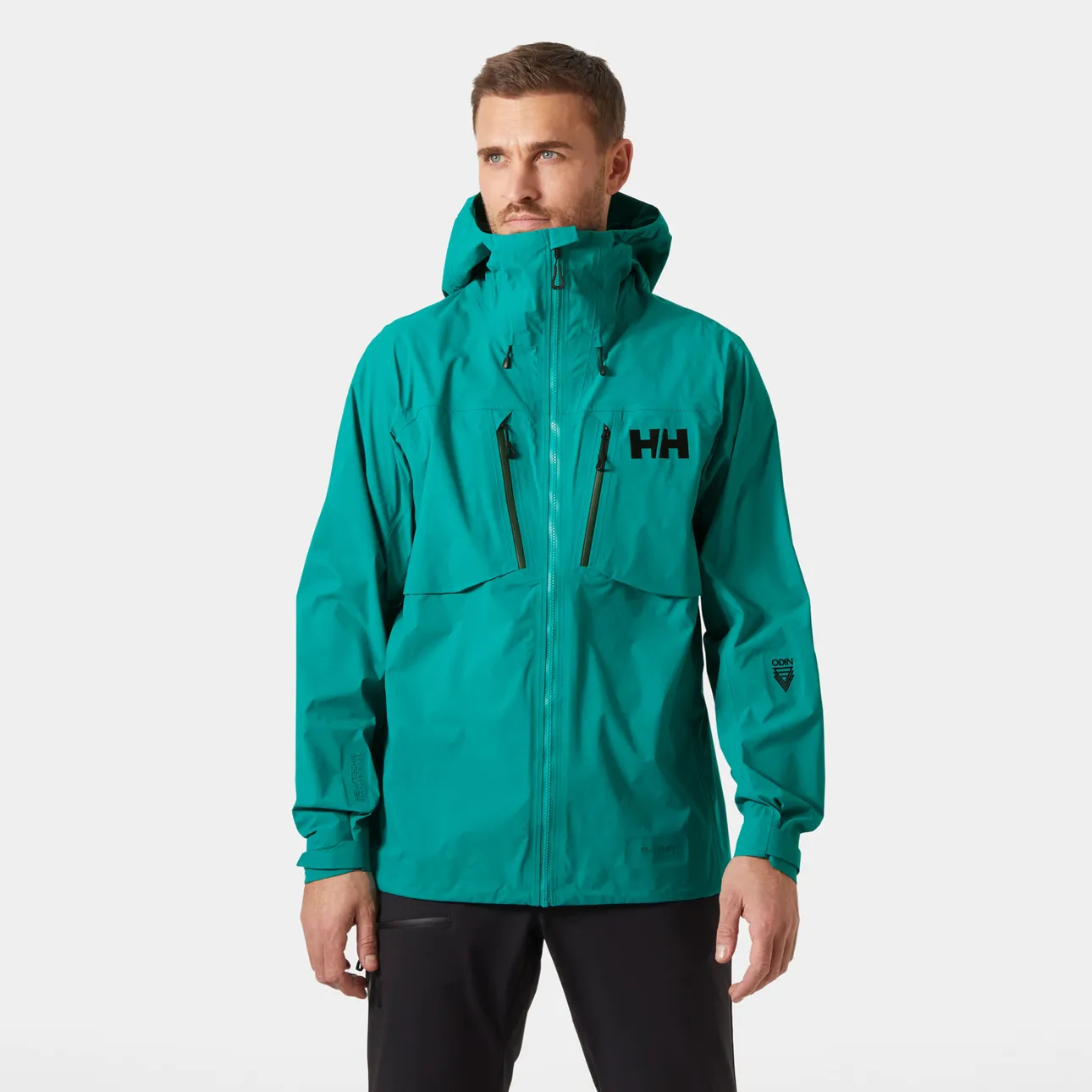
This is the shell we would choose when the forecast is bad enough to dictate the trip. Its appeal is not low mass, a silken feel or miraculous breathability. It is the confidence that comes from a dense three-layer build, complete seam sealing, well-controlled openings and a cut that continues to work beneath a backpack or climbing harness. In driving rain the shoulders did not leak under sustained strap pressure. On exposed ground the fabric stopped cold wind rather than merely reducing it.
Mountaineers, ski tourers, winter hikers and backpackers who travel through cold, wet shoulder-season weather are its natural audience. The solid cut accepts a base layer, fleece and light insulated jacket, the hood handles both climbing and ski helmets, and the tall pockets sit above hardware. Its 4.3 out of 5 score reflects performance that was close to faultless in the conditions it was designed for.
The deductions are about range. Summer hikers, runners and gram-focused backpackers should choose a lighter shell. In humid weather or during steep climbing, moisture from the wearer can accumulate faster than the membrane releases it, making the interior feel damp even while rain remains outside. Air-permeable shells are more comfortable for sustained output, and minimalist rain jackets can weigh less than half as much. The Odin is armour, with the liabilities that metaphor implies.
How I tested it
The jacket was worn on most days of a three-month journey through Quebec. Use included forest hiking, exposed viewpoints, wet camp chores, biking and long periods beneath the Unbound 40. Weather ranged from cold spring mornings to warmer rain, with high wind on the coast and in steep river valleys. The longest wet period was close to three days, giving the face fabric, seams and openings little chance to dry.
Abrasion was not simulated politely. The jacket brushed trees and rock, was scraped on gravel, rode beneath pack straps and was used as a seat for another person. It was washed once with a technical cleaner and was not reproofed during the test. We checked the face, shoulder zones, cuffs, hem, seam tape, zips and adjusters for wear. This establishes strong initial durability, not a five- or ten-year lifespan.
What LIFA Infinity means here
The product name invites confusion because Helly Hansen markets two related technologies. This jacket uses the LIFA Infinity membrane within a three-layer Helly Tech Professional construction. The membrane is made without solvents, and Helly also lists recycled content and OEKO-TEX certification. Those are useful improvements over older approaches.
It is not, however, made with LIFA Infinity Pro. Helly’s Pro technology pairs the membrane with a hydrophobic LIFA face that needs no added durable water-repellent treatment. Regular LIFA Infinity products use a conventional face fabric with a DWR finish above the solvent-free membrane. Claims that this particular jacket is DWR-free, can never wet out or will never require restoration of repellency would therefore be wrong.
In the field, the face continued to bead through the full test and did not develop the dark, saturated appearance associated with obvious wet-out. After mud and dirt reduced beading, a wash with technical cleaner restored it without reproofing. That is strong 90-day performance. It does not remove the need to follow Helly Hansen’s care directions or prove that the finish will behave identically after years of use.
Waterproofing through three wet days
The important result is uncomplicated: rain did not reach the wearer. During the longest storm cycle, water hammered the hood, ran along the shoulders and was squeezed against the shell by wet pack straps. The chest zip, pit zips and pocket openings stayed sealed. No damp patch appeared beneath the shoulder harness, a demanding area because pressure can help force moisture through compromised fabrics or seams.
The hood peak kept water away from glasses, the collar sealed high around the face and dual hem adjustment prevented runoff and spray from finding a loose lower edge. Fully taped internal seams remained flat after the trip. The YKK AquaGuard zippers felt stiff when new, which suits the rest of the jacket’s industrial character, but became easy to move with one hand once the base was anchored.
Some internal dampness appeared on harder climbs, but its pattern and timing pointed to perspiration rather than leakage. A membrane can keep rain out while the microclimate inside becomes wet from the wearer, especially when a backpack covers much of the available surface.
Breathability and temperature control
At a moderate walking pace in cool weather, the jacket remained comfortable. Below roughly 15°C, its low air permeability and solid construction were often advantages, conserving warmth during exposed breaks and cold rain. The story changed during steep ascents. Heat accumulated quickly beneath the pack, and the fabric could feel clammy before the membrane moved enough moisture outward.
The pit zips rescue the design. They are long, open from either direction and can be reached around pack straps. Opening them early creates a direct air path without surrendering the hood, shoulders or front to rain. Waiting until sweat is already running is less effective. This jacket rewards active management rather than supporting the idea that a premium membrane makes ventilation unnecessary.
Warm, humid summer conditions sit outside its strongest range. The shell is too substantial for running and less comfortable than an air-permeable alternative on repeated high-output climbs. If most of your rain arrives at 25°C, the protection is excessive. If it arrives close to freezing with wind, the same limited airflow becomes reassuring.
Wind protection and hood design
Wind resistance was outstanding. The close technical cut leaves little loose fabric, and the material itself permits no perceptible draft. In strong coastal gusts and the funnelled winds of the Hautes-Gorges, it felt more like closing a door than adding another thin layer. The drop tail remained beneath the hipbelt, and the hem cords stopped wind from pumping upward.
The hood is one of the jacket’s best components. It fit over both climbing and ski helmets, then cinched down securely around a bare head. It turned with the face instead of swallowing peripheral vision. A structured peak kept runoff beyond the eyes, while the front opening and volume controls were large enough to find with gloves. The soft tricot at the chin prevented the tall collar from becoming abrasive during long, wet days.
Fit, movement and cuffs
Adam is 6 ft 1 in with an athletic build and normally wears Large; the tested Large was true to size. It is an athletic mountain fit rather than a narrow race cut. A base layer, fleece and light down jacket fitted comfortably. A thick winter midlayer made the torso snug, so users planning heavy insulation should try the complete system before buying.
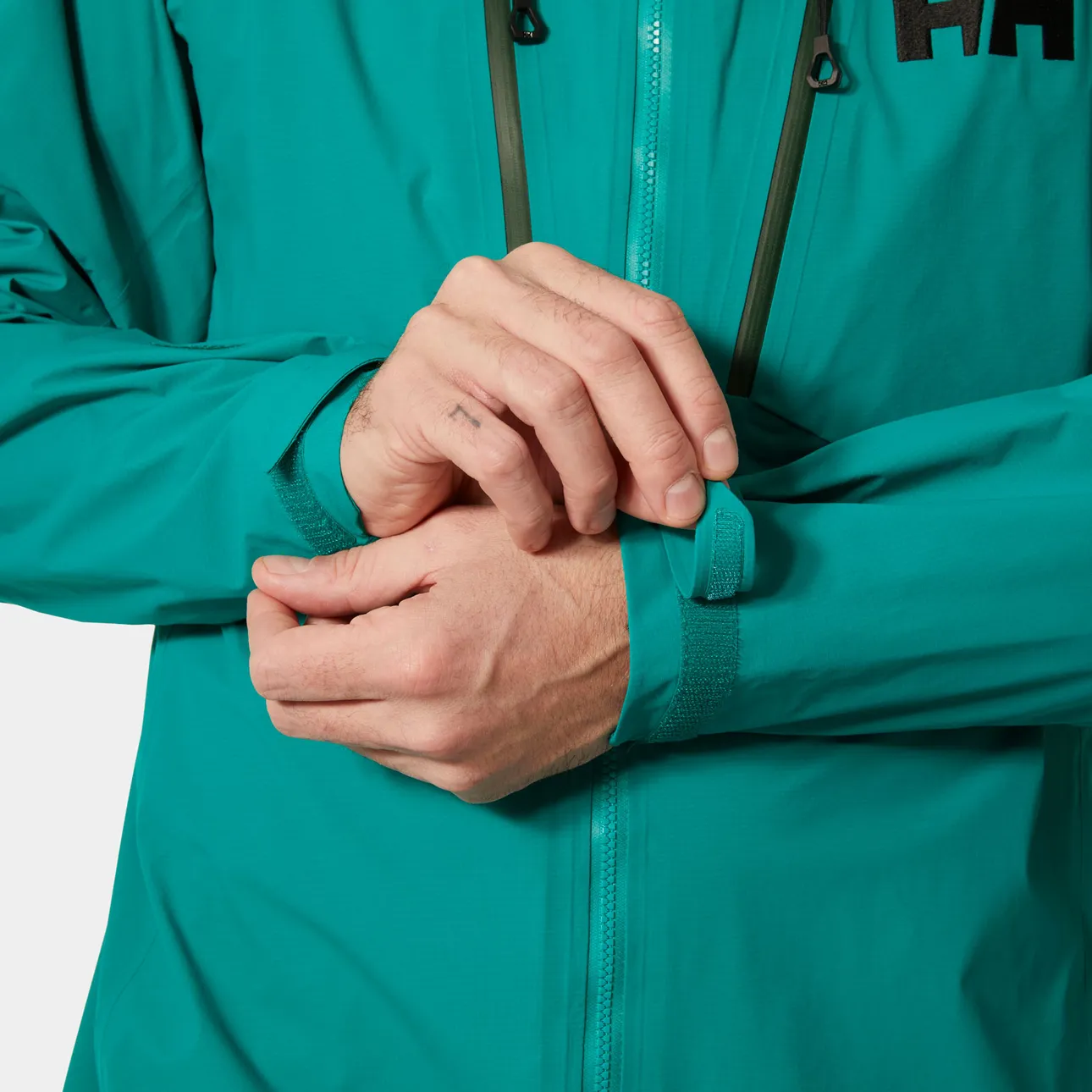
Pre-curved elbows and generous sleeves allowed a long reach with poles and on a bike. The cuffs remained in place instead of climbing the forearms, and their broad hook-and-loop tabs could close over thin gloves or open around gauntlets. At maximum overhead extension, the stiff body fabric lifted the hem slightly, though not enough to pull it free of the pack belt.
The material starts with a cardboard-like hand and produces a conspicuous rustle. Ninety days softened it a little, but nobody will mistake it for a supple everyday raincoat. That stiffness helps keep the fabric from collapsing against wet layers and contributes to the protective feel. It also makes the jacket less pleasant for travel, casual use and quiet movement.
Under a backpack
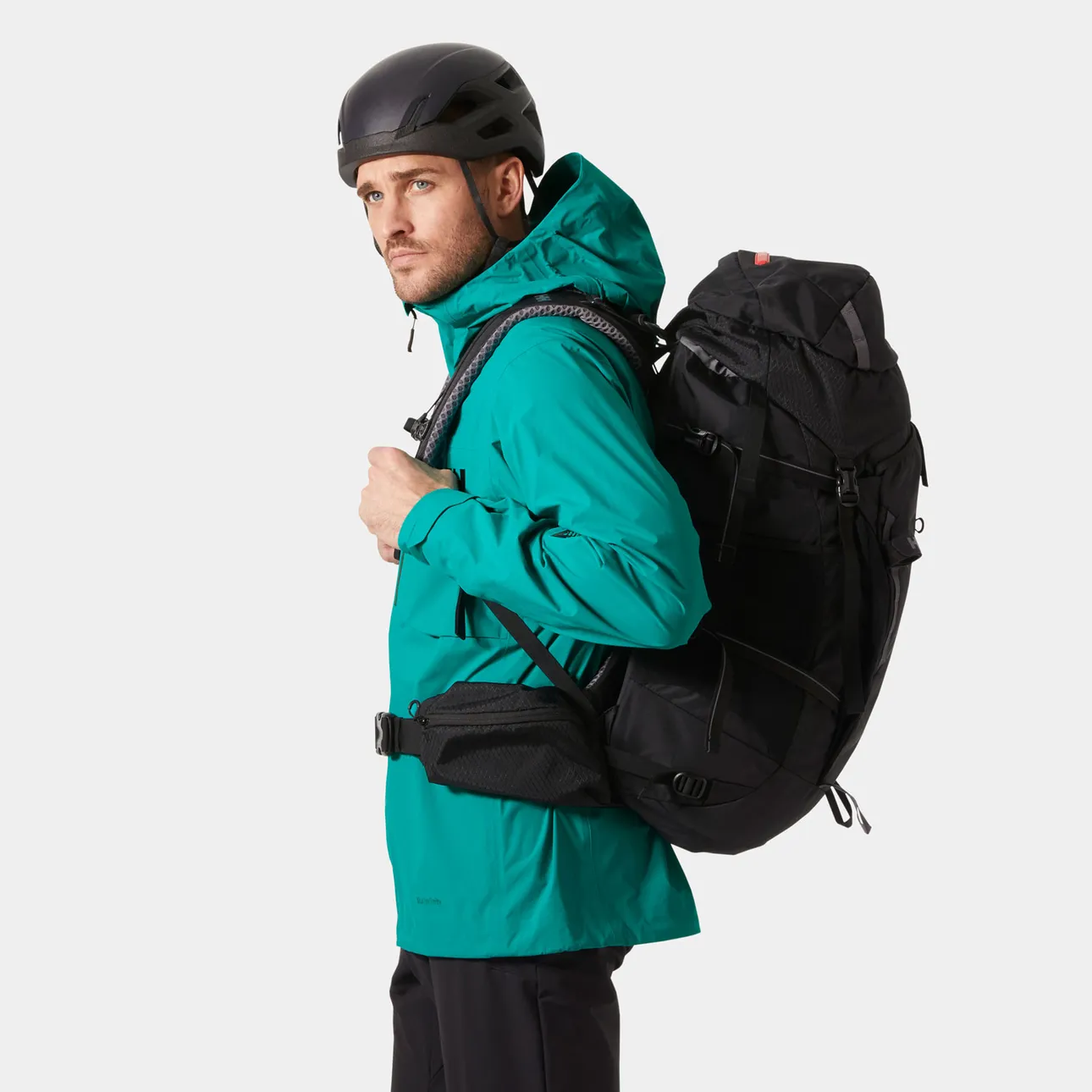
The two high chest pockets remain clear of a hipbelt and most harness configurations. They are large enough for maps, gloves and other essentials, though loading them heavily can pull the front of the shell outward. There are no conventional low hand pockets, a defensible mountain decision that is still easy to miss during casual wear.
Pack compatibility goes beyond pocket placement. The shoulders showed no leakage where straps compressed wet fabric, and repeated rubbing left no obvious thinning or shine. The longer back stayed tucked beneath the hipbelt, while the close body prevented bunching at the lumbar pad. The jacket also worked on the bike without the hood and collar fighting a helmet.
Weight and packability
Our size Large weighed approximately 580 g. It does not stow into one of its pockets and compresses to about the volume of a small melon. Helly describes the fabric as lightweight, but in the present market this is a substantial shell. The useful comparison is not with insulated jackets but with capable waterproofs that save 200 g or more.
That mass bought dense material, robust adjustments, a helmet hood and a feeling of structural reserve. Split across an expedition kit, it can be rational. Carried all summer for a shower that may never arrive, it is hard to defend. It is also too bulky to disappear into a small running vest. Buyers should treat low pack volume and maximum durability as opposing priorities here.
Abrasion and early durability
After 90 days there was no hole, delamination, seam-tape lift or functional damage. Shoulder zones endured pack abrasion, cuffs and hem remained intact, and zippers, adjusters and hook-and-loop tabs continued to work. Rock and tree contact left no meaningful scar. Even the ill-advised use as a ground blanket failed to produce punctures.
Pine sap and mud adhered to the face more readily than we would like, but rinsed or washed away. The single technical wash caused no visible change and restored beading where dirt had suppressed it. Helly instructs users to avoid ordinary detergent and fabric softener, close openings before washing and use a technical cleaner. Those instructions matter both to the membrane and the water-repellent finish.
This is excellent evidence for short-term toughness, not permission to promise a decade of service. Membranes, laminates and finishes age through storage, contamination, repeated washing and hydrolysis as well as abrasion. What we can say is that a demanding season produced less visible wear than expected.
Value and alternatives
At the £450 paid, the Odin Ultimate Infinity makes sense for someone who often spends full days in cold rain and values durability over a small pack. Its cost is harder to justify for weekend walking below the treeline. The jacket’s value is concentrated in ugly conditions; if those conditions are rare, much of the investment sits unused.
Arc’teryx’s Beta SV is a reference point for severe-weather construction and refined patterning, usually at a still higher price. Patagonia’s Triolet offers a similarly practical mountain remit with a different material system. For lighter protection, models such as the Outdoor Research Helium or Patagonia Storm10 save major weight but give up the Odin’s protective, durable character. Hot-running users should also consider a more air-permeable shell or softshell rather than expecting any waterproof laminate to solve moisture management.
We would keep the Odin for shoulder-season backpacking, mountain weather and trips where rain can become the defining hazard. We would leave it behind for summer running and fast-and-light travel. That boundary is not a failure. It is evidence that Helly Hansen built a specialised piece with a coherent purpose, even if the product name and environmental messaging require more careful reading than they should.
Helly Hansen Odin Ultimate Infinity specifications
| Exact product | Helly Hansen Men’s Odin Ultimate Infinity Shell Jacket |
|---|---|
| Product number | 63437 |
| Price paid | £450 |
| Tested size | Large |
| Measured weight | Approximately 580 g, size Large |
| Colour tested | Signal Green |
| Construction | Three-layer, fully seam sealed |
| Waterproof technology | Helly Tech Professional with LIFA Infinity membrane |
| Shell material | 100% polyamide |
| Hood | Adjustable and helmet compatible |
| Ventilation | Two-way underarm zips |
| Pockets | Two high chest pockets |
| Safety feature | RECCO reflector |
| Official certifications | Recycled content; OEKO-TEX |
| Rating | 4.3 / 5 |
Overall score: 4.3 out of 5. This is a durable, storm-ready shell with superb rain and wind protection. Its weight, rigid hand and warm-running character limit it to users who will exploit that protection.

Sources & context
What we checked
Gear Reviews bought the jacket for £450. Helly Hansen had no involvement in the test or article. Construction, material, care and sustainability statements were checked against Helly Hansen’s current documentation. Test observations and the measured weight are our own.
Editorial disclosure: We bought the jacket with our own money. Helly Hansen did not provide it, fund the test, see the copy or know the review was taking place.