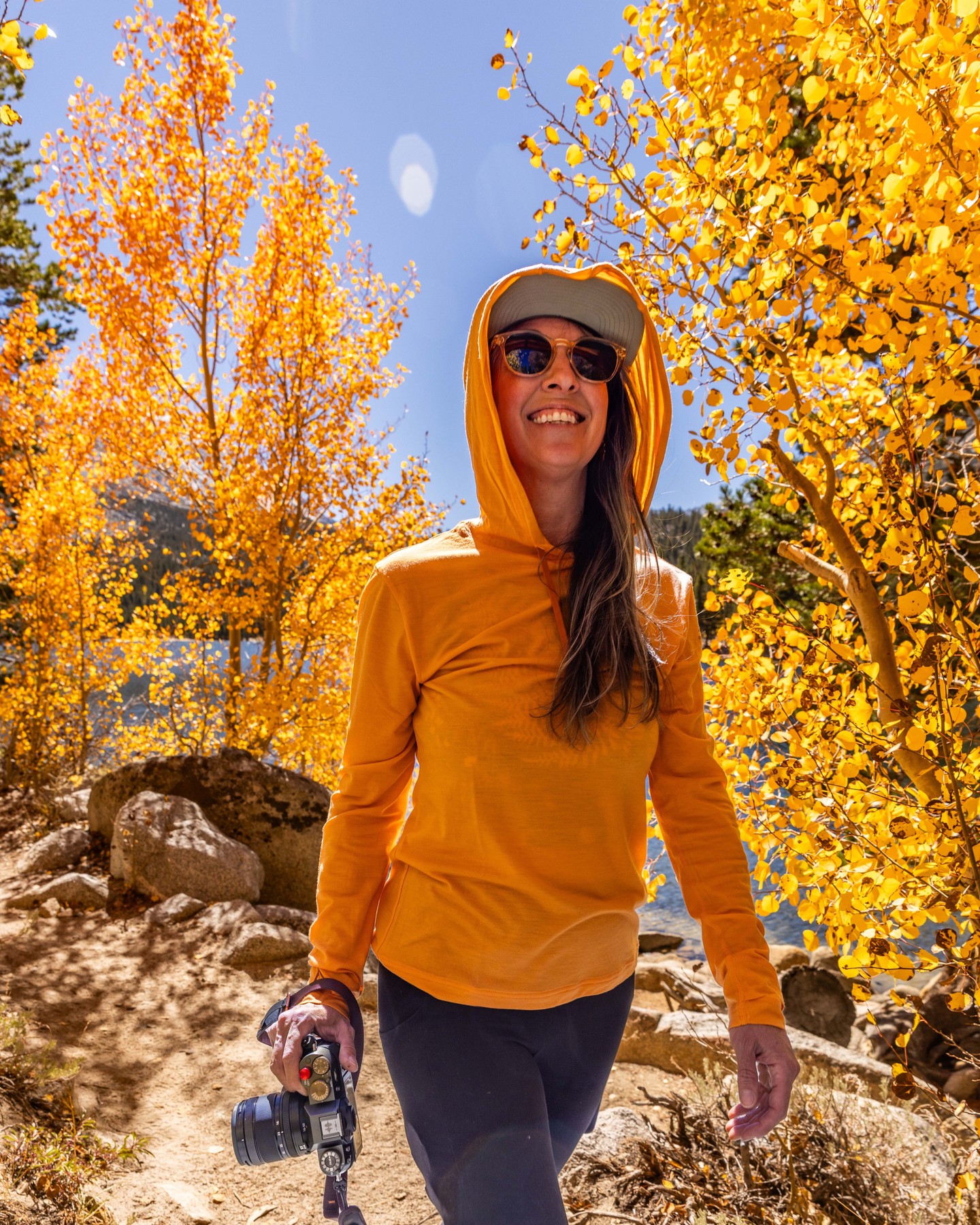
Merino is a lovely material to have in your outdoor wardrobe. It's soft against your skin, helps manage moisture as you warm up and cool down, and resists the smell that can make a well-used base layer rather unpopular in a shared tent. A merino top can earn its place on a summer walk and under a winter shell. [1]
Keeping it that way takes a little attention. A damp top left in a running vest, a rough rucksack strap or a small hole you keep putting off can shorten its useful life. And the wrong laundry routine can leave an expensive hoodie with shorter sleeves and a much tighter chest.
To care for merino wool sportswear, air it between uses, protect it from unnecessary rubbing, wash it gently when it needs cleaning and put it away clean and dry. Deal with bobbles and small repairs before they become bigger jobs. This guide covers that whole routine, with a detailed section on washing without shrinking and specific recommendations from Ridge Merino, icebreaker, DILLING, Mons Royale, ORTOVOX and others.
A useful routine after every outing
Unpack damp layers, open them out to air and inspect the areas your pack or boots rub. Wash when dirt or persistent odour calls for it. Once everything is dry, check for pills, loose stitching and small holes, then fold it away ready for next time.
Air merino after exercise, and wash according to use
Start when you take the kit off. Pull a damp top out of your running vest or rucksack, separate it from wet gloves and open it out. A base layer compressed into a ball in the bottom of a bag doesn't get much chance to dry, however good its fibre is at managing moisture.
Give air access to the inside as well as the outside. Unroll sleeves, open a zip neck and separate the legs of tights. If the garment is heavy with moisture, support it across a rack or lay it flat rather than leaving its weight hanging from two little points at the shoulders.
Fjällräven says airing outdoors, or in a humid environment such as a bathroom while you shower, can often refresh wool between washes. It also recommends treating a small dirty area locally instead of washing the entire garment. That is useful for a splash on a sleeve when the rest of the top is still fresh. [20]
There are helpful washing benchmarks too. Mons Royale suggests washing after every third wear, or spot-cleaning minor marks and airing. Patagonia recommends three or four days of active use for its merino-blend base layers and two or three full days for socks. These are starting points for the named garments; visible dirt or a smell that remains after airing is a reason to clean sooner. [19] [14]
Check the collar, underarms, waistband and cuffs instead of judging a top only by its chest panel. A lightly worn midlayer over another shirt has had a different day from a next-to-skin layer on a long, sweaty climb. Clean the part that needs attention, and use the full wash routine below when the whole garment needs it.
If you have two compatible base layers, rotate them. Woolmark recommends resting wool garments for about 24 hours between wears so their natural resilience has time to recover. Rotation also lets you dry one properly while wearing the other, rather than pulling a clammy top back on because it's the only one within reach. [18]
Reduce rubbing, snags and pinholes while wearing it
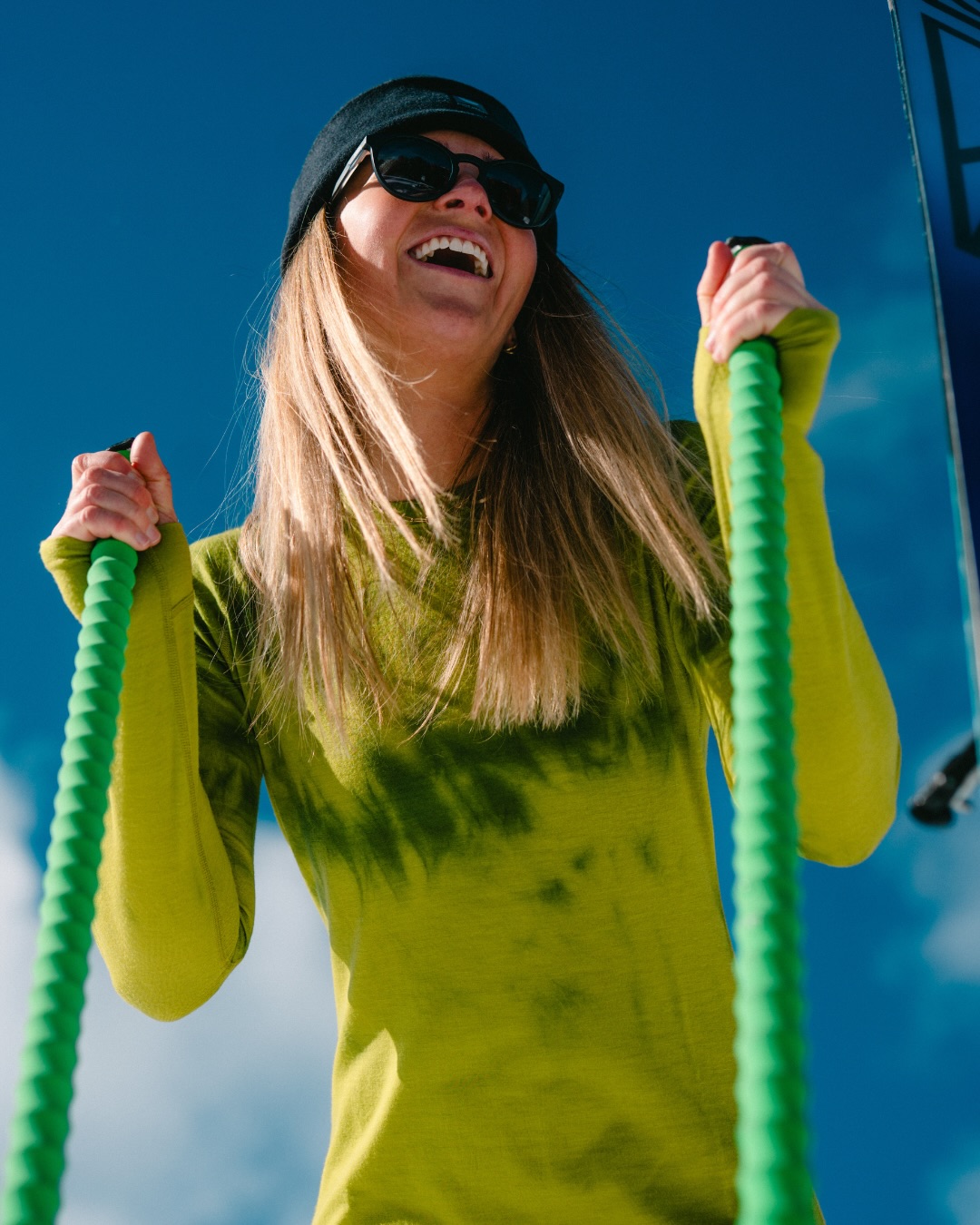
Look at the places your kit touches the fabric. Rucksack shoulder straps, a hip belt, a running vest and the edges of pockets can rub the same small area for hours. Fjällräven specifically identifies the back under a rucksack, along with sleeves and sides, as places where wool can pill. [20]
Before a long outing, feel the inside of the straps and belt for grit, rough stitching or an exposed fastening. Straighten a twisted strap and tuck away loose ends. If one patch of your top keeps getting fuzzy, check what sits against that patch before removing the fuzz again.
A lightweight merino top also benefits from a little protection when you're pushing through scratchy vegetation or leaning against a rough surface. Use an appropriate outer layer and move exposed fastenings away from the knit. Pulling a caught sleeve free by force can turn one snag into a hole; stop and release the bit that's caught.
For racing, ioMerino recommends a race-number belt or race dots instead of pinning the number through merino. That avoids making a row of small holes in a fine top. Place the number so it doesn't hide a pocket or catch the zip you'll want to use during the event. [21]
Take particular care pulling wet layers on and off. ioMerino warns that its merino is more fragile when wet and that a fingertip can go through the fabric. Gather the material, ease it over each hand and keep rings, watch edges and fingernails clear. Don't haul a wet sleeve off by its cuff while your hand is still wedged inside. [26]
Keep the same approach when the kit goes into a bag. Fold loose hook-and-loop tabs closed and place fine layers away from exposed buckles or sharp equipment. ORTOVOX's laundry guidance calls for a separate wash bag away from zips and hook-and-loop fasteners; containing those snagging surfaces is useful whenever you're handling delicate knitwear. [22]
How to wash merino wool without shrinking it
When airing and local cleaning are no longer enough, give the garment a proper wash. To wash merino wool without shrinking it, use the permitted cold or low-temperature wool programme, a measured dose of wool-safe detergent and gentle water extraction. Reshape it and dry with its weight supported. Here is how to put those choices together.
Why merino shrinks, even in a cool wash
The trouble comes from what happens to wool fibres when they're wet and rubbed together. Woolmark explains that their microscopic surface scales can interlock, tangling the fibres into a denser fabric. This is felting. Heat, moisture and mechanical agitation can work together to make a garment smaller and firmer. [2]
That explains why turning the temperature down is only part of the job. A cold, energetic wash with a drumful of heavy clothes still gives a delicate knit plenty of rough treatment. You want the appropriate programme as well as the appropriate temperature.
Machine-washable wool has been processed to reduce this interlocking. Different treatments achieve that in different ways, so don't assume every washable garment has the same coating. Equally, “100% merino” describes its fibre content, not its washing permissions. Two pure-wool jumpers can need different care. [2]
There are also less dramatic changes in fit. A damp knit can stretch under its own weight, and a garment can need reshaping after washing. Those changes are different from a badly felted top with dense, matted fabric. Later on, we'll separate gentle reshaping from damage that another soak won't undo.
Read the label before choosing a programme
Find the washing instructions before removing a scratchy label. Take a clear photograph of the symbols and composition, then save it with the garment's model name. Ridge uses removable labels and advises keeping a note of the care instructions if you take them out. [3]
A wash temperature alone isn't the whole instruction. The symbol's bars indicate a gentler process, and a hand-wash symbol means you need to take that route. A crossed-out wash tub means don't wash it. A crossed-out tumble-dryer symbol means the dryer stays off limits, including a quick finishing cycle. Woolmark's symbol guide explains those distinctions. [4]
| Manufacturer | Published washing advice | What to use it for |
|---|---|---|
| Ridge Merino | Cold water; gentle, delicate or wool setting. Ridge recommends cold even where a tag permits warm. [3] | Most Ridge garments; identify its hand-wash-only exceptions. |
| icebreaker | Gentle 30°C wash, with a low spin around 500rpm. [5] | Compatible icebreaker items, within their individual labels. |
| DILLING | Wool programme at 30°C and 800rpm. [6] | Its washable wool; some items are dry-clean-only. |
| Norrøna | Gentle 30°C wash with wool-specific washing liquid. [7] | Its merino clothing, followed by air drying. |
Those differences are useful when you're sorting a load. If one top permits 30°C and another requires a cold hand wash, don't put them together and average the instructions. Set the hand-wash item aside. The same goes for a merino blend with an unusual trim or construction.
Choose a wool detergent and measure it
Look for a detergent that explicitly says it is suitable for wool. “Delicate”, “sensitive” or “non-bio” on the front of a bottle isn't enough information by itself; check the fabric suitability and exclusions on the back.
Woolmark recommends a mild, neutral detergent and advises against heavy-duty products, enzyme-containing bio detergents and bleach. Its bleach warning covers oxygen bleach as well as chlorine bleach, so an oxygen stain-removal powder isn't a suitable way to brighten this load. If using a permitted powder, dissolve it first to avoid concentrated specks reaching the fabric. [8]
For a concrete measurement, the current UK instructions for Nikwax Wool Wash specify 50ml in the machine's detergent dispenser, followed by the garment's wash settings. Shake the bottle first. It is formulated for woollen sports clothing, not waterproof shells. [9]
Measure the product you're holding. A capful changes with the cap, and the amount needed can depend on the formula and washing method. Filling the drawer until it looks about right gives you an unknown dose to rinse out of a relatively small load.
Skip fabric softener. Ridge and icebreaker advise against it; icebreaker explains that it can coat the fibres and affect moisture management. A dedicated wool wash may describe itself as a cleaner and conditioner, as Nikwax does. That doesn't mean adding ordinary laundry softener alongside it is helpful. [3] [5] [9]
Protect the fabric before it goes in the drum
Empty pockets, close zips and other fastenings, then turn the garment inside out. icebreaker includes these steps to reduce snagging, stretching and pilling. Check that a zip pull or open hook-and-loop tab from another item won't be rubbing against a lightweight merino sleeve. [5]
Sort by colour and by weight. Ridge advises keeping merino away from heavy or abrasive items. A couple of compatible lightweight tops make a more sensible load than a merino hoodie sharing the drum with muddy jeans, rough towels and a jacket covered in buckles. [3]
Give delicate pieces their own mesh laundry bag if their instructions allow one. It helps keep sleeves and straps contained; it doesn't make a hot, vigorous programme suitable for wool. The fabric still experiences the water temperature and the movement inside the bag.
Check for small tears and loose seams before washing. The repair section below explains how to deal with these while there is sound fabric around the damage.
Finally, check the detergent drawer. Remove any old softener or bleach residue and rinse the drawer clean. Get your drying towel or mesh rack ready now, too. Leaving clean wool sitting wet in the machine while you clear a space is an avoidable extra job.
Machine-wash with a small load and a gentle programme
Choose the wool programme where the garment allows machine washing. Then check its displayed temperature and spin rather than pressing Start on whatever the machine remembers. Woolmark describes a typical wool cycle at 40°C, while many outdoor brands specify cold or 30°C. The garment's lower limit takes priority. [10]
Keep the load small. For the very mild wool wash described in its symbol guide, Woolmark says the drum should be no more than one-third full. That gives you a useful limit to check before compressing another armful of clothes into the machine. [4]
For a worked example, take an icebreaker item whose label permits the current general routine. Prepare it inside out with fastenings closed, choose a gentle 30°C wash and around 500rpm, then add the measured wool detergent. If using Nikwax's UK machine instructions, that measurement is 50ml. Let the programme finish, then remove the garment promptly. [5] [9]
A DILLING top following its maker's 30°C/800rpm wool routine has a different specified spin. Don't increase one garment's spin because another brand permits it. Equally, don't switch to a fast cotton cycle just because you can set its temperature to 30°C. The programme's handling is part of the choice.
Use the machine's manual to identify which programme suits the label, especially if its names are vague. A quick-wash programme still needs checking for temperature and movement. If none matches the required process, use the permitted hand-wash method instead.
When unloading, gather the garment underneath so its wet weight is supported. Straighten a twisted sleeve carefully and move into drying. Resist the temptation to run a hot finishing spin-and-dry programme because the top still feels damp.
Hand-wash gently, and check whether soaking is allowed
Rinse the basin first so there is no bathroom cleaner left in it. Use enough water for the garment to sit comfortably below the surface, and mix in the wool detergent before lowering it in. Work the water through with gentle pressing. Scrubbing the fabric against itself defeats the point of washing it carefully by hand.
Woolmark's general hand-wash method uses water around 30°C and a ten-minute soak, followed by thorough rinsing. Smartwool describes ten to fifteen minutes. DILLING, by contrast, says not to leave its wool soaking. Pick the routine for your garment before filling the sink; an overnight soak isn't an improvement on any of these instructions. [10] [11] [6]
Nikwax's UK hand-wash routine uses 25ml Wool Wash in 7.5 litres of warm water, with gloves, a five-minute soak and rinsing until clear. That needs to fit the garment too. For DILLING's no-soak items, choose a compatible method instead. [9] [6]
Drain the water while supporting the garment in the basin. Rinse with clean water as the selected routine requires and gently press the water through the fabric. Smartwool uses clean lukewarm water for its hand rinse; Woolmark describes lukewarm followed by a final cold rinse. [11] [10]
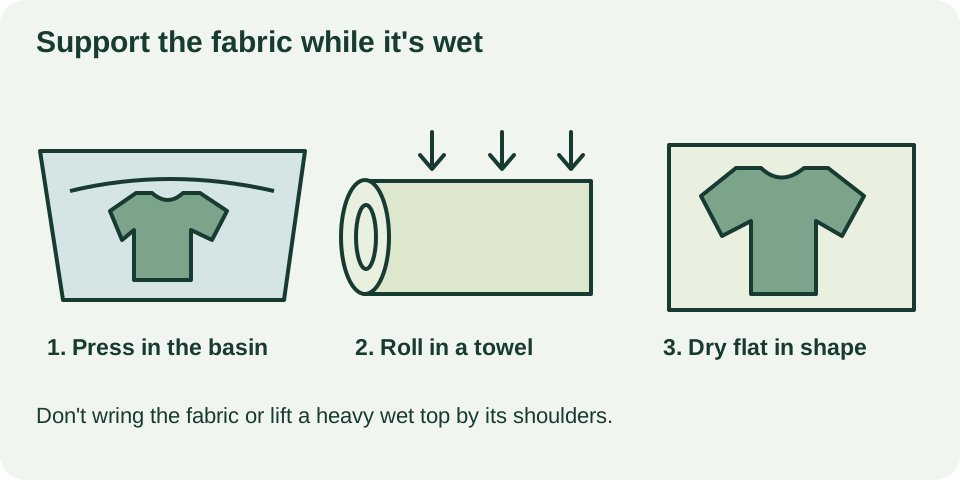
Don't wring the top into a rope. Lay it on a clean towel, roll the towel around it and press to absorb the excess water. DILLING recommends this method. Unroll it and support the whole garment as you transfer it to the drying surface. Pulling it up by the shoulders can leave the body stretching below your hands. [6]
Treat a mark without scrubbing a hole into the knit
Deal with a spill while you can still identify it. Blot away the excess with an absorbent cloth instead of rubbing it into the fabric. Check the garment's cleaning limits and test a suitable treatment on an inconspicuous area before treating the visible mark.
For coffee with milk, tea or chocolate, Woolmark's initial method uses a dilute solution of Woolmark-approved detergent in tepid water. Dab gently around the stain's edge with a lint-free cloth, then blot with a clean absorbent cloth or towel. You are trying to lift the mark without turning one small spot into a rough, fuzzy patch. [12]
For a little grease, remove the excess carefully with a spoon or blunt edge before choosing a wool-compatible treatment. Don't reach for the general-purpose laundry spray without reading its exclusions. Woolmark gives different procedures for different stains, including solvent treatments for some persistent marks; those need to suit the garment, its colour and any trims. [12]
Check the mark again after washing and air drying. If it remains, identify the stain and repeat a suitable targeted treatment or use a professional cleaner. A hotter wash adds shrinkage risk without telling you whether you've chosen the right stain treatment.
Dry merino in shape, away from direct heat
Set the garment on a clean, pale, lint-free towel or a mesh drying screen. Spread the body out, straighten the seams and place the sleeves in a relaxed position. Woolmark recommends gently reshaping damp knitwear and flat drying; hanging a heavy wet knit can stretch it and create shoulder bumps. [13]
Think about the finished fit as you lay it down. Don't leave the body twisted, the cuffs folded inside themselves or one sleeve stretched out while the other is bunched up. You want the top resting in its intended shape, with enough air reaching the fabric to finish drying.
Keep it away from radiators, direct sunlight and intense heat through a window. Woolmark warns that concentrated heat can damage or discolour wool, and a radiator dries the section touching it much faster than the rest. A slightly slower dry on a suitable surface is easier to manage than a hot stripe across your favourite base layer. [13]
There are real differences on dryers. DILLING says never tumble dry its wool; Norrøna also specifies air drying. Patagonia permits low tumble drying for compatible merino-blend items, and Darn Tough permits low tumble drying for its socks. Those permissions belong to the named products. [6] [7] [14] [15]
For a mixed merino wardrobe, flat drying keeps the routine straightforward. Put anything with a dryer prohibition aside before transferring other laundry. A low setting doesn't cancel a crossed-out dryer symbol.
Check the thicker seams, cuffs and hood before folding it away. If the towel beneath is damp, change it for a dry one; gently reposition the garment so the underside gets air. The thin body panel may finish before the double-layer cuff does.
What to do if merino has already shrunk
If a top comes out looking smaller, stop before adding a drying cycle. Spread it on a towel, check what happened in the wash and feel the fabric. A still-soft garment that has lost a little shape gives you something different to work with from a stiff, dense piece of felt.
Smartwool suggests gently stretching a shrunken garment back towards its original dimensions while damp, then air drying it flat. Work evenly across the body and sleeves, supporting the fabric with both hands. Small adjustments are easier to control than pulling hard on the hem while the shoulders stay trapped beneath a towel. [11]
If you have measurements from before washing, use them. Check body length from shoulder to hem, width across the chest and sleeve length. Move towards the intended shape gently; don't force a sleeve to a particular number when the fabric is resisting.
Woolmark distinguishes reshaping distorted knitwear from recovering severely felted fabric. The fibre interlocking that causes felting is irreversible. If the top has become thick, matted and much smaller, conditioner and aggressive stretching won't restore the original knit structure. Stop pulling before you add holes to the damage. [2] [16]
Woolmark's sweater guide describes dampening and gently massaging local shoulder bumps caused by hanging. That is a targeted shape correction, not the same job as reversing a badly felted wash. For a valuable garment that has changed substantially, show a specialist cleaner or repairer the label and explain the temperature, programme and drying used. [16]
Give socks and different merino blends their own care
A drawer full of merino can contain pure-wool tops, nylon-reinforced socks and stretchy tights. Check the complete composition and care instructions before making a load. Added nylon or elastane doesn't erase the wool's care limits, and one brand can use different constructions for its tops, socks and accessories.
For Darn Tough socks, the current care FAQ specifies cold machine washing on a gentle cycle, inside out, followed by low tumble drying or hanging. It also explains that its preshrunk socks can feel snug after laundering and then relax with wear. That temporary fit change is different from diagnosing every tight wool garment as permanently shrunken. [15]
Keep socks whose labels allow tumble drying separate from an item with a dryer prohibition. When a top and its matching tights have different requirements, save the label photographs separately. Colour and branding tell you much less about washing than the actual fabric and construction.
Once dry, inspect a sock's heel, toe and the area under the ball of your foot before rolling the pair together. A thin patch is easier to support with a small repair than a large opening. Check the inside too, particularly where a previous repair sits against the foot.
Remove pilling gently, rather than pulling it off
A few bobbles at the underarm don't mean your top needs a harder wash. Woolmark describes pilling as fibres forming little balls where the fabric rubs. The first useful step is to identify that friction, whether it comes from a sleeve, a pack or another garment. [17]
Spread the dry item on a flat surface and inspect the fabric beneath the pills. Sound fabric with a few surface bobbles needs a lighter touch than a thin, almost transparent patch. Don't keep working at the thin patch in pursuit of a perfectly smooth finish.
The makers differ on removal. Woolmark describes careful removal by hand, comb or fabric shaver. ORTOVOX advises against plucking pills by hand, because that can worsen the problem, and recommends a lint roller for loose fibres or careful removal with suitable tools. For a fine sports layer, avoid tugging at attached fibres. [17] [22]
If using a fabric shaver, keep the material flat and make light passes. Fjällräven warns that too much pressure can damage wool because the device works like a small razor. Keep raised seams and folds out of its path; stop regularly and check what you're removing. [20]
One particularly specific recommendation needs context. Mons Royale suggests washing its pilled garment right-side out with inside-out jeans so the denim removes short fibres. Ridge's general care guidance says to avoid heavy or abrasive laundry. Keep the denim technique specific to Mons garments covered by that advice. It isn't a routine to borrow for a delicate Ridge top. [19] [3]
After removing pills, look at the contact point again. If the same rough strap is going back over the same sleeve tomorrow, smoothing the surface has only dealt with the result. Sorting out the rubbing can save the fabric from repeated treatment.
Mend small holes and loose seams before they spread
Turn the garment inside out in good light. Check cuffs, elbows, the seat of leggings and the areas beneath pack straps. Note whether you're looking at a hole in the knit, a split seam or a broad area worn thin. Each needs a slightly different repair.
Norrøna recommends repairing small holes early, before continued wear makes them larger. If a recently purchased item appears defective, photograph it before mending and ask the maker to assess it. Ridge's guarantee covers manufacturing and material defects, with repair, replacement or refund options, but excludes normal wear. It asks for photographs and requires garments sent back to be laundered. [7] [25]
For a small knitted hole, Woolmark describes a simple darning approach using a needle, thread and a darning egg or tennis ball to support the area. Turn the item inside out, support it without stretching the hole wide and work small running stitches around its edge. Bring the stitches closer together as the opening closes, then secure the thread. Woolmark says the method can be used on knitted tops as well as socks. [23]
Choose thread fine enough for the fabric and work into sound material around the damage. A thick, tight lump beneath a pack strap or on a sock heel can become uncomfortable. Check both sides of the repair before wearing the item again, and flex it gently to see whether it moves with the surrounding knit.
For a larger opening, a sewn patch may spread the support across more fabric. DILLING's repair-patch guide specifies a patch bigger than the hole, a needle, thread and an embroidery hoop. Choose a soft, washable knit with similar stretch and weight, such as a compatible wool-knit offcut. Make it large enough for the stitching to run through sound fabric all around the hole. A rigid repair across a stretchy knee is a poor match for the job. [24]
A split seam needs the two edges reunited rather than a patch over the outside. Woolmark's seam method starts in the intact seam about one centimetre before the opening and uses overlapping backstitches through both layers. Keep the tension relaxed enough to avoid puckering and match the original seam where possible. [23]
If the surrounding fabric is very thin, the hole runs into an awkward seam or your first attempt pulls the area out of shape, use a knitwear repairer. Show the whole garment as well as a close-up: a repair underneath a running vest needs a different finish from a decorative patch on a loose midlayer.
Protect prints and reshape creases with the right heat
A rumpled top doesn't automatically need another wash. Open it out first and check whether it is clean and dry. Folded cuffs and a hood trapped beneath the body can make a garment look much worse than it is.
If pressing is needed, use the care label's limit. Ridge permits its wool setting up to 150°C; Norrøna specifies a maximum of 110°C for its merino clothing. Set the iron for the item in front of you rather than assume every wool garment has the same heat allowance. [3] [7]
Keep the iron off prints and labels. Mons Royale specifically warns against ironing its prints, and ioMerino gives the same instruction for prints and labels. A large chest graphic can sit exactly where you'd normally start ironing, so check the reverse as well before putting a hot soleplate down. [19] [21]
For label-permitted pressing, protect the fabric with a suitable pressing cloth and work gently, checking a hidden area first. Don't linger on a crease by increasing the temperature. If a section is distorted, use the damp-reshaping advice in the washing section before reaching for more heat.
Think about where the top will go afterwards. Fold it with fastenings closed and keep bulky zip pulls from pressing into a neighbouring fine layer. That gives you less creasing to sort out next time you unpack.
Store merino clean, completely dry and protected from moths
Before putting a top away, check the hood, cuffs, waistband and any double-layer panels. They can remain damp after the main body feels dry. Open out folded areas and give them more air before they go into a drawer or sealed container.
Fold knitted sportswear rather than leaving it hanging for weeks. Woolmark recommends drawers for knits; ioMerino also warns that long-term hanging can stretch the body and leave shoulder bumps. Put heavier garments underneath lighter ones so you can lift a top out without pulling it from a tightly packed stack. [18] [26]
For seasonal storage, wash away body oils and food marks first. Woolmark points out that these attract moths. ioMerino's practical rule is to clean a worn garment before packing it away and store it folded in a dry, sealed tub or bag. A top can look presentable after one wear and still benefit from cleaning before several months in storage. [18] [21]
Clean the space as well as the clothes. Empty the box or drawer, remove dust and inspect the corners, then let the area dry before refilling it. Put the dry garments in a clean container that closes properly. Keep stored layers away from sunlight, which Fjällräven identifies as a cause of discolouration. [20]
If using a suitable moth repellent, follow its instructions for the container and keep it from direct contact with the garment, as Woolmark advises. A scent in the cupboard doesn't replace clean clothing and a well-closed storage container. If you find new holes after storage, inspect the other wool items and the storage area before returning the repaired top to the same place. [18]
Before the next season, unfold the kit and check fit, cuffs and previous repairs. Give it time to air and pick up any small jobs before you're packing in a hurry. A clean, dry merino layer with its seams and wear points checked is much more useful than one you discover needs mending on the first cold morning away.
Look after the rest of your clothing
For insulated layers, see how to wash a down jacket and make it fluffy again. Our GORE-TEX washing and waterproofing guide covers shell-specific cleaners and treatments. Keep those routines separate from your wool wash.
Sources and further reading
Manufacturer guidance checked on 2 November 2026.
- Woolmark: merino fibre structure, comfort, moisture management and odour resistance
- Woolmark: fibre scales, felting and machine-washable treatments
- Ridge Merino: cold washing, suitable loads, detergents, removable labels and drying
- Woolmark: care symbols, very mild wash loads and washing restrictions
- icebreaker: preparation, 30°C wash, 500rpm spin, detergent and drying
- DILLING: 30°C/800rpm wool programme, no soaking, towel pressing and no tumble drying
- Norrøna: gentle 30°C washing, air drying and early repairs
- Woolmark: mild neutral detergents, enzymes, powder and bleach exclusions
- Nikwax: UK Wool Wash machine and hand doses and compatibility
- Woolmark: machine settings and general hand-wash routine
- Smartwool: hand washing, gentle water extraction and damp reshaping
- Woolmark: stain-specific cleaning and gentle local treatment
- Woolmark: supported flat drying, reshaping and direct-heat precautions
- Patagonia: merino-blend washing frequency and permitted low tumble drying
- Darn Tough: current sock wash, drying and post-laundering fit guidance
- Woolmark: local reshaping and the limits of recovery after severe felting
- Woolmark: pilling, abrasion and gentle pill removal
- Woolmark: resting garments, folded knitwear and clean long-term storage
- Mons Royale: third-wear washing benchmark, pilling, mending and print care
- Fjällräven: airing, rucksack friction, pilling tools and storage
- ioMerino: race-number attachment, prints and clean storage
- ORTOVOX: preventing pilling, protecting fabric and avoiding plucking
- Woolmark: small-hole darning and repairing split seams
- DILLING: sewn repair-patch equipment and patch sizing
- Ridge Merino: defects, normal wear and preparing a warranty return
- ioMerino: gentle handling of wet merino and folded storage