

These three Leathermans solve different problems. The ARC prioritises quick access and a premium blade, the Surge provides the strongest pliers and the broadest heavy-work capability, and the Signal trades everyday tools for a carabiner, hammer, saw and emergency fire-starting insert.
Evidence behind this comparison
The ARC and Surge conclusions come from long-term personal ownership. The Signal was tested across several shop-loan examples during a group bushcraft weekend. This guide combines those published field tests; it does not treat the shorter Signal test as equal to years of ownership.
Our recommendation
Choose the ARC for everyday carry and general outdoor repairs. It is much easier to use one-handed than the other two, carries comfortably at 8.6 oz and has the best main blade. Choose the Surge when plier strength, cutters and T-shank versatility matter more than a 12.5 oz carry weight. Choose the Signal only if clipped pack carry, light stake hammering and its aggressive saw matter more than scissors, a metal file and a proper plain-edge blade.
ARC vs Surge vs Signal at a glance
| Measure | ARC | Surge | Signal |
|---|---|---|---|
| Best for | Everyday carry and medium-duty repairs | Heavy work and maximum leverage | Pack carry and light camp tasks |
| Test basis | Owned since October 2023 | About two years during a boat refit | Group-tested for one bushcraft weekend |
| Our score | 4.5 / 5 | 4.0 / 5 | 3.3 / 5 |
| Tool count | 20 | 21 | 19 |
| Weight | 8.6 oz / 244 g | 12.5 oz / 354.4 g | 7.5 oz / 212.6 g |
| Main blade | 2.76 in CPM MagnaCut, plain edge | 3.1 in 420HC, plain edge, plus serrated blade | 2.73 in 420HC combo edge |
| Defining feature | FREE one-handed architecture | Rigid pliers and T-shank exchanger | Carabiner, hammer and outdoor inserts |
| Main compromise | Price and softer wire cutters | Weight and clumsy screwdriving | Compromised blade and missing everyday tools |
Choosing the right Leatherman
Best all-rounder
Leatherman ARC
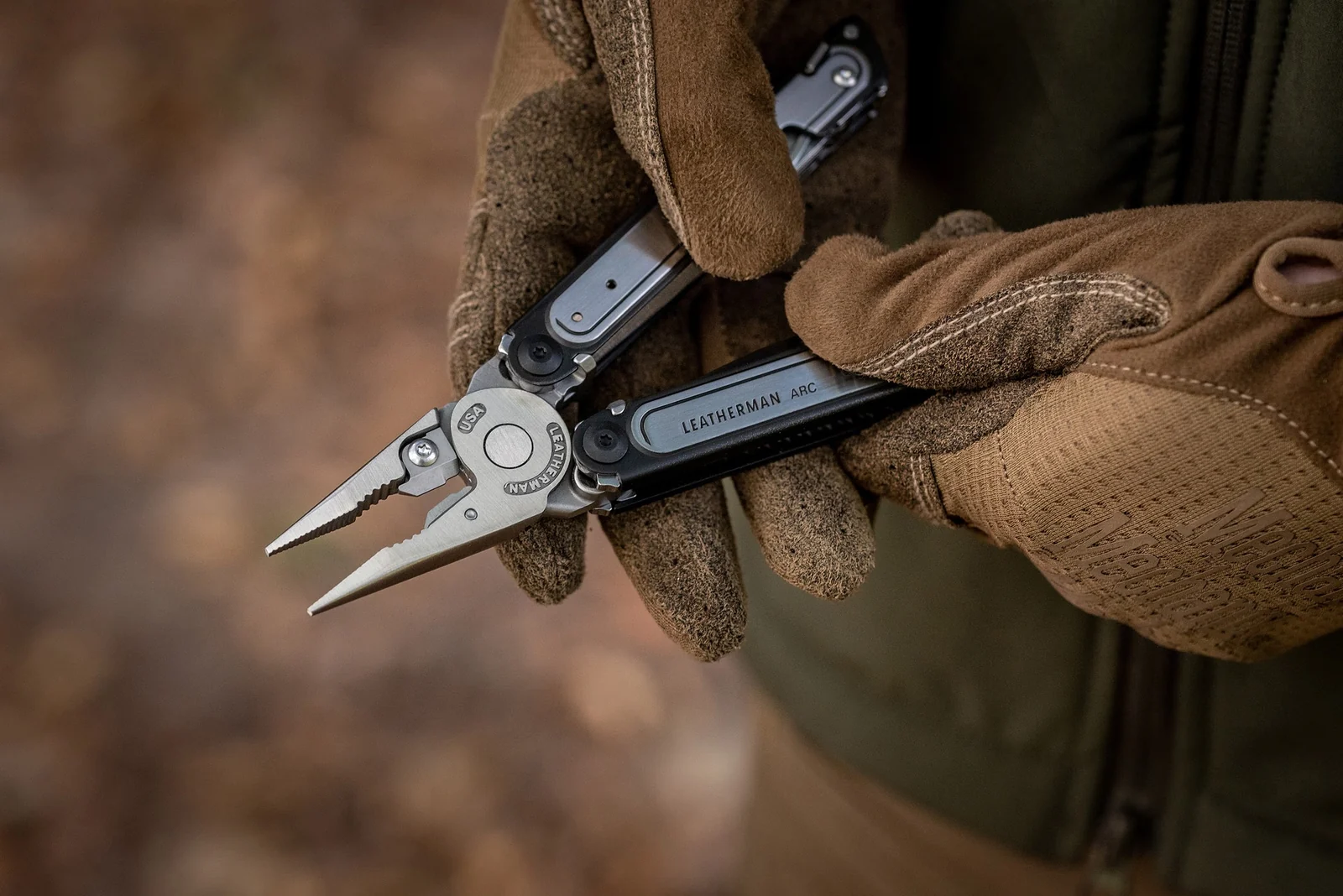
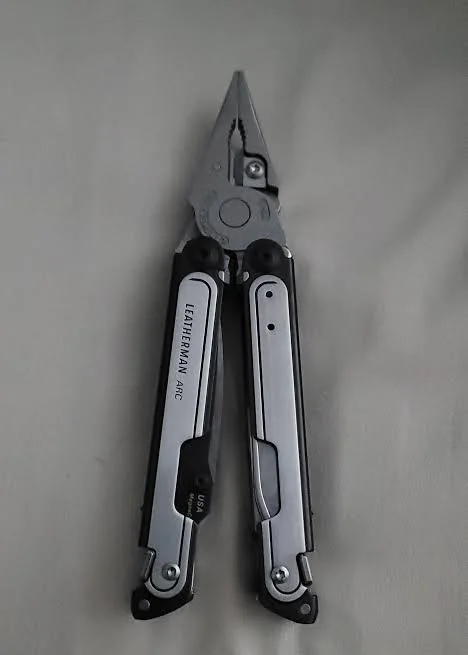
The ARC is the easiest of the three to carry and use regularly. Its FREE mechanism puts nearly every implement on the outside and makes one-handed access feel natural. The MagnaCut blade holds an edge well and has resisted corrosion in wet and salty use. It is the best fit for travel, walking, boats and unpredictable day-to-day fixes where the tool in your pocket needs to cover many jobs.
Best for hard work
Leatherman Surge
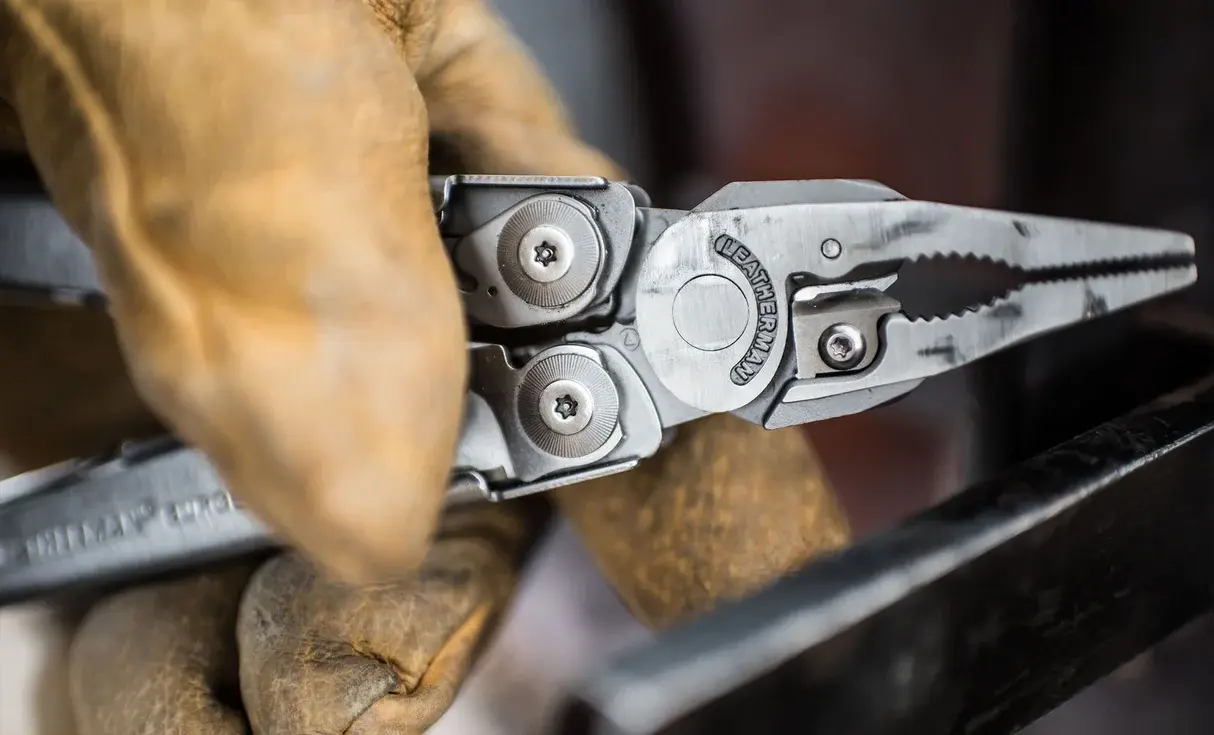
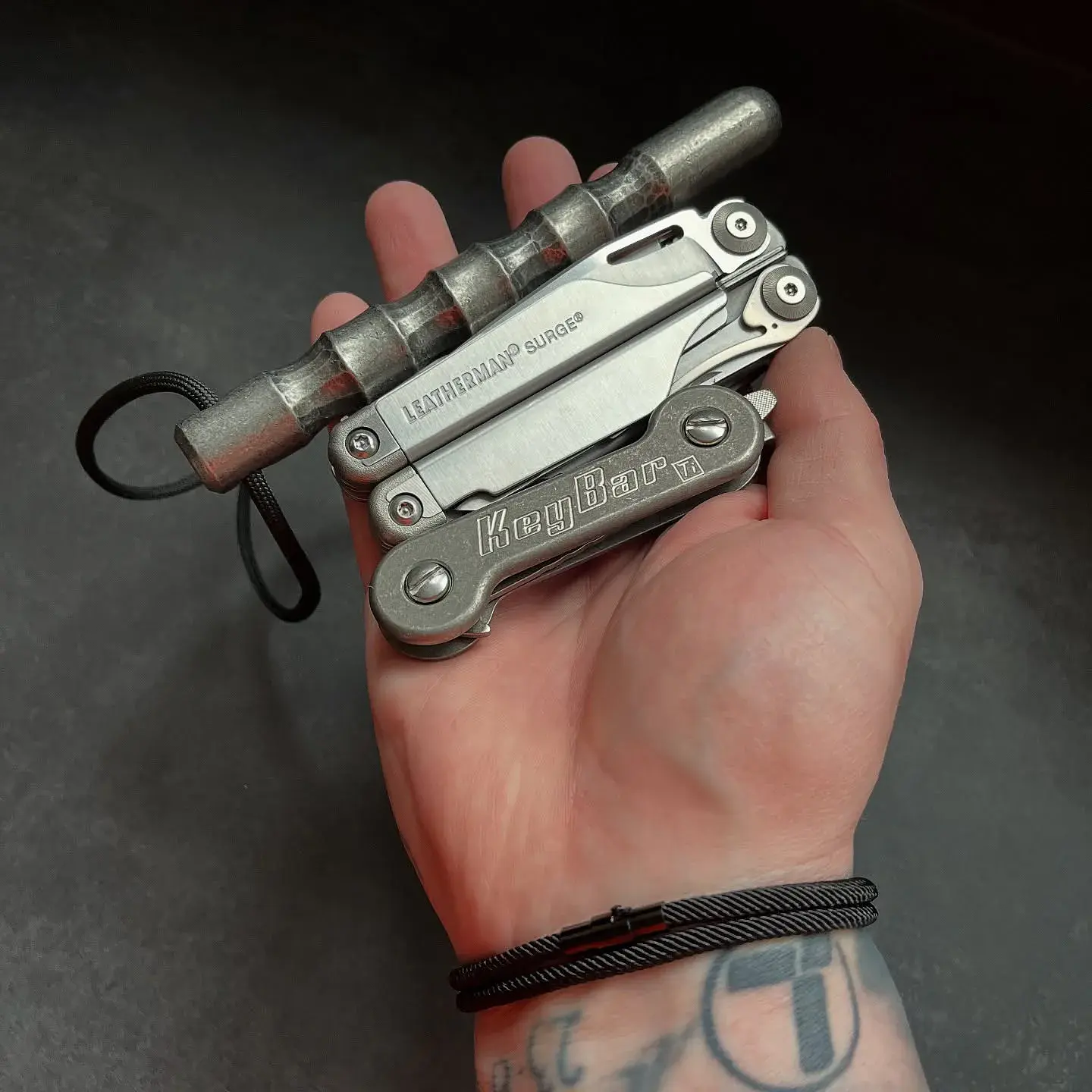
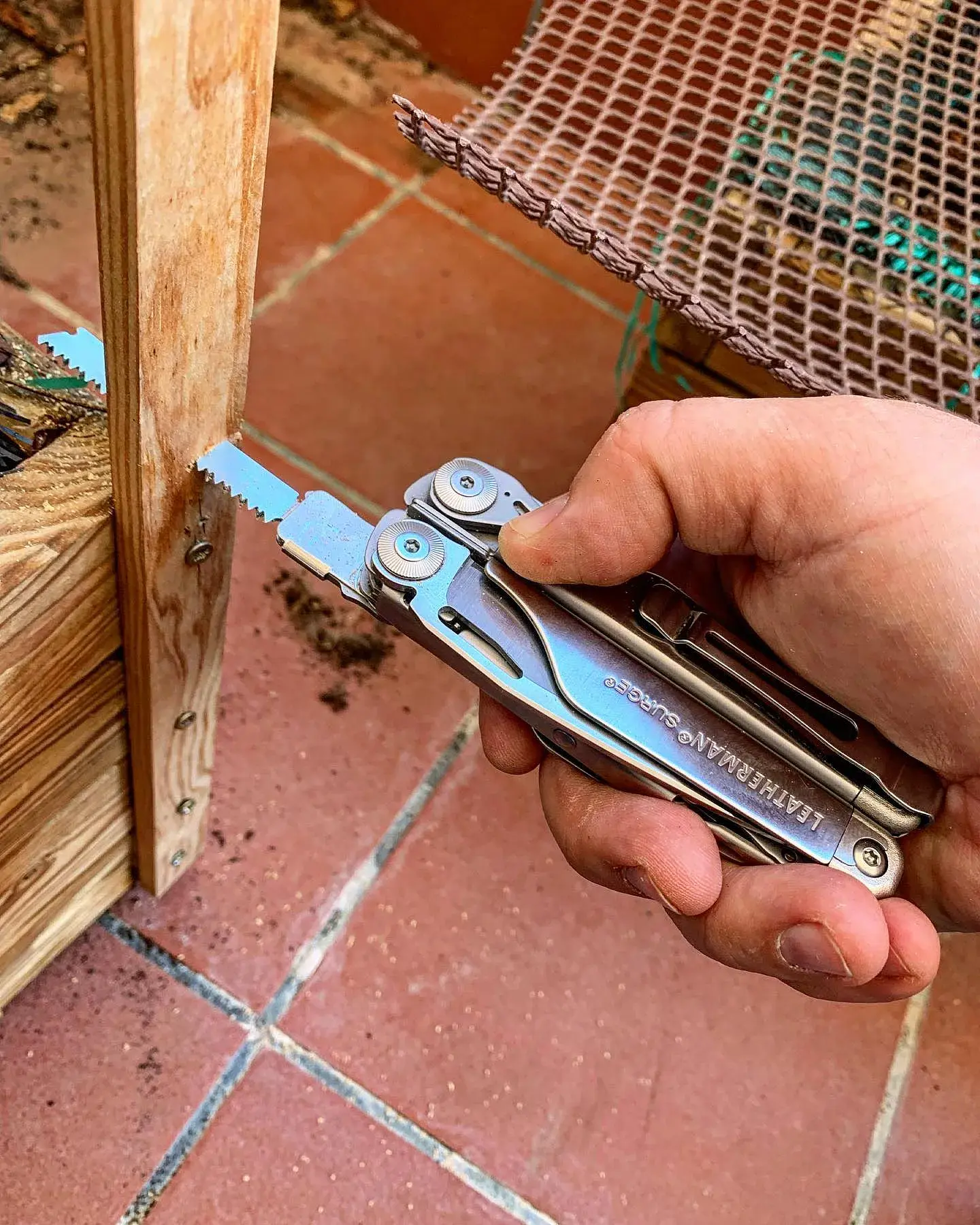
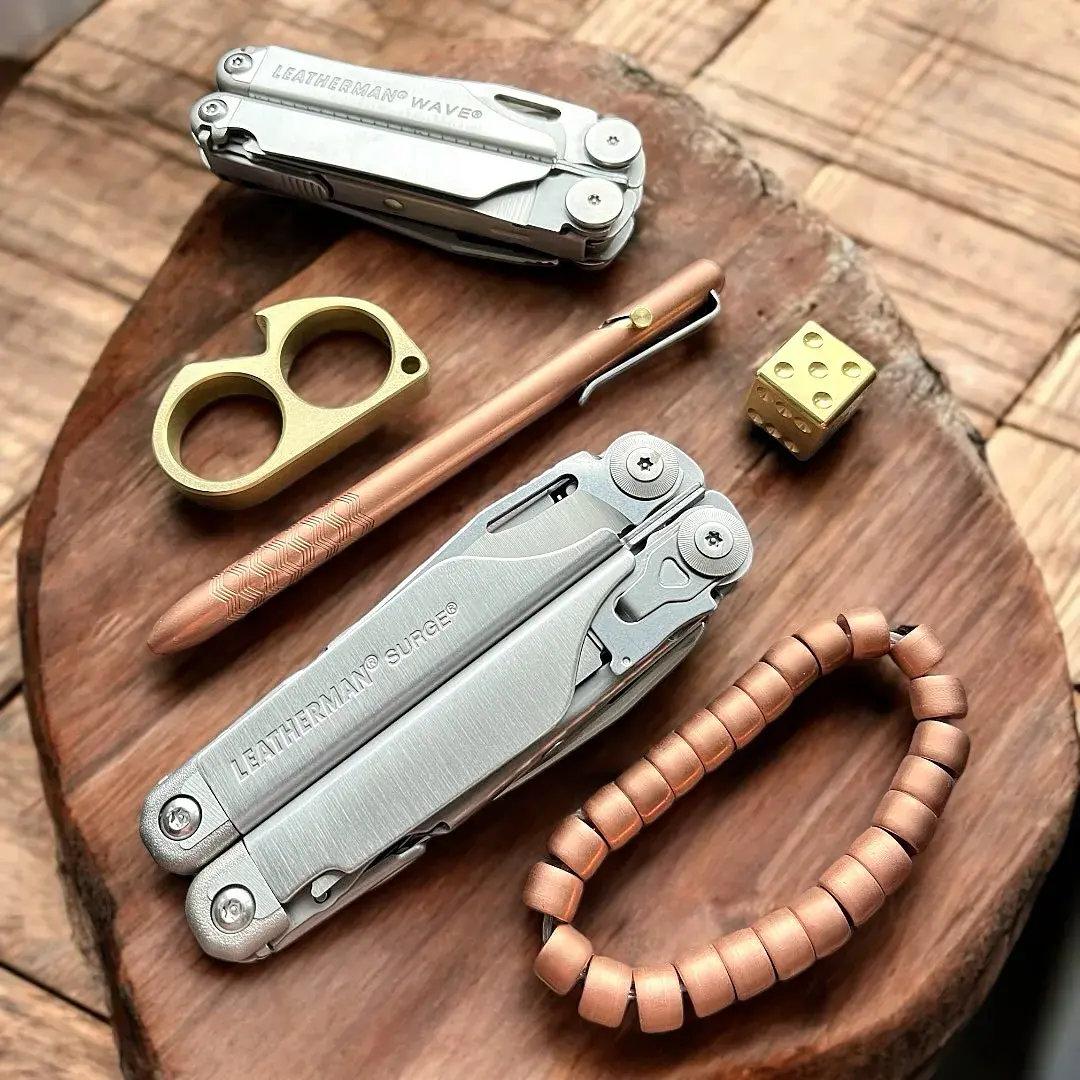
The Surge has the rigid handles, leverage and cutters for repetitive work. Its T-shank exchanger accepts compatible jigsaw blades, and the dedicated serrated blade is useful on rope and webbing. The penalty is obvious every time it goes into a pocket: 12.5 oz is heavy, and the wide handles can fatigue smaller hands.
Best outdoor carry
Leatherman Signal
The Signal clips securely to a pack or harness, drives light aluminium stakes and saws small branches well. Those features create a narrow but real outdoor niche. Its tiny sharpener, whistle and soft ferro rod are weak substitutes for the scissors, metal file and dedicated plain blade available elsewhere.
Carry and access
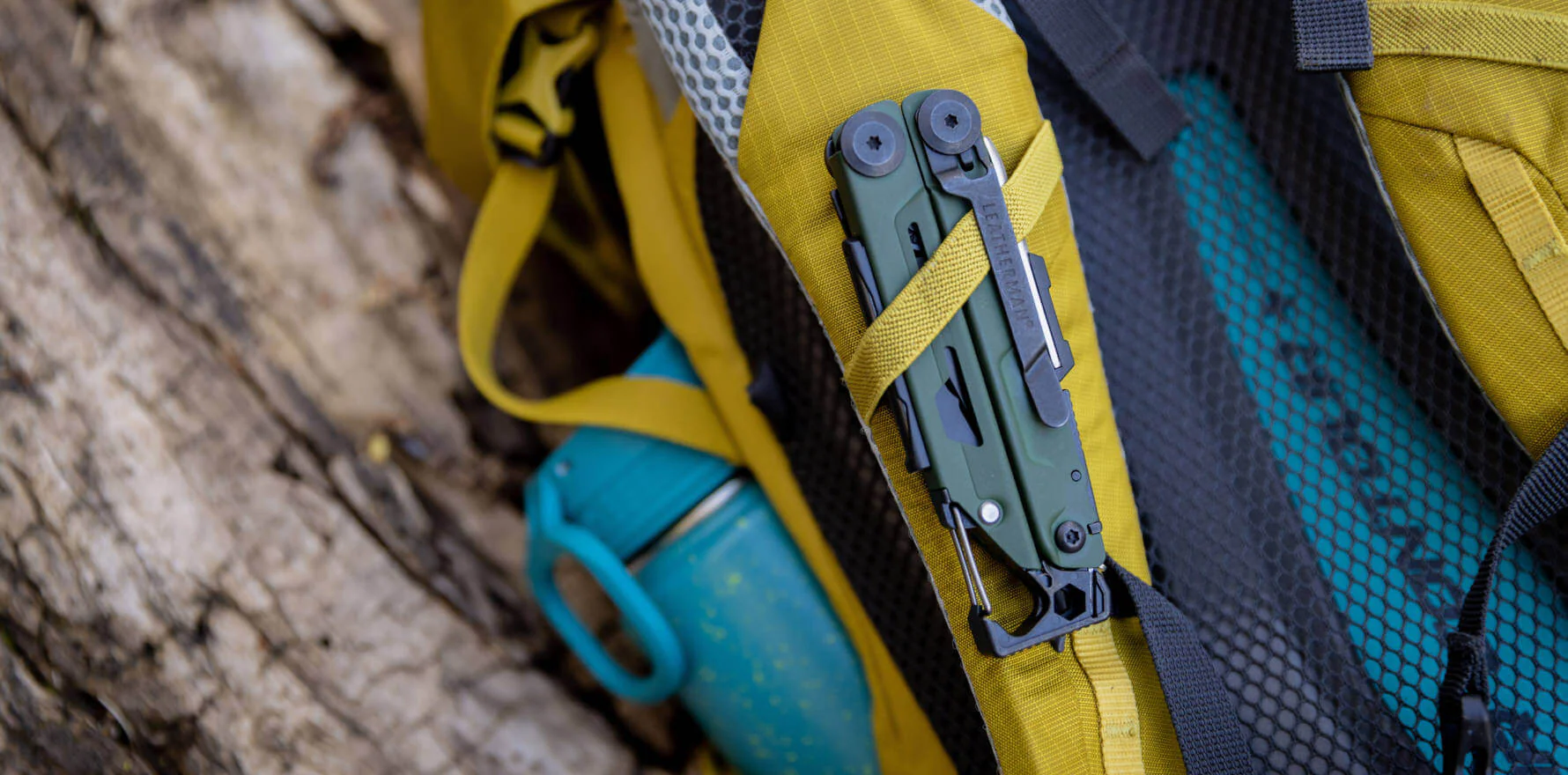
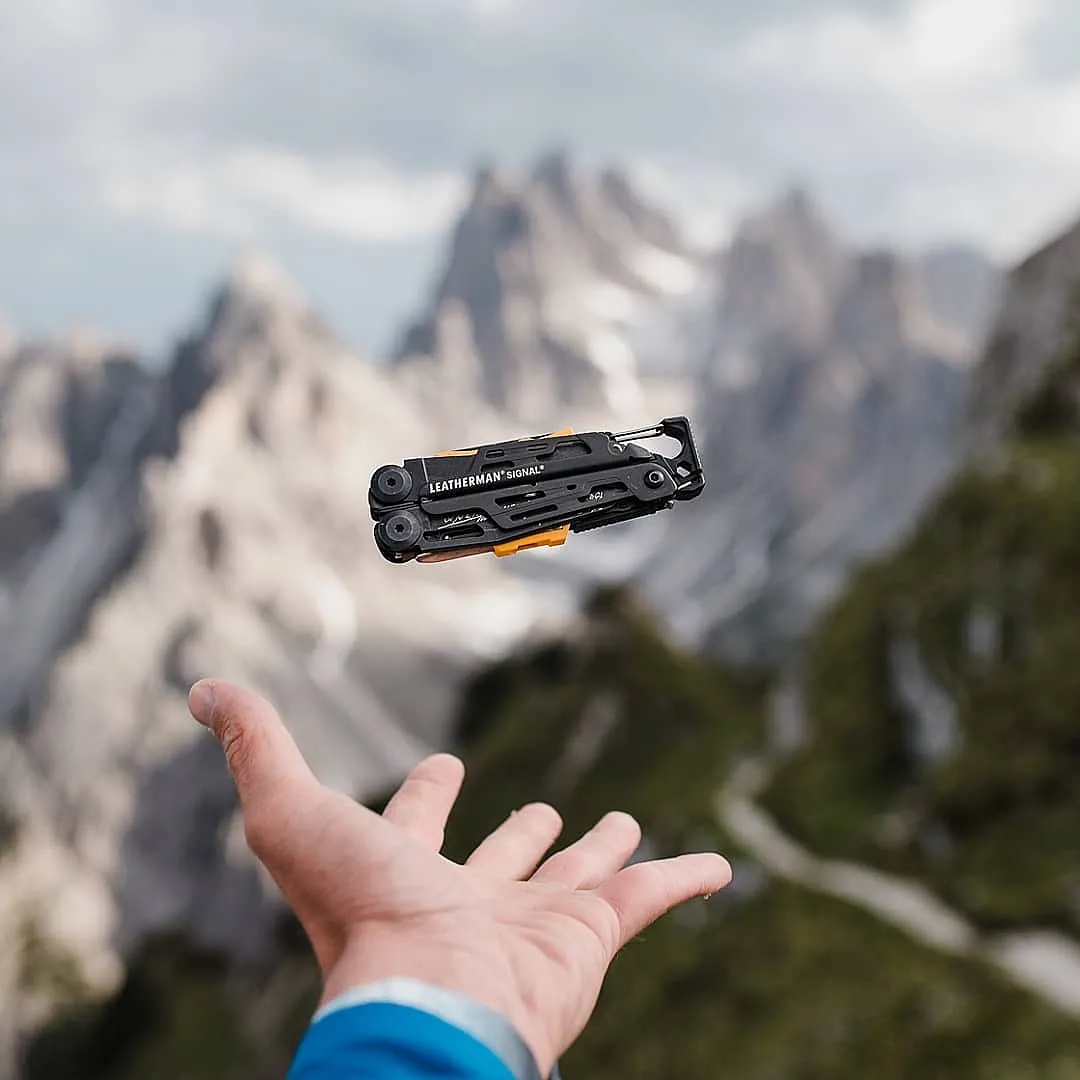
The Signal is the lightest at 7.5 oz and the integrated carabiner gives it the most flexible external carry. Clipping it to a shoulder strap or harness is quicker than finding a sheath. The uneven hammer and insert housings make its handles less comfortable under force.
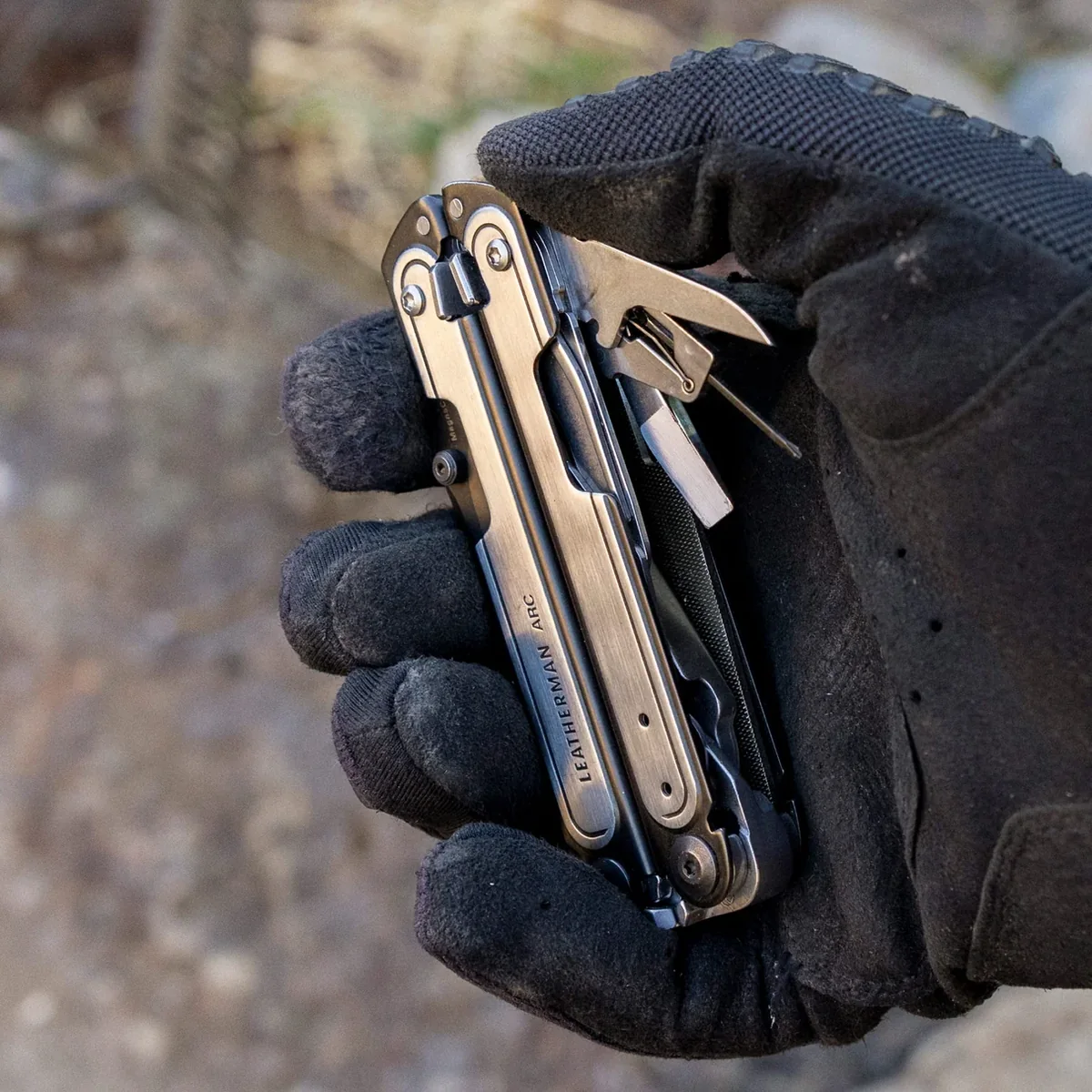
The ARC weighs 8.6 oz and is the best pocket tool of the three. Its magnetic FREE mechanism, outside-accessible tools and thumb-stud blade reduce the small delays that make older multitools irritating. That convenience matters whenever the other hand is holding a part, line or piece of equipment in place.
The Surge belongs in a sheath, work bag or vehicle kit. Its four outside tools can be reached one-handed, including while wearing gloves, but its 12.5 oz weight makes casual pocket carry unpleasant. The extra mass buys strength rather than refinement.
Pliers, cutters and hard work
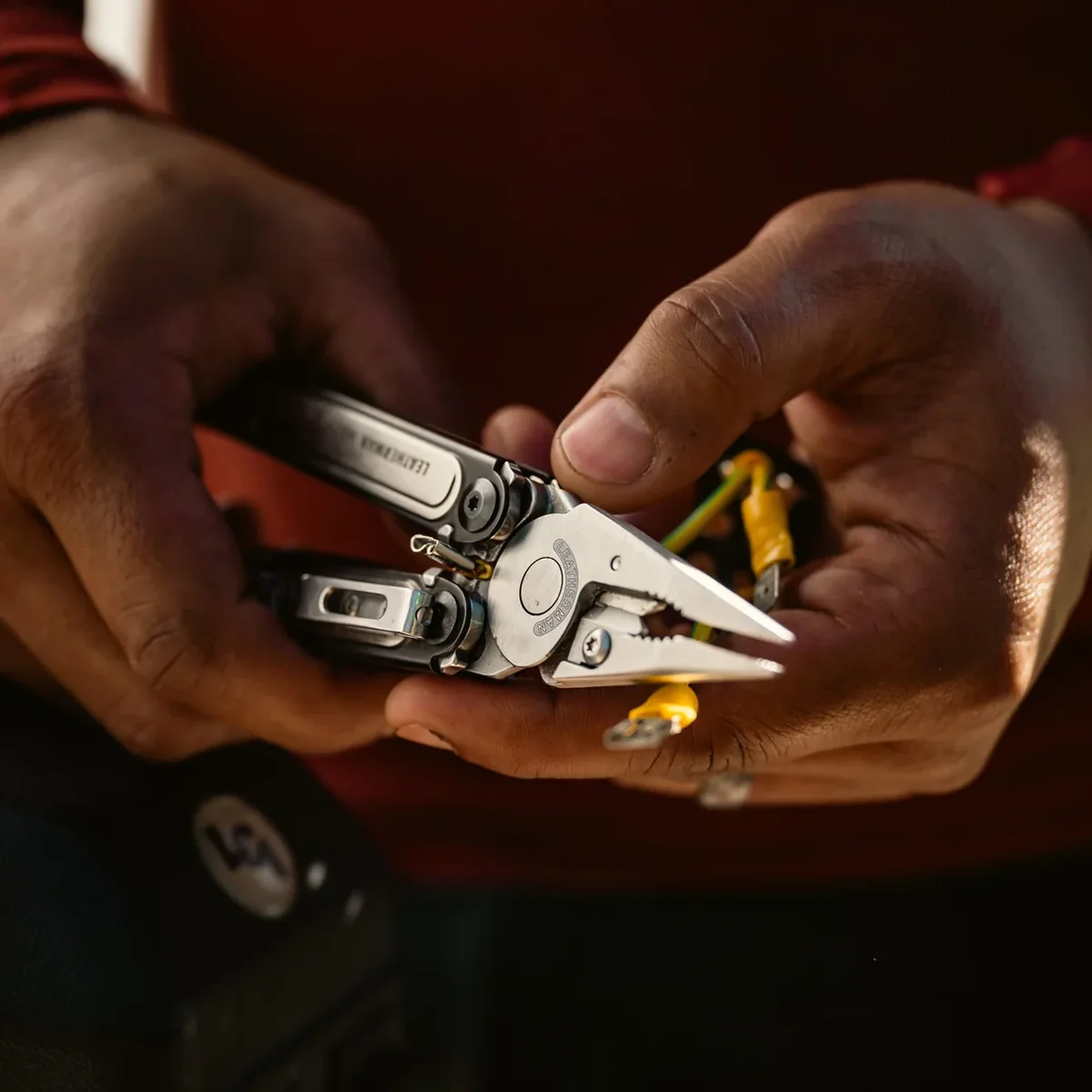
The Surge wins when force is the priority. Its frame stayed rigid through two years of electrical and mechanical work during a sailing-catamaran refit. The replaceable cutters handled ordinary copper wire well, and the long handles generated noticeably more leverage than the Signal or smaller Leathermans.
The ARC's pliers suit general repairs, gripping and bending, but the frame can flex when torque climbs. Its replaceable cutters also felt softer in our use than the older cutter setup experienced on the Surge. The ARC is a medium-duty tool with excellent access, not a compact substitute for a full toolbox.
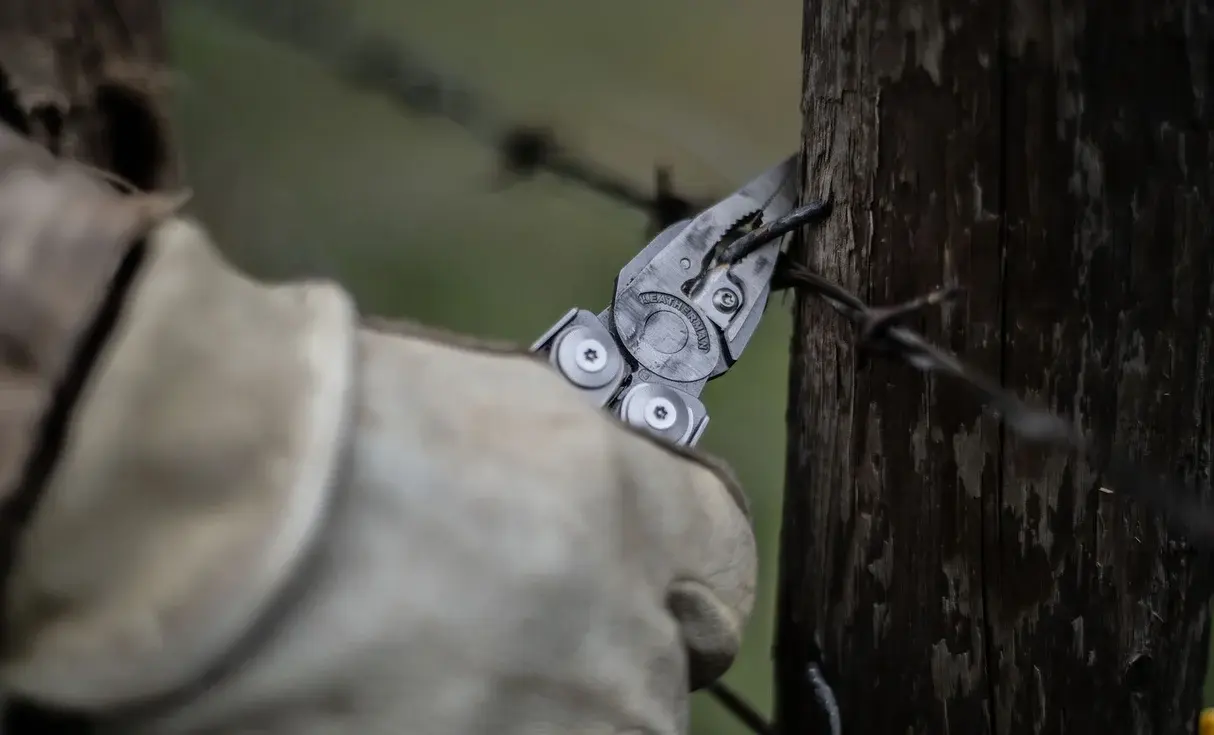
The Signal's Rebar-pattern pliers are precise enough for common field jobs, and its replaceable cutters handled copper wire, zip ties and thin fencing wire during the test. The asymmetrical handles become awkward when squeezed hard, so it does not challenge the Surge for demanding work.
Blades and cutting tools
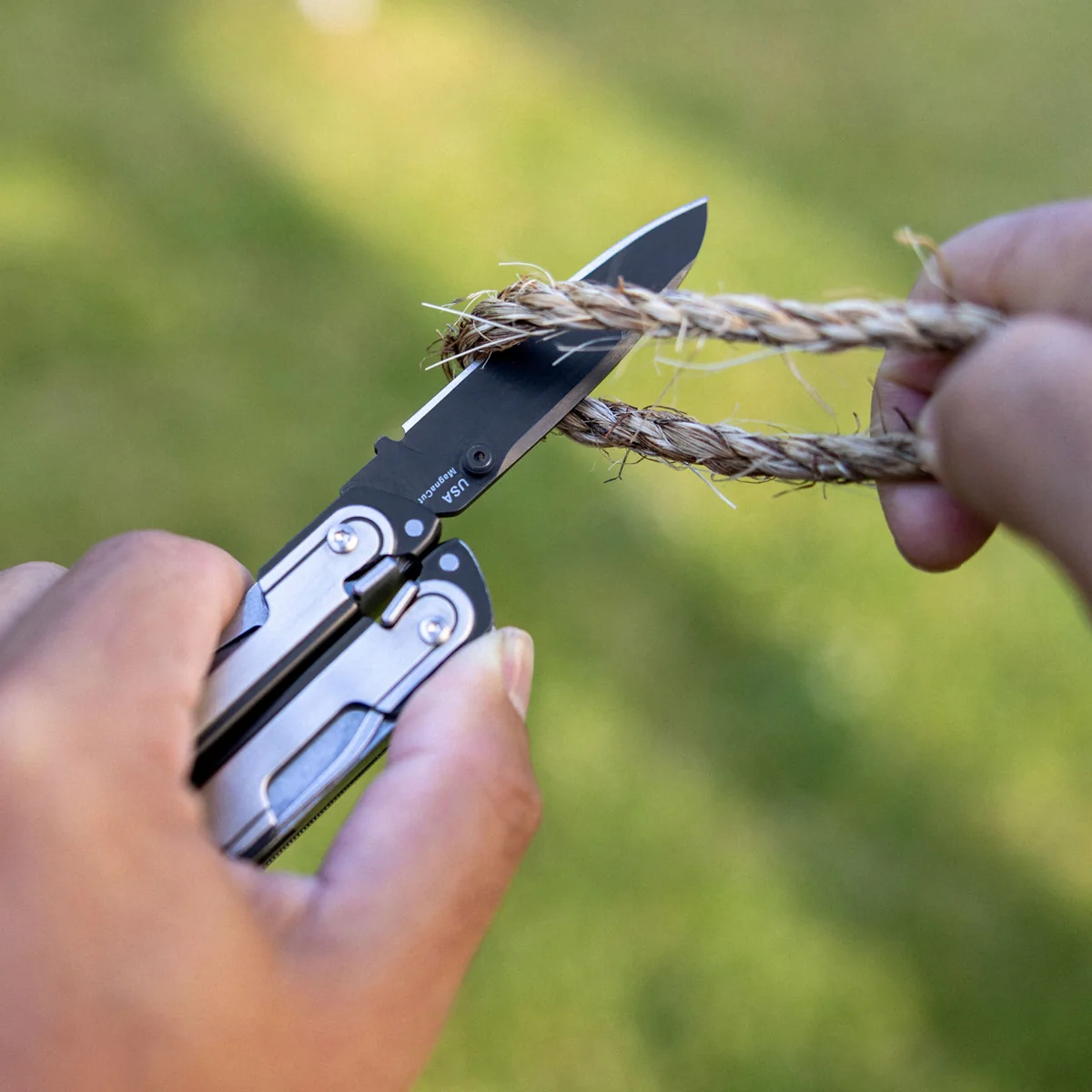
The ARC wins on its main blade. Its 2.76-inch MagnaCut blade combines strong edge retention, toughness and useful corrosion resistance. It opens naturally with one hand and behaves more like a good folding knife than most multitool blades.
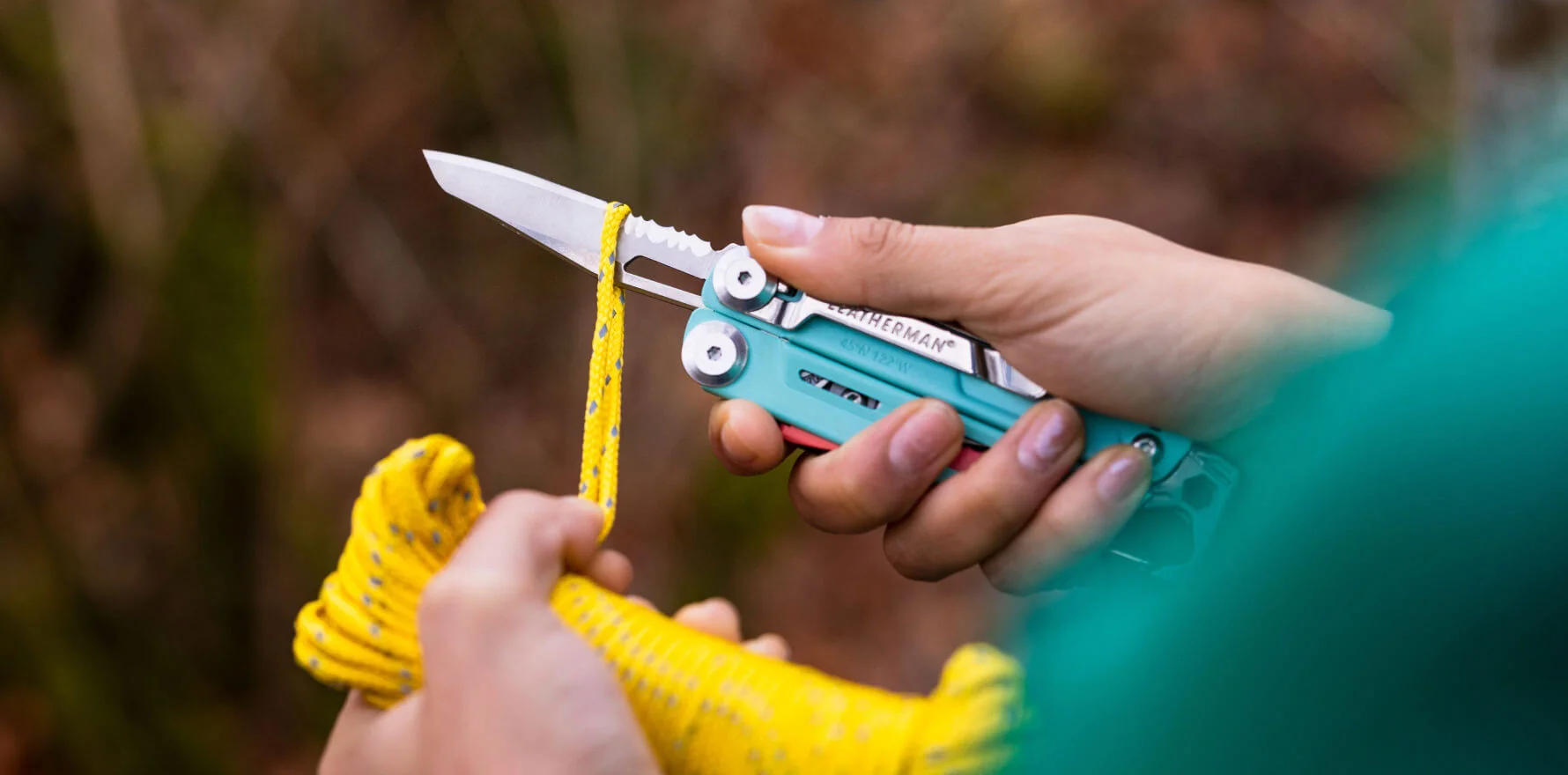
The Surge provides more cutting options. Its plain 420HC blade needs more frequent maintenance, particularly around saltwater, but the separate serrated blade excels on rope and nylon webbing. The T-shank exchanger adds a saw and file while accepting compatible replacements.
The Signal's thick combo blade is the weakest design. Splitting the short edge between plain and serrated sections leaves too little length for clean slicing or sustained rope cutting. Its separate wood saw is aggressive on branches around one to two inches, but the blade arrangement remains a poor everyday compromise.
Outdoor features
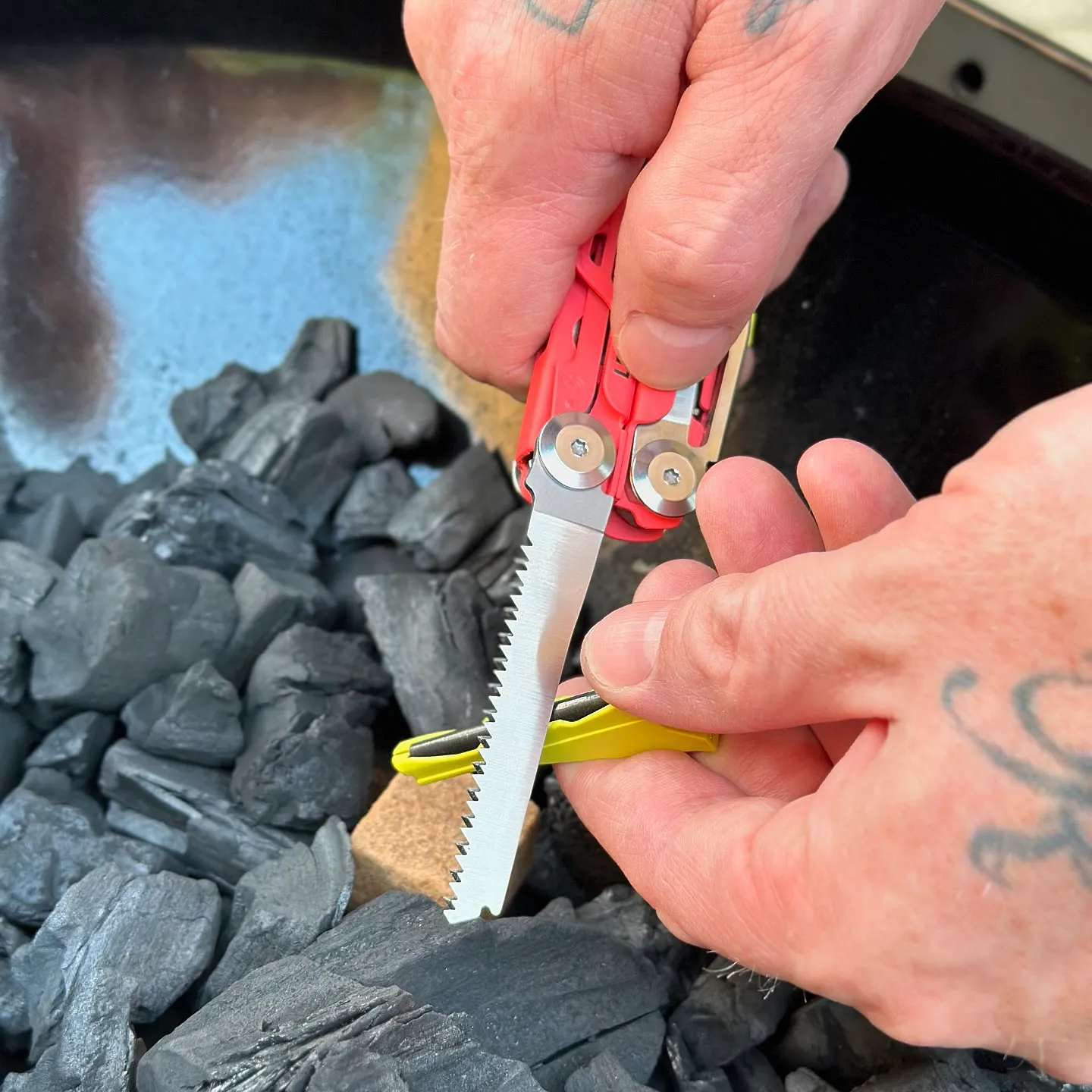
The Signal earns points for features that the other two do not attempt. Its carabiner improves carry, the hammer works on light tent stakes and the saw is effective within its short stroke. The ferrocerium rod can start a fire when dry tinder and patient technique are available.
The removable inserts are less persuasive. The ferro rod is small and soft, the whistle duplicates equipment many hikers already carry, and the tiny sharpener is inferior to a pocket stone. The plastic housing also sits close to the hammering surface. The ARC lacks these specialist camp features but provides a much stronger everyday selection. The Surge makes more sense when outdoor work involves real repair and construction rather than emergency accessories.
Durability and maintenance
The Surge showed the strongest core construction during long-term use. Its pivots and blades remained tight after two years, although the scissor spring failed and the 420HC components developed surface rust quickly without maintenance. The ARC has also held up well, with small rust spots on the plier jaws and concern around the softer cutter inserts rather than a structural failure.
The Signal test was too short to make the same long-term claims. No plier head, cutter or housing failed during the weekend. Its exposed plastic insert housing and mixed outdoor materials still deserve care, especially when using the hammer.
Value
The ARC is the premium purchase. Its value comes from improvements you feel on every use: faster access, a significantly better blade and a well-chosen tool set. It is worth paying for when the tool will be carried often. Buyers who rarely use a multitool will struggle to justify the price.
The Surge offers more physical capability for less money than the ARC, but its size can turn theoretical value into equipment left behind. It is strongest as a work-kit tool. The Signal's current positioning is harder to defend because its outdoor identity removes common tools while charging more than simpler general-purpose models.
Bottom line
ARC for most people, Surge for hard work, Signal for a specific outdoor niche.
The ARC is the one we would carry most often. The Surge is the one we would choose when failure to complete a heavy repair matters more than comfort. The Signal suits buyers who know they will use its carabiner and hammer enough to accept the missing scissors, file and dedicated plain blade.
Read the field tests
Full reviews behind this guide

Editorial disclosure: Adam bought the ARC and Surge with his own money. The Signal examples were borrowed from a local gear shop and returned after testing. Leatherman had no involvement in the reviews or this comparison.