
A local gear shop lent our group a selection of Leatherman Signal colorways for a long weekend of bushcraft testing, and we returned every tool afterward. Leatherman did not provide the tools, sponsor the review or know it was taking place. This is a concentrated field evaluation across several examples rather than a long-term ownership report.
Quick verdict
The Signal contains three genuinely smart outdoor ideas: a carabiner that makes pack and harness carry effortless, a hammer surface that works for light tent stakes, and a short but aggressive saw. Unfortunately, the survival-themed removable accessories occupy space that would be better spent on scissors, a metal file and a proper plain-edge blade. The soft ferro rod is an emergency backup, the whistle is redundant for many backpackers and the tiny sharpener is worse than carrying a pocket stone. At the current $149.95 US list price, a Wave+ is more versatile and a Skeletool CX is cleaner if you want minimalism.
What works
- Integrated carabiner gives fast, secure pack or harness attachment
- Hammer surface is genuinely useful for aluminum tent stakes
- Saw cuts dry and green branches aggressively
- Precise Rebar-pattern pliers with replaceable wire cutters
- Smooth butterfly opening once the tool is broken in
What to know
- Tiny sharpener and whistle feel like poor uses of limited space
- No scissors, metal file or dedicated plain-edge blade
- Thick combo blade compromises both clean slicing and rope cutting
- Asymmetrical handles are awkward under force, when wet or in gloves
- Exposed plastic ferro-rod housing is vulnerable during hammering
The verdict
The Signal is one of Leatherman's most visually distinctive tools and one of its easiest to understand from a shop counter. The bright ferro rod, whistle, sharpener, saw, hammer and carabiner sell a coherent story: this is the multitool for the outdoors. A weekend using those features showed that the story is more convincing than the tool selection.
The carabiner and hammer earn their place. Both solve real problems without requiring another pouch or accessory, and the carabiner improves the Signal every time it is carried. The saw and awl are also excellent. The problem is what Leatherman omitted to create room for the survival kit. Scissors, a metal file and a dedicated plain-edge blade would help on far more ordinary jobs than a tiny whistle and sharpener.
That does not make the Signal useless. For a casual backpacker, climber or arborist who values clipped carry and occasional stake driving above workshop versatility, it has a real niche. For most buyers, the Wave+, ARC or simpler Skeletool CX is a more coherent tool.
How we tested the Leatherman Signal
Our local gear shop supplied several Signal colorways for a small group's long bushcraft weekend. We cut rope and wire, prepared food and kindling, sawed dry and green branches, started a real campfire with the ferro rod, drove aluminum tent stakes, opened cans and bottles, worked with the awl and bit driver, and carried the tools on packs and clothing.
The short loan period limits what we can claim about long-term wear. None of the plier heads, wire cutters or plastic housings failed during our weekend. Where we discuss corrosion, breakage risk and factory variability, we distinguish our test results from maintenance concerns informed by longer experience with Leatherman tool steels and mechanisms.
Pliers and wire cutters
The Signal's Rebar-pattern needlenose and regular pliers are precise and capable for normal field repairs. They grip small components well, close accurately and give useful leverage. The replaceable 154CM cutters handled copper wire, zip ties and thin fencing wire exactly as expected.
The limitations appear when the user treats a pocket multitool like dedicated fencing pliers or a pry bar. Thick hardened coat hangers and heavy-gauge fencing can dent the cutter inserts, while levering sideways with the fine needlenose tips risks snapping them. The replaceable cutters are a serviceable component, not permission to ignore the plier head's limits.
Handle ergonomics also reduce confidence under major force. One side ends in the bulky hammer pommel while the other carries the plastic inserts, so the two handles do not present matching contact surfaces. I could feel some flex when squeezing hard. The pliers are good general-purpose tools; they are not designed for massive force.
The thick 420HC combo blade is a poor compromise
Our blades arrived adequately sharp, and the thumb hole provides convenient one-handed access. The blade itself is a thick modified drop point with a sheepsfoot-like working profile and a half-plain, half-serrated edge. It tries to cover clean slicing and aggressive rope work in one slot.
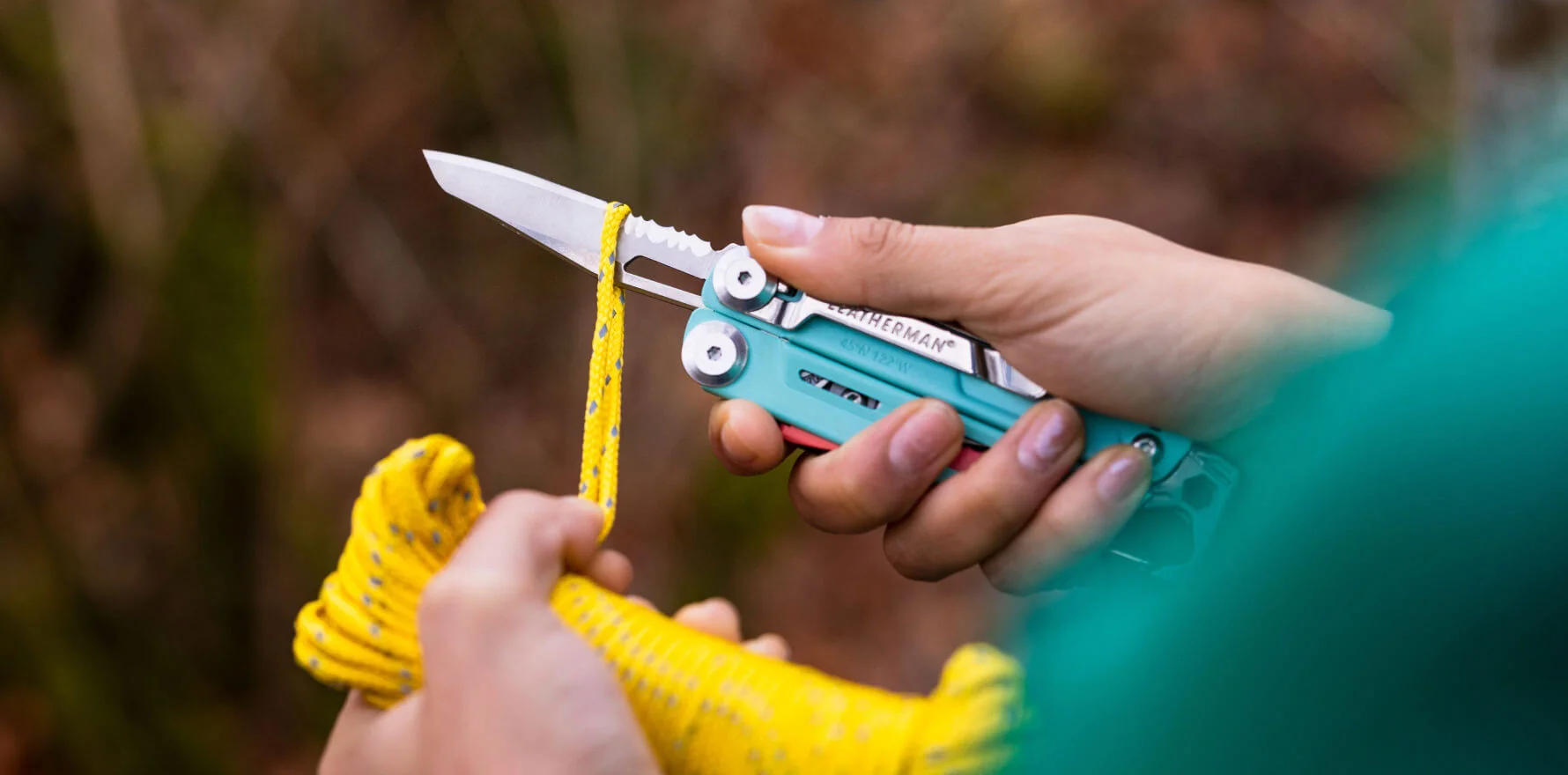
In practice, neither section gets enough blade. The short plain edge interrupts clean, continuous cuts through food and wood. The short serrated section does not give enough stroke to rip comfortably through thick marine rope. A dedicated plain blade plus separate serrated blade, as found on the Wave+, is far more useful.
Leatherman hardens the 420HC blade to a stated 55–59 HRC. That relatively soft stainless steel is easy to touch up but loses its working edge faster than modern premium steels. It resists ordinary corrosion reasonably when cleaned and dried, yet the blade and the Signal's other exposed tool steels still need oil and prompt maintenance after rain, sweat or saltwater.
Opening, lockup and butterfly action
The main blade was stiff initially and needed both oil and a break-in period before one-handed deployment became easy. Once open, it locked without play. The hammer side makes thumb placement feel cramped around the blade hole, particularly with larger hands.
The plier deployment became a highlight. Once worked in, the uneven mass of the hammer handle assists a buttery butterfly opening. It is fast, satisfying and easier to flick open than the Signal's rugged styling suggests. All implements except the plier head lock, which adds confidence when using the awl, saw and driver.
A short but aggressive saw
The saw was one of the better surprises. It chewed through dry and green branches around one to two inches in diameter quickly enough for small campfire preparation. Tooth geometry matters more than absolute length on those jobs, and the Signal bites immediately instead of skating across the bark.
That short blade establishes a hard ceiling. Try to process a 2x4 or serious firewood and the lack of stroke becomes frustrating immediately. The saw is appropriate for kindling and trail-side pruning, not wood processing.
Ferro rod, whistle and sharpener
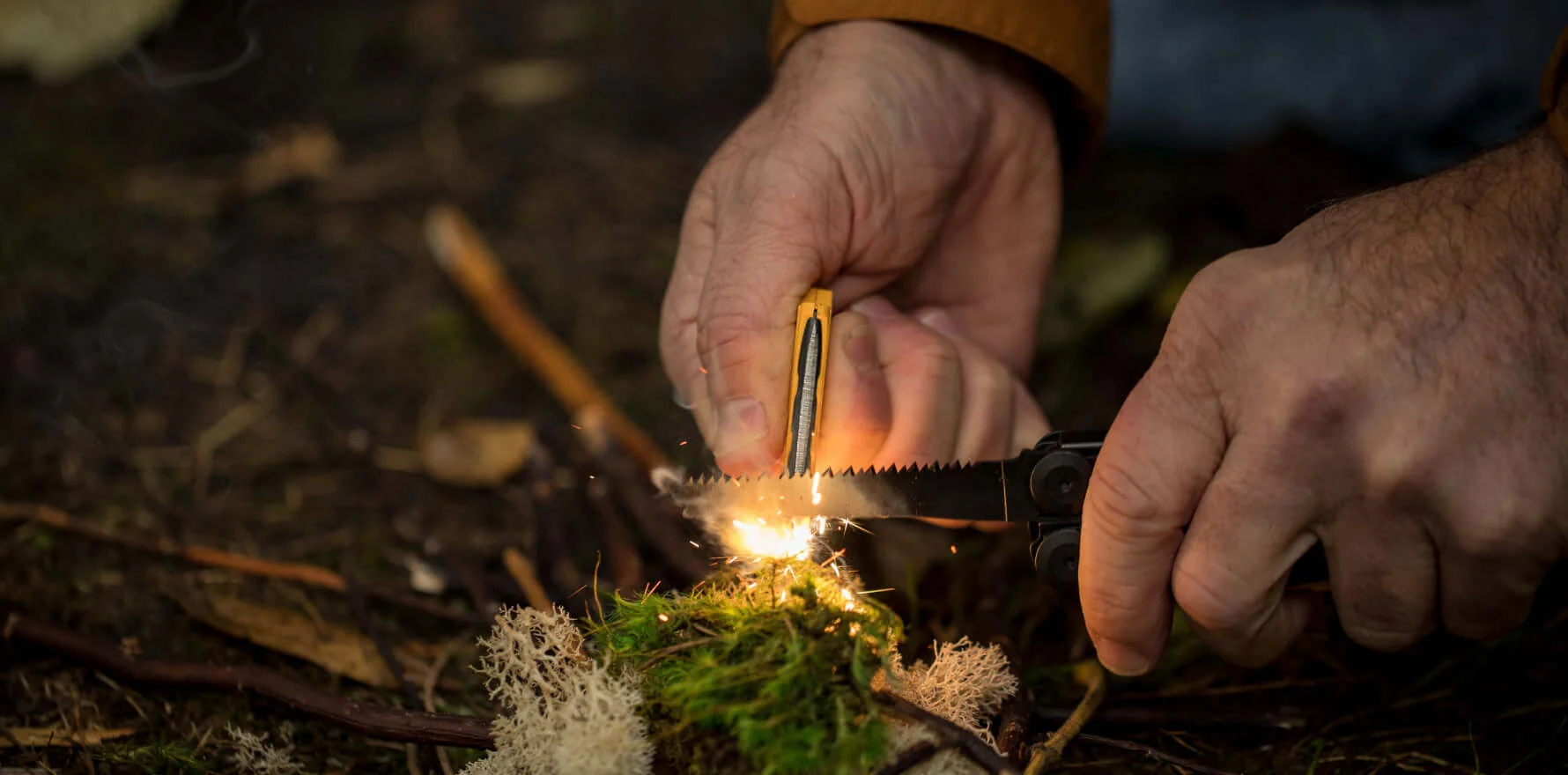
The ferrocerium rod works. Struck against the back of the saw, its exceptionally soft compound produces large, hot sparks with very little effort, and we used it to start an actual campfire. The same softness destroys longevity. Repeated weekend use would reduce the tiny rod to a nub quickly, so it belongs in the emergency-backup category rather than a primary fire kit.
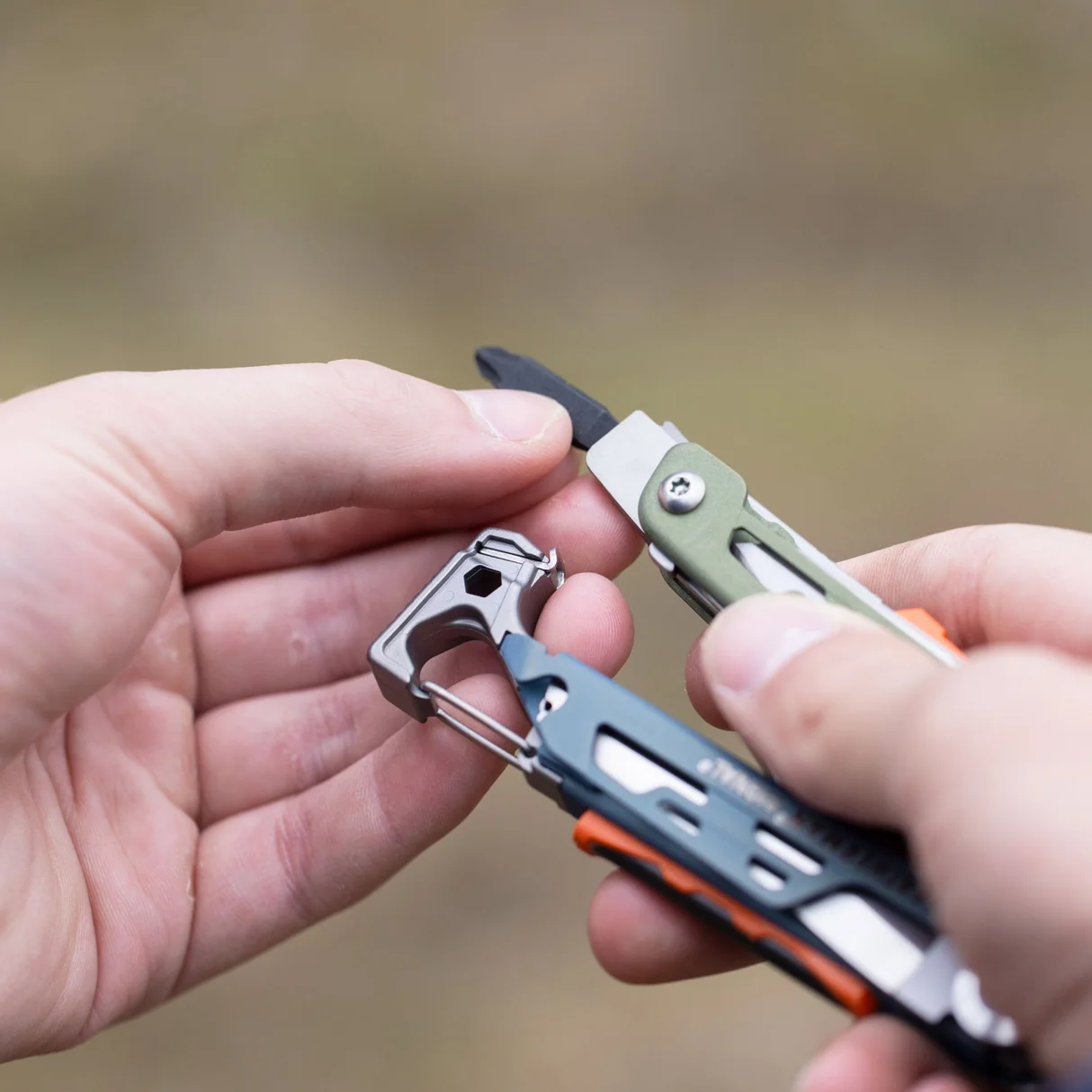
The emergency whistle is molded into the ferro-rod housing. It is reasonably loud and works, but many modern backpack straps already include a whistle that performs better in wind. Carrying a dedicated whistle also keeps the emergency signal accessible if the multitool is elsewhere.
The removable diamond sharpener is the weakest feature. It is too small to hold comfortably against the plain edge, awkward on the serrations and easy to drop into soil or leaf litter. Its curved profile can technically touch up serrated teeth, but a real pocket stone is dramatically easier and more effective.
Both plastic modules snapped securely into the frames we tested. They did not feel likely to fall out during normal carry. Reinstalling the whistle and ferro rod is needlessly fussy: a metal spring tab must be depressed while the housing slides in at the correct angle. The exposed housing also sits close enough to the hammer surface that a misplaced strike could crack it. We did not break one, but it is an obvious part to protect.
The hammer is useful—with an awkward grip
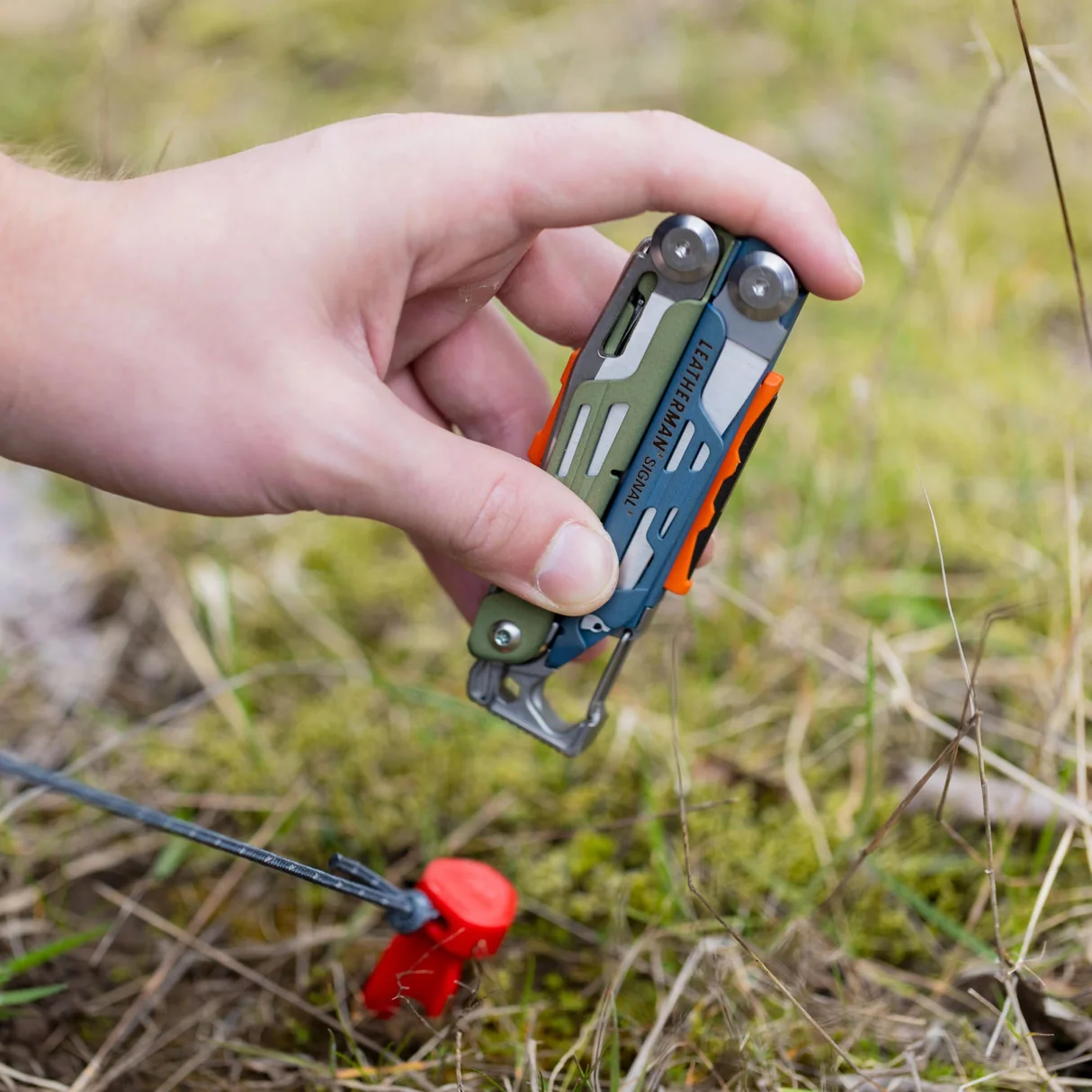
The hammer surface drove aluminum tent stakes effectively and is more useful than the Signal's plastic survival accessories. It saves using a boot, rock or another piece of gear for a routine campsite job.
There is little leverage because the Signal has no real hammer handle. To keep fingers away from the strike and the sharpener slot, I had to choke up over the plier pivots in a crude “caveman grip.” It works for light stakes, but it is less comfortable and less safe than the marketing images suggest. This is an impact surface for occasional taps, not a miniature framing hammer.
Awl, driver and the missing essentials
The awl is excellent for starting holes, starting screws and teasing apart stubborn knots. It can be reached from outside the closed tool, which makes it more convenient than buried inner implements. The combined can and bottle opener works perfectly.
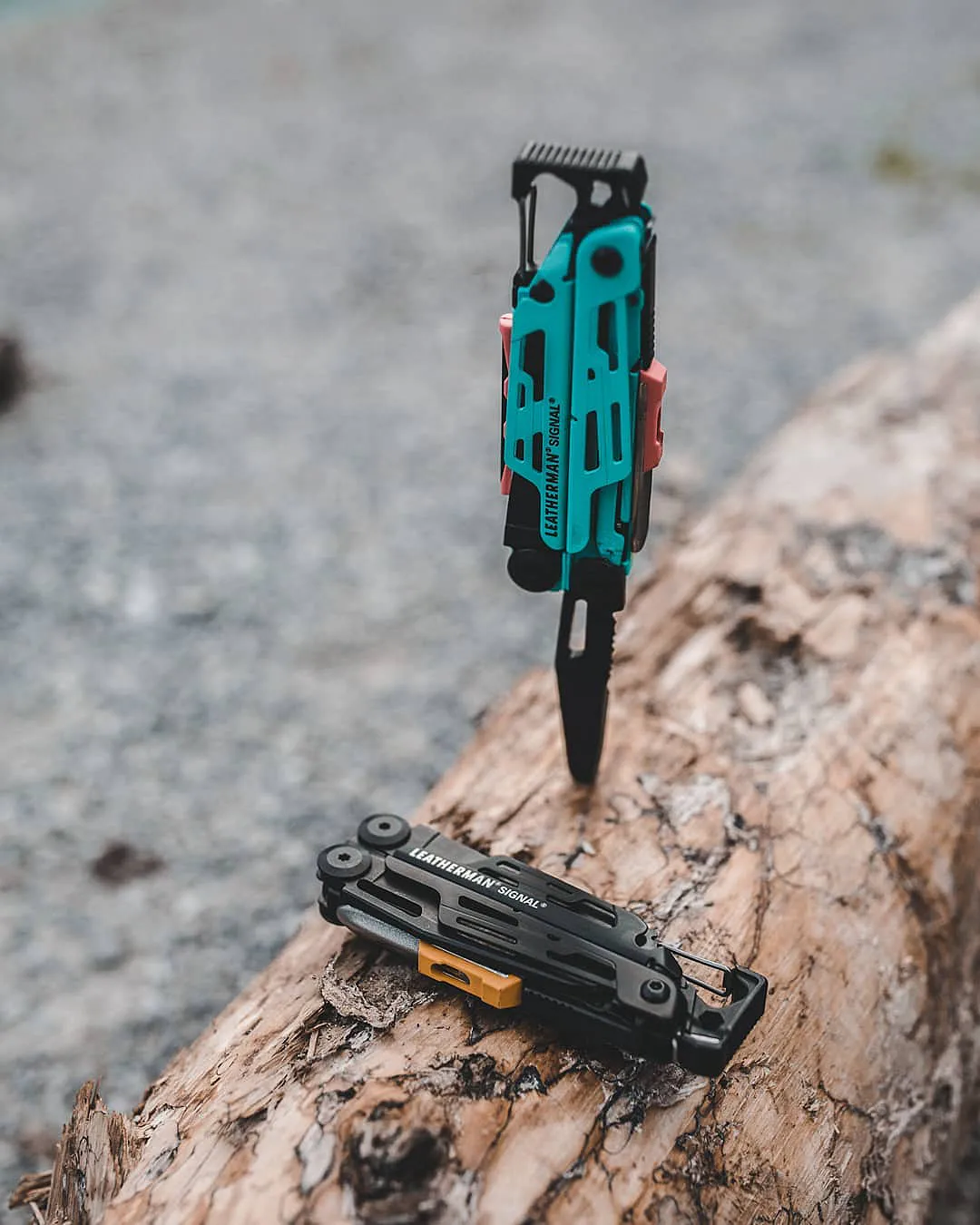
The bit driver is less successful. The hammer pommel stops the handles folding completely flat, leaving a clunky shape that is awkward to rotate around a fastener. More importantly, the Signal omits scissors and a metal file—two of the tools I use most often on a general-purpose multitool. At 7.5 oz, the Signal is fairly light for its footprint, but those omissions are a high price for the survival inserts.
Carabiner carry is the Signal's best idea
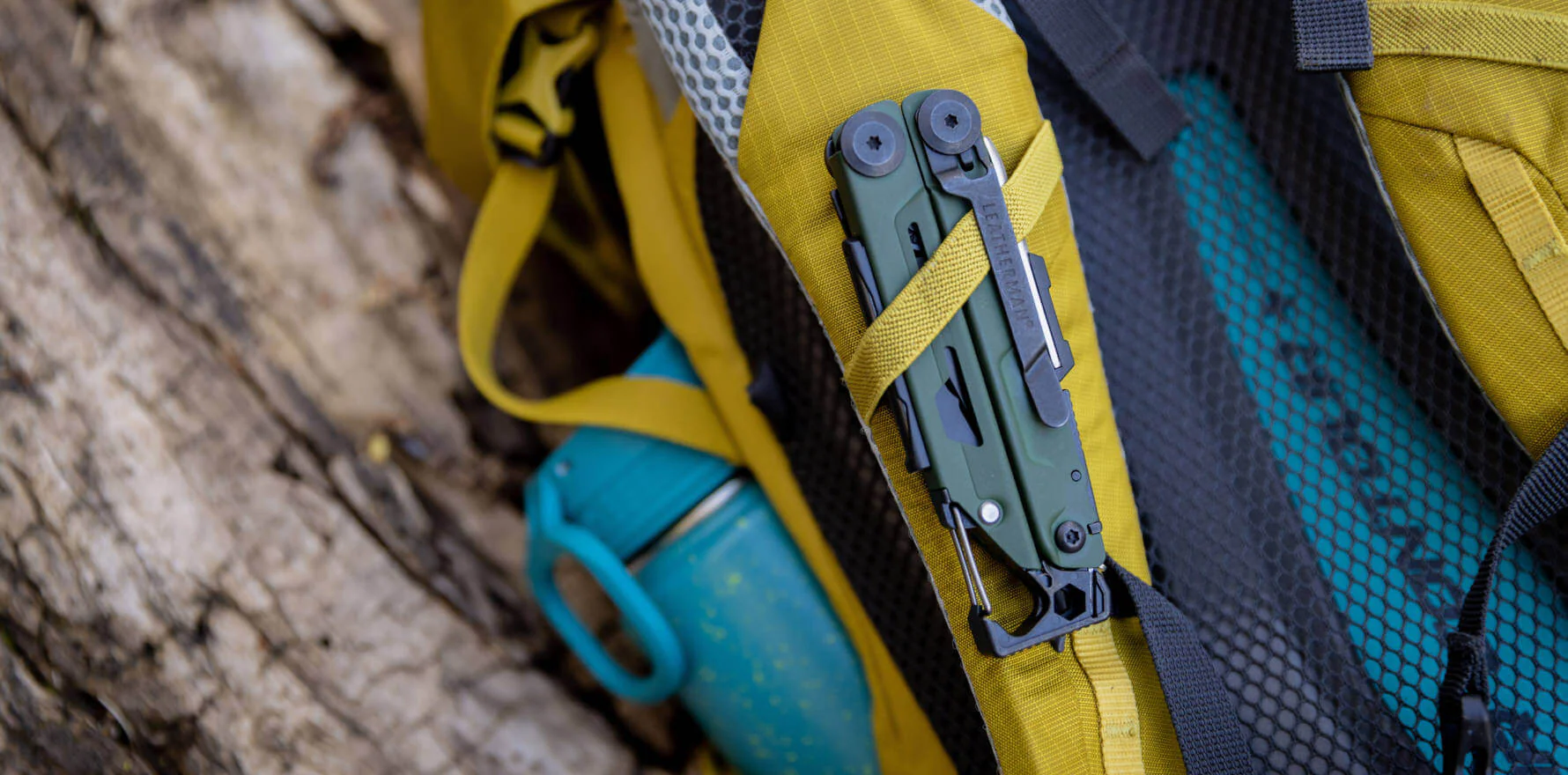
The removable pocket clip is adequate, but the integrated carabiner is the real carry advantage. It snaps quickly onto a climbing harness, backpack loop or belt loop and remains accessible when pockets are covered or difficult to reach. For climbers, arborists and anyone working while suspended, that can justify choosing the Signal over a conventional multitool.
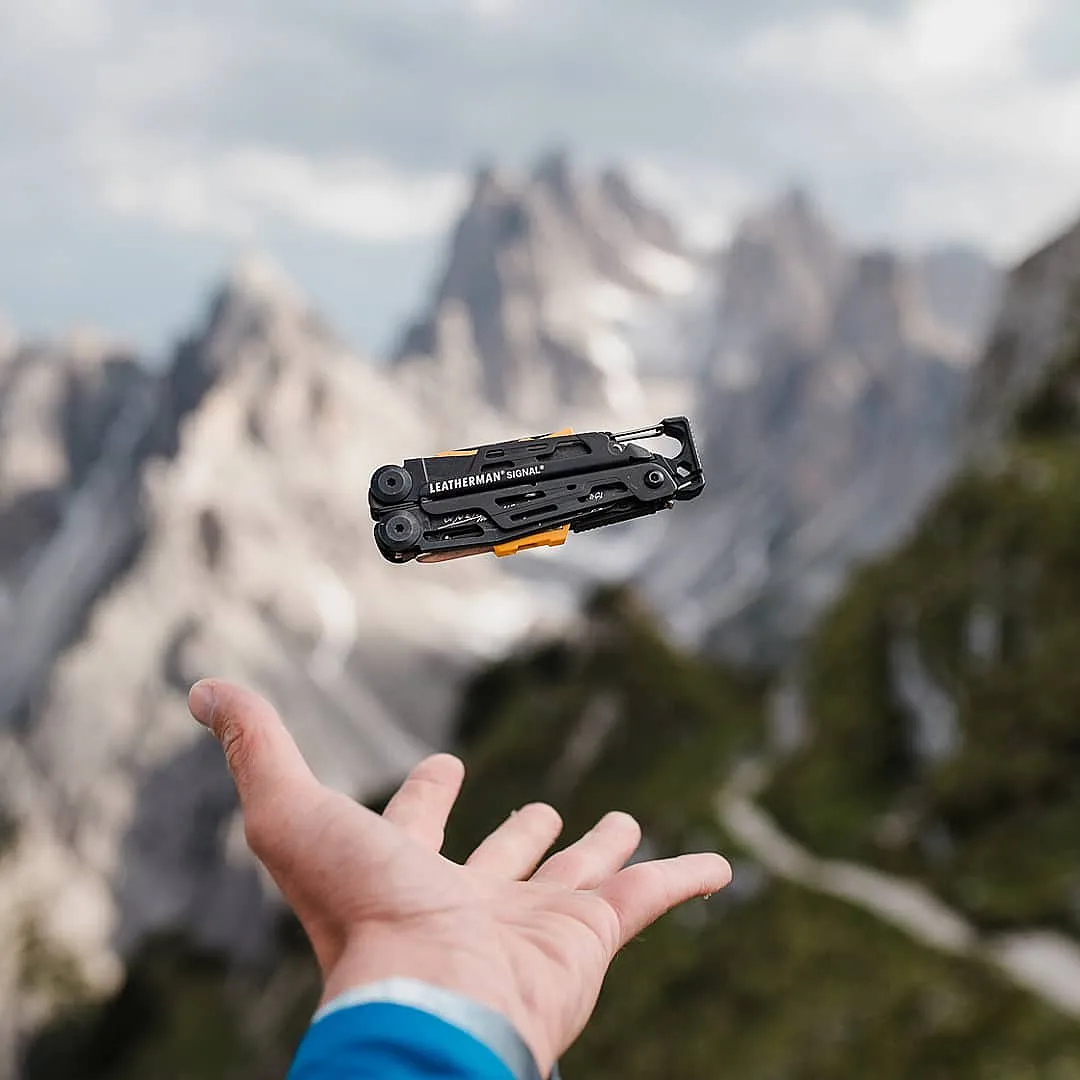
Wet and gloved operation is less convincing. The asymmetrical handles prevent a flush, predictable grip, and numb hands exaggerate every pressure point. One side is relatively flat while the hammer side is chunky, so hard squeezing feels less natural than on a Wave+ or Rebar.
Corrosion, quality control and durability
The examples we tested were centered and locked securely, but initial stiffness varied and one needed oil before the blade became easy to open. Black oxide finishes can also arrive with cosmetic marks or acquire them quickly. That is normal for a working coating, but it can disappoint buyers expecting a flawless premium object.
Our weekend did not produce rust, but this is not a tool I would leave damp. Leatherman's 420HC blade and standard stainless implements can spot after sweat, rain or salt exposure without prompt cleaning. Dry the tool thoroughly and apply a thin protective layer of oil after wet use, especially around pivots and the plier head.
Nothing broke during the loan. The realistic failure boundaries are still clear: do not pry with the needlenose tips, do not force hardened wire through cutters intended for lighter stock and keep the plastic ferro-rod housing away from the hammer's impact path.
Signal vs Wave+, ARC and Skeletool CX
Next to the Wave+, the Signal feels less complete. The Wave+ provides dedicated plain and serrated blades, scissors and useful files, making it dramatically more versatile for daily utility, DIY and travel. The Signal counters with easier clipped carry, the hammer and fire-starting features. For most people, that exchange is not worthwhile.
The ARC outclasses the Signal in blade steel, one-handed tool access and overall refinement. Its MagnaCut blade is in another league from 420HC, and its FREE architecture makes far more of the tool set readily accessible. The ARC is heavier and substantially more expensive, so it is not a direct value substitute, but it shows how compromised the Signal's blade and inner-tool access feel.
The Skeletool CX is the better minimalist choice if the requirement is simply a blade, pliers and driver. It avoids the Signal's gimmicks and carries more cleanly. Hardcore survivalists are also poorly served by the Signal's miniature survival components; a Wave+ or Surge paired with a proper ferro rod and pocket stone is a more dependable system.
Value and who should buy it
At a current US list price of $149.95, the Signal asks buyers to value outdoor packaging over everyday versatility. The manufacturing quality, locking tools, warranty and integrated carry system have real value, but too much space is spent on accessories that duplicate better gear most backpackers already carry.
The strongest audience is casual backpackers, arborists and climbers who specifically want the carabiner and a compact surface for driving tent stakes. Urban EDC users, tradespeople and DIY buyers should choose the Wave+ or ARC. Anyone building a serious survival kit should carry dedicated fire-starting and sharpening equipment rather than depend on the Signal's tiny backups.
After the weekend, I would not buy one at full retail. The Signal is memorable and occasionally clever, but the outdoor-specific marketing is stronger than the final tool selection.
Leatherman Signal specifications
| Category | Knives & tools |
|---|---|
| Tool count | 19 |
| Blade | 420HC modified drop point, combo edge |
| Blade hardness | 55–59 HRC, manufacturer specification |
| Blade length | 2.73 in / 6.93 cm |
| Closed length | 4.5 in / 11.43 cm |
| Open length | 6.75 in / 17.15 cm |
| Width | 1.5 in / 3.81 cm |
| Thickness | 0.63 in / 1.6 cm |
| Weight | 7.5 oz / 212.6 g |
| Frame | 420 stainless steel; finish varies by colorway |
| Included removable tools | Ferrocerium rod with safety whistle; diamond-coated sharpener |
| Included bit | Phillips #1–2 and 3/16 in screwdriver |
| Current US list price | $149.95 at time of review |
| Warranty | 25-year limited warranty |
| Test status | Multiple shop-loan samples; group-tested over one long bushcraft weekend and returned |
| Manufacturer involvement | None. No Leatherman sample, sponsorship or copy approval. |
Scoring breakdown

Sources & context
What we checked
This review is based on Adam's hands-on group test of several shop-loan Signal examples. We checked Leatherman's current official product listing for dimensions, materials, tool count, warranty and US list price. Performance findings and comparisons are Adam's own.
Editorial disclosure: A local gear shop lent our group several Leatherman Signal colorways for one long weekend, then we returned them. Leatherman had no involvement. Gear Reviews received no payment, free product or editorial approval.