
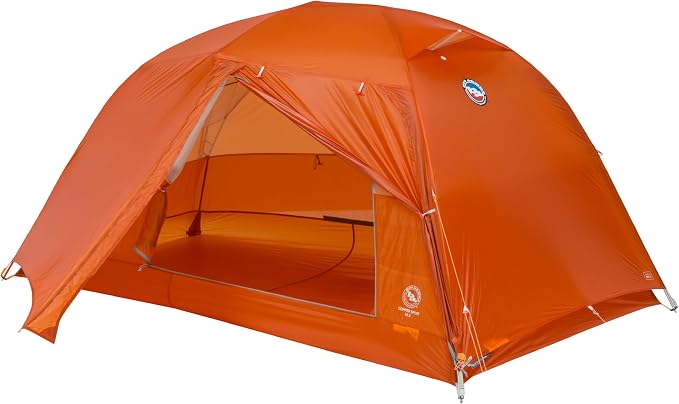
I mostly use the Copper Spur UL2 on my own, and the extra room is a pleasure. I can spread out on a wide sleeping pad, sit up to change clothes and keep my gear organised without shuffling everything around first. Put a second person in it and the narrow foot end becomes much harder to ignore. Put it in strong wind and comfort disappears altogether.
I bought the orange HyperBead model from Amazon.com for US$599.95 about a year ago and used it for a couple of weeks in Quebec's Parc national des Hautes-Gorges-de-la-Rivière-Malbaie. Most nights were solo, with a few shared with a partner. Big Agnes had no involvement in the purchase or this review.
Quick verdict
The Copper Spur UL2 is a comfortable solo backpacking tent with room for a wide pad, a quick pitch and excellent storage. Two doors make sharing easier, but the tapered floor will not take two rectangular 25-inch pads. Strong wind left the walls bowing over me and kept me awake. I would buy it again for sheltered three-season trips, where the space and convenience are worth carrying.
What works
- Generous solo space, including room for a wide sleeping mat
- Quick freestanding pitch on awkward ground
- Two side doors and useful covered vestibules
- Large overhead and side pockets keep small equipment organised
What to know
- Tapered floor cannot fit two rectangular 25-inch mats side by side
- Walls bowed inward and flapped heavily in strong gusts
- Condensation dripped inside during heavy rain
- Lightweight materials demand care at a US$599.95 purchase price
The verdict
The Copper Spur UL2 is a tent I would buy again, mainly for the way I use it: solo backpacking with enough room to be comfortable in camp. The freestanding frame goes up quickly, the two doors make access easy, and the pockets are some of my favourite features. At six feet tall, I can sit upright and move around without brushing my head against the roof. With a single wide pad inside, it's pretty damn comfy.
As a two-person tent, it needs more thought. Two standard 20-inch pads work, but two rectangular 25-inch pads cannot fit side by side at the foot end. Sharing also puts us closer to the mesh, so the roomy impression I get alone does not carry over to a night with a partner. Couples who both like wide pads will be better served by something with a regular rectangular floor like the MSR Hubba Hubba.
Wind is the bigger reservation. In strong gusts the walls bowed over me and the fly flapped so violently that I could not sleep. Nothing broke, but I would not choose it for regular exposed alpine camping. For sheltered three-season trips, the comfort and convenience earn it 4.1 out of 5. At US$599.95, I would want to be using those strengths often enough to justify the price.
How I tested it
I took it for a couple of weeks' camping in Hautes-Gorges national park, which gave it the chance to experience rain, cool and humid nights, a few hotter days and some pretty spicy wind. Using the tent both alone and with a partner gave me a good sense of where its space works and where it runs out. My usual sleeping setup includes a rectangular 25-inch pad, so the floor taper was more than a detail on a specification sheet.
I used a homemade Tyvek groundsheet, replaced a few of the supplied stakes with MSR Groundhogs and carried extra guylines. I also left the extra stuff sacks at home. Those are small changes, but they saved a bit of weight and improved the holding when the wind got up. Two weeks gave me plenty to say about pitching, sleeping space and weather protection; long-term fabric wear is still an open question.
Pitching and pack-up
The setup is straightforward enough that I can pitch it alone in about three or four minutes. The poles and fittings are colour-coded, orange to orange and grey to grey, and I have had no trouble with the clips or buckles. There is little to puzzle over once the components are laid out. The fly, however, needs even tension to sit properly.
I particularly appreciate the freestanding design on bedrock or root-heavy ground. Finding somewhere to drive a stake can be the most frustrating part of camping there. Being able to erect the inner and move it into position makes that job easier. The vestibules and guylines still need anchoring, especially in wind, but the tent holds its shape while I work out where those anchors can go.
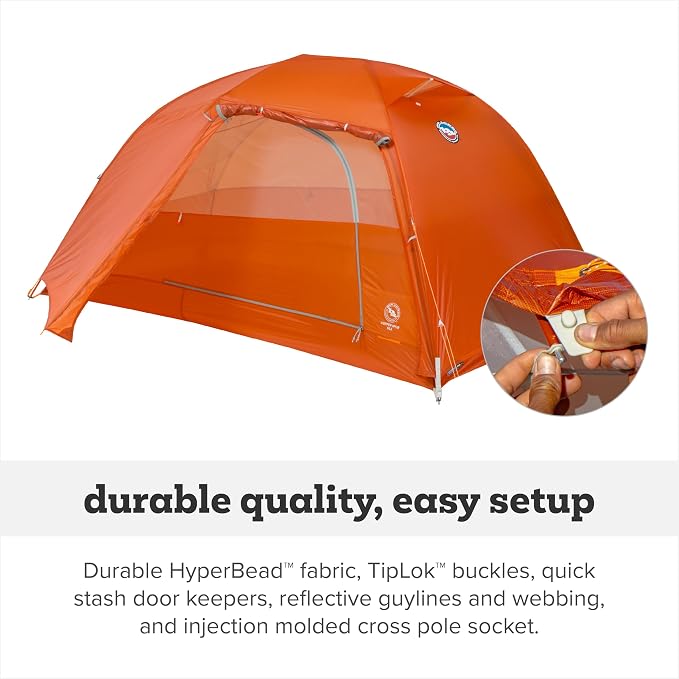
The supplied stakes are decent. I swapped a few for MSR Groundhogs because I wanted better holding power in bad weather, and I pack extra guylines as well. For a windy pitch, I would use all the guy-out points. Given how much the tent moved in the strongest gusts, I would also put more effort into finding shelter than into saving a few minutes on the pitch.
Big Agnes offers a Fast Fly setup with its compatible footprint, allowing the fly and poles to go up without the inner. The compatible footprint is sold separately. I use a cut-to-size Tyvek sheet for ground protection, described below.
Wind and rain performance
Rain protection was good overall, though heavy downpours exposed an irritating problem. Condensation on the underside of the fly was knocked loose by rain hitting the outside, sending droplets down into the tent. It felt as though it was raining inside. The fly was keeping rain out, but that did not make the spray any less unwelcome when I was trying to stay dry.
I also noticed some water pooling on the flatter part of the roof. You have to keep the fly evenly tensioned and clear of the inner. If wet fabric sags against the mesh, there is much less separation between the damp outer layer and the sleeping area. I would check the tension during prolonged rain, particularly if water starts collecting overhead.
The wind performance was much less reassuring. Ventusky showed it was gusting above 40 mph during our stay. The walls bowed right in over me and the tent flapped violently. It survived without a broken pole. But I did not sleep well. For all the comfort it offers on a quiet night, it was a miserable place to be in that wind.
The tall, steep walls are good for sitting room, but they also catch the wind. I would keep this tent below the treeline where possible and avoid exposed sites when strong gusts are forecast. When we sat out a Quebec gale in the Hubba Hubba 2 we had a much calmer night.
Space for one, and the squeeze with two
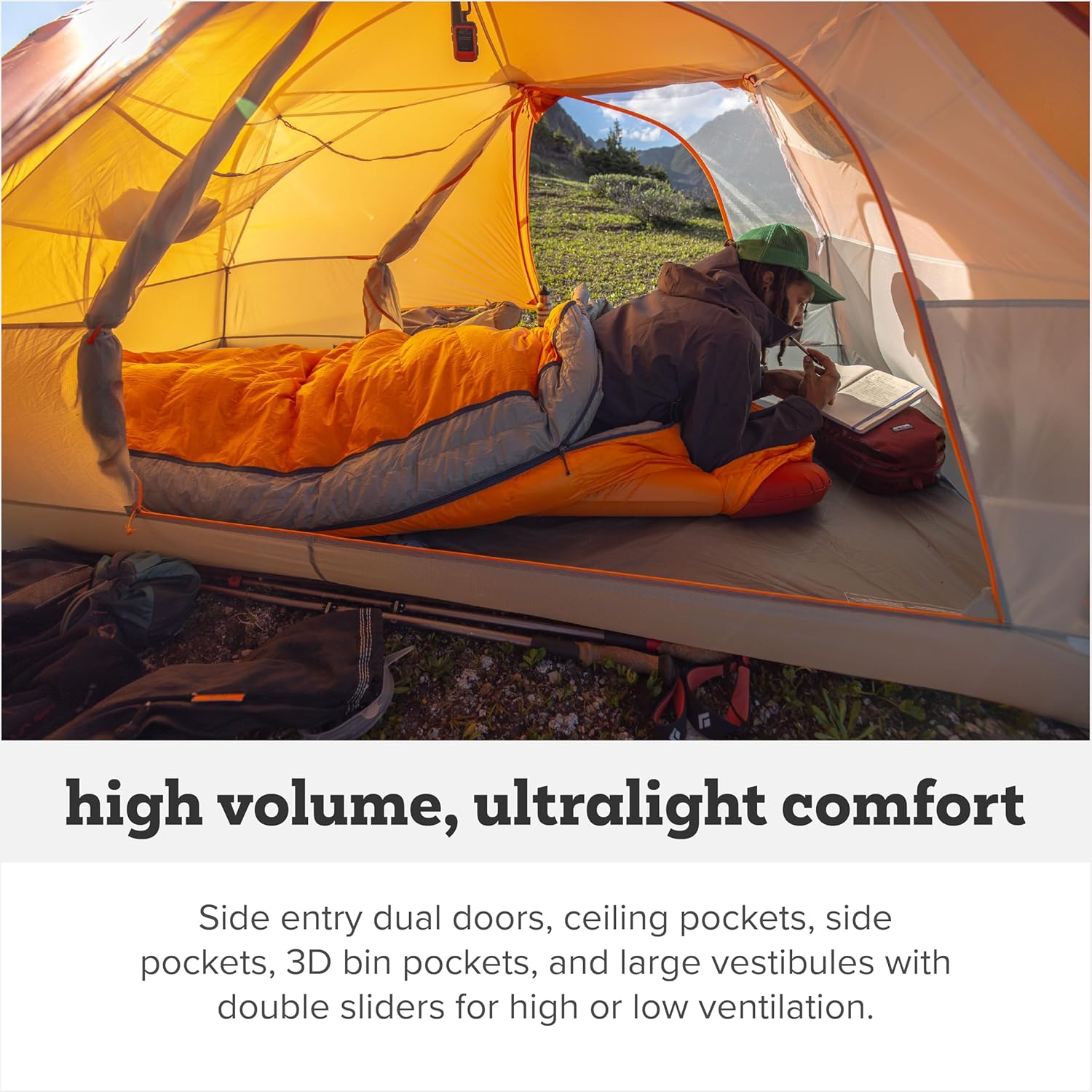
The high-volume design works. At six feet tall, I have enough headroom to sit up, change clothes and move around without rubbing against the ceiling. Sleeping alone, my feet and sleeping bag stay clear of the inner mesh. A wide pad takes up only part of the floor, leaving useful room beside me. That is the Copper Spur at its best: a light tent with enough space that I do not feel confined to my sleeping bag.
With a partner, the floor shape becomes the main limitation. It measures 52 inches across at the head but narrows to 42 inches at the feet. Two rectangular 25-inch pads need 50 inches along their full length. They fit at the head and run out of room at the other end, leaving an awkward overlap. Two 20-inch pads are the sensible option, though I still find the foot end tight when sharing.
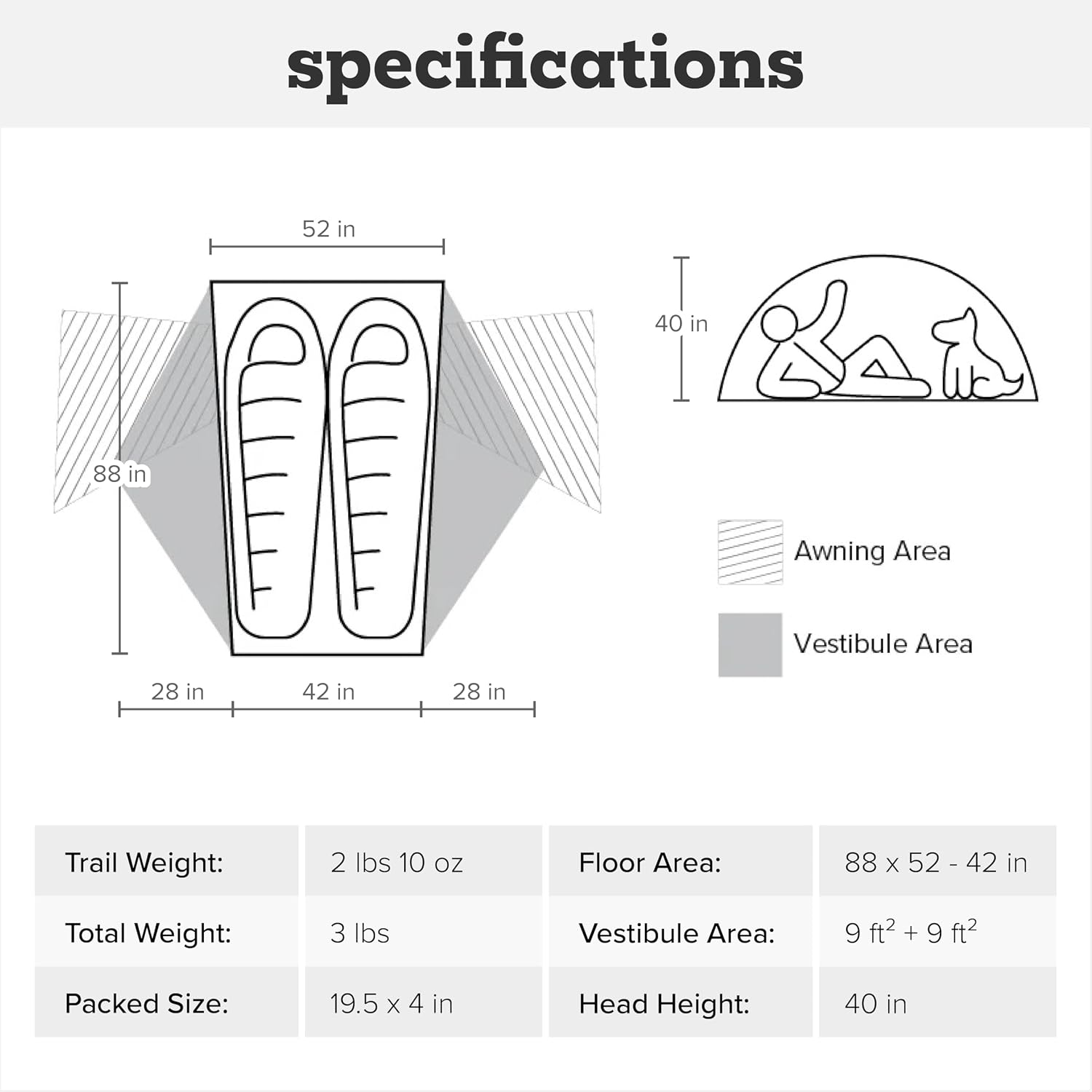
The difference is large enough that I think of this as a spacious solo shelter first. Two people can use it, and the separate doors help enormously, but the extra occupant takes away much of what I enjoy about it. Anyone buying it mainly for two should check their pads before anything else. More headroom cannot make up for a floor that is narrower than the bedding.
Doors, vestibules and storage
Two side doors are a major improvement over the Big Agnes Fly Creek I used previously. Its single front entrance was awkward with two people. In the Copper Spur, either of us can get out during the night without climbing over the other. Even when I am on my own, I like having access from both sides rather than arranging everything around one entrance.
The vestibules are generously sized. I keep muddy boots and a wet pack outside the inner, where they stay sheltered from the rain instead of taking up sleeping space. Having one on each side also means a shared trip does not force both people's gear into the same entrance. This is a much better use of space than trying to squeeze a pair of packs around two sleeping pads.
Inside, the storage is excellent. The large ceiling pocket gives loose items somewhere to go, and the smaller pockets near the head keep phones and headlamps within reach. I use them constantly. Good pockets sound like a minor feature beside weight or waterproofing, but they make the tent easier to live in every evening, especially once two people are occupying most of the floor.
The awning is worth using
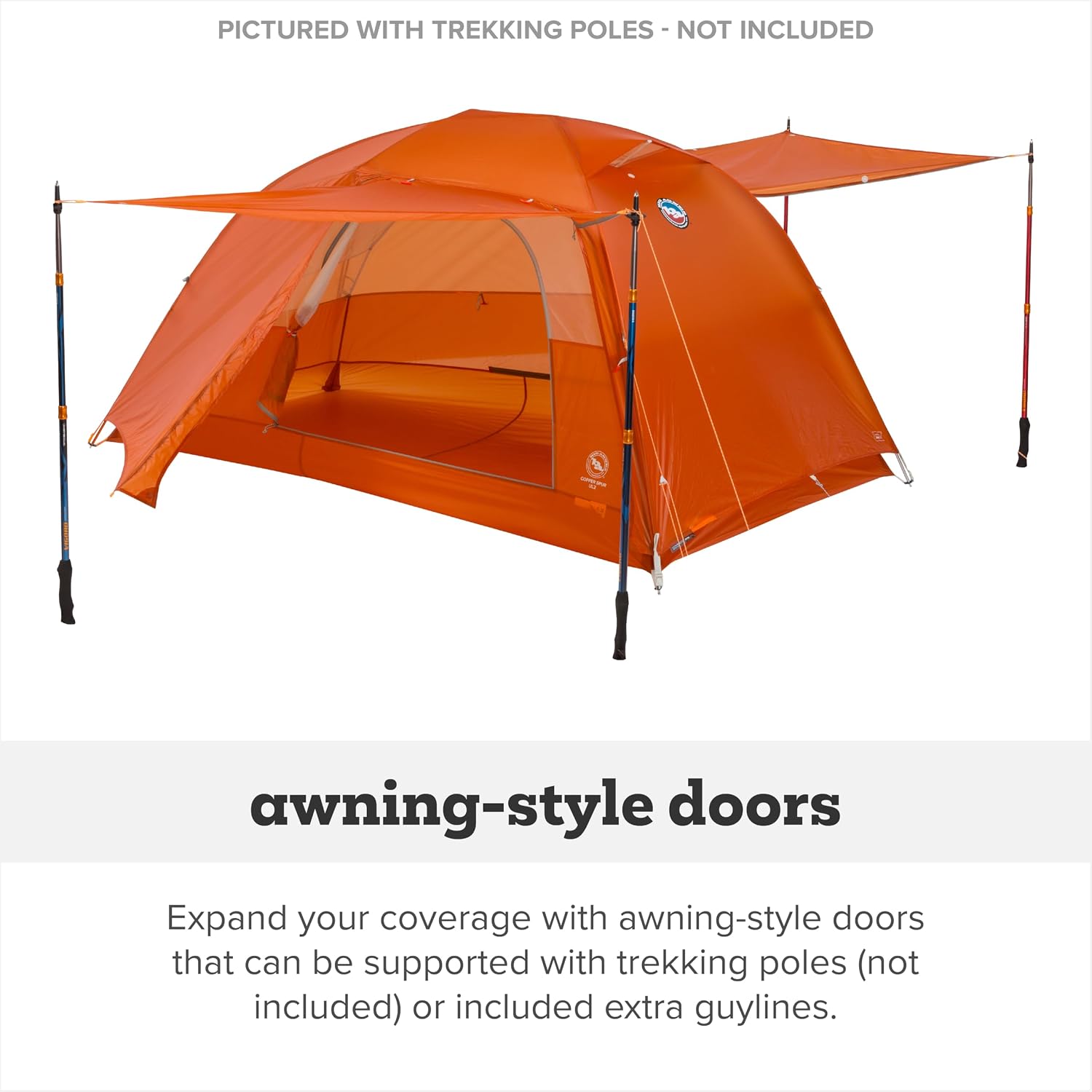
I love being able to prop the vestibule doors up with trekking poles and extra guylines. It creates a covered porch for sitting with a coffee, keeping out of the rain or getting some shade. The doors no longer block the view, and I can sit at the entrance without being shut behind the fly. Trekking poles are not included with the tent.
This is one of the features that makes spending time in camp more enjoyable. I value it most when travelling alone, when there is room to sit comfortably inside and look out. It also gives the vestibule a use beyond storing boots and a pack.
Ventilation and condensation
The large mesh upper lets plenty of air through. In hot weather, rolling the fly back makes the tent feel breezy and comfortable, which is a welcome change from sitting inside with both vestibules closed. The open inner is one reason I like it for ordinary three-season trips rather than colder, more exposed camping.
Cool, humid nights still brought condensation. The roof vent helps, and leaving the vestibule doors partly unzipped when it is dry made a substantial difference. I found the ventilation good overall.
Weight, packed size and durability
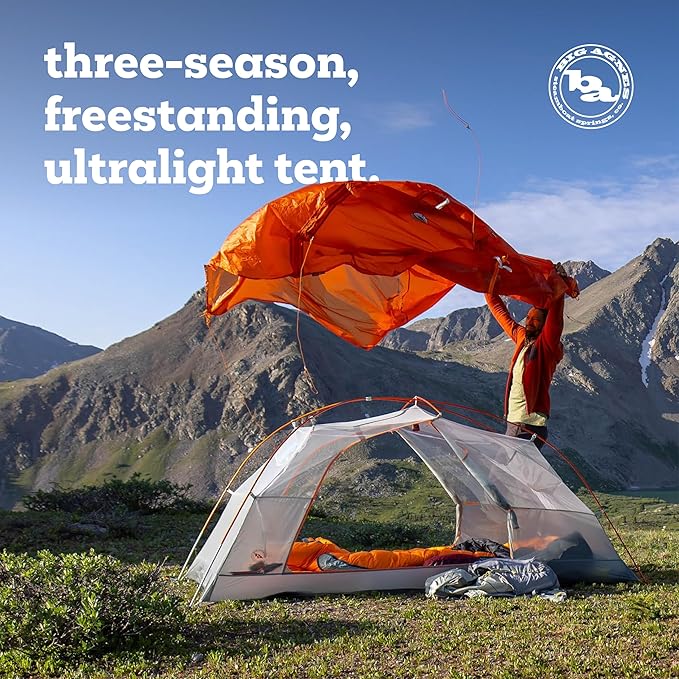
My setup weighs about 3 lb 2 oz, or 1.42 kg, including the Tyvek groundsheet, stakes and lines. I leave the extra stuff sacks at home and carry some sturdier stakes instead. That is a very manageable load for the amount of space it provides. When I share the tent, we split it: one person takes the poles and fly, the other the inner and stakes.
The pole sections set the packed length more than the fabric does. Big Agnes lists the packed size at 19.5 by 4 inches, so the poles are worth bearing in mind if space inside a small pack is tight. For more on keeping pack weight down, the Hyperlite Mountain Gear Unbound 40 review covers another piece of lightweight kit and how it carries over a multi-day trip.
The HyperBead fly and floor use 15D nylon with 20D ripstop reinforcement. They feel thin, and I handle them carefully. I would not choose this tent for someone who is rough on equipment or wants to pitch without thinking about what is beneath the floor. The mesh deserves the same care. Saving weight is welcome on the walk, but delicate materials are part of the cost of doing it this way.
I use a groundsheet every time. Instead of buying the Big Agnes footprint, I spent US$5 on Tyvek, cut it to size and washed it to soften it. The finished sheet weighs about 5.3 oz. It is an inexpensive way to add a layer under the floor, and I am happy carrying that small amount of extra weight beneath a tent that cost nearly US$600.
A smaller annoyance is the squeak when the floor rubs against my insulated sleeping pad. Moving around can be surprisingly noisy. It is hardly a reason to reject the tent, but it is one of those details that becomes more noticeable after a few nights.
Value and alternatives
At the US$599.95 I paid, this is an expensive way to sleep outdoors. What makes it worthwhile for me is the combination of low weight and enough room to enjoy being inside. The quick pitch, pockets, two doors and awning all get used. I would be much less happy with the price if I spent most of my trips squeezed alongside another person or lying awake on exposed campsites.
The MSR Hubba Hubba HD 2 is the most useful comparison in our reviewed tents. Its rectangular floor fits two wide pads, and its more enclosed inner suits colder weather. It weighs 1.80 kg packaged against the Copper Spur's published 1.36 kg. For two people in cold, wet conditions, I would be more willing to carry that extra weight. For a sheltered solo trip, I prefer the Copper Spur's lighter load and open, airy inner.
I would recommend the Copper Spur to solo backpackers who want room to spread out, or couples using narrower pads on three-season weekend trips below the treeline. I would steer people who regularly camp in high winds towards something more stable. I would buy it again, but as a comfortable solo tent. That is where it earns its place in my pack.
Big Agnes Copper Spur UL2 specifications
Published dimensions and standard weights below describe the HyperBead UL2. My carried setup is listed separately.
| Price paid | US$599.95 from Amazon.com |
|---|---|
| Version tested | Copper Spur UL2 with HyperBead fabric, orange |
| Capacity | 2 people; tested mostly solo |
| Published trail weight | 2 lb 10 oz / 1.19 kg |
| Published packaged weight | 3 lb / 1.36 kg |
| My approximate carried setup | 3 lb 2 oz / 1.42 kg, including Tyvek, stakes and lines |
| Floor dimensions | 88 x 52-42 in / 224 x 132-107 cm |
| Peak height | 40 in / 102 cm |
| Vestibule area | 9 sq ft / 0.84 sq m on each side |
| Published packed size | 19.5 x 4 in / 50 x 10 cm |
| Doors and vestibules | 2 of each |
| Fly and floor | HyperBead 15D nylon with 20D ripstop; published 1500 mm waterproof rating |
| Groundsheet used | Cut-to-size Tyvek, about 5.3 oz / 150 g; US$5 |
| Overall rating | 4.1 / 5 |
Overall score: 4.1 out of 5. Roomy and convenient for solo backpacking, with excellent storage and easy access. Sharing means narrower pads, and strong wind is its biggest weakness.
Sources & context
What we checked
Adam used the tent for about two weeks in Quebec. Construction details were checked against Big Agnes' Copper Spur UL2 specifications. The Hubba Hubba HD 2 was tested separately, as described in its linked review.
Editorial disclosure: Adam bought this tent from Amazon.com for US$599.95 with his own money. There was no brand involvement.