
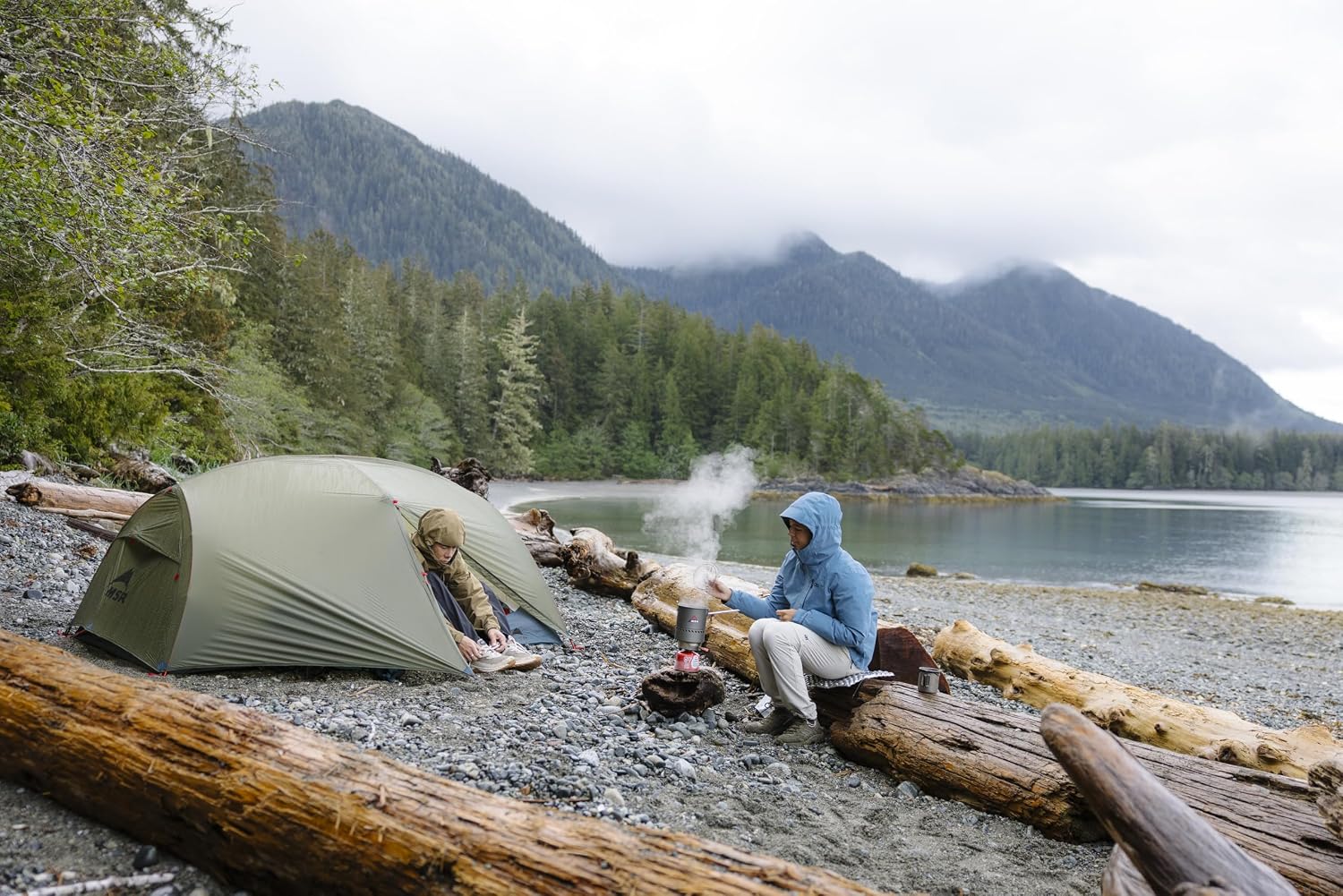
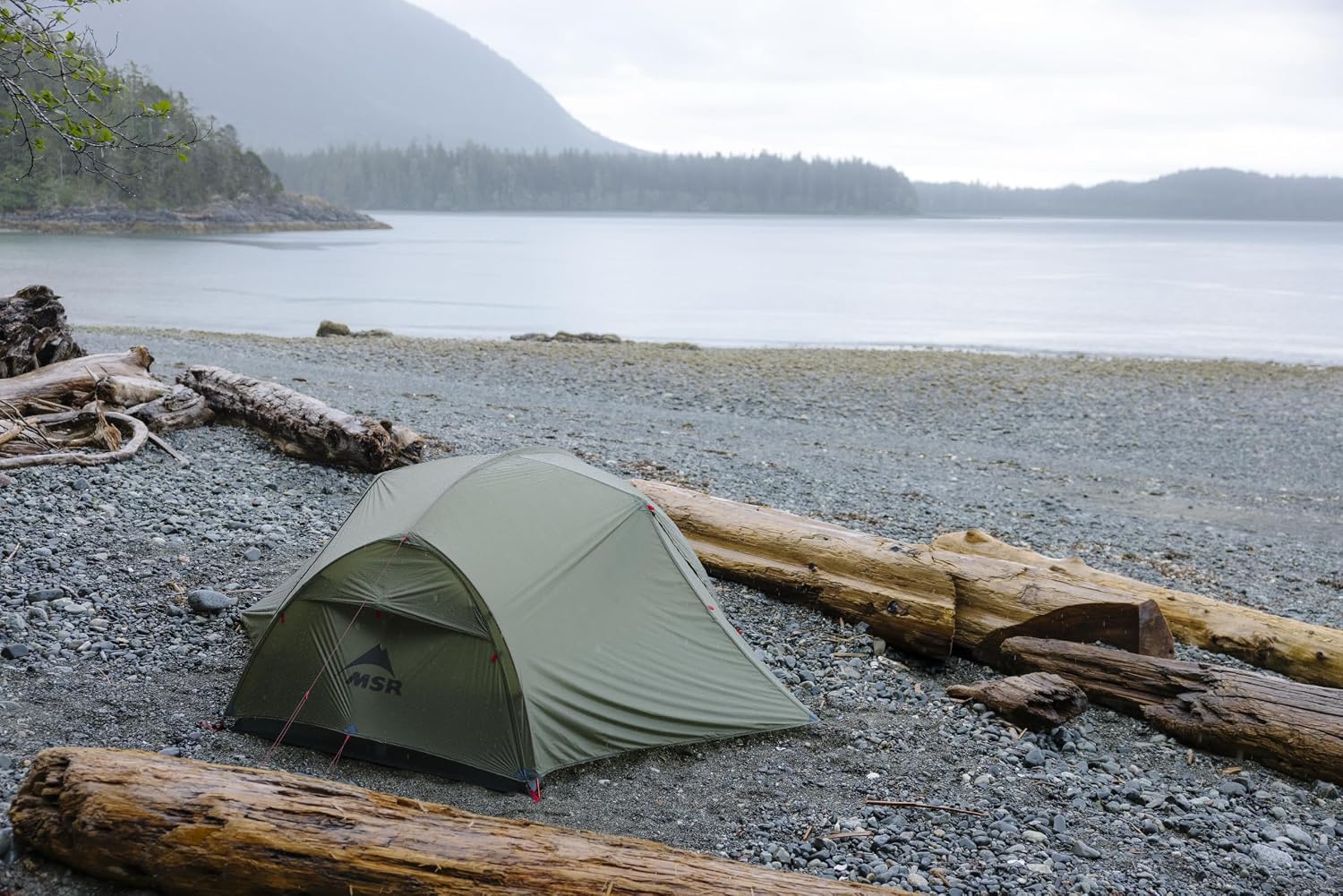
The moment that defined this test came on night four. A gale funnelled down the steep river valley and sent our camp chair into the woods. Inside the Hubba Hubba HD 2, the air was still. I watched the DAC pole structure flex under the gusts, but the shelter barely moved.
Gear Reviews purchased the tent for US$449. I used it for 14 spring nights, generally with a second person, in Quebec's Parc national des Hautes-Gorges-de-la-Rivière-Malbaie. The test included chilly nights, rocky and saturated pitches, prolonged rain and strong wind. This is the two-person HD model, not the lighter, more mesh-heavy Hubba Hubba LT.
Quick verdict
The MSR Hubba Hubba HD 2 takes the familiar Hubba formula and tunes it for difficult three-season weather. Its untapered floor fits two wide pads, the mostly solid inner cuts drafts, and the 3000 mm fly and 6000 mm floor stayed dry through driving rain and saturated ground. At 1.80 kg packaged it is not an ultralight shelter, and the inner-first pitch is awkward in a downpour, but the extra protection is worth carrying for shoulder-season trips.
What works
- Excellent stability once the extra guy lines are deployed
- 6000 mm floor and 3000 mm fly kept sustained rain outside
- True rectangular floor fits two 25-inch sleeping pads
- Solid inner blocks drafts and retains welcome warmth
- Full-width pockets provide outstanding organisation
- Side-loading roll-top sack makes packing unusually easy
What to know
- Inner-first setup exposes the bedroom during heavy rain
- 1.80 kg packaged weight is substantial beside ultralight rivals
- Mostly solid canopy will run warm in hot, humid conditions
- Optional footprint adds cost and is unnecessary on many pitches
- Eight Mini-Groundhog stakes may need supplementing in soft soil
The verdict
The Hubba Hubba HD 2 is an excellent shelter for backpackers, bikepackers and paddlers who travel through uncertain shoulder-season weather and want a tent that feels secure rather than delicate. It combines a properly sized two-person floor, useful vestibules, a warm inner and strong waterproof specifications with a freestanding shape that can be pitched quickly by one person. The night-four gale mattered because the design translated its specifications into a calm, usable place to wait out bad weather.
There are clear limits. Hikers counting every gram should look at the Hubba Hubba LT, Big Agnes Copper Spur UL2 or another lighter design. Summer-only campers may prefer more mesh, and people who often pitch in maritime rain should consider a tent whose fly and inner rise together. The HD's inner goes up first, so speed and a fly draped over the frame are your defence when the rain has already started.
At the US$449 we paid, the case rests on dependable function rather than novelty. The stronger floor, mostly solid canopy, excellent hardware and generous storage all improve ordinary camp life, while the guying system gives real confidence when the forecast deteriorates. This is not the lightest Hubba Hubba, but it is the one I would choose for a cold, wet trip where a few extra ounces are less important than sleeping well. Those strengths earn it 4.5 out of 5.
How I tested it
Fourteen nights is long enough for a tent's daily irritations to become obvious. We moved between established and rougher pitches, slept two in the tent on most nights and packed it in conditions ranging from dry spring mornings to steady rain. The floor met damp soil, moss and rock. The fly was used throughout the coldest and wettest spells, and the kickstand vents remained open whenever conditions allowed.
I used MSR's optional Universal footprint, then judged where it was adding protection rather than treating it as essential equipment. We also changed the staking setup with the ground: the supplied Mini-Groundhogs handled ordinary soil, while softer riverside ground benefited from a few full-size Groundhogs. No wind speed was recorded, so this review describes what happened during the gale rather than assigning it an invented number.
Pitching and pack-up
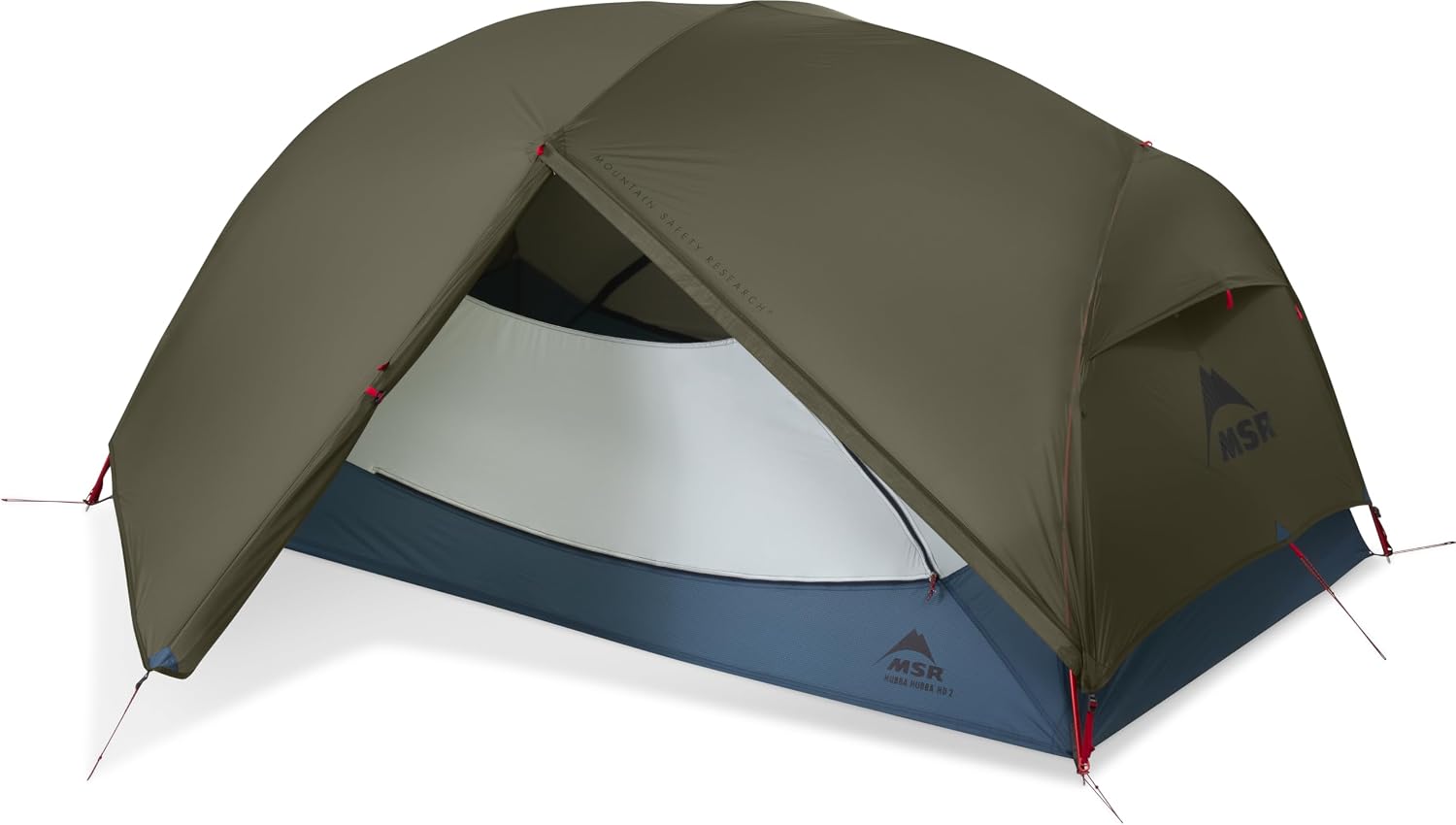
The first pitch took less than five minutes. Familiarity brought that down to about three, working alone. A unified DAC NFL hub-and-pole assembly unfolds into an obvious structure, and the symmetrical plan removes the usual pause to identify head, foot or front. Metal corner fittings are easy to locate and seat, while the clips follow a logical path up the frame.
That freestanding structure is valuable in wind because the body gains shape before every stake is fixed. It does not solve the rain problem. The inner must be pitched before the fly, so a hard downpour can wet the sleeping area during setup. Draping the fly over the body while connecting poles kept most water out during our test, but it is a workaround. An all-in-one or fly-first pitch remains the better architecture for repeated setup in heavy rain.
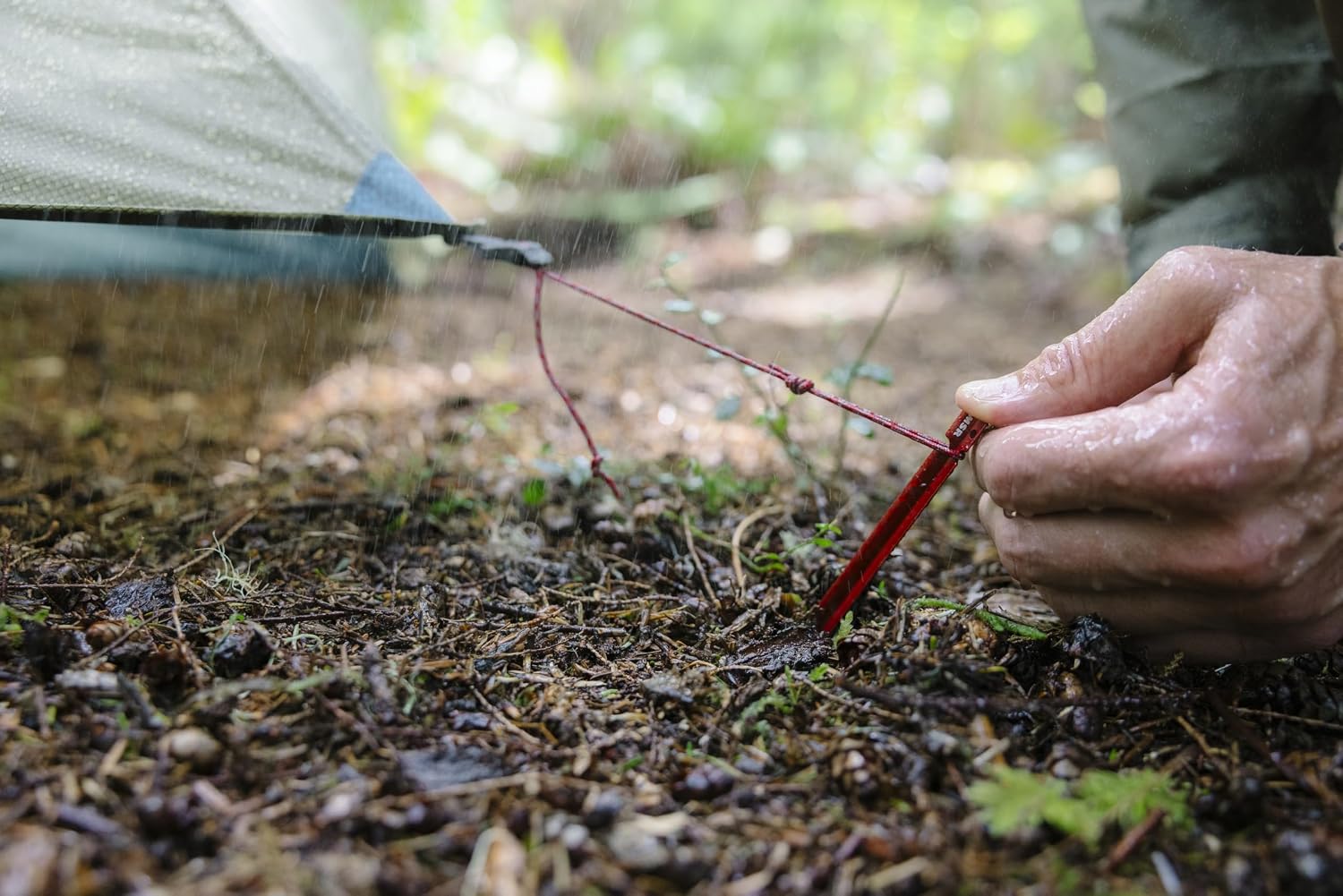
The included eight Mini-Groundhog stakes are good, light all-rounders. They held in normal forest soil; soft moss beside the river asked for more surface area. The multiple guy points deserve to be used rather than left coiled on the fly. Once tensioned for the valley gale, they spread the load across the pole structure and made the tent feel much more rigid.
Wind and rain performance
Wind stability is the HD's defining strength. During the strongest gusts, the DAC poles flexed instead of locking rigidly, then returned to shape. The fly remained tensioned and the inner stayed calm enough to sleep. This is still a three-season backpacking tent, not a winter expedition shelter, but its composed behaviour was far closer to the heavier end of the category than its friendly dome shape suggests.
Rain performance was equally persuasive. MSR specifies a 3000 mm polyether-urethane coating on the 20D fly and 6000 mm on the 30D floor. After prolonged rain and pitches over saturated, muddy ground, the bathtub floor showed no ingress and the fly did not sag into the inner. Taped seams and sensible separation between the two layers did their jobs without demanding adjustment through the night.
The two fly doors incorporate rain gutters that direct runoff to the sides. They reduced the familiar drip onto a sleeping pad when entering during rain. Packing wet remains a matter of technique: I kept the damp fly in an external mesh pocket rather than pressing it against the dry inner. That separation made the next evening easier and let the fly shed moisture during the day.
Space for two
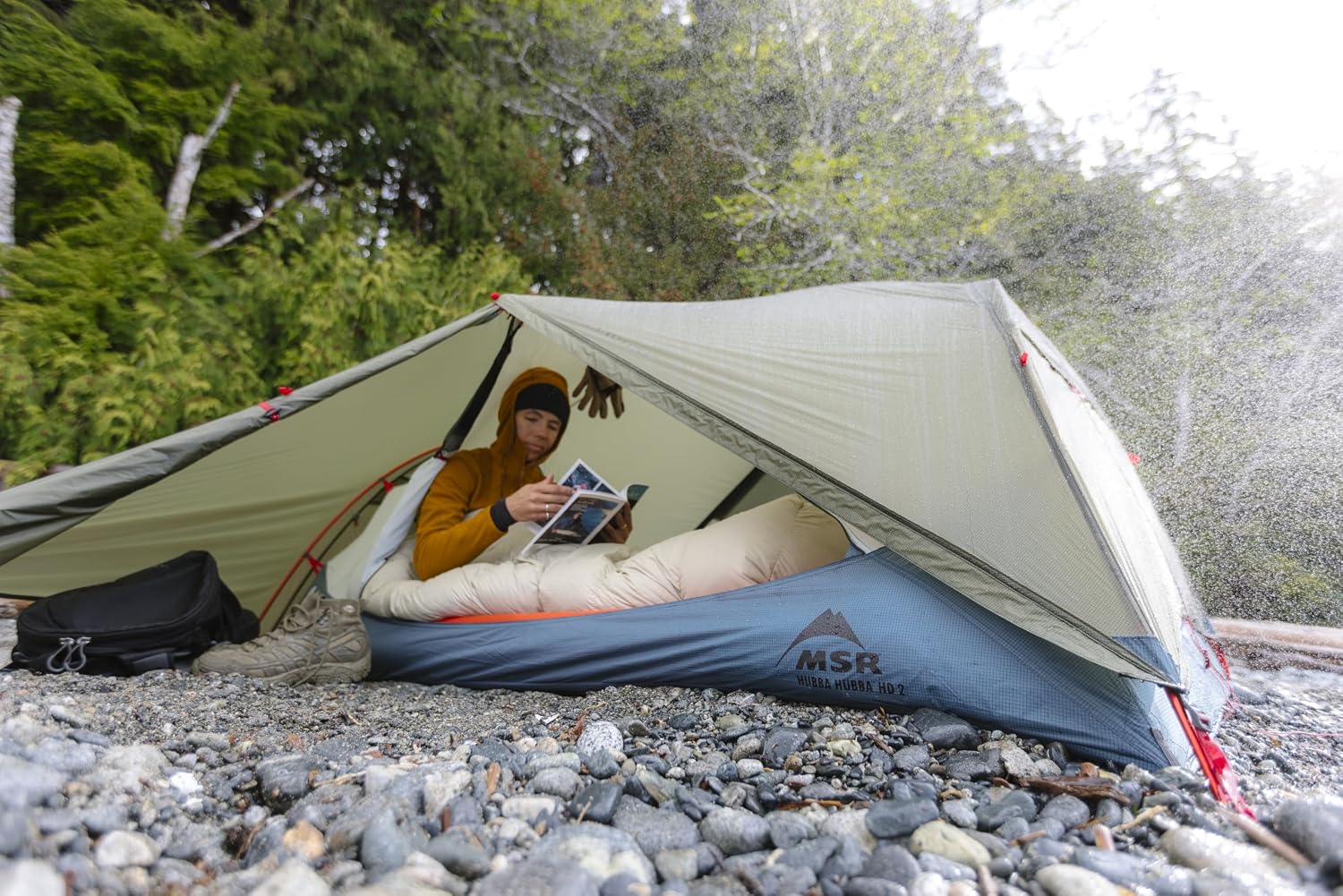
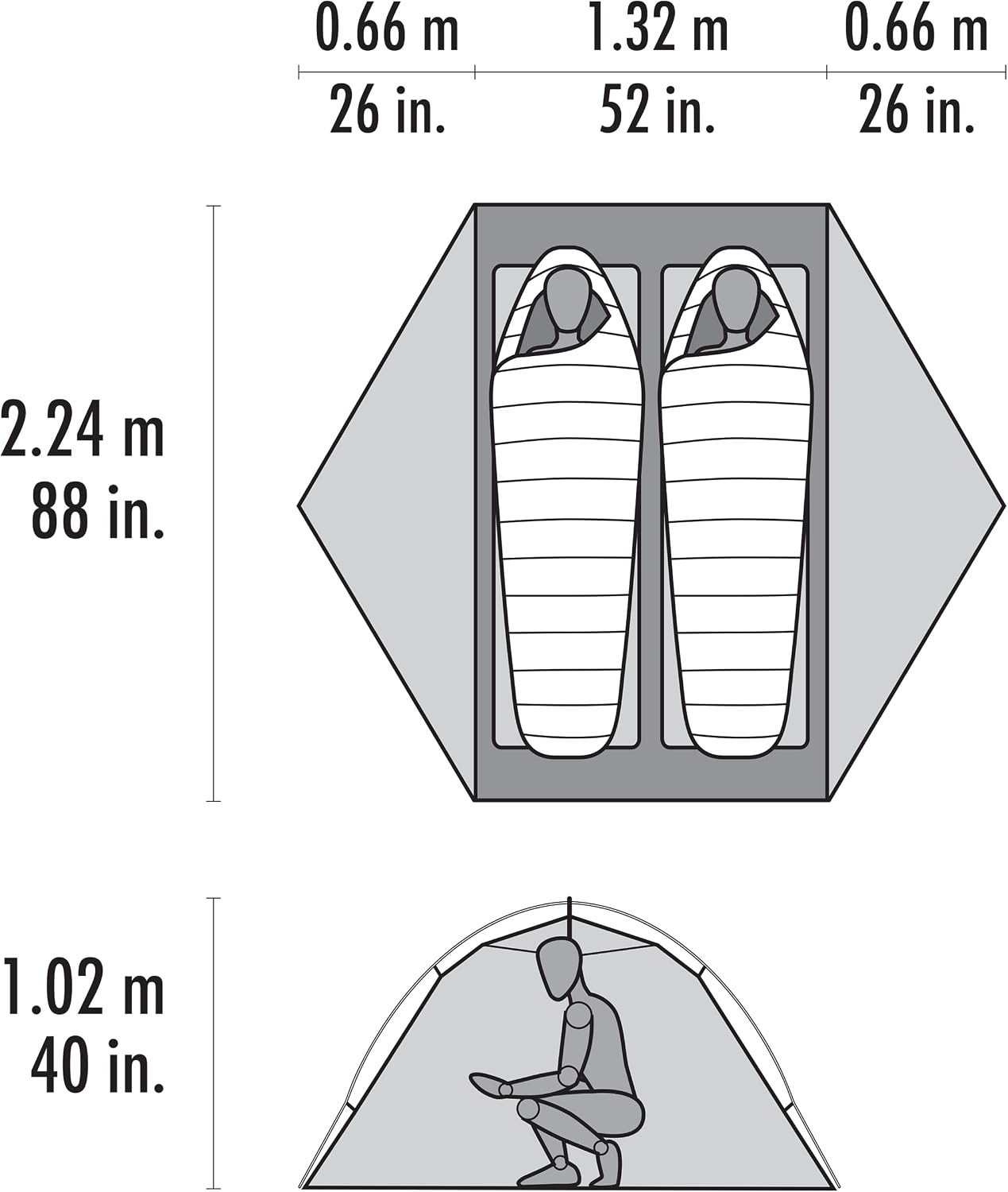
The 2.95 square metre floor is a true rectangle measuring 2.24 metres long by 1.32 metres wide. Its usable shape is more valuable than an impressive headline area with a narrow foot. Two 25-inch rectangular sleeping pads lay side by side without overlap, and neither person had to negotiate for the wider end. At six feet tall, I could lie straight without brushing my sleeping bag against the end walls.
A 1.02-metre peak height sounds ordinary until the cross pole and near-vertical walls distribute it across the interior. Two adults can sit up, change layers and organise equipment without taking turns. The pale inner also keeps the space visually open. It felt cheerful when we woke to grey weather, rather than turning a rain day into a dark cave.
Doors, vestibules and storage
Each sleeper gets a side door and a vestibule, so nobody must climb across a partner at night. The no-curve inner zips can be worked one-handed and close to a single, predictable point. MSR lists 16.5 square feet of vestibule space in total. In practice, each side held a 65-litre pack and muddy footwear while preserving a usable route through the door.
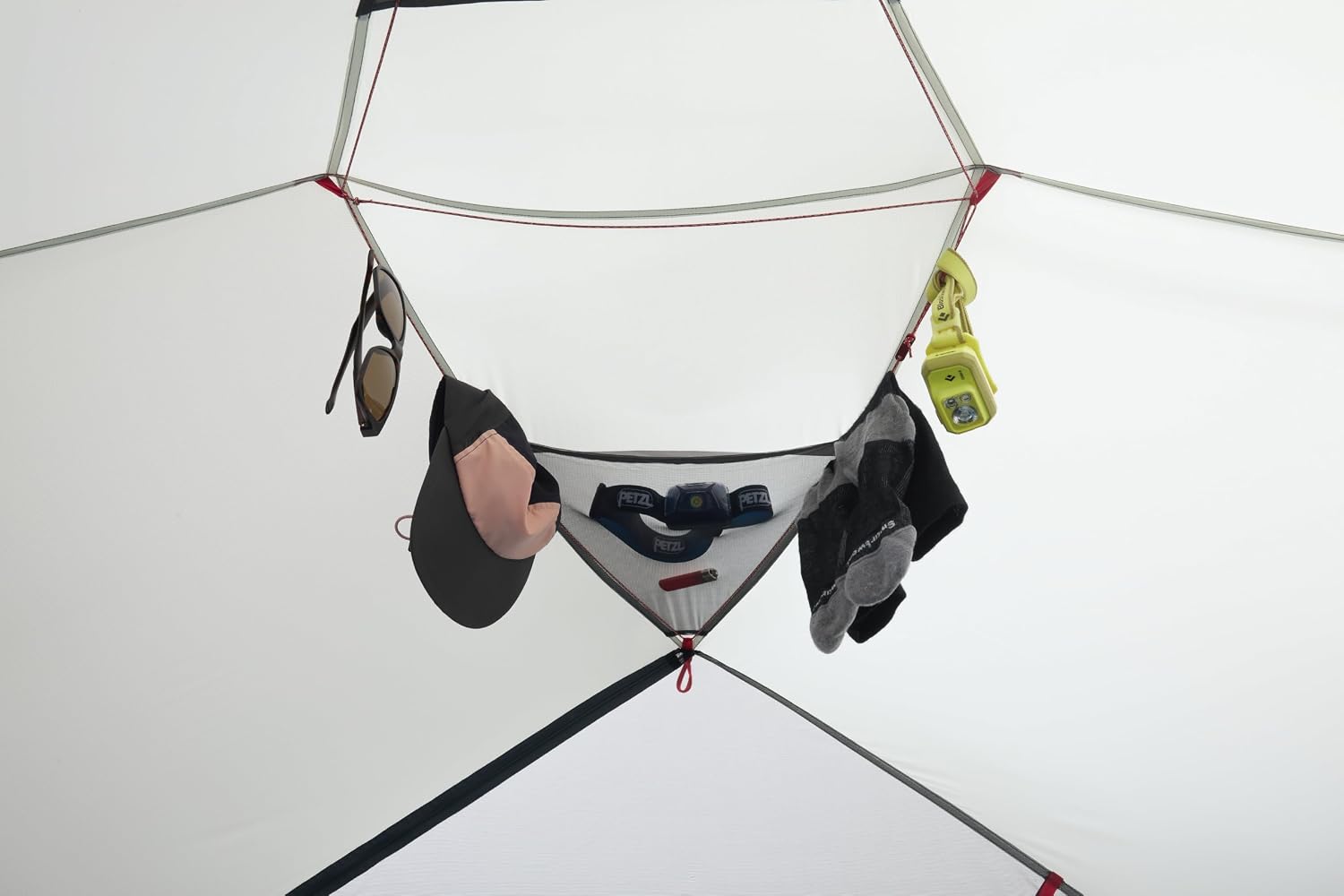
The internal pockets are exceptional. Large mesh panels span the head and foot ends, swallowing spare clothing, maps and the loose contents of a pack without hanging into the sleeping space. Overhead lofts put headlamps and glasses within reach, and the included clothesline is useful for damp socks. Cable ports exist in the pockets, but they added nothing to this test. The storage succeeds because of its size and placement, not its electronics story.
Warmth, ventilation and condensation
The canopy uses mostly solid 20D ripstop nylon with smaller micromesh sections. On nights in the low 30s Fahrenheit, that fabric cut drafts and retained enough body heat to make the interior noticeably more comfortable. It is one of the HD's main advantages over a mesh-dominant summer shelter.
Warmth and ventilation are the same design decision viewed in different weather. The solid fabric will be less appealing on a still, humid July night. During our cool spring test, condensation stayed minor because we used both kickstand fly vents to establish crossflow and avoided sealing every opening. No double-wall tent makes moisture disappear; the HD gives you enough ventilation control to manage it if the pitch and weather cooperate.
Weight, packed size and durability
Our complete tent weighed about 1.8 kg, matching MSR's packaged specification of 3 lb 15 oz. The minimum trail weight is listed at 1.61 kg. Packed dimensions are 58 by 13 centimetres, so the pole length is more conspicuous than the fabric volume. Split between two people, with one carrying the inner and poles and the other the fly and stakes, the burden was easy to justify.
The side-loading roll-top sack is an unexpectedly good part of the system. Instead of forcing a damp bundle through a narrow end, it opens along its length. Lay the folded components inside, roll the bag over them and compress the package. Pack-up became faster, and an imperfect fold was not punished.
After 14 nights, the floor, fly, clips and pole hubs showed no meaningful wear. The zips remained smooth despite grit, and the coatings showed no peeling or abrasion. That does not prove years of durability, but the 30D floor and solid construction provide more margin than fragile ultralight fabrics. The optional footprint is sensible over sharp gravel or repeated abrasive pitches; on ordinary forest ground, the floor did not make it feel mandatory.
Value and alternatives
The Hubba Hubba HD 2 sits between ultralight tents and much heavier storm shelters. The NEMO Dagger OSMO appeals to campers who prioritise generous vestibules and a more open warm-weather interior. Our Big Agnes Copper Spur UL2 review covers a lighter option with generous solo space, but a tapered floor that cannot fit two rectangular 25-inch mats. Its strong-wind performance was less reassuring in a separate Quebec trip; these were not controlled head-to-head tests. Durston's X-Dome 2 is worth considering if an all-in-one pitch is central to the brief. The Hubba Hubba LT is the closest alternative for buyers who like MSR's basic geometry but want less weight and more mesh.
The HD is the better choice when two wide pads, cold-night comfort, durable fabrics and bad-weather composure outrank the lightest possible pack. US$449 is premium money, but the tent earns its place through features that affected every night rather than decorative extras. I will keep using it for shoulder-season trips, particularly when the route offers no easy exit from a deteriorating forecast.
MSR Hubba Hubba HD 2 specifications
| Price paid | US$449 |
|---|---|
| Capacity | 2 people |
| Packaged weight | 3 lb 15 oz / 1.80 kg |
| Minimum weight | 3 lb 9 oz / 1.61 kg |
| Floor area | 32 sq ft / 2.95 sq m |
| Vestibule area | 16.5 sq ft / 1.53 sq m total |
| Interior dimensions | 88 x 52 in / 2.24 x 1.32 m |
| Peak height | 40 in / 1.02 m |
| Packed size | 23 x 5 in / 58 x 13 cm |
| Doors | 2 |
| Pole | DAC NFL 9.3 mm unified hub-and-pole system |
| Fly | Solution-dyed 20D ripstop nylon, 3000 mm polyether urethane, PFAS-free silicone |
| Canopy | Solution-dyed 20D polyester micromesh and 20D ripstop nylon, PFAS-free DWR |
| Floor | Solution-dyed 30D ripstop nylon, 6000 mm polyether urethane, PFAS-free DWR |
| Included stakes | 8 Mini-Groundhog stakes |
| Rating | 4.5 / 5 |
Overall score: 4.5 out of 5. The Hubba Hubba HD 2 is a roomy, warm and impressively storm-stable three-season tent. Its inner-first pitch, packed weight and summer ventilation are the meaningful tradeoffs.

Sources & context
What we checked
Gear Reviews purchased this Hubba Hubba HD 2 for US$449. The performance findings come from Adam Whistler's 14-night field test. Published dimensions, materials and environmental statements were checked against MSR's current documentation.
- MSR Hubba Hubba HD 2 product page and technical specifications
- Sépaq: Parc national des Hautes-Gorges-de-la-Rivière-Malbaie
MSR says its solution-dyed floor, mesh and fly reduce carbon emissions by at least 80% compared with the fabrics the company used previously. We have treated that as a manufacturer claim, not an independently measured result from this test.
Editorial disclosure: Gear Reviews bought the tent for US$449.