
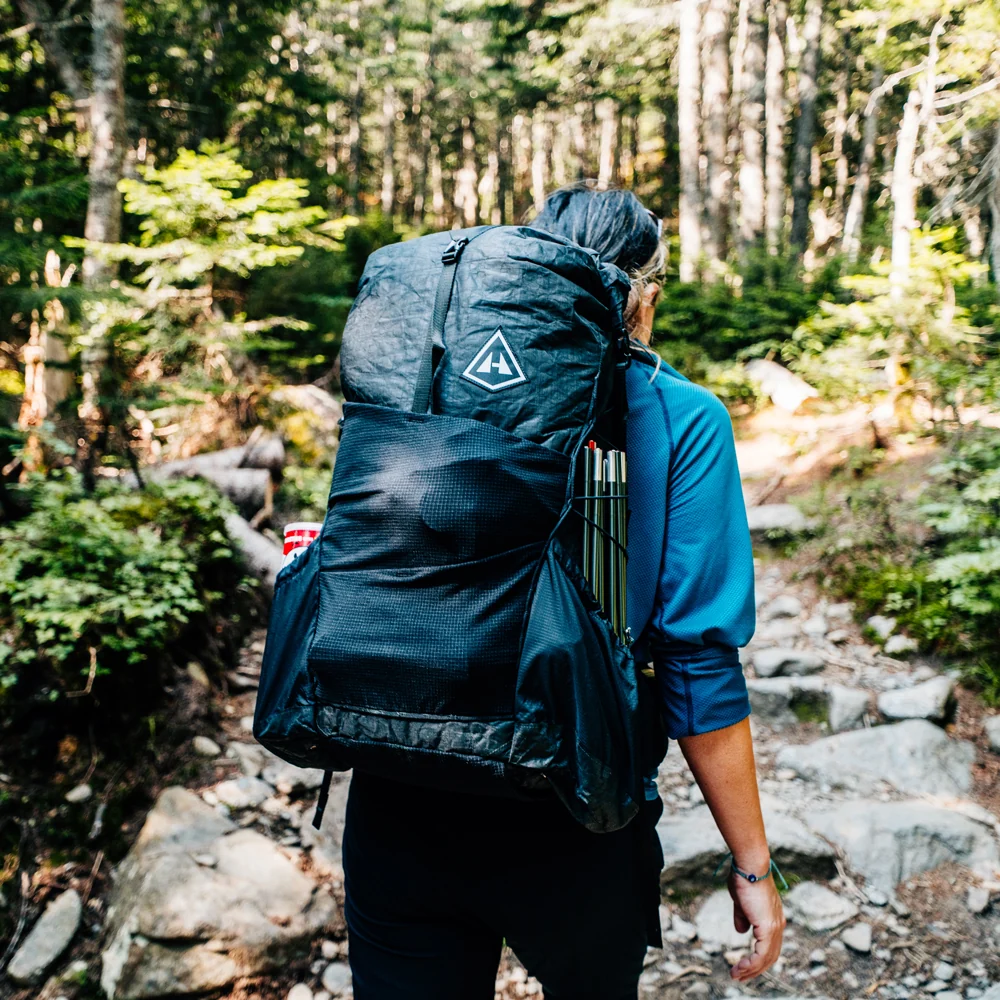
I bought the black Hyperlite Mountain Gear Unbound 40 with my own money for £379 and used it throughout a three-month hiking trip in Quebec. Hyperlite Mountain Gear did not supply the pack, know it was being tested or have any influence over this review. It was the only backpack I wore during almost 1,000 km through the Laurentides, Saguenay National Park and along the Gulf of St Lawrence.
Quick verdict
The Unbound 40 is an exceptionally capable pack for high-mileage hikers who already have a compact kit. At a normal 8 kg load it sits close, transfers weight cleanly to the hips and makes water, food and wet layers unusually easy to reach without stopping. The body shrugged off rock, branches, mud, salt water and prolonged rain, while the external stretch pockets remained taut. It runs hot against the back, hard objects must be packed carefully and the absence of load lifters reduces fine adjustment. I also carried 19.6 kg during transfers, slightly beyond the stated 40 lb limit. It coped, but comfort deteriorated sharply at that weight and it is not how this pack should normally be used.
What works
- Excellent comfort and load transfer at normal loads
- Highly effective weather protection with taped seams
- Superb dual-entry front pocket and bottom stash pocket
- Large side pockets that are easy to reach while walking
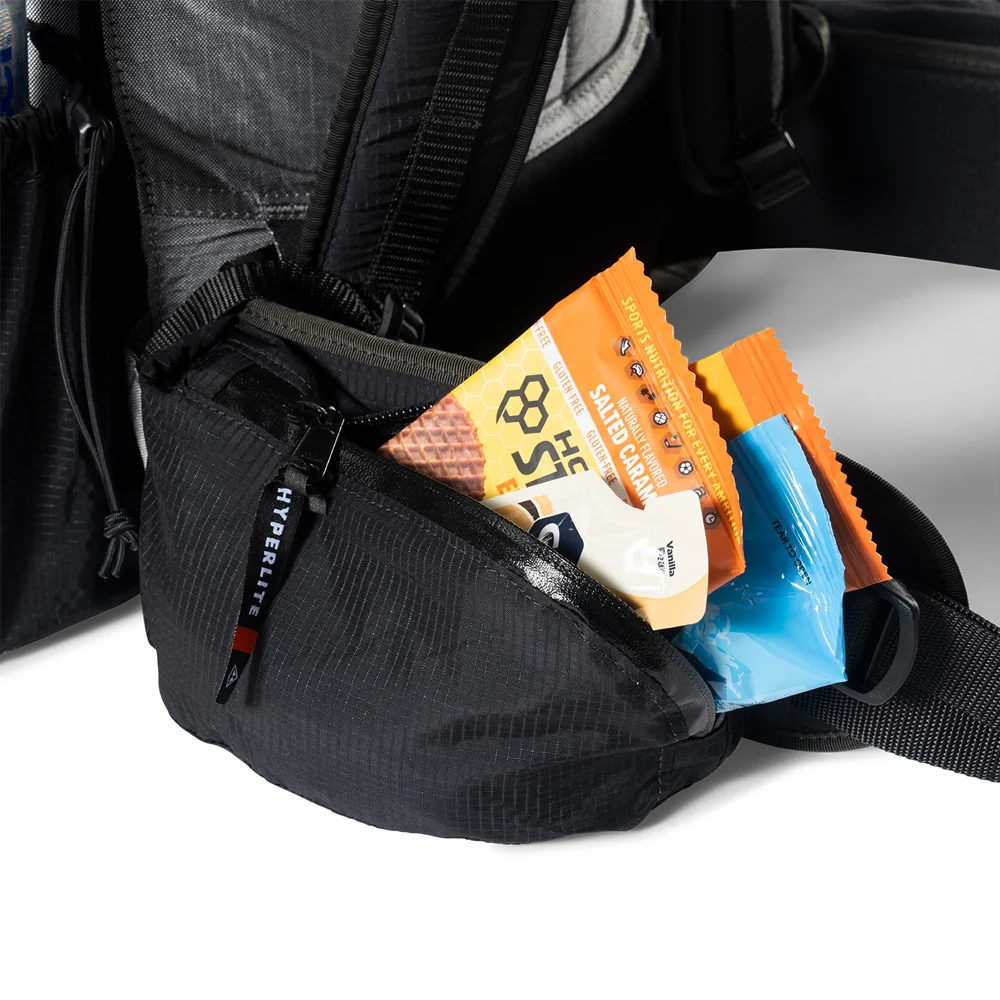
- Useful, generous hipbelt pockets
- Stable, close-to-body carry on rough terrain
- No meaningful fabric, mesh or hardware damage after three months
What to know
- No suspended back panel or ventilation channel
- Thin back padding makes careful packing essential
- No load lifters
- Comfort falls away near the 40 lb maximum
- Premium £379 purchase price
- Top-loading main compartment limits access to buried gear
- Not a sensible match for bulky, heavy beginner equipment
The verdict
The Unbound 40 is built around a simple idea: keep the main bag light and weather resistant, then put the things needed during the day where they can be reached without removing the pack. That idea survived three months of continuous use. Water bottles came out one-handed. Food, rainwear and damp equipment lived in the external pockets. The roll top compressed as supplies disappeared. I spent less time stopping, opening the main compartment and rebuilding the load than I do with more traditionally organised backpacks.
It also carried far better than its low empty weight suggests. My usual day load was around 8 kg, including food and water. At that weight the pack felt closely connected to my torso, with the hipbelt taking the load and the shoulder straps providing control rather than supporting everything. There was little bounce when walking quickly, climbing or moving across uneven ground. The narrow profile made it easy to judge gaps between branches and rock.
The limit is equally clear. Hyperlite Mountain Gear rates the Unbound 40 to 40 lb, or about 18.1 kg. My maximum 19.6 kg transfer load was roughly 43.2 lb. That load included all my belongings and, at times, additional food and water for younger children. The structure coped, but the comfort that defines the pack at 8 kg had largely gone by then. This is useful evidence of reserve strength, not an argument for routinely exceeding the stated limit.
How I tested the Unbound 40
The test covered almost 1,000 km over three months in Quebec. Routes ran through forest and mountain trails in the Laurentides and Saguenay National Park, beaches and coastal ground around the Gulf of St Lawrence, plus the pavements and public transport involved in moving between locations. The pack was not reserved for headline hiking days. I lived out of it and wore it for ordinary travel and urban sightseeing as well.

Conditions ranged from days of torrential rain to 38°C heat with heavy humidity. The bag encountered rock, gravel, branches, mud, slime and salt water at the beach. It was repeatedly set down, repacked and compressed rather than being treated as delicate ultralight equipment. That breadth of use mattered because the Unbound was one of the most heavily promoted packs of the year. The point of the test was to find out whether the performance matched the attention.
My normal carried weight was about 8 kg. The exceptional 19.6 kg figure occurred while moving everything between locations, not during a representative hiking day. Those two loads exposed both sides of the design: a very comfortable pack within its intended range and a much less forgiving one at or beyond its published ceiling.
Carry comfort and load transfer
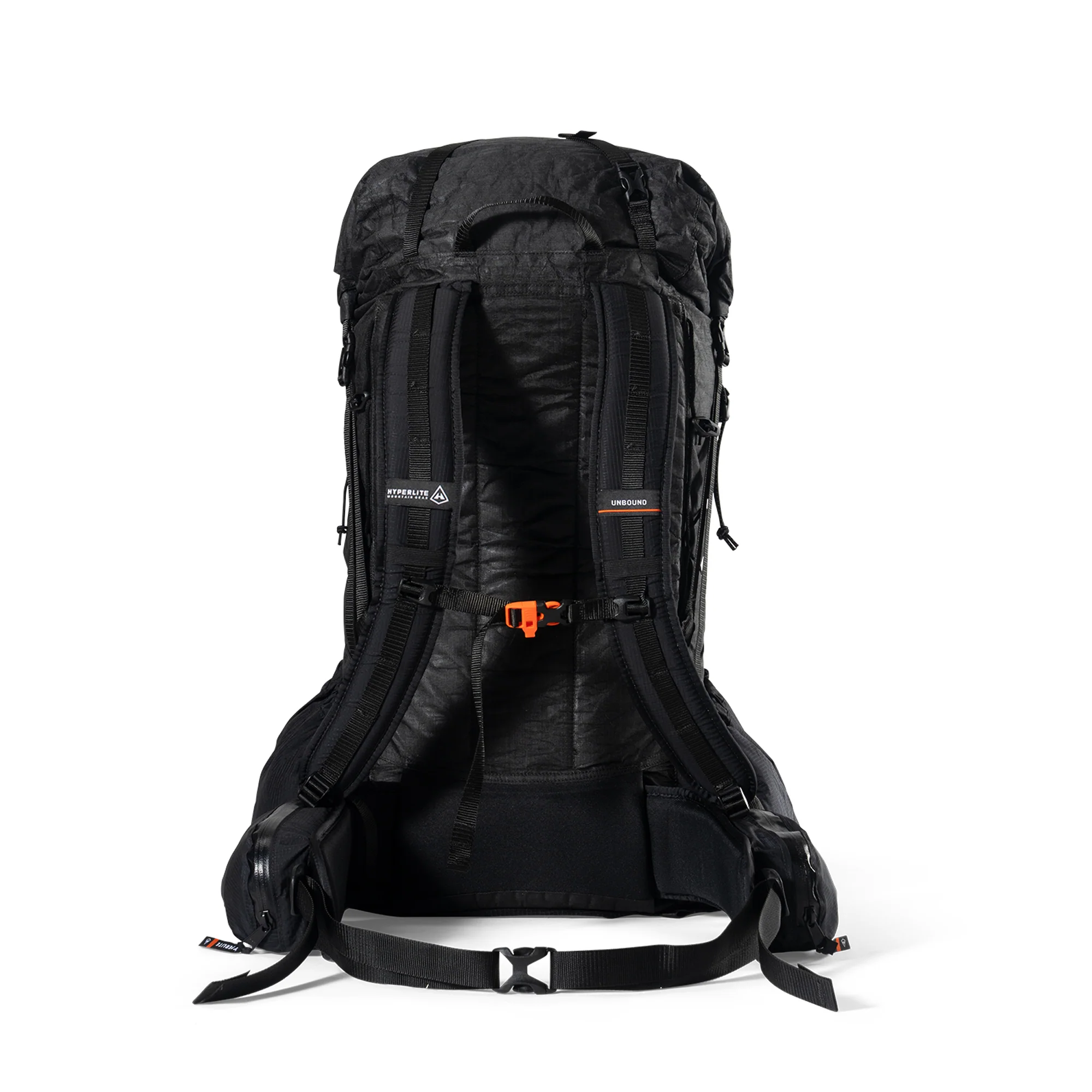
At light and moderate weights, the Unbound 40 is very comfortable. The frame and foam back panel are simple compared with a heavily engineered suspension system, but they keep the bag upright and direct weight into the hipbelt effectively. At around 8 kg the pack felt lighter on my body than the number suggested. I could wear it from morning until evening without the late-day shoulder ache that exposes poor load transfer.
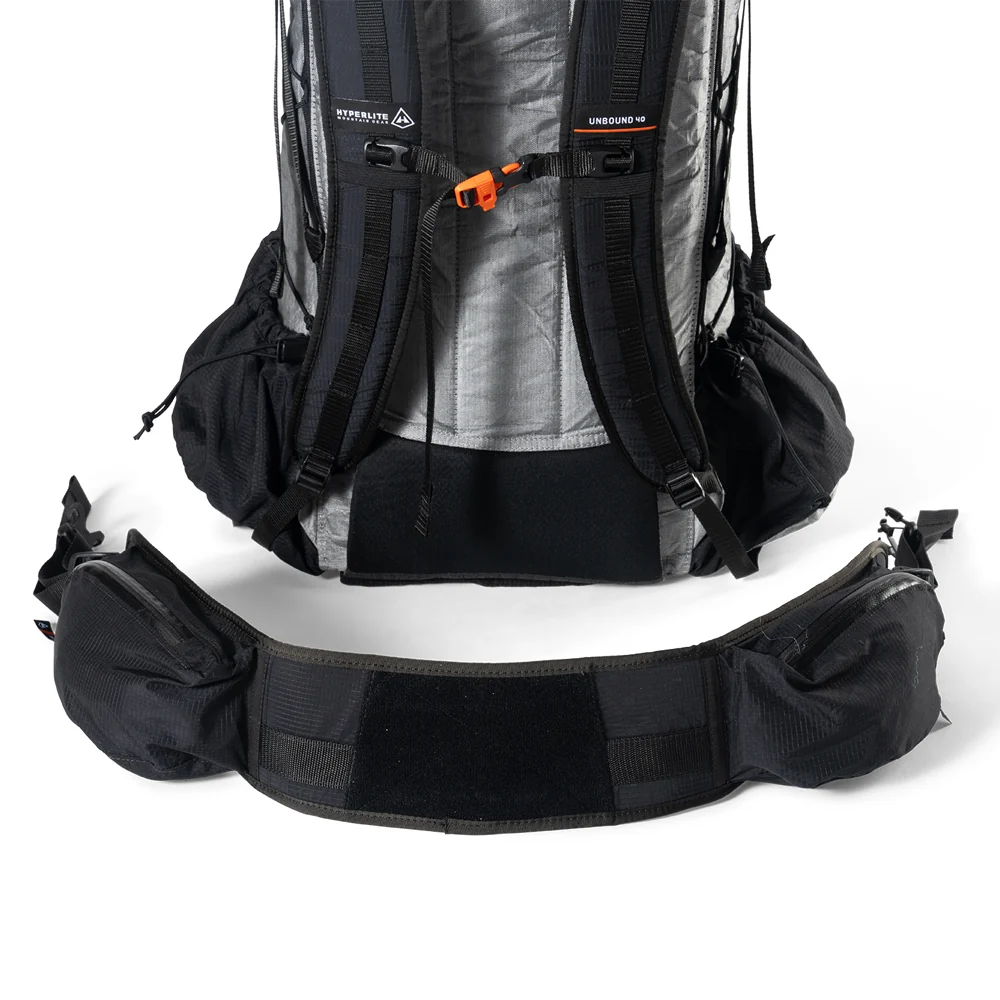
The hipbelt stayed locked around my hips and did most of the work. The shoulder straps use restrained padding rather than the thick foam found on conventional load haulers. That was enough at normal weights and reduced bulk across the chest. The sternum strap was easy to move between the bar-tacked positions and held its adjustment.
Comfort deteriorated close to 40 lb. The shoulder straps had less reserve cushioning, and the lack of load lifters meant I could not make the small upper-harness changes available on many framed packs. Hyperlite Mountain Gear designs the frame to finish near the shoulders, so load lifters are not required for the intended geometry. I still missed them when the pack was unusually full or heavy.
The thin foam also makes packing technique part of the suspension. A cooking pot or another hard object placed directly against the back can create an obvious pressure point. Soft clothing or sleep equipment needs to form a smooth layer between the wearer and angular items. Once packed properly, comfort remained consistent. Packed carelessly, the mistake became apparent within minutes.
Heat and back ventilation
The back panel sits flat against the body. There is no suspended mesh, deep channel or meaningful air gap, so sweat accumulates quickly in hot weather. During humid 38°C days in Quebec, the back of my shirt became wet. The same would happen with many minimalist packs, but buyers moving from a trampoline-style suspension should expect a major difference.
This is the clearest everyday compromise in the design. A suspended system would add weight, structure and distance from the body. The Unbound instead stays close and stable. I preferred that control on awkward ground, though it never became cool or airy. If back ventilation is a high priority, this is the wrong pack regardless of how attractive the weight and storage look on paper.
Storage designed for movement
The 40-litre main compartment is a simple roll-top tube. It accepts bulky soft equipment easily and compresses down as food and clothing leave the bag. The simplicity helps weather protection and makes the volume flexible, but there is no shortcut to something buried at the bottom. Packing order matters.
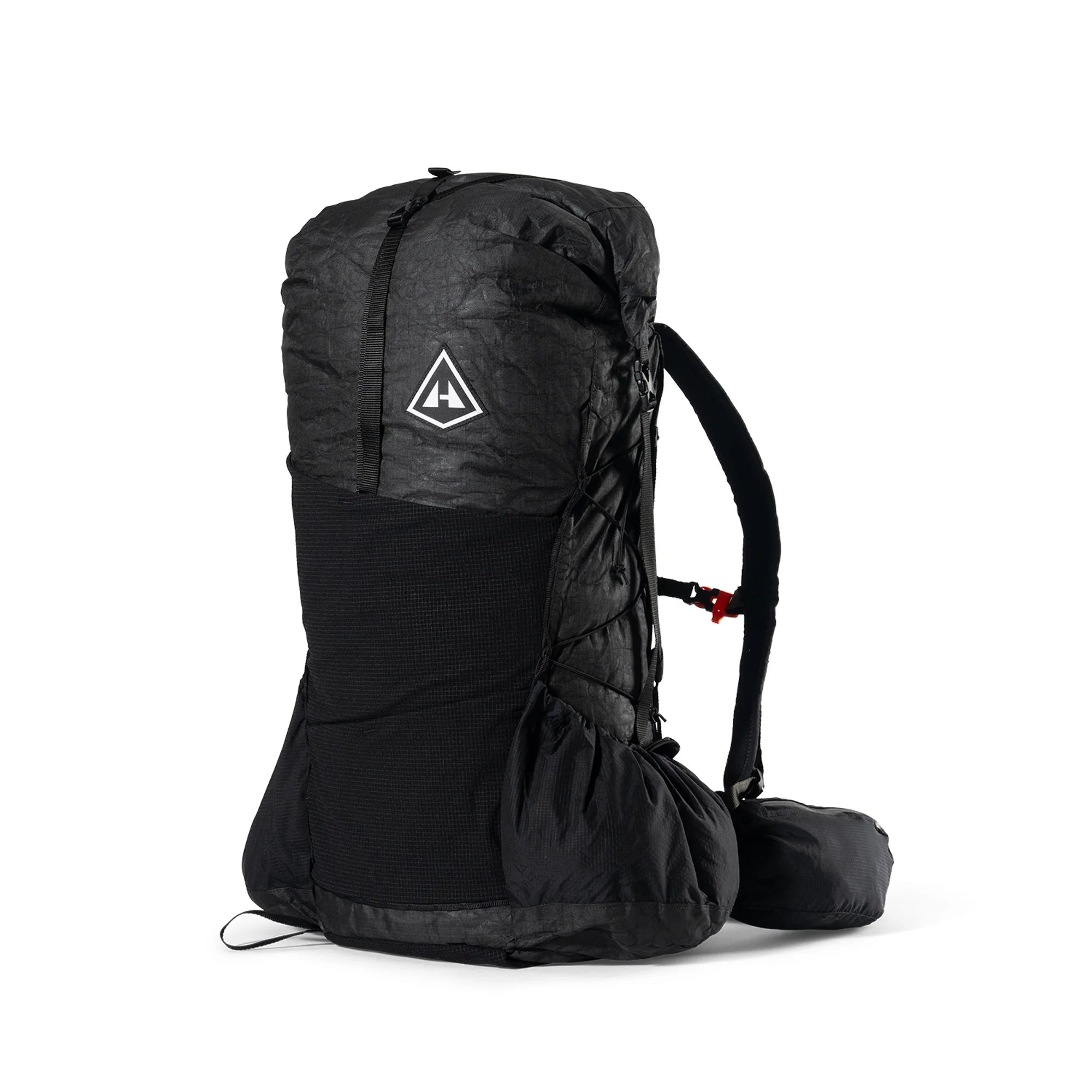
The external storage prevents that top-loading layout from becoming irritating. The large front pocket has access from both sides and takes rainwear, maps, damp layers and other equipment that should remain available. The bottom stretch pocket works well for food or a shell. Together they reduce the number of times the roll top needs to be opened during a normal day.
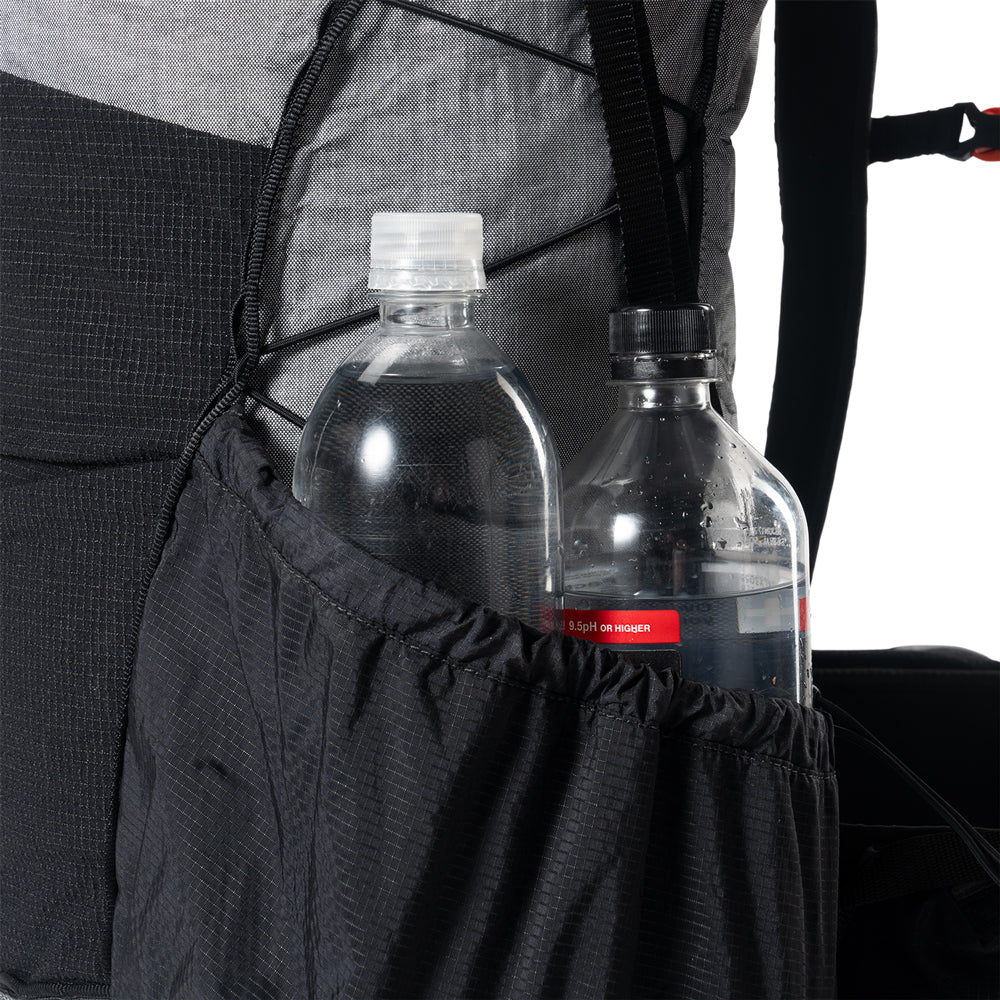
The side pockets are unusually generous. Each can take two bottles, while the shape allows a bottle to be removed and replaced one-handed. One side can carry a compact shelter instead. Removable compression straps and daisy chains secure taller loads and provide sensible attachment points for trekking poles without covering the bag in permanent webbing.
The hipbelt pockets are another strong point. They are large enough for a phone, food and a compact camera, with weather-resistant zips and openings that are easy to operate while walking. The pockets kept their shape and did not sag after months of use.
Rain and weather protection
The pack spent days in sustained, heavy rain without allowing water into the main compartment during this test. The composite body does not absorb water in the way a conventional woven nylon pack can, and the taped seams prevent the usual stitching lines from becoming immediate leak paths. After rain, most surface water could be shaken or wiped away.
I would describe that as excellent real-world rain protection rather than make an absolute waterproof guarantee. The roll-top is still an opening, closures can be used badly and abrasion can eventually affect any pack. I carried a light plastic liner around my sleeping equipment as inexpensive redundancy. I did not use a rain cover.
The external mesh drained quickly and was the right place for wet rainwear. It did not retain enough water to become a heavy sponge. Salt water and beach use caused no visible problem, though salt should still be rinsed from zips and hardware rather than left to accumulate.
Durability after three months
The Unbound 40 finished the trip dirty but structurally excellent. I found no hole, seam failure, delamination, broken buckle or stretched pocket. The body had been pushed against branches, placed on gravel and rock, splashed with salt water and repeatedly loaded for travel. None of those encounters produced meaningful damage.
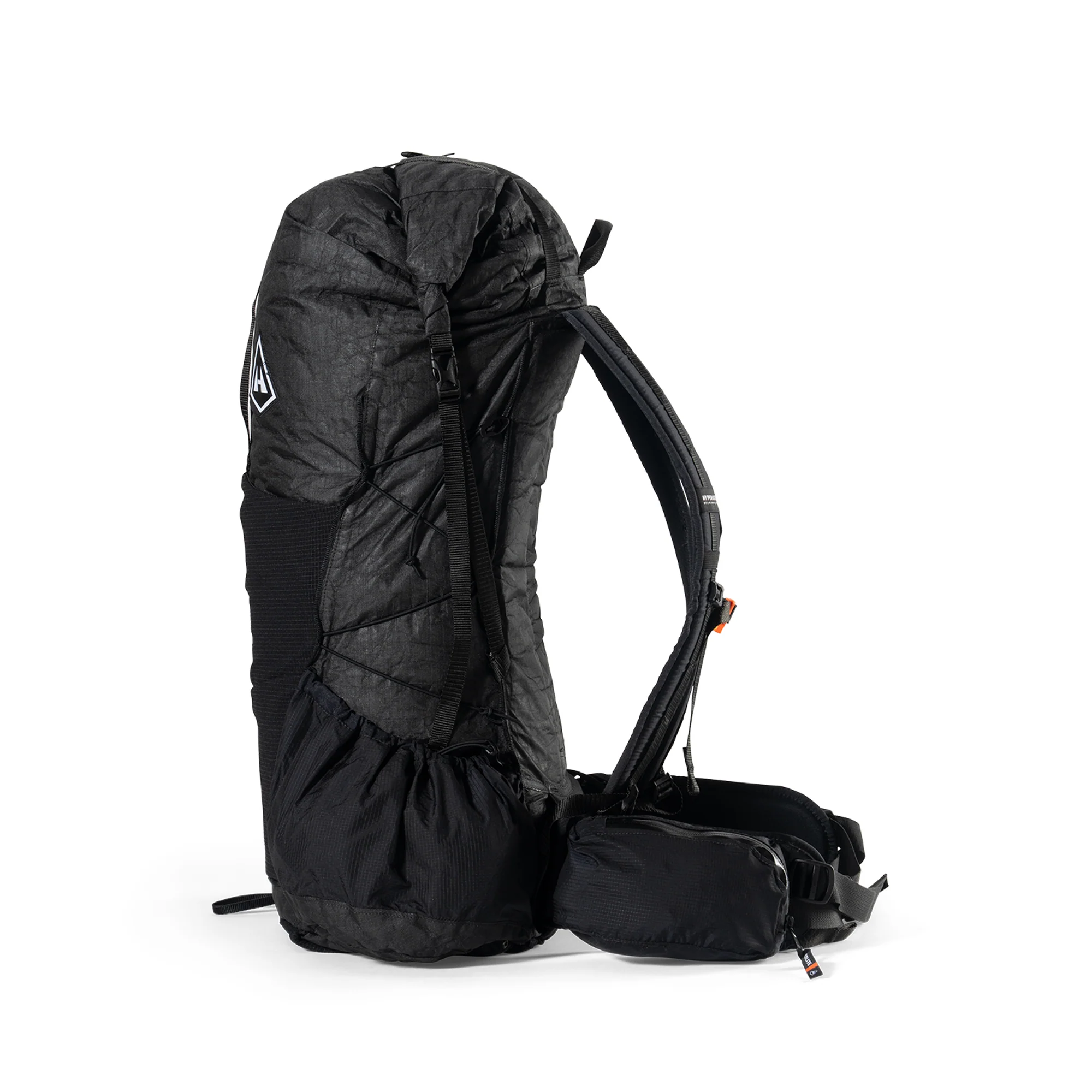
The Dyneema Stretch Mesh deserves particular credit. Stretch pockets are often the first parts of a lightweight pack to look tired. These retained their tension despite frequent overfilling and contact with vegetation. Stitching around the harness, hipbelt and compression points also remained neat.
Three months cannot prove the pack will survive several complete thru-hikes. It is long enough to expose fragile mesh, weak hardware and poor reinforcement. Nothing from this test suggests the low weight has been achieved by making the parts most exposed to trail abuse disposable.
Weight, materials and value
Hyperlite Mountain Gear lists the current 40-litre Unbound at an average 27.3 oz, or 773.9 g, in size medium. That includes two removable contoured aluminium stays and a removable hipbelt. The main materials are Dyneema Woven Composite 3.9, 100D Dyneema Gridstop and Dyneema Stretch Mesh. The pack is made in Mexico.
The £379 I paid places it well into premium territory. Less expensive packs can be comfortable, and some specialist frameless designs weigh less. The case for the Unbound is the combination rather than one headline number: low empty weight, useful structure, excellent exterior storage, strong weather resistance and materials that tolerated prolonged use.
Value depends on the rest of the system. A hiker with compact shelter and sleep equipment can use the 40-litre capacity efficiently and benefit from the low weight. Somebody trying to fit bulky entry-level gear will either overload the bag or spend the day fighting its shape. The pack does not make a heavy kit ultralight.
Who should buy it
The Unbound 40 suits thru-hikers, high-mileage section hikers and experienced backpackers with a compact base kit. It is especially good for people who want to eat, drink, add a layer or stow wet equipment without taking the pack off every time. Long wet trips also play to the material and seam construction.
It can work from an overnight trip to a multi-month journey. Food volume, water requirements and seasonal insulation will decide whether 40 litres is enough. My three-month test proves the pack can support long travel, but I regularly used the external pockets and had to think carefully about what belonged inside.
Avoid it if you routinely carry more than 35 to 40 lb, want strong back ventilation or prefer extensive internal organisation. Beginners should check the packed volume and weight of their full kit before buying. The Unbound is forgiving on the trail once loaded correctly, though it is not forgiving of bulky equipment, poor packing or unrealistic load expectations.
I would buy it again. At normal loads it became the kind of pack I stopped thinking about, which is the best result for equipment worn all day. It kept the essentials accessible, stayed dry in severe weather and showed no reason to doubt its durability. The sweat and careful packing are real costs. For the intended high-mileage user, they are acceptable ones.
Hyperlite Mountain Gear Unbound 40 specifications
| Tested model | Hyperlite Mountain Gear Unbound 40, black |
|---|---|
| Main volume | 40 L |
| External volume | 9 L |
| Manufacturer weight | 27.3 oz / 773.9 g average in size medium |
| Load capacity | Up to 40 lb / 18.1 kg |
| Materials | Dyneema Woven Composite 3.9, 100D Dyneema Gridstop and Dyneema Stretch Mesh |
| Frame | Two removable contoured aluminium stays |
| Back panel | Integrated foam panel |
| Height fully unrolled | 32.5 in / 82.6 cm |
| Back width | 10.5 in / 26.7 cm |
| Country of manufacture | Mexico |
| Price paid | £379 |
| Test status | Purchased by reviewer; almost 1,000 km and three months in Quebec |
| Manufacturer involvement | None. No free sample, sponsorship or copy approval. |
Scoring breakdown
Sources & context
What we checked
This review is grounded in Adam's three-month, almost 1,000 km test in Quebec. We checked the current weight, materials, dimensions, load rating, frame construction and country of manufacture directly against Hyperlite Mountain Gear's product specification.
Editorial disclosure: Adam bought this Unbound 40 with his own money for £379. Gear Reviews received no payment, free product or editorial approval from Hyperlite Mountain Gear.