
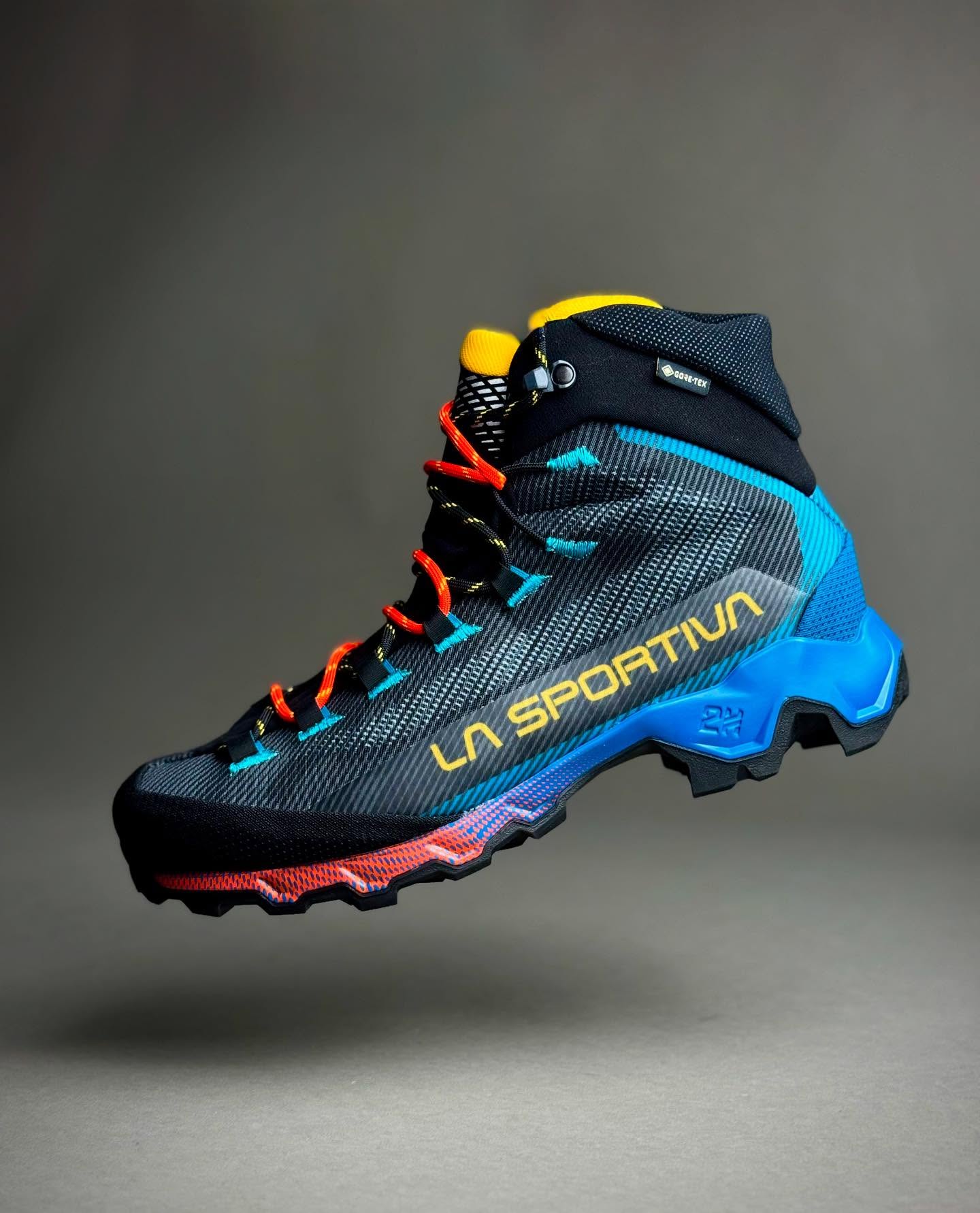
A local gear shop lent my friend and me two pairs of men's La Sportiva Aequilibrium Hike GTX boots for a Quebec hiking trip. We returned both pairs afterwards. The shop had no editorial input. We each walked about 24 miles, starting with the Acropole des Draveurs in Hautes-Gorges-de-la-Rivière-Malbaie and continuing on a multi-day loop near Mont-Tremblant. The same boot gave us very different results: my narrow-footed friend loved the fit, but my wider foot never really settled into it.
Quick verdict
This is a capable, protective boot for difficult terrain. The sole gave us confident braking on steep descents, and the upper let our ankles move without the whole boot feeling floppy. After roughly 24 miles each, the soles and seams looked sound. My friend, with narrow feet, scored it 4.8/5 and would buy it at the shop's $279 USD price. I scored it 3.8/5: my little toe pressed against the forefoot when I tried my usual size in the shop, while the pair one size up let my foot slide downhill on the hike. Our combined score is 4.3/5.
What works
- Secure heel hold and immediate comfort for our narrow-footed tester
- Firm underfoot protection and great ankle mobility
- Excellent grip on roots, dirt and loose descents
- Dry socks after a shallow stream crossing and a two-minute standing test in water
- Only superficial scuffs after 24 miles per tester
What to know
- Narrow forefoot rubbed Adam's wide foot
- Moving up a size eased toe pressure but allowed sliding on descents
- Polished wet granite still demanded care
- The firm feel will not suit hikers seeking plush trail-runner cushioning
The verdict
We chose the notoriously difficult Acropole des Draveurs for the first hike because we wanted to put these boots through their paces. With about 25 pounds on my back, I wanted enough protection to step onto broken rock without needing to pick the perfect landing every time. The Aequilibrium's firm sole took the sharp edges out of those steps, but its ankle still did not fight me when the trail turned into a scramble. My friend later carried closer to 35 pounds on the Mont-Tremblant loop and came away with the same confidence in the platform.
Where we saw things differently was fit and comfort. My friend's narrow foot stayed planted from the first mile to the last. I was stuck between pressure on my little toe in the shop and too much space in front of it on the trail. He gave the boot 4.8/5, I gave it 3.8/5, and the 4.3/5 shown on this page is the average of those two views. I do not often have this kind of fit issue with boots; my foot shape is not especially unusual. I would recommend trying the boots on with the socks you plan to hike in before trusting a size chart.
Two pairs and about 24 miles each
We took two shop-loaned pairs straight from their boxes to the trail. The Acropole was a long, demanding day of steep steps and dry rock scrambles. Our later loop near Mont-Tremblant brought slick granite, roots, muddy hollows and two shallow stream crossings. Daytime temperatures were around 60°F (15°C), and we both wore mid-weight Darn Tough merino socks. My pack was about 25 pounds; my friend's was closer to 35 pounds on the loop.
Two hikers, two very different fits
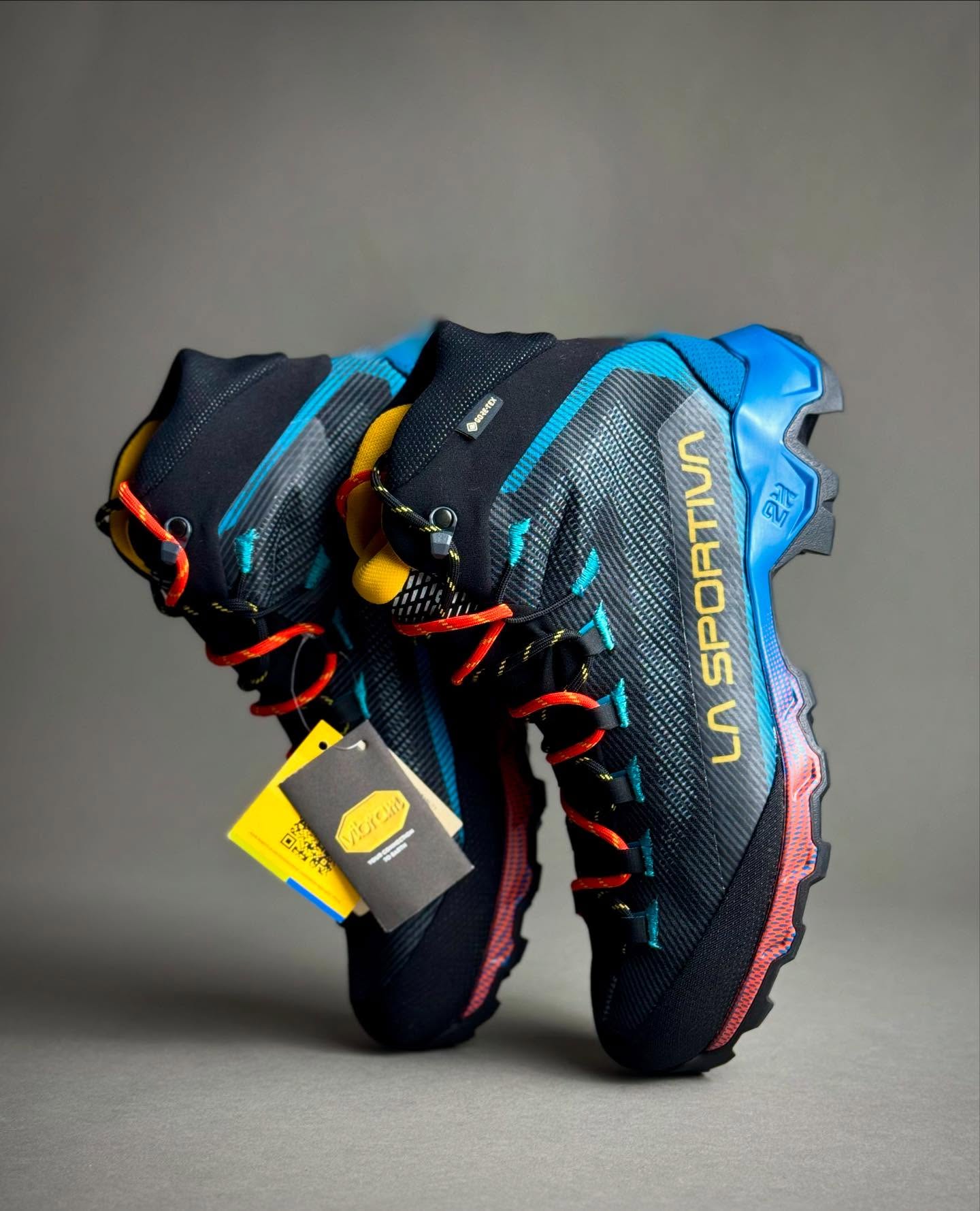
I usually need room for my toes to spread. When I tried my usual size in the shop, my little toe pressed against the forefoot. I hiked in a pair one size up. That relieved the pressure, but the extra length let my foot slide forward on descents, so neither fit felt right. After a 14-mile day I had a mild rub on my left little toe, though no blister formed. Lacing helped hold the heel, but it could not compensate for the overall shape mismatch.
My friend normally wears a US 10 and has a narrow foot. He found his usual size right immediately. His heel stayed locked, and he reported no hot spots, pressure points or blisters. Neither of us had broken the boots in at home. La Sportiva lists a medium fit, but our two pairs suited his narrow foot far better than my wide one. His comfortable first outing matters, but it does not cancel out my sizing problem. If you have a broad forefoot like mine, a larger number on the box may solve one contact point while creating another problem downhill.
Firm protection without a rigid-feeling ankle
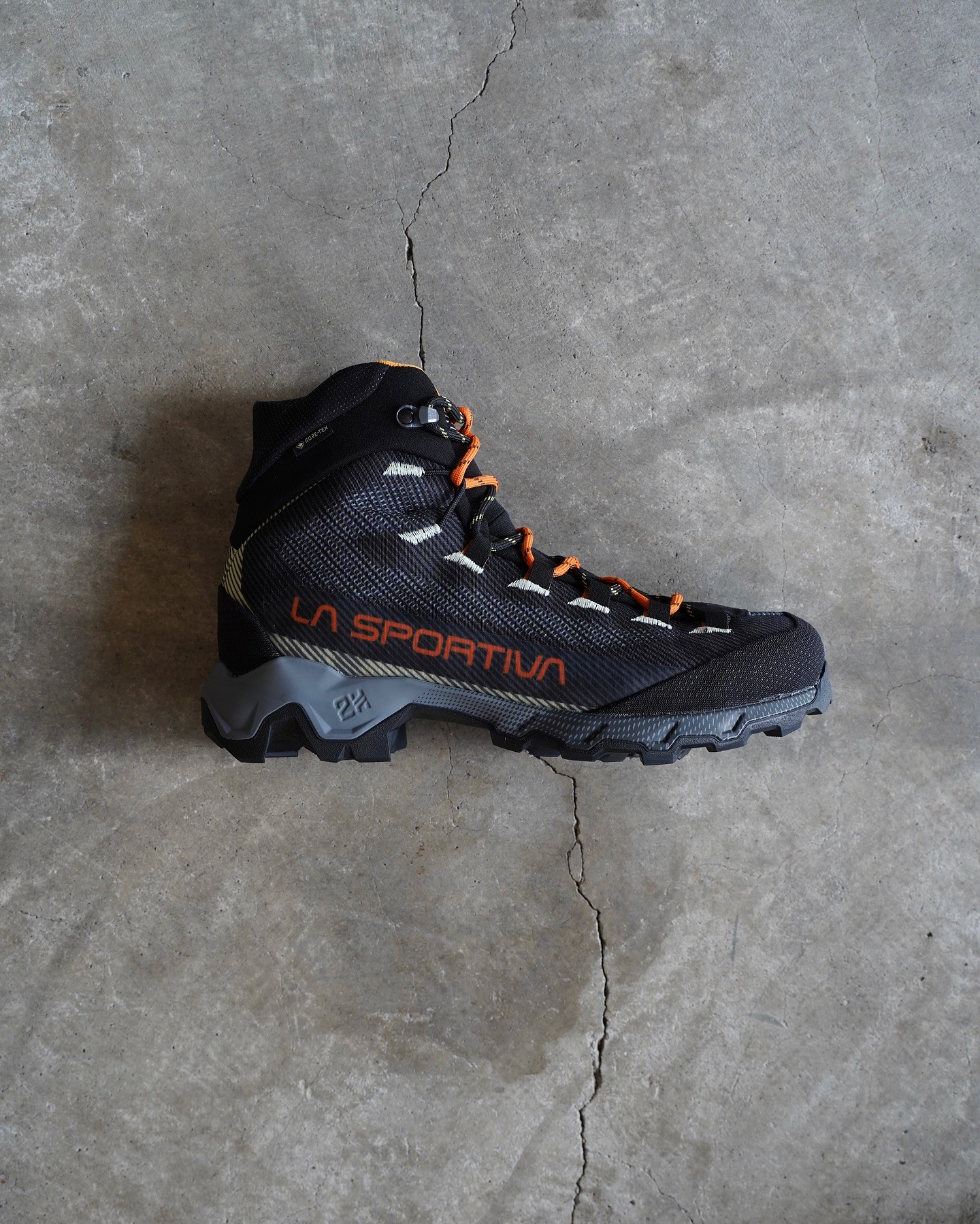
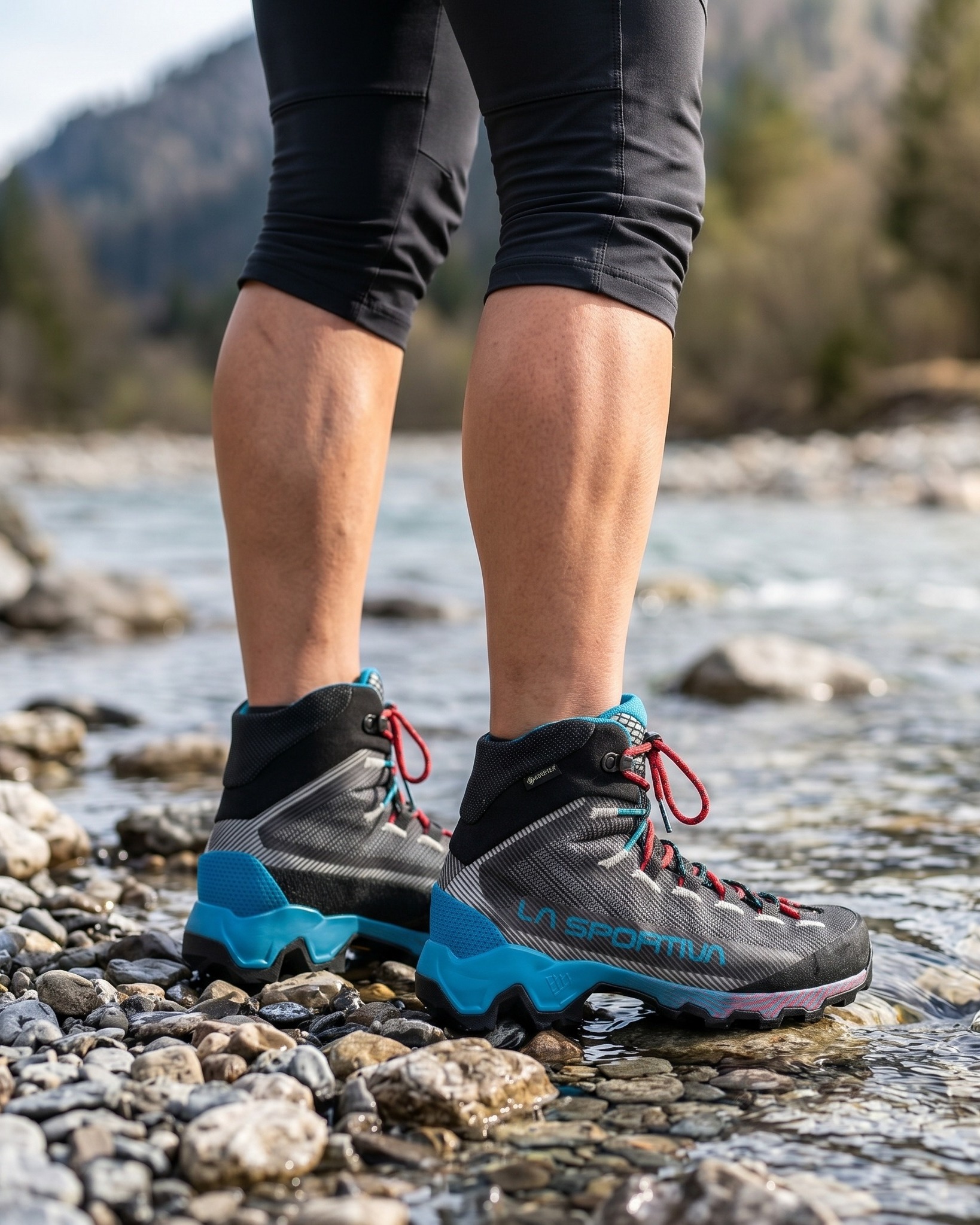
Underfoot, these are closer to a mountain-oriented hiking boot than a plush trail runner. The firm platform dulled the sharp rock strikes on the Acropole and remained reassuring under both of our packs. My friend noticed that support most with his heavier load. I noticed it when stepping across uneven blocks, where I could place a foot without feeling the edge through the sole.
The synthetic upper and articulated ankle made the boot easier to move in than that stiffness might suggest. On scrambles I could lift and turn my foot naturally instead of fighting a rigid cuff. La Sportiva calls its ankle design 3D Flex System Evo. The collar did not feel restrictive; the tradeoff is a firm ride. Someone used to the soft cushioning of something like a Hoka Speedgoat Mid will notice the difference immediately.
A strong heel brake, with one wet-rock limit
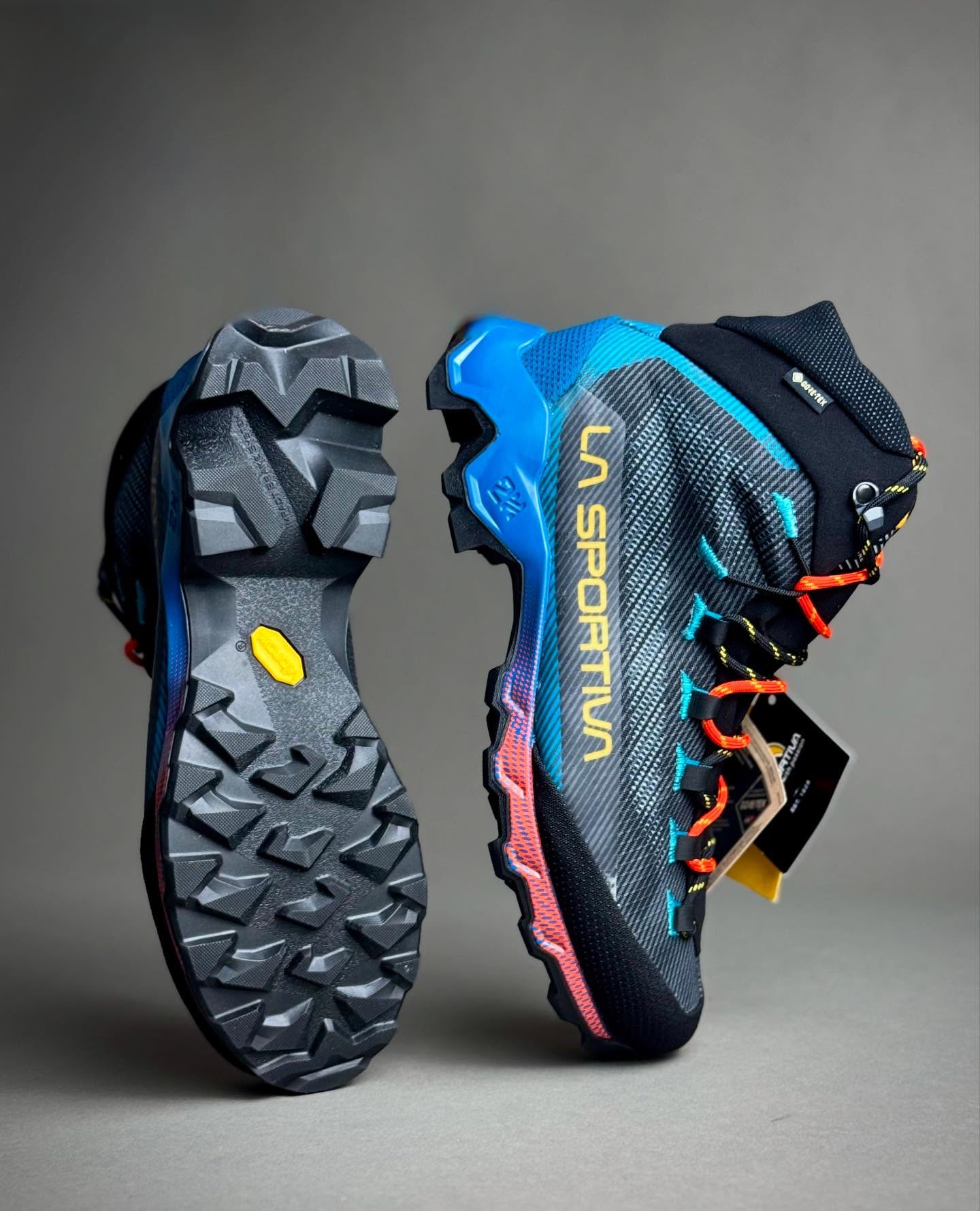
The Vibram Spring-Lug outsole was probably the feature we agreed on most. The aggressive lugs dug into loose dirt, pine needles and wet roots, and the pronounced heel blocks made steep, loose descents feel controlled. It was reassuring. We could set a heel into the slope and slow ourselves without shuffling sideways for every step. That felt good with 25 to 35 pounds on our backs.
Highly polished, wet granite was sometimes challenging, though. There the rubber did not feel as secure when we needed to smear across a smooth slab. We slowed down and chose footholds rather than assuming that deep lugs would automatically grip every kind of rock. The traction was still excellent in the conditions we met, with that specific limit.
Dry socks in the stream, comfortable at 60°F
I stood ankle-deep in a shallow stream for about two minutes to test them, and my socks stayed dry. Both pairs also handled wet ground and the other stream crossing without a leak. The Gore-Tex Extended Comfort lining did its job during this trip. The collar is still an opening: a splash over the top would be a different test, and we avoided treating these as waders.
At around 60°F, neither of us felt notably hot or clammy in mid-weight merino socks.
Lacing, toe protection and the collar
The laces were simple to adjust, and the top hook let me change ankle tension without crushing the forefoot further. I appreciated that separation, although again it could not compensate for the narrow toe shape. A protective wrap around the toe took repeated knocks against stone well without either of us feeling the impact through the front.
We learned to snug the collar properly. When left loose, it gave dirt and trail debris an easy route inside. That small nuisance showed up quickly on rooty, gritty ground, but it was also easy to avoid once we paid attention.
What 24 miles can show
My friend's pair looked close to new after a hose-down. Mine picked up a few superficial scuffs where I wedged a foot into a rock crack. Neither pair showed a loose seam, damaged lace point or meaningful lug wear. That is a good first impression for a weekend of Canadian Shield rock, mud and roots.
Between a trail runner and a leather boot
I normally reach for something like a Hoka Speedgoat Mid. It gives me more of the soft, familiar trail-runner feel that I prefer, but I would take the Aequilibrium's firmer underfoot protection for this kind of sharp rock and a heavier pack. My friend usually hikes in a substantial leather boot such as the LOWA Renegade. He liked getting solid support here without the same heavy-boot feel.
The Salomon X Ultra 5 Mid GTX is another reviewed option for someone weighing a lighter waterproof mid against a more protective platform.
Would we spend $279?
At the shop's $279 USD price, my friend said he would buy a pair immediately. He got secure fit from day one, excellent grip and protection under a 35-pound load. I would pass, despite liking almost everything about its trail behaviour. I could not find a size that kept both my little toe comfortable and my foot stable on descents.
For narrow-footed hikers who want a mobile but firm technical boot, it is an easy recommendation to try. For wide feet or anyone seeking a sneaker-like ride, I would start elsewhere.
La Sportiva Aequilibrium Hike GTX details
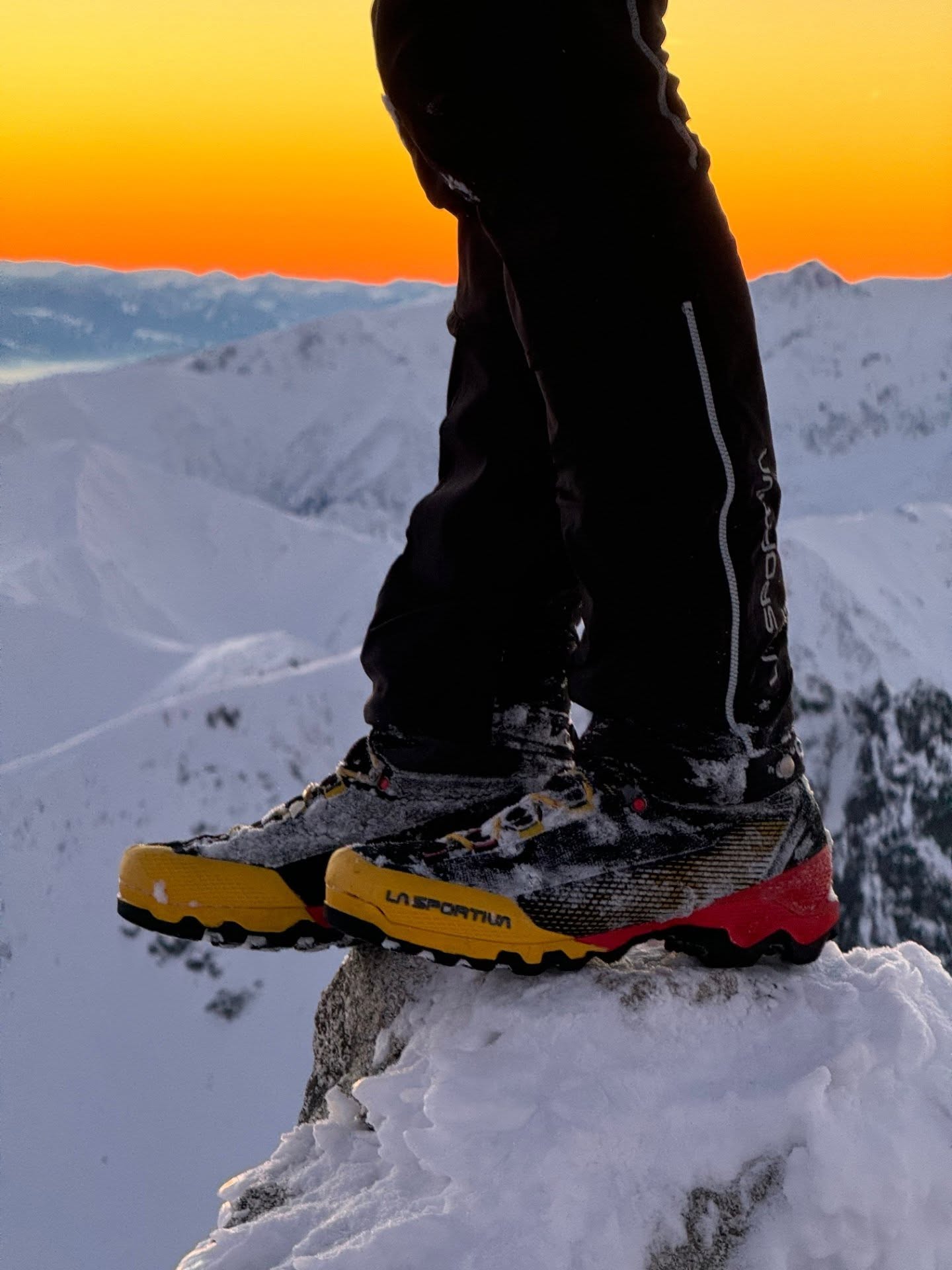
| Model tested | Men's Aequilibrium Hike GTX, two pairs |
|---|---|
| Testers and fit | Adam Whistler, wide foot, tried his usual size in the shop and hiked one size up; friend, narrow foot, usual US 10 |
| Listed weight | 480 g / 16.9 oz per boot (La Sportiva specification) |
| Upper and ankle | Synthetic fabric with 3D Flex System Evo (La Sportiva specification) |
| Lining | Gore-Tex Extended Comfort (La Sportiva specification) |
| Outsole | Vibram Spring-Lug with Impact Brake System (La Sportiva specification) |
| Field distance | About 24 miles per tester |
| Pack loads | About 25 lb for Adam; about 35 lb for his friend on the Mont-Tremblant loop |
| Shop price | $279 USD; both pairs loaned and returned |
| Individual scores | Adam 3.8/5; friend 4.8/5; combined average 4.3/5 |
Sources & context
What this review draws on
Adam and a hiking friend each walked about 24 miles in two shop-loaned pairs. Fit, comfort, traction, water protection and early wear come from that trip. Listed weight, materials and technology names were checked against La Sportiva's product specifications. We did not test snow performance or long-term durability.
Editorial disclosure: A local gear shop lent Adam Whistler and a hiking friend two pairs of the men's Aequilibrium Hike GTX for this trip. Both pairs were returned. The shop did not pay for the review, request changes or have any editorial input. The shop price was $279 USD.