
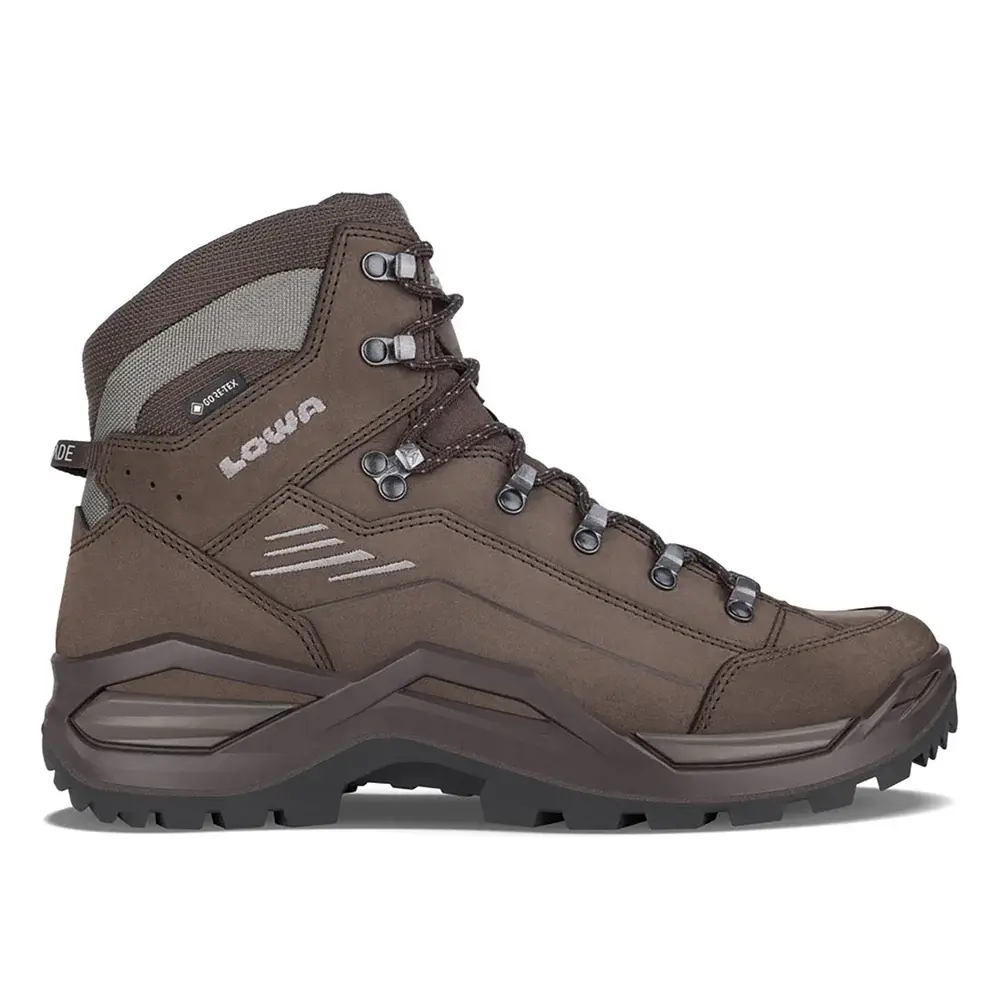
I bought the men's LOWA Renegade Evo GTX Mid in US size 13 and Espresso/Seaweed for $280, then hiked roughly 300 km in them over eight months. The test crossed Yorkshire, the Lake District and Greece's Pindus Range, with loads normally around 25-30 lb and reaching 45 lb. I paid for the boots myself; LOWA did not supply them or sponsor the review.
Quick verdict
The Renegade Evo GTX Mid is a serious leather hiking boot that earns its premium through support, control and durable construction. It locked my heel, protected tired joints and remained dependable under a 45 lb pack without becoming a rigid mountaineering boot. Wet grip and waterproofing were very good, and the upper showed no structural trouble after 300 km. It runs warm, takes time to dry if flooded and cannot receive a conventional full resole, but its core hiking performance is excellent.
What works
- Elite stability and heel hold under mid-to-heavy backpacks
- Firm PU cushioning keeps feet and joints fresh on long days
- Very good wet-rock grip and excellent downhill braking
- Flawless waterproofing through rain, puddles and streams
- Fast break-in and no blisters, rubbing or pressure points
What to know
- Leather and Gore-Tex run hot in summer weather
- Over-collar flooding can take more than a day to dry
- Structured feel is excessive for casual, unweighted walks
- Wet roots and wooden boards still need care
- Injected construction rules out a conventional full resole
The verdict
The Renegade Evo GTX Mid succeeds because its parts work as a system. A supportive PU frame secures the heel and arch, the moderately stiff platform remains controlled under load and the forefoot still flexes enough for a natural stride. The result is a boot that feels composed rather than cumbersome.
My feet, knees and joints stayed remarkably fresh after long days, including a 16-mile mountain loop with 4,000 feet of ascent. That protection is firm and damped rather than soft or bouncy. Hikers coming from maximal trail shoes may initially think the boot feels severe; once the terrain steepens or the backpack gets heavier, its stability makes sense.
The 4.6 score reflects excellent performance in the categories that matter most for this kind of boot: fit, support, traction, waterproofing and durability. Heat management is the clear weak point, and the inability to fit a conventional replacement sole is a frustrating limitation on an otherwise long-lived design.
How I tested the LOWA Renegade Evo GTX Mid
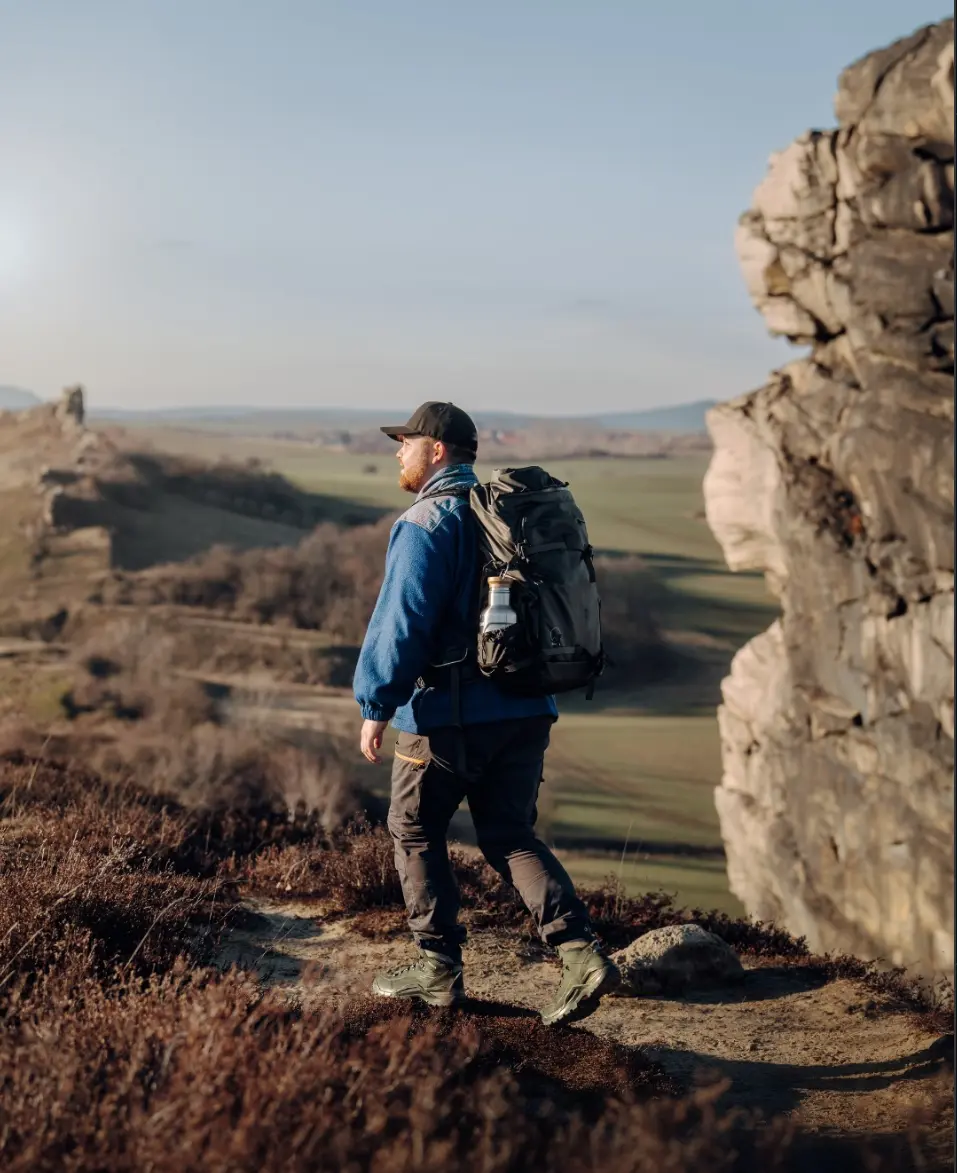
Over eight months, the boots covered about 300 km around Yorkshire, the Lake District and the Pindus Range in Greece. Terrain included paved approach roads, muddy forest trails, loose dirt, abrasive scree and technical rocky alpine sections. Conditions ranged from spring rain and humid summer afternoons to early frost and light snow.
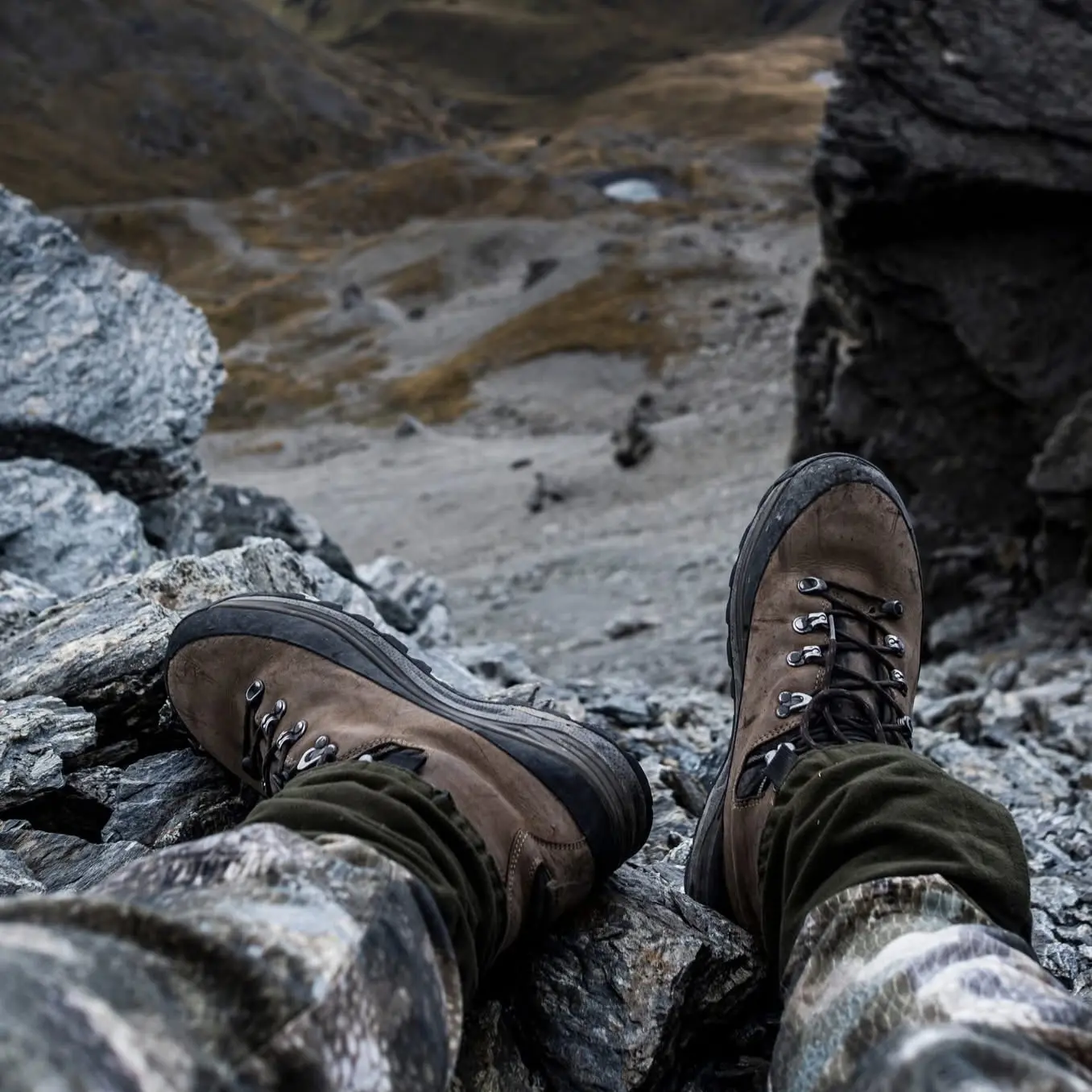
My pack usually weighed 25-30 lb for weekend trips and reached 45 lb on a longer backcountry stretch. I used the boots mainly for serious day hikes and mid-weight backpacking rather than casual walking. I have also worn the older Renegade, so the Evo comparisons are based on direct experience.
Fit, sizing and break-in
The US men's 13 fit perfectly with medium-weight Darn Tough merino socks. I went up half a size specifically to leave room for those socks and late-day swelling. The Evo's toe box feels slightly roomier than the classic Renegade, giving the toes enough space to spread without allowing the foot to move around.
Heel hold is excellent. There was no lifting on steep climbs, no forward slide on descents and no pinching across the instep or ankle. The arch support is moderate and placed where it should be.
Break-in was surprisingly quick for a nubuck boot. After roughly 15-20 miles, the leather softened and shaped itself to my foot. I had no blisters, rubbing or numbness, even as my feet swelled near the end of a 15-mile day.
Firm comfort that lasts all day
LOWA uses a double-injected PU platform rather than the plush EVA found in many modern trail shoes. It feels firm and highly structured in the first few miles, with enough damping to absorb repeated impact but very little of the trampoline-like bounce associated with maximal cushioning.
That firmness pays off over a full day. The platform remained consistent as distance and load increased, and I finished long mountain routes with less foot and joint fatigue than expected. At a listed 590 g per shoe, it is not light, but the controlled forefoot flex and sensible toe shape prevent the clumsy “Frankenstein” stride common to heavier leather boots.
Support, stability and heavy loads
The ankle collar and PU Monowrap frame are the heart of the boot. They wrap the heel and arch like an exoskeleton, keeping the foot centred on off-camber tracks, loose descents and uneven rock. Despite the structure, the collar did not dig into the ankle or restrict ordinary walking.
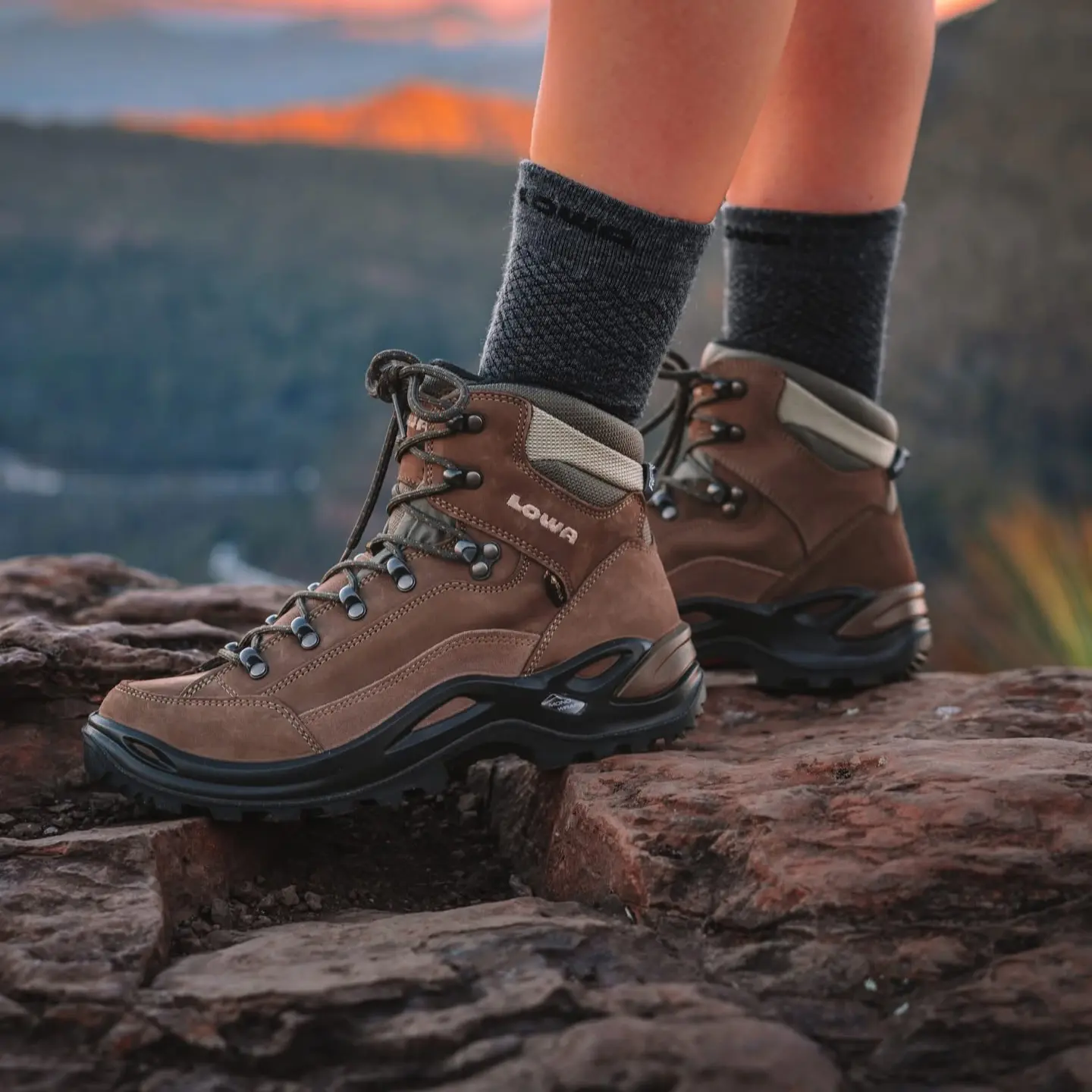
With a normal 25-30 lb pack, the boot felt completely at home. At the 45 lb maximum, it continued to hold the foot securely and never felt tippy or overwhelmed. That makes it a far more convincing backpacking option than a soft day-hiking mid.
Traction on rock, mud and snow
The Vibram Rene Trac outsole bites confidently into dry rock, scree and loose dirt. On wet rock it remained highly dependable - not quite as adhesive as the best Megagrip compounds, but predictable enough that I trusted it on steep descents. Wet roots and slick wooden bog boards still require deliberate foot placement.
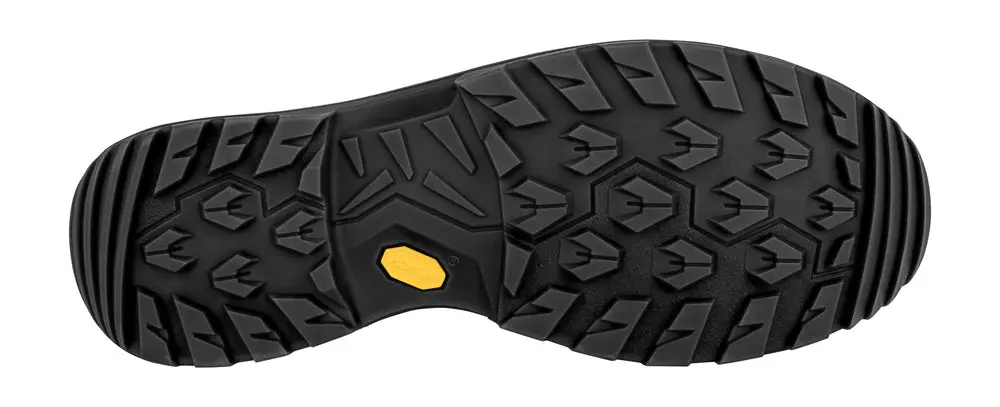
Deep-mud grip is good and the tread sheds thick clay reasonably well. The heel breast is particularly effective when braking on steep loose ground. Light snow was manageable; sheet ice remains microspike territory, as it does for any ordinary rubber hiking sole.
Flawless waterproofing, limited summer ventilation
I waded streams, stood in puddles and walked through hours of sustained rain without water entering through the Gore-Tex lining, seams or collar. The bellows tongue protects to roughly 4.5 inches before water can spill over its top.
Nubuck still needs maintenance. Once the exterior absorbs enough water to wet out, breathability drops even though the lining keeps water from reaching the foot. I brushed off mud after use and applied a water-based nubuck conditioner and waterproofing spray every few months.
These boots run warm. They were comfortable in mild spring weather and early frost, but at 85°F my feet became sweaty. If water enters over the collar, the leather, membrane and padding can need more than 24 hours to dry fully.
Two-zone lacing and trail usability
The two-zone lacing system is excellent. Locking hooks at the ankle let the forefoot stay comfortable while the upper is tightened independently, and the laces remained secure all day. The Evo tongue stayed centred instead of drifting to one side, while the bellows kept scree and pine needles outside.
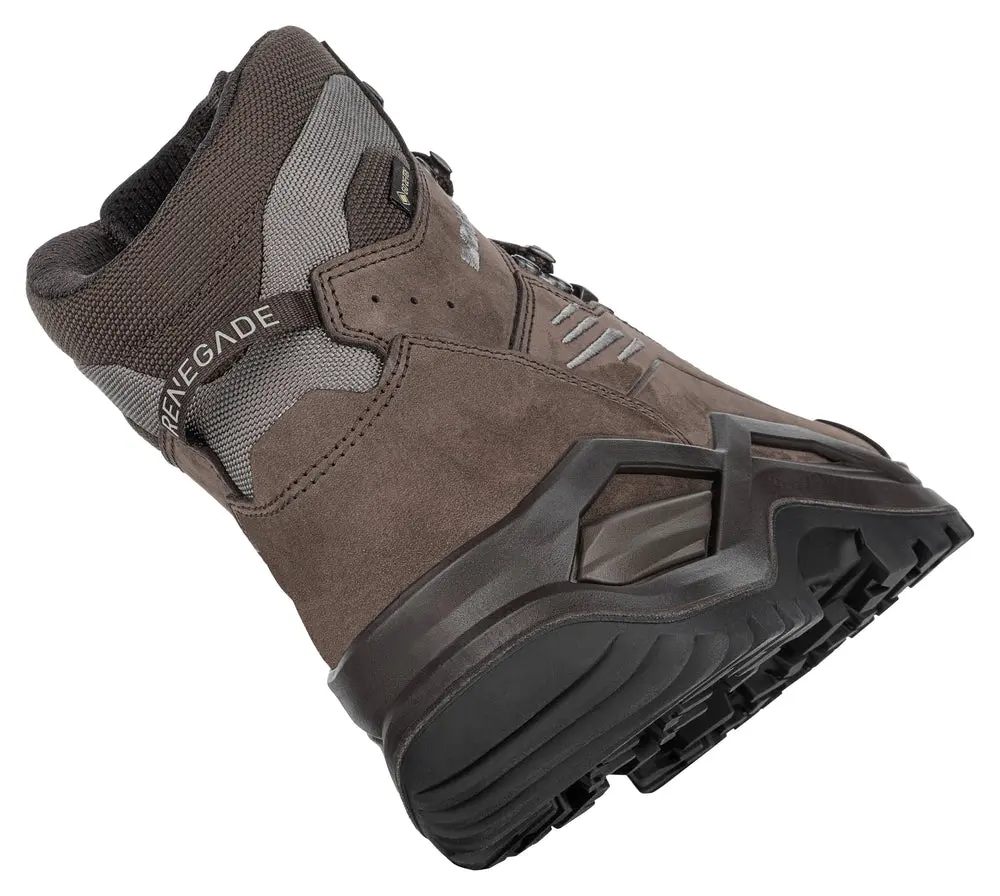
They are easy enough to put on at the tent door, but the same structure that works on a mountain feels stiff during camp lounging or a long drive home. This is purpose-built footwear, not an all-day casual boot.
Durability after 300 km
Durability has been excellent so far. The nubuck shrugged off sharp stone and abrasion, the protective toe remained firmly bonded and there was no outsole separation. The Gore-Tex lining, hardware and original laces are intact. Tread wear is normal rather than accelerated, and I have not noticed the PU midsole losing its structure.
The Evo removes several forefoot seams found on the older Renegade, reducing obvious wear and pressure points. In my wider footwear experience, this class of LOWA boot has outlasted three cheaper synthetic pairs. This specific pair is only eight months and 300 km into its life, so the durability score rewards its condition without pretending the test proves a decade of service.
There is one important ownership caveat. LOWA says the Renegade Evo's directly injected sole cannot receive the conventional full resole available for cemented models such as the Tibet or Camino without compromising structural integrity. Smaller jobs such as restitching or hardware replacement may still be possible, but when the tread is eventually spent, a complete factory-style sole replacement is not an option.
Renegade Evo vs Moab 3, Kaha 3 and the older Renegade
Compared with the Merrell Moab 3 Mid Waterproof, the LOWA is in another class for loaded support, wet traction and construction quality. The Moab is cheaper, softer and friendlier for casual day walks; my Moab pair also suffered severe sole separation, while the Renegade Evo remains intact.
The Hoka Kaha 3 GTX is far plusher and bouncier. Its broad platform offers plenty of stability, but it is bulky and largely erases ground feel. The Renegade Evo is firmer, more precise on technical ground and better suited to hikers who prefer traditional leather structure over maximal foam.
Against the older LOWA Renegade, the Evo feels cleaner and slightly roomier at the toe. Fewer forefoot seams remove likely wear points, the tongue stays centred more reliably and the underfoot package feels supportive without becoming harsher.
Value and who should buy it
At the full $280 I paid, the Renegade Evo is expensive but justified. It combines comfort, dependable weather protection, excellent traction and genuine 45 lb load support in a boot that has so far worn exceptionally well. If that means replacing fewer flimsy synthetic pairs, the initial price is easier to defend.
It is best for traditionalists, mid-weight backpackers, hikers with weak ankles and anyone who wants firm long-day support. It is also a strong choice for people tired of cushioning that rapidly compresses and uppers that fail before their tread is worn.
Choose something else if you are an ultralight thru-hiker, walk mostly in hot and arid conditions, want maximum squishy cushioning or insist on footwear that can receive a traditional full resole. The Renegade Evo is built to carry and control, not to disappear on the foot.
LOWA Renegade Evo GTX Mid specifications
| Category | Footwear |
|---|---|
| Tested model | Men's, US size 13, Espresso/Seaweed |
| Upper | Heinen Terracare nubuck leather |
| Lining | GORE-TEX |
| Midsole | Double-injected DuraPU / DynaPU |
| Support | PU Monowrap frame; moderately stiff platform |
| Outsole | Vibram Rene Trac |
| Manufacturer-listed weight | 590 g per shoe |
| Country of manufacture | Slovakia |
| Price paid | $280 USD |
| Test distance | Approximately 300 km over eight months |
| Pack loads | Normally 25-30 lb; maximum 45 lb |
| Terrain | Roads, forest, mud, scree, wet rock, alpine scrambles, frost and light snow |
| Manufacturer involvement | None. Personally purchased; no free product, sponsorship or copy approval. |
Scoring breakdown

Sources & context
What we checked
This review is based on Adam's 300 km test across Yorkshire, the Lake District and Greece's Pindus Range, plus his direct experience with the older Renegade. We checked LOWA's official product listing for materials, construction, features and listed weight, and its official repair guidance for resoling eligibility. Fit, comfort, traction, waterproofing, heat, durability and comparisons are Adam's field observations.
Editorial disclosure: Adam Whistler bought this men's LOWA Renegade Evo GTX Mid for $280 and tested it for approximately 300 km. LOWA did not supply the boots or sponsor the review. Gear Reviews received no payment, free product or editorial approval.