
I bought the Osprey Atmos AG LT 65 with my own money for £250 and wore it for roughly 900 km over three months in Quebec, Canada. Osprey did not provide the pack, support the trip or know this review was being written. It served as both hiking pack and luggage, carrying anything from an 8 kg day load to 19.5 kg when I moved between accommodation. By the end I had lived out of every pocket, adjusted every strap and dragged it through enough dense Laurentides brush to know it rather well.
Quick verdict
The men's Atmos AG LT 65 is one of the most comfortable large packs I have carried. Its suspended AntiGravity back panel, easy torso adjustment and excellent hipbelt move weight away from the shoulders so effectively that long days with a heavy load became much less punishing. Ventilation is superb, access is sensible and the materials survived three months without meaningful damage. The curved frame steals some usable space from the main compartment, the LT layout gives up a few pockets and zips, and the price is steep. Those compromises never outweighed the carry comfort during this test.
What works
- Exceptional comfort and hipbelt load transfer
- Best-in-class ventilation from the suspended mesh back panel
- Simple injection-moulded torso adjustment
- Useful side access and well-positioned bottle pockets
- Included rain cover performed perfectly in four serious downpours
- Excellent durability through brush, travel and heavy packing
What to know
- Curved frame intrudes into the main compartment
- Rigid equipment can be awkward to arrange
- £250 is a serious outlay
- The LT model drops lower sleeping-bag access and some extra pockets
- Roughly four pounds is still heavy for an ultralight pack
- Poor adjustment can make the load feel rear-heavy
The verdict
A large backpack can look impressive in a shop and still become an instrument of torture somewhere around hour four. Foam compresses, straps find nerves you did not know existed, and a load that seemed balanced at breakfast starts levering backwards by mid-afternoon. The Atmos AG LT 65 avoided that slow collapse. Across roughly 900 km, it kept its shape. Most of the weight stayed on my hips, where I wanted it, and my shoulders had a much easier time.
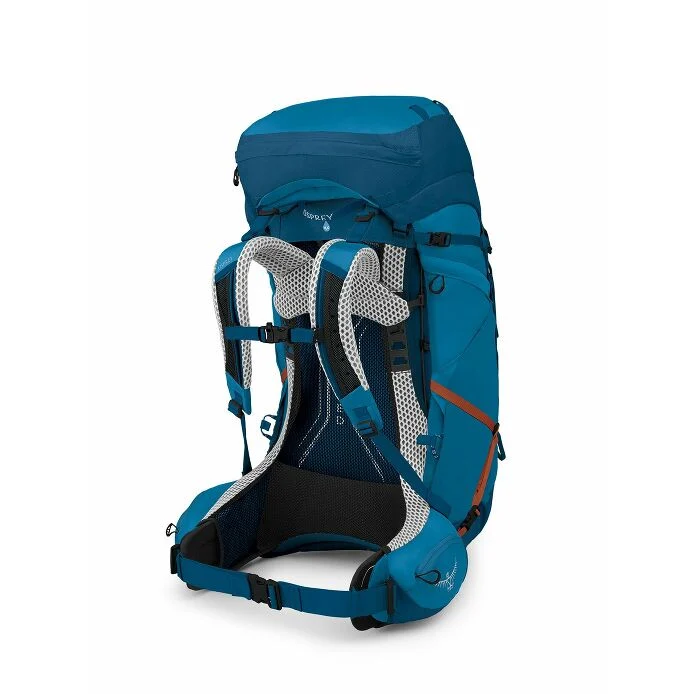
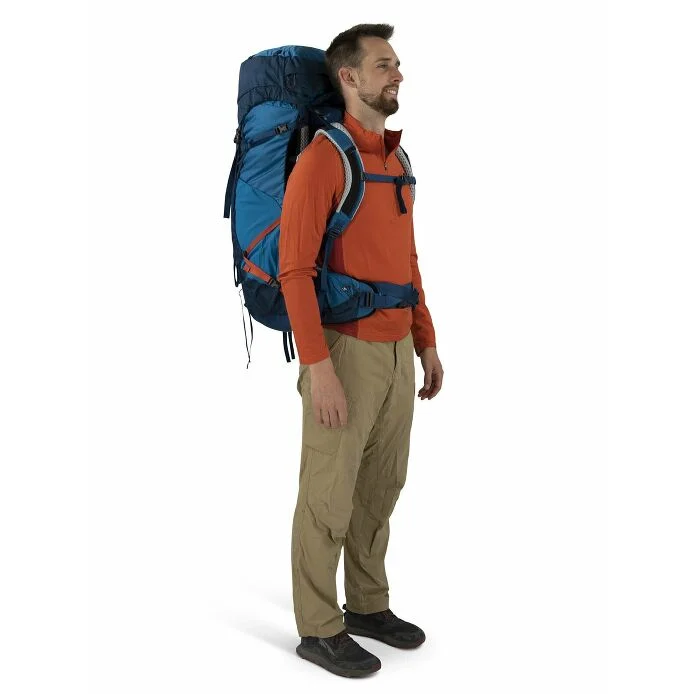
No single bit of padding is responsible for the comfort. The suspended mesh back, full peripheral frame, adjustable harness and extendable hipbelt work as a unit. Once I had the torso length and belt set correctly, the pack wrapped closely around my hips without creating hard pressure points. Shoulder fatigue was minimal and I had no lingering hip soreness, including on days with loads around 40 pounds.
There is a price for the curved suspended frame. It bows into the main compartment and changes the shape of the space, so square or rigid items need more thought. The nominal capacity also feels a little smaller than a conventional 65-litre sack. Soft equipment conforms around the curve easily enough. A camera cube, cook box or other blocky object will remind you the frame is there. I accepted that irritation because the same curve creates the airflow and load control that made the pack so pleasant to wear.
How I tested the Atmos AG LT 65
I used the men's size L version while hiking and travelling around Quebec for three months, primarily in the Laurentides. The pack covered about 900 km and became my only proper luggage for the trip. Conditions moved through spring into summer and included heat, strong wind, dense vegetation and four periods of heavy rain.
My normal hiking load sat around 8 to 10 kg. On transfer days, when everything had to move from one place of accommodation to the next, the pack weighed as much as 19.5 kg. That upper figure is slightly above Osprey's stated 14 to 18 kg load range for the current pack, so it was not my preferred all-day hiking weight. It did show that the structure had useful reserve strength. Nothing buckled, twisted or began to feel structurally uncertain.
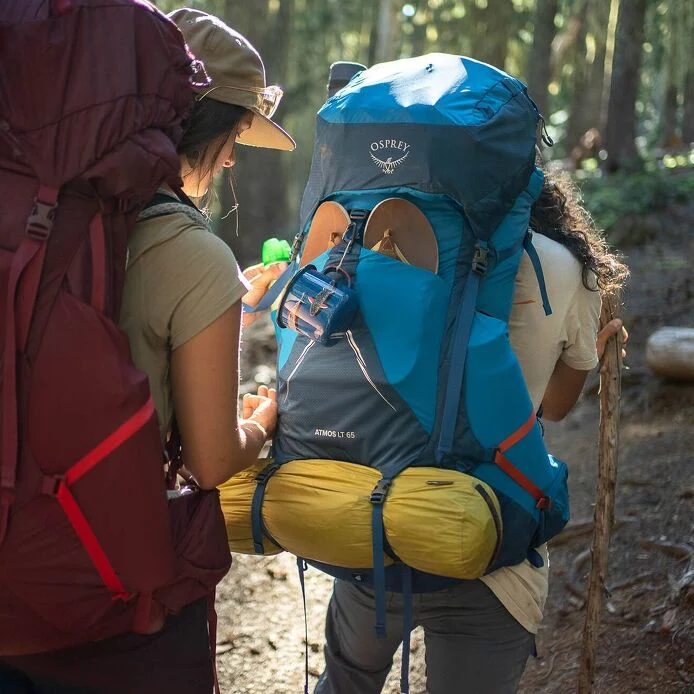
I am six feet tall with an average build. The size L gave me enough adjustment range to place the shoulder straps and hipbelt properly without forcing either to the end of its travel. Pack fit is personal, so those measurements do not guarantee the same result for another user. They do provide context for the comfort observations and the position of the frame against my back.
Fit and adjustment
Osprey's injection-moulded ladder system makes torso adjustment very easy. Lift the harness away from the ladder, move it to the required rung and press it back into place. You can see what you are doing, and the parts feel more positive than a large hidden patch of hook-and-loop material. I made a couple of small changes during the first few days. After that I left it alone.
The Fit-on-the-Fly hipbelt was just as useful. Each padded wing extends to suit the wearer, so the support can wrap around the front of the hips instead of ending too early. Osprey's crossbody ErgoPull straps tighten inward from both sides. I found that pulling direction easier to tension evenly, especially with a heavy pack already on my back.
With the belt centred and the torso length correct, the frame transferred weight extremely well. Loads above 18 kg remained controlled and wearable, while the normal 8 to 10 kg hiking load felt almost indulgent inside a pack of this size. The shoulder straps stayed in contact without carrying the whole burden, and I could loosen or snug them as terrain changed without disturbing the hipbelt.
Adjustment matters here. The tensioned frame naturally holds the body of the pack away from your back. If the torso length, load lifters or hipbelt are poorly set, that geometry can pull the centre of gravity rearward. I noticed the sensation during early setup. A small harness and load-lifter correction brought the pack back into balance, and it did not become an ongoing complaint.
Carry comfort over long days
The pack was still comfortable late in the day after 900 km of use. There were long days and heavy days, sometimes both, and no recurring sore spot appeared. My shoulders avoided that deep, dull fatigue caused by a poorly supported load. The belt edges never started digging into my hips either.
The frame also controlled movement well. A 65-litre pack will never disappear during quick steps or steep scrambles, but the Atmos did not sway excessively when the compression straps were used properly. The belt kept the lower pack connected to my body, and the tall frame felt predictable in wind. On open sections I knew it was there, obviously, though it never felt loose.
Eight to ten kilograms is a light load for this suspension and probably lighter than many buyers will carry on a multi-day trip. That makes the Atmos somewhat overbuilt for my common hiking day. It also made those kilometres comfortable, and the ability to add food, water or travel gear without changing packs was useful. For hikers who routinely carry 14 to 18 kg, the support system makes even more sense.
Ventilation and the curved-frame compromise
The suspended 3D mesh back panel is superb. A taut sheet of mesh holds the pack away from the torso, leaving a channel for air to move across the back. It did not stop sweating during warm Quebec days, because no framed backpack can do that. It reduced the trapped, soaked feeling that develops when fabric and foam sit directly against a shirt for hours.
The ventilation difference remained noticeable at walking pace and became very obvious when the pack came off during a break. My shirt dried more quickly and the contact area around the spine was smaller than with a conventional padded back. The mesh itself remained supportive and showed no sagging during the test.
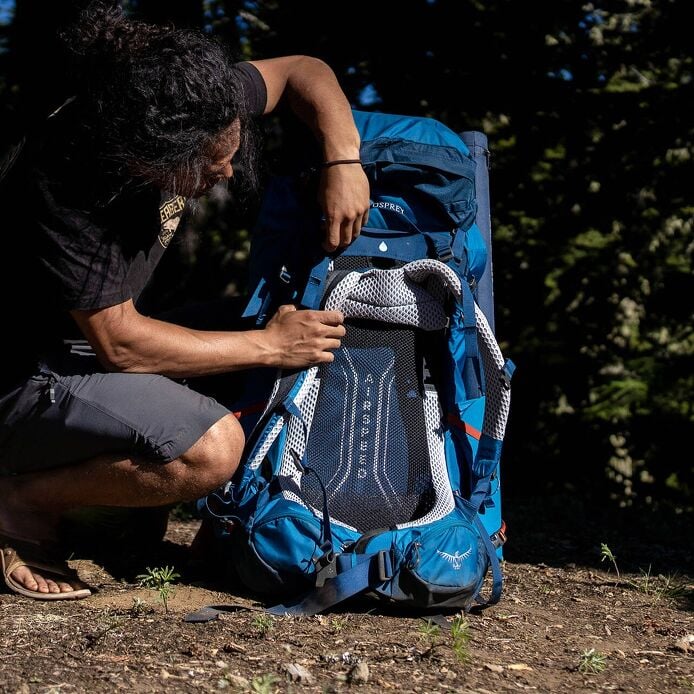
That air gap has to exist somewhere, and some of it is borrowed from the interior. The main compartment curves around the back panel instead of forming a simple cylinder. Sleeping bags, clothing and other soft items settle around it without much effort. Hard-sided objects need deliberate placement, and packing the bag carelessly can leave dead space beside the deepest part of the curve.
I would take the awkward packing shape again. It annoyed me for a few minutes while loading the bag, usually when a rigid item refused to sit where I wanted it. The airflow and comfort helped for the rest of the day. A photographer carrying hard cases, or a climber with lots of rigid equipment, may be less forgiving.
Organisation and access
The stripped-back LT arrangement still gives enough structure to organise 65 litres sensibly. The main compartment loads from the top, while a curved side zip opens a large portion of the body. That side access proved useful when something had migrated below the day's clothing or when I needed one item without dismantling the complete load.
The floating top lid handles the normal collection of items that should remain close: first-aid kit, documents, head torch, spare snacks and small electronics. At the front, a fabric-reinforced stretch pocket swallowed wet layers and other equipment I did not want inside the main compartment. It survived branches and repeated overfilling without tearing.
The dual-access side pockets are particularly well shaped. Their angled openings allowed me to remove and replace a water bottle while walking, without twisting my shoulder into a ridiculous position or asking somebody else for help. They also retain the bottle securely when the compression straps are adjusted. Both hipbelt pockets take a smartphone or a useful quantity of snacks. On some walks it was smartphone and snacks, which is better.
The LT version loses the separate lower sleeping-bag access, some additional side storage and a portion of the zip hardware found on the fuller Atmos. I did not miss the sleeping-bag door because the side zip already provides another route into the body, and packing a sleep system at the bottom is hardly complicated. The reduction saves roughly half a pound and leaves fewer components to break. For my use that exchange was well judged.
Rain and weather resistance
The pack body uses recycled nylon with a PFAS-free water-repellent treatment. Light moisture beaded and rolled from the fabric, with no obvious point where water liked to pool. That finish is useful for passing showers and wet vegetation, but I would not rely on it alone to protect electronics or a sleeping bag through sustained rain.
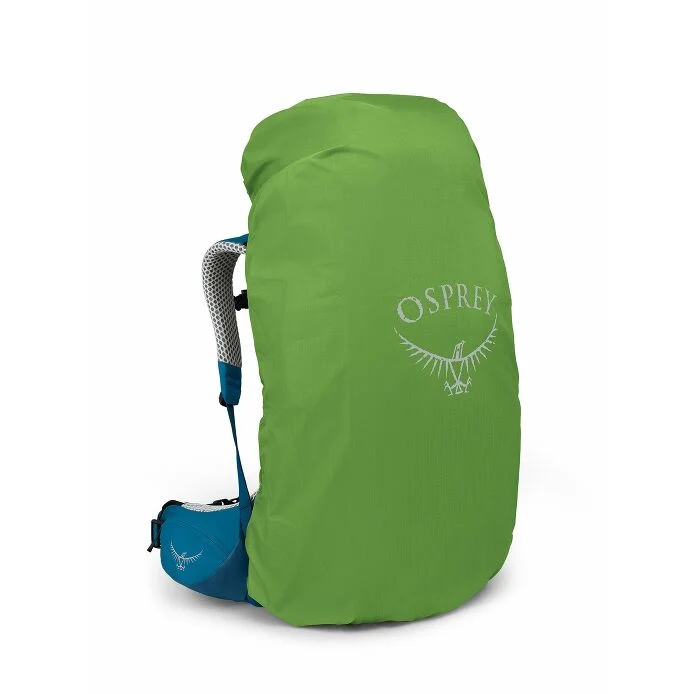
The included rain cover dealt with the four serious downpours we encountered. It fitted securely over a full load, stayed in place in wind and prevented water reaching the pack body in any meaningful quantity. Contents that could not tolerate moisture were still packed in dry bags, as they should be, but the cover kept the exterior from becoming saturated and heavy.
Wind exposed no handling problem beyond the normal extra surface area of a tall pack. Tight compression straps helped, and the close hipbelt connection prevented the lower bag from wandering. The frame did not creak or flex in a way that suggested it was close to its limit.
Durability after three months
Osprey did not chase the LT label by turning the whole bag into tissue paper. The 210-denier nylon body, 500-denier base, zips and 4 mm powder-coated frame all survived the trip without a failure. The pack was pushed through dense brush, loaded heavily, placed on rough ground and handled as luggage. By the end it looked used, but nothing important looked worn out.
The reinforced base matters on a tall pack because it gets dropped onto rock, soil and station platforms while carrying considerable weight. I found no hole, delamination or worrying abrasion. Stitching around the harness and compression points stayed neat. The side-access zip continued to run smoothly, and the mesh back panel retained its tension.
Three months cannot prove lifetime durability, though it is long enough to expose weak fabric, poor seams and hardware that works loose. None appeared. Osprey's materials seem appropriate for users who want a lighter large pack without treating it like delicate specialist equipment.
Weight, price and the LT proposition
Osprey lists the L/XL pack at 1.93 kg, or 4.25 lb, with a 68-litre volume for that size. The S/M version is 65 litres and slightly lighter. The model name stays Atmos AG LT 65 across the size range, which explains why a size L can have a manufacturer-stated capacity above the number printed in its name.
It is lighter than the standard Atmos and still has the AntiGravity suspension. Osprey removed some access and storage features to save weight, leaving the frame and hipbelt alone. That choice suited me. A lower sleeping-bag zip is handy, but the frame and hipbelt decide how the next ten kilometres feel.
Hardcore ultralight hikers will still consider four pounds far too heavy before any gear goes inside. They are correct within that style of hiking. The Atmos AG LT is designed for somebody who wants serious support, ventilation and a conventional feature set with some unnecessary pieces removed. It belongs in the lighter end of supportive load-haulers, not among frameless minimalist sacks.
The £250 price was my largest reservation. Plenty of competent packs cost less, and careful fit matters more than a premium logo. The Atmos justifies much of its cost through the suspension, durable fabrics and successful details, but it remains an expensive purchase. Trying it with realistic weight before buying is the sensible move because the value disappears if the curved frame or hipbelt shape does not suit your body.
Who should buy it
The Atmos AG LT 65 suits multi-day hikers and travellers who carry moderate or heavy loads and place comfort above minimum empty weight. It is especially strong for hot-weather use, people who sweat heavily through padded back panels, and trips where food or water pushes load weight beyond a minimalist pack's comfortable range.
It also worked well as combined travel luggage and hiking equipment. Side access reduced the frustration of living from a top-loader, the pockets held daily essentials, and the frame protected the shape of the load during repeated moves. At 65 to 68 litres it can encourage overpacking, so some discipline is still required.
Look elsewhere if you mainly carry less than 8 kg, count every gram or need a straight-sided compartment for rigid equipment. The pack can handle light loads, but you would be carrying a lot of suspension to support very little gear. Anyone who strongly prefers a sleeping-bag door or numerous small compartments may also find the LT layout sparse.
I finished the test with no major design dislike. The curved interior needed a little patience, and the purchase price hurt. Once adjusted and moving, those complaints faded behind excellent comfort. After 900 km, the comfort is the part I remember.
Osprey Atmos AG LT 65 specifications
| Tested model | Men's Osprey Atmos AG LT 65, size L |
|---|---|
| Manufacturer volume | L/XL: 68 L / 4150 cu in; S/M: 65 L |
| Manufacturer weight | L/XL: 4.25 lb / 1.93 kg |
| Dimensions | Approximately 90 × 39 × 32 cm / 35 × 15 × 13 in |
| Recommended load range | 14 to 18 kg / 30 to 40 lb |
| Frame | 4 mm powder-coated full peripheral frame |
| Back system | AntiGravity suspended mesh with injection-moulded ladder torso adjustment |
| Hipbelt | Fit-on-the-Fly with crossbody ErgoPull adjustment |
| Main fabric | Recycled 210D nylon honeycomb with PFAS-free DWR |
| Base fabric | Recycled 500D high-tenacity nylon with PFAS-free DWR |
| Rain cover | Included |
| Price paid | £250 |
| Test status | Purchased by reviewer; three months and roughly 900 km in Quebec |
| Manufacturer involvement | None. No free sample, sponsorship or copy approval. |
Scoring breakdown
Sources & context
What we checked
This review is grounded in Adam's three-month, roughly 900 km test in Quebec. We checked current dimensions, weight, load range, fabrics and feature names against Osprey's official owner's manual and product specification.
Editorial disclosure: Adam bought this Atmos AG LT 65 with his own money for £250. Gear Reviews received no payment, free product or editorial approval from Osprey.