
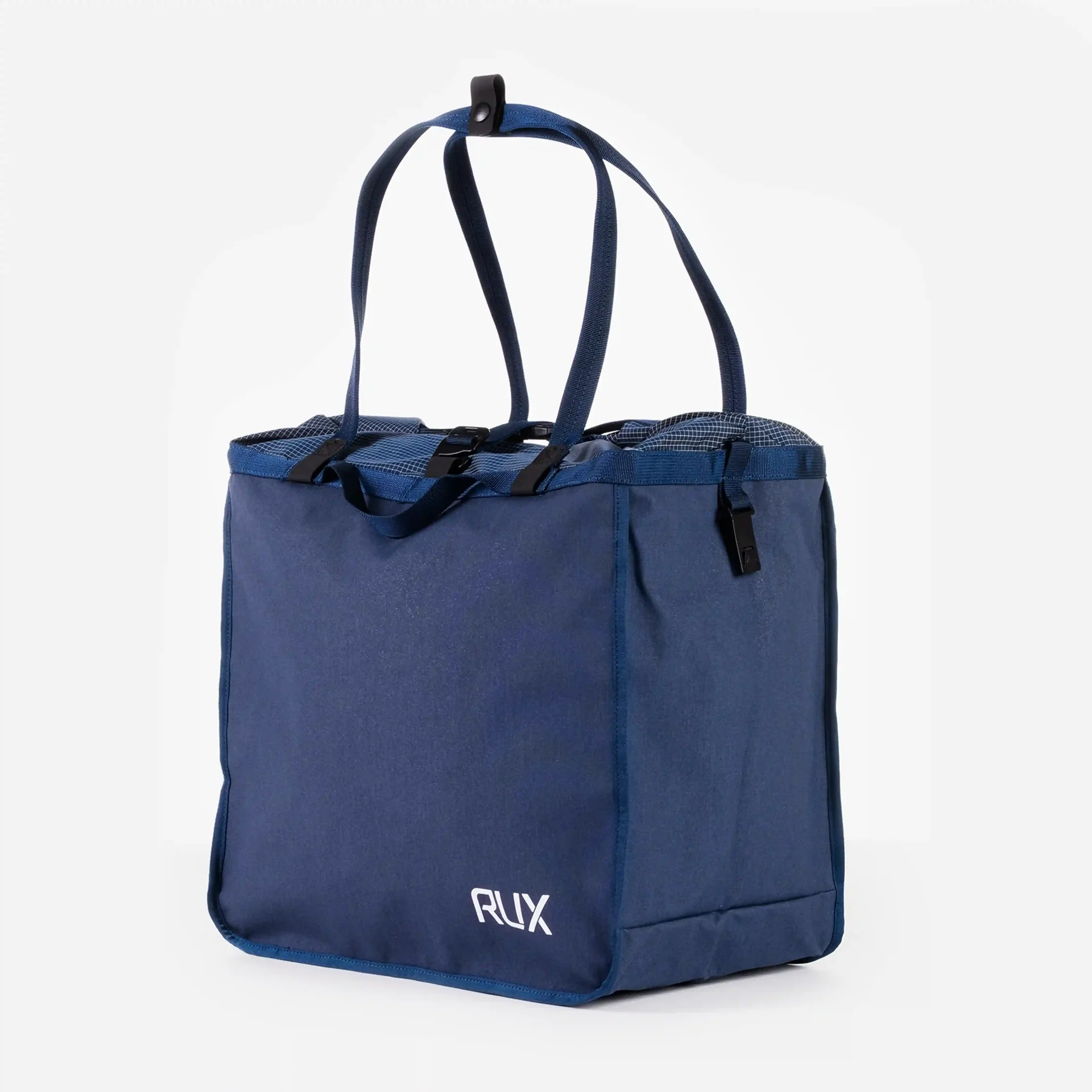
I paid $85 for the navy RUX Bag 25L and used it for three months of hiking and car camping around Quebec's national parks. RUX did not provide the bag, contribute to the trip or have any say in this review. It rode in the car through Hautes-Gorges and Saguenay, came along the Gulf of St Lawrence coast, and spent most days moving food, clothes and whatever else we needed between the car, campsite and water. I often grabbed it for a picnic beside a river or a short walk to the beach. It gave us a place to put the loose bits that otherwise spread across the boot.
Quick verdict
The RUX Bag 25L has become my favourite grab-and-go camp tote. It stands open while I load it, packs neatly beside other gear and feels good over a shoulder for a walk to the shore. I can fold it flat when the car is full. Its roll-top kept my clothes dry in heavy rain, but water got through a bottom seam when I left it in a deep puddle. I treat it as a tough, water-resistant bag rather than a dry bag.
What works
- Stands upright for easy packing and access at camp
- Comfortable shoulder carry for short walks with ordinary day-trip loads
- Nests inside RUX's larger Duffel Box and Gear Box
- Wipe-clean interior and no serious wear after three months
- Roll-top kept clothes dry during a sudden downpour
What to know
- Sewn seams can admit water when the base sits in a puddle
- A heavy load makes the boxy shape bounce against the hip
- Rolling and clipping the top slows frequent access
- Mesh pockets can pull the sides down when the bag is otherwise empty
The verdict
For the way I camp, a useful bag spends a lot of time in transit. One minute it is full of groceries on the car floor. The next it is on a picnic table with somebody reaching in for a bottle or a jacket. The RUX handled that routine well because it stays upright and gives the contents a wide, rectangular space. I could put bread and a Jetboil beside wine bottles without playing the usual game of trying to find them at the bottom of a floppy tote later.
The shoulder handles make it easy to take that same load away from the car. A couple of towels, drinks, a fleece and sunscreen were no trouble on the way to the beach. I also carried beer, snacks, a rug, speaker and battery pack to riverside picnics. It carries these mixed loads better than I expected from such a boxy bag. I would still take a proper rucksack if I planned to walk for miles, and I would use a dry bag if I needed the contents protected on the water.
The $85 I paid is a lot for a tote. What I got for it was a shape I used almost daily, a closure that helped in a downpour, and fabric that still looks sound after a summer of being put down on rock, sand and asphalt. The small annoyances stayed small: I left the top open when I wanted quick access, and I stopped putting heavy little objects in the mesh pockets when the main compartment was empty. I would buy this bag again.
Three months of everyday hauling in Quebec
I used the navy 25-litre bag during three months of hiking and car camping in Quebec. We spent time around Hautes-Gorges and Saguenay National Park and along the Gulf of St Lawrence. Camp was the base for hikes, lake visits and short trips to picnic beside a river. The bag was our portable collection point for food, towels, spare layers and the smaller things we wanted nearby. It was never my hiking pack.
That routine gave it a fair amount of wear. I slid it in and out of a crowded car, carried it across campsites and set it down on wet grass, rocks and rough parking areas. It saw drizzle and one sudden coastal downpour. I also made the mistake of leaving it in a deep puddle on a wet boat deck, which taught me more about its water protection than a neat product label could.
A box shape that makes packing easier
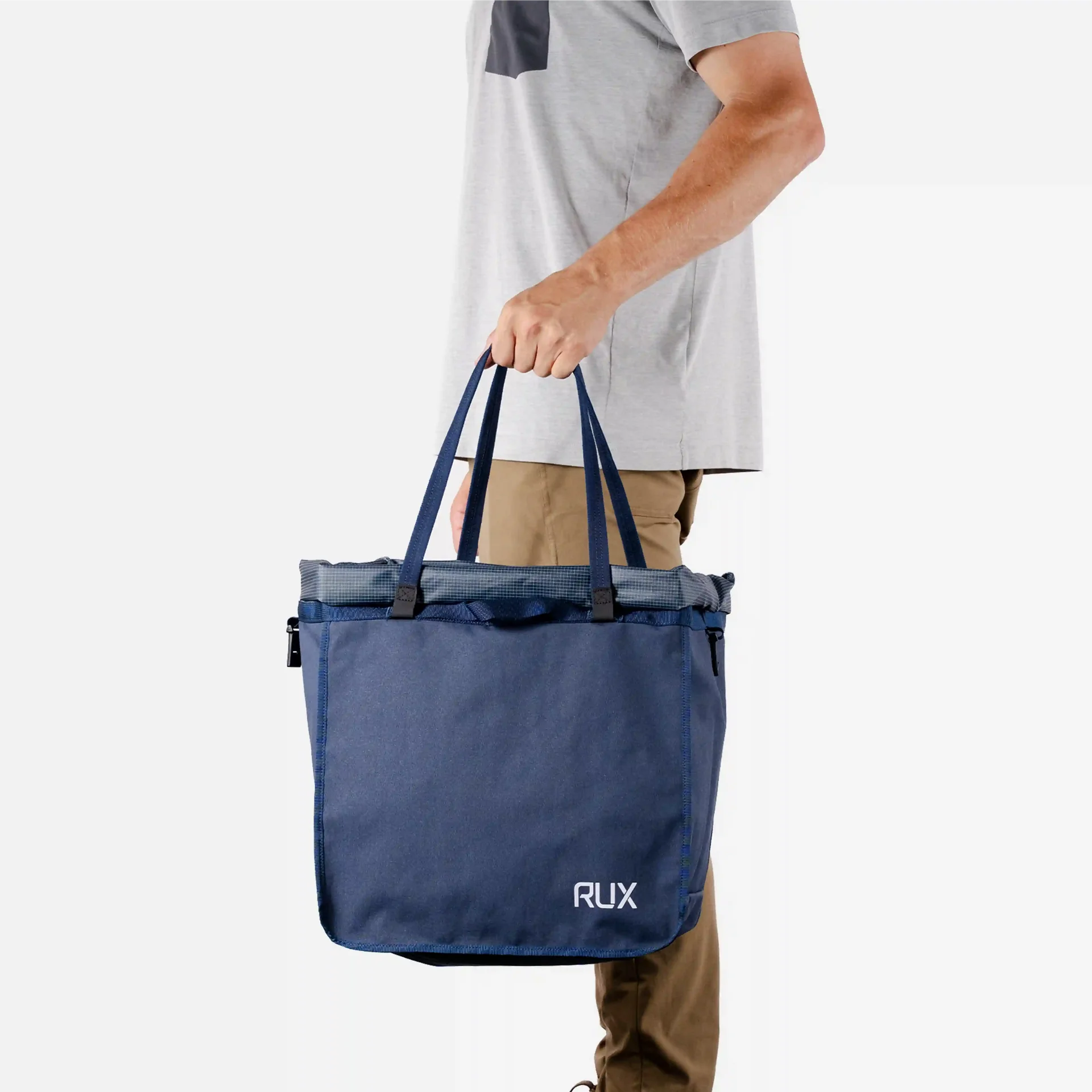
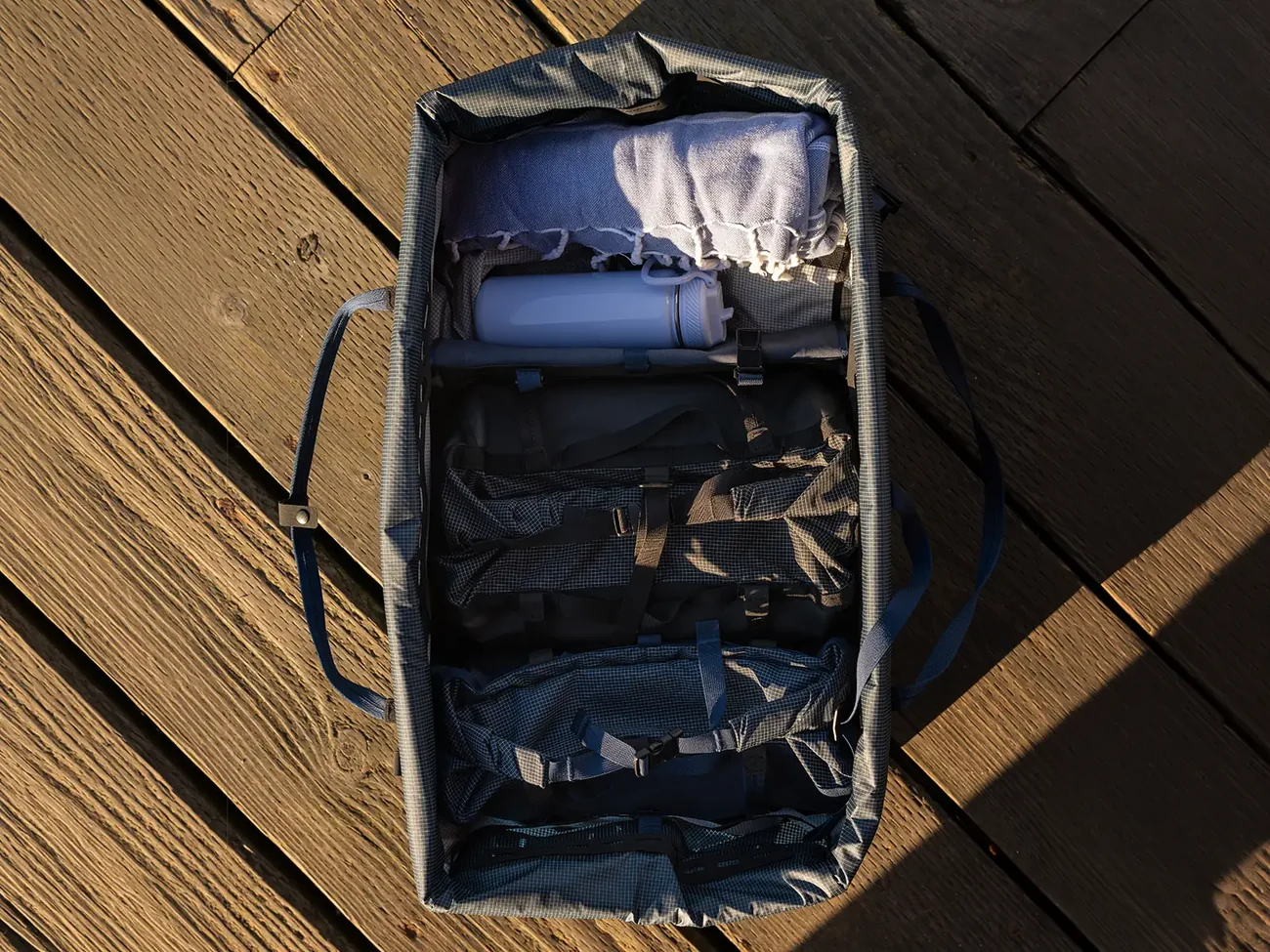
Most ordinary canvas totes sag inward as soon as I put them on the ground. I end up holding the opening apart with one hand while trying to load them with the other. The RUX holds its shape on a picnic table or beside the car. The wide top lets me see what I have packed, and the rectangular bottom makes good use of the space instead of leaving awkward corners that swallow small items.
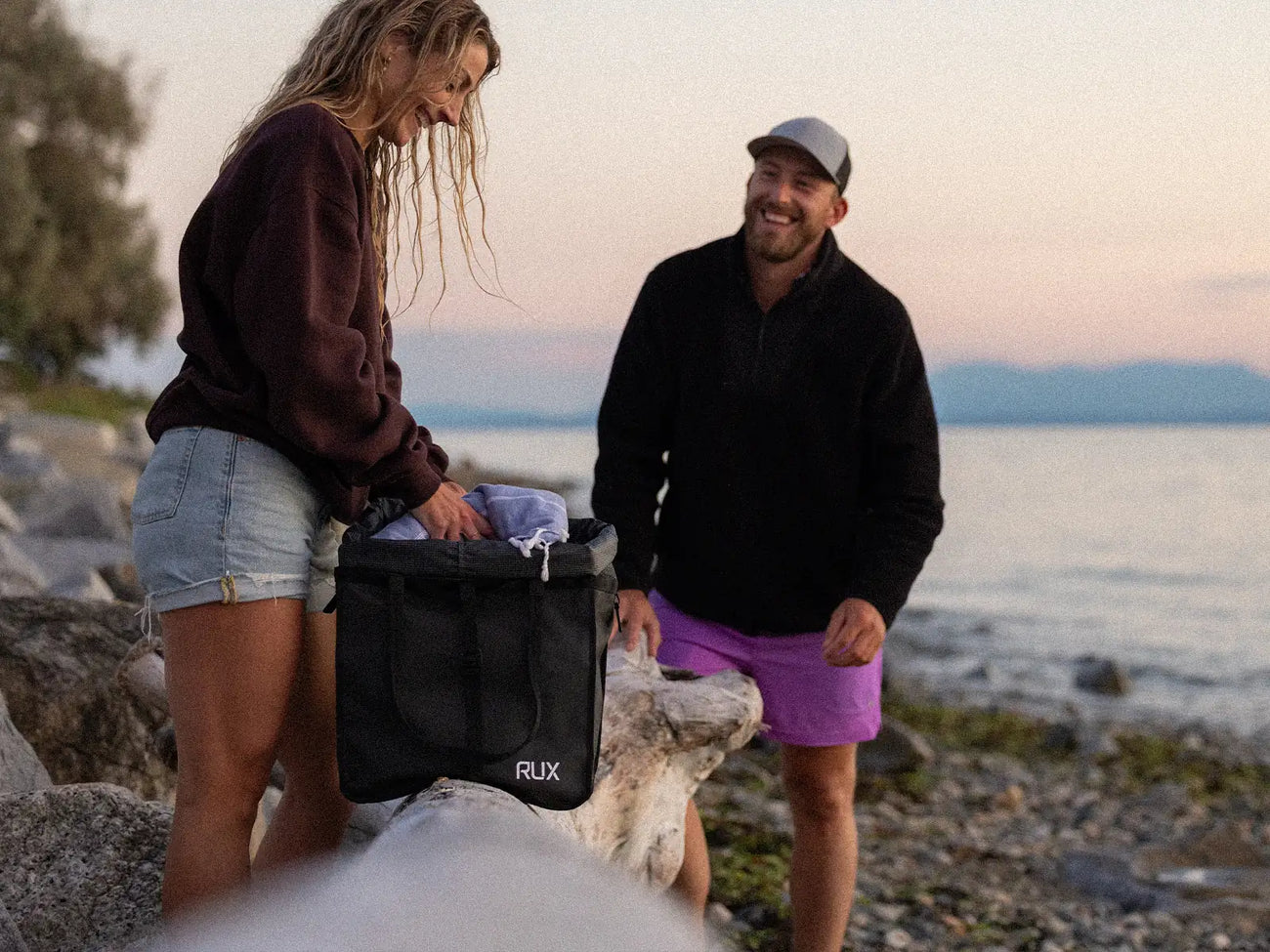
For a beach run, I can put in two thick towels, a fleece, two Nalgene bottles and sunscreen with room to find each one again. When I filled it for the move from the car to camp, it took two loaves of bread, a Jetboil, pasta, snacks and a couple of wine bottles. Those bulky, uneven objects used most of the advertised 25 litres. The bag kept them together and upright much better than a soft duffel would have.
That shape also earns its space in the boot. I can put it next to a storage box without losing a wedge of room to a round bag. When I unpack at camp, it remains a small, stable container. I can move it from the car to a table and continue taking things out through the day. I used it this way far more often than as a sealed bag that stayed packed until the end of a trip.
I usually leave the top open
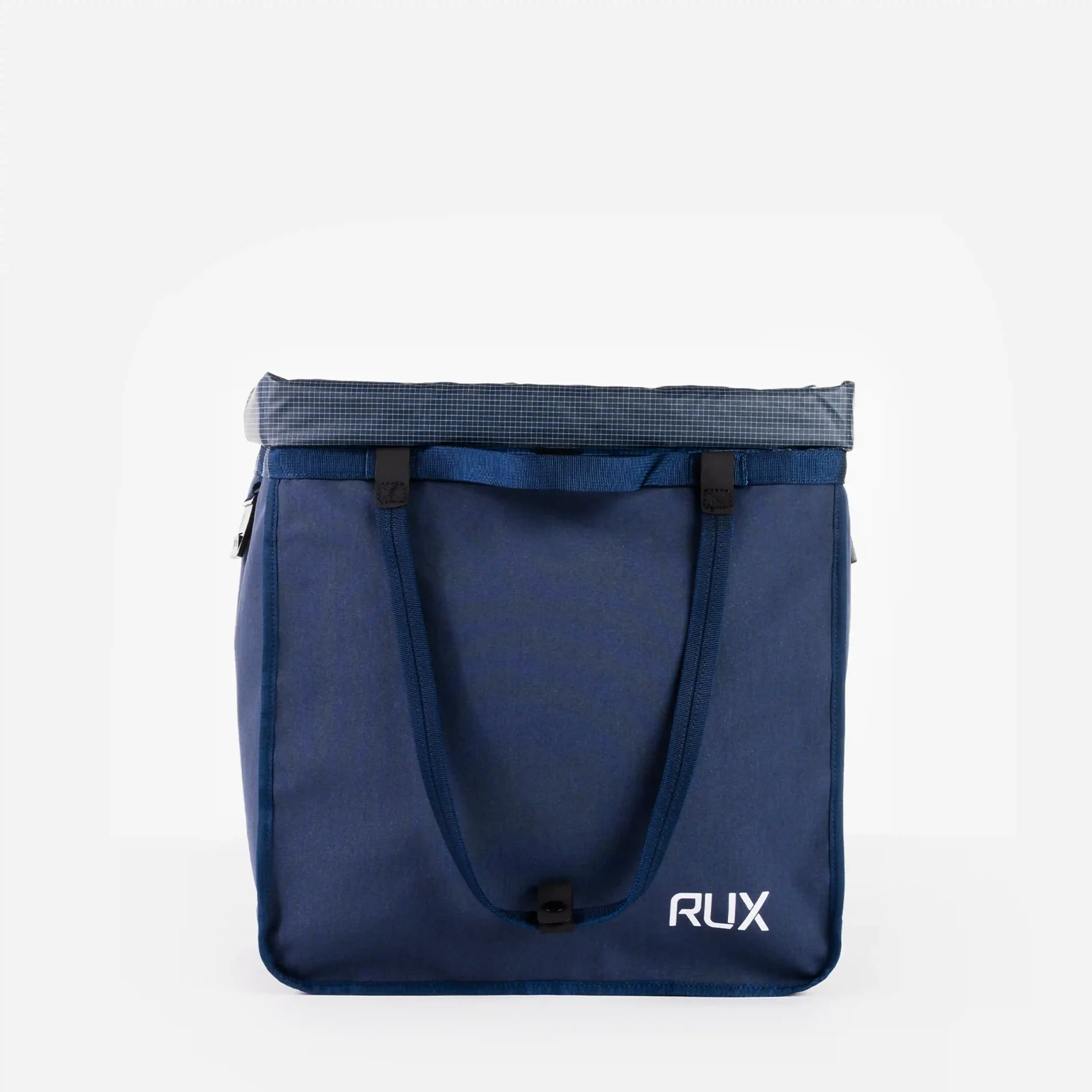
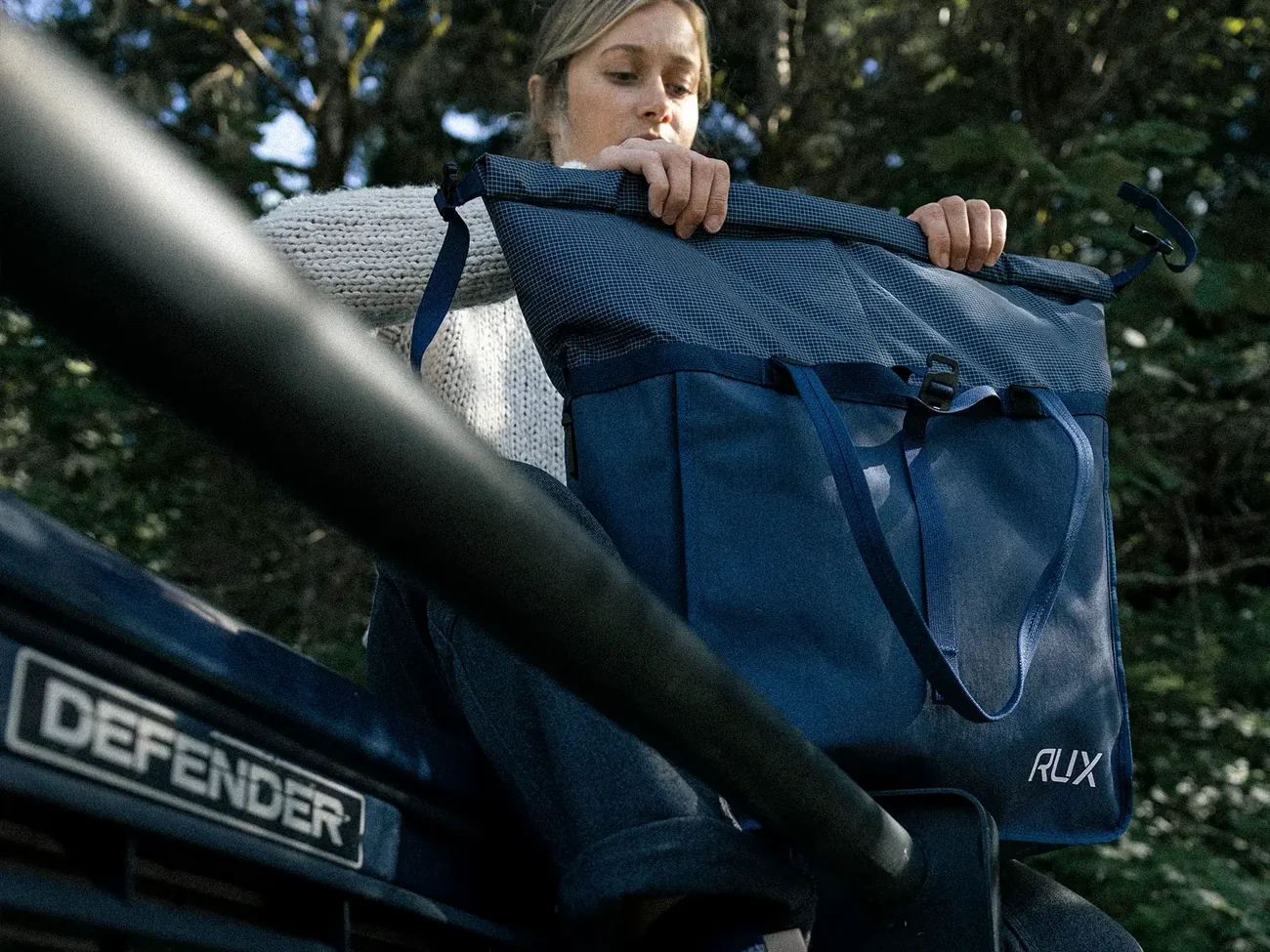
The segmented roll-top folds over the opening and clips down when I want to secure a load or keep weather off it. It is easy enough to use, and I was glad of it when a downpour hit beside the Gulf of St Lawrence. I rolled it quickly, clipped it and ran back to the car. The spare dry clothes inside were still dry when I opened it.
At a campsite I seldom bother closing it. If I am making lunch, someone wants sunscreen and I need a layer in ten minutes, rolling and clipping after every reach gets tedious. Left open, the bag works like a tidy bucket with handles. I can look straight in, take what I need and carry it to the next spot. RUX has made a useful closure, but the open-bucket mode is the one that made me keep reaching for the bag.
There are two mesh pockets inside for the small things that would otherwise settle beneath towels or food. They help when the main compartment has something in it to support the sides. Put a heavy multi-tool or a large bunch of keys in one while the bag is empty, though, and the pocket tugs that side down. I learned to keep heavy small objects in the main compartment and use the mesh for lighter things.
Comfortable for the walk to the water
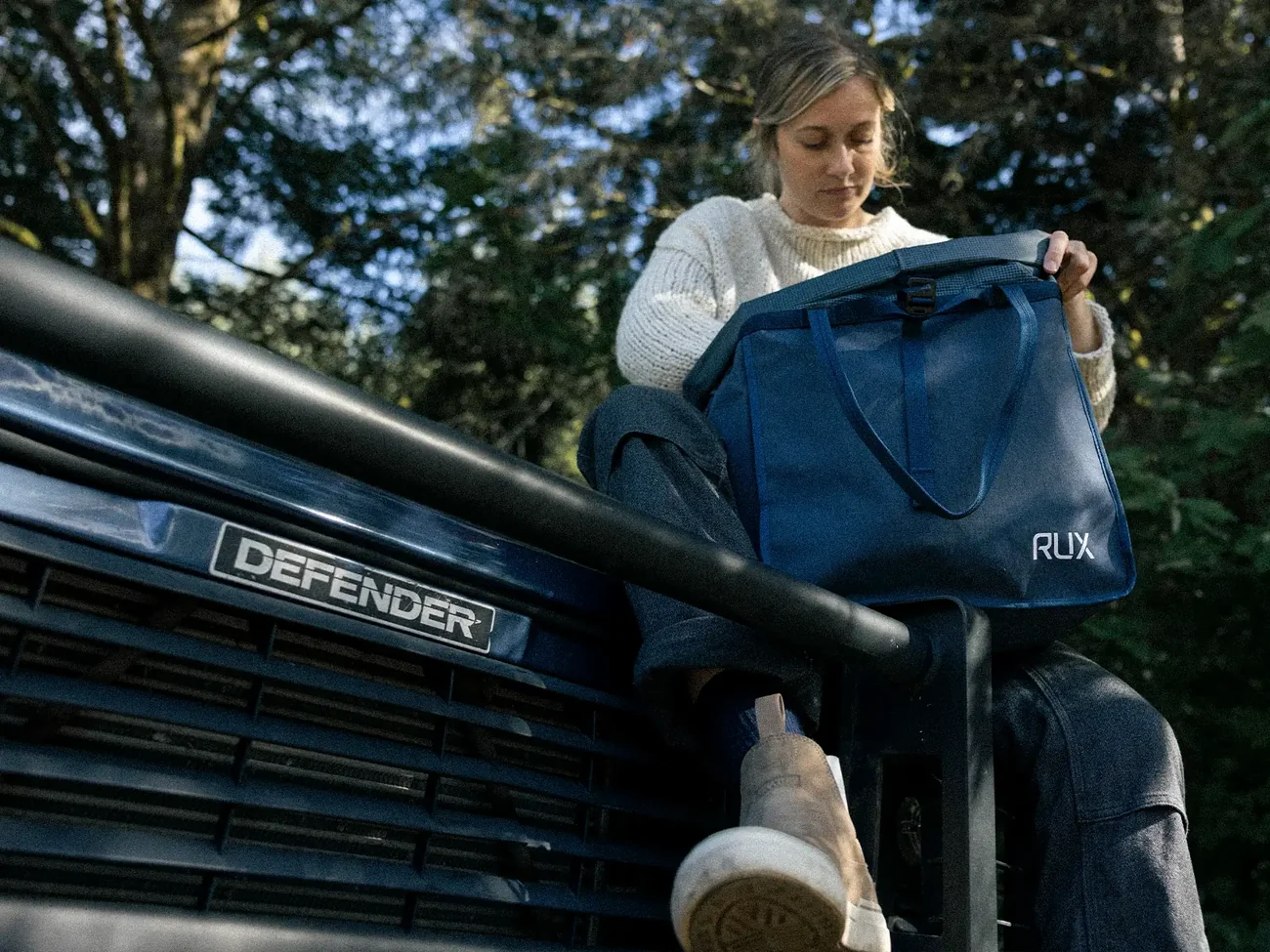
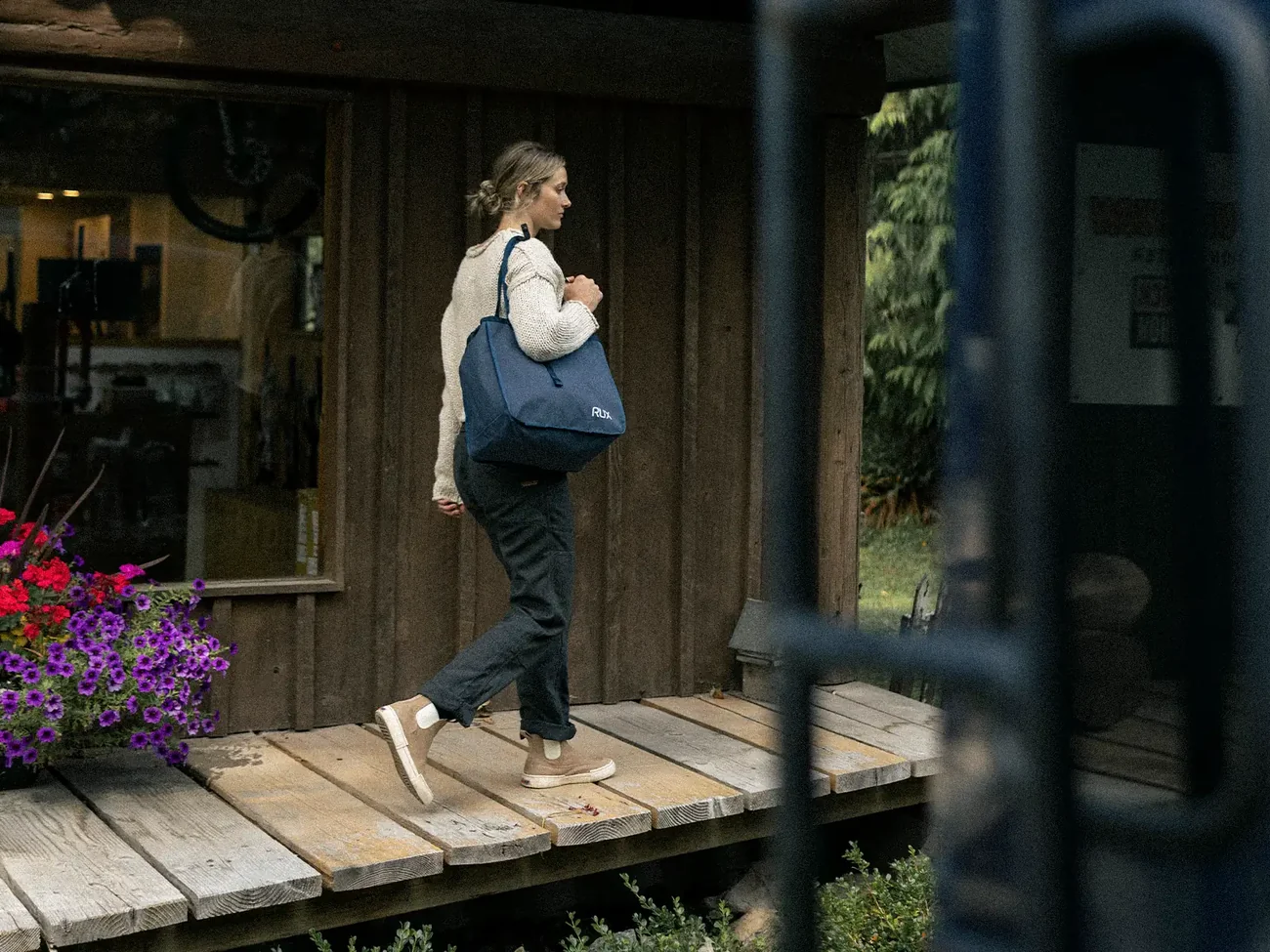
I mostly carry it with the webbing handles over one shoulder. They are long enough to make that feel natural, and the Hypalon keeper keeps them together when I grab the bag in a hurry. An eight-beer picnic load with snacks, a rug, speaker, battery pack and a spare hoodie was quite manageable. So was the towel-and-fleece load for the beach. A walk of around half a mile to the river was within its comfort zone.
Once I filled it with heavy provisions, I could feel the difference. The flat-sided body knocked against my hip, especially when I walked quickly. It never became awkward enough to make me leave it behind for the short car-to-camp jobs it normally did. I would choose a backpack for a longer approach, a steep track or a full day's hiking. This bag is better when the walk is short and the load changes as people take things out.
I also like being able to take it by the handles for quick lifts into the car, onto a boat or across a campsite. A rigid tub can be awkward to carry at my side and bangs my legs. A loose tote is easier on the body but often collapses while I load it. The RUX hits a useful middle ground for the trips I took.
Rain protection, with a clear limit
Light drizzle in Hautes-Gorges and damp grass at Saguenay caused no problem for my gear. The coated body shed the weather well, and the rolled top protected clothes during that Gulf of St Lawrence downpour. It was reassuring to reach the car, open the bag and find the dry layer I had packed still dry.
The puddle on the boat deck was different. I left the bag sitting in deeper water than I realised, and a little moisture came through a seam at the bottom. The bottom of a cardboard cracker box got damp. The bag uses sewn, bound seams, so I would not expect it to behave like a welded dry bag when water sits against those seams. It is fine for ordinary rain and a wet campsite. I would move it out of standing water and put electronics or a down layer in separate waterproof protection if those items had to stay dry.
RUX sells a separate Waterproof Tote Bag with a different construction. The 25L Bag makes more sense to me for daily camp errands because it is lighter and softer to store. I would choose the waterproof version for a paddleboard, a wet boat deck or any trip where a leak could ruin the contents. My downpour result was good; the puddle result tells me where to draw the line.
A summer of grit, spills and quick cleanups
After three months of loading and carrying it, I have not found a serious scrape, torn seam or stretched handle. The base has been put down on sand, rocks and asphalt repeatedly. It shows the sort of light marks I expect from use, but nothing has weakened or changed its shape. The webbing and closure still feel secure.
Cleaning it is easy. Mud and a coffee spill wiped out of the coated interior with a damp rag. That matters in a bag I use for food and beach kit as well as general camp clutter. I do not have to decide whether it is now permanently the muddy-gear bag. I wipe it, let it dry and use it for bread and snacks again.
RUX says the main body is 320D high-tenacity nylon with a TPU laminate and a PU-coated interior. The roll-top uses lighter fabric. Those details help explain why it can hold a useful shape while staying below a pound empty, though my own evidence is the condition of this one bag after a busy summer. I have not treated the seams as waterproof or tested how many years it will last.
It fits the larger RUX boxes, then works on its own
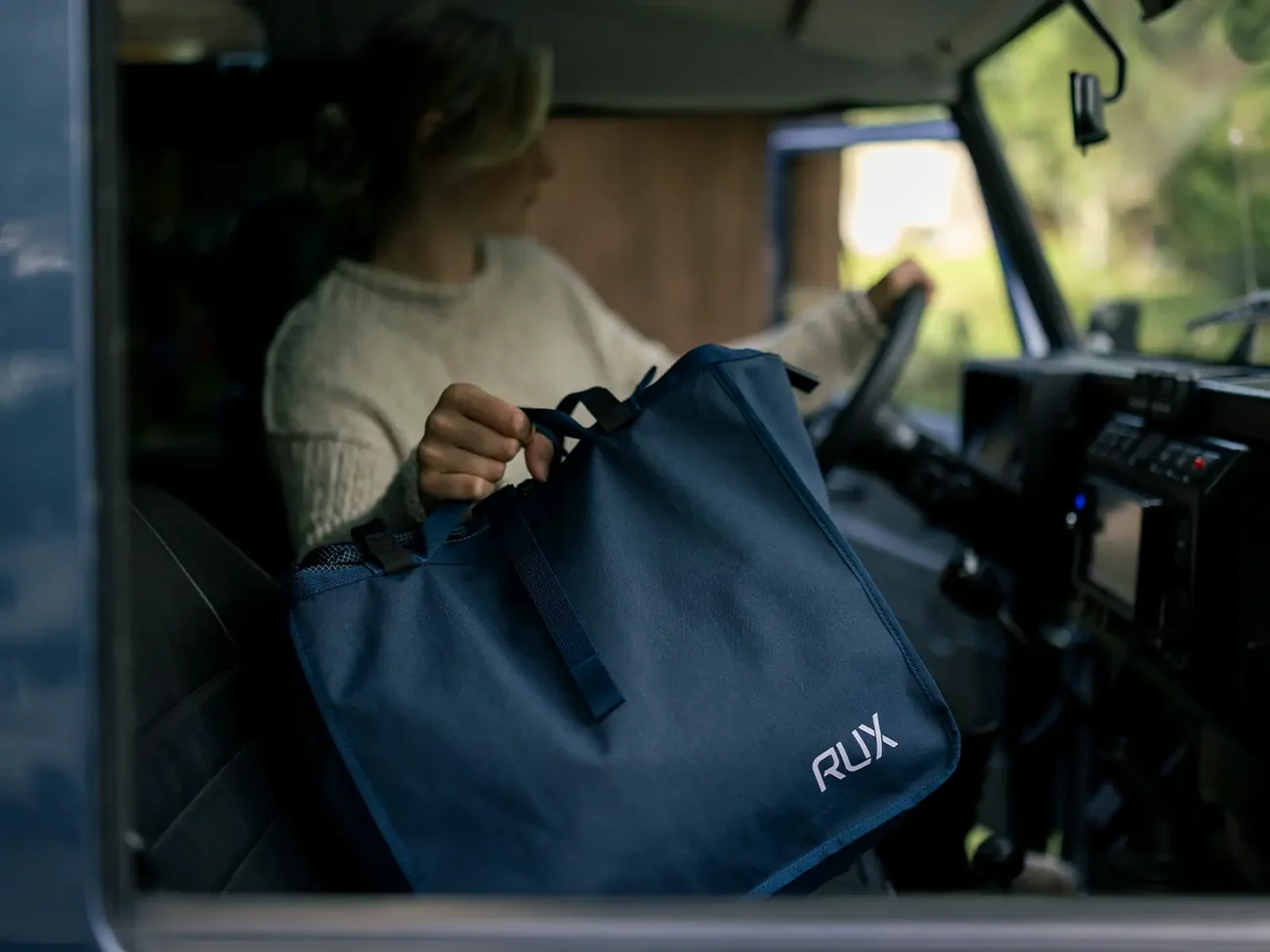
RUX designed two of these 25L bags to fit inside a 55L Duffel Box or a 70L Gear Box. I used mine inside the 55L box during the drive, then pulled it out when we stopped. That meant the food and day gear stayed together in the car and I already had a tote to carry it to camp. I have also used the larger 70L Gear Box for basecamp storage. The big box is useful when most of the gear stays in one place; this little bag is the piece I take away from it.
It also collapses when the contents are out. I flatten mine and leave it in the boot between uses. The fabric has enough body to stand open at camp, yet it does not force me to reserve a full 25-litre block of car space on the return drive. That is a practical difference from a hard tub, especially after a trip when the vehicle has filled with damp clothes and things nobody packed as carefully as they did on the way out.
The nesting system is nice if you already own a larger RUX box, but I would still find the 25L Bag useful on its own. The everyday jobs made the purchase worthwhile for me. Packing it into the big box during a drive is a convenient extra, not something a reader needs to buy into before the bag makes sense.
Where it sits beside other bags
I have carried the YETI Camino 35 tote as well. The YETI has a sturdier, more permanent body. That is useful when you want a tough standing container ready all the time. The RUX is easier to flatten after the trip and weighs much less. For a car-camping load that I carry to a picnic spot and then fold away, I prefer this one. For something I wanted to leave upright in a garage full of heavy gear, the Camino would still make sense.
Within the RUX range, the 70L Gear Box is a basecamp storage piece and the Waterproof Tote is the one to consider when the load has to stay dry. The 25L Bag does the lighter everyday jobs: groceries, towels, spare layers and food for a short outing. The category names can make them sound interchangeable, but I would decide where the bag will spend its time. Mine spent far more time moving between car and campsite than sitting in water or carrying everything we owned.
There is a related bag review on this site if your load is much larger. I used The North Face Base Camp Duffel 95L for months of travel and sailing. It holds a great deal and stands up to rough handling, but it is too much bag for a picnic or an afternoon at the lake. For a long walk with camping equipment, my Hyperlite Unbound 40 review covers a proper hiking pack. Shoulder straps, a hipbelt and trail access matter when the gear is on your back all day.
Would I pay $85 again?
Yes. The price felt steep when I thought of it as a tote, but I used it constantly over three months. It made moving supplies from the car less messy, kept our day-trip kit together and worked as a small container on the picnic table. I like being able to wipe it out and flatten it at the end of the day. It has shown no damage that makes me question using it for another season.
I would recommend it to car campers, families and people who make frequent short trips from a vehicle to a beach, campsite or boat. If your main need is a long carry, buy a backpack. If the contents must stay dry after the bag lands in water, buy a true dry bag or waterproof tote. Within those limits, the RUX Bag 25L does its everyday job very well, and 4.5 out of 5 feels fair.
RUX Bag 25L details
| Version tested | RUX Bag 25L, navy |
|---|---|
| Volume | 25 L |
| Dimensions | 21 x 34 x 32 cm (RUX specification) |
| Weight | 0.42 kg / 0.93 lb (RUX specification) |
| Main fabric | 320D high-tenacity nylon Oxford with TPU laminate |
| Closure | Segmented 105D nylon roll-top with clips |
| Inside | Two nylon monomesh pockets; coated wipe-clean surface |
| Water protection | Water-resistant; sewn, bound seams |
| Price paid | $85 USD |
| Use | Three months of car camping and day trips in Quebec |
Scoring breakdown

Sources & context
What this review draws on
Adam bought the navy RUX Bag 25L and used it over three months of car camping and day trips in Quebec. Dimensions, weight, fabrics and system fit were checked against RUX's published specifications. The carry, wear and water observations come from his own bag.
Editorial disclosure: Adam Whistler bought the navy RUX Bag 25L for $85 USD. RUX did not provide the bag, fund the review or have any involvement in it.