
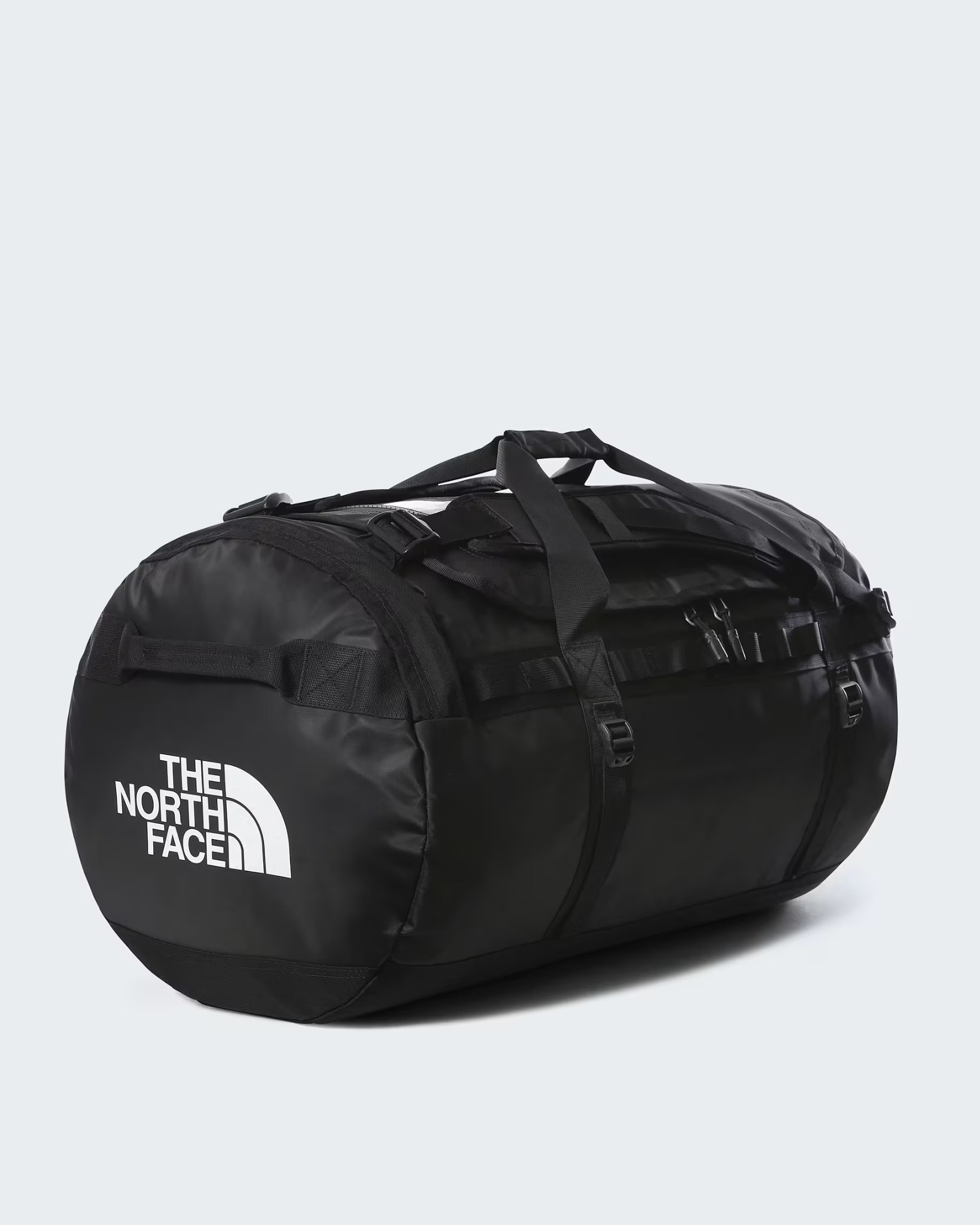
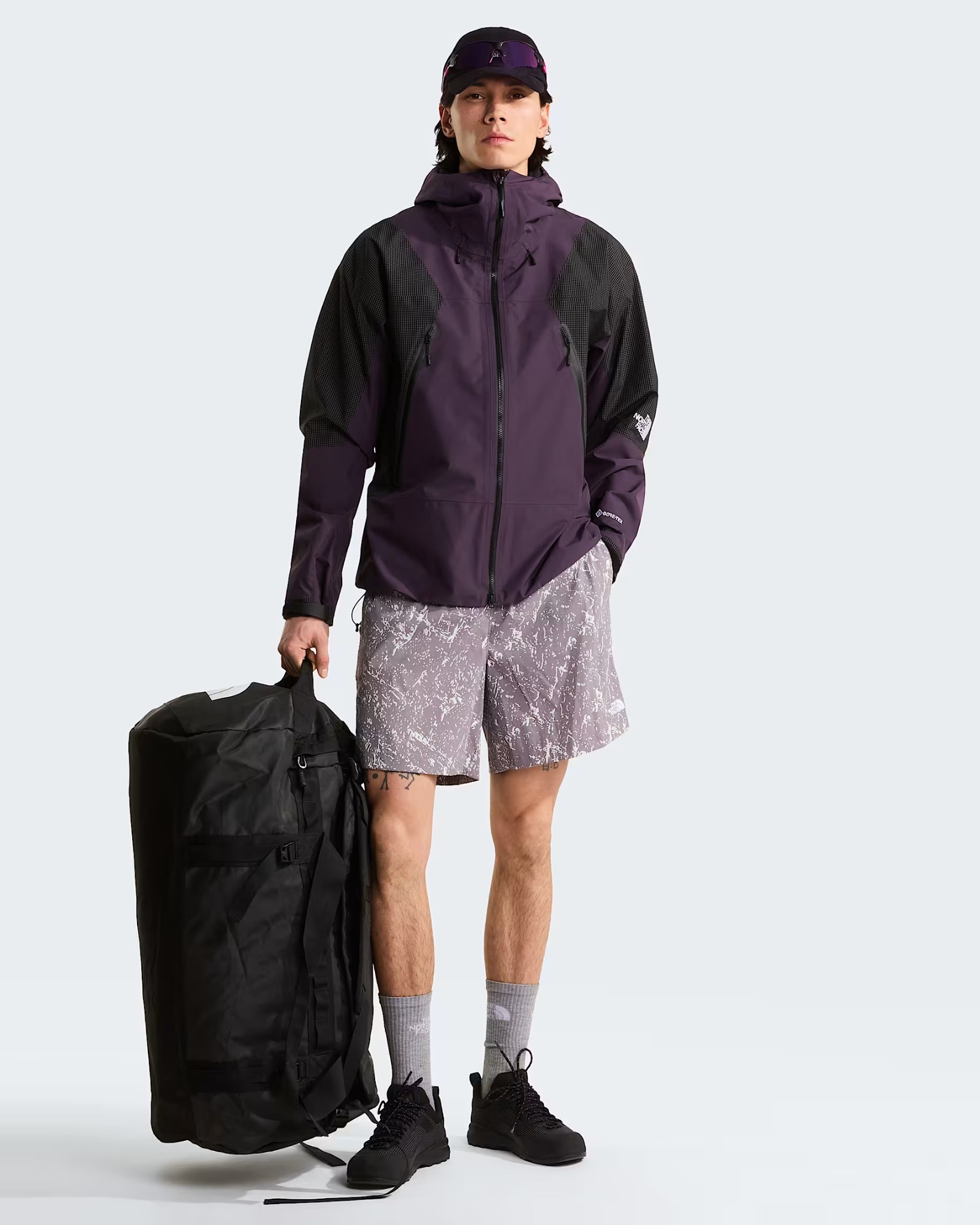
I bought the black 95 L Base Camp Duffel for £150 and used it as our main shore bag during roughly nine months of sailing in the Mediterranean. It is often described in retail listings as the Base Camp WP Duffel, while The North Face's current product page calls it the Base Camp Duffel L. The North Face did not supply the bag, know it was being tested or have any influence over this review.
Quick verdict
The Base Camp Duffel 95L is an exceptionally tough, highly water-resistant gear hauler. Our bag spent a sailing season moving through wet dinghies, rain, salt spray, beaches, rough town quays and laundry runs. It was dropped into the sea more than once during brief mishaps and the contents stayed dry each time. Those accidents do not make it a certified dry bag, and I would still use an internal dry bag for electronics. Its real drawbacks are the stiff zip, limited organisation, 1.84 kg empty weight and poor comfort when a full 95 L load is carried far.
What works
- Excellent abrasion resistance on stone quays, docks and boat decks
- Highly water-resistant fabric handled rain, salt spray and standing water
- Huge opening and 95 L capacity suit bulky equipment
- Four grab points make dinghy loading and hand-offs much easier
- Removable shoulder straps help with short transfers
- Compression straps control smaller loads
- End pocket separates wet or dirty kit
- Daisy chains provide secure lashing points
What to know
- The main zip takes effort around the D-shaped corners
- At 1.84 kg empty, it uses a meaningful part of an airline weight allowance
- Internal organisation is minimal and the black interior hides small items
- The backpack carry is sweaty and uncomfortable under a heavy load
- It is water-resistant rather than certified for submersion
- Salt and sand make the zip feel rough unless rinsed out
- Damp kit can develop odours quickly in the non-breathable body
The verdict
After nine months of hard marine use, the most useful quality is simple: I stopped worrying about where I put it down. The bag landed on splintery docks, abrasive stone, wet dinghy floors, sand and rock. It picked up pale scuffs and creases, particularly on the black body, but we found no punctures, delamination, loose stitching or damaged attachment points.
The 95 L volume was enough for grocery runs, family laundry, beach equipment and freediving kit. The wide opening made bulky loads easy to place, and the handles on multiple sides mattered every time the bag had to be passed between a moving dinghy and a quay. It is a useful marine bag because the construction tolerates poor handling.
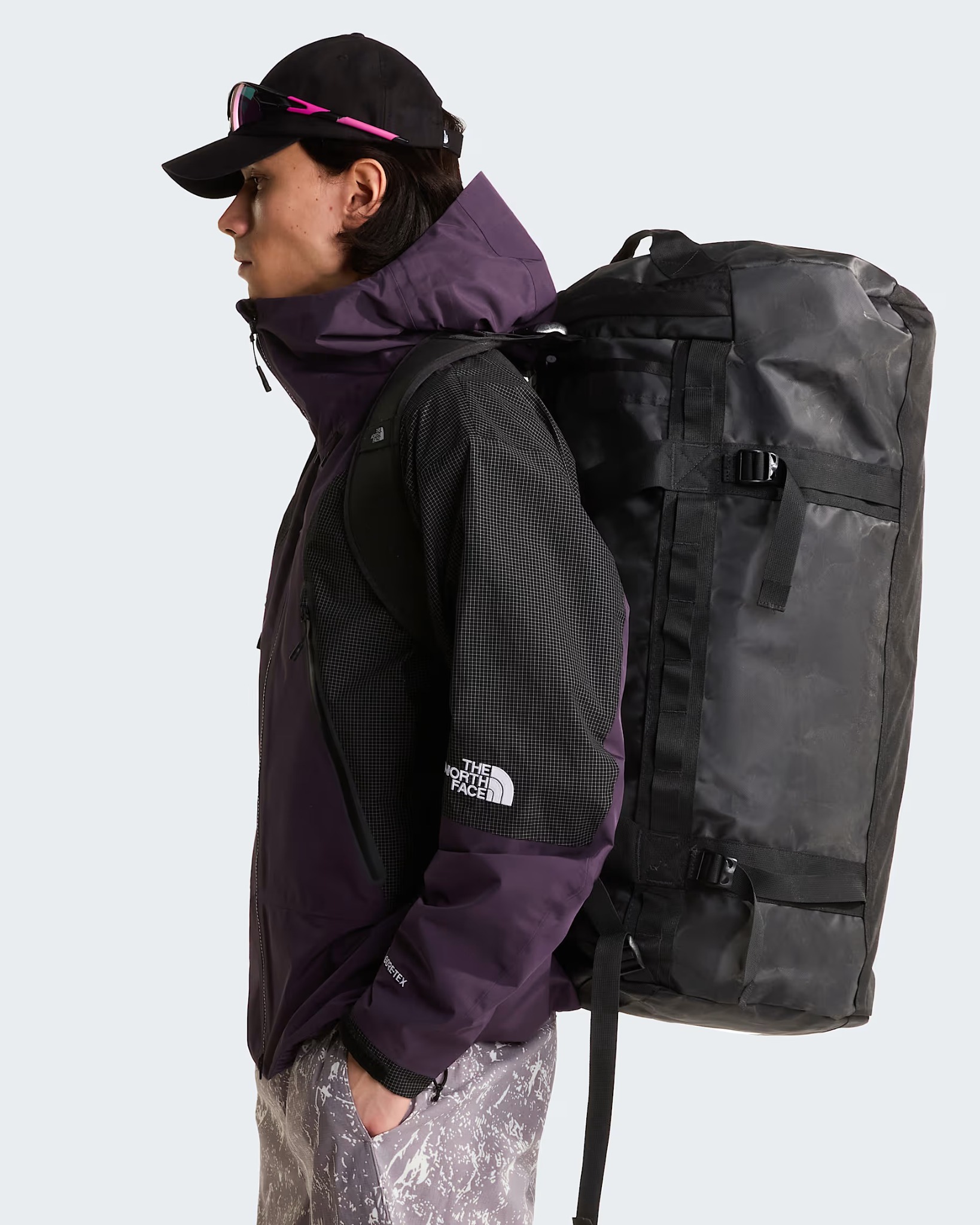
It is far less convincing as a backpack. The removable straps are handy for a walk from the marina, but there is no proper back panel or frame. Heavy, awkward contents press into the back, the bag gets sweaty and a full load becomes uncomfortable within 15 to 20 minutes. Think of the straps as a transfer system rather than a hiking harness.
How I tested the Base Camp Duffel
This was our go-to-shore bag for a Mediterranean sailing season lasting roughly nine months. It went ashore for food, laundry and beach trips, and joined spearfishing and freediving excursions. Nearly every outing meant lifting it in and out of a dinghy.
The test included regular salt spray, several rain showers, puddled water in the bottom of the tender, rough stone quays, splintery docks, sand, rock and the odd spilled beer. The bag was also dropped into the sea more than once. Each immersion was brief and the zip flap was properly closed. The contents stayed dry in those incidents.
I did not conduct a timed or depth-controlled immersion test. North Face describes the Base Camp fabric and construction as water-resistant, and that is the standard buyers should use. Critical electronics, documents and bedding still belong in an internal dry bag when a swim is possible.
Water resistance around boats
The coated 1000D recycled polyester body sheds rain and spray very well. Water beads on the exterior and the 840D recycled ballistic nylon base can sit on a wet surface without soaking through. The fabric wipes clean and dries quickly because it absorbs very little water.
The main zip is the limiting part. A weather-resistant flap covers the D-shaped opening and needs to lie flat so water runs away rather than collecting on the teeth. During our brief accidental drops, water did not reach the contents. A longer immersion, pressure below the surface or a badly seated flap could produce a different result.
Salt water caused no damage to the coated body. Dried salt and sand did make the sliders feel rough. Fresh-water rinses restored a smoother action. Packing wet towels or wetsuits also showed the disadvantage of the nearly non-breathable shell: moisture and odour stay inside until the bag is opened and dried.
Capacity and packing
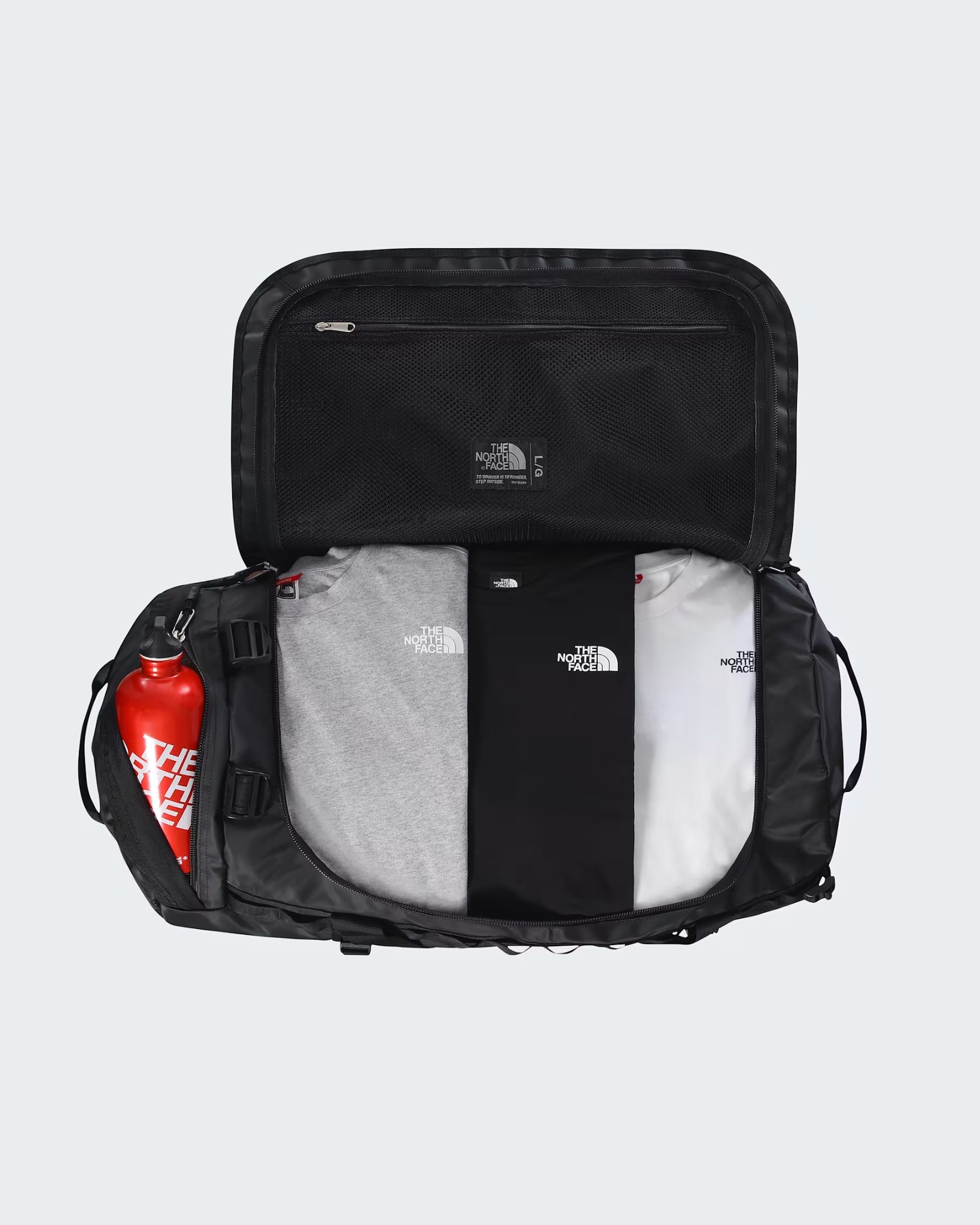
The claimed 95 L capacity feels accurate. The compartment accepts bulky, awkward equipment without much planning, including fins, masks, towels, food and laundry. Four compression straps reduce the loose volume when it is partly filled.
The D-shaped zip gives excellent access, but the stiff coated lid can fall back toward the opening during packing. There is a secure mesh pocket under the lid and a mesh sleeve at one end, with little else to organise smaller objects. Packing cubes and separate dry bags make a large difference. Loose black items disappear against the black interior.
One exterior end pocket is useful for wet shoes, masks or dirty clothing, although it still consumes some of the main bag's volume. The side daisy chains accept lashings for a deck or roof rack. At 95 L, there is enough space to overpack quickly. Heavy groceries or dive weights can turn it into a two-person lift long before it looks full.
Carrying and handling
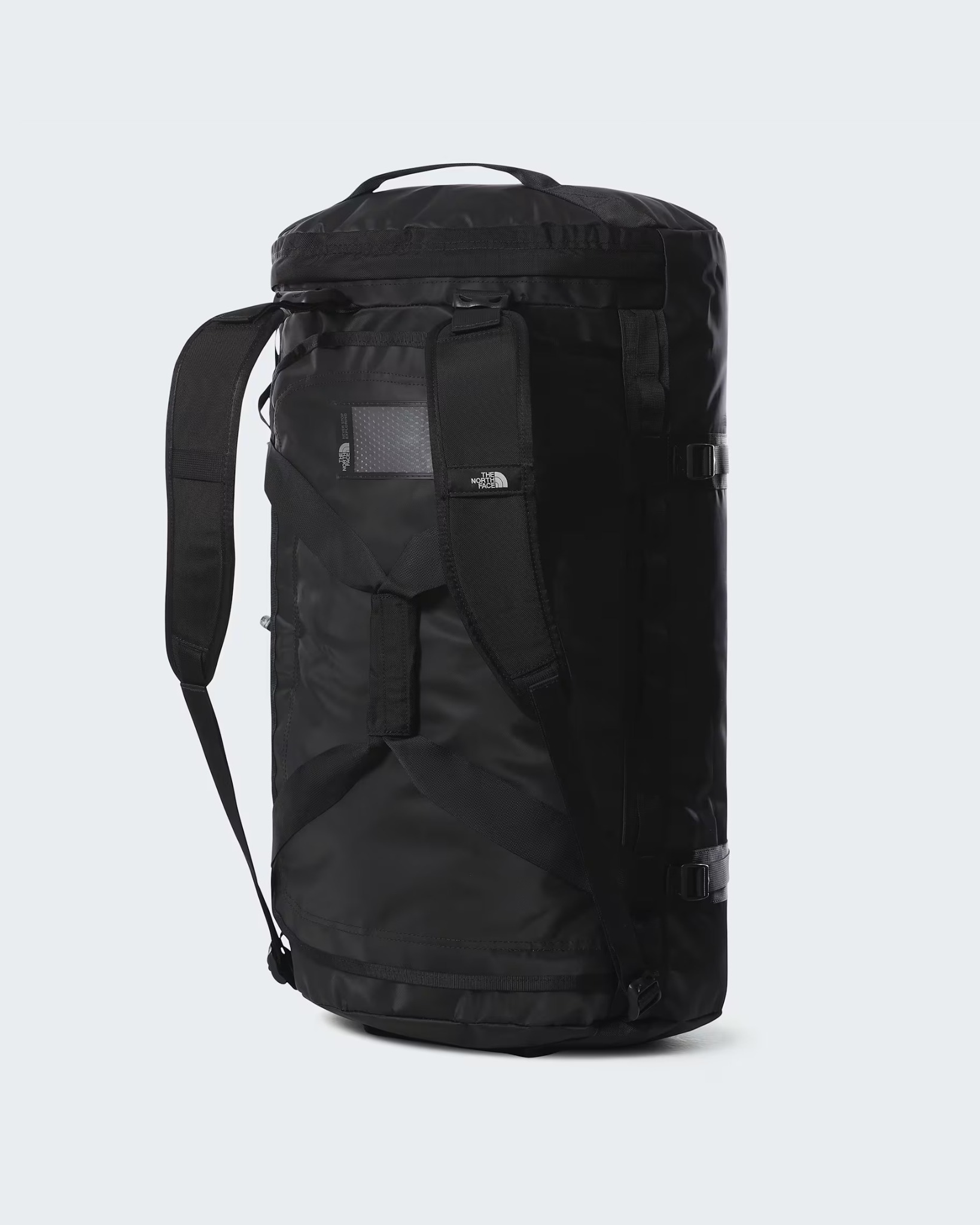
Grab handles are positioned around the bag, which is exactly what a large duffel needs. One person can pull it upright from a deep locker, and two people can take opposite ends when the load is dense. The handles also make a controlled hand-off between boat and shore possible without trusting a shoulder strap.
The alpine-cut shoulder straps unclip and adjust easily. They hold the bag close enough for a short walk, but there is no sternum strap, ventilated panel or rigid structure. Poorly packed equipment can press directly against the spine, while a load above about 20 kg pulls hard at the shoulders.
The bag's width also becomes awkward in narrow companionways, marina gates and public transport. Removing the shoulder straps before checking it with an airline reduces the chance of a strap snagging on handling equipment.
Zip and daily use
The heavy zip and stiff fabric require a firm pull around the D-shaped corners. It was the one recurring annoyance during daily use, especially when the bag was overfilled. The large pullers remain easy to grip with wet hands or gloves, and the two sliders can accept a small luggage lock.
We had no separation or structural failure. The slider occasionally caught the internal edge of the weather flap when pulled too quickly. In cold conditions the body becomes stiffer, adding more resistance. Keeping the track clear of sand and rinsing salt away is worthwhile maintenance rather than cosmetic fuss.
Durability after a sailing season
The bag handled the marine test with superficial wear only. The base received the worst abrasion from docks and quays, yet it remained intact. The coated body accumulated pale marks and folds, while the stitching, compression straps, handles and daisy chains stayed secure.
Black makes dirt, dried salt and concrete scuffs easy to see. A hose, soft brush and fresh water removed most of it. I would avoid storing damp clothing in the closed bag because the shell traps smells as efficiently as it traps spray.
The main zip is the component I expect to wear first after years of grit and overstuffing. The removable shoulder straps are easier to replace than a permanently sewn harness, which is a useful detail for a bag likely to remain in service for a long time.
Travel and airline practicality
North Face publishes dimensions of 40.64 by 71.12 by 40.64 cm. That totals 152.4 cm, or 60 linear inches, but airline allowances vary and can change. The weight is usually the more immediate problem. A 1.84 kg bag plus 95 L of dense equipment can pass a checked-bag limit very quickly.
It does not have wheels. That saves rigid parts, weight and potential breakage on rough ground, though a long airport transfer is tiring. This size makes sense for extended travel and equipment-heavy trips. It is far too large for a normal weekend unless several people's gear is being consolidated.
Value
At the £150 paid, the Base Camp Duffel cost much more than a basic nylon holdall. The premium bought a bag that endured nine months of salt, rough surfaces and awkward handling without a functional failure. For sailors, expedition teams and gear-heavy travellers, that durability makes the price reasonable.
Buy a lighter and more structured travel bag if you need wheels, laptop storage or comfortable long-distance carry. Choose a rated dry bag if prolonged submersion is part of the plan. The Base Camp Duffel works best when a large load needs tough weather-resistant protection and will move through vehicles, boats or baggage systems more often than it sits on someone's back.
I would buy it again at full price. The zip and carry comfort prevent a perfect score, but neither outweighed the bag's reliability in daily marine use.
The North Face Base Camp Duffel 95L specifications
| Tested model | Base Camp Duffel L, 95 L |
|---|---|
| Colour | TNF Black / TNF White |
| Capacity | 95 L / 5,797 in³ |
| Published weight | 1.84 kg / 4 lb 0.9 oz |
| Dimensions | 40.64 × 71.12 × 40.64 cm / 16 × 28 × 16 in |
| Body | 1000D recycled polyester with phthalate-free PVC coating |
| Base | 840D recycled ballistic nylon with non-PFC DWR finish |
| Water protection | Water-resistant fabric and weather-resistant zip flap; no published submersion rating |
| Opening | D-shaped zip |
| Carry | Removable adjustable shoulder straps, connected duffel handles and end grab handles |
| Organisation | Secure-zip mesh lid pocket, end-cap mesh sleeve and exterior end pocket |
| Compression | Four external straps |
| Price paid | £150 |
| Country of manufacture | Not stated on the current manufacturer product page |
| Manufacturer involvement | None |
Scoring breakdown

Sources & context
What we checked
This review is based on Adam's nine-month Mediterranean sailing test. We checked the published capacity, weight, dimensions, materials, pockets, straps and water-resistant construction against The North Face's current product documentation. The manufacturer does not publish a submersion rating for this duffel.
Editorial disclosure: Adam bought the Base Camp Duffel 95L with his own money for £150. Gear Reviews received no payment, free product or editorial approval from The North Face.