
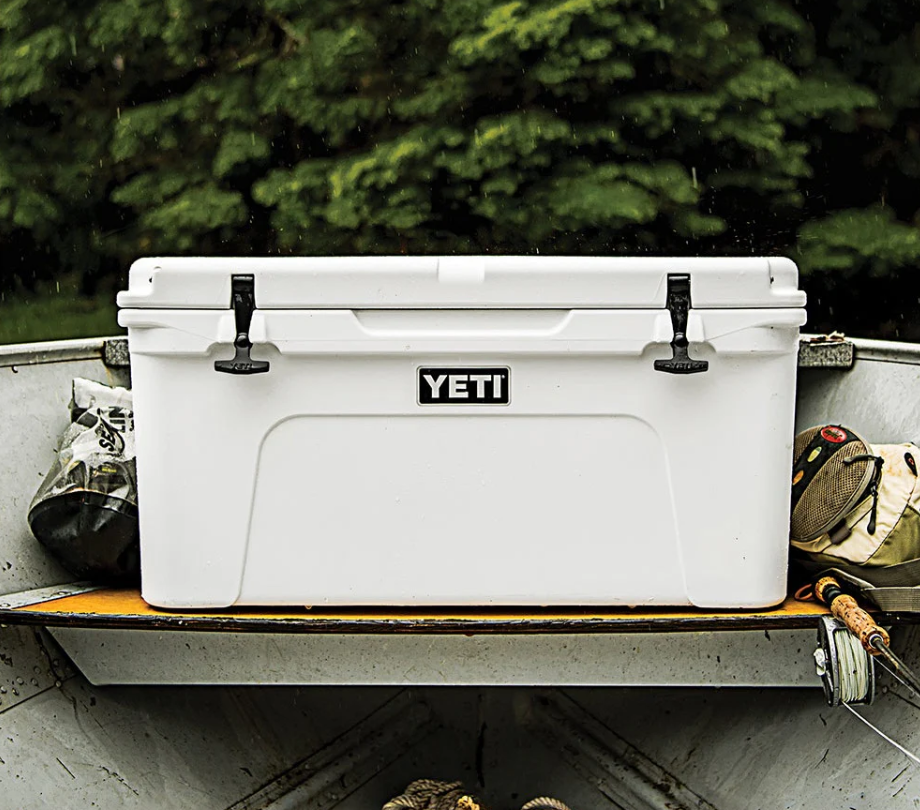
I paid £350 for the white YETI Tundra 65 and used it throughout a Mediterranean sailing summer. YETI did not supply it, know it was being reviewed or influence the test. We bought it because few cool boxes attract this much enthusiasm online, and we wanted to see what remained once the hype met 40°C heat, salt water and repeated beach transfers.
Quick verdict
The Tundra 65 is a superb stationary cooler. With pre-chilling, plenty of ice and sensible shade, we saw five to six days of useful ice and four to five days when food and drinks still felt properly cold. Its rotomoulded body shrugged off a season of boats, beaches, rocks and salt. The 13.7 kg empty weight and lack of wheels are substantial weaknesses. A full load can approach 40 to 45 kg, turning every dinghy landing into a two-person lift.
What works
- Five to six days of useful ice in real summer use
- Exceptional shell, hinge and latch durability
- Gasket kept spray and rain outside during our test
- Dry-goods basket protects food from meltwater
- Non-slip feet kept it planted in the dinghy and car
- Strong enough to serve as a seat or stable work surface
- Fast, simple drain system
What to know
- 13.7 kg empty and commonly a two-person carry when loaded
- No wheels for beach or marina transfers
- Thick walls consume a large part of the exterior footprint
- The “65” model name should not be read as 65 litres
- A proper ice ratio leaves room for roughly 40 to 45 cans in our use
- Tall wine and two-litre bottles need to lie down
- White shows dirt and scuffs quickly
The verdict
The Tundra 65 delivered where the reputation matters most. It held cold for days in serious heat, stayed shut in a moving dinghy and accumulated only cosmetic marks during a full summer. We stopped treating it like fragile equipment. It went onto sandy beaches, rocky shorelines and wet boat surfaces without a structural problem.
Its weakness was present every time we moved it. The cooler itself weighs 30.3 lb, or about 13.7 kg. Add a block of ice, cubes, cans and food and the total can reach 40 kg or more. The rope handles are good and the weight sits predictably between two people, but one person carrying it any distance is awkward and hard on the back.
That trade earns a 4.0 rather than a higher score. For a boat, vehicle camp or fixed base, the Tundra 65 is exceptionally dependable. For a solo traveller or anyone dragging a cooler above the tideline, the wheeled Tundra Haul is a more sensible YETI.
How I tested the Tundra 65
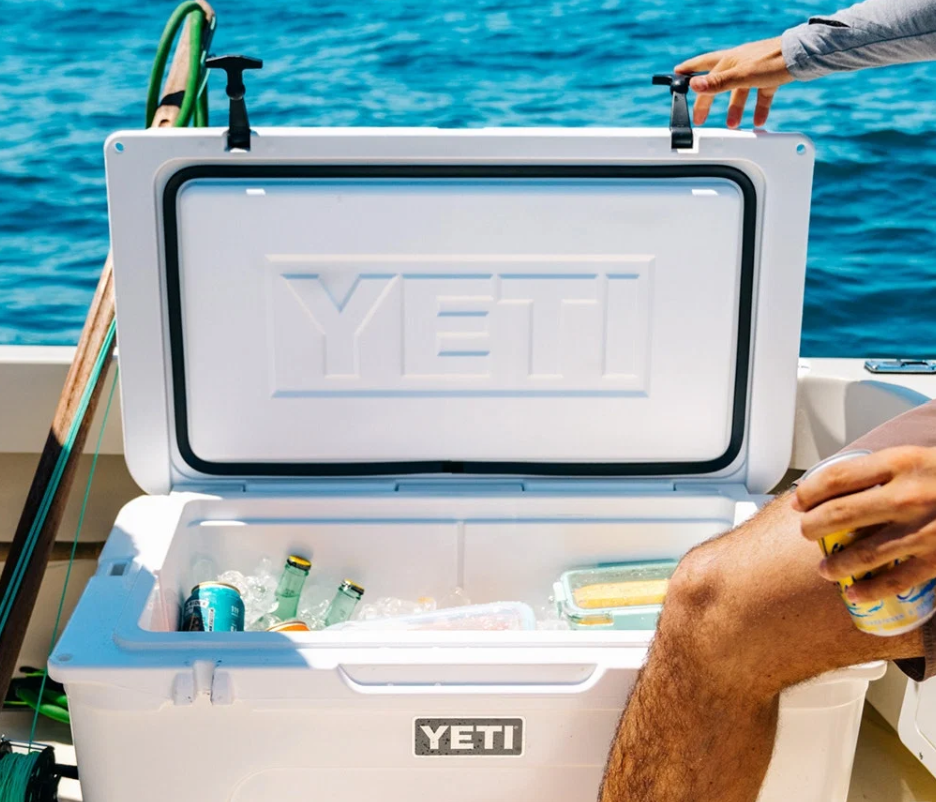
The test covered a full summer cruising the Mediterranean on our sailboat. A typical day meant loading the cooler on the mothership, lowering it into the dinghy, landing on a beach and carrying it above the waterline. It came back aboard at night. We also put it in a car boot for several day trips.
Air temperatures reached 40°C, with the closed car boot likely hotter. The cooler was usually placed in shade when possible, but it also saw direct sun, salt spray, sand and wet boat floors. We opened it around 10 to 15 times on busy days for drinks. This was regular-use testing rather than a sealed laboratory ice challenge.
We normally pre-chilled it overnight and packed a solid ice block underneath, then used cubes to fill the gaps. We aimed for YETI's suggested two parts ice to one part contents. That ratio improves retention but has an obvious cost in usable food and drink space.
Ice retention in daily use
Five days of useful ice was repeatable when the cooler started cold, carried enough ice and spent most of the day out of direct sun. A sixth day was possible in favourable use. After three or four days, we still found slushy solid ice mixed with very cold meltwater.
Food and drinks felt cold for roughly four to five days. We did not log internal temperatures with a calibrated thermometer, so that observation should not be treated as proof that perishable food remained below a particular safety threshold. Anyone depending on multi-day storage for meat or dairy should use a thermometer rather than touch alone.
Opening the lid 10 to 15 times a day accelerated melt, as did leaving the white box in afternoon sun. Direct exposure could remove one or two days from the useful period. The insulation worked evenly, although anything sitting in the bottom meltwater was predictably colder than items near the top.
The Tundra performed very well, but it did not suspend the normal rules of coolers. Pre-chilling, block ice, plenty of cubes, shade and restrained opening all mattered. A lightly iced box opened for every drink will not produce the same five-day result.
Capacity versus exterior size
The number 65 is a model designation. YETI's current product page does not describe it as a 65-litre box. The company instead states 77 cans when filled with cans only, or 26.3 kg of ice when filled with ice only. Neither figure represents a normal mixed load.
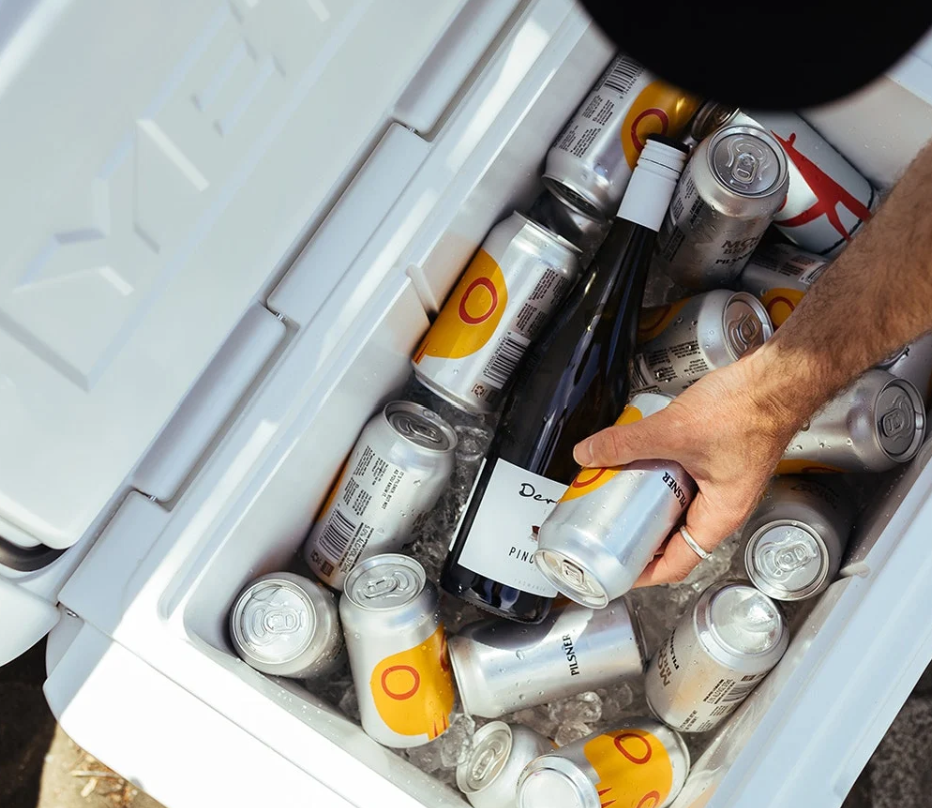
With the two-to-one ice ratio we used, roughly 40 to 45 cans was realistic. For food, it served two people for four to five days or a family of four for a weekend. The thick insulated walls explain both the strong performance and the surprisingly modest interior.
The removable basket was one of the best practical details. Cheese, eggs, sandwiches and other items stayed above the meltwater, while waterproof containers protected meat lower down. The rectangular cavity packed neatly, but deeply buried items required cold rummaging. Wine bottles and two-litre drinks had to be laid flat or angled.
Dinghy, beach and car handling
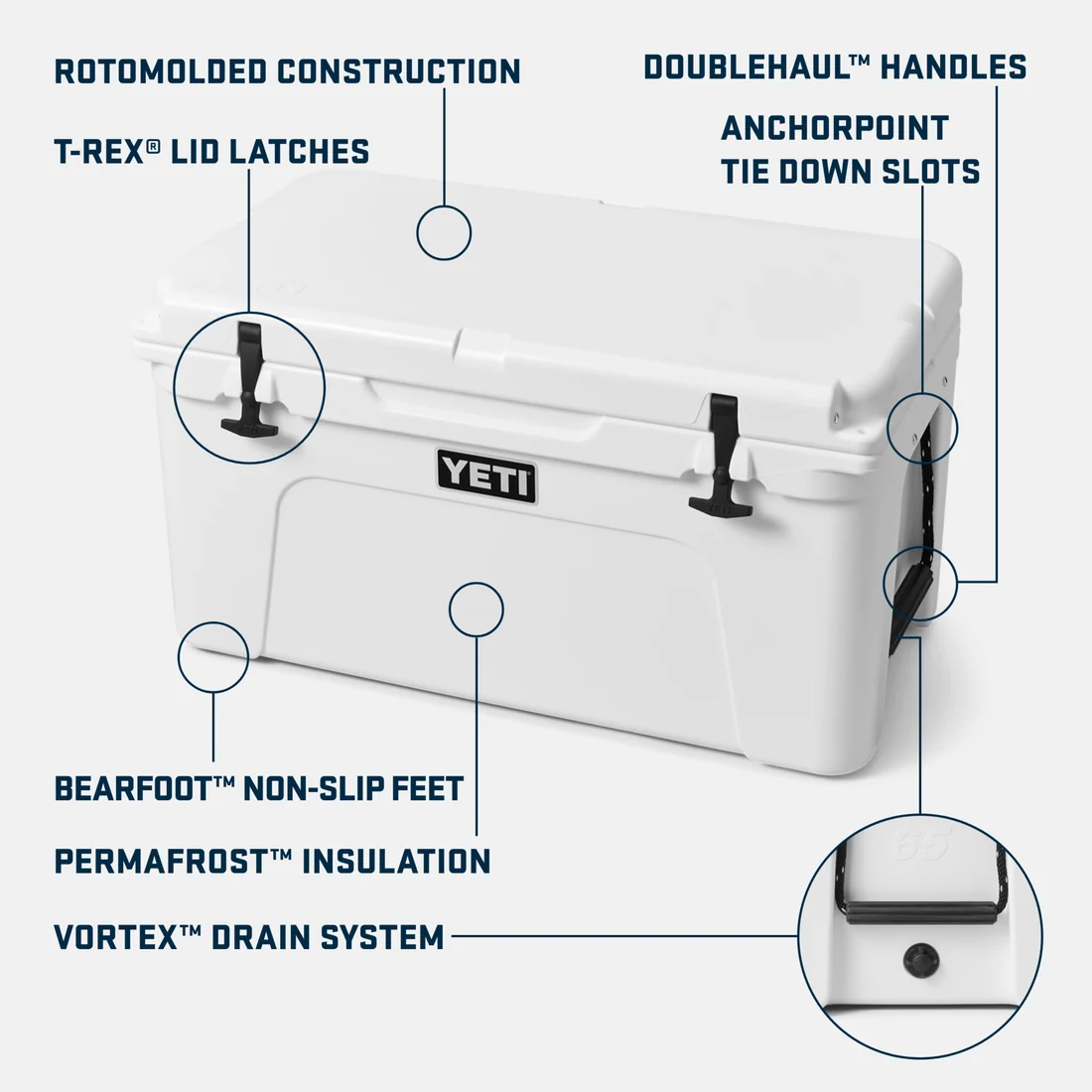
The DoubleHaul rope handles have thick rubber grips and are positioned well for a person at each end. They swing out of the way without pinching fingers. Two people could lift the cooler between sailboat and dinghy with control, although timing still mattered when either platform was moving.
Solo carrying was poor. The box is wide enough to strike the leg and heavy enough that walking across soft sand becomes a short, unpleasant exercise. The lack of wheels was the most consequential omission in our use. Splitting the load between two smaller Tundra 45s would improve individual handling, while the Haul adds wheels at the expense of a different shape.
The BearFoot rubber feet were excellent on a boat and in a car. The cooler stayed where it was placed instead of skidding as the dinghy moved. Those feet also make it impossible to shove the box casually across a deck, which is usually a sensible safety trade.
Latches, hinge, gasket and drain
The rubber T-Rex latches were easy to use with wet hands. They maintained firm pressure throughout the summer and made it obvious when the lid was secured. The hinge stayed aligned, and the lid held itself open past vertical while we packed it.
Rain and spray did not enter the latched cooler in our use. It also did not spill meltwater when tipped briefly. That is a field observation rather than a submersion rating, and we would not treat the Tundra as a dry box for electronics.
The Vortex drain released water quickly without removing the whole plug. A small puddle remained until we tilted the box. The plug can unscrew completely and has no tether, so losing it on sand or in long grass is a plausible annoyance.
Durability after a Mediterranean summer
The rotomoulded shell accumulated scuffs but no meaningful dents, gouges or warping. Handles, latches, hinge, drain and feet all finished the season working normally. Salt and sand did not jam anything because the design has very few complicated moving parts.
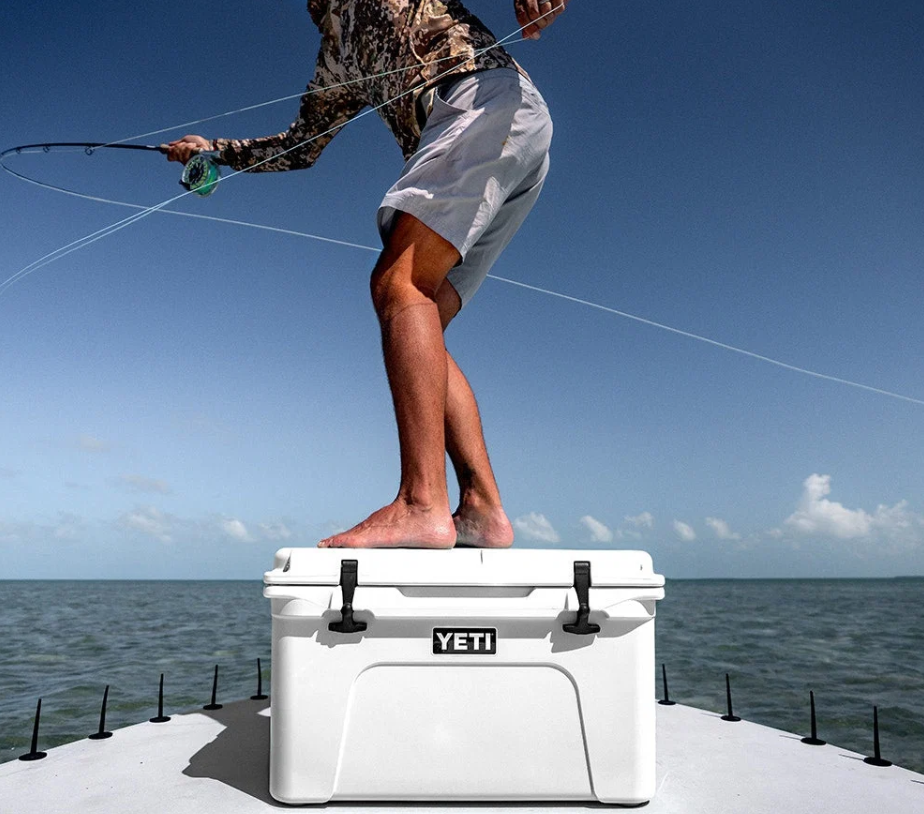
We regularly used the closed cooler as a seat and work surface. The lid did not flex under an adult. YETI also presents it as a casting platform, and the broad top and non-slip feet make that credible on a stable deck.
The replaceable rubber latches are the parts we would expect to age first after years of ultraviolet exposure. We saw no deterioration during this test. The construction inspires confidence that the box itself will outlast a long sequence of cheaper coolers.
Cleaning the white finish
A hose, dish soap and a brush handled ordinary food residue, sand and dried salt. The plastic did not retain beer or food smells when washed promptly, and the open drain made rinsing straightforward.
White kept the surface relatively cool in full sun and suited the boat, but it showed grime and dark scuffs quickly. The textured lid needed a stiffer brush than the smooth interior. We saw no yellowing or ultraviolet warping during the summer.
Value and alternatives
Ice retention alone did not justify £350. The RTIC 65 we have used can hold ice for a similar period at a lower price, while a Coleman Xtreme is much easier to lift for a simple afternoon. YETI's advantage was the quality of the shell, latches, hinge, gasket, feet and overall finish.
That construction changes the value calculation for a cooler that lives on a boat or at a base camp. It tolerated a full season without a functional fault and should remain repairable if a latch eventually degrades. YETI currently backs the Tundra with a five-year warranty.
I would buy the build quality again, but for our repeated beach transfers I would choose the wheeled Tundra Haul. The 65 is best for boat owners, hunters, vehicle campers and fixed camps where it can stay loaded. Solo travellers, people with back problems and anyone facing a long carry from car to beach should avoid it.
YETI Tundra 65 specifications
| Tested model | Tundra 65, white |
|---|---|
| Price paid | £350 |
| Published empty weight | 13.7 kg / 30.3 lb |
| Published exterior dimensions | 78.2 × 43.9 × 40.6 cm / 30.8 × 17.3 × 16.0 in |
| Published interior dimensions | 59.2 × 27.2 × 28.7 cm / 23.3 × 10.7 × 11.3 in |
| Published cans-only capacity | 77 cans |
| Published ice-only capacity | 26.3 kg / 58 lb |
| Construction | Rotomoulded shell with pressure-injected polyurethane insulation |
| Included accessory | One removable dry-goods basket |
| Published warranty | Five years |
| Manufacturer involvement | None |
Scoring breakdown

Sources & context
What we checked
This review is based on Adam's independently funded Mediterranean sailing test. Published weight, measurements, capacities, construction, features and warranty were checked against YETI's current product documentation. Ice retention and handling conclusions come from the field test.
Editorial disclosure: Adam bought the Tundra 65 with his own money for £350. Gear Reviews received no payment, free product or editorial approval from YETI.