
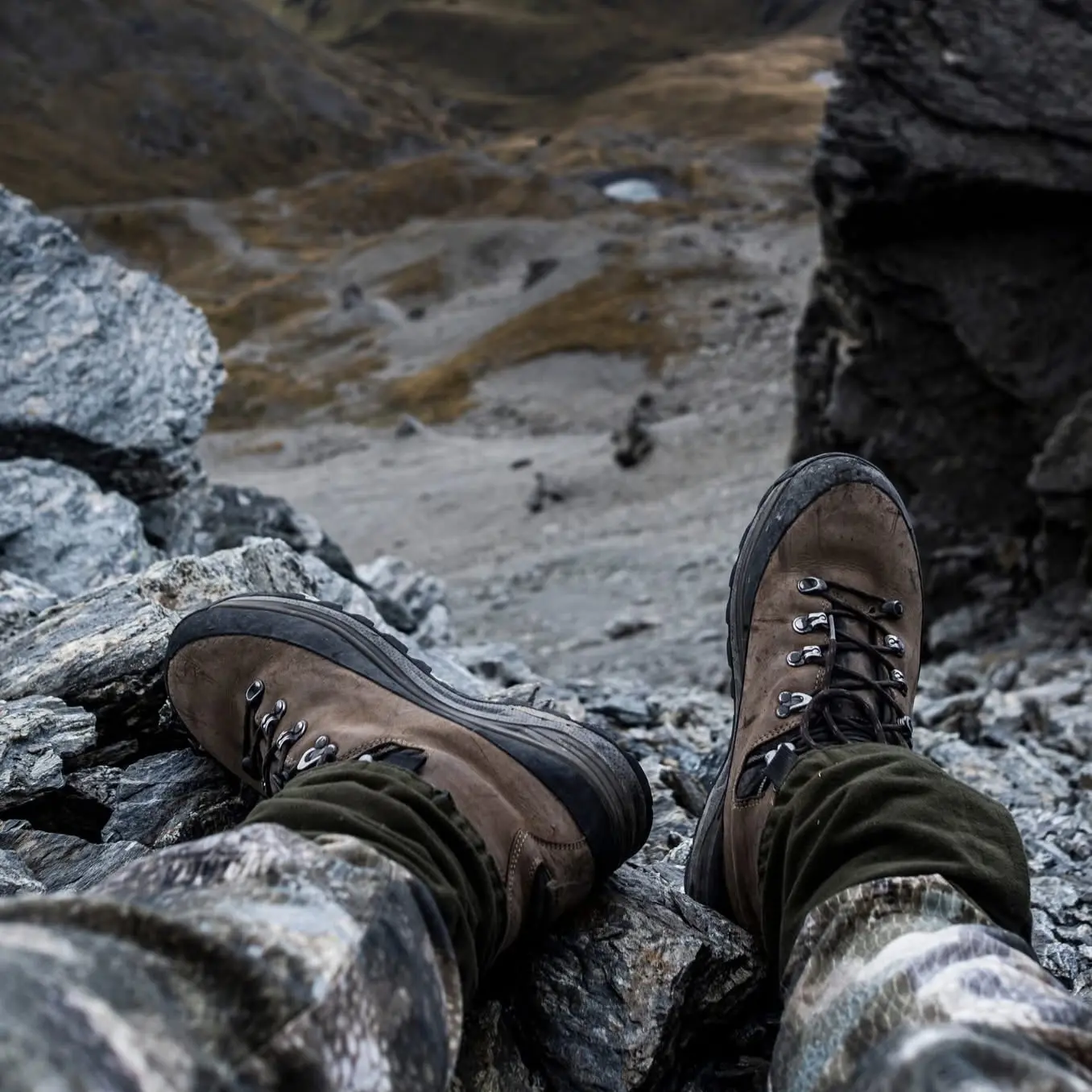
The LOWA Renegade Evo GTX Mid is our best hiking boot for wet conditions among the four models we have field tested. It combines flawless water exclusion with dependable wet-rock grip, useful mud traction, strong load support and the best durability record in this group. The lighter Salomon X Ultra 5 Mid GTX is the better choice for quick hiking on wet rock and roots.
Scope of this roundup
This ranking covers the four waterproof hiking boots with full Gear Reviews field tests. Each pair was tested separately over a different distance and period. The results are comparative editorial judgments based on those published tests, not a controlled simultaneous trial. We prioritised water exclusion, grip on wet surfaces, mud behaviour, drying, durability and comfort in cool wet weather.
Our recommendation
Choose the LOWA Renegade Evo GTX Mid for sustained rain, mixed wet terrain and loaded hiking. Choose the Salomon X Ultra 5 Mid GTX when low weight and wet-rock grip matter more than firm ankle support. The Hoka Kaha 3 GTX is the cushioned option for long, cool and wet days, but its broad sole is less confident on polished wet stone. We do not recommend the Merrell Moab 3 Mid Waterproof for wet conditions.
The quick picks
Best overall
LOWA Renegade Evo GTX Mid
Flawless waterproofing, dependable wet grip, good mud clearance and firm support under heavy packs.
Best for wet rock
Salomon X Ultra 5 Mid GTX
The lightest, quickest boot here, with excellent grip on wet rock and damp roots.
Best cushioning
Hoka Kaha 3 GTX
Maximum underfoot comfort and reliable water protection for long days in cool conditions.
Not recommended for wet use
Merrell Moab 3 Mid Waterproof
Poor wet-surface grip and later sole separation outweigh its initial waterproofing and roomy fit.
Wet-weather performance at a glance
| Boot | Wet-weather verdict | Field test | Waterproofing | Wet grip and mud | Weight | Review score |
|---|---|---|---|---|---|---|
| LOWA Renegade Evo GTX Mid | Best overall | 300 km over 8 months | Flawless in sustained rain, puddles and streams | Very good on wet rock; good deep-mud bite | 590 g per boot | 4.6 / 5 |
| Salomon X Ultra 5 Mid GTX | Best for fast hiking and wet rock | 900 km over 90 days | Held through rain, wet grass, puddles and shallow streams | Excellent on wet rock and roots; limited in bottomless mud | 453 g per boot | 4.3 / 5 |
| Hoka Kaha 3 GTX | Best cushioned option | 200 km over 30 days | Excellent through rain, puddles and stream crossings | Good on normal mud; less assured on polished wet rock | 567 g per boot | 4.5 / 5 |
| Merrell Moab 3 Mid Waterproof | Not recommended for wet conditions | Hundreds of kilometres over 6-8 months | Worked initially; sole separation ended confidence | Very poor on wet rock and roots; lugs clog in deep mud | Not recorded in our test | 2.4 / 5 |
How we ranked these boots
Keeping water outside is only the first requirement. A wet-weather boot also needs predictable traction when stone, roots and timber become slick. Its tread must clear enough mud to keep working, and its upper and sole bond need to survive repeated flexing after the exterior wets out.
We gave the most weight to observed performance in sustained rain, puddles, streams, wet rock, roots and mud. Drying time and heat matter because waterproof membranes slow moisture movement in both directions. Support, fit and comfort remain part of the judgment, but a comfortable boot with poor wet grip cannot win a wet-conditions roundup.
The four tests were unequal. Salomon covered the greatest distance at roughly 900 km, LOWA ran for the longest period at eight months, Hoka covered about 200 km in one month, and the Merrell distance was not precisely logged. We preserve those differences rather than presenting every durability conclusion with the same confidence.
1. Best overall
LOWA Renegade Evo GTX Mid
The most complete combination of waterproofing, wet traction, mud performance, support and durability.
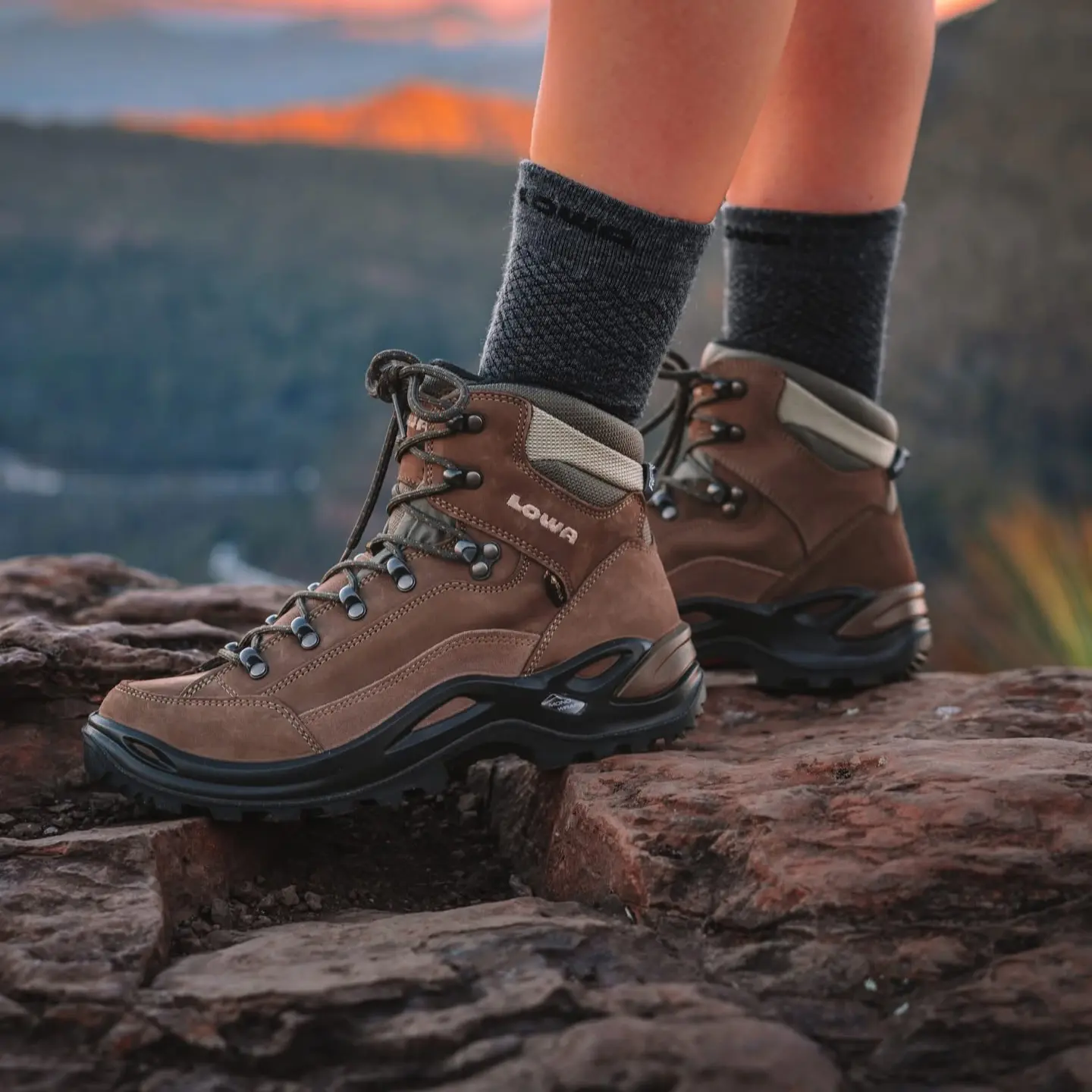
The LOWA kept water out during stream wading, puddles and hours of sustained rain. Its bellows tongue protects to roughly 4.5 inches, while the nubuck and Gore-Tex construction remained intact after 300 km across Yorkshire, the Lake District and Greece. No lining, hardware, outsole bond or upper failure appeared during the eight-month test.
Wet-rock grip was dependable enough for steep descents, and the heel brake worked well on loose ground. Deep-mud traction was also good, with a tread pattern that shed thick clay more effectively than the Hoka or Merrell. Wet roots and slick wooden boards still require deliberate placement.
The Renegade Evo is the heaviest and most structured recommendation here. It runs warm in summer, needs more than a day to dry if water enters over the collar, and cannot receive a conventional full resole. For cool, wet hiking with a mid-to-heavy pack, those compromises are easier to accept than weak grip or uncertain support.
2. Best for wet rock
Salomon X Ultra 5 Mid GTX
The strongest choice for hikers who want wet-surface confidence without the weight of a leather boot.
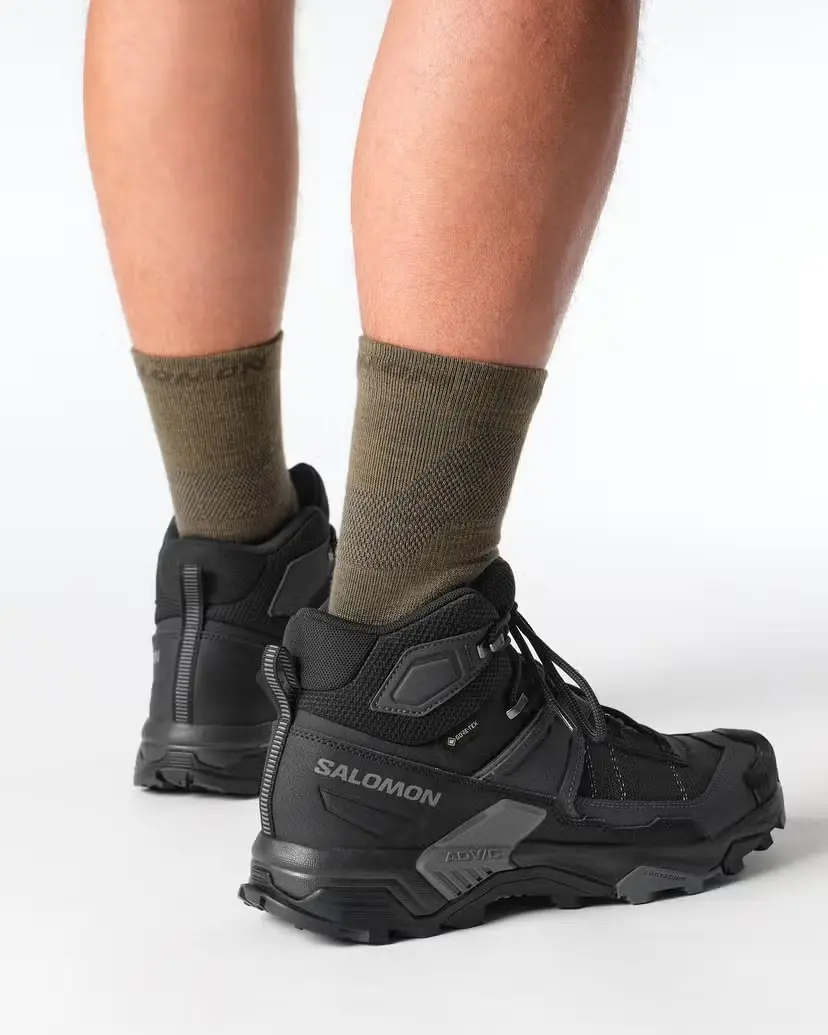
The Salomon's All-Terrain Contagrip held on slick boulders and damp roots during roughly 900 km of use in Quebec. A pronounced heel brake added control on loose descents, while the low weight and chassis made accurate placement easier than it was in the broader Hoka.
Its Gore-Tex lining also kept out sustained rain, puddles, wet grass and shallow stream water. The synthetic exterior dried quickly after rain, although water entering over the soft collar left the lining and padding wet for much longer. Bottomless mud and long scree fields expose the limits of the lighter design.
A small toe-box seam began to split near the end of the 90-day test. It had not leaked when testing ended, but it prevents the Salomon from taking the overall position. The standard fit can also feel close on broad feet, and the factory insole needed replacement for our tester.
3. Best cushioning
Hoka Kaha 3 GTX
The most comfortable choice for long, cool and wet days when impact protection matters more than precision.
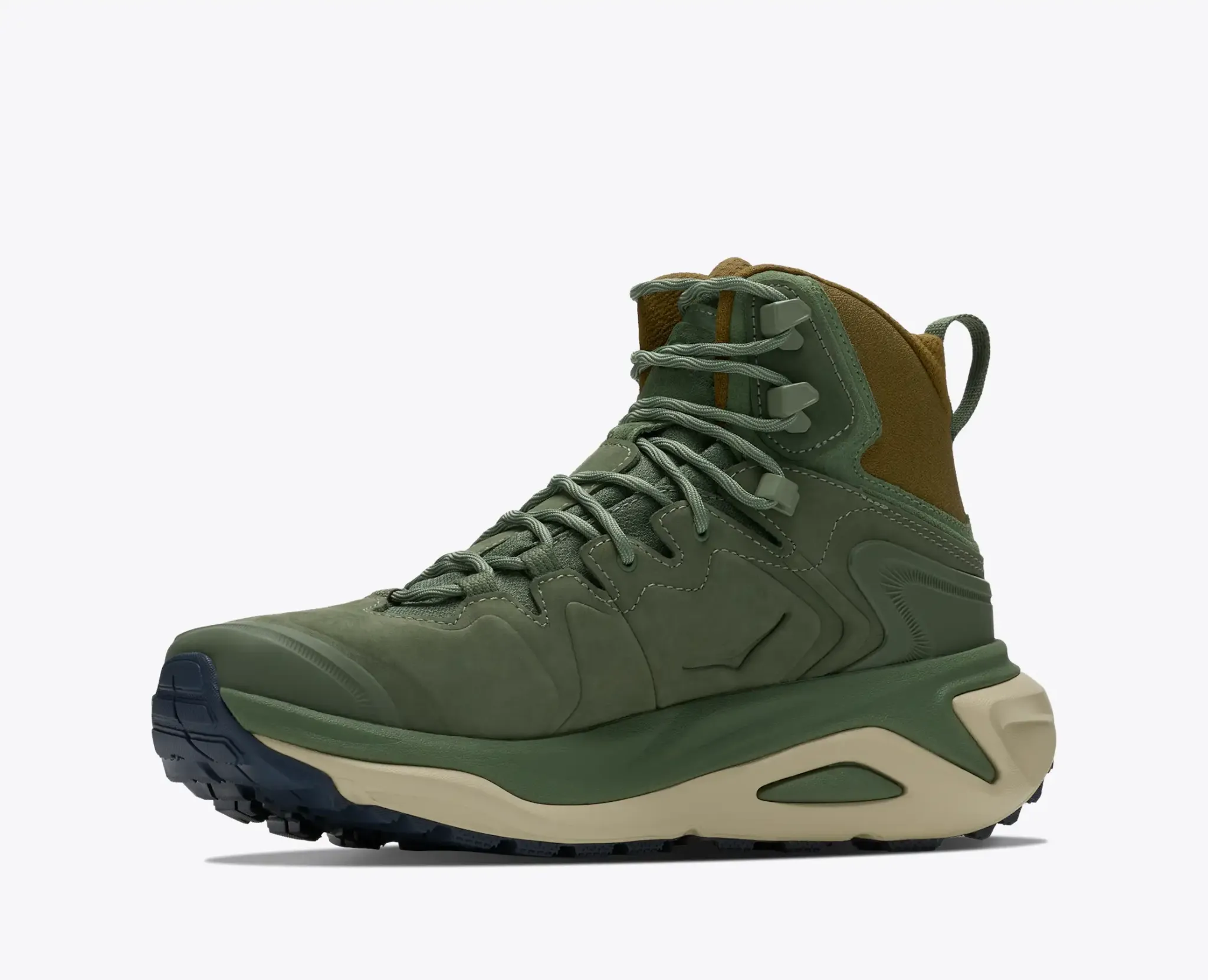
The Hoka's Gore-Tex Invisible Fit membrane, waterproof nubuck and high cuff kept rain, puddles and stream water outside throughout a 200 km Lake District test. Its wide platform remained stable on broken ground and under packs up to about 15 kg, while the deep cushioning reduced foot and joint fatigue.
Grip was strong on normal muddy trail, loose scree and dry rock. The 4 mm lugs do not bite as deeply into churned mud as a more aggressive tread, and polished wet stone required more care than it did in the Salomon. The large footprint also feels imprecise when a route demands small footholds.
The insulated feeling that helps in cool rain becomes a liability in warm weather. Thick padding, nubuck and the membrane ran hot in the mid-30s Celsius. One stock lace also broke during the first 200 km, though the boot itself showed little structural wear.
4. Not recommended for wet conditions
Merrell Moab 3 Mid Waterproof
A roomy, comfortable day-hiking boot whose wet grip and durability failed the requirements of this roundup.
The Merrell membrane worked when the boots were new. Shallow streams, puddles, wet grass and ordinary rain stayed outside while the water remained below the bellows tongue. The roomy fit and cushioning also made the boot comfortable for shorter walks.
Traction was the decisive problem. The Vibram TC5+ compound felt extremely insecure on wet stone and slick roots, while the 5 mm lugs clogged instead of clearing deep mud. A waterproof upper does little good when the outsole cannot provide predictable footing.
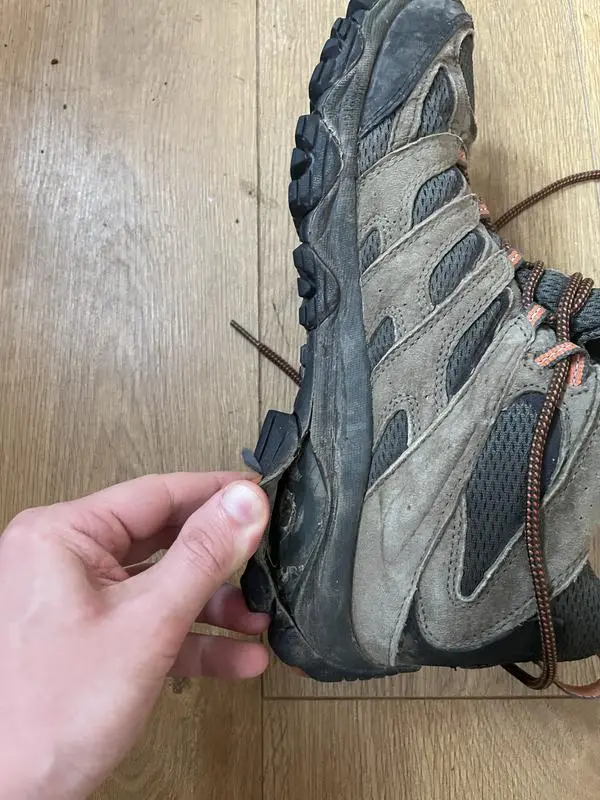
Both soles then separated at the toe flex after roughly six to eight months. The failure ended confidence in the waterproof structure and required an epoxy repair after the warranty claim was rejected. The boot also ran hot and took a long time to dry once moisture reached the interior.
Choosing a boot for wet terrain
Waterproofing and wet grip solve different problems
A membrane can keep rain and shallow water outside while the outsole remains slippery. The Salomon produced the best grip on wet rock and damp roots. The LOWA offered the better complete system when rain, mud, support and durability were considered together.
Higher cuffs help until water comes over the top
The LOWA and Hoka can handle deeper shallow crossings than a lower shoe when water stays below the tongue and collar. Once water spills inside, their leather, membranes and padding dry slowly. Gaiters can reduce rain and debris entry but do not turn the collar into a watertight seal.
Waterproof boots run warmer
All four tests recorded a heat or drying penalty. The synthetic Salomon exterior sheds rain and dries faster on the outside, but its lining still holds water after flooding. The leather LOWA and Hoka suit cool, wet conditions better than hot summer mileage.
Fit still decides whether the winner works for you
The LOWA has a secure heel and moderately roomy toe box. The Hoka wide model provided the broadest stable platform in our tests. The Salomon standard width was close on broad feet, though a wide version exists. Try boots with the socks and insoles you intend to use, leaving enough room for swelling and downhill toe clearance.
Our verdict
LOWA for the best complete wet-weather boot. Salomon for speed and slick terrain.
The LOWA Renegade Evo GTX Mid is our first choice when a route combines rain, mud, wet rock and a loaded pack. The Salomon X Ultra 5 Mid GTX is better for hikers who move quickly and want less weight underfoot. Choose the Hoka Kaha 3 GTX when cushioning is the priority, and avoid relying on the Merrell Moab 3 Mid Waterproof for consistently wet ground.
Read the field tests
Full reviews behind this roundup
Editorial disclosure: Adam bought all four pairs with his own money. Hoka, LOWA, Merrell and Salomon had no involvement in the reviews or this roundup.