
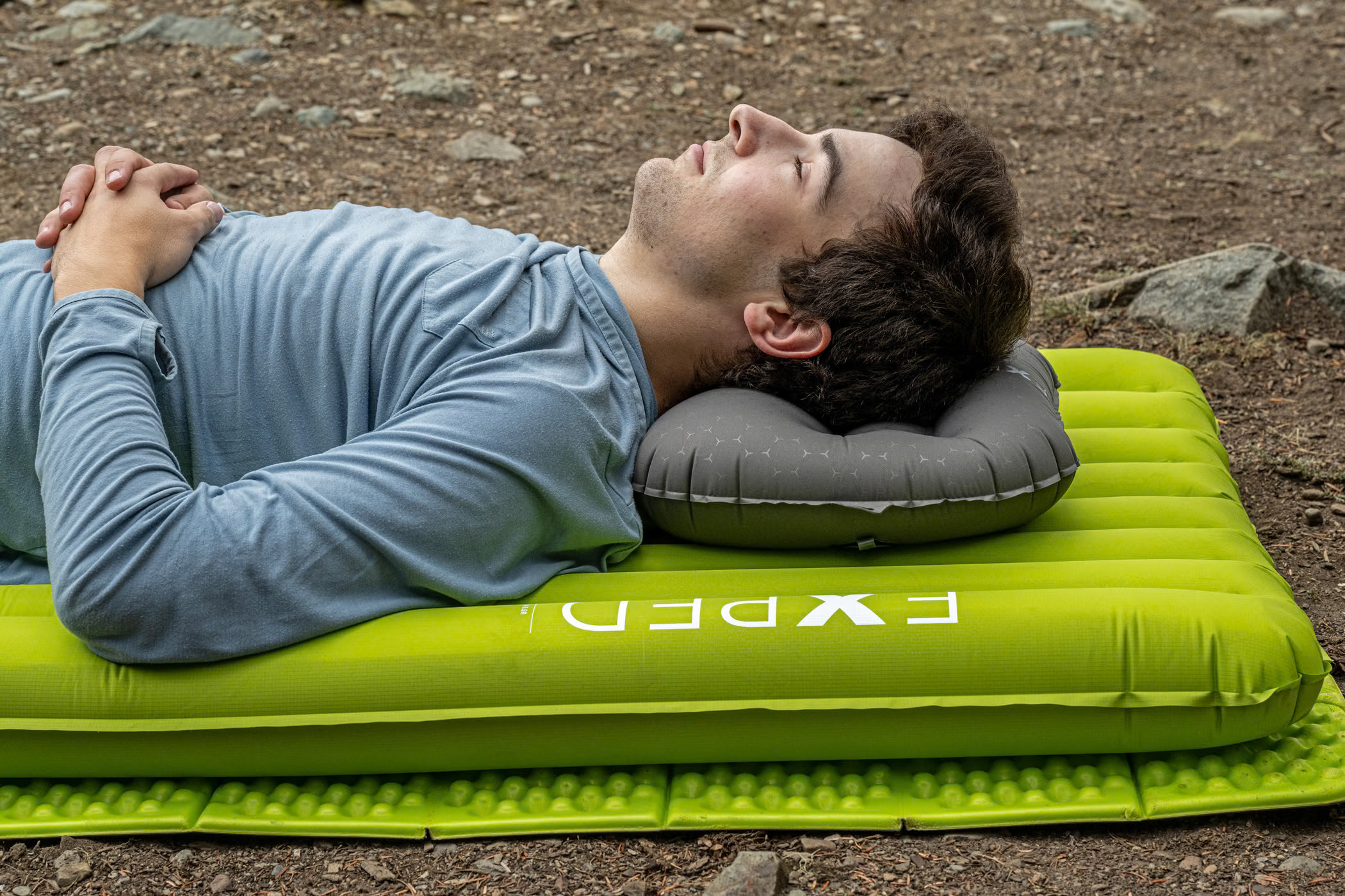
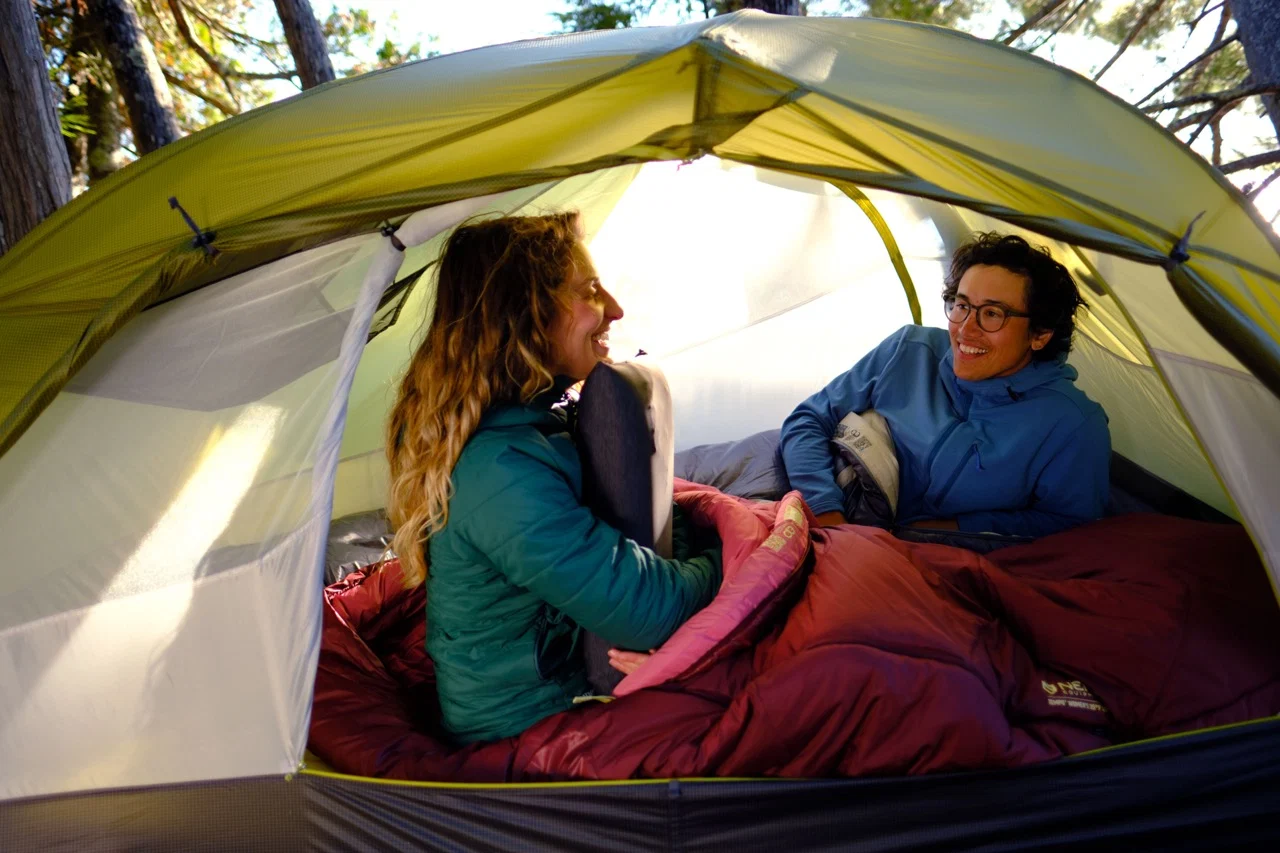
I would take the Exped Ultra 6.5R on a backpacking trip and the NEMO Roamer to a campsite beside the car. I sleep well on both. The Exped keeps my hip off the ground, stays quiet when I turn over and rolls into a small bundle. The Roamer feels much closer to the bed I have left at home. Carrying two of them more than 10 km was enough to remind me why I usually leave that sort of comfort near a vehicle.
The nights behind this comparison
I used the rectangular Exped Medium for about 60 nights in Quebec and the Lake District, including a night at 10°F (-12°C). Our two regular Roamer Singles were our bed for 90 consecutive nights in Quebec, from 18°C down to 1°C. I am six feet tall, weigh 75 kg and sleep on my side. My partner, around 5 ft 6 in, shared the Roamer setup; we both slept on our sides and fronts.
My recommendation
For walking between camps, buy the Exped in a size you can sleep on comfortably. The Medium's 52 cm width suits me, but it will feel narrow if you like to sprawl. For long stays, family camping or a couple making a bed from two Singles, I would spend the extra money and carry the Roamer from the car. Its foam support and soft top made three months in a tent much more pleasant.
At a glance
| In use | Exped Ultra 6.5R | NEMO Roamer |
|---|---|---|
| Version tested | Rectangular Medium, 183 x 52 cm | Two regular Singles, used together |
| Thickness | 9 cm | 10 cm / 4 in |
| Support | Lengthwise air chambers with raised outer tubes | Foam-backed support with a soft stretch top |
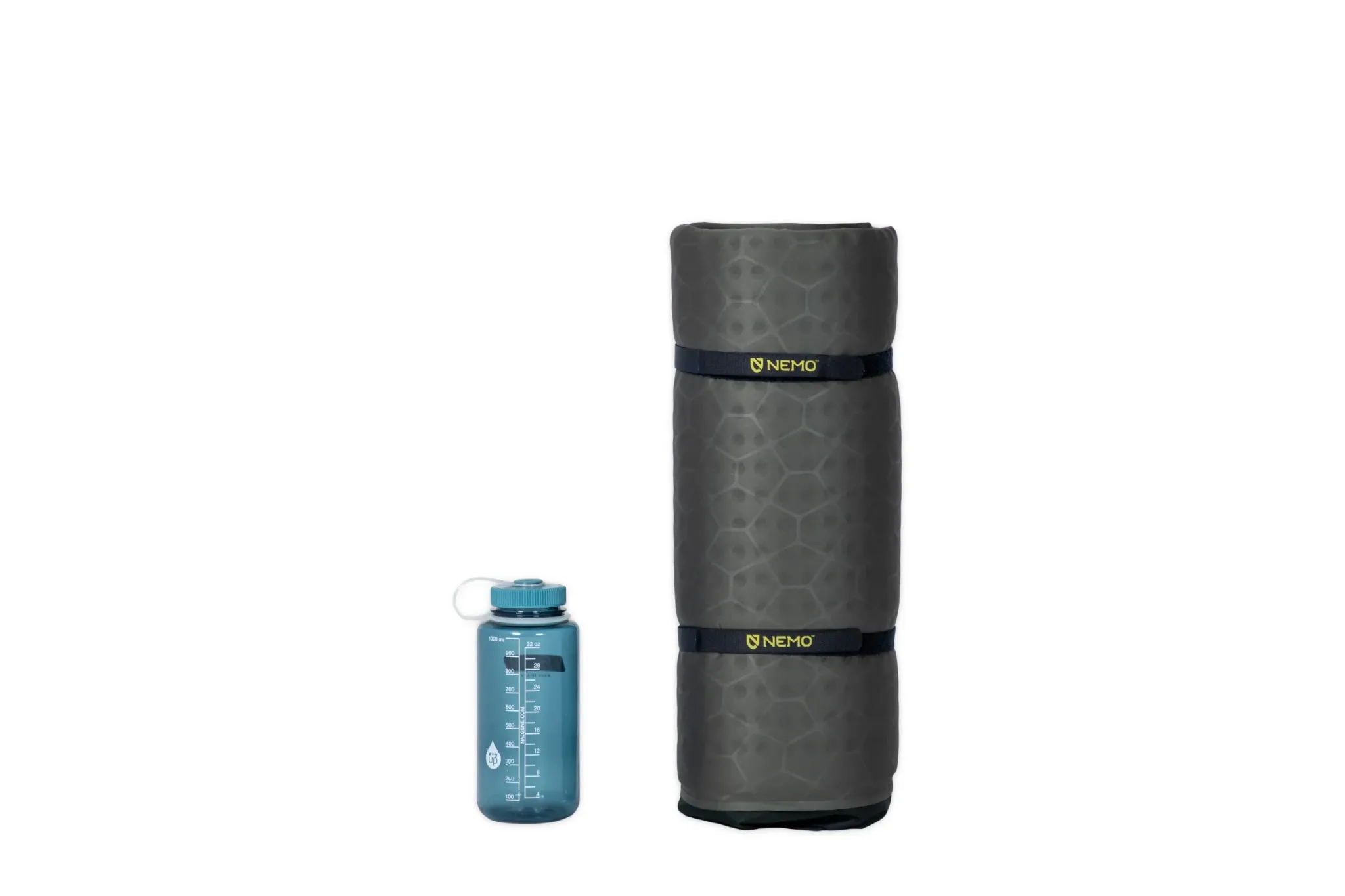
| Packing | Roughly a one-litre bottle-sized bundle | Bulky rolls, especially when carrying two |
| Inflation in our tests | About three Schnozzel bagfuls; roughly a minute | 10-15 minutes to self-inflate, then two or three pump-sack fills |
| Cold nights experienced | Down to -12°C with a 15°F quilt | Down to 1°C; no below-freezing test |
| Time used | About 60 nights | 90 consecutive nights |
| Price paid | €165 (US$185) | US$259.95 per Single |
| Full-review score | 4.7 / 5 | 4.8 / 5 |
Pack and carry size
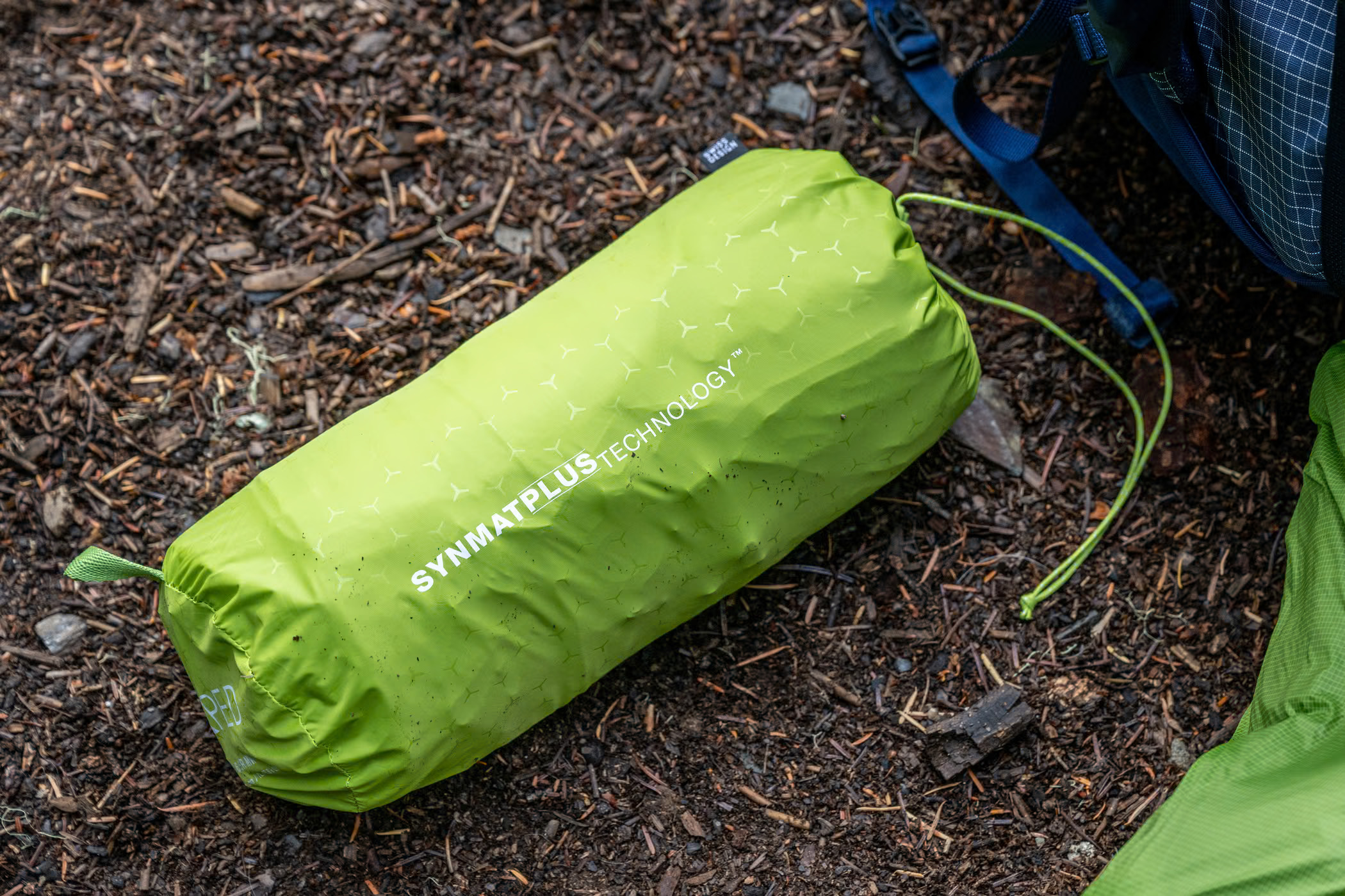
The Exped fits around the rest of my kit. Rolled tightly, it takes up about as much room as a one-litre Nalgene bottle, so finding a place for it is easy even with cold-weather clothes in the bag. My mat, Schnozzel pump bag and 15°F quilt together came in just under 1.6 kg. That is the whole sleep setup, rather than a weight for the mat alone.
I keep it inside the pack, away from anything sharp. The fabric feels thin enough that I do not want it rubbing against stove parts or dangling outside through branches. Once it is tucked away, I can get on with packing everything else.
Two Roamers take considerably more planning. Most of our transfers were by car, which made them easy enough to live with. Some camps needed a walk or a bike-trailer approach of more than 10 km. We did carry the mattresses that far, but I would not choose that job every morning on a walking holiday.
For a long stay, I can accept one awkward journey to get a better bed at the other end. For a route where I pack up and move every day, I want the Exped. The Roamer's foam compresses well for such a comfortable mattress, but two rolled Singles still occupy a sizeable chunk of the luggage.
I can sleep on my side on either
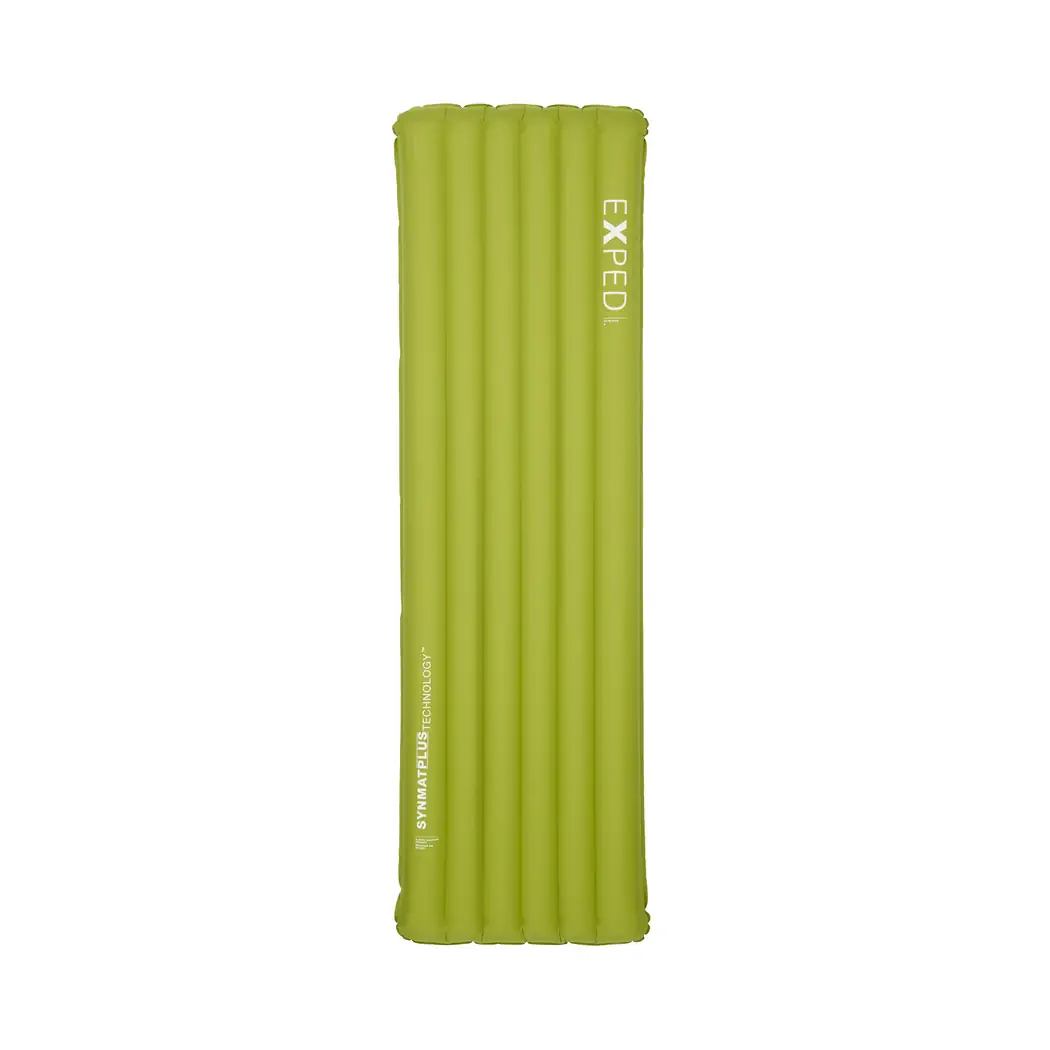
The Exped's 9 cm depth was enough to keep my hip and shoulder clear of the ground throughout the test. I could let a little air out to soften it without sinking through. I never felt I was putting up with a bad night's sleep to save weight.
The Medium is narrow, though. At 52 cm across, it gives me enough room to curl up on my side, with the raised outer chambers helping me stay centred. It does not leave much room for sprawling. The 183 cm length works for me at six feet tall; width is the measurement I would pay more attention to before buying.
The Roamer has the more comfortable surface. Its foam spreads my weight without the hollow bounce I associate with a basic air bed. My partner and I could settle onto a hip, shoulder or elbow without hitting the ground. It also felt natural when we slept on our fronts.
There is only about a centimetre between their stated thicknesses. The Roamer's appeal comes from the way the foam supports me and the softer fabric against my body, rather than that extra centimetre alone. Fully inflated, it was firmer than we wanted. Letting a little air out after lying down made it much nicer.
Both were quiet. I move around at night, and the Exped never made enough noise to bother me. The Roamer's stretch top was soft and quiet too, and a fitted sheet made our linked pair feel more like a bed during the warmer part of the trip. Noise would not decide this choice for me.
Two Roamers make a good bed for a couple
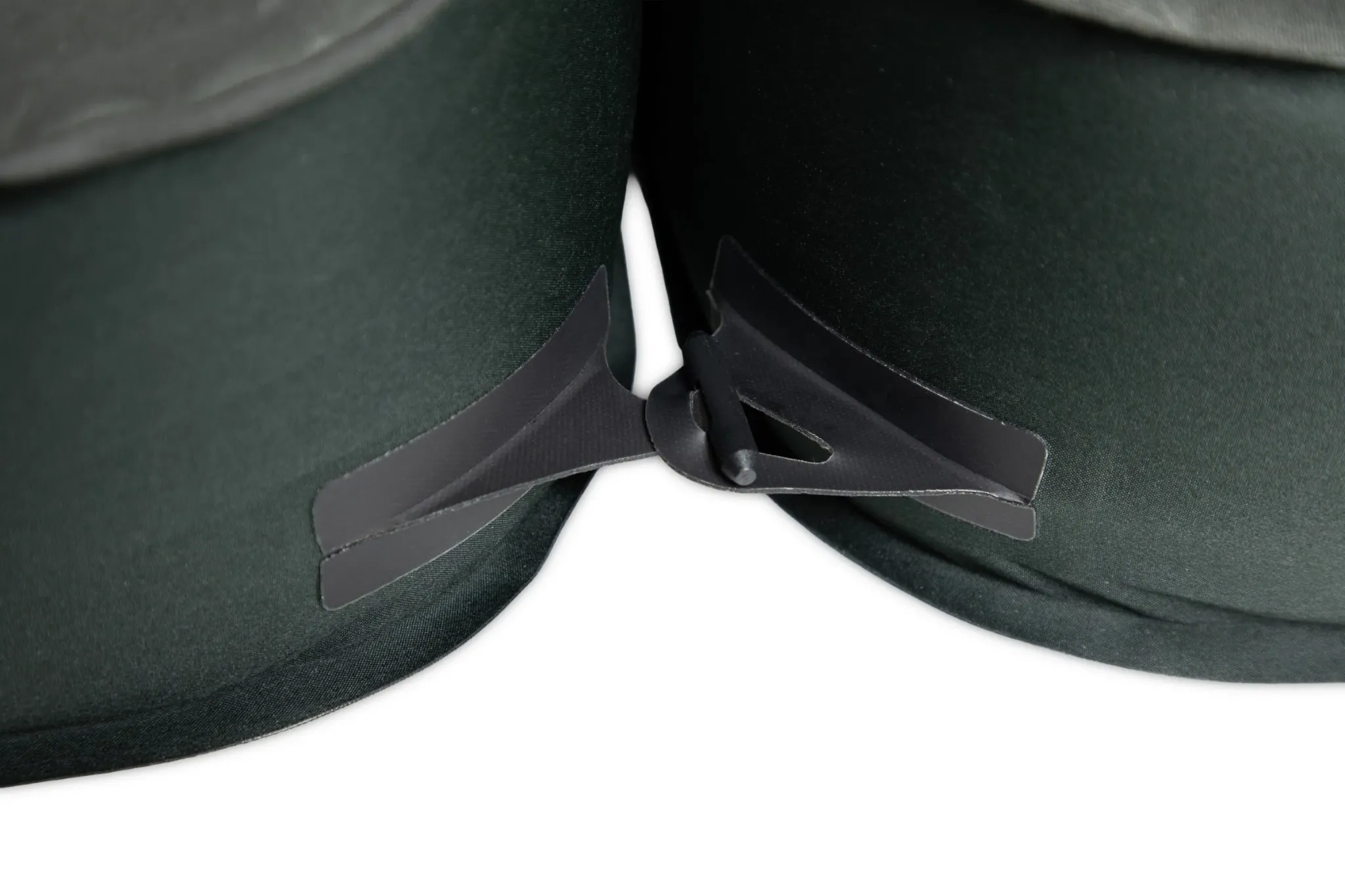
We bought two Singles rather than one double mattress. The side toggles held them together for the full 90-night test, so we did not wake up with a widening gap between us. I could still feel the join, but it never became much of a nuisance.
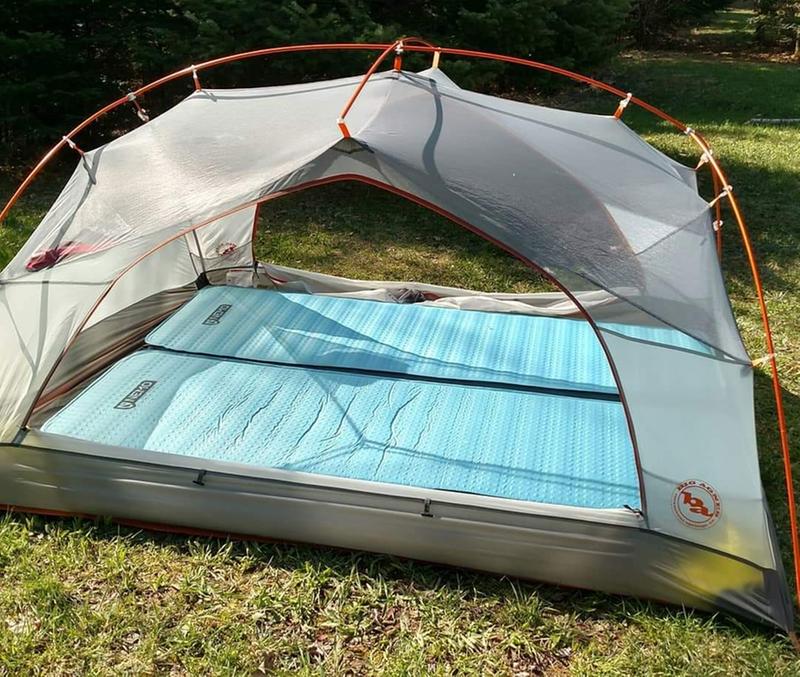
Separate valves meant we could each choose our own firmness. Movement on one side did not disturb the other much, either. For a couple spending weeks in the same tent, those small comforts are worth more to me than shaving another minute off packing.
Check the tent floor before committing to a pair. My Copper Spur UL2 would not take two rectangular 25-inch pads at its tapered foot end. That experience made me more careful about matching a mattress to the usable floor width. The Exped Medium is easier to fit in a compact tent, but choosing a narrow pad only to save space is a poor bargain if you cannot sleep on it.
The Exped has been out in colder weather
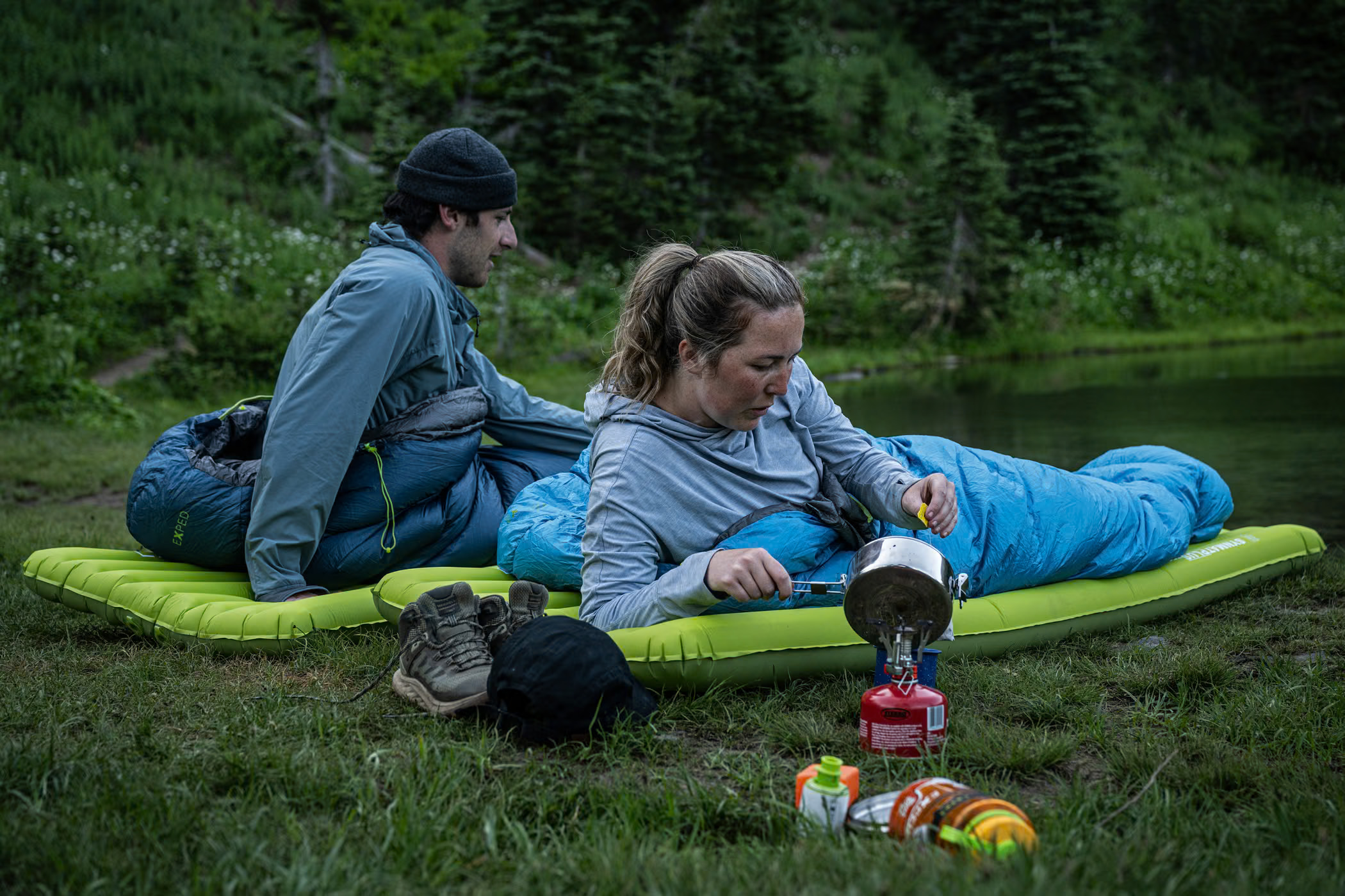
Near Mont-Tremblant, the temperature fell to 10°F (-12°C). I was on the Exped with a 15°F Enlightened Equipment Revelation quilt above me. I expected to feel cold through the mat around my hip, where I put most pressure on it. I stayed comfortably insulated from the ground all night.
That is the coldest night in these two reviews. The Roamers went down to 1°C, and neither of us felt cold coming up through them. We did not use them below freezing.
For a cold backpacking trip, I would take the Exped because it has already done that job for me and fits easily in my pack. I would still choose the quilt or sleeping bag for the forecast.
Getting them ready for bed
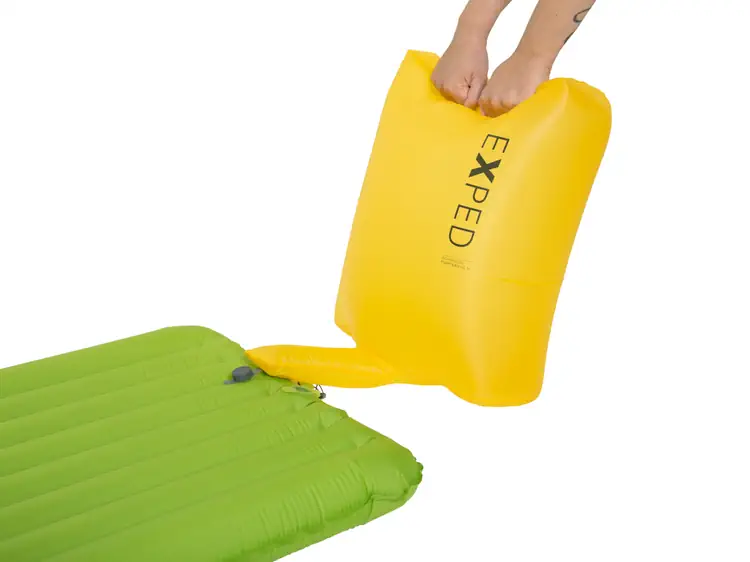
The Exped is quick. I connect the Schnozzel, catch air in the bag and squeeze it into the mat. About three bagfuls and a minute later, I can lie down. A gentle press on the intake valve lets out enough air to soften the surface under my shoulder.
I prefer that to blowing into a valve at the end of a walk. The bag packs flat, and the separate deflation valve makes emptying the mat straightforward. The last air still needs squeezing out before it will roll neatly into its sack.
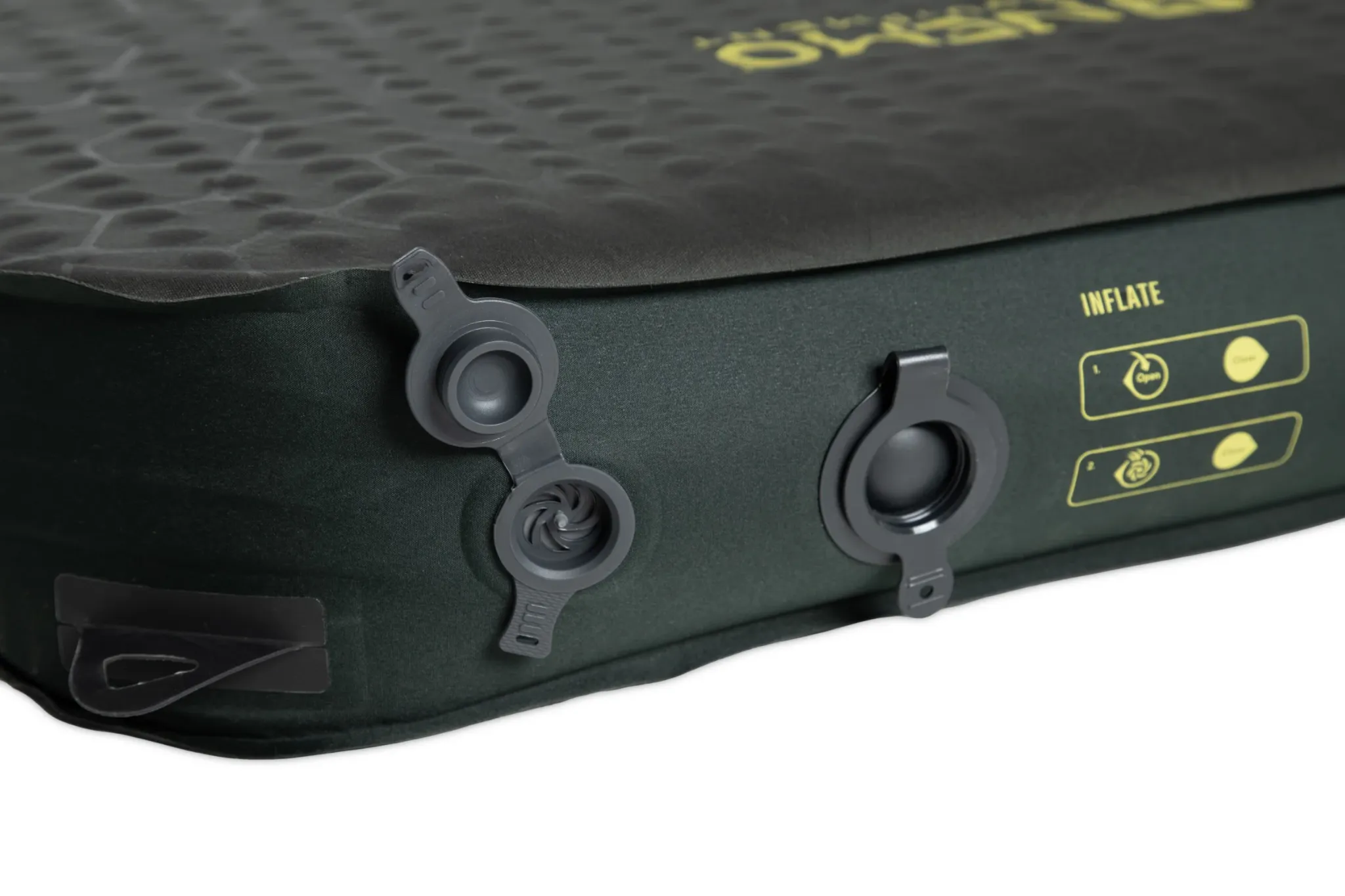
The Roamer needs less attention at first and more time. We opened the intake valves and left the mattresses for 10-15 minutes while doing other camp jobs. After that, two or three fills of the Vortex pump sack finished each one. Its opening could be wider; catching air inside a small tent was fiddlier than I wanted.
The little firmness button on the Laylow valve is excellent. I could tap out a small amount of air while lying down, then stop as soon as the mattress felt right. Be gentle when opening the intake cap, though. Pull it abruptly and the internal insert can come out with it, letting the air escape. Holding the inner ring with a thumb prevented that.
Rolling them up and looking after them
Packing the Roamers took knees and body weight. The dump valve released air quickly, but the foam needed compressing. We folded and squeezed each mattress, closed the valve, then unrolled it for one final tight roll. Both went back into their bags without a fight once we had the routine.
Neither Roamer developed a puncture, leaking seam or delamination over 90 nights. The foam still rebounded and both held their firmness overnight. At home, they need somewhere to lie unrolled with the valves open. That storage requirement is easy to overlook when buying a mattress for a few weekends a year.
The Exped also stayed inflated through its roughly 60 nights. I used a tent floor or footprint beneath it, including on wooden platforms and rocky pitches, and kept sharp kit away from its 20D shell. I am happy with that record, but I would still carry the repair kit.
What I would buy for the next trip
I paid €165 (US$185) for the Exped and US$259.95 each for the Roamers. So the Roamers were quite a bit more expensive. Buying two Roamers was a substantial expense. Using them as our bed for three months made it easier to justify.
If most of my camping involved walking between pitches, I would buy the Exped again. I have slept well on it in cold weather, it keeps my shoulder and hip off the ground, and I can pack it without rearranging everything else. I would choose a wider size if I needed more room to turn over.
For another long stay beside the car, I would take the Roamers. After weeks of living outdoors, I appreciated having a bed I could settle into without much thought. I would even haul them into a more remote basecamp again if I were staying long enough. I just would not volunteer to carry them to a new pitch every day.
Read the field tests
Full reviews behind this guide

Editorial disclosure: I bought the Exped and both Roamer Singles with my own money. Neither company supplied the mats, funded the tests or had any say in this guide.