
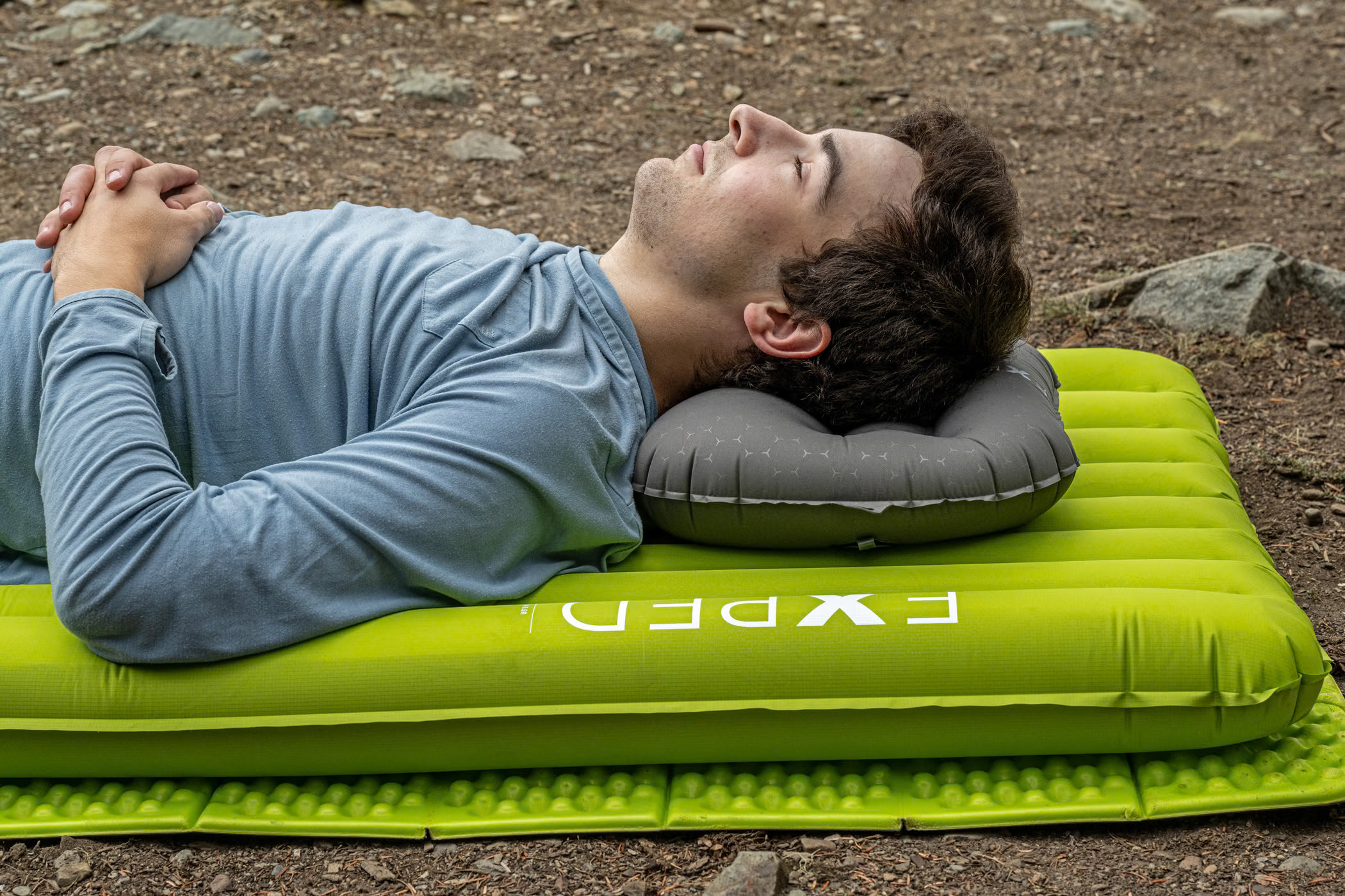
I bought the Exped Ultra 6.5R in Medium for €165 and have slept on it for about 60 nights. Those nights took me from Quebec national parks to the Lake District, including a late-season freeze near Mont-Tremblant that reached 10°F (-12°C). Exped did not know I was reviewing it and had no part in the test or this article. I am six feet tall, weigh 75 kg and sleep on my side, so a narrow mat has plenty of chances to annoy me. This one has kept me warm and has never let my hip or shoulder touch the ground.
Quick verdict
The Ultra 6.5R gives me the warmth I want for cold trips without filling my pack. It is quiet, comfortable on my side and quick to inflate with the supplied Schnozzel bag. The 20D fabric needs a careful pitch and a little attention to sharp objects, but mine has made it through around 60 nights without a puncture or leak.
What works
- Kept ground cold away during a 10°F (-12°C) night in Quebec
- Enough cushioning for a 75 kg side sleeper without bottoming out
- Raised outer chambers help keep me centred on the 52 cm-wide mat
- Quiet fabric and insulation when I turn over
- Schnozzel bag makes inflation fast and can carry clothes as a dry bag
What to know
- The thin 20D fabric calls for care around grit and sharp gear
- The Medium is only 52 cm wide, so choose your size carefully
- Getting every bit of air out takes a firm roll before it fits neatly in its sack
The verdict
The night near Mont-Tremblant is the one I think about when someone asks whether a light inflatable mat can handle proper cold. The temperature fell to 10°F (-12°C). I had a 15°F Enlightened Equipment Revelation down quilt above me and frozen ground below the tent. I expected to notice the cold through the mat at some point, particularly around my hip where I press hardest into it. I did not. I stayed comfortably insulated from the ground all night.
The Ultra 6.5R has also been a pleasant mat to live with on less dramatic nights. I can inflate it in about a minute, settle the firmness with a quick tap of the valve, and move around without waking myself with a loud crackle. I am a dedicated side sleeper, and its 9 cm thickness has kept my shoulder and hip clear of the ground. The raised edge chambers are useful on a 52 cm-wide mat. I feel them guiding me back toward the centre rather than letting me roll off the side.
I give it 4.7 out of 5. The lightweight fabric is the main compromise. I have not damaged mine, but I have always put a tent floor or footprint between it and rough ground and kept sharp kit away from it. If I regularly threw my sleep system straight onto rocks, I would choose a tougher mat. For backpacking and cold-weather camping with a normal amount of care, I would buy this one again.
About 60 nights in Quebec and the Lake District
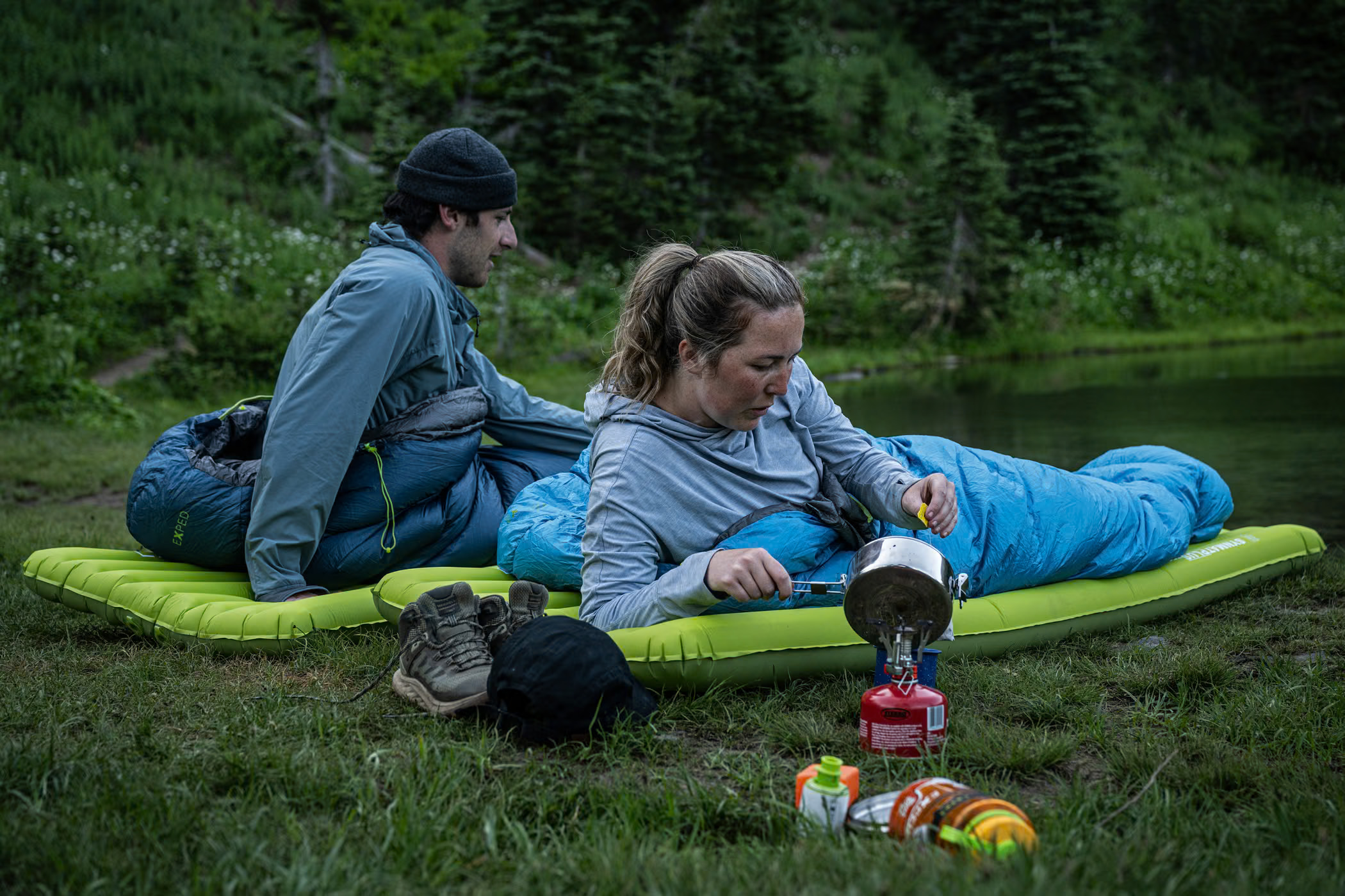
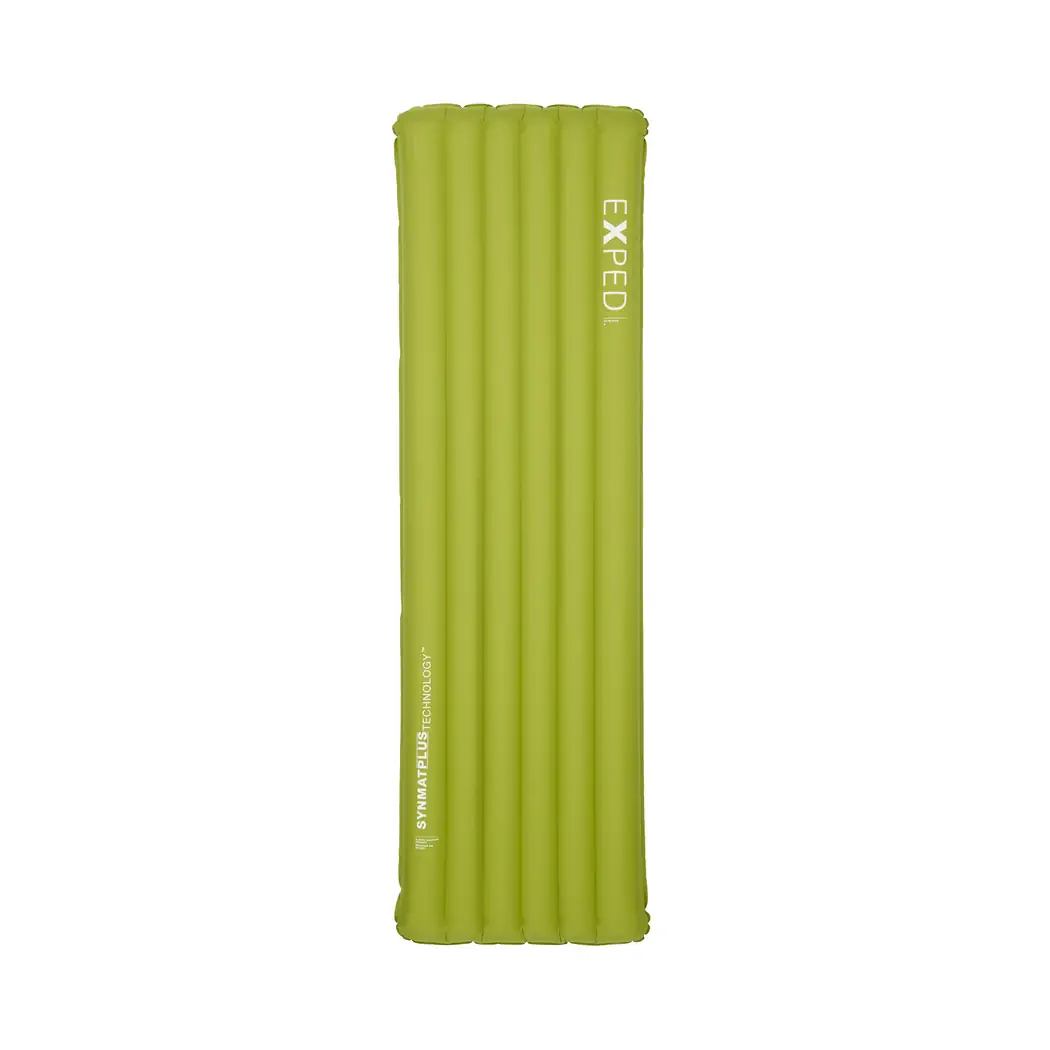
I used the lime-green, rectangular Medium version, which measures 183 x 52 x 9 cm. The trips included Quebec national parks and the Lake District, from ordinary cool evenings to damp nights on frozen ground. The coldest was the 10°F (-12°C) freeze near Mont-Tremblant. I paired the mat with a 15°F Enlightened Equipment Revelation quilt on that trip, with the mat insulating me from the ground beneath.
I camped on rocky pitches and wooden platforms, but I did not put the mat directly on either surface. It sat inside a standard silnylon tent or over a footprint. That protection is relevant to the fact that I have had no punctures. My experience says a carefully used Ultra 6.5R can survive a lot of nights.
Warmth when the ground froze
Exped lists an ASTM R-value of 6.9 for the Ultra 6.5R. That number measures resistance to heat loss through the mat. I cared more about whether I woke up cold when the ground froze. On the Mont-Tremblant night, I did not feel cold rising under my back, hip or shoulder. I had the same experience on several damp Lake District nights when the ground had frozen. I could concentrate on getting comfortable in my quilt instead of trying to tuck spare clothes beneath me.
Inside the mat, Exped combines synthetic microfibre insulation with a reflective layer. It slowed heat escaping into the ground well enough that my 15°F quilt setup worked well in the challenging conditions I faced. I never found a cold patch halfway down a chamber or near an edge that sent me hunting for a different sleeping position.
The cold-ground performance changes what I pack. On a trip with uncertain overnight temperatures, I do not want to save a little space with a summer mat and then lose sleep when a forecast drops. This one gives me room to head out in shoulder season without treating every cold night as an experiment in survival. I would still check the forecast and build the rest of my sleep system around the expected low. A warm mat cannot make an inadequate quilt warm enough above you.
Side-sleeping on the Medium
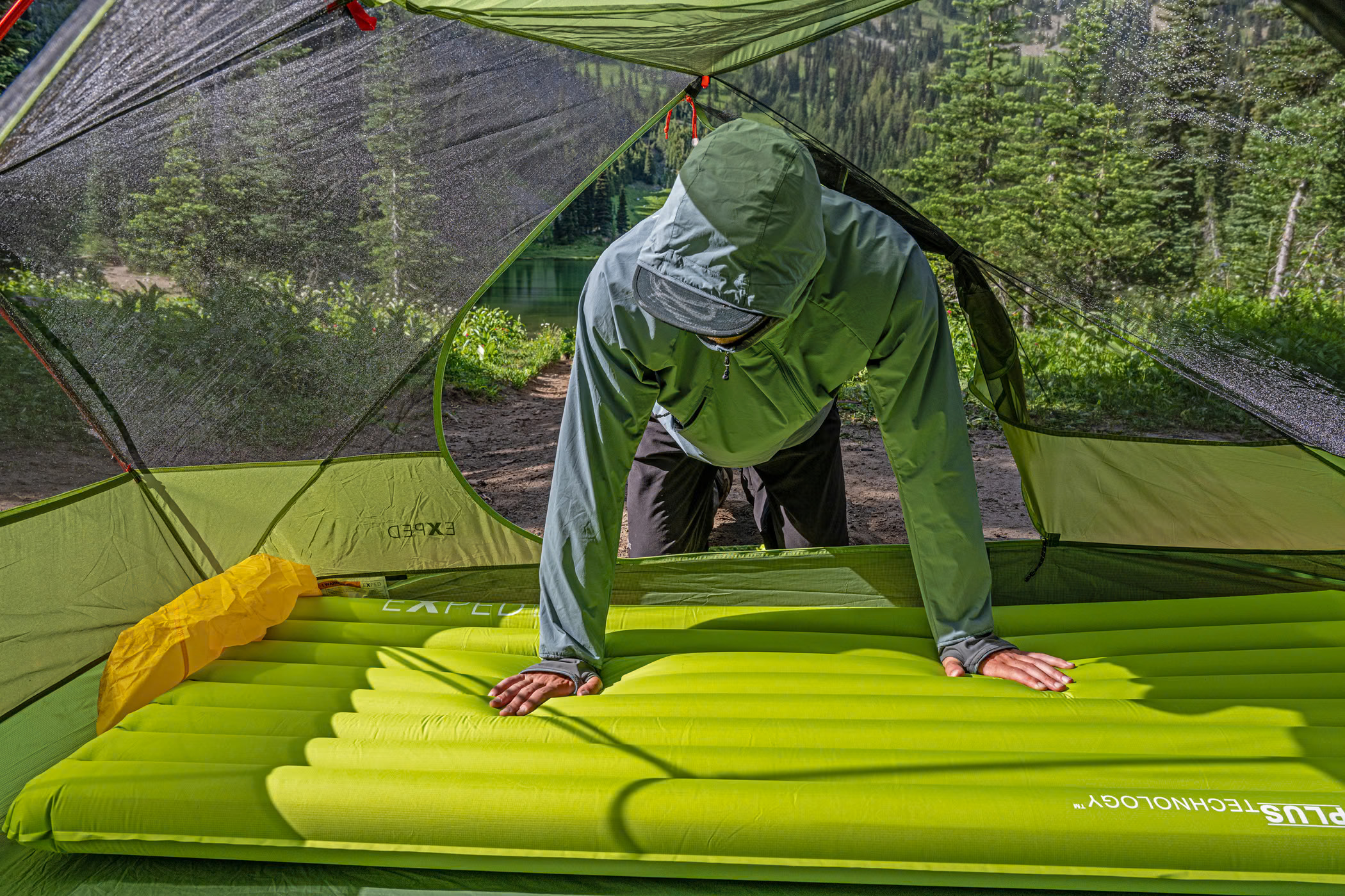
At six feet tall, I fit the 183 cm Medium without wishing for a longer mat. The width needs more thought. Fifty-two centimetres is a fairly lean sleeping space, especially if you move around a lot or like to spread your elbows. I spend most of the night on my side, so the important test was whether my hip or shoulder pushed through the mat. Neither ever did. I can let some air out to soften it without losing the depth that keeps those pressure points away from the ground.
The tubes run from head to foot, with slightly larger chambers down both outside edges. I notice the shape when I roll toward an edge: instead of the surface falling away at once, there is a small rise that nudges me back. It does not turn a Medium into a wide mattress, but it makes the available width feel more secure. I did not spend the night pulling myself back into position or wake with an arm hanging off the side.
My quilt works well with this arrangement. I can turn underneath it without hauling the whole sleep setup across the tent, and the top fabric has enough grip that I have not found myself creeping downhill on a mildly sloped pitch. If you sleep diagonally or want both arms beside your torso, look closely at the Medium's 52 cm width before buying. The mat worked for my size and my side-sleeping style; the wider versions exist for people who want more room.
The Schnozzel is easy to live with
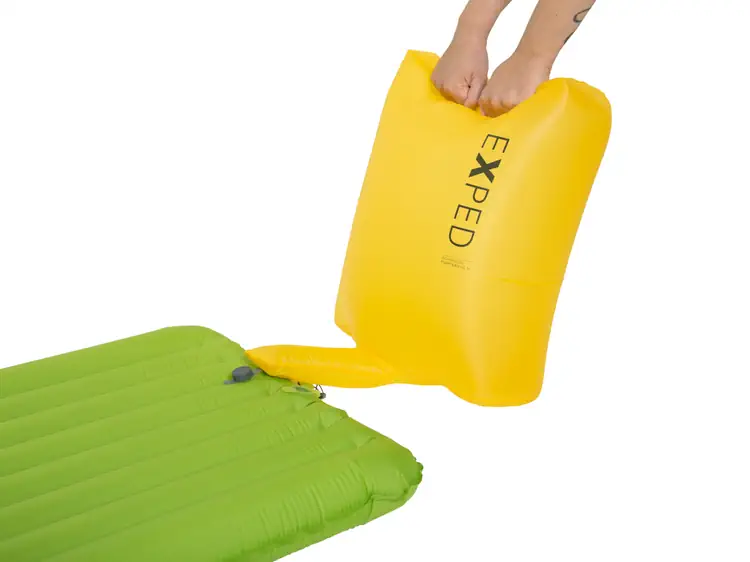
At camp, I attach the Schnozzel pump bag to the intake valve, catch air in the bag and push it into the mat. My Medium takes about three full bags and roughly a minute when I am moving at a normal pace. I do not have to blow into the valve after a tiring day, and I am not putting breath moisture into the insulation. The large yellow bag looks comical when it is full of air, but it does the job with very little effort.
Exped gives the mat separate, low-profile valves for inflation and deflation. The intake has a one-way flap. Once the mat is full, I can press that flap lightly with a finger and let out a little air until the surface feels right under my shoulder. That is easier than trying to judge the ideal pressure while pumping. I tend to start slightly firm and make the final adjustment after lying down for a minute.
Opening the other valve releases most of the air quickly. The last bit takes work. I fold or roll the mat deliberately, push the remaining air out and then roll it tightly enough for the stuff sack. That extra minute in the morning is the price of having a thick insulated mat in a small package. The Schnozzel also serves as a waterproof compression sack for clothes, according to Exped. I like having a large bag in my pack that can do another job after it has inflated the mat.
A quiet night, even when I turn over
I move in my sleep. Some insulated inflatable mats announce every turn with a crinkle that sounds much louder inside a tent at two in the morning. This one has been pleasantly quiet. Exped uses microfibre insulation alongside a reflective layer, and whatever sound those materials make has never bothered me or made me hesitate to shift position. I can turn over and go straight back to sleep.
I also like the feel of the surface. It has a little traction against my quilt without feeling sticky, and I have not slid toward the foot of the tent on the slightly uneven places where I have pitched. I still try to find a level spot. The mat cannot correct a bad campsite, and a steep slope would move any sleep system. On the modest slopes I have encountered, the fabric and those raised outer chambers have kept me where I started.
Warmth that fits in the pack
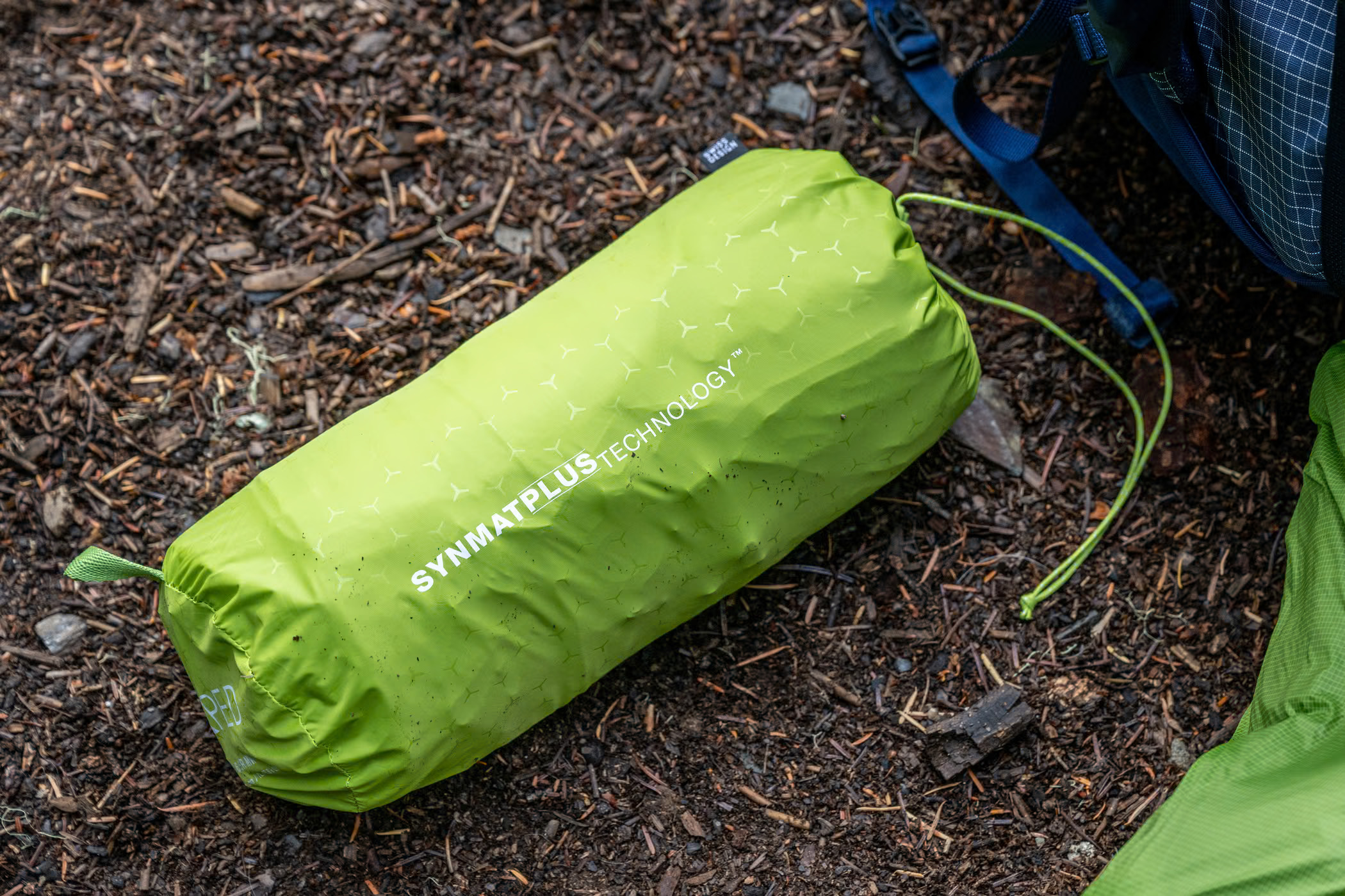
Rolled tightly, my mat is roughly the size of a one-litre Nalgene bottle. My complete sleep setup on these trips, including the mat, Schnozzel and 15°F quilt, came in just under 3.5 lb (1.6 kg). For the warmth I got on the frozen nights, that was a load I was happy to carry.
The little packed cylinder is particularly useful when the rest of the bag is already full of cold-weather clothing. I can find a place for it without building my entire packing system around the mattress. The trade is that the fabric feels thinner in my hands than a heavy car-camping pad. I pack it inside the bag, away from anything that could poke or abrade it, and I do not drag it over rough ground at camp.
The size of the Schnozzel makes it worth bringing even if I am trying to trim small items from my kit. It packs flat, inflates the mat quickly and can carry spare clothes. I have had pump sacks that felt like another awkward accessory to remember. This one earns its place every evening when I stop hiking and every morning when I put my sleep kit away.
Sixty nights without a leak
My pad has not punctured, lost air overnight or developed a faulty valve. I have also seen no sign that the insulation has shifted and left one area colder than another. That is a good result after roughly 60 nights, particularly with a mat whose shell is made from 20D ripstop polyester.
The Lake District gave it some rough pitches and plenty of dampness. In Quebec it spent nights over wooden platforms as well as ordinary tent sites. A silnylon floor or footprint separated it from the ground each time. Inside the tent, I keep stove parts, knife points and other hard edges away from the mat. That is normal care for a lightweight inflatable, but it is also part of why mine remains intact. Someone who wants to throw a pad onto abrasive ground without thinking about it should look at a heavier construction.
I have not had to repair the Ultra 6.5R. The valves still close cleanly, and the mat holds the firmness I choose through the night. I would still pack the included repair kit on a longer trip. A sharp stone can puncture any inflatable, and this one is built for low weight.
How I would choose between this and other mats
The Therm-a-Rest NeoAir XTherm is another warm, light option I considered. To me it feels narrower and makes more noise when I move. The NEMO Tensor has a comfortable surface, though its past durability reputation gave me pause. Those impressions are about what I value as a side sleeper; I did not run these three mats through the same 60-night field test. The Exped won me over by keeping me warm while staying quiet and helping me stay on the pad.
There is a more useful comparison already on this site if your trips begin beside the car. The NEMO Roamer mattress gave us excellent comfort over 90 nights of Quebec car camping, but it takes far more room and effort to carry away from a vehicle. I would pick the Roamer for a roomy basecamp and this Exped for a backpacking route. The two pads solve different packing problems.
A sleeping mat also has to make sense with the rest of the shelter. In my Big Agnes Copper Spur UL2 review, fitting two wide mats inside the tent was a real constraint. The Exped Medium is easier to accommodate in a compact two-person tent, though the narrow width will not please everyone. I would decide how much sleeping room I need before choosing a pad size just because its listed weight looks attractive.
Value after 60 nights
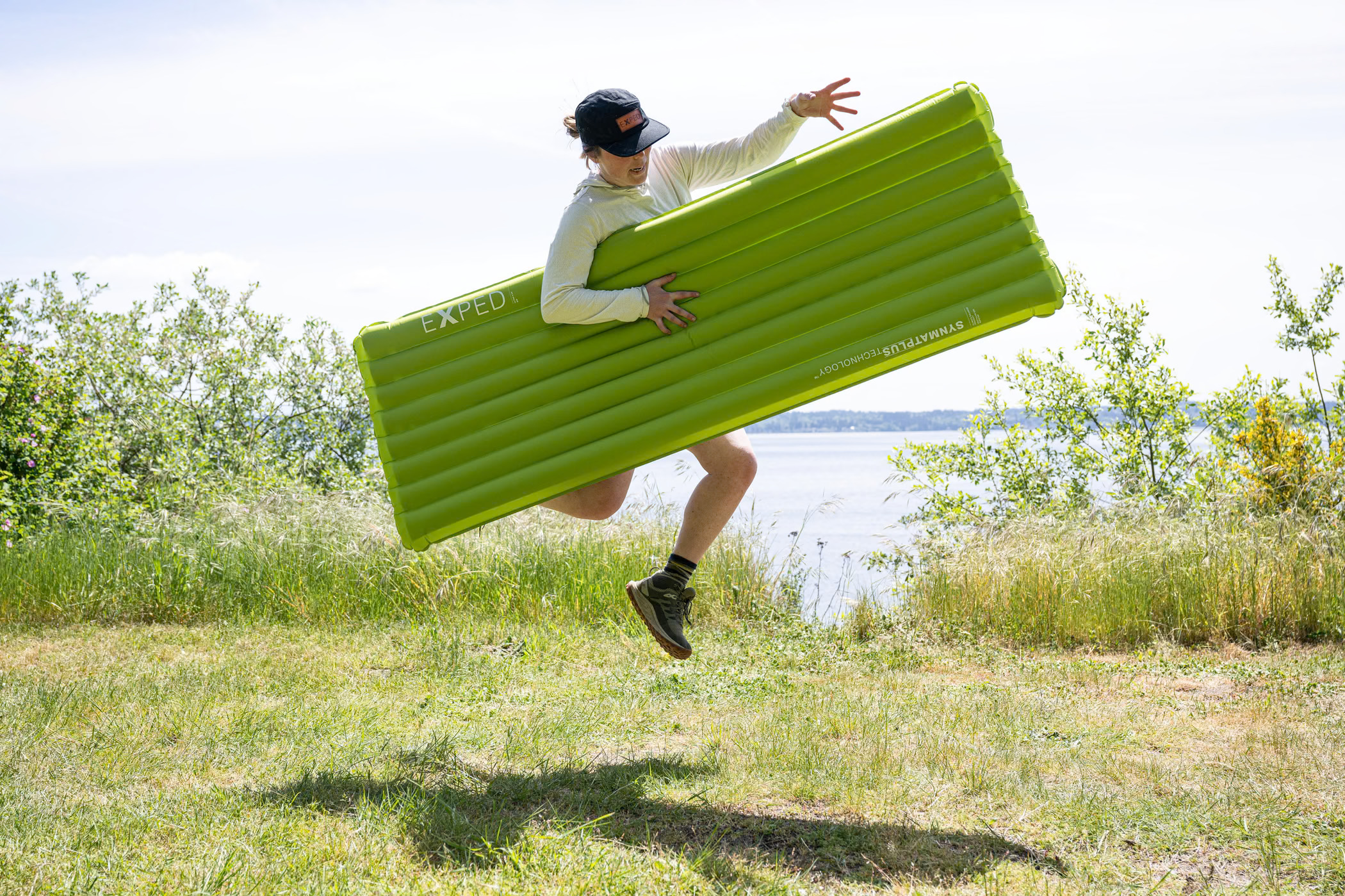
Yes. I paid €165 for mine, with no discount or contribution from Exped. After about 60 nights, including frozen ground at 10°F (-12°C), I still reach for it when I need one mat for a cold trip that involves carrying my gear. The quiet sleep and the simple pump bag have been as valuable to me as the temperature rating. I do not want an insulated mat that keeps me warm but wakes me every time I turn over.
I would recommend the Medium to someone who sleeps comfortably on a 52 cm-wide surface and is willing to protect a 20D pad with a tent floor or footprint. Side sleepers who need cushioning under the hip and shoulder should pay attention to its 9 cm depth. If you sprawl, start with one of Exped's wider sizes. If you camp on rough ground without much care for your gear, a heavier 70D-class mat may be a better companion, even though you will carry the extra bulk.
My Ultra 6.5R has kept the ground cold away, stayed inflated and remained quiet for the whole test. That combination makes the delicate shell a compromise I am willing to manage. When I pack for another trip with cold nights in the forecast, it is the mat I expect to take.
Exped Ultra 6.5R Medium details
| Version tested | Medium, rectangular, lichen green |
|---|---|
| Dimensions | 183 x 52 x 9 cm |
| R-value | 6.9 (ASTM, stated by Exped) |
| Outer fabric | 20D ripstop polyester |
| Insulation | Synthetic microfibre and reflective layer |
| Inflation | Schnozzel pump bag and separate flat valves |
| Price paid | €165 |
| Use | About 60 nights in Quebec and the Lake District |
Scoring breakdown

Sources & context
What this review draws on
Adam bought the Medium mat and used it for about 60 nights across trips in Quebec and the Lake District. Dimensions, materials and the ASTM R-value were checked against Exped's product information.
Editorial disclosure: Adam Whistler bought the Exped Ultra 6.5R for €165. Exped did not provide the mat, fund the review or have any involvement in it.