
The Jetboil Genesis and Camp Chef Everest 2X are both two-burner propane stoves for vehicle-supported camps, but they reward different cooks. The Genesis is a compact integrated kitchen with unusually good simmer control. The Everest is a broad steel stove built around heat, wind protection and heavy pans.
Evidence behind this comparison
Both stoves were bought by Adam and owned for about three years. The Genesis saw frequent travel across Europe and Canada; the Everest was used on eight or nine vehicle-supported trips. Their boil results came from separate field use in representative conditions, so the timings show each stove's observed performance rather than a controlled simultaneous test.
Our recommendation
Choose the Genesis when cargo space and cooking control matter most. It nests into its own five-litre pot, provides four turns of valve adjustment and handles sauces, porridge and breakfast food with less intervention. Choose the Everest 2X for fast boiling, cast iron, exposed camps and two burners running hard. Its 20,000 BTU burners and deep wind panels are much better suited to high-heat cooking.
Genesis vs Everest 2X at a glance
| Measure | Jetboil Genesis | Camp Chef Everest 2X |
|---|---|---|
| Best for | Compact storage and controlled cooking | High heat, wind and heavy cookware |
| Our score | 4.4 / 5 | 4.1 / 5 |
| Test period | About three years across Europe and Canada | About three years across 8-9 trips |
| Output | 10,000 BTU/h per burner | 20,000 BTU/h per burner |
| Observed or published boil | About 3 min 15 sec per litre in the FluxPot | Just over 2 minutes per litre in representative use |
| Low-flame control | Excellent four-turn adjustment | Narrow and touchy |
| Wind protection | Exposed without the separate screen | Deep lid and side panels |
| Weight | 9 lb 1.6 oz published, before regulator, screen and bag | About 12 lb |
| Cookware | Includes 5L FluxPot and 10-inch pan | Use your own full-size cookware |
| Major weakness | Failed igniters and weak wind performance | Poor simmering and bulky storage |
Choosing the right camp stove
Best for compact control
Jetboil Genesis
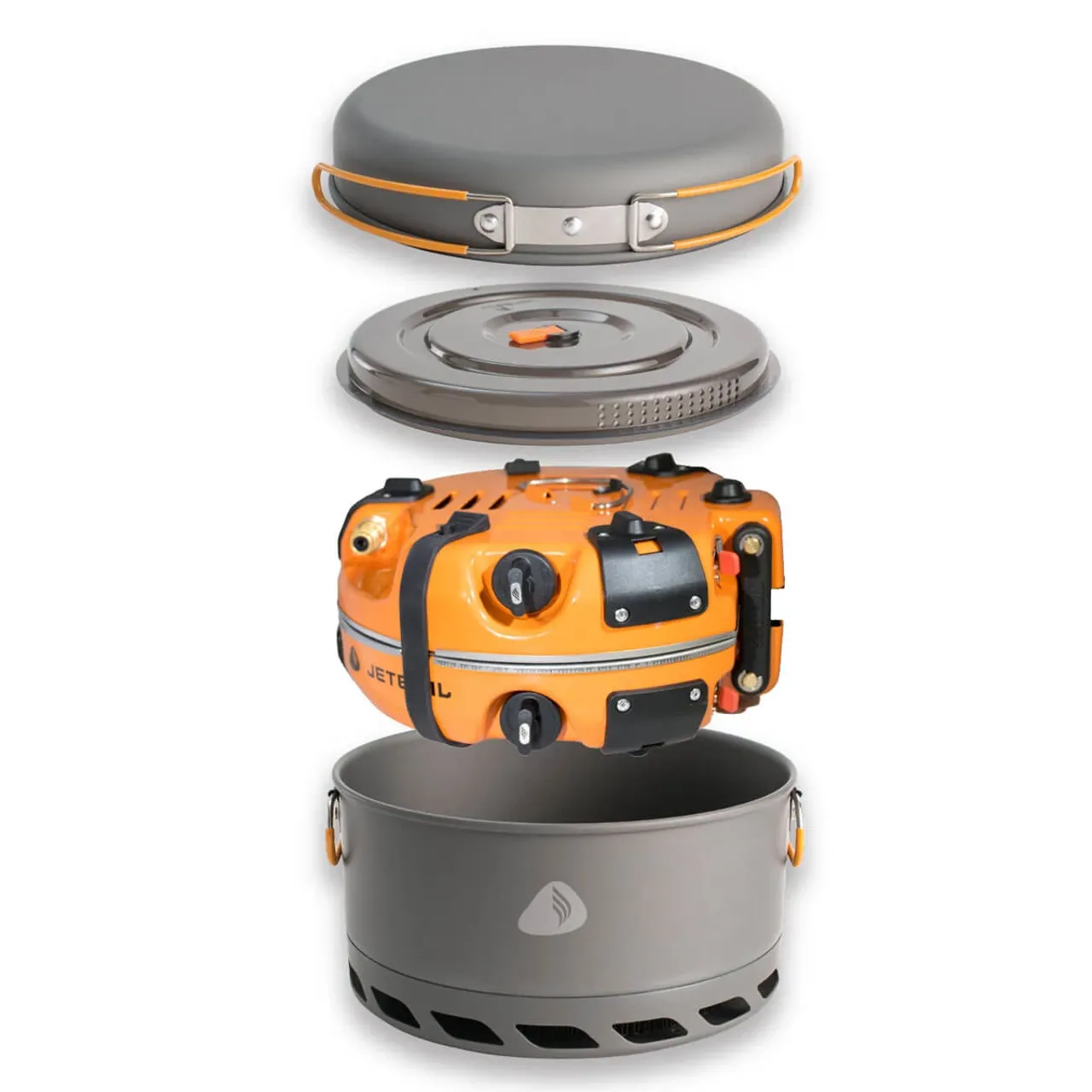
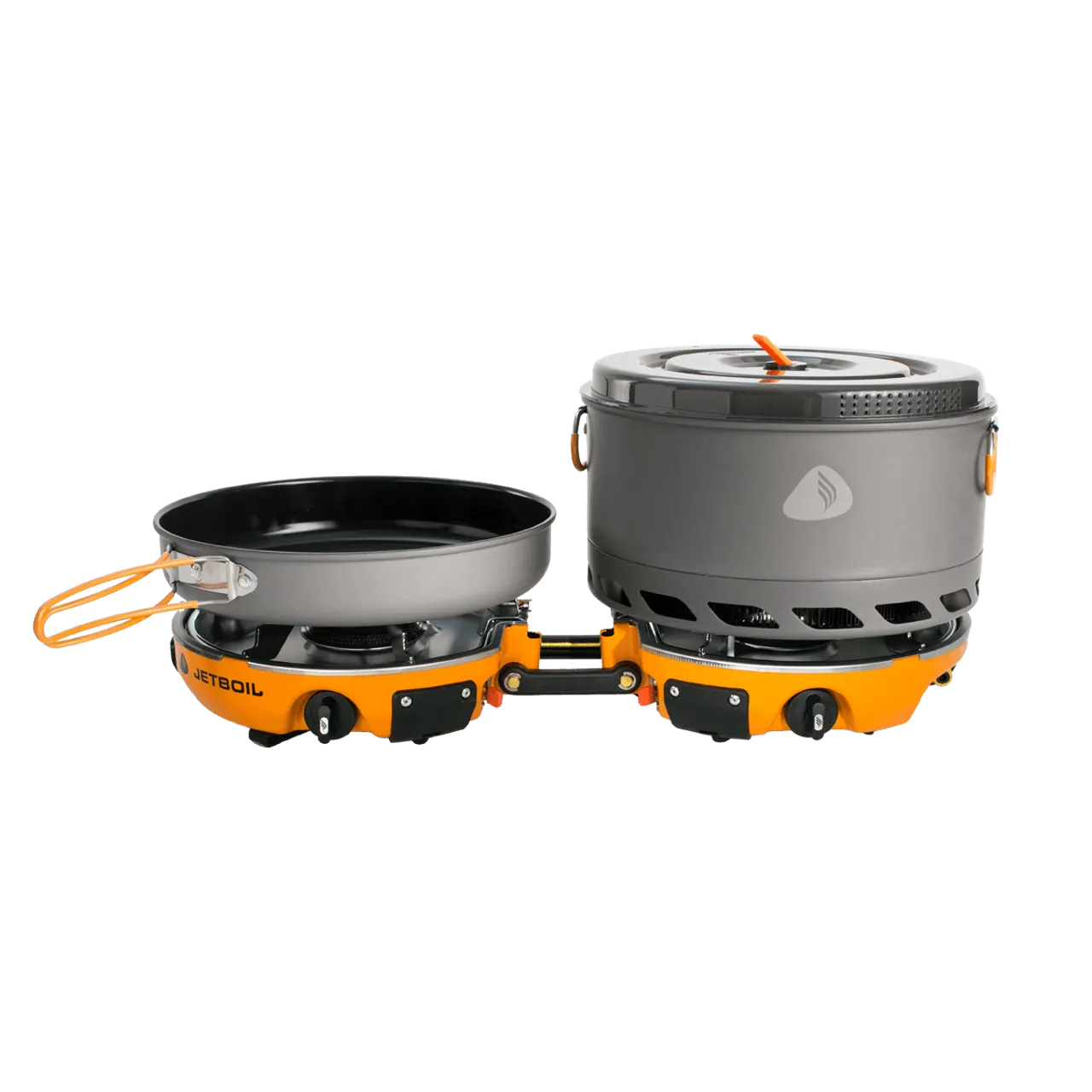
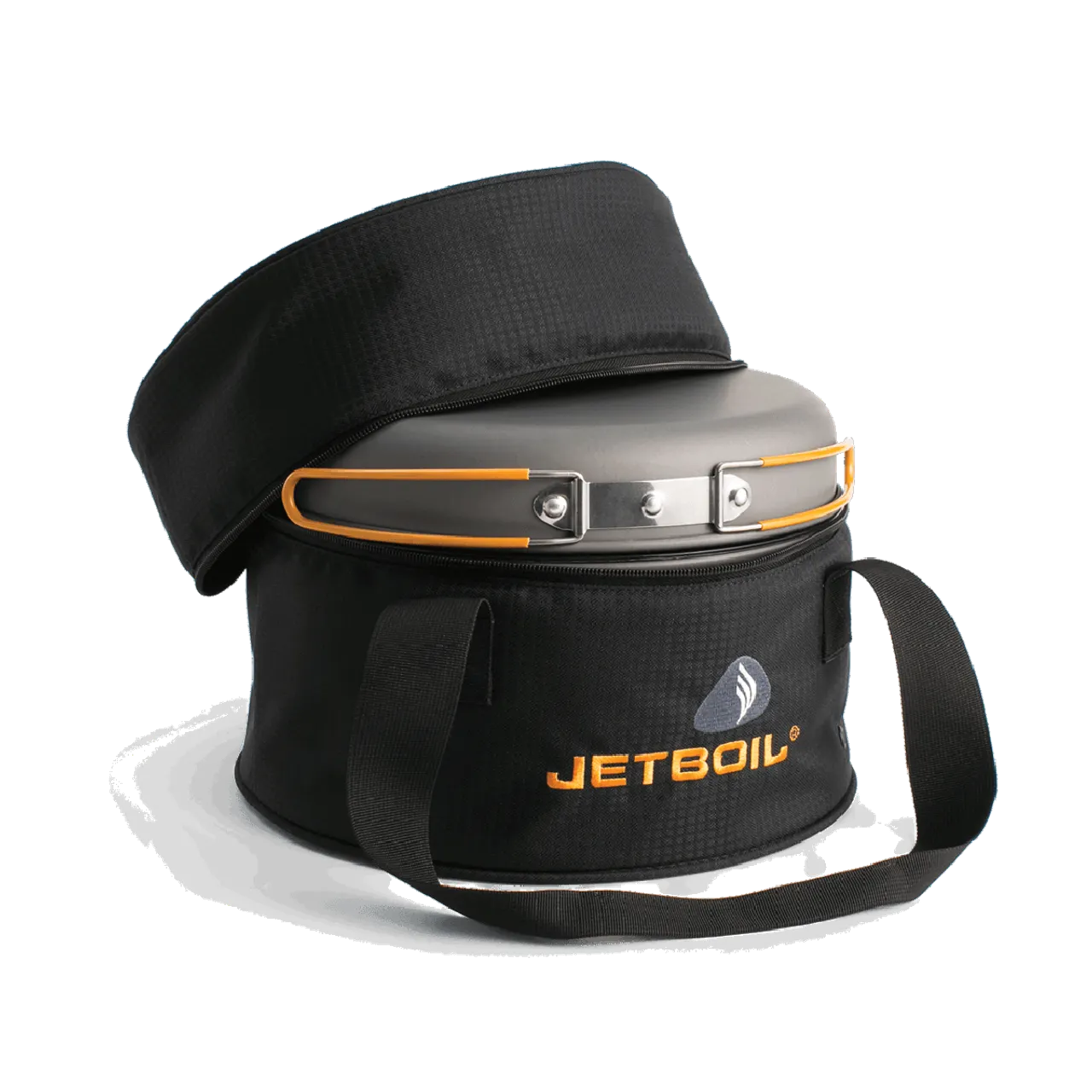
The Genesis fits cooks who want a complete basecamp kitchen in one defined package. The clamshell stove nests inside the FluxPot, the frying pan closes the stack and the padded bag keeps the system together. Its fine valve control makes it much easier to simmer sauces, cook porridge or manage breakfast without scorching the centre of the pan.
Best for heat and wind
Camp Chef Everest 2X
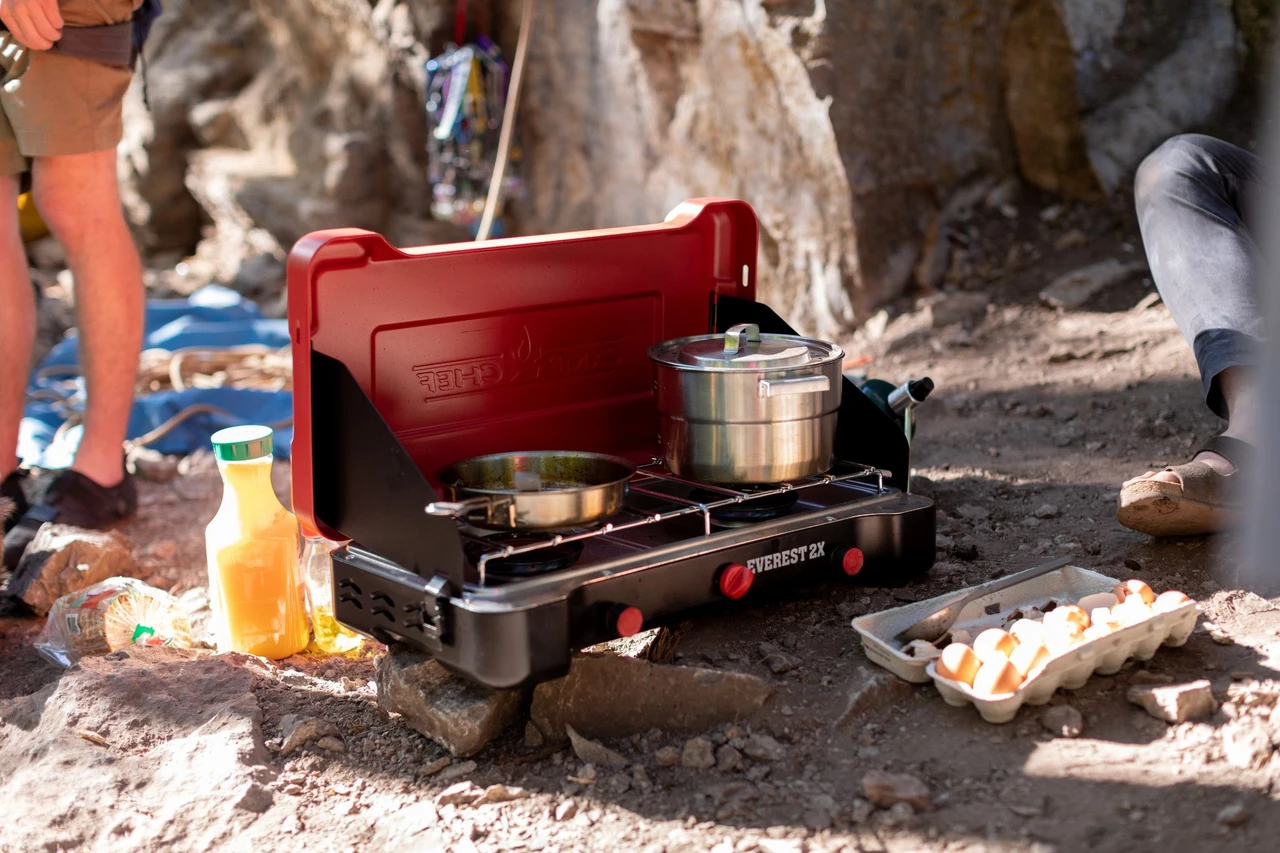
The Everest suits car campers, overlanders and tailgate cooks who use cast iron, large pots and two hot burners. It reaches a boil faster in our field use, keeps both 20,000 BTU burners running together and protects the flame with a deep lid and side panels. It asks for more cargo space and more attention at low heat.
Heat, boiling and two-burner performance
The Everest has twice the rated output per burner. Both burners can run wide open without an obvious pressure drop, making it easy to boil a large pot while heating a frying pan. One litre reached a strong boil in just over two minutes during representative camp use. The concentrated heat works particularly well with cast iron and substantial cookware.
The Genesis uses two 10,000 BTU burners. Its five-litre FluxPot offsets some of that output gap with a heat-exchanger ring, bringing one litre to the boil in about 3 minutes 15 seconds in representative use. Both burners also hold full output together. The Genesis is fast enough for normal group meals, but heavy cast iron and large-volume frying expose the lower ceiling.
Simmering and everyday cooking
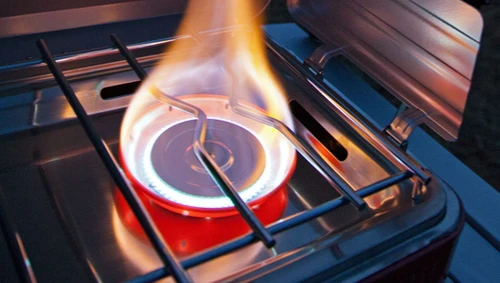
The Genesis wins decisively at low heat. Each valve turns through four full rotations, allowing small, repeatable changes. It can hold a quiet flame for sauces, rice, porridge and breakfast food without constant adjustment. The included ceramic-coated pan also spreads heat more evenly than a thin conventional camp pan.
The Everest's useful low-flame range is narrow. A small knob movement can produce a large flame change or extinguish the burner, especially when a gust reaches the cooking area. Pancakes, rice and sauces need more stirring and pan movement. Heavy cookware or a heat diffuser can soften the central hot spot, but neither changes the valve response.
Wind and cold-weather use
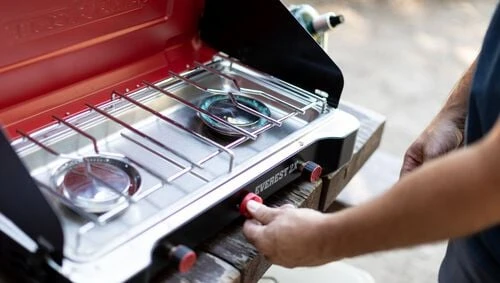
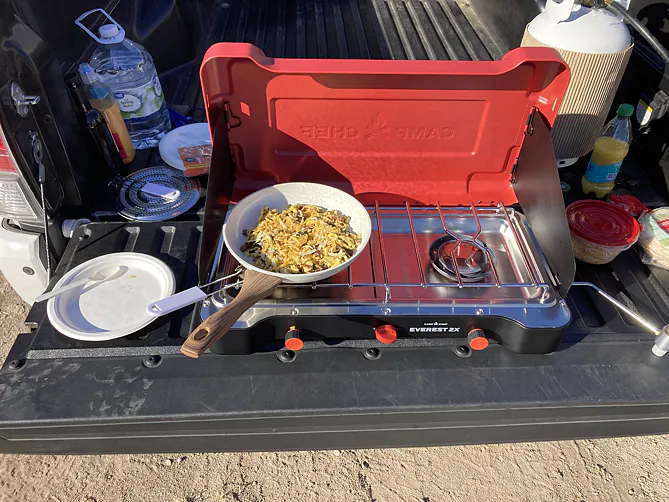
The Everest's deep lid and attached side panels provide the better wind protection. Moderate gusts have little effect, and meaningful performance loss appeared around 15 to 20 mph in our use. Once lit, it also ran well in cold weather and at altitude on one-pound propane cylinders.
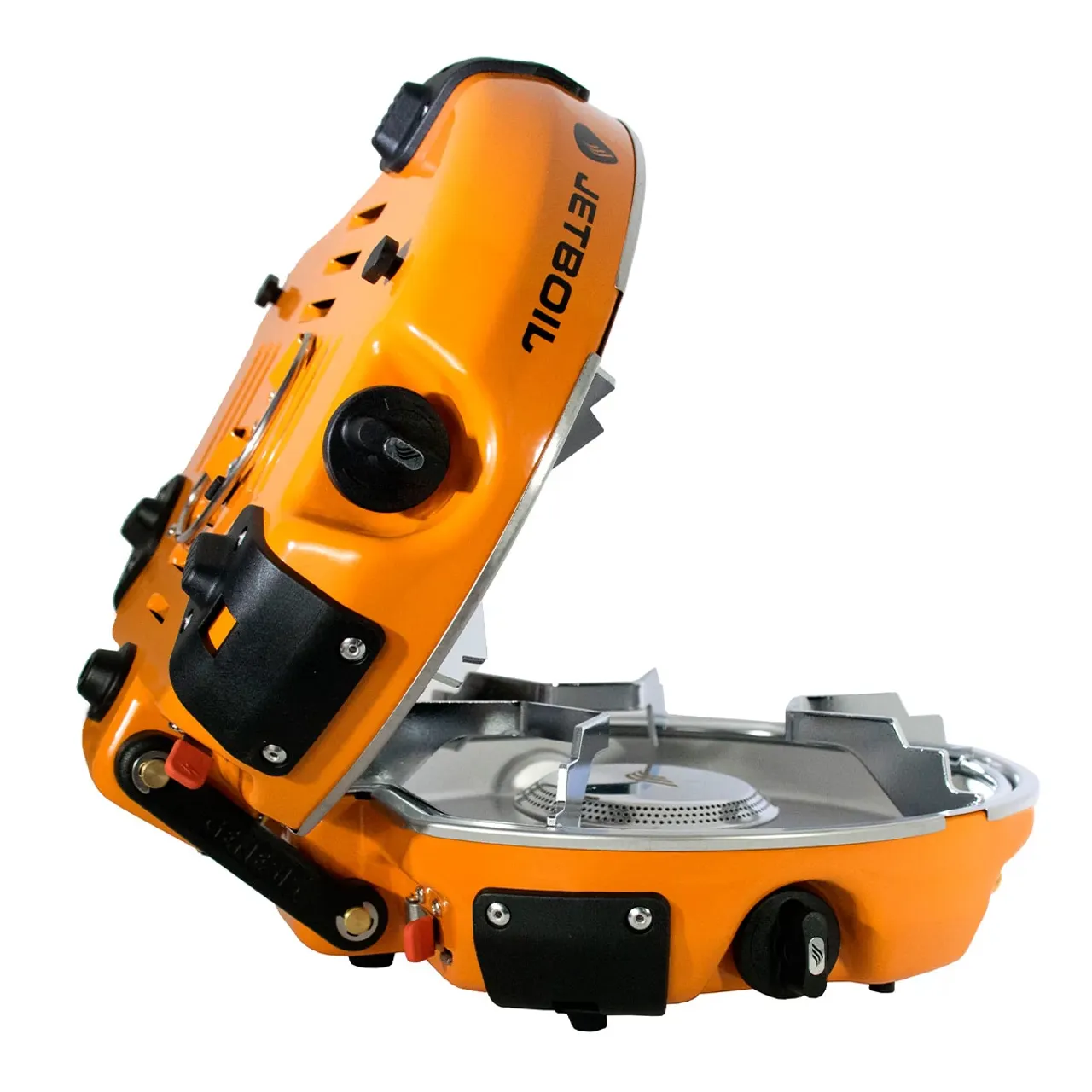
The Genesis burners sit in shallow wells and are more exposed. Strong crosswinds stretch the flame, slow boiling and force higher valve settings. Its flexible windscreen helps but uses fiddly plastic clips. Positioning the stove behind a vehicle or another safe barrier often matters more than it does with the Everest.
Packing and setup
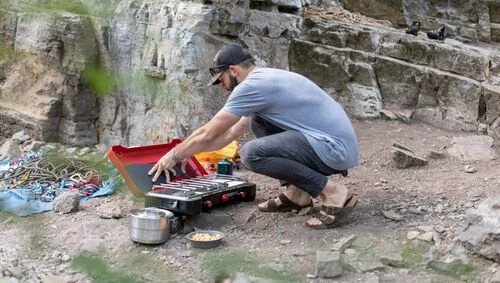
The Genesis is the more intelligent package. Fold the stove, place it inside the five-litre pot, close the stack with the frying pan and put everything in the padded bag. The cylindrical bundle is easier to place among food boxes and camping equipment than a broad suitcase stove. Setup still takes less than a minute.
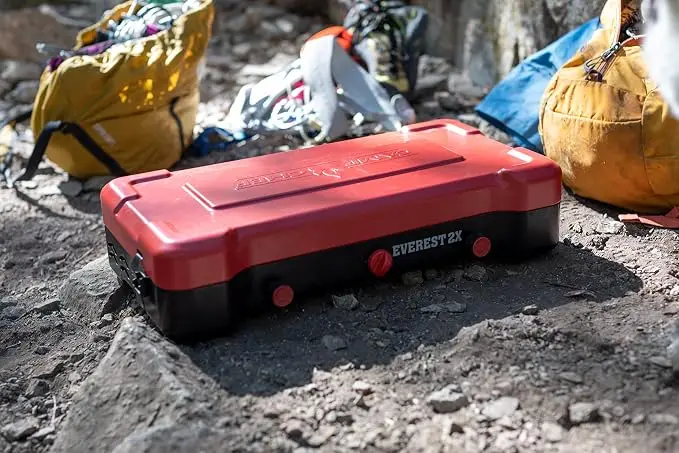
The Everest opens and connects in under 30 seconds, but its broad steel case remains broad when closed. At roughly 12 pounds, it is equipment for a vehicle, picnic table or tailgate. It is straightforward to move a short distance and awkward anywhere cargo space is tight.
Cookware and group meals
The complete Genesis system includes a five-litre FluxPot and a 10-inch ceramic-coated frying pan. Both fit on the low, wide frame together, and the pot capacity has handled meals for groups as large as eight in our use. Standard kettles, stainless pans and cast iron also sit securely on the grates.
The Everest provides 215 square inches of cooking area and supports two 10-inch pans or substantial pots. It is the better platform for cookware you already own, particularly cast iron. The handles need deliberate positioning when two large pans share the grate, but the steel frame stays planted on a solid table.
Ignition, cleaning and durability
Both stoves lost their built-in ignition during testing. Both Genesis igniters stopped working fairly early, while the Everest piezo became loose and eventually stopped sparking. A stormproof lighter now lives with each system. The burner controls and regulators continued to work, so the failures were inconvenient rather than trip-ending.
The Genesis frame, hinge, cookware and controls handled frequent travel well. Grease is awkward to remove from the burner wells, and the plastic FluxPot lid warped after exposure to flame overhang. The Everest's core burner system and grate remain dependable, but its latch and hinges developed play and the finish near the burner wells scorched and flaked.
Price and value
The Genesis cost $337.49 as a complete system. That is expensive beside a bare stove, but the package includes the large heat-exchanger pot, coated frying pan and padded bag. Its value improves when limited storage and fine cooking control are part of the buying decision.
The Everest cost $194.18 and delivers more raw burner performance for less money. Buyers already equipped with suitable cookware get a powerful, stable camp kitchen. Its value weakens when compact storage or delicate cooking matters more than speed.
Bottom line
Genesis for cooks and tight packing. Everest 2X for heat, wind and cast iron.
Both are strong vehicle-camping stoves with failed igniters in our long-term use. The choice rests on the meals and cargo space: take the Genesis for control and integration, or the Everest for faster boiling and harder cooking in exposed camps.
Read the field tests
Full reviews behind this guide

Editorial disclosure: Adam bought both stoves with his own money. Jetboil and Camp Chef had no involvement in the reviews or this comparison.