
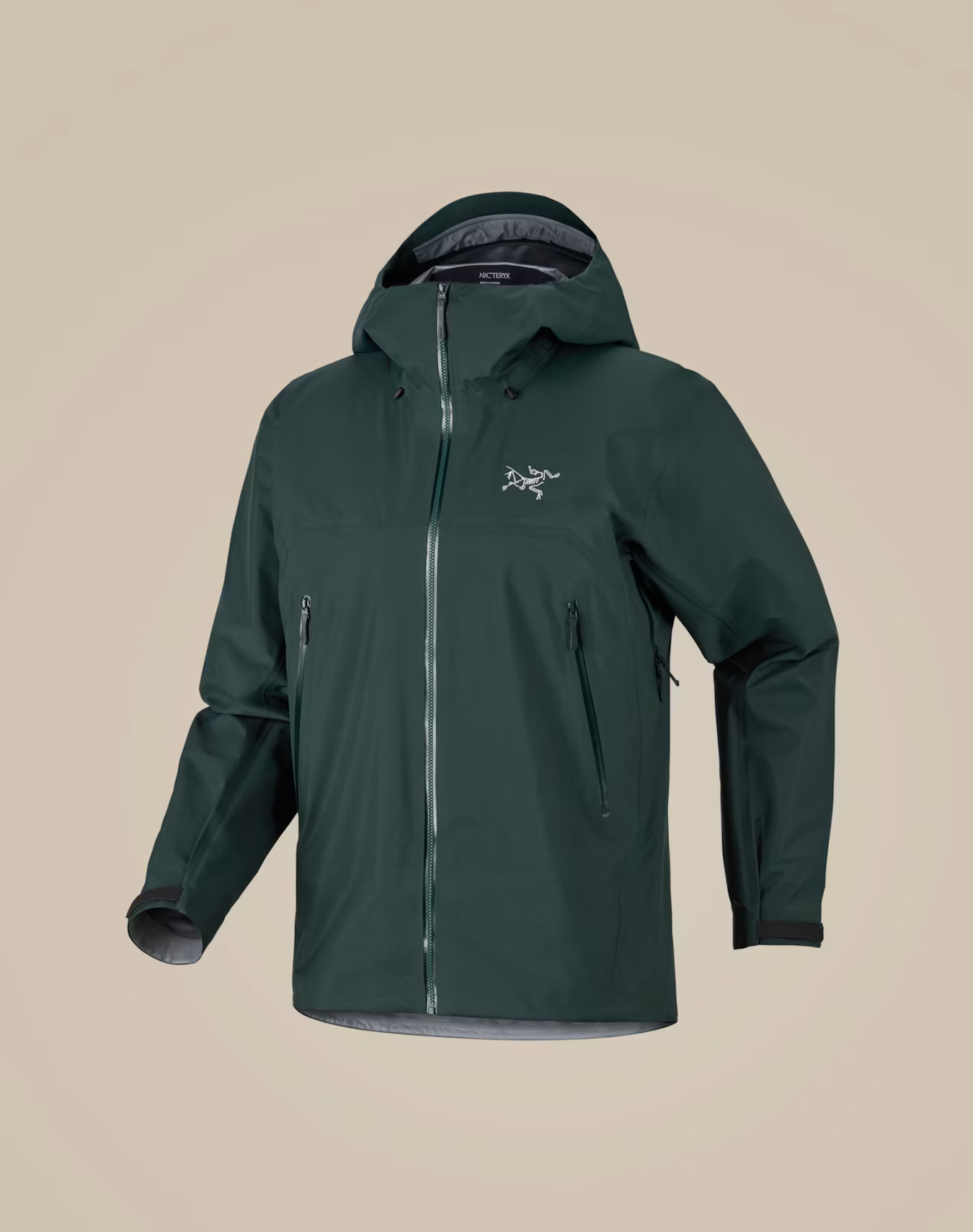
My mate Andy and I spent two weeks camping and hiking in Cornwall in January 2026. We borrowed a couple of jackets to test out along the way: I was wearing an Outdoor Research Helium UL and Andy had borrowed an Arc'teryx Beta SL. The test included - in traditional Cornish style - prolonged rain, cold weather with strong winds, and a particularly harsh coastal walk in driving sleet.
I felt pretty let down by the Helium - it's an awesome ultralight jacket but we definitely found (and exceeded) its limits on this trip. My underlayers were constantly damp and clammy. I was cold a lot of the time. Andy's, in the Beta, stayed dry. He also had pit zips to open on the climbs, and hand pockets to retreat into when we stopped. As the trip went on I was becoming increasingly envious of both.
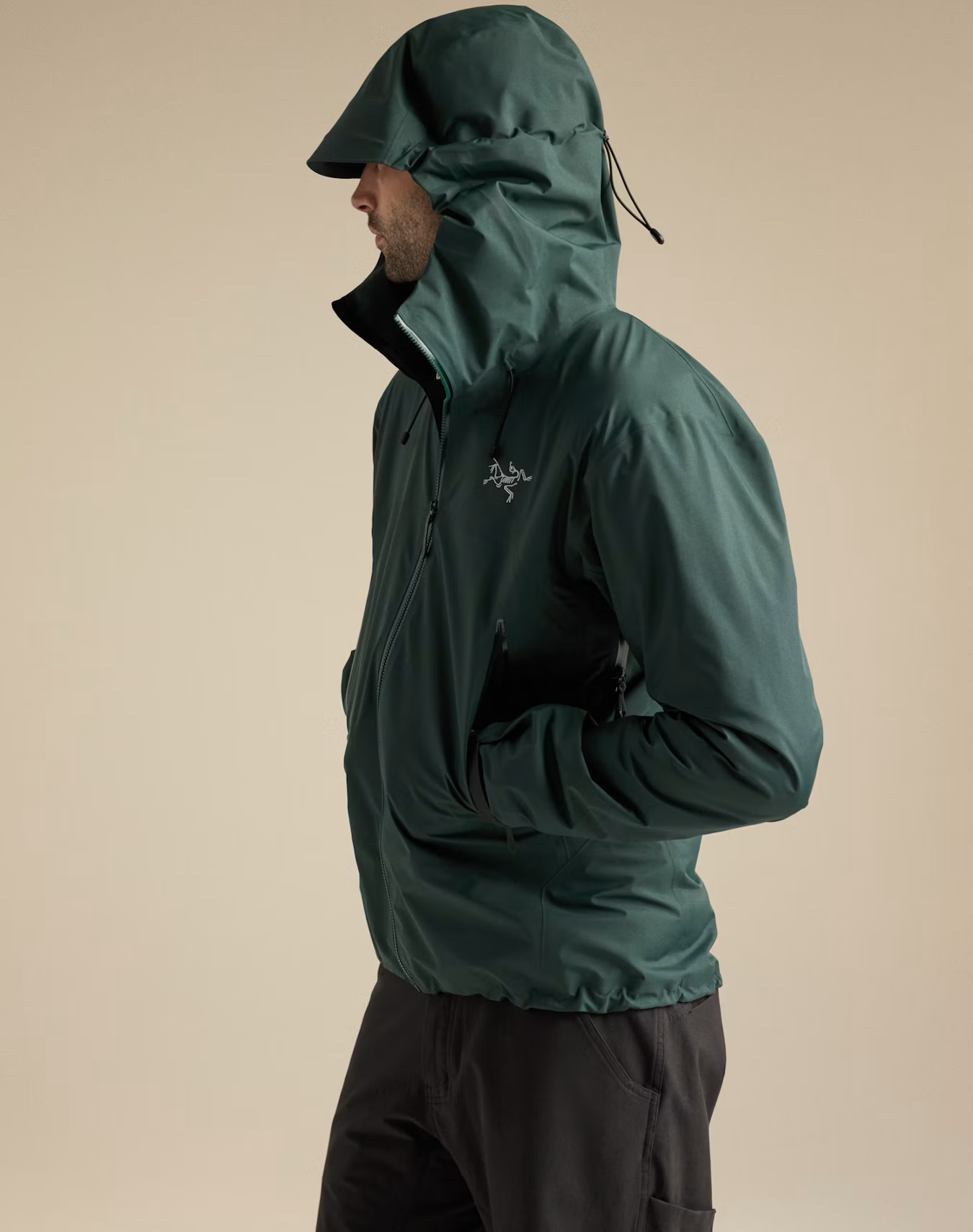
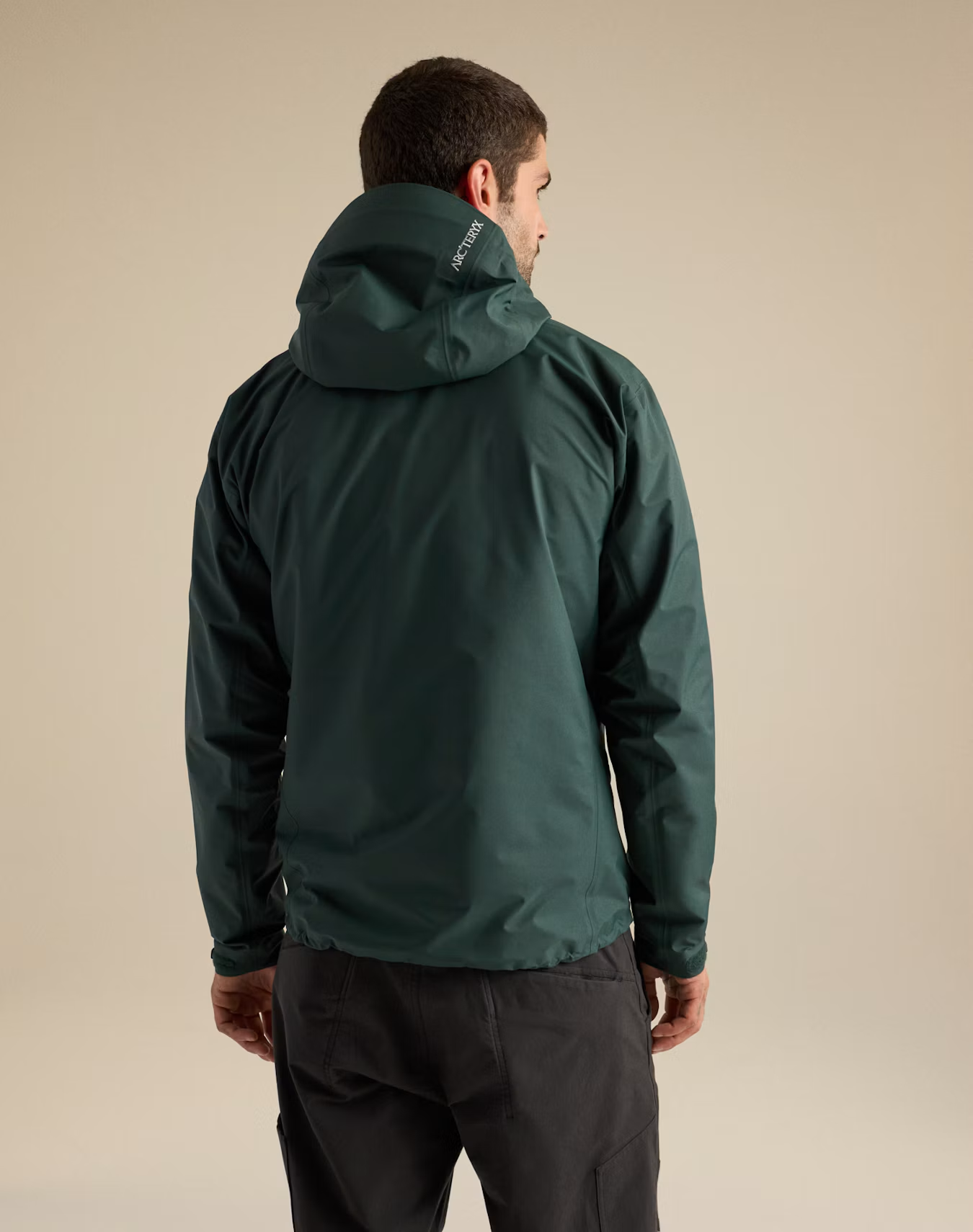
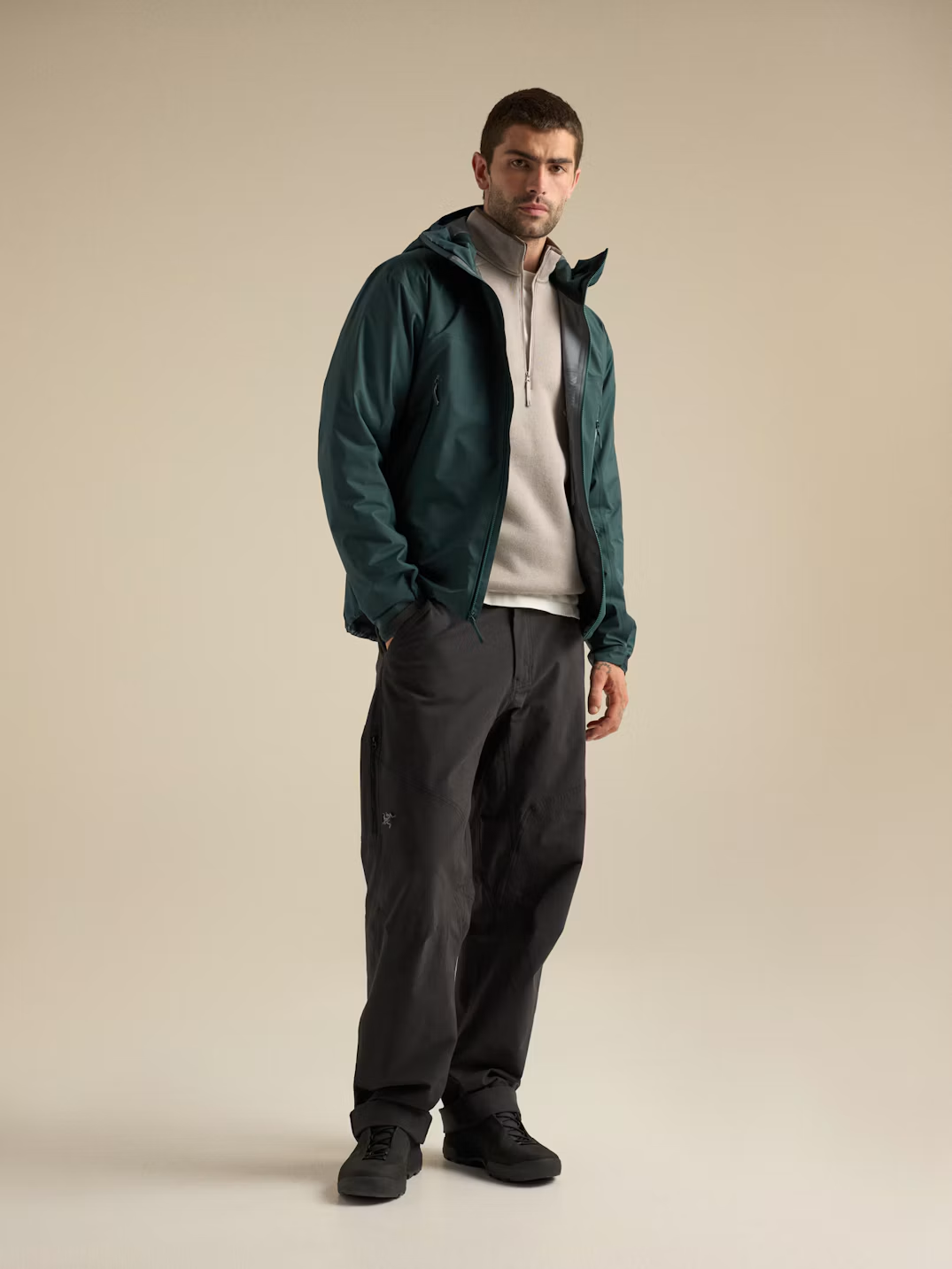
His jacket was the men's Beta SL in Dark Jade, size medium. At 6ft 2, Andy found it a great fit over a long-sleeve base layer and mid-weight fleece. It moved comfortably under his rucksack and gave him enough coverage when scrambling or bending down around camp.
The Beta SL was a lot heavier and bulkier to carry than my jacket, and its fabric made plenty of noise. Its helmet-compatible hood also needed considerable adjustment without a helmet underneath. But once the weather settled in, Andy was very pleased with the jacket he had borrowed, while I was feeling considerably less smug about my own life choices. You can read my standalone review of the Helium here, but the rest of this review is going to focus on the Beta.
Quick verdict
The Beta SL kept Andy's underlying layers dry through sustained rain and over an hour of freezing sleet. Its wind protection, accessible hand pockets and useful pit zips made it comfortable to keep wearing as the terrain and weather changed.
The cut worked well with his walking layers, although he said he would have wanted more room for serious cold weather gear under the jacket. The hood was oversized for ordinary hiking until properly tightened (presumably to accommodate a helmet), and the zips needed a firm pull. But it was solid, no doubt about it.
At $500, it is an expensive waterproof. Andy is a bit of a cheapskate but he ultimately felt he wouldn't pay much more than $350 for one. He would still seriously consider buying one as his main shell for year-round use.
What works
- Kept underlying layers dry through sustained rain and driving sleet
- Pit zips released heat effectively on climbs
- Hand pockets remained accessible above his rucksack hip belt
- Good movement and coverage in size medium
- Comfortable inner backing against his neck and arms
- No visible damage from rucksack straps or thorny branches
What to know
- Steep $500 price tag will be off-putting for some
- Helmet-compatible hood is pretty massive without a helmet
- Crinkly fabric is noisy when moving
- Zips are a bit stiff
- Fitted cut leaves limited room for bulky insulation
Full verdict
The Beta SL gave Andy the sort of performance I would want from a waterproof on a cold, wet camping trip. It kept his layers dry, blocked the stiff coastal wind and let him release heat without opening the entire front of the jacket.
Its practical details were also solid once we stopped walking. The pockets gave him somewhere to put his hands, the collar covered his chin, and the cuffs could be closed securely around his wrists. Those are some easily overlooked features you end up valuing on a long, wet day outside. I hadn't even noticed the Helium had no hand pockets until I got out on the first hike.
There were some irritations. We both found the fabric noisy and a bit irritating, and the hood had much more room than you want without a helmet. The zips also took some effort with cold fingers. But the jacket kept him comfy and toasty when the weather was rough, which was what really counted.
The price is inevitably going to be the big obstacle for most. Andy liked the jacket a lot, enough to consider buying one as his main waterproof, but he would want a substantial discount before stumping up for one. We talked it over and felt the Beta SL deserves 4.5 out of 5: an excellent performer, but one with an asking price that will be over the pain threshold for most.
Testing with Andy
Andy borrowed the nearly-new jacket for the same two-week Cornwall trip on which I used the Helium UL. He wore it for hiking with a loaded rucksack and for the usual campsite jobs, including pitching, sorting equipment and spending time outside once we had stopped moving. We also sat and had a rather miserable beer in the rain.
This review combines some of his notes with what I observed working alongside him in those rather punchy conditions.
Andy wore the Beta SL throughout the test. His normal walking combination was a long-sleeve base layer and mid-weight fleece. He reported that it all fitted comfortably beneath the medium without making the jacket feel loose or cumbersome.
The conditions gave the shell plenty of work. Prolonged rain, exposed wind and a particularly unpleasant hour or two of driving sleet meant it spent plenty of time being worn with everything buttoned up and zipped tight.
Rain protection and wetting out
The strongest result here was that Andy's underlying layers stayed dry for the whole test while my jacket had already wetted out.
He remained comfortable inside the Beta SL while I was feeling cold dampness beneath my own shell. He came out of that spell with much more enthusiasm for his jacket than I had for mine.
The outside did not keep beading water everywhere. After about 45 minutes of heavy rain, the shoulder areas beneath his rucksack straps did become saturated. But despite that his clothing underneath remained dry.
Drying took longer than it did with my Helium UL. Back at the tent, the Beta SL's outer fabric held on to moisture for noticeably longer. My much thinner jacket recovered its dry feel more quickly once the rain stopped.
But for this trip, I would have accepted the slower drying. Keeping his layers dry while he was outside was by far the more useful result than getting wet and drying a bit faster.
Wind protection
The jacket dealt comfortably with the exposed coastal wind. If you've ever been to Cornwall you will know it does not take prisoners. Andy did not feel any draughts and the fabric stayed settled rather than constantly flapping around him.
Its slightly stiffer feel probably helped here. There was more structure to the jacket than there was to my ultralight shell, which probably contributed to it not getting pushed around by the wind.
That structure probably also caused some of the noise. The fabric was crinkly when Andy moved, and it was one of the things he liked least about wearing it. A rustling waterproof on a quiet country walk is not an especially happy combination.
The wind protection itself gave him little to complain about. With the collar up, cuffs closed and hood adjusted, he could get on with walking without repeatedly trying to close a gap somewhere.
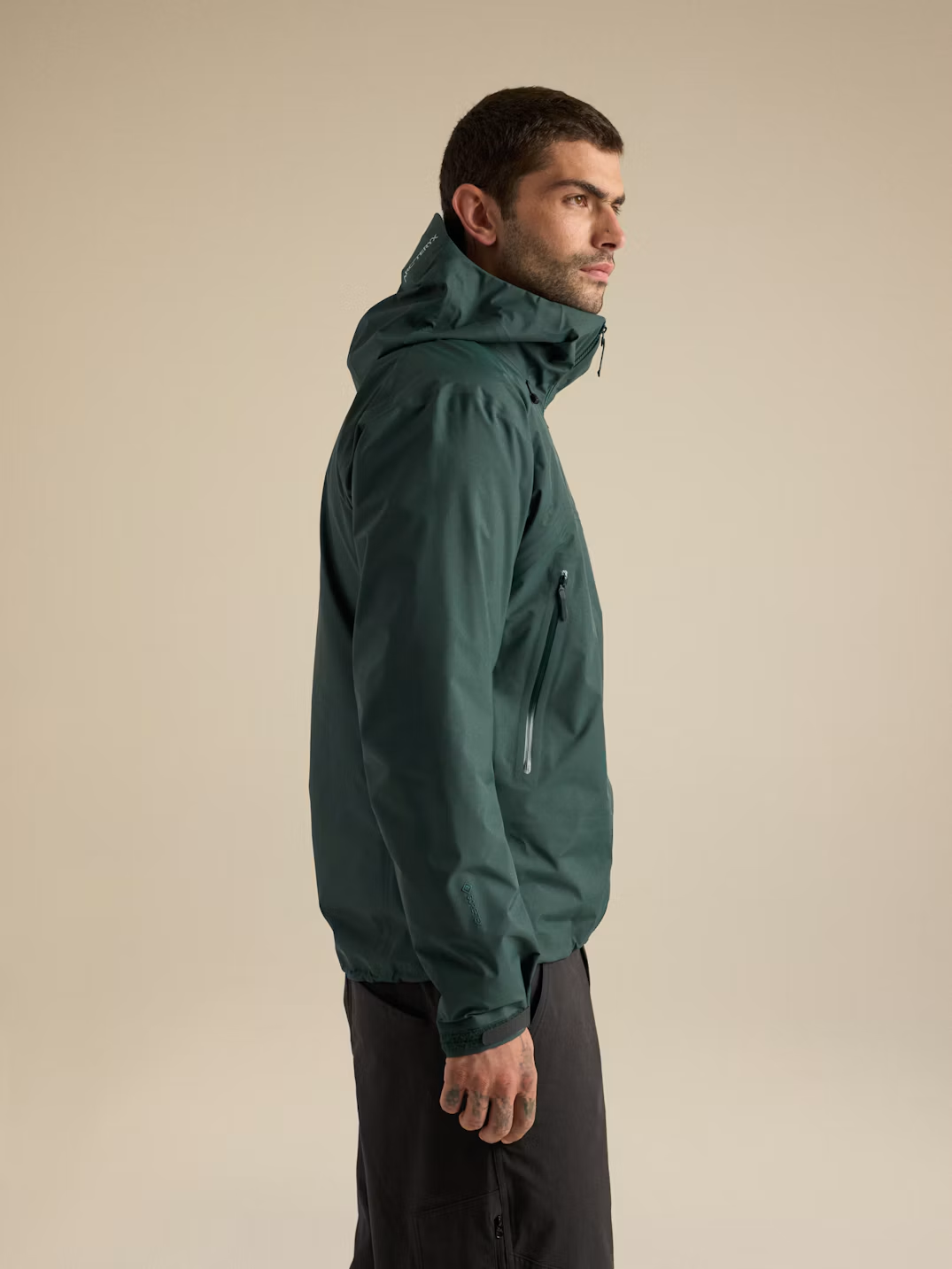
Breathability and pit zips
Andy still got a bit hot on the steep climbs with a loaded rucksack. He experienced some sweat buildup, particularly when working hard with the jacket closed against the rain.
But the pit zips were very useful. Opening them releases heat while keeping the front of the jacket closed, and he found that much easier to manage than relying entirely on the main zip.
He avoided the overwhelmingly clammy feeling I experienced in my own shell. There was still heat to deal with, but the pit zips gave him a practical way to moderate it before becoming uncomfortable.
I was particularly envious of that during uphill sections. Opening the front of my jacket was a constant tradeoff pitting ventilation against letting the rain and wind in.
For walks with sustained changes in effort, the ventilation was one of the Beta SL's most useful features.
Fit, movement and layering
The medium worked well for Andy's 6ft 2 frame. It sat fairly close across his chest and waist, with enough space for his base layer and fleece.
He liked that tidy fit while walking. There was little unnecessary fabric around his torso, and the jacket did not interfere with movement under the rucksack. He got a couple of compliments on the jacket from people in the pub.
He said reaching, bending and crossing his arms felt unrestricted. While scrambling, the sleeves stayed long enough and the rear hem continued covering his lower back. He was not repeatedly tugging the jacket back into place after a movement.
Andy did say he felt there wasn't room for much more and that putting a substantial down puffer underneath would make the torso uncomfortably tight. But for his walking layers, the fit was good. For a thicker camp setup, he would want more room.
The rear coverage was also welcome when bending down around the tent. It gave him protection without requiring constant attention, which is exactly how a jacket hem ought to behave.
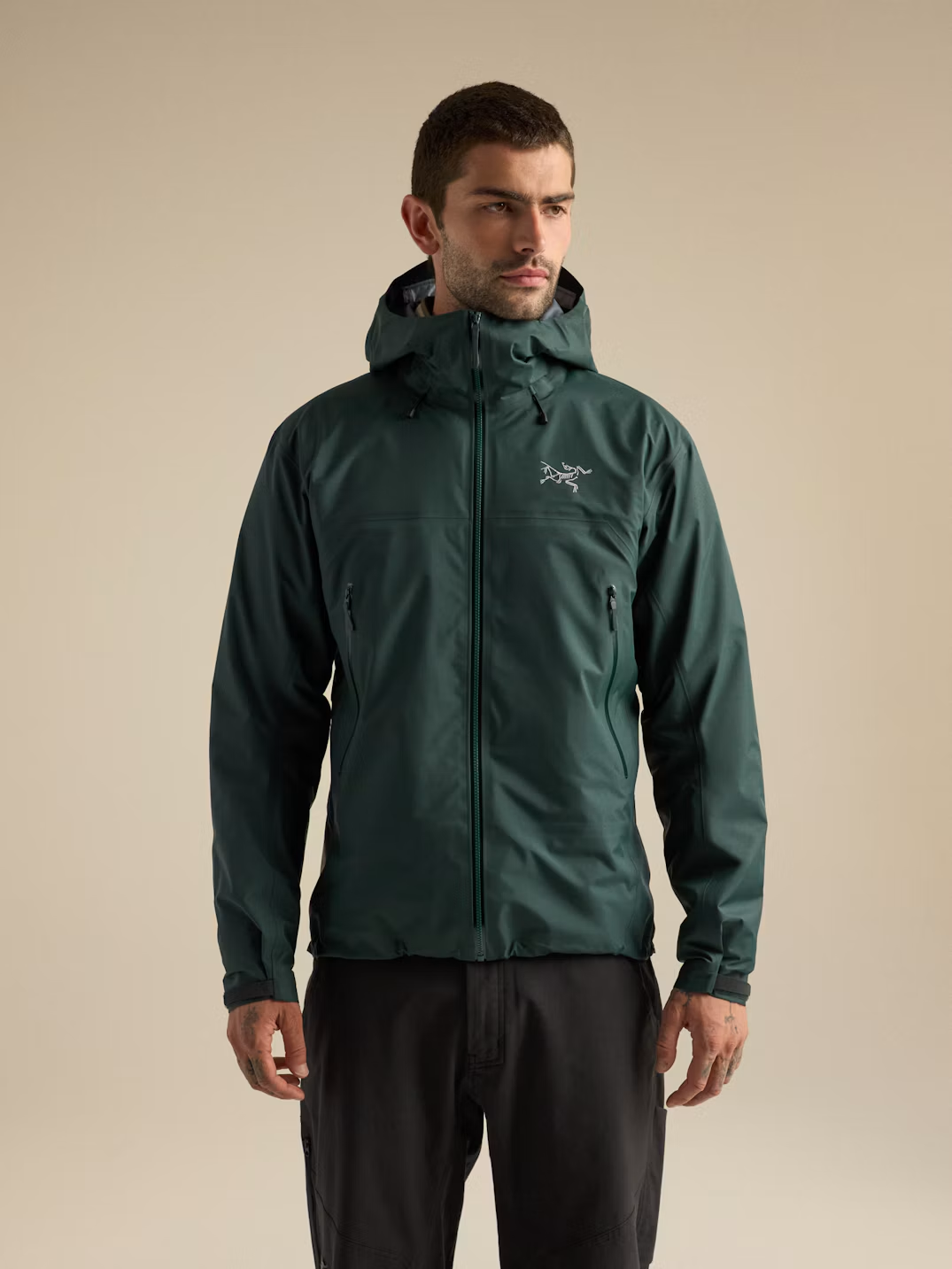
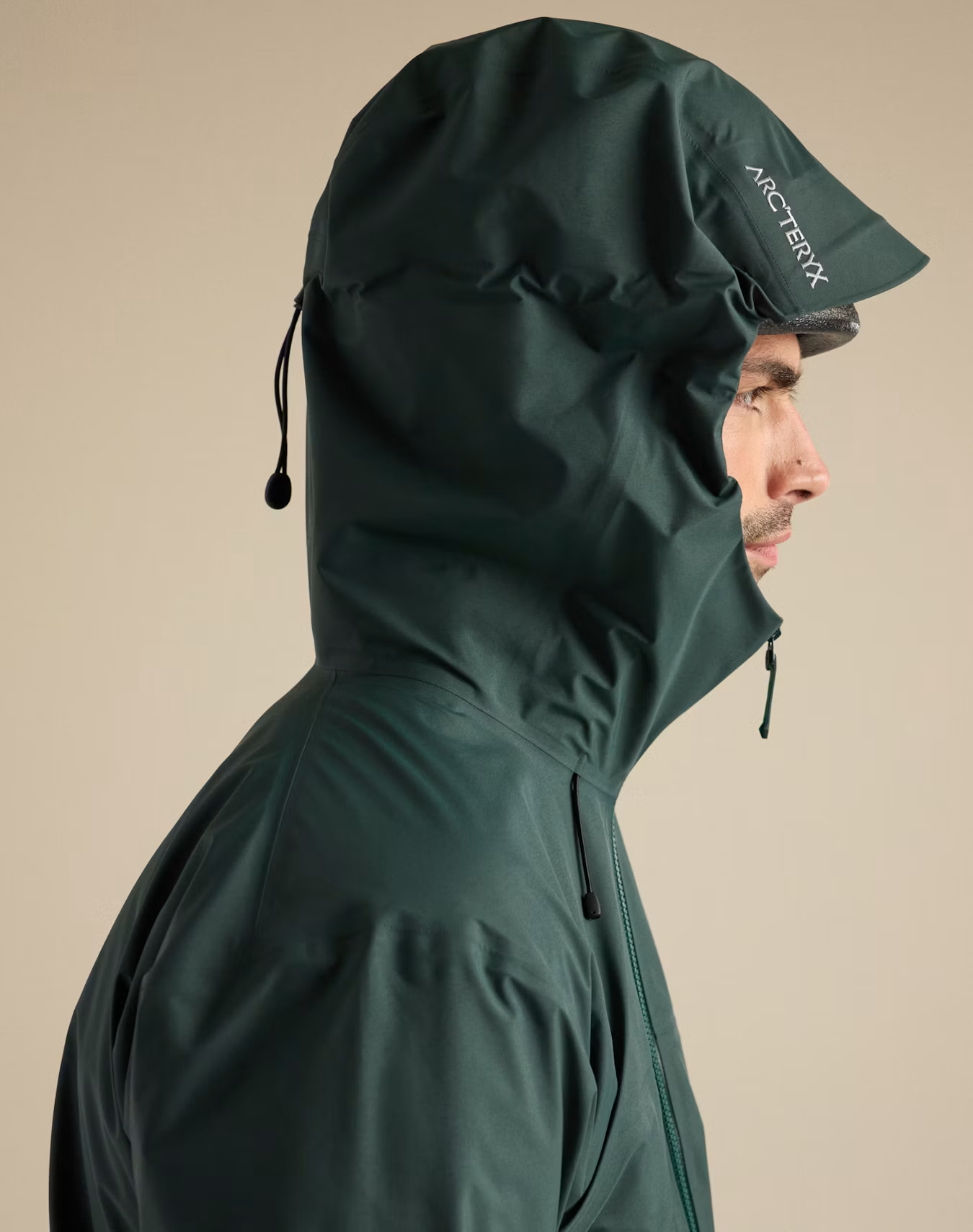
Hood and collar
The hood was one of Andy's main frustrations at first. It had a lot of spare room without a climbing helmet underneath, and he needed to tighten the rear and side adjustments considerably to get it settled.
Once adjusted though, its performance was good. It stayed secure in the wind, moved with his head and let him see the path without the opening sliding across his view.
The stiff brim also did a good job of keeping sleet out of his eyes. During the roughest weather, he could keep his head covered without having to hold the hood in position.
For ordinary hiking, Andy said he would have preferred less volume to manage. He appreciated the protection once it was fitted properly, but the adjustment required was a faff.
The tall collar was more immediately comfortable. Fully zipped, it covered his chin well and gave him somewhere to tuck down when the weather was coming straight at us.
Pockets, cuffs and zips
The hand pockets were a feature I found myself looking at with considerable envy. I hadn't even realised the Helium had no hand pockets until I got out in the weather.
Andy could still get into them with his rucksack's hip belt fully fastened. Their position let him reach his phone without unbuckling the pack. They were useful both while walking and around camp.
The adjustable cuffs also worked well. He could close them around his wrists and stop draughts getting up the sleeves. They gave him more control over the opening than the partly elasticated cuffs on my shell.
The zips were less convenient with cold fingers. Andy found them relatively stiff and needed a firm pull to operate them.
He was pleased with the pocket placement and cuff adjustment overall.
Comfort around camp
Andy said he liked the feel of the inner backing against his neck and arms. It felt softer and more comfortable to him than the sticky interior I was experiencing in my own jacket.
The Beta SL gave Andy good rear coverage when bending down, usable pockets when sitting around and a comfortable collar when fully closed. He was happy to leave it on while doing jobs outside.
Weight, packed size and durability
The Beta SL was of course a lot bulkier than the Helium UL. When Andy took it off, he generally put it into the main compartment of his rucksack rather than bundling it into a small outer pocket like I did with the Helium.
It was less convenient to stow quickly, and it took up more of the available space. My jacket had a clear advantage whenever we were carrying the shells.
But of course Andy was much more interested in the protection and toughness of his once he was wearing it. And we did beat the jackets up quite badly, but rucksack straps and thorny branches left no visible scuffs.
Price and value
Andy would consider buying the Beta SL as his main waterproof, but $500 was more than he wanted to spend. Around $350, he would be much more interested.
At that price, its performance would be easier for him to justify. He liked having dependable rain protection, useful ventilation and accessible pockets in a jacket that moved comfortably over his normal walking layers.
The hood volume, fabric noise and stiff zips were small frustrations but no dealbreakers. They were certainly much easier to live with than spending the day in damp clothing.
The Beta SL kept Andy dry through the worst weather of our trip and gave him the adjustments and storage he wanted while walking and around camp. I did like the low weight and volume of the Helium in my pack but once the rain arrived, I was much more interested in the one he was wearing.
Specifications and test details
| Product | Arc'teryx Beta SL Jacket Men's |
|---|---|
| Model | X000010854 |
| Colour and size tested | Dark Jade, medium |
| Wearer | Andy, 6ft 2 |
| Construction | Three-layer GORE-TEX ePE |
| Face fabric | 40dx70d nylon |
| Inner backing | GORE C-KNIT |
| Listed weight | 340g / 12oz |
| Fit | Fitted |
| Hood | Helmet-compatible StormHood |
| Ventilation | Pit zips |
| Pockets | Two zipped hand pockets and an internal chest pocket |
| Listed US price | $500 |
| Testing | Two weeks camping and hiking in Cornwall, January 2026 |
| Product loan | Nearly-new jacket borrowed for the trip |
Overall score
4.5 out of 5. Excellent rain and wind protection during the trip, with useful pit zips, accessible pockets and comfortable movement. The high price, hood volume, noisy fabric and stiff zips hold it back.
Sources & context
What we checked
Adam wrote this review after hiking and camping alongside Andy, who wore the Beta SL throughout the two-week loan. Andy supplied feedback on fit, comfort and using its features. Arc'teryx product information supplies the model, construction, fabric, listed weight, features and US price.
Editorial disclosure: Andy borrowed a nearly-new Beta SL for the trip.