
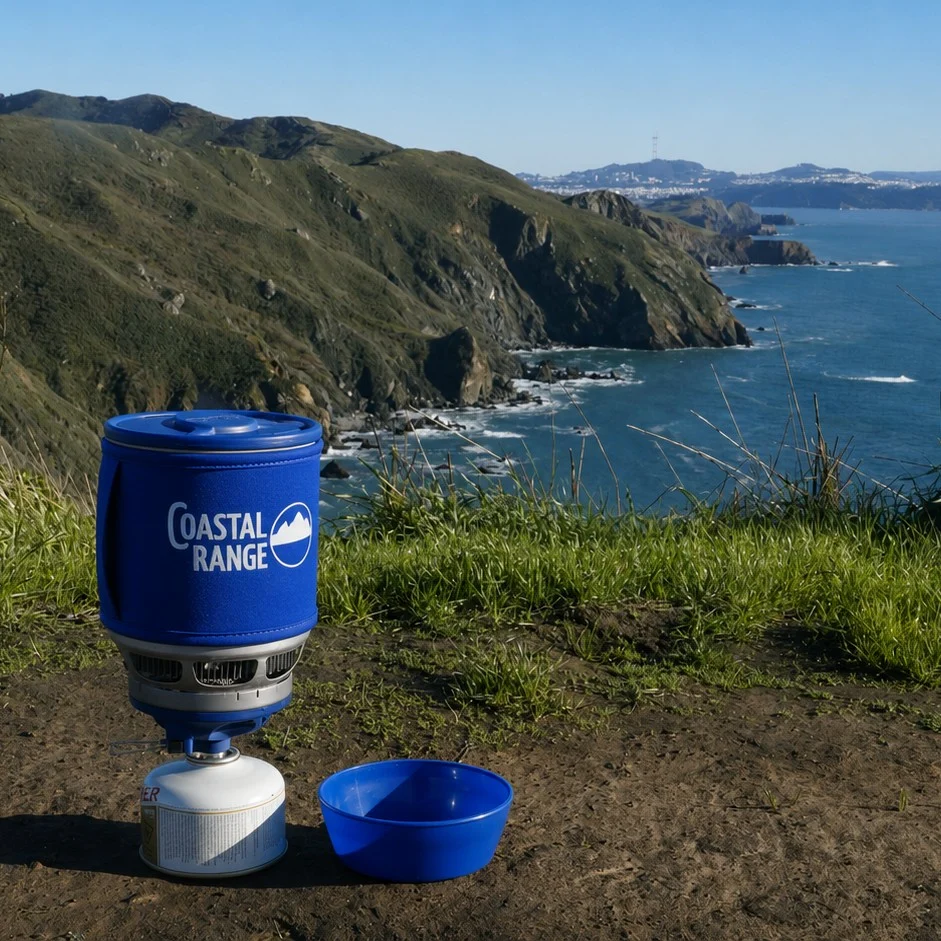
I bought the Coastal Range The Backpacker for $149, plus import taxes, and used it for a week of hiking and camping in the Lake District while cooking for a family of four. Coastal Range did not supply the stove, know it was being tested or have any influence over this review. I chose it because the 9.2 oz integrated system was attracting considerable attention and promised unusually generous capacity for its weight.
Quick verdict
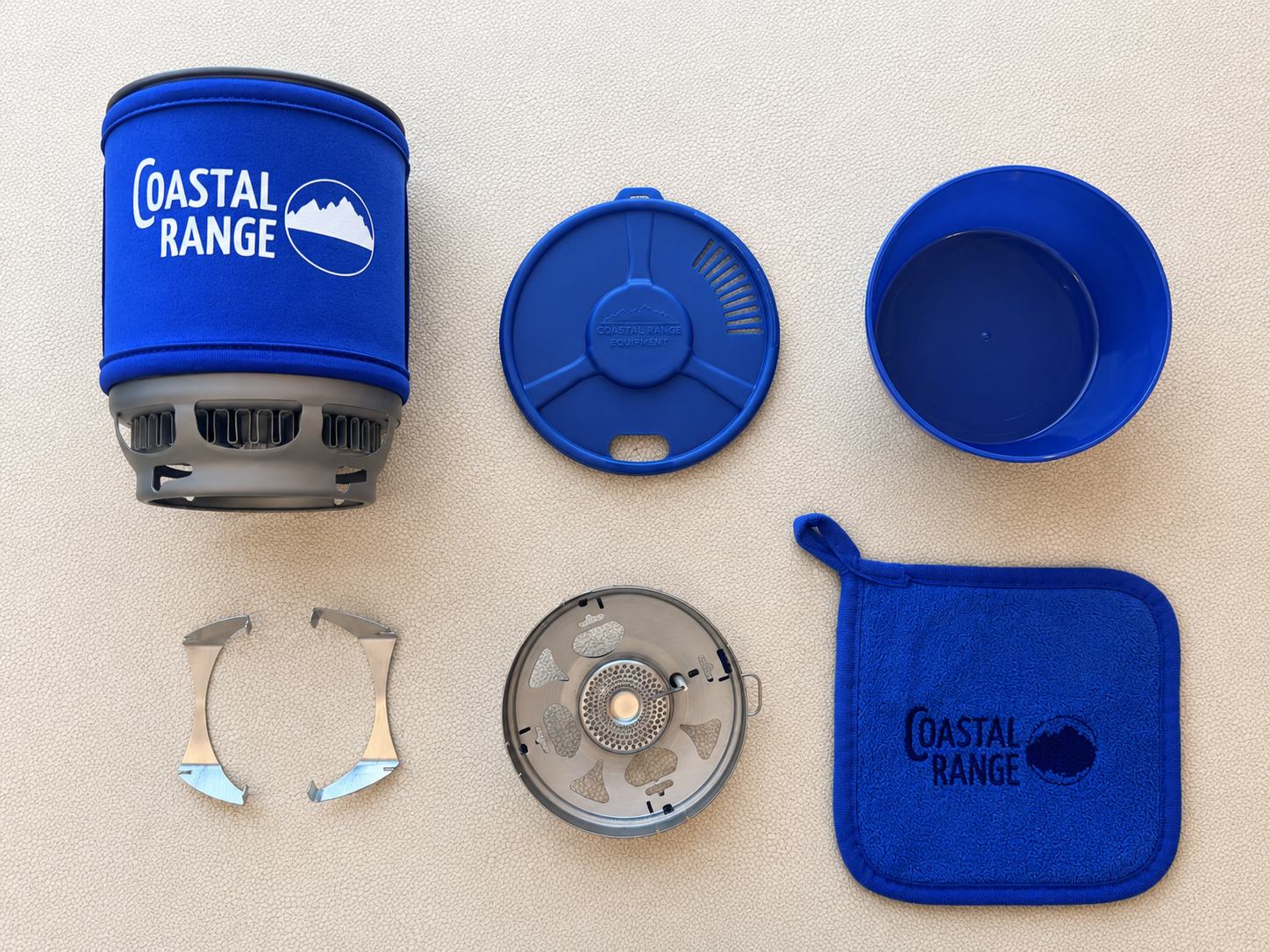
The Backpacker comes with nearly everything needed for an integrated stove setup. Its 1.2 L pot, burner, lid, bowl and pot supports weigh 260 g, everything nests with either a 100 g or 230 g EN417 canister, and repeated 500 mL boils took about 2 minutes 20 seconds in calm conditions. That capacity helped when preparing water for four people, although it still took multiple batches. It is mostly a water boiler, and a very quick one. The narrow control range and concentrated heat make thick food easy to scorch. The blue insulating cozy also became too hot for comfortable bare-handed pouring immediately after a hard boil. That handling problem keeps the score at 4.5.
What works
- Complete 1.2 L system weighs 9.2 oz or 260 g
- Repeated 500 mL boils around 2 minutes 20 seconds
- Useful capacity for couples, families and small groups
- One-click Piezo ignition worked throughout the test
- Included supports accept ordinary backpacking cookware
- Good fuel efficiency at roughly 4 to 5 g per 500 mL boil
- Everything nests with a 100 g or 230 g canister
- Burner and accessories are included in the $149 package
What to know
- The insulating cozy becomes uncomfortably hot after boiling
- Limited fine control makes the integrated pot poor for thick meals
- No pressure regulator for cold weather or a nearly empty canister
- Some minimalist kits and smaller integrated systems weigh less
- Top-heavy unless the fuel canister sits on firm, level ground
- No canister stabilising legs or dedicated windscreen included
- Piezo ignition is a likely long-term wear point
The verdict
The numbers are the reason to buy The Backpacker. A 1.2 L heat-exchanger pot, burner, bowl, strainer lid and detachable pot supports weigh 260 g together. Most integrated systems at this weight provide less cooking capacity, and the larger pot avoids an endless sequence of tiny breakfast boils.
Cooking for four exposed both sides of that design. The pot served two people at a time. Preparing a second quick boil was more practical than juggling a small solo vessel. Oatmeal, coffee and dehydrated meals were easy. Thick food cooked directly in the pot needed constant stirring because the burner concentrated heat in the centre.
The cozy was the main problem. Coastal Range describes it as insulating, but immediately after a rolling boil it was too hot to hold comfortably with bare hands. Pulling sleeves over the hands solved it, though the pot should be safer and easier to pour.
How I tested The Backpacker
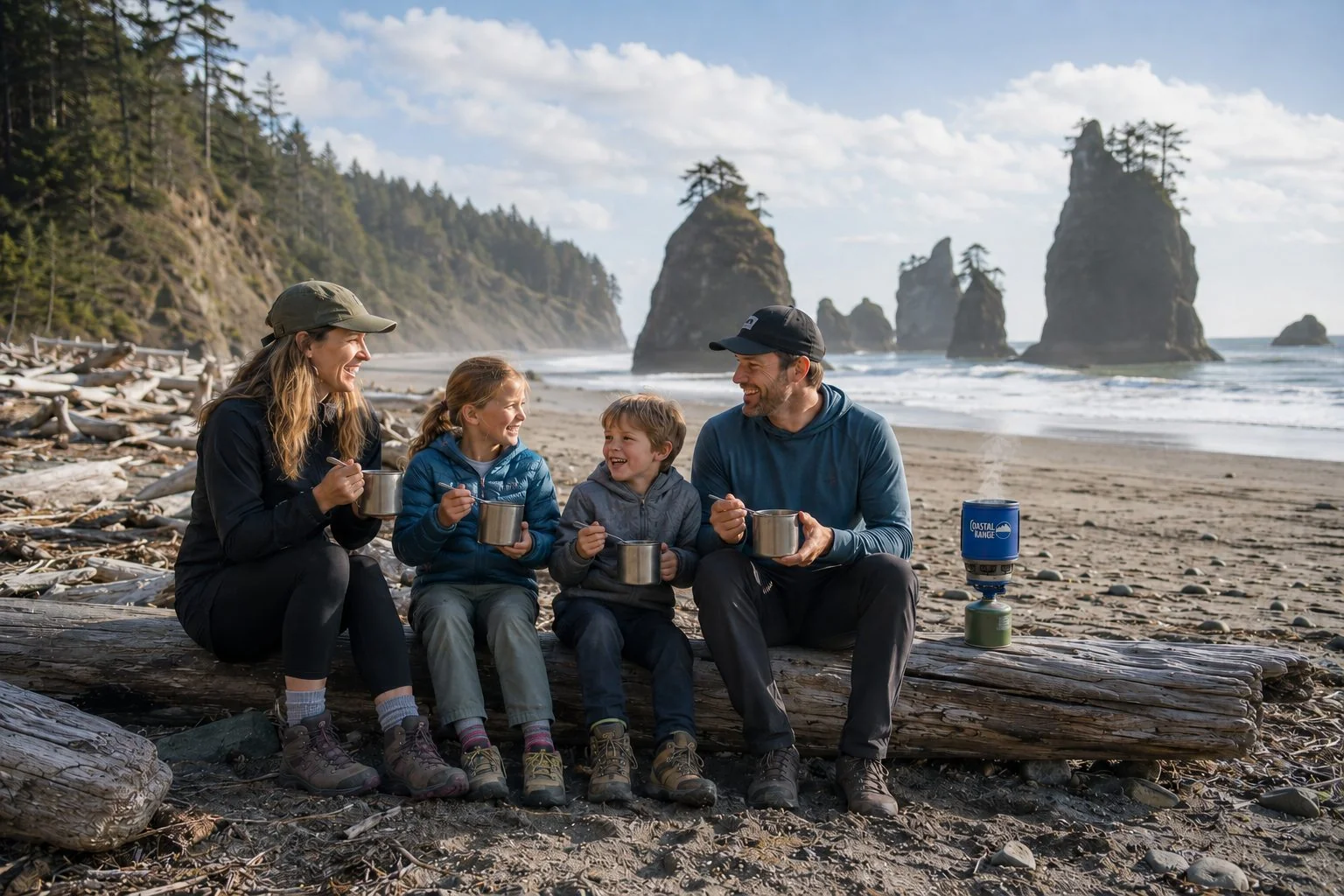
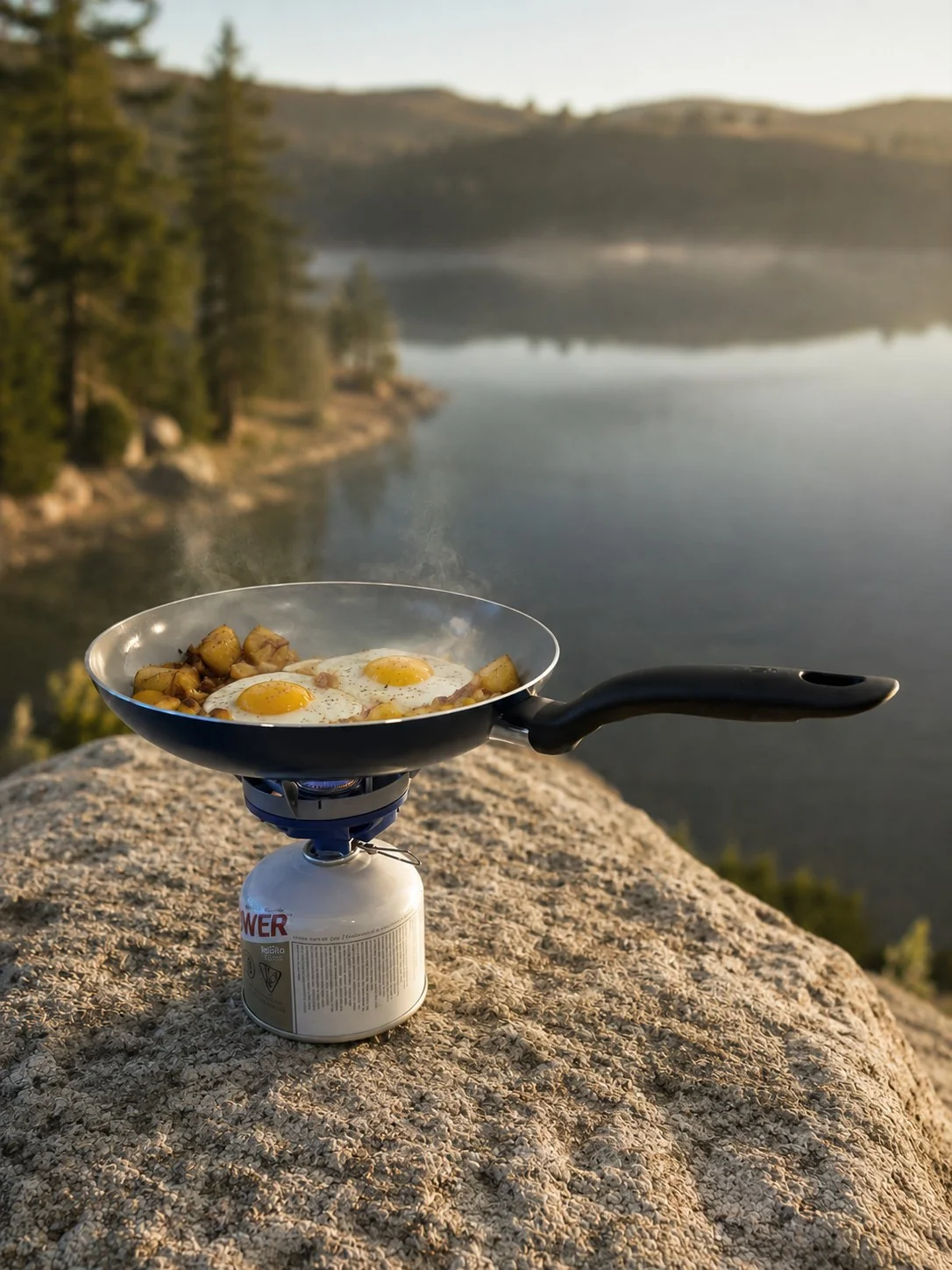
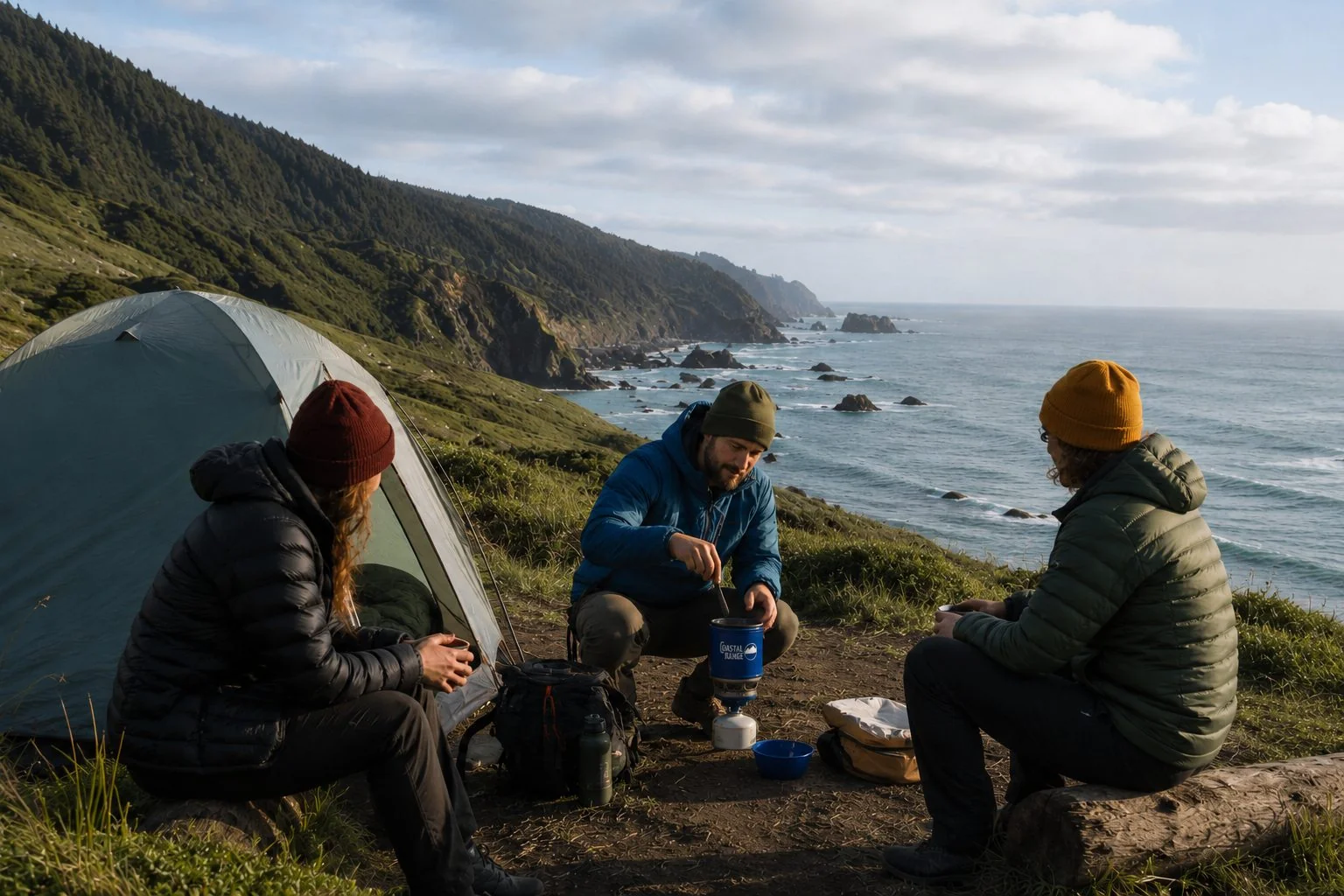
I carried the stove for a week of hiking and camping in the Lake District and used standard threaded EN417 isobutane-propane canisters. It handled the family's water for dehydrated meals, oatmeal and coffee, plus an egg cooked in a small titanium skillet on the supplied pot supports.
The field test covered exposed hills, sheltered camps and the damp, changeable weather typical of the region. I also ran repeatable boil checks using 500 mL of water starting at 50°F, or 10°C, in calm conditions. Those tests consistently finished at roughly 2 minutes 20 seconds.
The week covered setup, handling, boil performance, fuel use and basic pack durability. Long-term valve, seal and Piezo reliability will take much longer to judge.
Setup and ignition
From packed to lit took less than a minute. The burner screws onto any standard EN417 Lindal-valve canister, the pot twists into the burner and the built-in Piezo lights the flame with one press. Ignition worked every time during the test.
The long wire valve control was easy to use with light gloves. Extinguishing the stove required only turning it fully clockwise. Packing demands slightly more attention: the burner needs wrapping in the supplied microfiber cloth and nesting in the correct position before the lid closes neatly.
Boil speed and fuel efficiency
Coastal Range publishes an approximately 2.5-minute boil time for 500 mL. My repeatable calm-weather result was slightly quicker at about 2 minutes 20 seconds. Light wind made little difference because the burner sits close to the heat-exchanger fins, while sustained wind extended the wait noticeably.
Fuel use was approximately 4 to 5 g per 500 mL boil in favourable conditions. The manufacturer specifies a 5,900 BTU/hr burner and estimates about 23 L of boiled water from a full 230 g canister under its test conditions. Real consumption will vary with water temperature, wind, elevation and canister pressure.
There is no pressure regulator. Output softened as the canister emptied and in temperatures near freezing. That is normal for a simple upright canister stove, but it makes The Backpacker a less convincing winter choice than a regulated or remote-canister system.
Cooking control and capacity
The 1.2 L pot gives couples room for a proper shared boil and reduces the number of cycles needed for a family. The strainer lid and lower bowl both earned their place during ordinary camp meals.
Flame control is less capable. The useful adjustment sits in a narrow band between a hard boil and off. Oatmeal could be managed with attention, but chilli, cheesy pasta and other dense food risk scorching at the central hot spot. Careful simmering calls for a broader burner with better low-output control.
The clip-in pot supports add some flexibility. A small titanium skillet worked for frying an egg, although external cookware can occassionally slide and needs closer supervision than the locked integrated pot. I would not use anything larger than an 8 or 9-inch pan.
Stability, wind and safe use
The integrated pot locks firmly to the burner, but the whole assembly remains a tall 1.2 L vessel balanced on a fuel canister. It felt top-heavy on uneven rocks and does not include folding canister legs. A flat, non-combustible surface is essential, particularly around children.
No close-fitting metal windscreen is supplied, and one should not be improvised around the canister because reflected heat can dangerously increase canister temperature. A distant natural barrier or properly positioned pack can reduce wind without enclosing the fuel.
Like every combustion stove, The Backpacker produces carbon monoxide. It must not be used inside a closed tent, vehicle or other enclosed sleeping space. Fire-ban rules vary by location and can change quickly; an on/off valve often makes canister stoves permissible when open fires are banned, but users still need to check the exact local restriction before lighting it.
Weight and packability
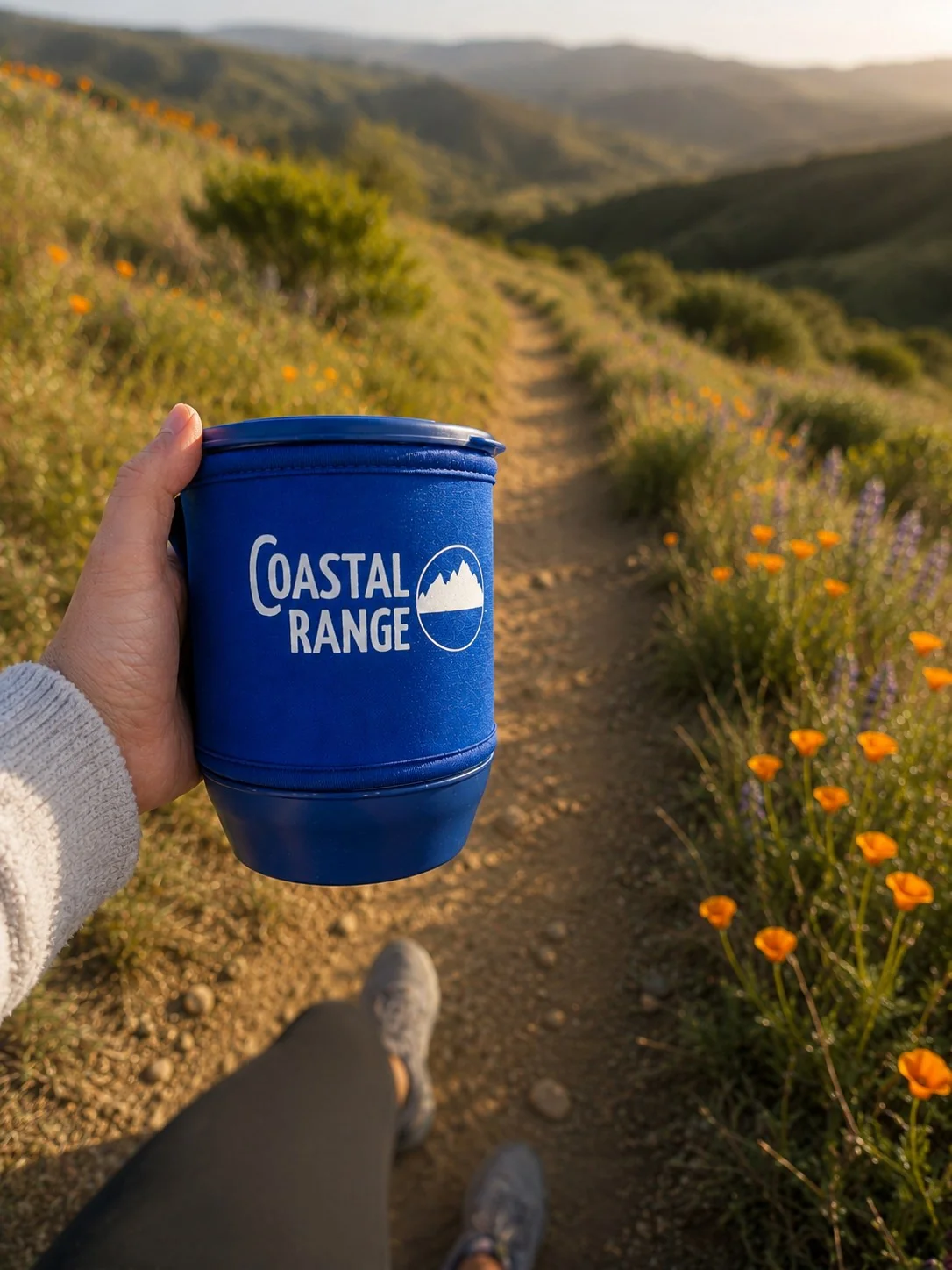
The published complete-system weight is 9.2 oz or 260 g, excluding fuel and the microfiber cloth. Packed dimensions are 4.75 inches in diameter by 6.25 inches high. Both 100 g and 230 g canisters fit inside with the burner and supports.
The figure is low for an integrated system with a 1.2 L pot. Minimal burners paired with small titanium pots can weigh less, and so can a few smaller integrated systems. Coastal Range has put a useful amount of pot and included equipment into the 260 g allowance.
The bowl shields the heat-exchanger fins in transit, while the cloth keeps the burner from scratching the pot. The thin aluminium cooled within a few minutes and the clean-burning canister fuel left no soot to contaminate the pack.
Build quality and durability
The hard-anodised aluminium pot and heat exchanger completed repeated heating and cooling without warping. Burner threads met the canisters cleanly, the valve remained smooth and the detachable supports stayed secure. Carrying the sealed nested system kept trail grit away from the critical components.
The blue cozy picked up dirt and the exposed heat-exchanger fins could bend if the pot were dropped hard onto rock, although neither affected this test. The Piezo is the part I expect to fail first over years of use because small stove igniters are inherently exposed to heat, impacts and repeated cycling. A backup lighter should always travel with the stove.
Coastal Range provides a three-year limited warranty against defects in materials and workmanship. The company states that the stove was designed and tested in California, but does not publish a country of manufacture on its current product page.
Value and alternatives
At the $149 price paid, The Backpacker feels complete. Buyers receive the burner, large integrated pot, lid, bowl, cookware supports and cloth instead of discovering that useful parts are optional extras. Import taxes reduce the value for buyers outside the United States, where Coastal Range does not currently advertise direct shipping.
A minimalist screw-on burner and separate titanium pot remain better for solo hikers chasing the lowest possible weight. A regulated integrated stove is better for sustained cold-weather performance. The Backpacker is strongest for couples, small groups and weight-conscious families who mainly boil water but appreciate the ability to use a frying pan occasionally.
I would buy it again at full price. The hot cozy needs improvement, but the combination of capacity, speed, nesting and included accessories is unusually persuasive.
Coastal Range The Backpacker specifications
| Stove type | Integrated upright canister stove |
|---|---|
| Tested fuel | EN417 Lindal-valve isobutane-propane canister |
| System weight | 9.2 oz / 260 g, excluding fuel and pack towel |
| Pot capacity | 1.2 L |
| Published boil time | Approximately 2.5 minutes for 500 mL |
| Measured boil time | Approximately 2 minutes 20 seconds for 500 mL in calm conditions |
| Heat output | 5,900 BTU/hr |
| Measured fuel use | Approximately 4 to 5 g per 500 mL boil |
| Packed size | 4.75 x 6.25 in / 12.1 x 15.9 cm |
| Pot | Hard-anodised aluminium with aluminium heat exchanger |
| Burner | Stainless steel, brass and aluminium in a nylon housing |
| Ignition | Built-in Piezo |
| Pressure regulator | No |
| Included | Burner, pot, cozy, strainer lid, bowl, pot supports and microfiber cloth |
| Designed and tested in | California, USA |
| Country of manufacture | Not stated by the manufacturer |
| Warranty | Three-year limited warranty |
| Price paid | $149 plus import taxes |
| Manufacturer involvement | None |
Scoring breakdown
Sources & context
What we checked
This review is based on Adam's week-long Lake District field test and repeatable boil measurements. We checked the system weight, capacity, packed dimensions, burner output, materials, fuel compatibility, included parts, warranty and published boil performance against Coastal Range Equipment's current product documentation.
Editorial disclosure: Adam bought The Backpacker with his own money for $149, plus import taxes. Gear Reviews received no payment, free product or editorial approval from Coastal Range Equipment.