
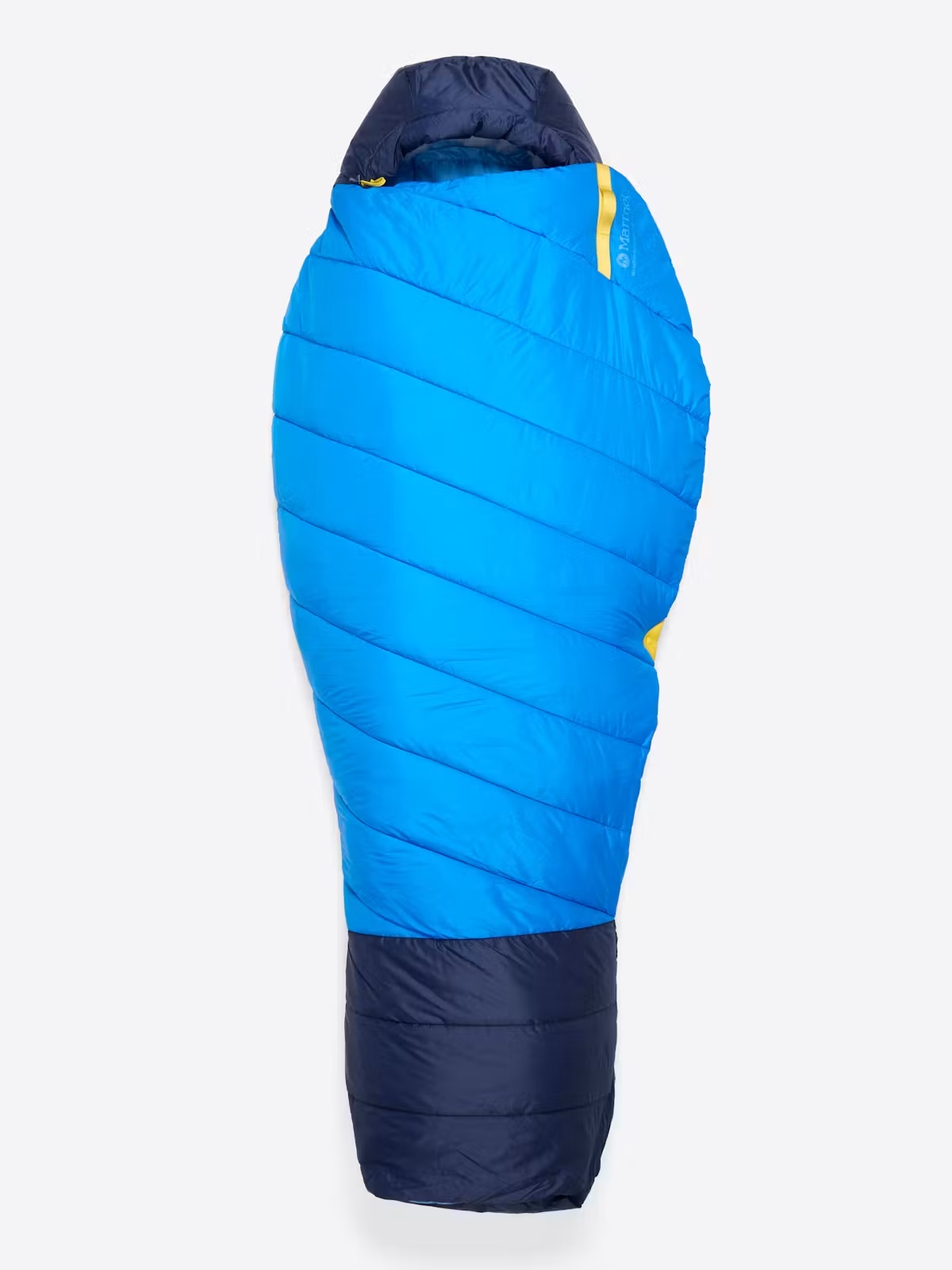
I bought the regular-size Marmot Wraptor 30 Synthetic with my own money for $279 and slept in it for 90 nights during a three-month spring and summer camping trip in Quebec. I also used it for several weeks aboard a boat in the Mediterranean, sleeping in the cockpit during night passages. Marmot did not supply the bag, know a test was taking place or have any influence over this review.
Quick verdict
The Wraptor 30 Synthetic is the most comfortable mummy-shaped bag I have used for side sleeping and regular movement. Its zipperless flaps feel more like bedding than camping equipment, the foot vent makes temperature control immediate and the synthetic fill stayed warm through condensation, damp mornings and salt-laden air. Marmot's ISO 2°C comfort figure is credible, although about 4°C was the relaxed sweet spot for this generally warm sleeper. Around freezing, movement can lift the flaps or release the shoulder magnet and admit a small draft. At roughly 1.24 kg with a 19 x 41 cm compression sack, it is also a bulky choice for long-distance travel.
What works
- Snag-free zipperless design
- Excellent freedom for side sleepers
- Strong Fidlock shoulder magnet
- Outstanding foot vent
- Warm-when-wet synthetic insulation
- Quick drying and easy care
- 100% recycled shell and lining fabrics
What to know
- Approximately 1.24 kg in regular size
- Consumes considerable pack space
- Hard movement can release the shoulder magnet
- Less draftproof near freezing than a zipped mummy bag
- Hip snap takes practice in darkness
The verdict
The Wraptor fixes a very ordinary problem. Sleeping bag zips snag, restrict movement and force every temperature adjustment through one narrow opening. Marmot replaces the zip with two overlapping insulated flaps, held by a Fidlock magnet at the shoulder and a snap at the hip.
In use, it feels like pulling a duvet across the body. I could cover both shoulders, fold the outer flap down, push it aside or sleep partly on top of it. Entry and exit took seconds, with no zipper to find at 2am.
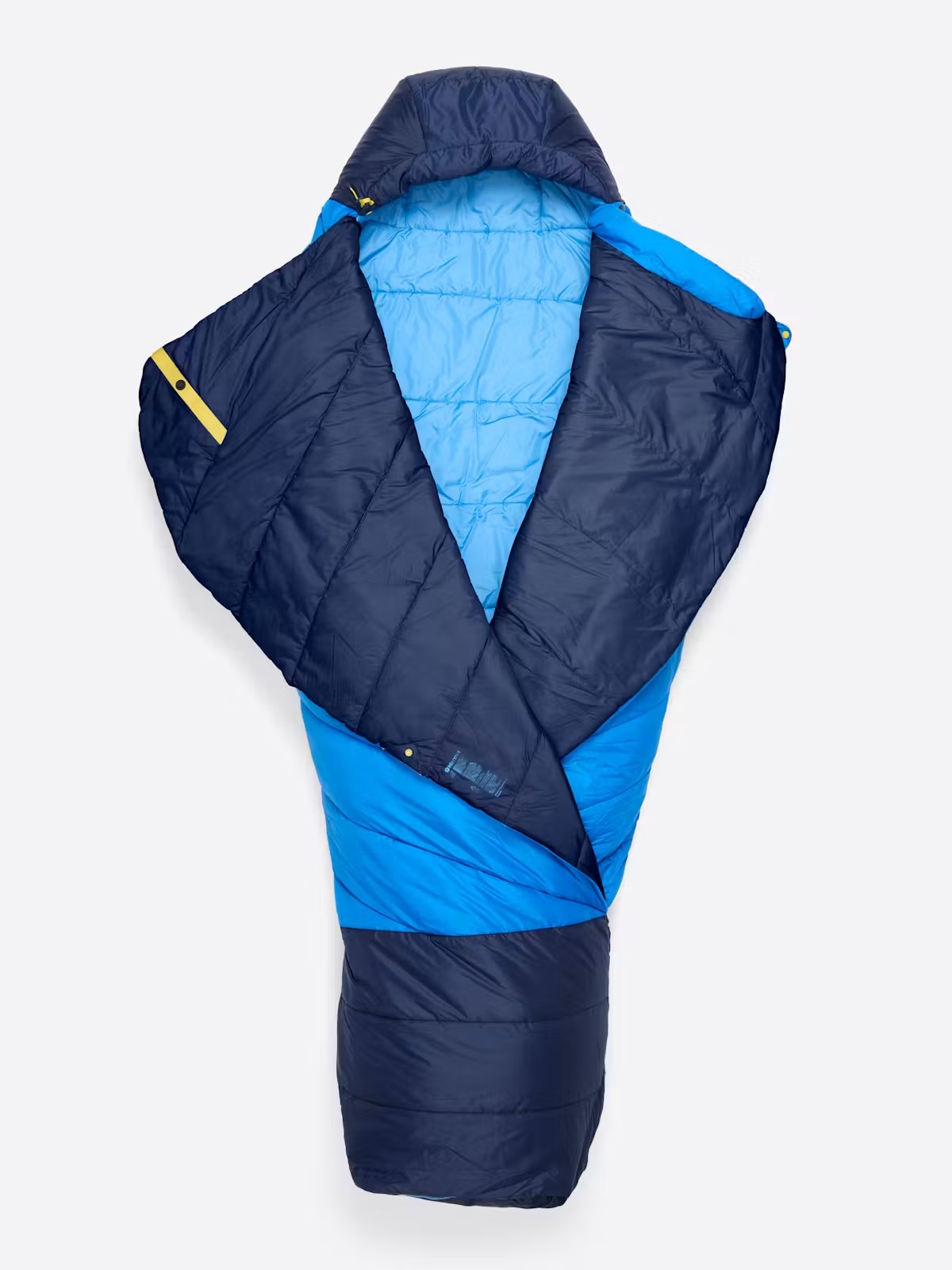
The trade-off appears at both ends of the use case. In warmth, the bag is exceptionally adaptable. Near freezing, a hard roll can disturb the seal. In a backpack, the synthetic fill consumes considerably more room than an equivalent down bag. The design is not universally better, but it is decisively better for campers who value movement, venting and damp-weather tolerance.
How I tested it
The main test covered 90 nights across Quebec, including the Gulf of St Lawrence, Saguenay National Park and Parc national des Hautes-Gorges-de-la-Rivière-Malbaie. The bag experienced the moisture sleeping equipment actually sees inside shelter: condensation, damp ground, humid air, repeated compression and hurried morning packing.
Several additional weeks aboard a Mediterranean cruising boat added salt air, warm nights and cockpit sleeping during night passages. I generally sleep warm, so the test focused as much on shedding heat as retaining it.
Zipperless comfort
The Wraptor offers more usable movement than a traditional mummy bag. Removing the rigid zipper track lets the upper body and knees shift without pulling against one fixed edge. Side sleeping felt natural, and I could bend my knees and roll over without becoming tangled.
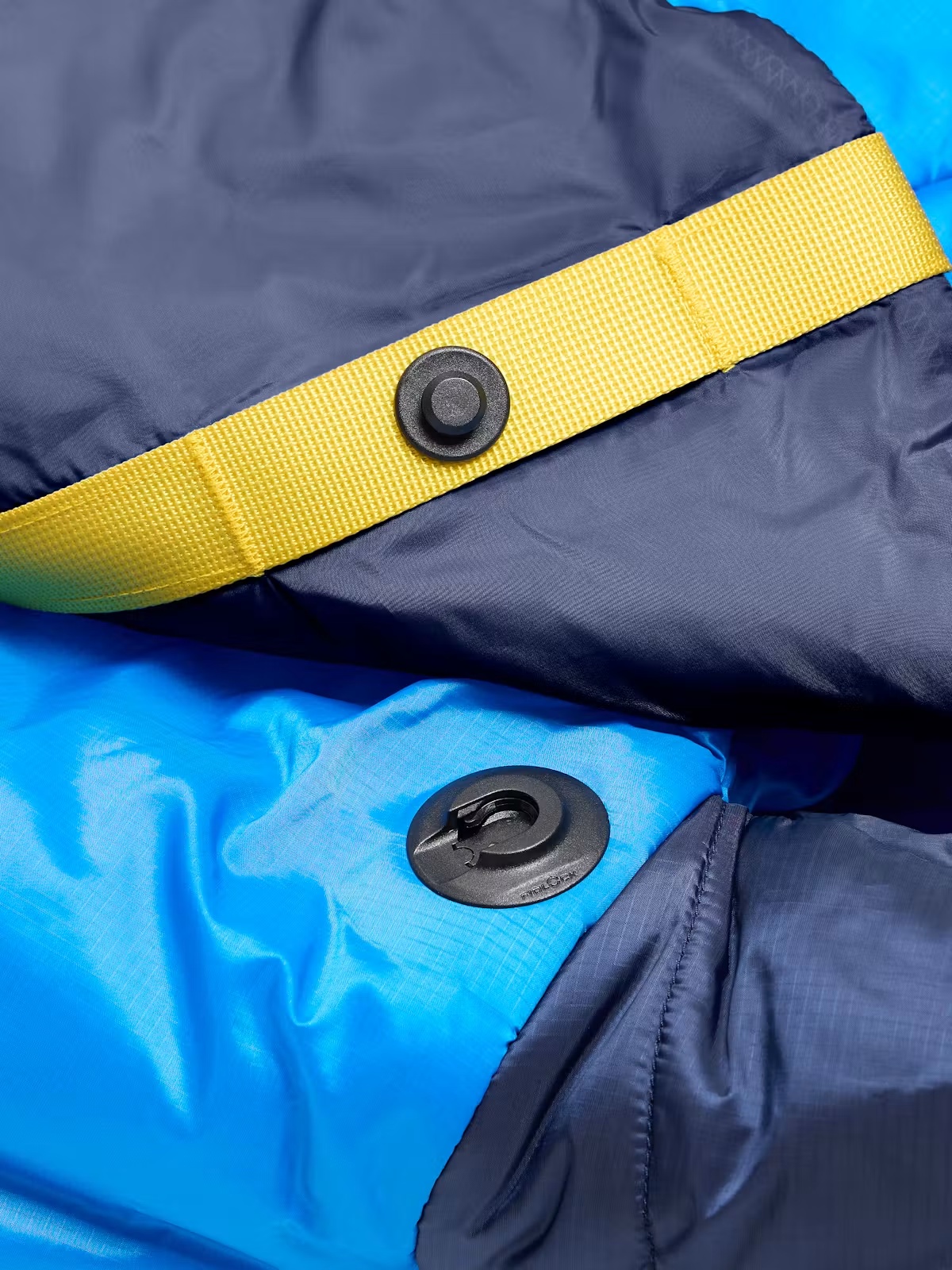
The shoulder magnet finds itself when the two parts come close. The hip snap prevents the flap wandering, although locating it in darkness took a night to learn. A forceful roll could pop the magnet loose, but it was easy to pull back into place.
Warmth and draft control
Marmot gives the Wraptor an ISO tested comfort rating of 2°C and a limit of -3°C. The comfort figure felt credible, but around 4°C was where I could stop thinking about the bag entirely. The torso, legs and feet retained heat evenly.
The shoulder was more variable. With the magnet engaged and flaps arranged properly, the seal worked surprisingly well. Around 0°C, movement-created drafts were enough to disturb sleep. That is the difference between a laboratory limit and relaxed comfort for an active sleeper. In sustained freezing conditions, I would choose a conventional mummy bag with a full zipper and tighter face seal.
Temperature control
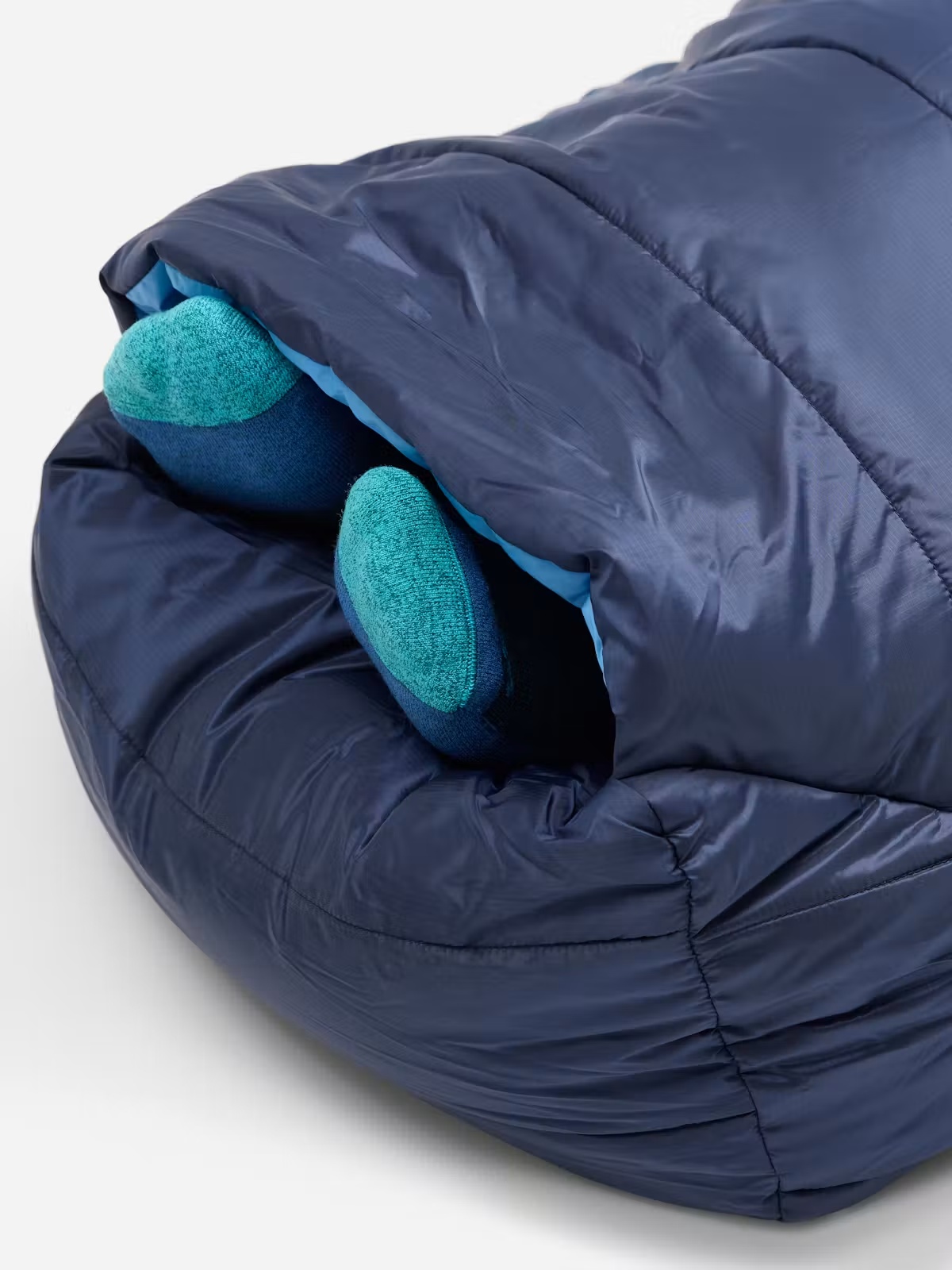
The envelope-style foot vent is brilliant. Pushing both feet through dumped heat without changing the upper arrangement, and returning them inside was just as easy. Folding down the outer flap provided smaller changes around the chest.
Damp conditions and care
The HL-ElixR Eco synthetic insulation handled condensation, humid mornings and salt air without losing useful loft. Even when the shell felt damp, the fill remained warm. Hanging the bag in morning sun generally dried it within about an hour.
The bright blue sections collected trail grime, but normal washing removed it. Marmot permits cold machine washing with liquid detergent on a gentle cycle and low tumble drying, making care less intimidating than with a delicate down bag.
Weight and packability
The regular bag weighs approximately 1.24 kg. Marmot includes a compression sack and larger storage bag; the compression sack is essential for backpacking. The published sack size is 19 x 41 cm.
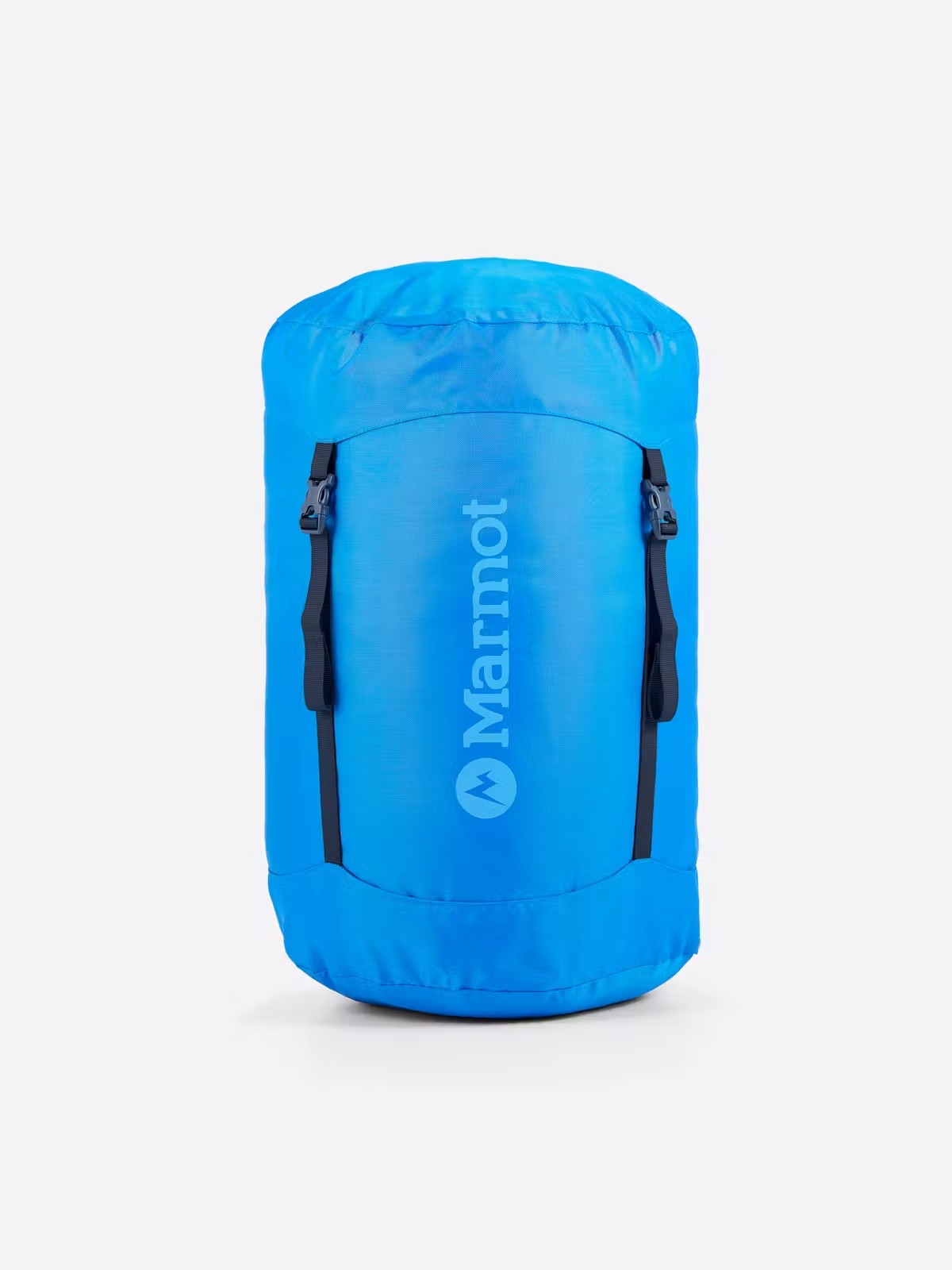
That is realistic for short backpacking trips, but less convincing for a thru-hike. The bag's sweet spot is a weekend, car camp, basecamp or one-to-two-night hike where sleep comfort matters more than minimum volume.
Durability after 90 nights
The test produced no holes, loose stitching, broken closures or obvious insulation migration. The shell tolerated rough wooden shelter floors, repeated packing and dog paws without a tear. Removing the zipper also removes a common failure point.
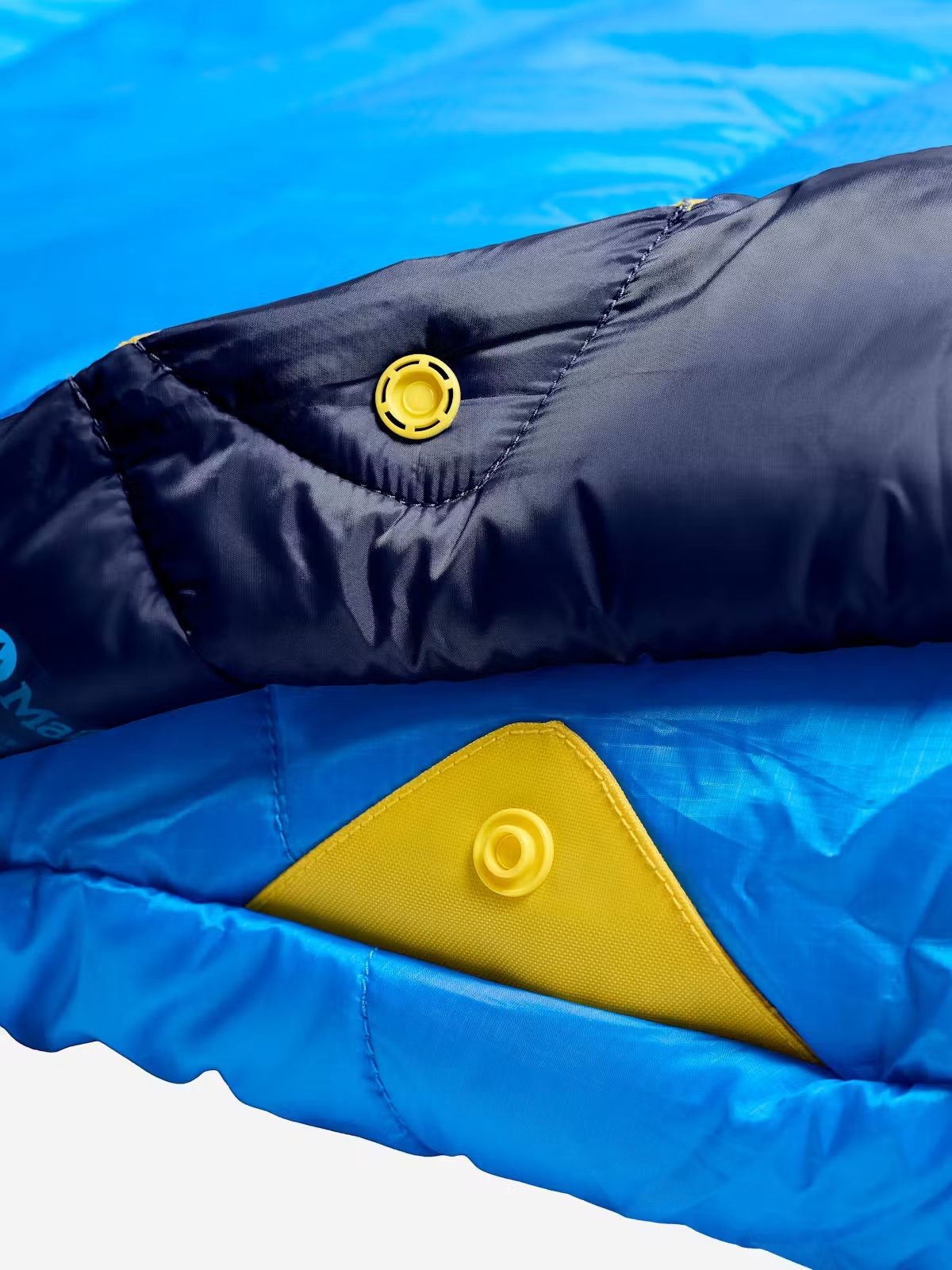
Over thousands of cycles, the fabric around the hip snap is what I would watch first. There was no sign of stress during this test. The bag should be stored loose in the included storage sack rather than compressed between trips.
Who should buy it
The Wraptor suits side sleepers, active sleepers, claustrophobic campers and anyone who despises snagged zippers. It also makes sense for damp camps and regular users who value easy washing. Sierra Designs' Frontcountry Bed and Zenbivy Bed are the closest bed-like comparisons.
Ounce-counting thru-hikers and people expecting repeated freezing alpine nights should look elsewhere. I would buy the Wraptor again, although for long-distance backpacking I would save for the down version to reduce bulk.
Specifications
| Tested model | Marmot Wraptor Synthetic 30°, regular |
|---|---|
| Temperature rating | 30°F / -1°C |
| ISO comfort | 36°F / 2°C |
| ISO limit | 26°F / -3°C |
| Manufacturer weight | Approximately 2 lb 11.6 oz / 1,236 g |
| Insulation | HL-ElixR Eco synthetic sheet |
| Shell and lining | 100% recycled polyester fabrics |
| Closure | Overlapping flaps, Fidlock shoulder magnet and hip snap |
| Stuff sack | 7.5 x 16.1 in / 19 x 41 cm |
| Price paid | $279 |
| Test status | Purchased by reviewer; 90 camping nights plus Mediterranean boat use |
| Manufacturer involvement | None |
Scoring breakdown

Sources & context
What we checked
This review is grounded in Adam's 90-night test. We checked the temperature ratings, insulation, closure system, materials, packed dimensions and care guidance against Marmot's published specifications.
Editorial disclosure: Adam bought this Wraptor 30 Synthetic with his own money for $279. Gear Reviews received no payment, free product or editorial approval from Marmot.