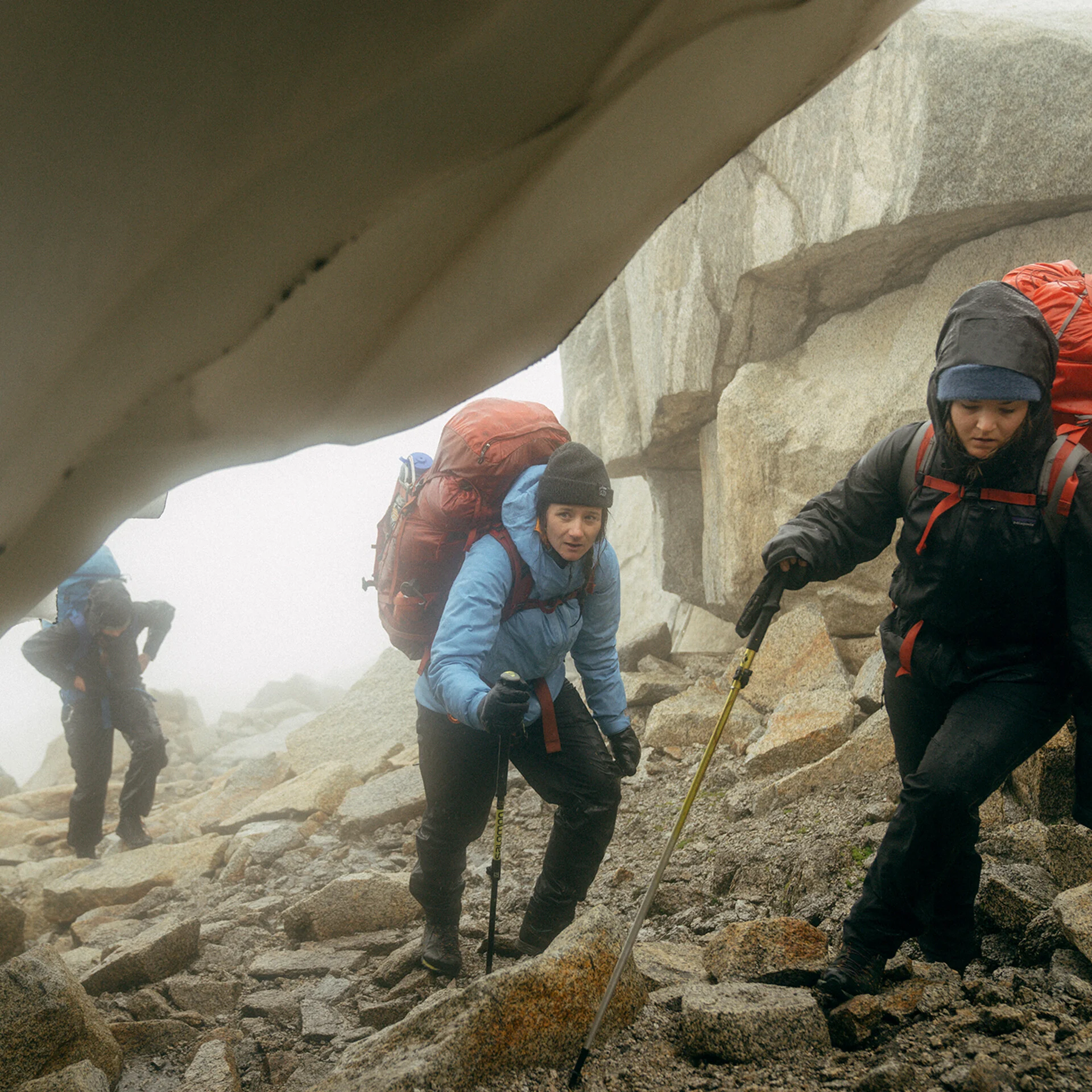
It's easy to like a waterproof jacket when it's hanging in a shop. The more revealing bit comes a few hours into sideways rain, when the hood keeps slipping over your eyes and you want to open a zip without soaking your fleece. Spending more can buy a lighter or tougher shell, but we still want the ordinary things to work well.
We've worn the Patagonia Torrentshell 3L, Arc'teryx Beta SL and Helly Hansen Odin Ultimate Infinity through long wet walks in Quebec and winter weather in Cornwall. Those trips left us with three recommendations for different budgets and outings. The Torrentshell is our starting point for most hikers; below, we'll explain when we'd pay more for the other two.
The jackets we'd choose
| For your hikes | Our pick | Why we'd take it | The compromise |
|---|---|---|---|
| Most walking and backpacking | Patagonia Torrentshell 3L | Dependable rain protection, good hood and strong value | A hip belt covers much of the hand pockets |
| A lighter premium shell under a pack | Arc'teryx Beta SL | 340 g listed weight, useful pit zips and accessible hand pockets | High price; the hood needs cinching without a helmet |
| Cold rain and rough mountain trips | Helly Hansen Odin Ultimate Infinity | Strong storm protection, high pockets and a tough build | About 580 g in our Large, stiff and bulky to pack |
Where we've worn them
Adam wore the Torrentshell for roughly 150 km during a three-month Quebec trip covering about 900 km in total. Four prolonged downpours, loaded-pack walking and strong wind on the Gulf of St Lawrence gave it plenty to do. It cost him £160.
The Odin spent 90 days hiking, camping and biking across Quebec, usually beneath a loaded Hyperlite Mountain Gear Unbound 40. Its longest wet spell ran close to three days. Pack abrasion, rock, trees and gravel left no holes or functional damage. Gear Reviews paid £450 for it.
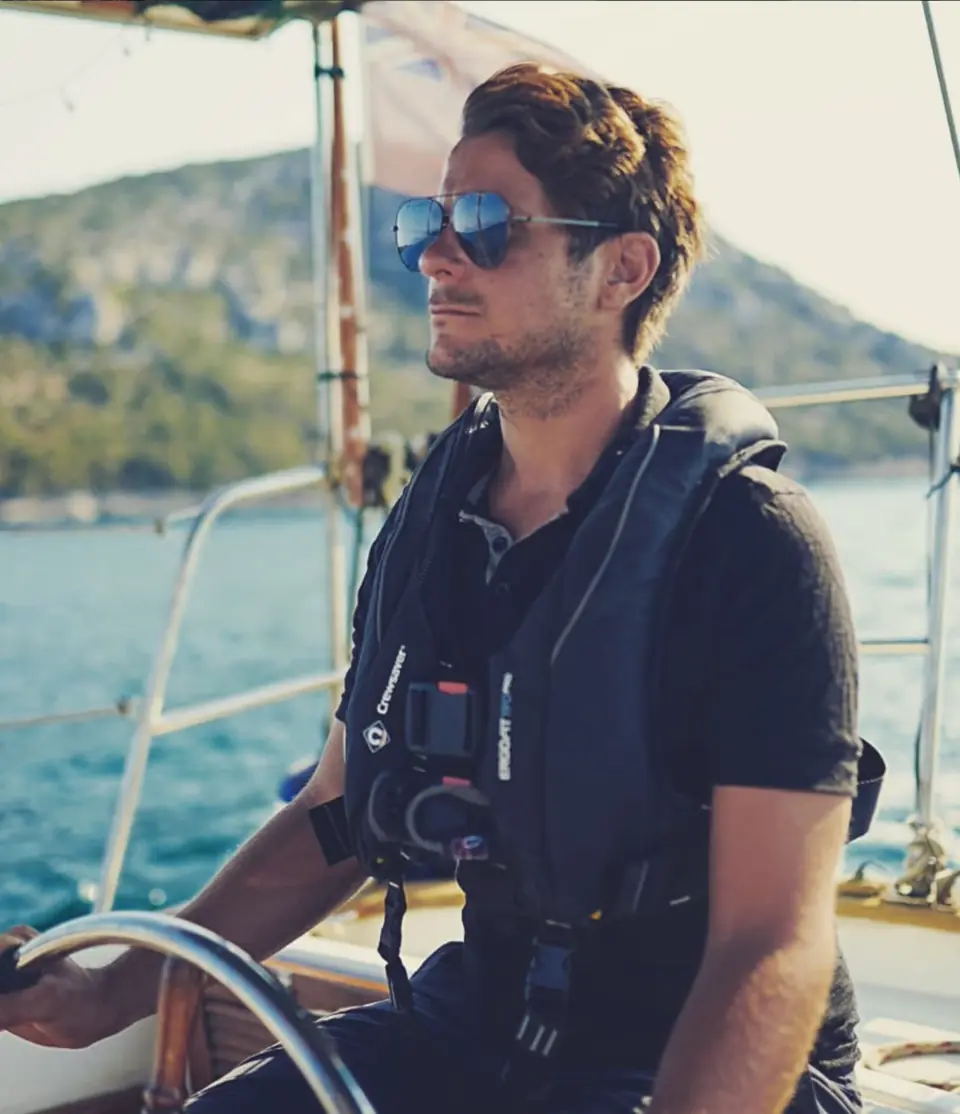
Andy wore the borrowed men's Beta SL on a two-week Cornwall camping and hiking trip with Adam in January 2026. Cold rain, exposed coastal wind and an extended spell of driving sleet tested its protection; loaded climbs and camp chores tested the fit and ventilation. Andy's base layer and fleece stayed dry.
The recommendations below come from those outings. Manufacturer documents supply the construction and listed specifications, while the full reviews carry the detailed trip notes.
Patagonia Torrentshell 3L: our pick for most hikers
The Torrentshell does the job we'd want from a main waterproof without making the purchase feel like a specialist mountain-equipment decision. Adam's jacket went hiking, sightseeing and travelling around Quebec for three months. When the rain became heavy enough to keep it on for hours, his layers stayed dry, including beneath the rucksack straps.
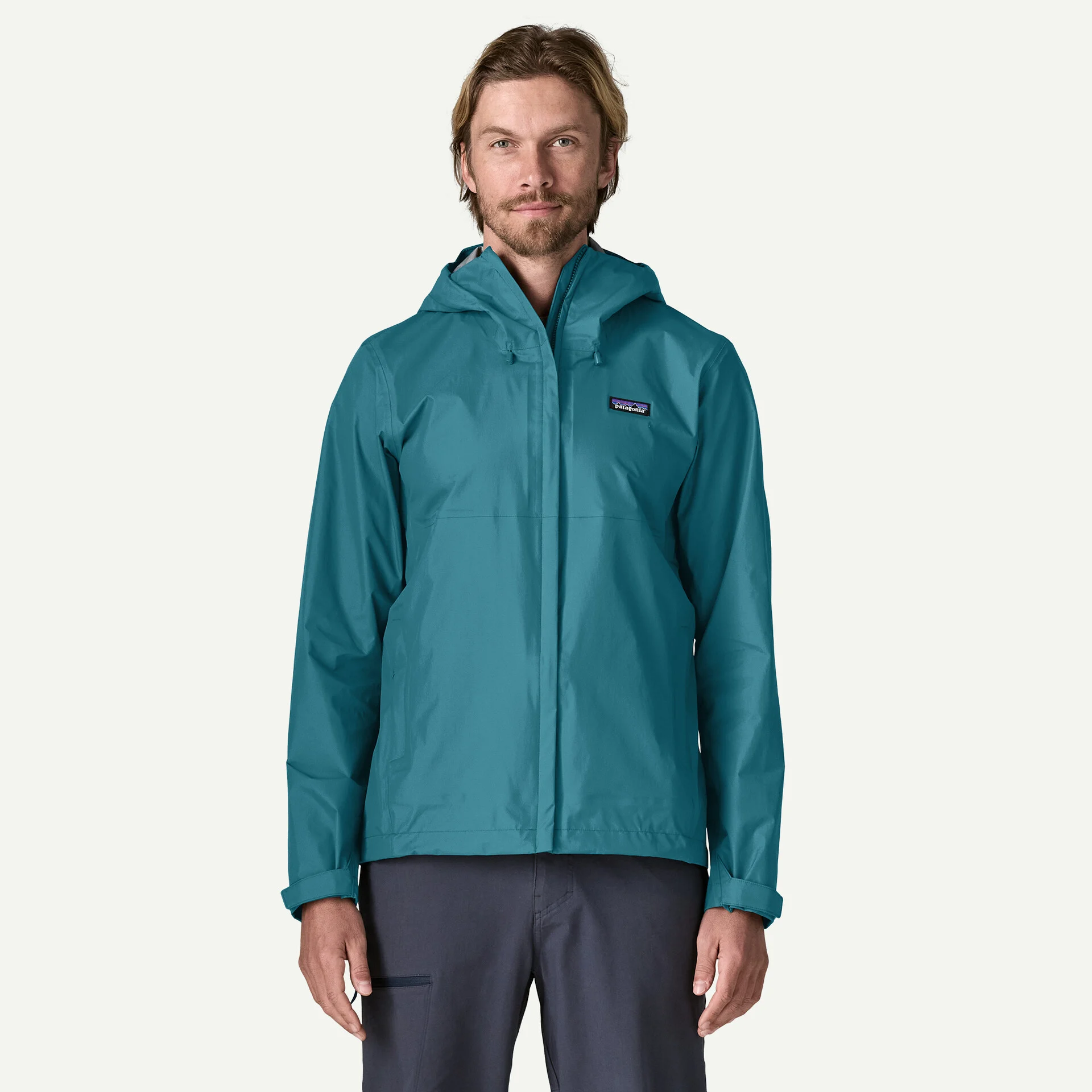
We'd happily take it on a long walking trip. The fabric feels substantial, the seams survived repeated packing and backpack wear, and the hood stayed settled in strong wind. At the £160 Adam paid, we'd find it difficult to justify spending substantially more just to get dependable rain protection.
Patagonia lists a 400 g weight for the men's jacket and a three-layer H2No construction. The nylon face is backed by a waterproof membrane and inner tricot fabric. In use, that inner surface was pleasant over short sleeves, without the sticky feel that can make a wet-weather summer walk even less comfortable. [1]
It still became clammy on hard climbs. The long pit zips were much more useful at that point than waiting for the fabric to deal with all the heat. Opening them let Adam cool down while keeping the front closed, and the cut allowed a good reach without dragging the hem above his pack belt.
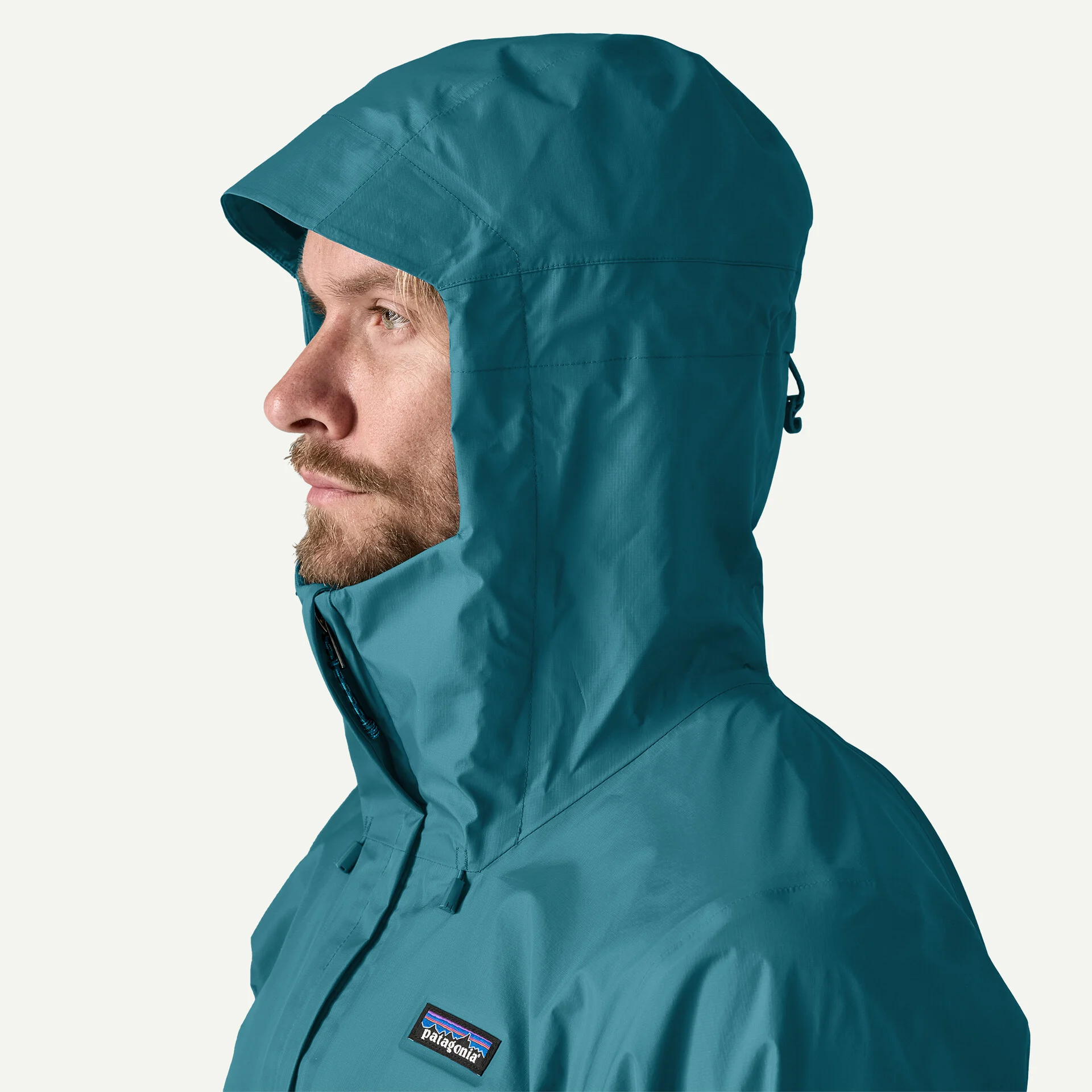
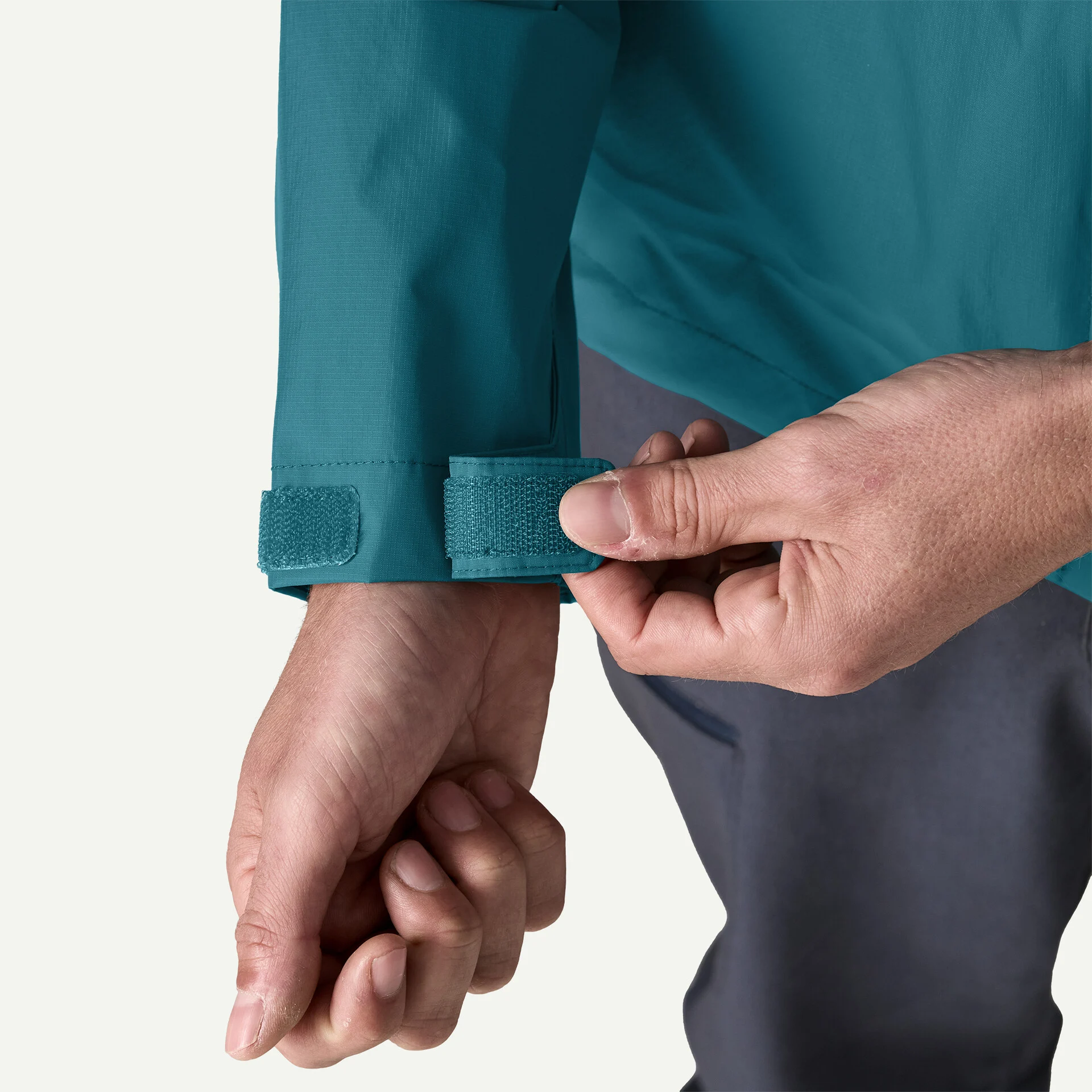
The hood is a particular reason we'd choose it for hiking. It has front and rear adjustment, turns with the head and leaves a useful view of the path. Andy had more spare hood volume to manage in the helmet-compatible Beta SL. If you're walking without a climbing helmet, the Torrentshell's arrangement is convenient.
The pockets are less convenient. A large rucksack's hip belt runs across much of both hand pockets, making access awkward and pressing against anything bulky inside. There is no chest or internal stash pocket to move a phone into. We'd keep quick-access items in the pack's belt pockets, but we'd prefer the Beta SL's arrangement for anyone who uses their jacket pockets throughout the day.
By the end of the trip, the outer fabric was beginning to hold water during prolonged saturation. The layers underneath remained dry, while the jacket felt heavier and less breathable. It was ready for a wash and attention to the water-repellent finish. There was no peeling, bubbling or delamination.
We'd buy the Torrentshell for regular walking, backpacking and travel. Its slight stiffness and blocked pockets are easier to accept when the rain protection, hood and durability have worked this well. For most of our hiking, we'd keep the saving over a premium shell.
Arc'teryx Beta SL: our lighter premium pick
The Beta SL is the one we'd look at when the Torrentshell's pocket placement starts to sound annoying and we want to reduce what we're carrying. Arc'teryx lists the men's jacket at 340 g. It uses three-layer GORE-TEX ePE with a C-KNIT backer, has pit zips, two hand pockets and an internal chest pocket. The model reviewed is X000010854. [2]
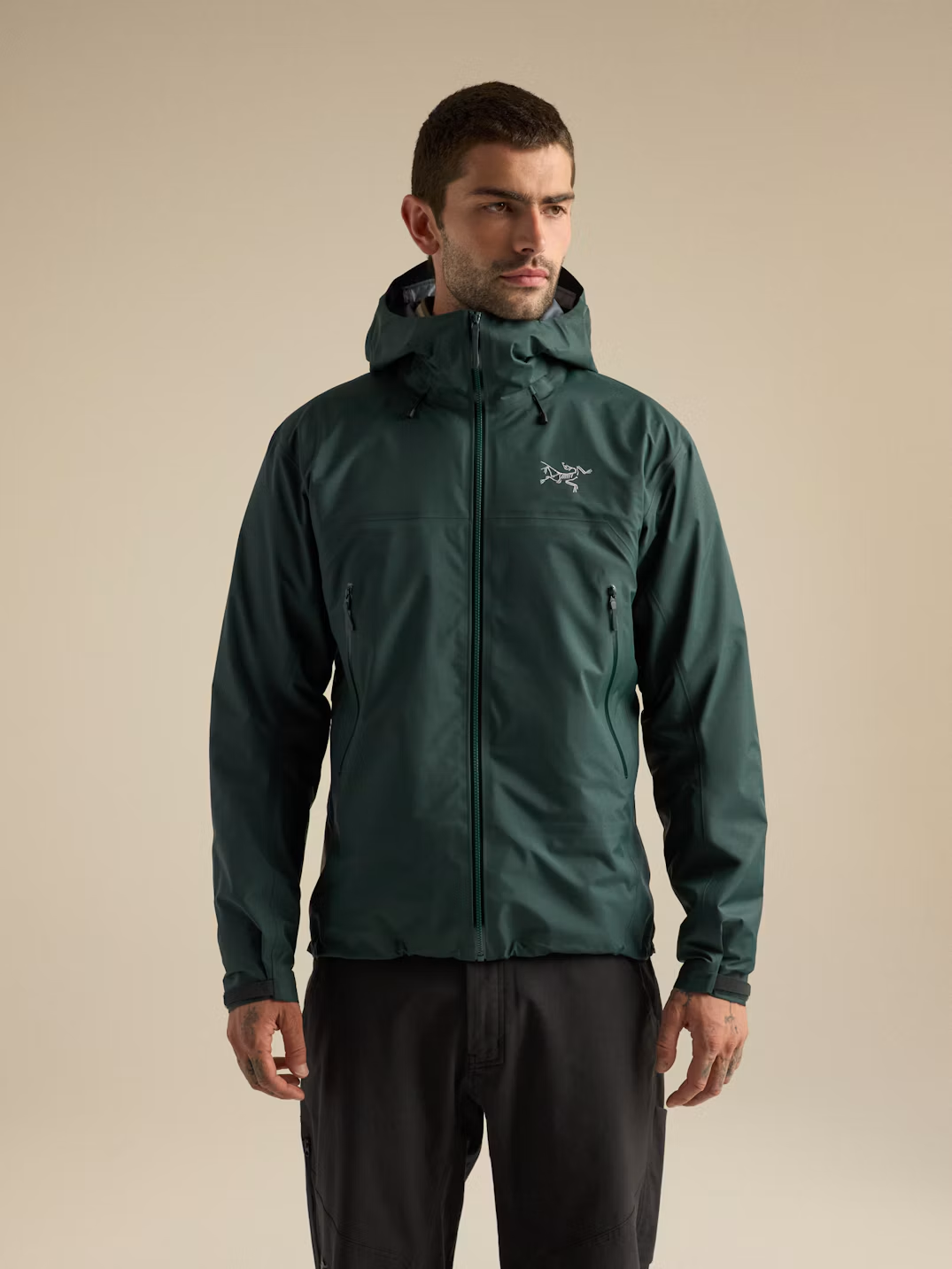
Its case is strongest once there's a pack on and the rain has arrived. Andy could reach the hand pockets with his hip belt fastened, get to his phone and put his hands somewhere warm when we stopped. The pit zips released heat on the climbs without opening the entire front to the weather.
In Cornwall's prolonged rain and driving sleet, his underlying clothes stayed dry. The shoulder fabric beneath the straps started holding water after about 45 minutes of heavy rain, but that saturation stayed outside. Back at the tent the jacket took a while to lose its wet feel. We'd take that result over a quicker-drying shell that left the fleece damp.
Andy liked the inner backing against his neck and arms, and the medium moved well over his walking layers. At 6ft 2, he could reach and scramble without pulling the sleeves short or repeatedly tugging down the rear hem. A substantial down jacket underneath would have made the torso too tight for him, so we'd try it with the insulation intended for camp as well as the layers worn uphill.
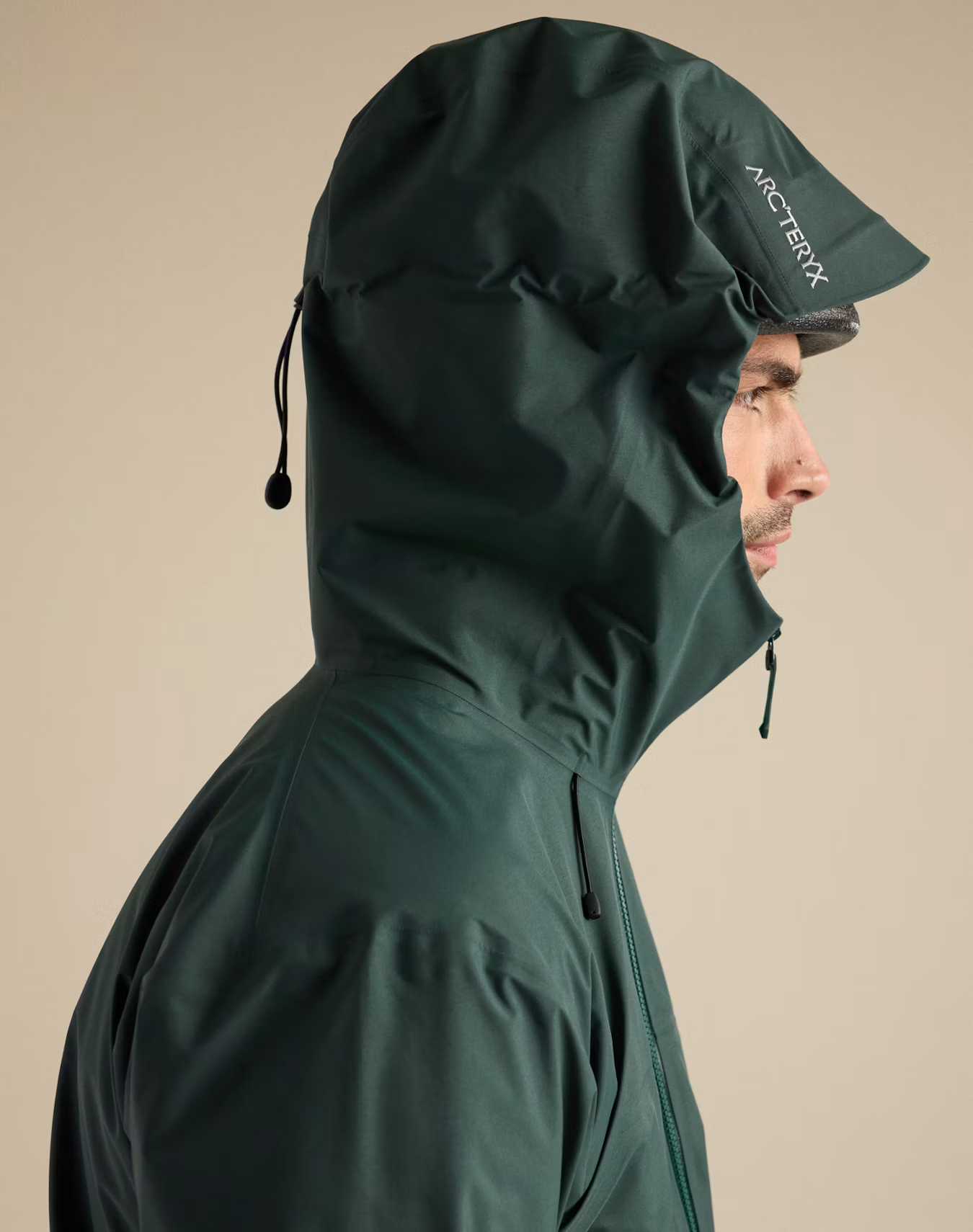
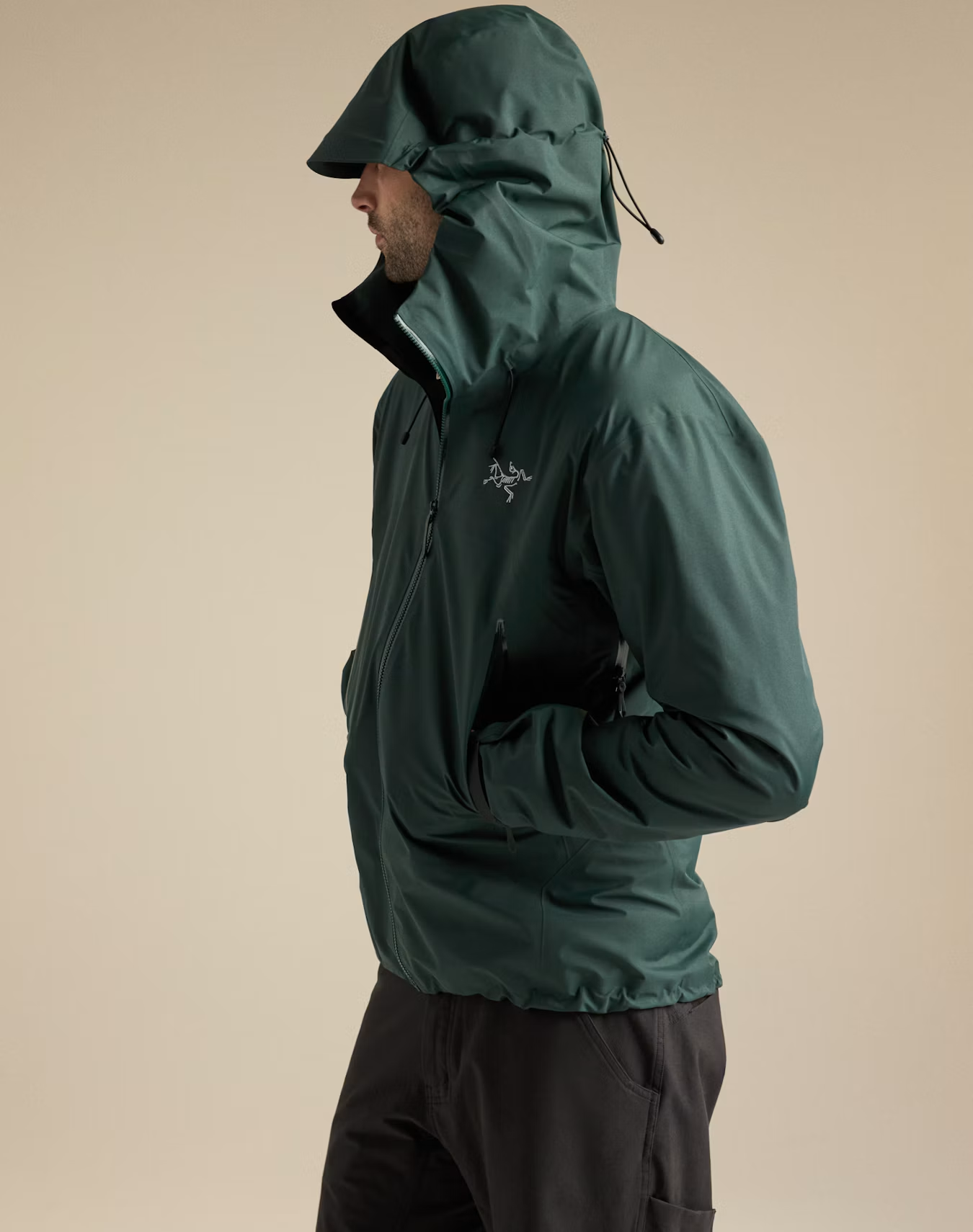
The hood needs a bit of patience. Without a helmet, Andy had to take up a lot of spare volume with the rear and side adjustments. Once settled, it stayed secure, turned with his head and kept sleet away from his eyes. We'd sort that fit before setting off rather than discover how much adjustment it needs on an exposed path.
There are other small irritations for an expensive shell. The fabric rustles, the zips need a firm pull and the fitted torso leaves less spare room for bulky winter insulation. None stopped Andy enjoying the jacket in bad weather, but they belong in the buying decision alongside the low listed weight.
The larger obstacle is the $500 US asking price shown by Arc'teryx when we checked. Andy liked the borrowed jacket enough to consider it as his main shell, but his own buying threshold was around $350. We'd also look for a good reduction before paying the premium over the Torrentshell.
We'd choose the Beta SL for frequent hiking with a pack when weight, pocket access and comfort justify spending more. The rain protection was excellent on the Cornwall trip. Its advantages over the Patagonia are the carrying weight and practical details under a pack; the Torrentshell remains our better-value purchase.
Helly Hansen Odin Ultimate Infinity: our pick for cold, rough trips
The Odin is much easier to appreciate when it has been raining for most of three days. On Adam's Quebec trip, water ran along the pack straps and the jacket spent hours compressed beneath them. His base layer stayed dry. The hood, collar, cuffs and hem kept the openings controlled in strong wind as well.
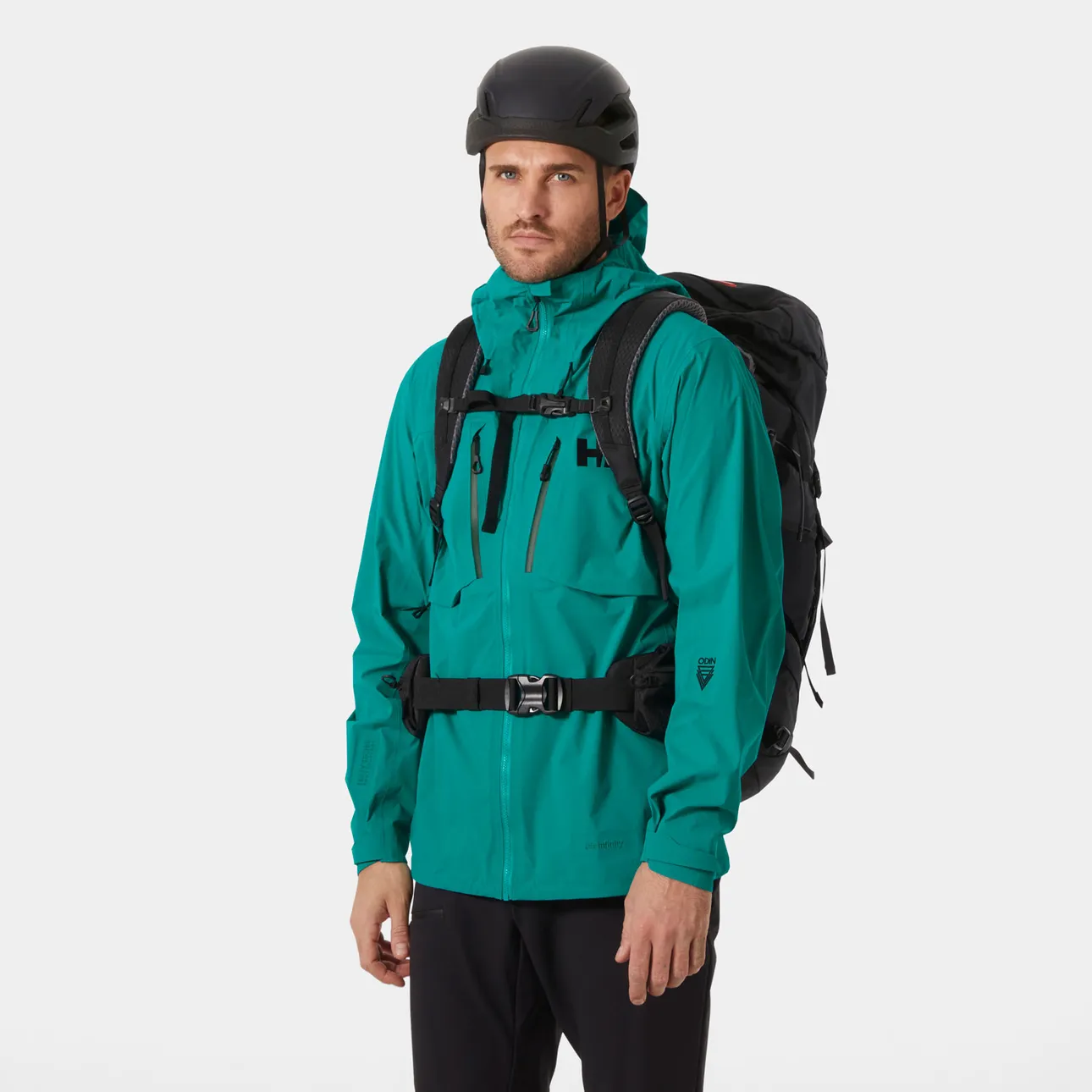
We'd take it for wet shoulder-season backpacking and rough mountain trips where the jacket is going to be worn for long stretches. After 90 days of pack straps, rock, trees and gravel, it had no holes, lifted seam tape or functional damage. The zips and adjusters were still working, and the shoulder fabric showed no obvious thinning.
Helly Hansen specifies fully seam-sealed three-layer construction with a LIFA Infinity membrane, a helmet-compatible hood and two chest pockets. [3] Those high pockets stayed accessible above the hip belt. They suit storing gloves or a map while walking, though we'd miss ordinary lower hand pockets when standing around camp.
The hood was excellent. It accommodated a helmet, tightened securely around a bare head and followed the face without swallowing the view. Its structured peak kept runoff away from glasses, and the controls were easy to find with gloves. Broad cuff tabs and a long back completed a jacket that stayed settled beneath the pack.
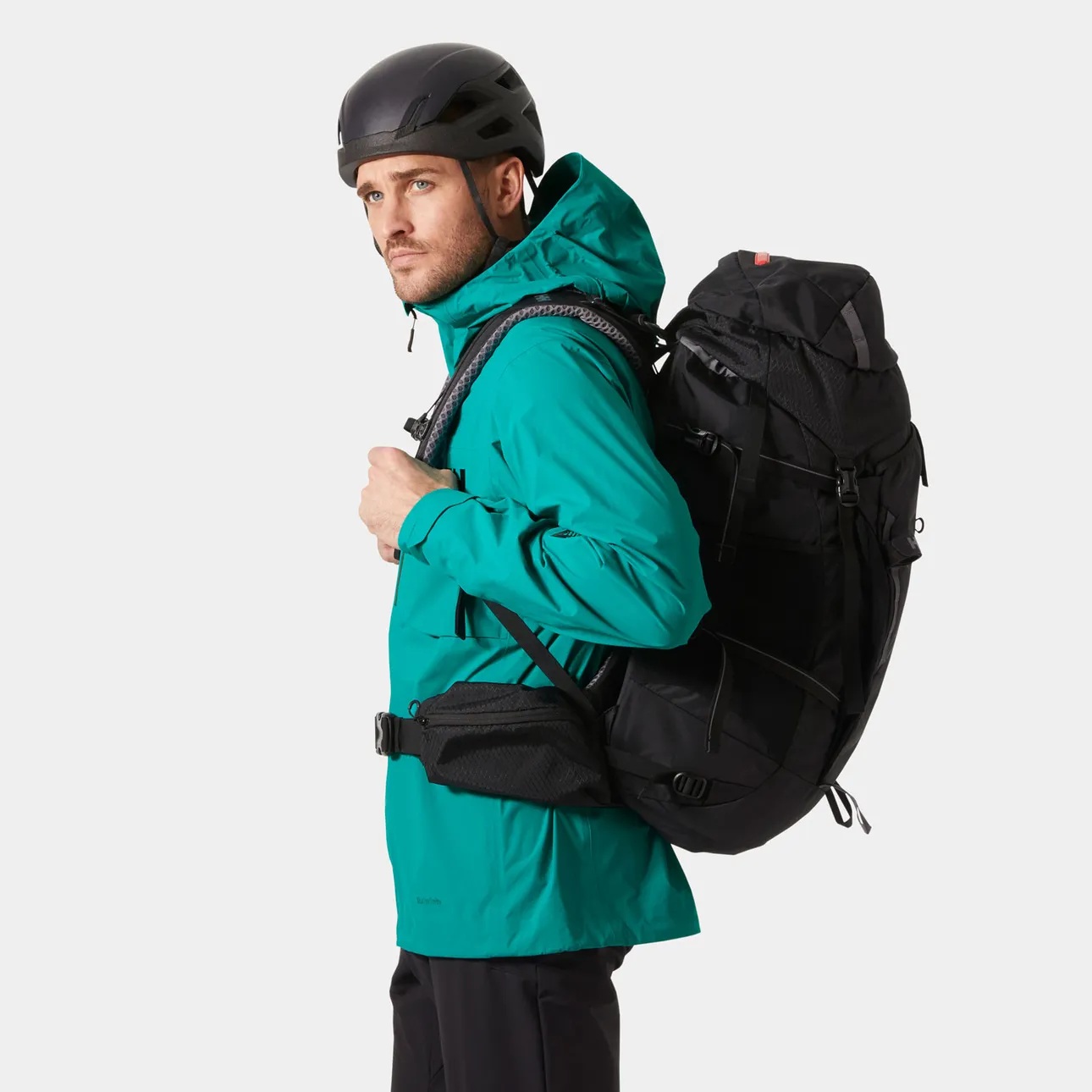
There is a lot to carry when the sun comes out. Our Large weighed about 580 g and compressed to roughly the size of a small melon. The fabric started stiff and loud, and three months of use only softened it a little. We'd be reluctant to spend a warm summer trip carrying that bulk for an occasional shower.
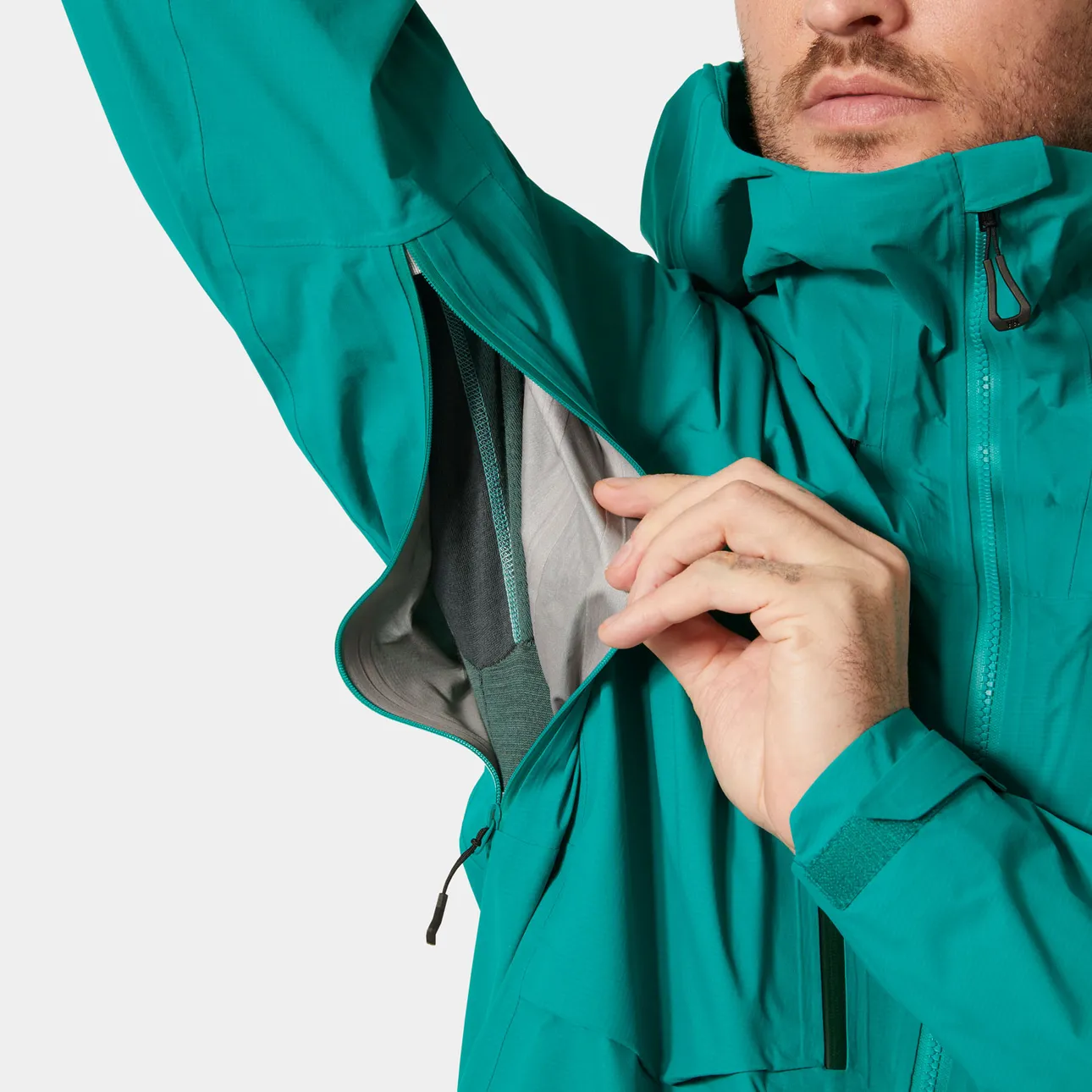
On cool, moderate walks it was comfortable. Steep climbs and warm rain were less pleasant: heat built up beneath the pack and the inside could feel clammy. Opening the long two-way pit zips early helped. The weather protection that felt welcome on an exposed cold ridge felt excessive during humid uphill walking.
There is also a naming detail worth getting right. This jacket uses LIFA Infinity, which has a face fabric with a DWR treatment. Helly's LIFA Infinity Pro uses a different, inherently water-repellent face. The Odin here still needs normal care of its outer finish. On our trip, a technical wash restored beading where dirt had reduced it, without reproofing. [4]
We'd choose the Odin when cold rain, wind and abrasion are regular parts of the trip. At the £450 paid, it is a costly, substantial shell. For ordinary day walks we'd take the Torrentshell; for carrying less we'd favour the Beta SL. The Odin earns its recommendation through the protection and toughness we appreciated during a demanding wet season.
The practical differences
| Jacket | Weight | Ventilation | Storage under a pack | Hood |
|---|---|---|---|---|
| Torrentshell 3L | 400 g, manufacturer listed | Pit zips | Two hand pockets, partly covered by a large hip belt | Adjustable walking hood; limited room for a bulky helmet |
| Beta SL | 340 g, manufacturer listed | Pit zips | Hand pockets accessible on Andy's pack setup; internal chest pocket | Helmet compatible; plenty of volume to take up on a bare head |
| Odin Ultimate Infinity | About 580 g, measured in Large | Long two-way pit zips | Two high chest pockets; no lower hand pockets | Helmet compatible, with effective bare-head adjustment |
The listed weights are for the men's models; the Odin figure is our measured Large. All three recommendations are based on the men's jackets in the linked reviews.
What we would prioritise before buying
Pocket access with your loaded pack
Put the hip belt where you normally wear it and see whether you can still use the pockets. This is the most obvious everyday difference between the Torrentshell and Beta SL. A phone trapped beneath a tight belt becomes irritating long before a small difference in fabric weight does. If you keep everything in the pack's belt pockets already, the Torrentshell's limitation is easier to live with.
A hood that follows your head
Turn to look behind you and down towards your feet with the hood tightened. The opening should leave the view clear, and the brim should stay where you've put it. The Torrentshell's hiking hood was convenient in wind; the Beta SL needed more adjustment around Andy's bare head. We'd only pay for helmet volume if we wanted it for the trips ahead.
Room for the layers you use
Try reaching forward with a fleece underneath, then repeat with your camp insulation. The Beta SL fitted Andy's walking layers well but became less appealing for a substantial puffer. Adam had room for a base layer, fleece and light insulated jacket beneath the Odin, while a thicker winter layer made it snug. A shell that pulls tight across the upper back is going to get tiresome under a rucksack.
Ventilation on the uphill sections
Each of these jackets built up some internal moisture during harder efforts. We value pit zips because they give us another opening while the hood and front remain closed against the rain. We'd open them and ease off the pace before sweating heavily, then close things down when stopping on exposed ground.
How often the jacket stays in the pack
The Beta SL has the lowest listed weight of these picks. The Odin is the one we'd least enjoy carrying all day unused. For a wet multi-day forecast, its toughness and protective fit are easier to justify; for mixed day walks, the Torrentshell offers the balance we'd buy first. We wouldn't choose the heaviest shell here for every outing just because it performed well in cold rain.
Keeping the rain protection working
A face fabric that stops beading water can feel unpleasant long before the waterproof membrane fails. On both the Torrentshell and Beta SL, we saw areas of outer fabric saturate while the clothing beneath stayed dry. The wetter outer fabric held more moisture and took longer to dry.
Keep an eye on that change, particularly across shoulders and beneath pack straps. Washing away sweat, dirt and oils, then following the jacket's drying and water-repellency instructions, is part of looking after a shell used regularly. The Odin's beading improved after its technical wash. Its LIFA Infinity name doesn't remove the need to care for the face treatment.
Our guide to GORE-TEX care and restoring waterproofing covers wetting out, cleaners, drying and reproofing, including the differences between manufacturer routines. For these three jackets, we'd use the care instructions for the exact garment when choosing the wash and drying settings.
The one we'd buy first
For most hiking and backpacking, we'd buy the Torrentshell 3L. It stayed dry through long rain events, survived three months of use and had a hood we liked wearing in wind. We'd work around the pocket placement and keep the saving.
We'd move to the Beta SL for a lighter carry and better hand-pocket access with a pack, particularly at a good discount. For cold, prolonged rain and rough use, we'd pack the Odin and accept its weight. Those are the reasons we'd change our choice; a more expensive membrane name on its own wouldn't do it.
Sources and updates
Reviews and manufacturer specifications
The linked field reviews supply our rain, fit, ventilation and durability observations. Manufacturer specifications and the Beta SL's US asking price were checked on 3 November 2026. The £160 Torrentshell and £450 Odin figures above are what we paid.