
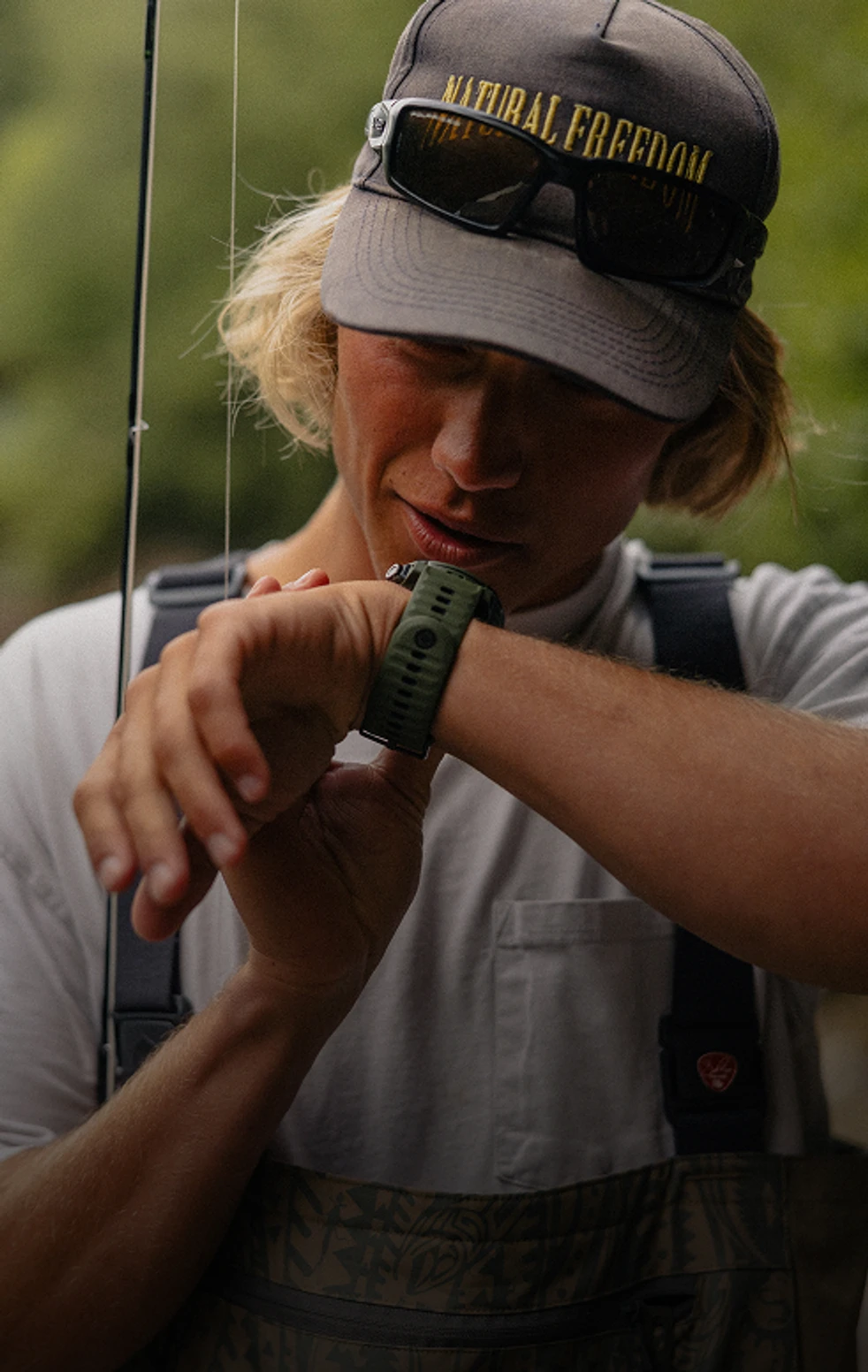
Halfway through a bikepacking ride, I reached a washed-out bridge and held the Nomad's action button. "Washed-out bridge here," I said, then carried on. The watch attached that recording to the precise point on my route. It was faster and safer than balancing a phone over the bars, and it captured the detail I would otherwise have forgotten by camp.
I paid US$349 including VAT for the grey COROS Nomad with its included nylon band. COROS did not supply the watch, contribute to the test, pay for the review or know it was taking place. I wore it for three months while hiking, camping and cycling through Quebec's Laurentides, Saguenay National Park, Hautes-Gorges and the Gulf of St Lawrence.
Quick verdict
The COROS Nomad is a rugged adventure watch with the mapping, positioning accuracy and battery life normally associated with much more expensive hardware. Global offline topographic maps were useful on the trail, All Systems GPS matched a Garmin Edge 540 closely, and the watch lasted 20-22 days in ordinary use. Voice Pins add a practical reason to choose it over familiar rivals. The muted MIP display, bulky 47 mm case and limited smartwatch functions explain why this is a 4.5 rather than a near-perfect score.
What works
- Full offline topographic maps at a highly competitive US$349
- 20-22 days of measured smartwatch use and about 50 hours in All Systems GPS
- Voice Pins make hands-free waypoint notes fast and useful
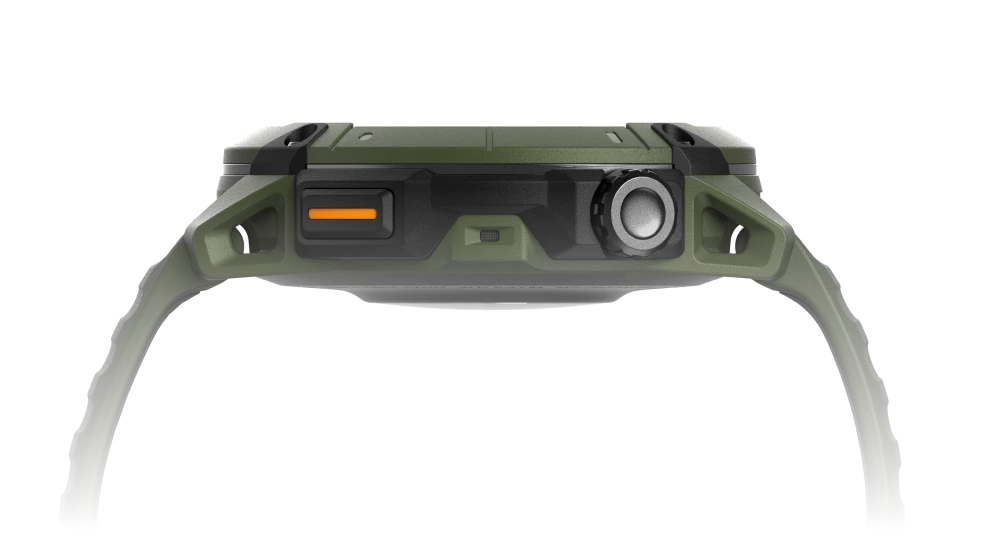
- Digital crown gives precise map control, including with gloves
- Fast satellite acquisition and dependable tracks under forest cover
- Included nylon band is light, breathable and easy to fine-tune
What to know
- 1.3-inch MIP display looks subdued beside a modern AMOLED panel
- 47 mm case sits high and catches tight sleeves and winter gloves
- No contactless payments, LTE, onboard Spotify or third-party app store
- Optical heart rate can cadence-lock on rough bike descents
- Off-course alerts do not provide automatic route recalculation
- Safety alerts require a connected phone with cellular service
The verdict
The COROS Nomad is one of the best-value adventure watches available for hikers, bikepackers, kayak anglers and ultrarunners who care more about mapping and endurance than an app-filled smartwatch. At US$349, it provides global offline topographic and street maps, dual-frequency GNSS, reliable route guidance and battery life that can cover a multi-day trip without rationing every feature. Adam's three-month test supported the headline claims: 20-22 days between charges in daily use, roughly 2% battery consumption per hour in All Systems mode and a stable track through dense Laurentian forest.
Its best ideas also work outside a specifications table. The crown makes zooming a map controlled and predictable when wet fingers or gloves make touchscreens awkward. Voice Pins turn a spoken observation into a geotagged note without interrupting a ride or reaching for a phone. COROS then folds those notes, saved locations, photos and route data into the Adventure Journal in an app that is detailed without demanding a subscription.
The trade is visible every time the screen lights up. The always-on MIP panel is superb in direct sun and economical with power, but its colours and contrast look flat beside the AMOLED displays on watches such as the Suunto Race S and Polar Grit X2. The case is also broad and tall enough to snag a rain-jacket cuff. Buyers who want payments, cellular connectivity, stored Spotify music or a large app ecosystem should choose a different watch. For people planning long days beyond a charger, those omissions matter less than accurate positioning, usable maps and endurance. On that brief, the Nomad is an unusually complete watch and earns its 4.5 score.
How I tested it
The Nomad stayed on my wrist for ordinary days, sleep, trail runs, gravel rides, hikes, bikepacking and camping. Terrain ranged from exposed Gulf shoreline to wet mixed forest, steep park trails and enclosed valleys. It saw torrential rain, mud spray, granite scrapes, mountain-bike spills and full submersion during lake kayaking. I did not test pool swimming, deep-sea fishing or the complete tide-and-catch system, so this review does not make claims about those uses.
I used an iPhone 15 Pro with current iOS and normally recorded in All Systems mode. For a technically difficult hike I changed to dual-frequency. On the bike, a Garmin Edge 540 provided a useful comparison for route distance and elevation. A Polar H10 chest strap provided the reference for heart-rate intervals.
Offline maps and navigation
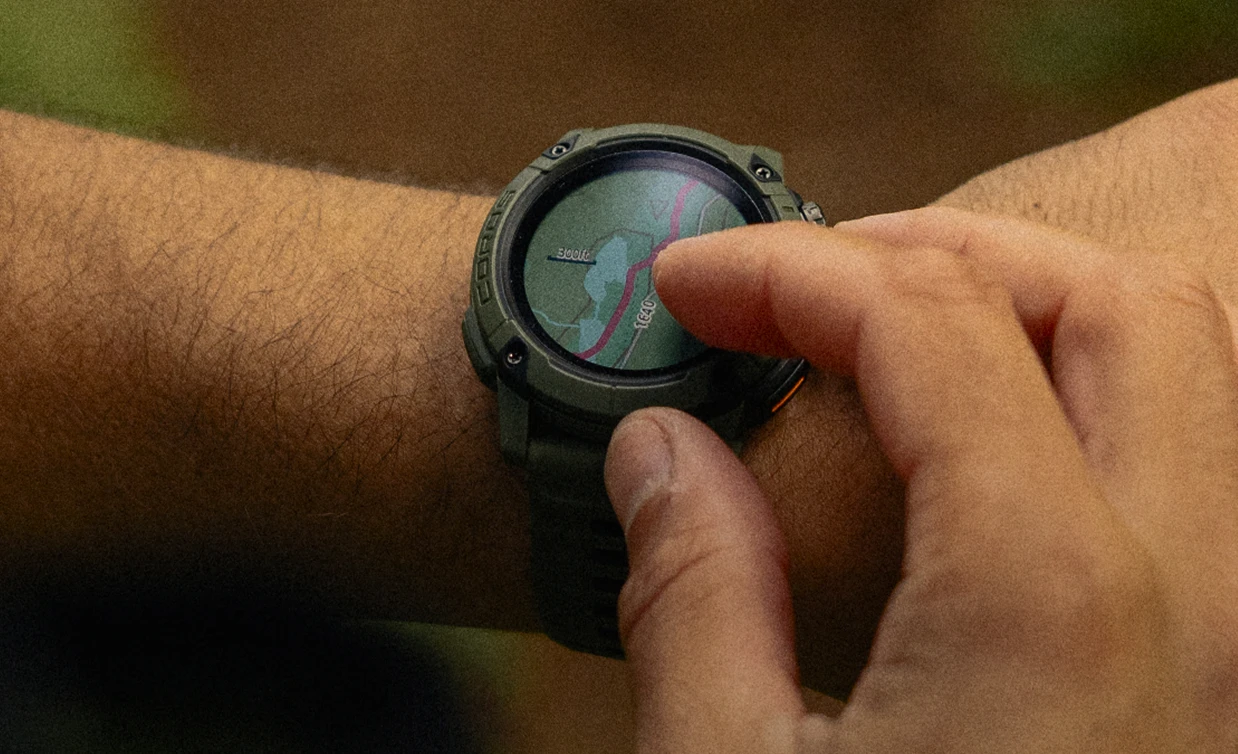
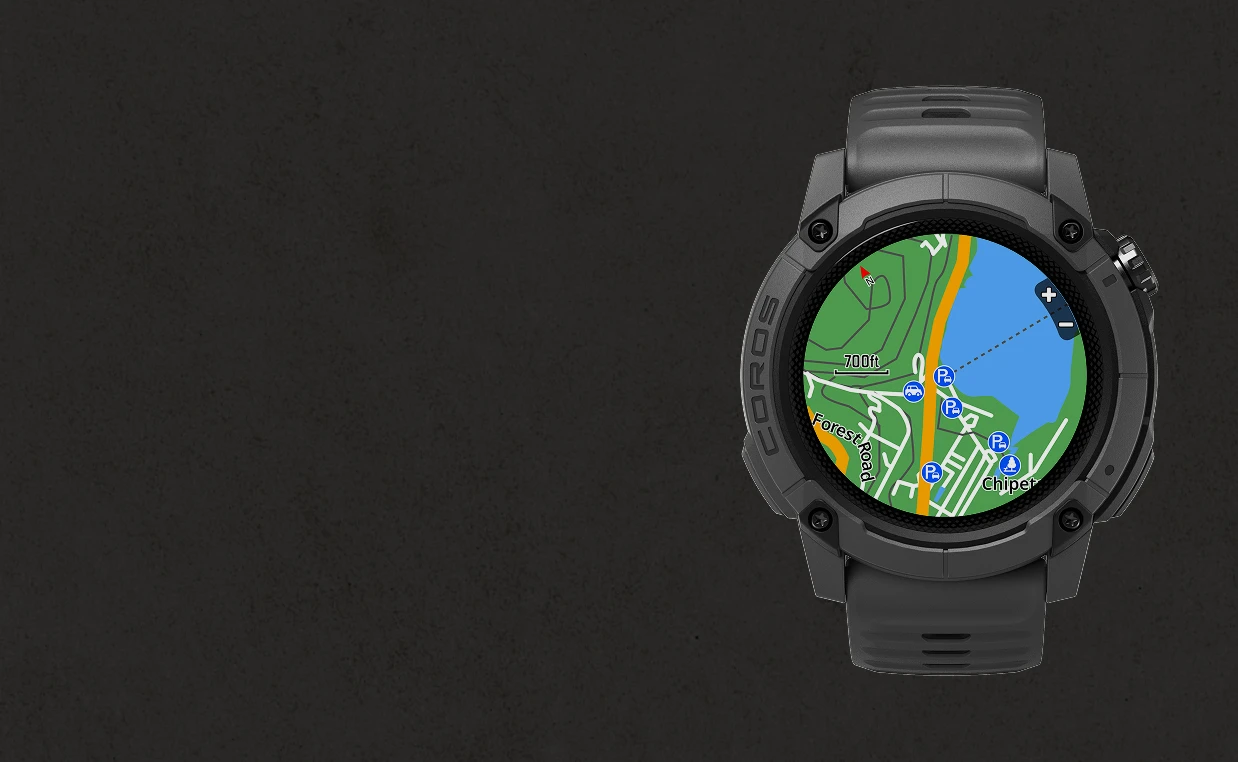
Mapping is the Nomad's strongest value argument. Landscape and topographic map layers can be downloaded for offline use, with street names, trails and points of interest visible on the wrist. Imported GPX routes from Strava reached the watch in around ten seconds during our use. Route lines were easy to distinguish from surrounding map detail, and turn prompts arrived without distracting from the activity screen.
The digital crown is central to the experience. Rotating it changes map scale in predictable increments, which proved faster than repeated taps and more dependable with gloves. Touch panning was responsive enough with bare fingers. Rendering occasionally needed about half a second to catch up with a fast pan, but the software never froze or crashed.
If I left the planned line, the watch issued an obvious deviation alert and showed the route back. It does not calculate a fresh route around an obstruction as a car navigator would. Back to Start can retrace the recorded path, and that is useful, but neither feature replaces judgement, a properly prepared route or a second navigation method in consequential terrain.
GPS accuracy and activity recording
Position acquisition usually took less than five seconds. In open country, the recorded line sat where expected. More tellingly, it continued to follow the trail beneath dense, wet Laurentian canopy without the broad wandering that makes a detailed map look convincing while corrupting total distance.
Alongside the Garmin Edge 540, distance and elevation profiles were close enough that neither device changed the interpretation of a ride. The Nomad smoothed a few sharp switchbacks slightly more than the Edge, but did not introduce a meaningful distance error. All Systems offered the best balance for routine use. Dual-frequency is available for narrow valleys, thick forest and other difficult reception, although its extra power demand makes it a setting to choose deliberately.
Voice Pins and Adventure Journal
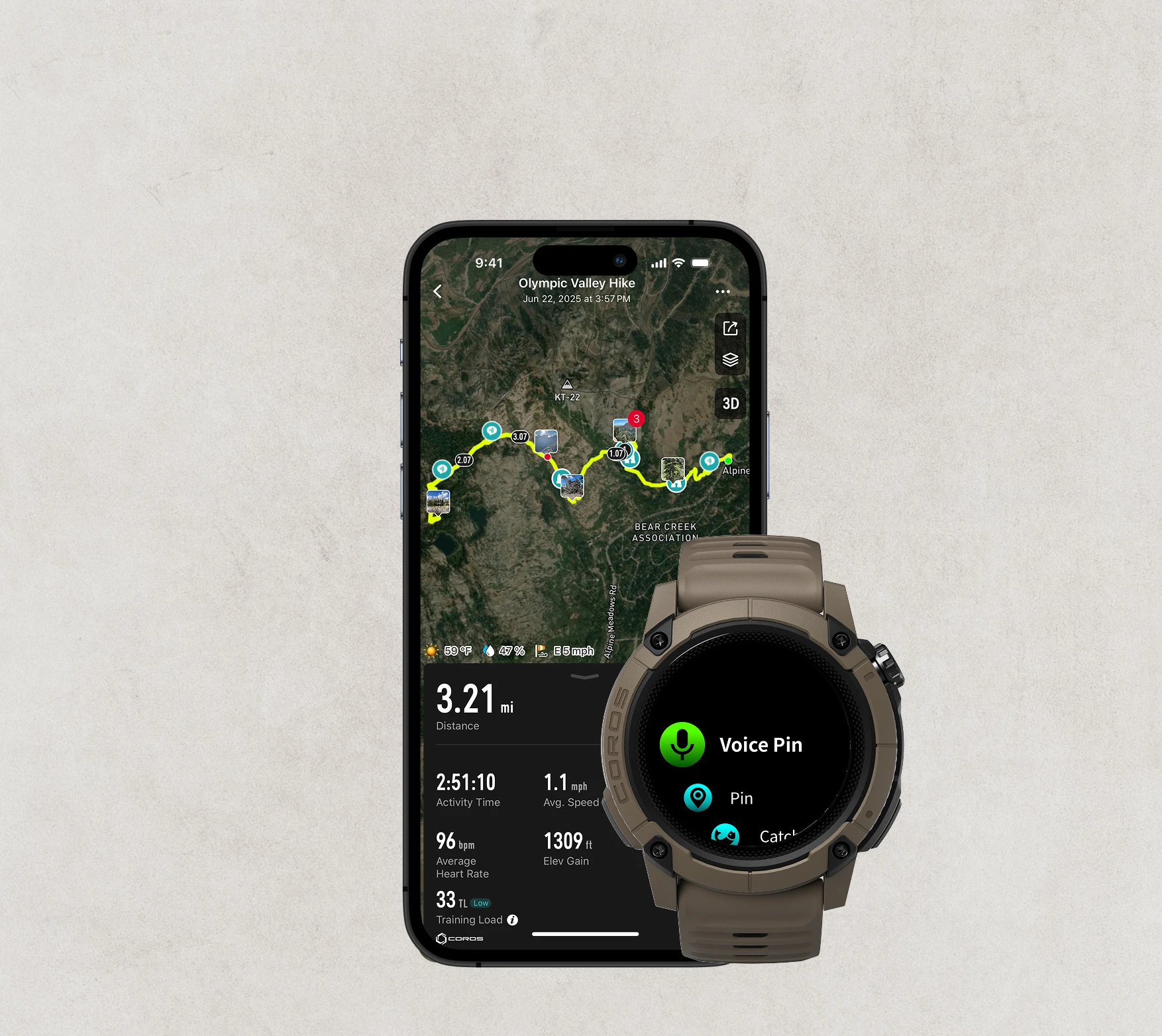
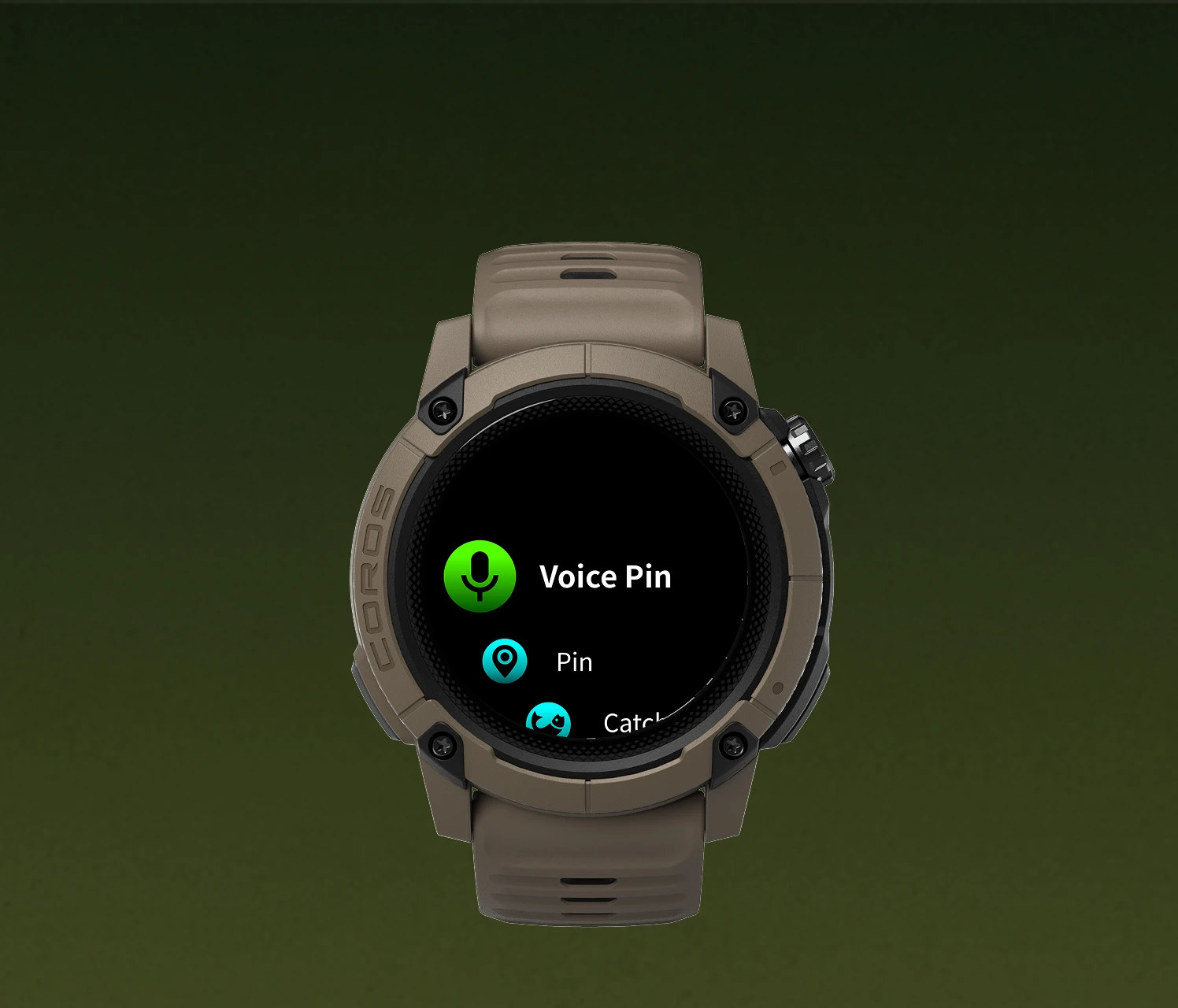
Voice Pins could have been a marketing novelty. They became the Nomad's most distinctive field tool. Press the action button during an activity, record a short note and the watch pins the audio to that location. Moderate wind did not prevent later understanding. The dual microphones will not replace a dedicated recorder, but they captured a washed-out bridge, potential campsites and route observations without forcing a stop.
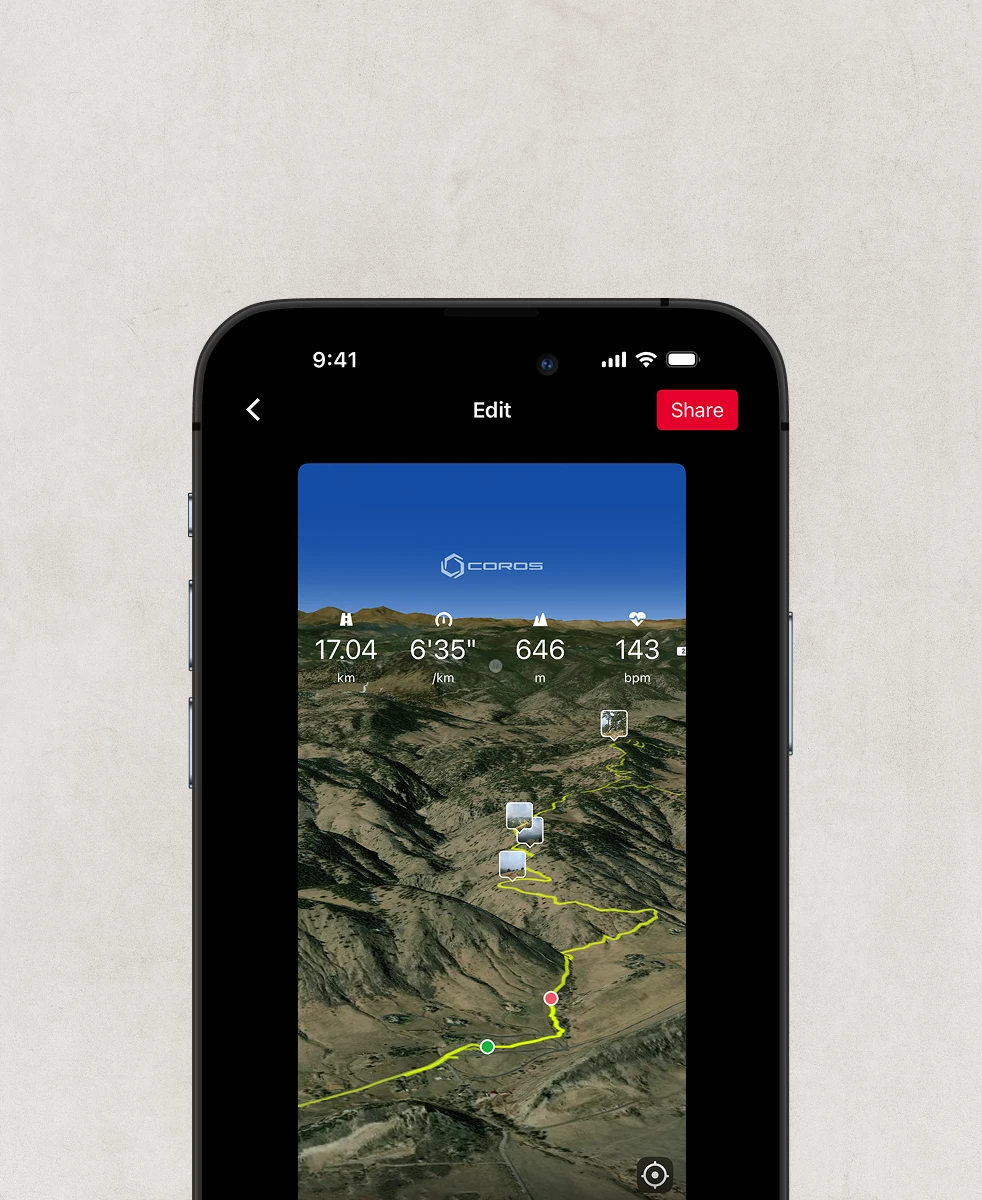
After syncing, the COROS app places voice clips, ordinary pins and photos along the recorded track. The resulting Adventure Journal is useful for trip records and future planning, rather than only producing a social-media animation. A guide can note a hazard, a bikepacker can mark water, and an angler can record why a location mattered while the context is fresh.
Display, crown and everyday control
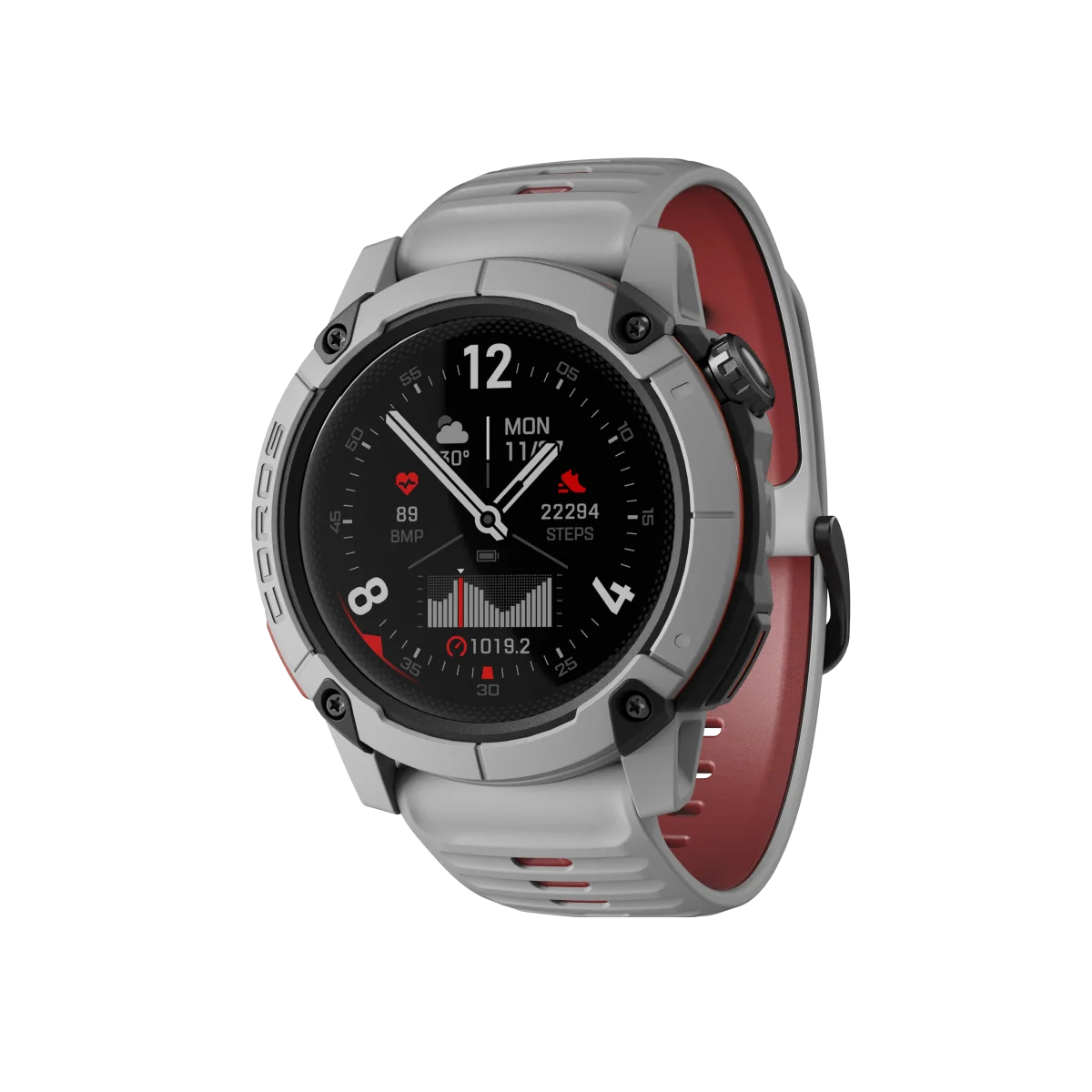
The 1.3-inch always-on MIP display is a functional choice. Reflected light makes it more readable as the sun gets stronger, and it remained excellent on open water at midday. In dark forest and at camp, it needed the backlight. That light is adequate rather than vivid, and leaving it active changes the battery equation.
Anyone moving from an AMOLED watch will notice the muted palette and softer contrast immediately. Maps remain legible because COROS uses strong lines and restrained colours, but photographs and polished watch faces are not the point. The touchscreen is competent, not phone-smooth. It handled rain reasonably well, while thick gloves made the crown and buttons the better control system.
The interface itself is stable and easy to learn. Scroll, press to select and use the two secondary buttons for back, laps and the chosen action. Bluetooth syncing to the iPhone was consistently fast. We had no lost activities, restarts or unexplained crashes.
Battery life and charging
With notifications, continuous heart-rate monitoring, sleep tracking and ordinary daily use, the Nomad lasted about 20-22 days between charges. That closely matches COROS's published 22-day figure. All Systems activities consumed roughly 2% per hour, which supports the company's 50-hour estimate. Dual-frequency use pointed to about 32-34 hours, again close to the official 34-hour claim.
The 20-22 day result included normal use of maps, route guidance, sensors and notifications. Backlight time, navigation, weak satellite reception and connected accessories can all increase consumption, so a remote trip still deserves a power margin.
A full charge took under two hours. The proprietary A2 adapter is small and easy to lose on its own, but COROS supplies a silicone keychain holder and the adapter accepts a standard USB-C cable. That is a better travel arrangement than carrying another full proprietary lead.
Fit, comfort and durability
The fibre-reinforced polymer case keeps the apparent bulk from becoming heavy. COROS lists 49 g with the nylon band and 61 g with silicone. The supplied nylon strap breathed well, dried quickly and allowed more precise adjustment than fixed holes. Attaching its initial pin was fiddly, but it stayed secure afterward.
The 47 mm case sits high. It remained comfortable through daily wear and sleep, although I noticed it at night and repeatedly caught it on tight rain-jacket cuffs in the Hautes-Gorges. Fitting close winter cycling gloves around it was frustrating. People with small wrists should try it before buying.
Three months left a couple of silver scuffs on the aluminium bezel after granite contact and bike spills. The hardened mineral-glass screen remained unmarked. Torrential coastal rain, mud and lake submersion did not affect operation. The 5 ATM rating supports surface-water use, but our testing does not establish suitability for diving.
Heart rate, recovery and training data
Wrist heart rate was stable during steady hiking and running. Against a Polar H10 chest strap, average heart rate was nearly identical, although the Nomad trailed rapid interval changes by about 5-10 seconds. Rough mountain-bike descents sometimes produced cadence lock as vibration confused the optical sensor. Riders training by heart-rate zones should pair a chest strap for technical sessions.
COROS presents HRV, recovery, training load and sleep data in a dense but well-organised app. The trends broadly matched how I felt, without allowing one night's poor score to dominate the morning watch face. These are guidance tools, not diagnoses. Their value is in repeated patterns and workload context.
Weather, safety and fishing limits
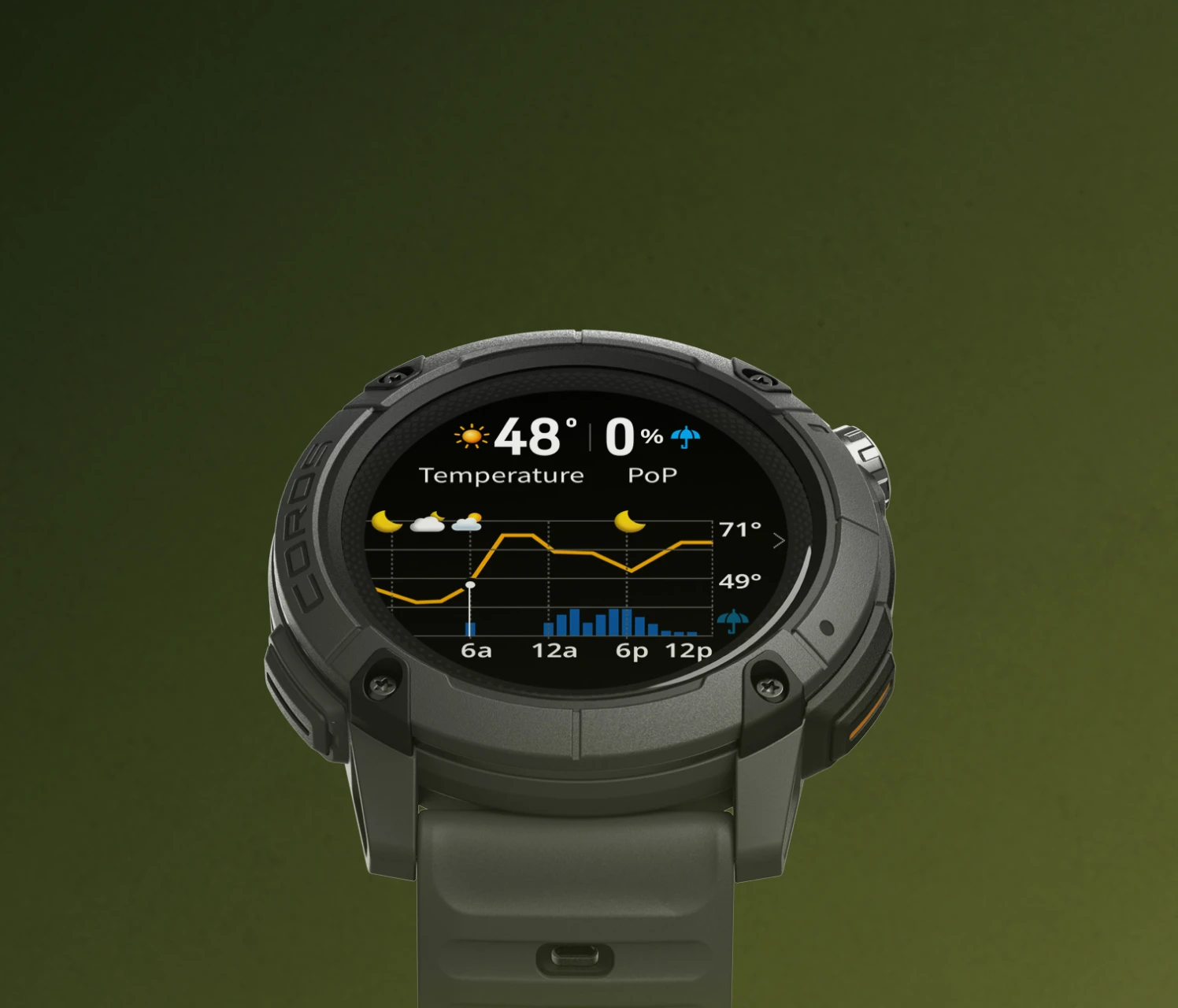
Rapid barometric drops triggered storm warnings ahead of two large squalls moving off the St Lawrence. They provided enough notice to put on rain gear before conditions arrived. Temperature, pressure, sunrise, sunset and forecast information also suit the watch's outdoor focus.
The safety feature needs careful description. A Nomad can send a location and live-tracking link to nominated contacts, but the watch must remain connected by Bluetooth to a phone with cellular service and the COROS app running. It does not contact emergency services and is not a satellite communicator or personal locator beacon.
Fishing profiles, moon phases, tides and catch logging broaden the product, but our use was limited to lakes, coastal trails and kayaking. We did not test deep-sea fishing or the complete tide workflow, so those functions do not influence the score.
App, integrations and smartwatch limits
The COROS app synced activities within seconds and organised maps, EvoLab training load, HRV and recovery without pushing a paid premium tier. Strava, AllTrails and RideWithGPS integrations worked without trouble. Route planning and three-dimensional activity flyovers make the app useful after the watch leaves the wrist.
Smartwatch functions are much thinner. The Nomad shows calls and message notifications, provides alarms and timers, and handles basic controls. It has no LTE, NFC payments, onboard Spotify storage or third-party app store. The screen can turn white as an emergency light, but it is enough for finding a tent zip rather than replacing the dedicated LED fitted to some premium Garmin models.
Value and alternatives
US$349 is the reason the Nomad changes the comparison. The Garmin Instinct 3 offers a broader Garmin ecosystem and more mature everyday features, but the Nomad gives far richer on-watch map context. The Suunto Race S and Polar Grit X2 appeal to buyers who value an AMOLED display and a less utilitarian presentation. None makes the Nomad's particular combination of full maps, long GPS endurance, Voice Pins and price irrelevant.
Choose the Garmin if ecosystem depth and payments matter more. Choose an AMOLED alternative if display richness and a smaller visual presence sit above multi-week battery life. Choose the Nomad for multi-day bikepacking, long hikes and route-heavy outdoor use where charging and map context are the priorities. It covers a large group of people who previously had to spend much more.
COROS Nomad specifications
| Price paid | US$349 including VAT |
|---|---|
| Case | 47 mm fibre-reinforced polymer with aluminium bezel |
| Published weight | 49 g with nylon band; 61 g with silicone band |
| Display | 1.3-inch always-on Memory-in-Pixel touchscreen |
| Lens | Hardened mineral glass |
| Published daily use | Up to 22 days |
| Published GPS endurance | 50 hours All Systems; 34 hours dual-frequency |
| Water rating | 5 ATM |
| Navigation | Offline landscape and topographic maps, street names, POIs, routes and Back to Start |
| Positioning | All Systems GNSS and dual-frequency GNSS modes |
| Controls | Touchscreen, digital crown, Back/Lap button and Action button |
| Connectivity | Bluetooth and Wi-Fi |
| Charging | COROS A2 adapter with standard USB-C cable |
| Rating | 4.5 / 5 |
Overall score: 4.5 out of 5. Accurate positioning, excellent offline maps, measured 20-22 day endurance and useful Voice Pins make the Nomad an outstanding adventure-watch value. Its muted display, bulky case and limited smart features are the meaningful compromises.
Comparison guide
GPS Watch vs Satellite Communicator for Hiking
Compare wrist-based maps and activity recording with off-grid messaging, remote tracking and interactive SOS.

Sources & context
What we checked
Gear Reviews bought this COROS Nomad for US$349 including VAT. COROS had no involvement in the test or article and did not review the copy before publication.
Editorial disclosure: We bought the watch with our own money. COROS did not supply it, fund the test or know this review was taking place.