
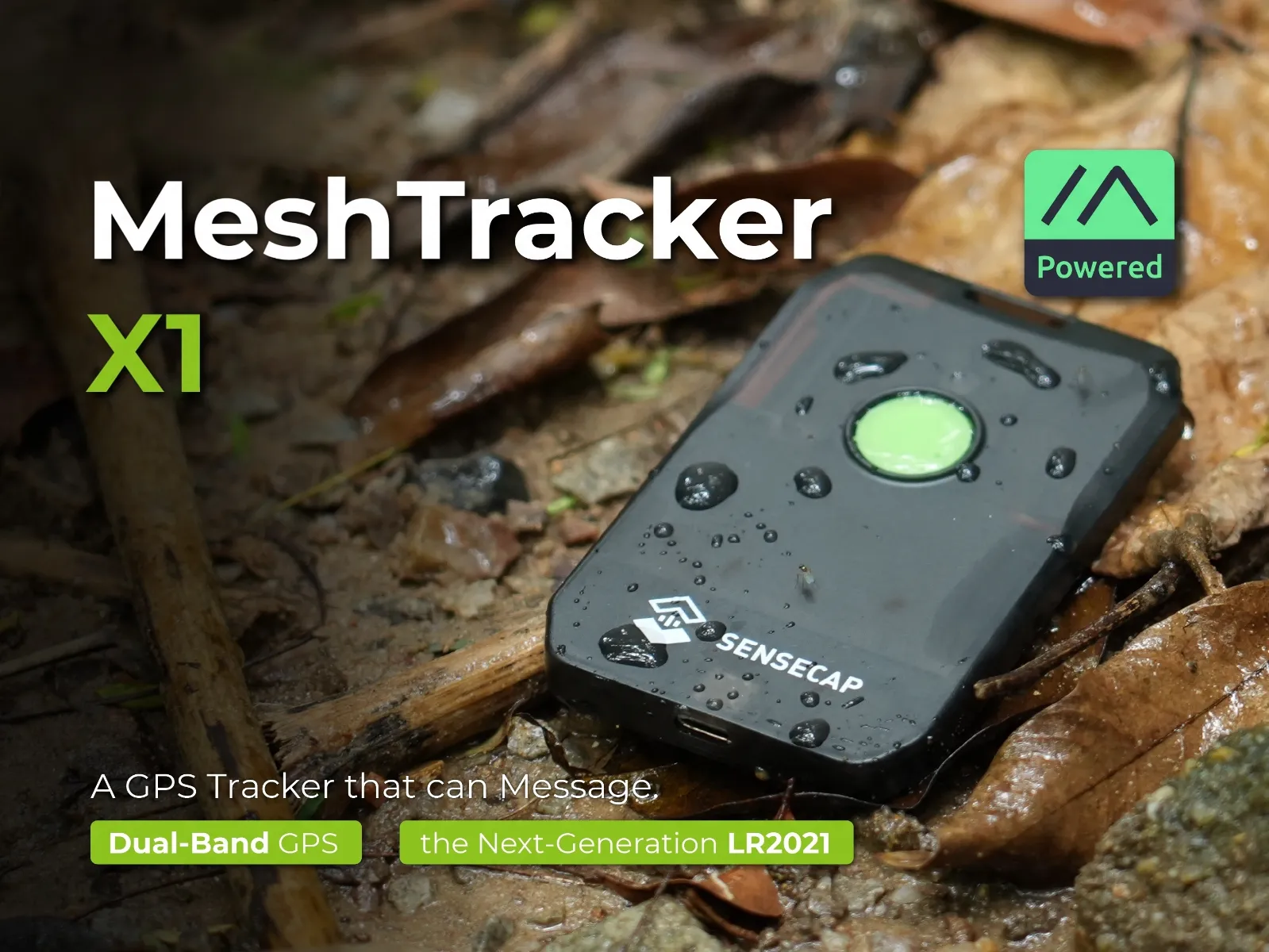
I bought two 868 MHz SenseCAP MeshTracker X1 units for $49 each, plus import duty, and used them for a week of hiking and camping in the Lake District. Seeed Studio did not supply the trackers, know they were being tested or have any influence over this review. The test covered hills, mountains, forests and deep valleys, including substantial areas without mobile coverage.
Quick verdict
The SenseCAP MeshTracker X1 is the most convincing ready-made Meshtastic tracker I have used. Setup took less than five minutes, Bluetooth remained stable, the dual-band GNSS produced clean tracks under tree cover and the 1100 mAh battery lasted four to five days with 15-minute position updates. A direct 868 MHz link reached 8 km from a ridge to the valley floor, while dense woodland more typically reduced useful range to 1 to 2 km. The IP66 case, vibration motor and USB-C charging make it feel like real outdoor equipment rather than a development board in a box. There is no screen, so messages still require a phone, and this two-node test does not prove multi-hop performance. It is an excellent group coordination tool, not a replacement for a PLB or satellite communicator.
What works
- Excellent dual-band L1 and L5 GNSS performance
- 8 km direct line-of-sight result on 868 MHz
- Compact 45 g card-sized body
- Reliable vibration and buzzer alerts
- Four to five days of practical battery life
- USB-C charging and firmware updates
- IP66 protection survived heavy rain and mud
- Pre-flashed and ready within five minutes
What to know
- No display for reading or composing messages
- A paired smartphone remains essential
- No integrated solar panel
- Internal antenna cannot accept a larger external aerial
- Range collapses behind terrain and dense wet vegetation
- Multi-hop routing was not tested
- Not an emergency beacon or satellite communicator
The verdict
Most Meshtastic hardware still asks the buyer to accept some combination of exposed boards, printed cases, external aerials and idiosyncratic charging. That is part of the appeal for enthusiasts, but it is a poor fit for somebody who simply wants dependable off-grid group communication.
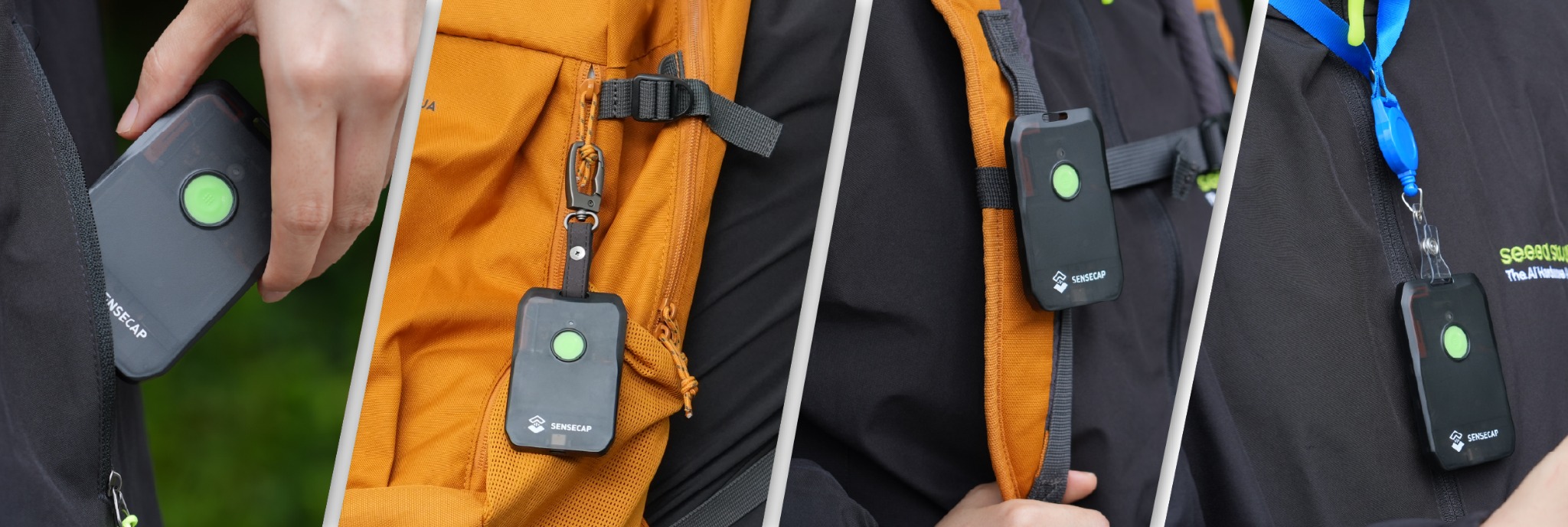
The X1 feels like the product that emerges once those experiments mature. It is 8 mm thick, weighs 45 g and arrives with official Meshtastic firmware already installed. There is one button, one RGB status light, a buzzer, a vibration motor and a sealed USB-C port. Nothing rattles or demands a soldering iron.
That refinement does not change the physics. LoRa needs a usable radio path, and the Lake District is full of ridges, wet forest and deep valleys that block one. The X1 was excellent when the two units could see compatible terrain and useless when the land placed too much rock between them. The product makes Meshtastic easier; it does not make coverage universal.
How I tested the X1
The two 868 MHz units were our only LoRa nodes. We used them for a week while hiking and camping, carrying one tracker per person and communicating through private Meshtastic channels. There were no fixed repeaters and no third-party nodes within the test network.
That makes the results unusually clear for direct range but deliberately limits the conclusion. We tested point-to-point messaging, position sharing, reconnection after moving back into range, Bluetooth stability, battery life and weather resistance. We did not evaluate multi-hop routing through a wider community mesh.
Both trackers were normally clipped high on a shoulder strap or carried in an upper chest pocket. Keeping the internal antenna away from the body improved range. Burying it inside a wet pocket did the opposite.
Setup and everyday use
Setup took under five minutes. The units arrived pre-flashed, paired immediately with the Meshtastic iOS app over Bluetooth 5.0 and sent their first message without firmware surgery. The connection remained stable while the phone was within a few metres.
The single physical button can control power and trigger common actions, including a manual position update. The RGB LED communicates basic status. Reading or writing a message still requires the phone because there is no display or keyboard.
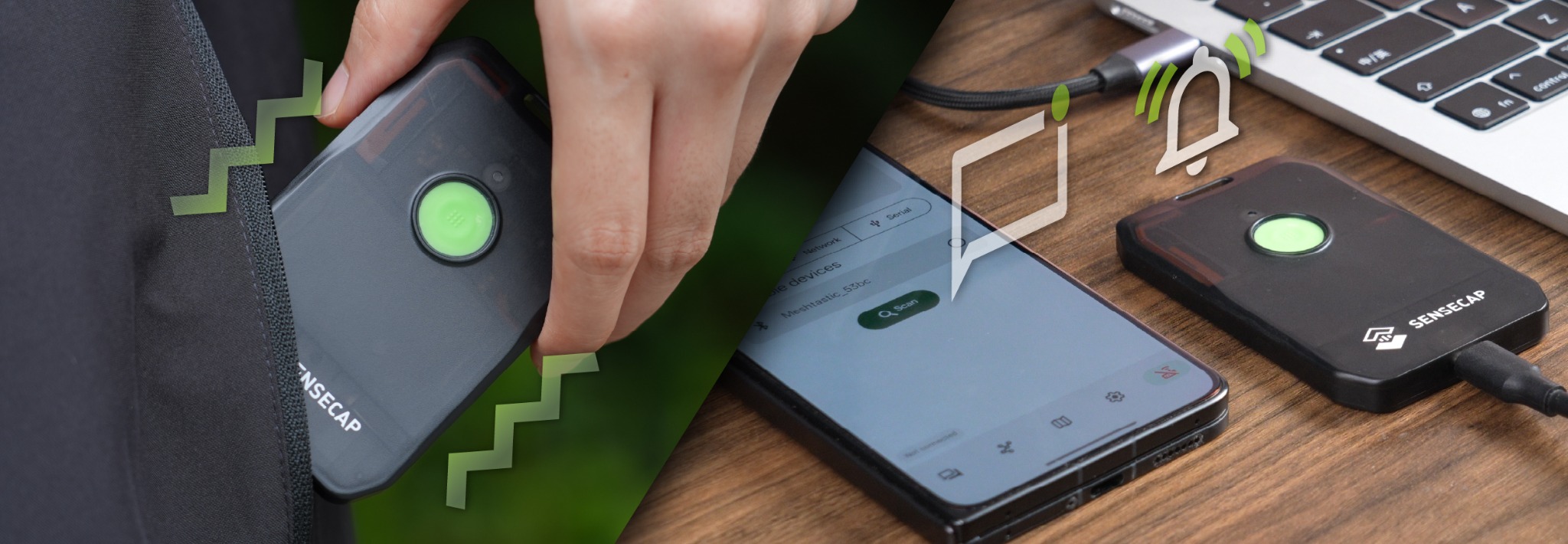
The haptic motor and buzzer partially compensate. Incoming messages were difficult to miss even when the tracker was in a pocket or the environment was noisy. The Meshtastic app handled private channels, maps and acknowledgements clearly, although it occasionally showed a message as pending after delivery.
Messaging and direct range
The best result was a direct 8 km link from a ridgeline to the valley floor. Messages arrived within seconds and acknowledgements confirmed delivery. This was achieved with the European 868 MHz configuration and the internal antenna.
In forest and broken terrain, useful point-to-point range was more commonly 1 to 2 km. Dense wet trees, buildings and the human body all absorbed or obstructed the signal. Elevation made the largest difference: gaining a few hundred feet could restore a link that did not exist at the bottom of a valley.
Messages sent outside coverage were not magically delivered at the time. Once the two trackers returned to direct range, the nodes resynchronised and queued traffic appeared. That behaviour was useful, but group coordination still requires users to understand when an acknowledgement is absent.
Seeed Studio publishes an up-to-8 km line-of-sight figure from a 915 MHz test. Our separate 868 MHz result reached the same distance, but it should not be read as a guaranteed range. LoRa performance is dominated by terrain, antenna placement, interference and radio settings.
GNSS and position sharing
The dual-band L1 and L5 receiver was the X1's strongest feature. Cold starts usually took one to two minutes, while warm starts completed within seconds. Tracks remained tight under heavy tree cover and showed almost none of the wandering or large jumps familiar from cheaper single-band nodes.
In open ground, positions were sufficiently precise to identify which part of a trail somebody occupied. The built-in barometer added useful altitude information in steep terrain. Position broadcasts every 15 minutes provided a good compromise between group awareness, channel traffic and battery life.
Privacy controls live in Meshtastic rather than the hardware. We could restrict location sharing to a private encrypted channel or disable it entirely. That choice needs attention before joining any public mesh.
Battery life and charging
With Bluetooth connected, standard routing enabled and GNSS updates every 15 minutes, the X1 ran for four to five days. Very cold mornings shortened the projection to around three and a half to four days. Increasing location updates to every minute reduced endurance noticeably.
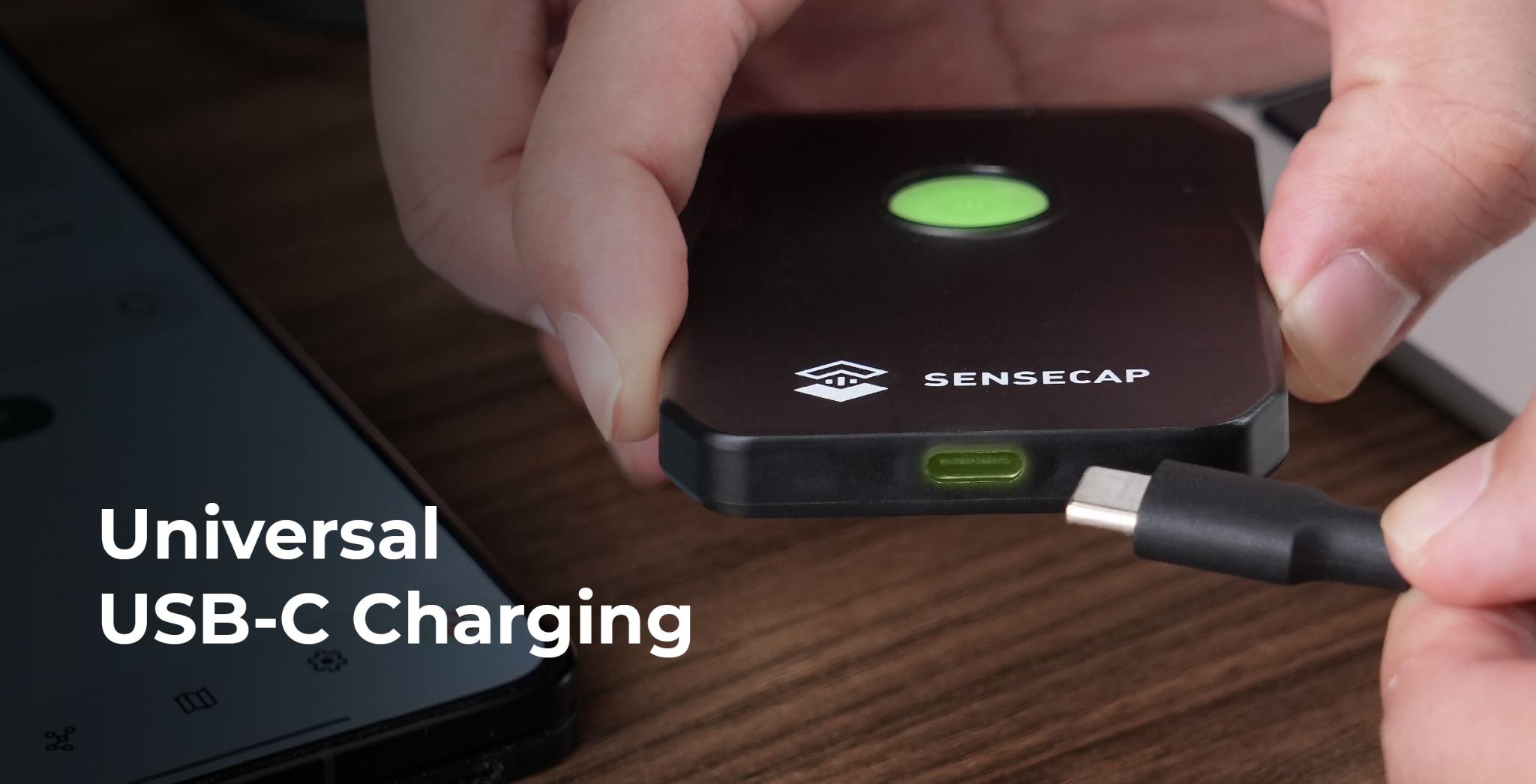
The 1100 mAh battery recharged in about two hours and the tracker continued operating from a power bank. There is no integrated solar panel. A small external panel or ordinary USB battery can recharge it, but buyers should ignore listings or assumptions that imply solar is built into the card.
Design and portability
At 90 x 57 x 8 mm, the X1 is close to a thick credit card. It lay flat against a pack strap instead of rotating or bouncing, and it was easy to forget in a pocket. The included leather keychain and lanyard hole provide simple attachment, although a secure aftermarket clip may suit hard movement better.
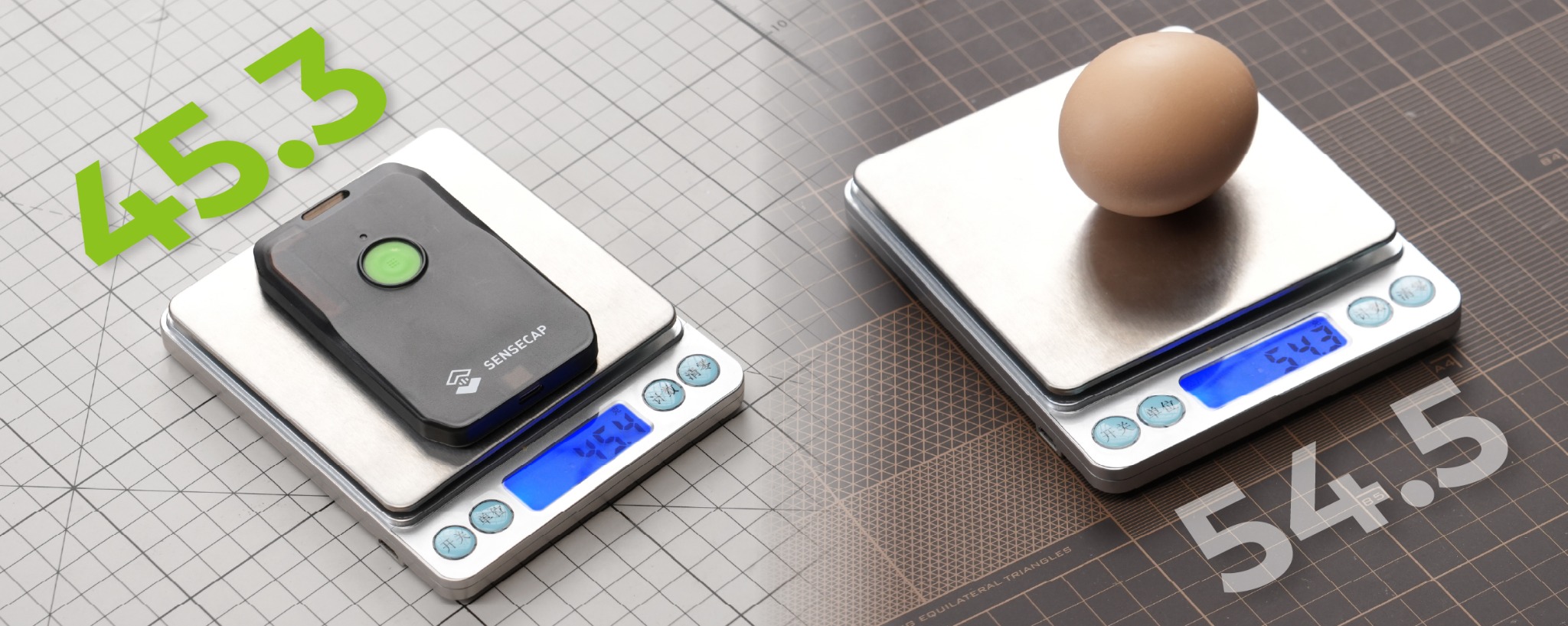
The internal antenna is central to that clean shape. It also prevents experimentation with high-gain whips, remote aerials or fixed base-station installations. This is a mobile personal node, not a universal Meshtastic platform.
Weather resistance and durability
The tracker remained attached during sustained heavy rain and was dropped into mud. The IP66 enclosure and snug USB-C cover kept water out. A separate fall of about four feet onto hard trail rock left a cosmetic scuff but caused no functional damage.
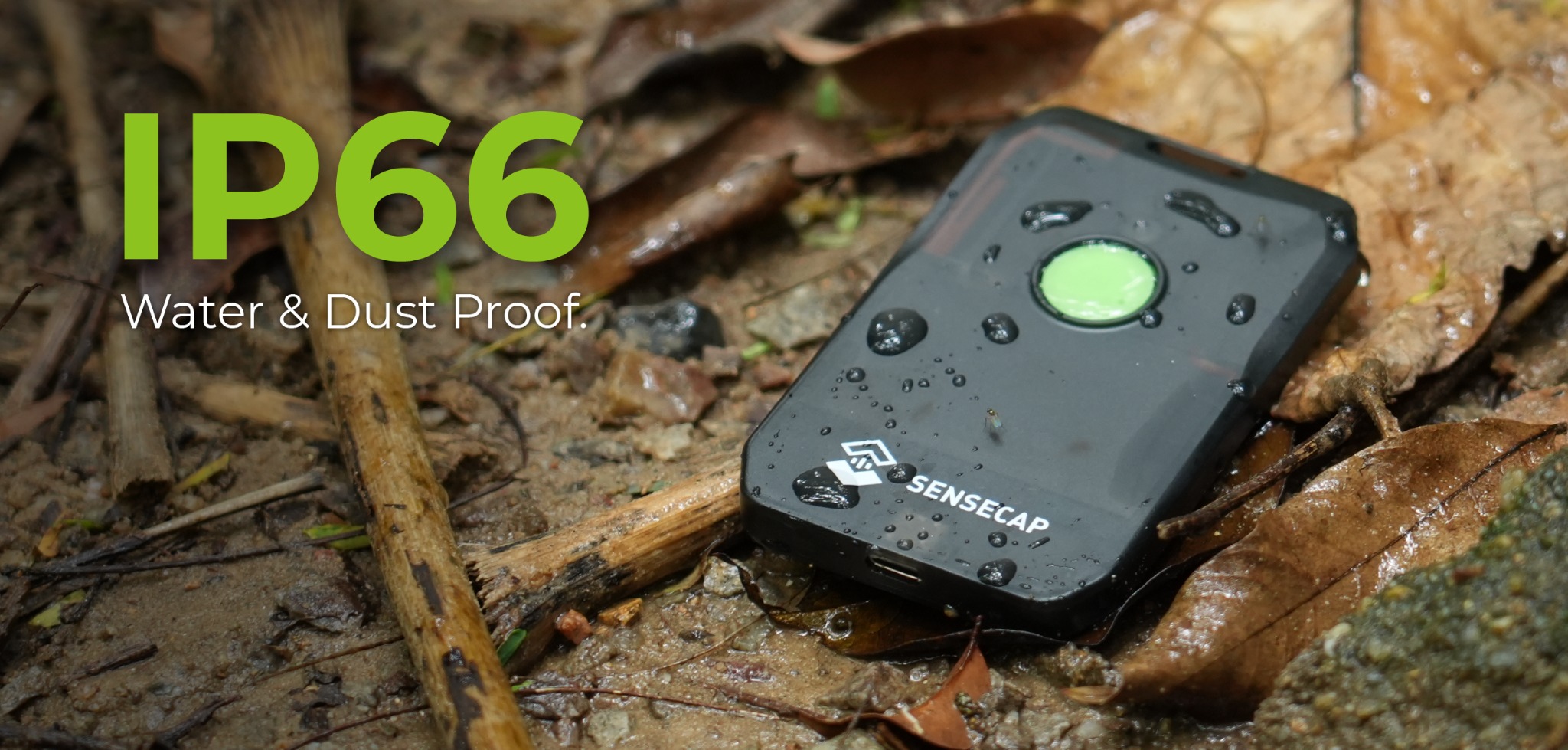
Radio and GNSS performance did not change. The small rubber tether on the charging-port cover appears the most likely long-term wear point because it is flexed at every charge. A week cannot establish multi-year durability, but the case is far more convincing than a typical printed enclosure.
What it can and cannot replace
Two X1 units are excellent for keeping a walking group coordinated when mobile service disappears. They can share positions, exchange short text messages and help separated people find one another within radio range.
They are not a substitute for a personal locator beacon, Garmin inReach or another satellite distress system. A two-node mesh has no path to emergency services unless one participant can separately reach help. Even a larger public mesh is opportunistic ground infrastructure, not guaranteed rescue coverage.
Value and alternatives
At $49 before import duty, the hardware value is exceptional. DIY nRF52840 nodes can be cheaper or more configurable, but reproducing the X1's slim sealed case, dual-band GNSS, barometer, vibration motor, buzzer and finished charging arrangement takes time and often costs more than expected.
Existing T1000-E owners gain USB-C, longer claimed runtime, the LR2021 radio and a more accurate positioning system. Builders wanting an external antenna, display or physical controls should choose a different platform. The X1 is best for hikers, skiers, festival groups and vehicle convoys who want a set-and-forget personal tracker.
The LR2021 supports much faster FLRC modes than Meshtastic currently uses. That creates room for future development, but it is not a reason to buy the tracker on promises of voice or image transfer. Its current messaging and location performance already justify the price.
SenseCAP MeshTracker X1 specifications
| Tested configuration | European 868 MHz, two units |
|---|---|
| Controller | Nordic nRF52840 |
| LoRa radio | Semtech LR2021, 863 to 928 MHz, up to 22 dBm |
| GNSS | Dual-band L1 and L5 with barometer |
| Bluetooth | Bluetooth 5.0 |
| Battery | 1100 mAh rechargeable |
| Measured runtime | Four to five days with 15-minute position updates |
| Charging | USB-C; about two hours in this test |
| Protection | IP66 |
| Dimensions | 90 x 57 x 8 mm |
| Weight | 45 g |
| Country of manufacture | China |
| Antenna | Internal GNSS, LoRa and Bluetooth antennas |
| Interface | One button, RGB LED, buzzer and vibration motor; no screen |
| Price paid | $49 each plus import duty |
| Manufacturer involvement | None |
Scoring breakdown
Comparison guide
Satellite vs Mesh: Which Is Right for You?
Learn when satellite messaging and SOS make sense, and when local mesh range, tracking and lower cost are the better fit.
Explainer
What Is a Mesh Communication Device?
Learn how mesh nodes, LoRa radio and relays move messages and positions without mobile service, including realistic range and safety limits.

Sources & context
What we checked
This review is based on Adam's direct two-node 868 MHz test in the Lake District. We checked the controller, radio, frequency coverage, power, battery, sensors, dimensions, weight, IP rating and interface against Seeed Studio's current datasheet and technical documentation.
Editorial disclosure: Adam bought both X1 trackers with his own money for $49 each, plus import duty. Gear Reviews received no payment, free product or editorial approval from Seeed Studio.