
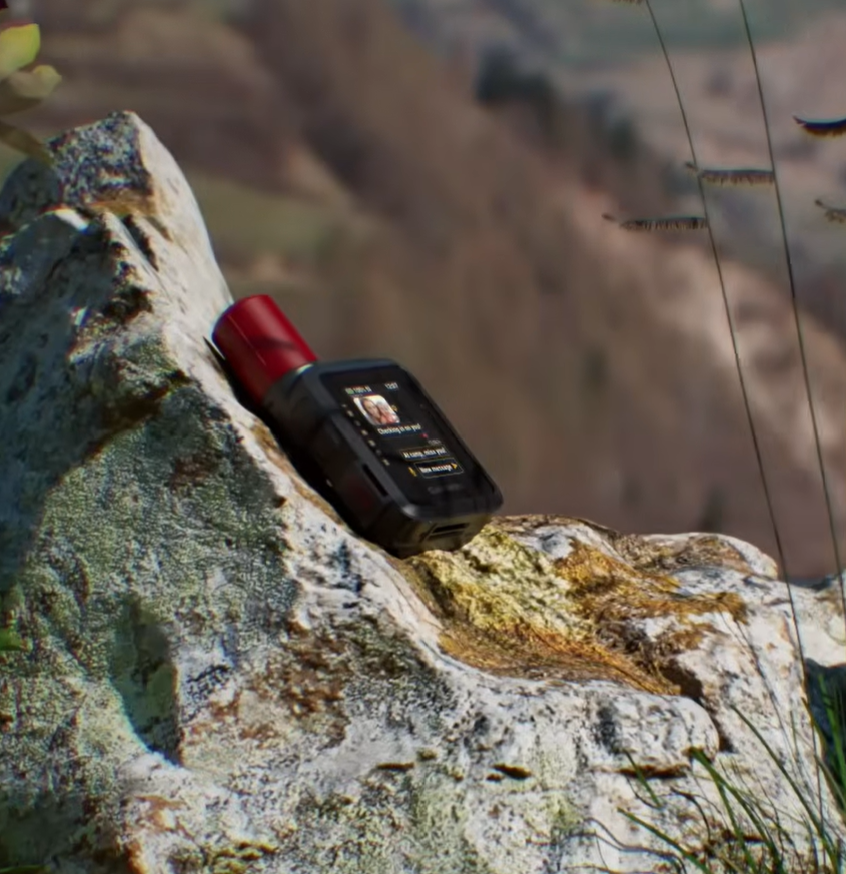
I paid CA$509.99 for the Garmin inReach Mini 3 Plus and carried it for three months through Quebec's Laurentides, Saguenay National Park, Hautes-Gorges and the Gulf of St Lawrence. Garmin did not supply the unit, know about the review or contribute to the trip. We spent about 80% of those three months outside mobile coverage, hiking through forests, mountains and steep valleys.
Quick verdict
The Mini 3 Plus made satellite messaging feel far less awkward than it did on the inReach Mini 2. Open-sky texts usually left in under 30 seconds, the colour touchscreen made short replies practical without a phone, and low-power 10-minute tracking lasted close to two weeks. Forest and gorge walls still slowed the Iridium link, while photos required a paired phone and patience. The basic onboard map is the main reason this is a 4.9 rather than a perfect score.
What works
- Open-sky text messages commonly sent in under 30 seconds
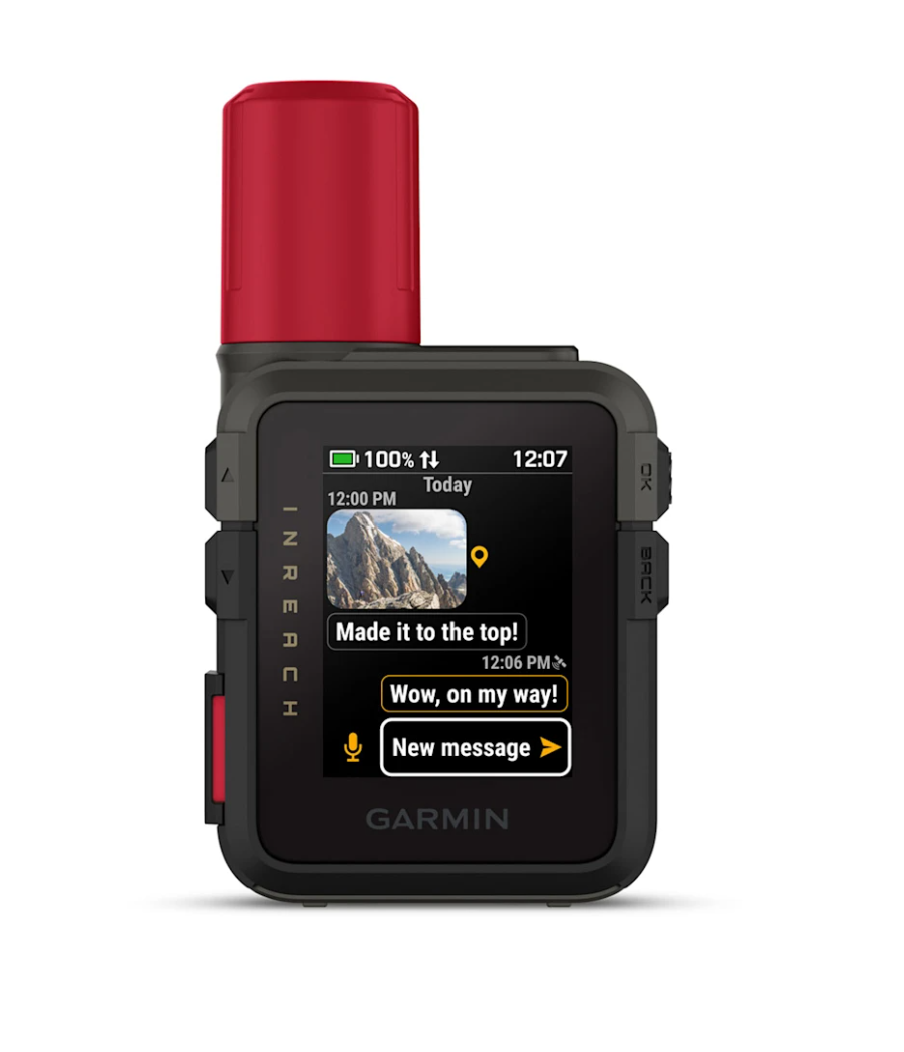
- 1.9-inch colour touchscreen makes short standalone replies viable
- Physical buttons retain full control in rain or thick gloves
- Low-power 10-minute tracking approached two weeks in our use
- Voice messages can be recorded and sent from the device
- IP67 body survived storms and a brief creek drop
- Secure SOS button and a useful local safety siren
What to know
- Satellite features require an active plan and a useful view of the sky
- Texts took three to five minutes under heavy canopy in our worst routine cases
- Photo sharing needs the Garmin Messenger app on a paired phone
- Performance messaging can cut the published battery estimate sharply
- On-device navigation is basic beside a proper mapping handheld
- Messaging and mapping are split between Messenger and Explore
- The subscriber and emergency profile should be updated before lending it
The verdict
The Garmin inReach Mini 3 Plus is an excellent compact satellite communicator for hikers, paddlers, sailors, guides and anyone who regularly spends days beyond mobile coverage. In three months across Quebec, open-sky texts commonly sent in under 30 seconds, 10-minute low-power tracking lasted close to two weeks and the unit kept queued messages moving when a better patch of sky appeared. The colour touchscreen makes short standalone replies practical, while the full set of physical controls keeps every essential function usable in rain or thick gloves.
It is best for people who want dependable messaging, tracking and SOS coordination without relying entirely on a phone. The trade-offs are specific rather than fundamental: dense forest and gorge walls can delay the Iridium link, sending photos requires Garmin Messenger on a paired phone, satellite features need an active plan and Garmin splits messaging and route planning between two apps. Its basemap, course line and TracBack tools are useful backups, but anyone who needs detailed handheld navigation should look at a GPSMAP 67i instead. A discounted Mini 2 or a simpler app-led communicator also makes more sense for occasional basic texts and SOS use.
At the CA$509.99 we paid, the Mini 3 Plus is not cheap, although it compares favourably with Garmin's CA$699.99 Canadian launch price. The touchscreen, direct voice messaging, photo display, excellent low-power endurance and dependable standalone controls are meaningful improvements over the Mini 2, not decorative extras. For frequent trips beyond coverage, it is the most capable compact inReach we have carried and fully earns its 4.9 score.
How I tested it
The device stayed clipped high on a shoulder strap during day hikes and approaches, with its antenna upright and exposed. Terrain ranged from open shoreline to forest, mountain paths and enclosed valleys. We used 10-minute tracking for most outings and sent ordinary texts, check-ins, group messages, 30-second voice notes and photos.
I had previously used the inReach Mini 2, ZOLEO and inReach Messenger Plus, which gave useful context for interface and transmission speed. This was not a controlled antenna comparison. When the Mini 3 Plus felt faster, that is a field impression from different trips and conditions rather than proof of a particular internal component.
Before leaving, I used Garmin's permitted device and SOS testing process. I did not trigger a real SOS during the trip. No review can responsibly prove how every rescue will unfold, because dispatch, local resources, terrain and weather all matter.
Satellite connection and message timing
In clear conditions the unit usually acquired service within a minute. Ordinary texts commonly sent in less than 30 seconds. Under heavy forest cover, the longest routine text waits were around three to five minutes. Voice notes and compressed photos sometimes needed 10 to 15 minutes when the sky view was poor.
Deep gorges produced the weakest results. A transmission could sit in the queue while the device kept searching, then leave automatically after we reached a clearing. Incoming messages were similarly dependable when the unit was exposed and actively checking. Indoors, in caves and in very narrow valleys there may be no useful link at all.
Garmin's manual is explicit that messaging, tracking and SOS need satellite access and work best with a clear view of the sky. The device will keep searching, but it still needs usable sky. Keep it exposed and confirm the message status before assuming anything has been delivered.
Dense cloud and thunderstorms occasionally seemed to add delay, but terrain and antenna exposure were the more obvious constraints. We did not measure weather effects independently.
Text, voice and photo messaging
The 1.9-inch screen is small by phone standards and large by compact inReach standards. Its 306 by 230-pixel transflective MIP panel was easiest to read in sunlight. At night, the adjustable backlight went low enough for normal camp use.
Typing a long account of the day still made more sense in Garmin Messenger. For a short answer, the virtual keyboard, autocomplete and next-word suggestions worked well. Check-in messages were even easier. The device showed whether a message was queued or sent, so we rarely had to guess what was happening.
The phone connection was stable and reconnected automatically. Once, after the app had not been opened for weeks, restarting it restored sync. Recipients could reply through familiar SMS or email routes, while Garmin Messenger made ongoing and group conversations tidier.
Garmin publishes a maximum of 1,600 characters for text messages. The Plus can record and exchange voice messages from the device, and it can display received photos. One distinction matters: sending a photo requires Garmin Messenger on a compatible paired phone. Voice notes are available directly from the Mini 3 Plus and can only be sent to Garmin Messenger accounts, according to the owner's manual.
The richer formats were useful, especially when context mattered, but they were slow compared with mobile data. A photo of a junction or a spoken explanation can convey more than a short text. It can also consume a plan allowance faster, so we would reserve them for messages that benefit from the extra information.
SOS controls and safety limits
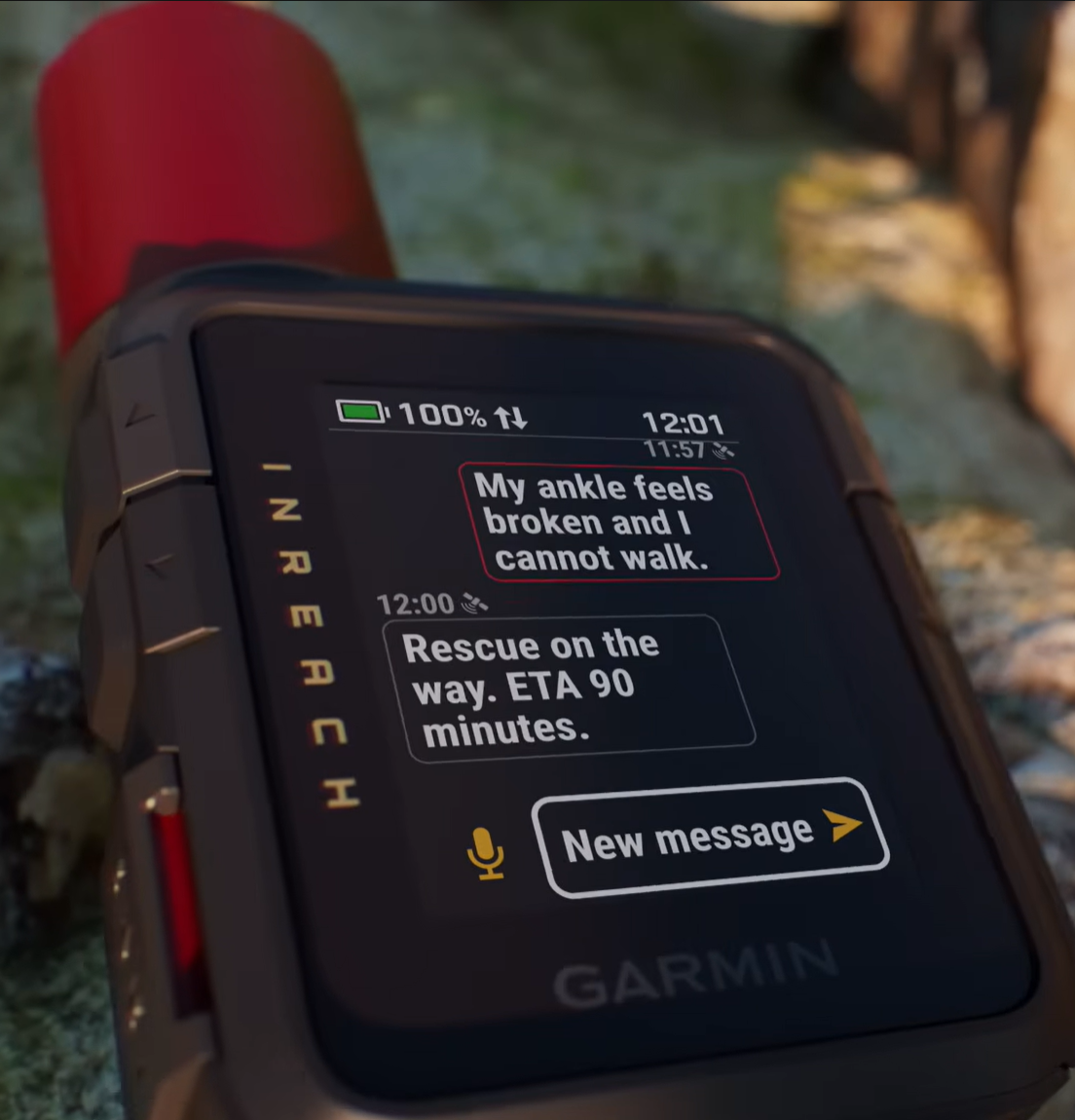
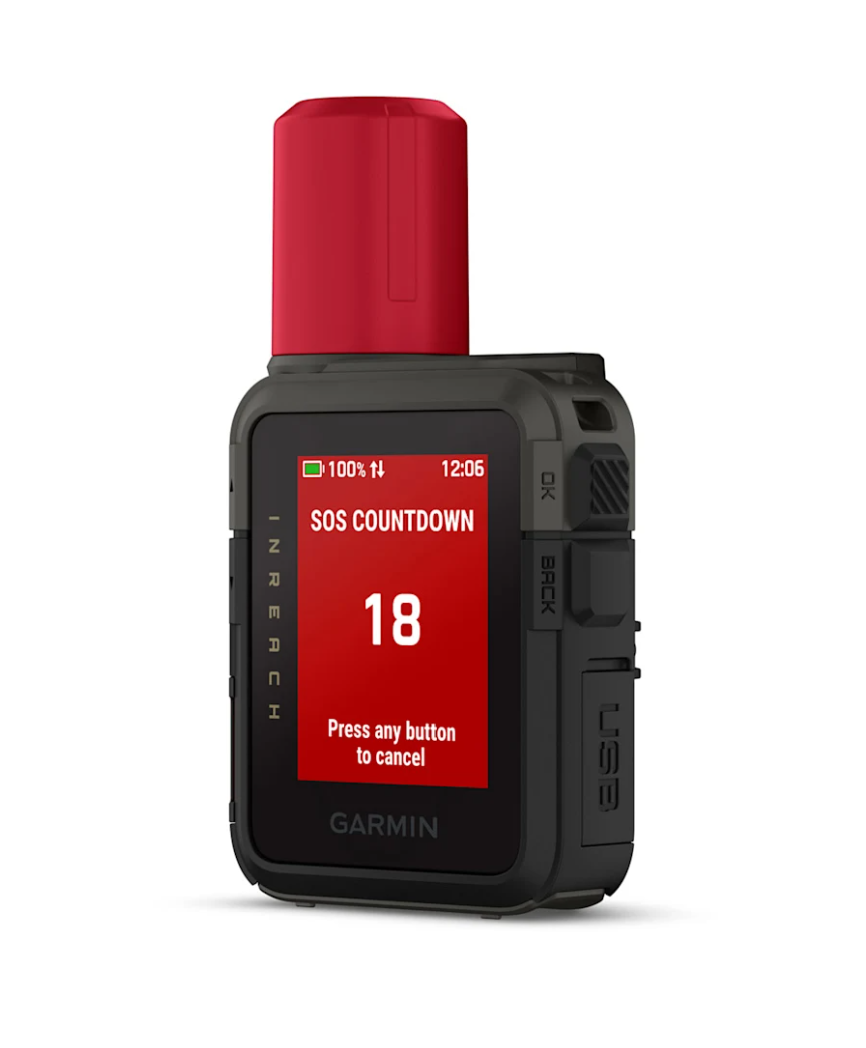
The dedicated SOS button sits beneath a firm protective cover. It was easy to locate and operate with one hand, including in gloves, yet it did not feel prone to accidental activation. The device presents a countdown before sending, allowing an inadvertent trigger to be cancelled.
Our scheduled SOS test received a prompt reply from Garmin Response and confirmed two-way communication. The device also has a safety siren that was audible nearby. We did not measure its sound level or useful range, so we will not attach a distance claim to it.
An inReach is not a substitute for trip planning, first aid, navigation skill or a realistic turnaround decision. The official SOS instructions require an active satellite subscription and a clear view of the sky. A charged device also needs the correct subscriber, emergency-contact and medical information. Update that profile before lending the unit to someone else.
Tracking, MapShare and navigation
We manually started 10-minute tracking at the trailhead. The recorded line generally followed the route closely, helped by multi-band GNSS support. A deep gorge could delay a transmitted point even when the device continued recording its local activity.
MapShare was one of the most useful features for people at home. A private link and password let family see progress without learning the handheld. That quiet background reassurance mattered more than sending frequent messages.
On the unit itself, waypoints, courses, a simple basemap and TracBack provide useful direction. The map lacks the detail we want for complex off-trail planning. Garmin Explore offers offline maps and route planning on the phone, which improves the system but adds another app. I would still carry an appropriate paper or digital map.
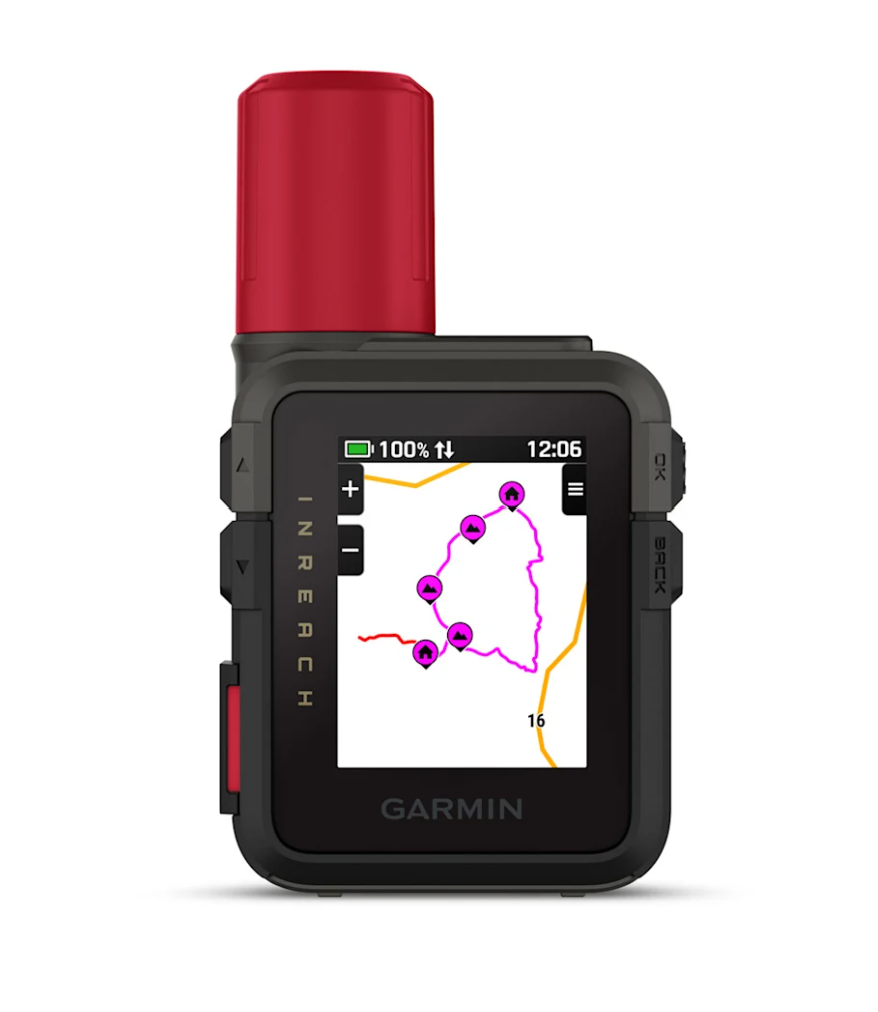
Screen, touchscreen and physical controls
The interface remained responsive throughout the test and did not freeze. Menus are arranged as recognisable apps, and someone comfortable with a phone should understand the basics quickly.
Wet fingers caused occasional unwanted touches. Thick winter gloves did not operate the touchscreen reliably. Garmin kept side buttons for scrolling, confirming and backing out, so every essential function remained available. The power button can lock the touchscreen, and we had no accidental input while the device hung from a pack.
The screen is large enough to read a message without squinting. Detailed map inspection is limited by its physical size, and messages are where the display feels most at home.
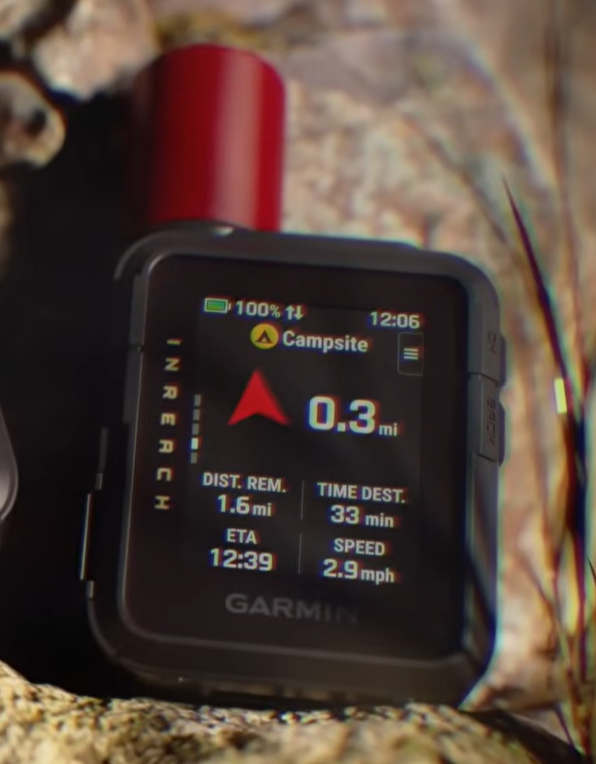
Two-week battery result, with an important catch
Using low-power messaging, a 10-minute tracking interval and a 30-second screen timeout, we reached about two weeks on a charge in open terrain. USB-C charging from a power bank was reliable, and a full recharge took roughly two hours in our use. The device remained usable while connected to power.
That two-week result should not be quoted without its settings. Garmin's current battery table lists up to 350 hours for low-power messaging with 10-minute tracking, but only up to 95 hours for performance messaging at the same tracking interval. Add high-detail all-systems activity recording and the published figure falls to 60 hours. Poor sky view, cold, frequent screen use and richer messages can reduce it further.
For our week-long trips, charging was unnecessary. I would still carry a small power reserve on a remote journey. Battery endurance is excellent, but the cost of arriving at an emergency with an empty communicator is too high to plan around a best-case estimate.
Rain, immersion and pack wear
The Mini 3 Plus stayed on the shoulder strap through several thunderstorms and survived a brief accidental creek drop. Water did not affect the buttons, charging port or speaker after it was dried. The touchscreen itself became less precise under heavy droplets, which is when the buttons earned their keep.
Garmin rates the device IP67, defined here as dust protection and incidental water exposure to 1 metre for up to 30 minutes. The company also lists MIL-STD-810 testing for thermal, shock and water conditions on the bare unit. Neither rating makes it suitable for diving or prolonged submersion.
The case, thick mounting point and rubberised perimeter showed no functional wear. I added a cheap screen protector because the glass regularly knocked against buckles. The tight USB-C flap is the part I expect to age first, though it remained intact after three months.
Carrying it where the antenna can work
At 125.2 g, the communicator disappeared into the load. The supplied loop carabiner kept it easy to reach, although it swung against the shoulder strap. A rigid tether would make sense for people who dislike the movement.
A pocket feels convenient but obstructs the sky. The upper shoulder strap was better because the antenna naturally remained upright and exposed. Garmin's own instructions tell users to point the internal Iridium antenna toward the sky.
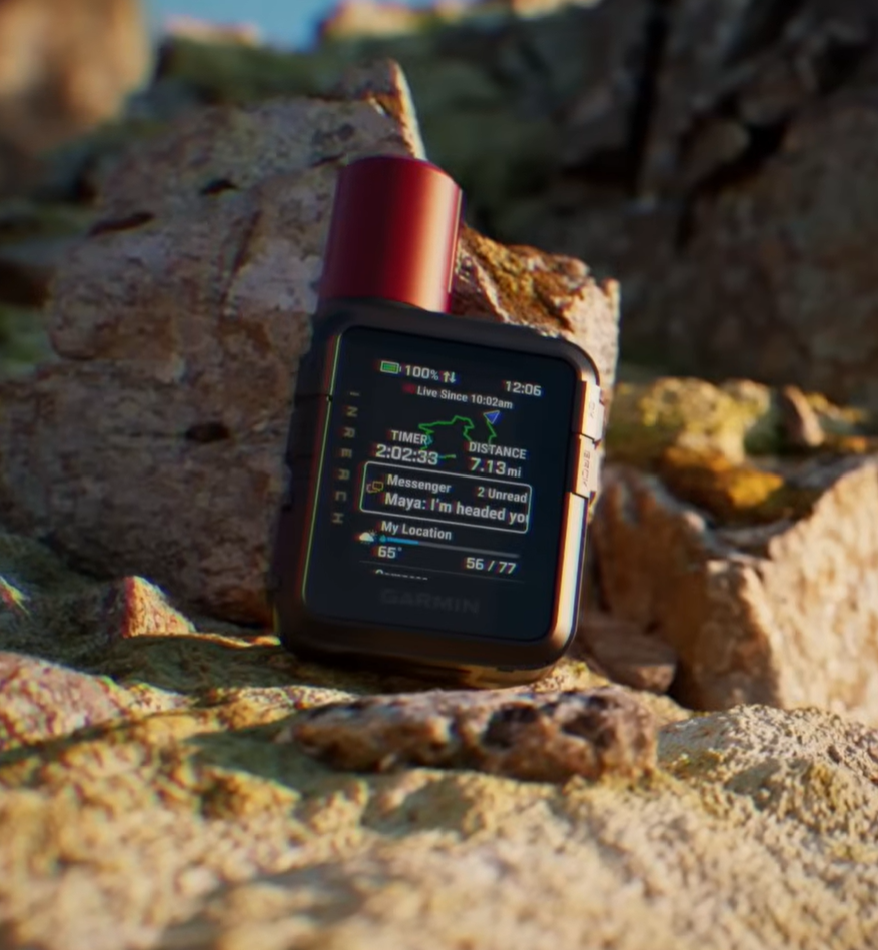
Setup, apps and lending
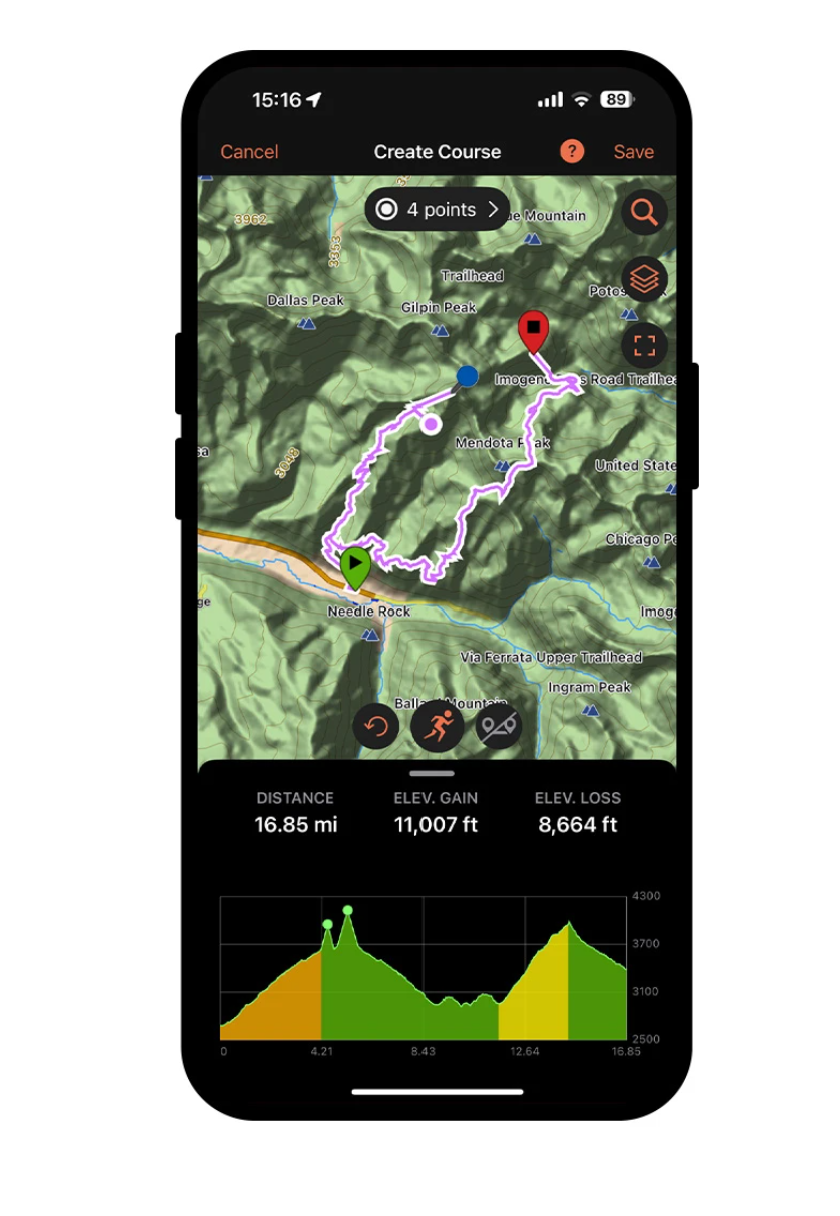
Initial activation was straightforward, but it required internet access to pair the phone, select a plan and complete the subscriber profile. Garmin Messenger handled conversations, contacts and check-ins. Garmin Explore handled route planning, offline maps and data management. Both worked, though switching between them still felt unnecessary.
Bluetooth reconnection and cloud sync were reliable. Updates installed without trouble, and both the phone and device announced new messages. The hardware also remains useful if the phone fails because text, voice notes, check-ins, tracking, navigation and SOS can be controlled on the unit.
Only one phone can be paired at a time. More importantly, the inReach service and SOS profile belong to the subscriber. Lending the physical unit without checking the account and emergency details creates avoidable confusion for responders and contacts.
Subscription cost and value
An active plan is part of the ownership cost. Garmin's Canadian plans currently range from SOS-focused service with pay-as-you-go use to tiers with larger text, weather, tracking, photo and voice allowances. We did not publish a single monthly price because rates, taxes and plan structures can change.
The current Garmin plan overview says all active tiers include SOS. Photo and voice allowances vary by tier, and tracking can be pay-as-you-go on lower plans. Service can be suspended for up to 12 months without monthly fees, but satellite features do not work while suspended. Cancelling and later reactivating can carry an activation fee.
At the CA$509.99 we paid, the Mini 3 Plus was expensive but justifiable. Garmin's Canadian suggested price at launch was CA$699.99. People who need only occasional basic texts and SOS may be well served by a discounted Mini 2 or a simpler app-led communicator. The Plus earns its premium for people who want useful standalone messaging, voice, photo support, long tracking endurance and a colour screen in one compact unit.
Mini 2, ZOLEO, Messenger Plus and phone satellite
The Mini 2 remains smaller and simpler, but composing a custom message on it is slow. The Mini 3 Plus is markedly easier to use without a phone, and its voice, photo-display and group features make longer trips less austere.
ZOLEO provides a smooth app-first conversation but depends more heavily on the phone. Garmin's inReach Messenger Plus is a strong communications alternative if the larger screen and on-device navigation matter less. A navigation-first Garmin such as the GPSMAP 67i is the better direction for people who want detailed handheld mapping.
Satellite features built into newer phones are valuable backups. Capabilities, coverage, service terms and operating methods vary by handset and region, so broad claims about all of them age quickly. I would still carry the inReach for multi-day tracking, a separate battery and a device that stays clipped outside rather than living in a pocket.
Garmin inReach Mini 3 Plus specifications
| Price paid | CA$509.99 |
|---|---|
| Published dimensions | 5.50 × 9.80 × 2.67 cm |
| Published weight | 125.2 g |
| Display | 1.9-inch diagonal transflective colour MIP touchscreen |
| Resolution | 306 × 230 pixels |
| Battery | 1,800 mAh rechargeable lithium-ion |
| Published endurance | Up to 350 hours in low-power messaging with 10-minute tracking; up to 95 hours in performance messaging at the same interval |
| Water rating | IP67 |
| Satellite network | Iridium |
| Positioning | GPS, Galileo, QZSS, BeiDou and multi-band frequency support |
| Charging and data | USB-C |
| Included attachment | Loop carabiner |
| Rating | 4.9 / 5 |
Overall score: 4.9 out of 5. Fast routine messaging, excellent low-power endurance and useful standalone controls make this the best compact inReach we have carried. The basic onboard map and split app system are the main drawbacks.
Device comparison
Garmin inReach Mini 3 Plus vs SPOT X
Two separate Quebec field tests show how each handled messages, tracking, controls and battery life beyond cell coverage.
Comparison guide
Satellite vs Mesh: Which Is Right for You?
Learn when satellite messaging and SOS make sense, and when local mesh range, tracking and lower cost are the better fit.
Emergency communication guide
Satellite Communicator vs PLB: Which Should You Carry?
Compare two-way messaging and interactive SOS with a dedicated 406 MHz distress beacon and smartphone satellite SOS.
Comparison guide
GPS Watch vs Satellite Communicator for Hiking
Compare wrist-based maps and activity recording with off-grid messaging, remote tracking and interactive SOS.

Sources & context
What we checked
Gear Reviews bought this Garmin inReach Mini 3 Plus for CA$509.99. Garmin had no involvement in the test or article.
Editorial disclosure: We bought the device with our own money. Garmin had no involvement in the test and did not review this article before publication.