Packing for a day walk sounds simple until you're the one carrying everybody's water, fleeces and lunch. Add a tent and sleeping bag for an overnight and it gets harder to judge how much room you need. Buying the biggest pack can seem like an easy way out, but a tall 65-litre bag is quite a lot to bring when most of it will be empty.
We've picked three hiking backpacks from our field reviews, covering loaded day walks, lighter backpacking and bigger multi-day loads. Adam used them through family hikes and months of walking in Quebec, including almost 1,000 km with the Hyperlite Unbound 40 and roughly 900 km with the Osprey Atmos AG LT 65. They've all earned a recommendation, but we'd pack them for different trips.
Our backpack picks
For a day out carrying more than your own lunch and a jacket, we'd choose the Osprey Talon 33. For backpacking with compact equipment and a lighter load, we'd take the Hyperlite Unbound 40. When the kit gets bulkier or heavier, the Osprey Atmos AG LT 65 is the one we'd want on our backs.
| Your trip | Our pick | The appeal | The annoyance |
|---|---|---|---|
| Day walks with a substantial load | Osprey Talon 33 | Stable, close carry and room for family supplies | Awkward bottle access and digging through a top-loader |
| Multi-day hiking with compact kit | Hyperlite Unbound 40 | Low weight and excellent pockets for use while walking | A sweaty back and less comfort under heavy loads |
| Bigger loads and more packing room | Osprey Atmos AG LT 65 | Supportive harness, good ventilation and side access | More weight and a curved interior to pack around |
Osprey Talon 33: our pick for loaded day walks
The Talon 33 was bought for a very particular job: carrying the supplies for two adults, an older child and a baby while Adam's partner carried the baby. That meant several people's water, food, spare layers, rain shells, wipes and a substantial first-aid kit. On full days the load came to around 22-24 lb, or roughly 10-11 kg. The Talon handled it well.
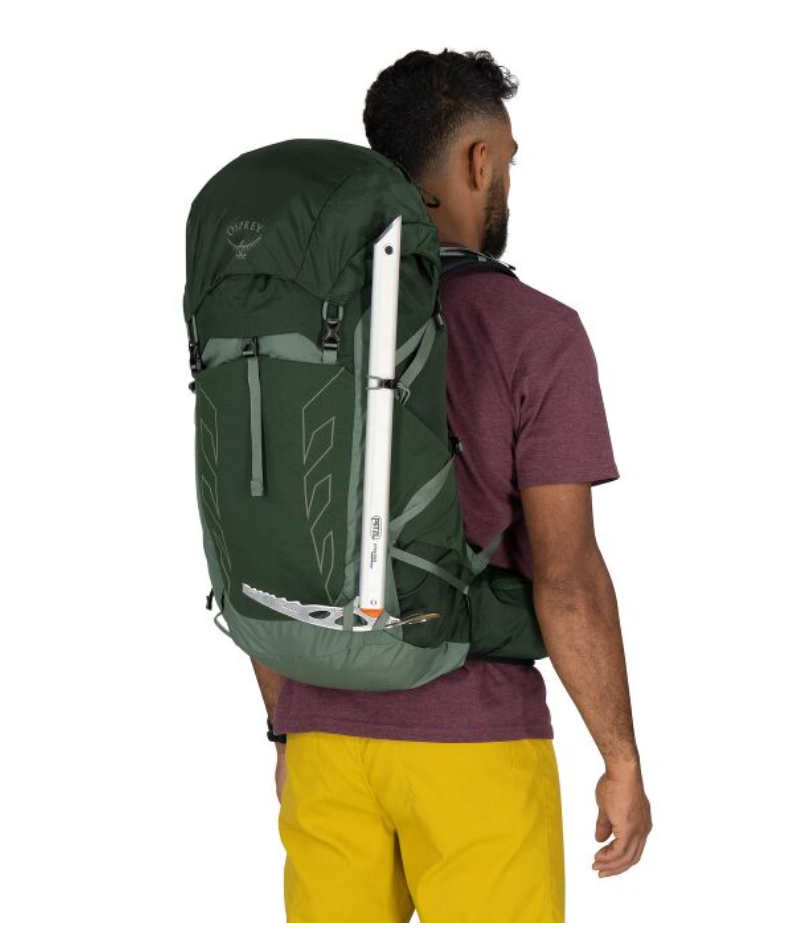
We like the way it stays close when the ground gets awkward. On the steep rock steps of the Acropole des Draveurs, Adam could turn, lean and help his older child without the pack swinging behind him. The hipbelt carried its share, and tightening the compression straps kept things steady as food and water disappeared through the day.
The 33-litre capacity was about right for that family load. Fleeces take up a surprising amount of space, even before everybody's lunch goes in. Compared with the 20-litre Daylite Plus Adam had used previously, the Talon gave him both the room and the support he needed. The front stretch pocket was useful for damp rain shells, while the zipped hipbelt pockets held snacks, a phone and keys.
It's a top-loader, though, so packing order can make a pleasant day slightly more irritating. Put the wipes beneath three jackets and you'll be taking the whole lot out when somebody needs them. The lid also sat awkwardly when the main compartment was nearly empty. We'd choose a smaller bag for a short solo walk with very little to carry.
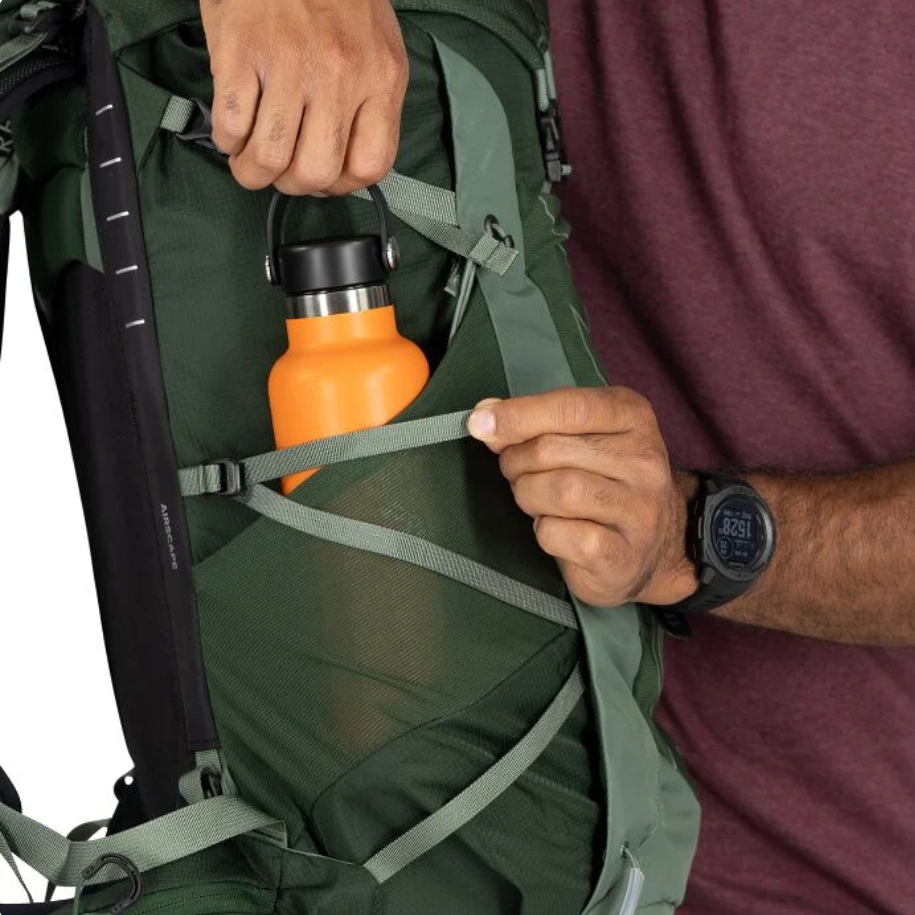
The side bottle pockets were the bigger frustration. They held a Nalgene securely, but Adam couldn't remove and replace it cleanly while wearing the pack. A hydration bladder solved his own drinking access; it didn't get the children's bottles out for him. Try that reach with a loaded pack before buying if you like drinking from bottles on the move.
After roughly 35-40 hiking days over three months, the fabric, straps and buckles were still sound. Adam paid $205 and would buy it again. We'd recommend it for longer day walks, family outings and a light overnight when the complete kit fits. For regular trips carrying a tent, sleep system and several days of food, we'd move on to one of the larger options below.
Hyperlite Unbound 40: our pick for lighter backpacking
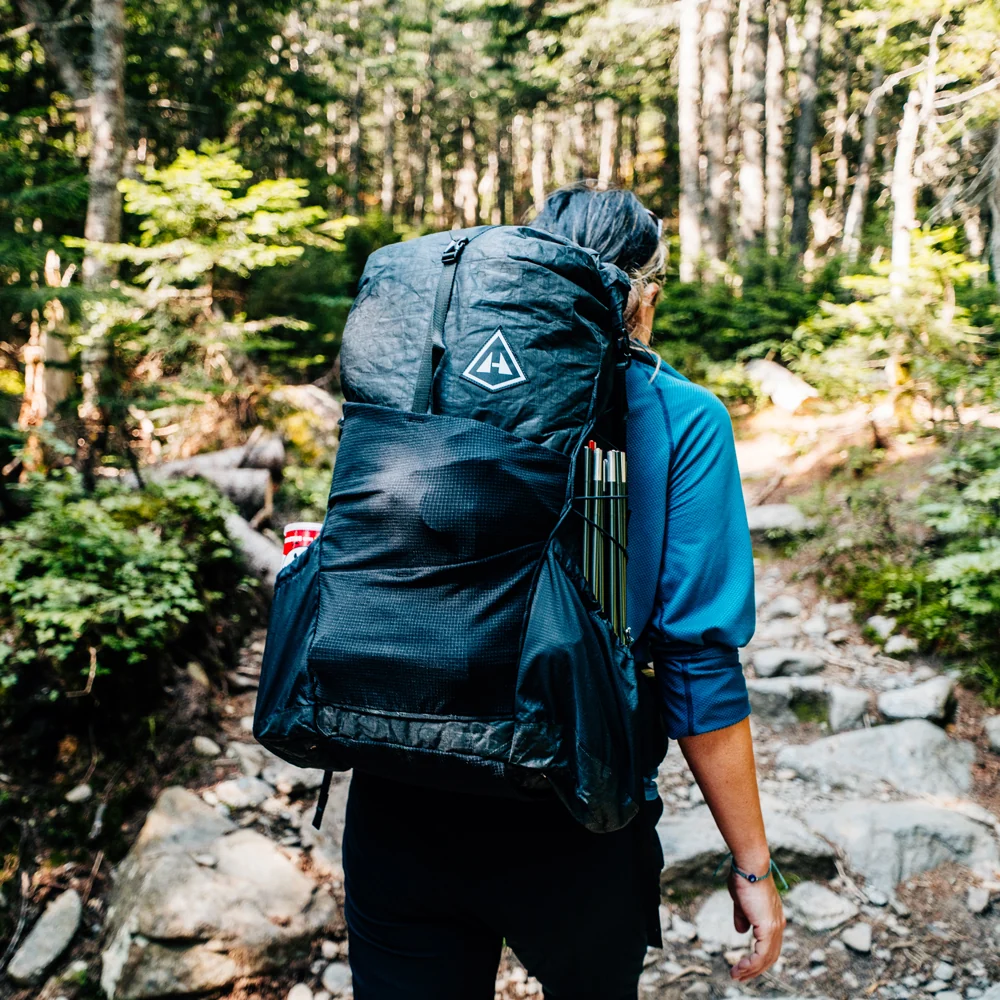
The Unbound 40 is the pack we'd choose when our overnight gear is compact and we expect to spend plenty of time walking. Its 40-litre main compartment and 9 litres of external storage carried Adam's equipment through almost 1,000 km in Quebec. At his normal load of about 8 kg, including food and water, it stayed close and comfortable from morning until evening.
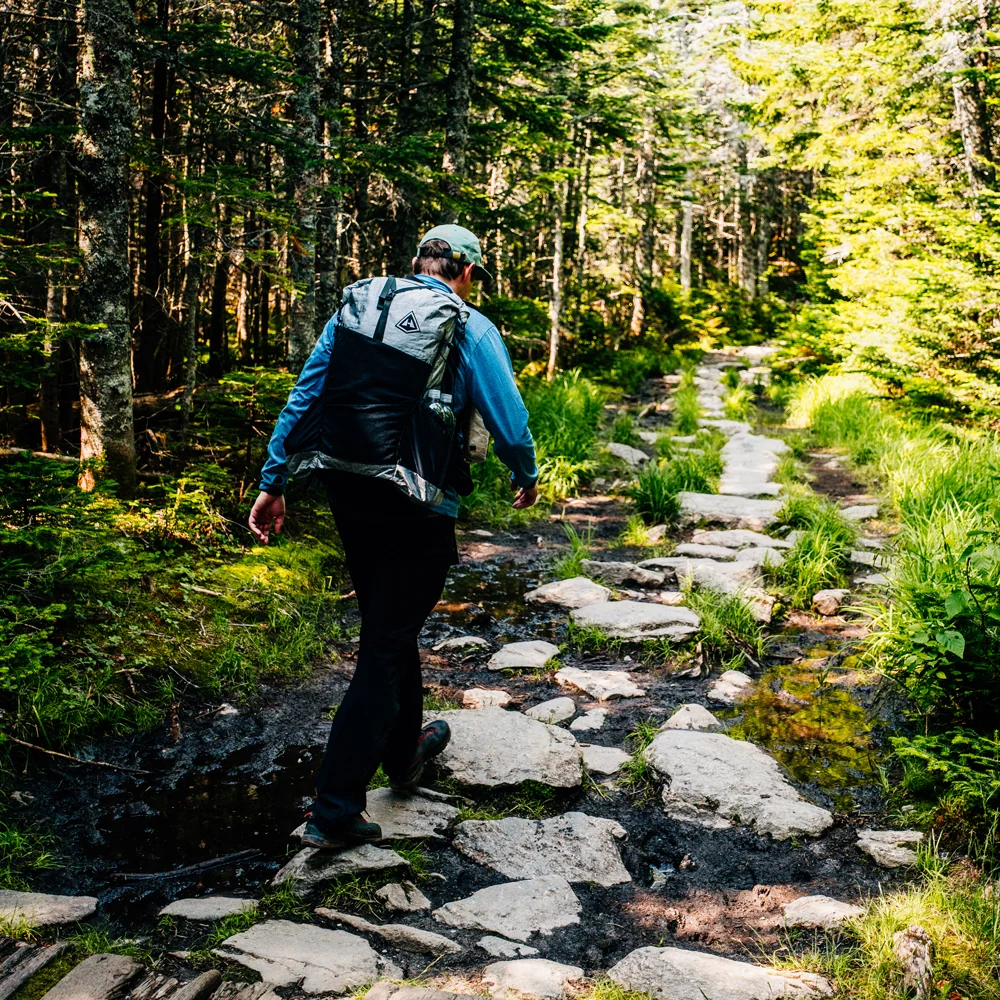
The outside pockets are a large part of why we like it. The front pocket has access from both sides, the bottom stash pocket takes food or a shell, and the big side pockets let Adam remove and replace a bottle one-handed. Wet rainwear could stay outside the main compartment, and the things he needed regularly were already within reach. There was much less stopping to take the pack off.
That arrangement makes the simple roll-top compartment easier to live with. Sleep equipment can stay buried while snacks, water and a spare layer sit outside. We'd still pack soft clothing between the thin back padding and any hard cookware. A badly positioned pot made itself felt quickly.
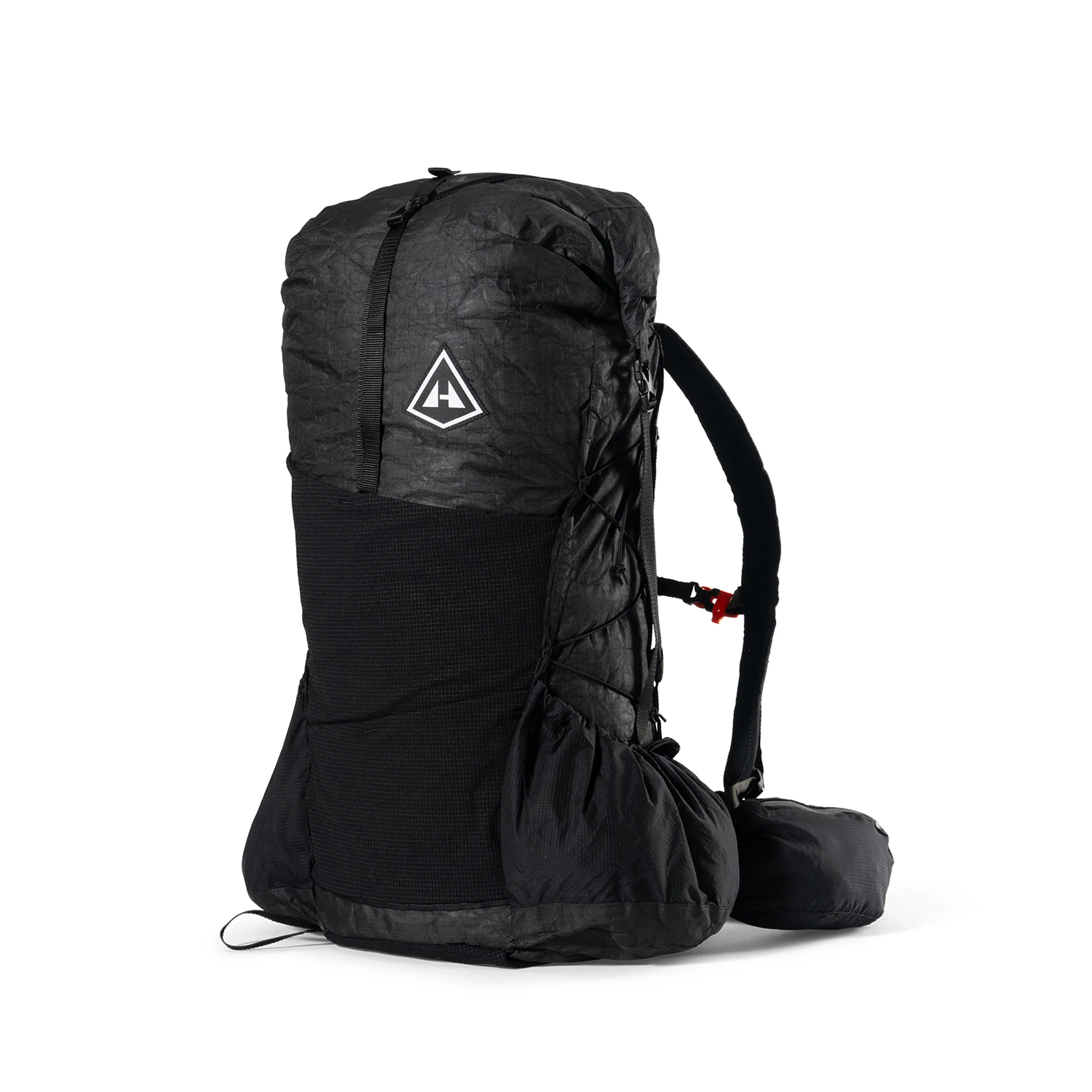
The other cost is heat. There is no suspended mesh or useful air gap behind the pack, and Adam's shirt became wet during humid days reaching 38°C. The close fit helped control the load on awkward ground, but we'd choose the Atmos if back ventilation were high on our list.
We'd also keep a good distance from the published 40 lb load ceiling. Comfort fell away as Adam approached that weight, and a 19.6 kg transfer load was unpleasant. The pack has no load lifters to help fine-tune a particularly heavy carry. The comfortable 8 kg hiking load is the part of this test we'd build our buying decision around.
Its rain performance was excellent. Days of sustained rain stayed outside the main compartment, with taped seams and a body that shed surface water readily. Adam used a light plastic liner around his sleep equipment. After three months of rock, branches, mud, coastal use and repeated packing, the body and stretch pockets had no meaningful damage.
Adam paid £379, so we'd want to be sure the rest of our kit suited it before spending the money. If your sleeping bag and tent already fill a large rucksack, a lighter 40-litre pack will leave you short of room. With compact kit, manageable food carries and a sensible total load, the Unbound is our favourite of these three for covering miles.
Osprey Atmos AG LT 65: our pick for bigger loads
Sometimes the equipment is bulky, the food carry is long, or you're bringing things for somebody else. The Atmos AG LT 65 gives us more room and a harness we'd be happy to put a substantial load into. Adam wore it for roughly 900 km over three months, with normal hiking loads around 8-10 kg and heavier transfers between accommodation.
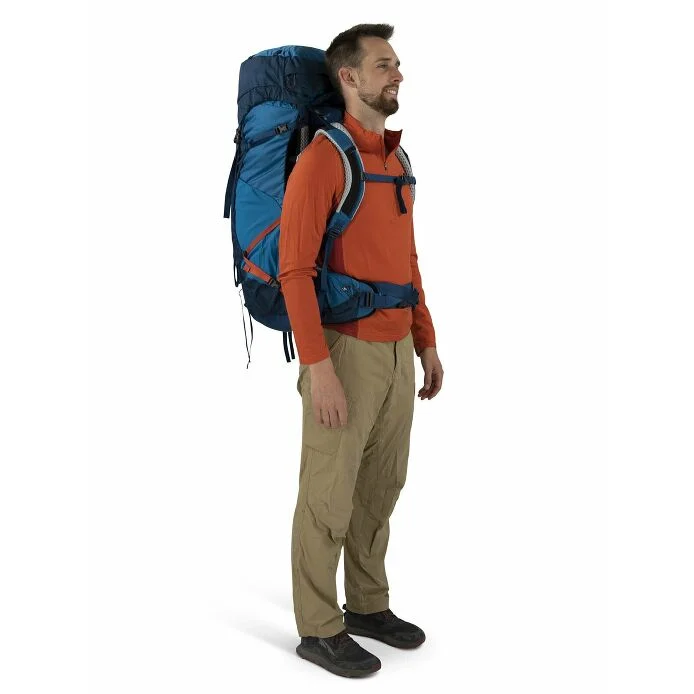
The AntiGravity back system is the reason we'd choose it. The suspended mesh, peripheral frame and extending hipbelt work together to keep weight off the shoulders. Adam had no recurring shoulder or hip soreness during the test. Osprey gives the pack a 14-18 kg load range, and this is the one we'd favour when our packing list is heading that way.
It was easy to adjust, too. The harness moves between visible rungs on a moulded ladder, and the padded hipbelt wings extend around the hips. Once the torso length and belt were set properly, the pack stayed balanced. Early in the setup, poor adjustment made it feel as though the load was pulling backwards; a small correction brought it closer.
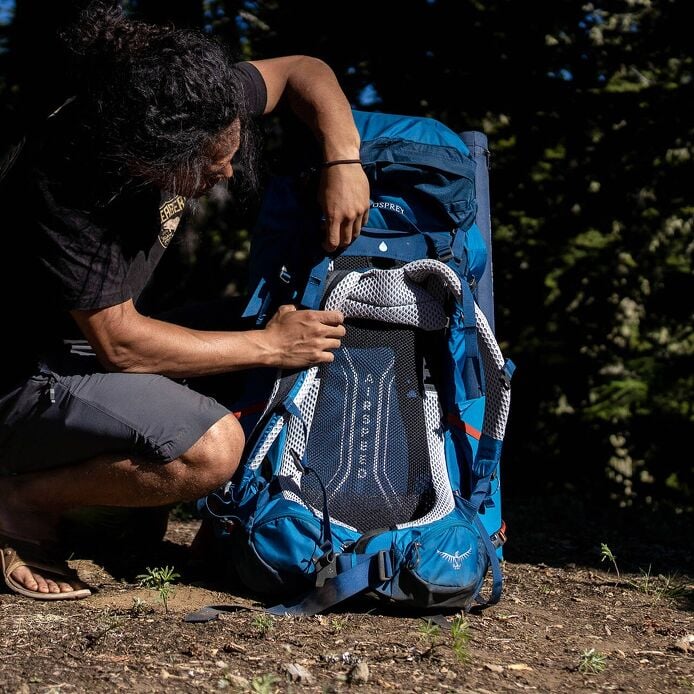
The ventilation was welcome on warm walks. A mesh panel keeps the main bag away from the back, leaving room for air to move. The price is a curved space inside the pack. Clothes and a sleeping bag fill it easily enough, but a rigid camera cube or cooking box can be awkward to arrange. We'd take that irritation for the comfort, although we'd bring our actual equipment along when trying one.
The curved side zip gives another route into the main compartment, which is handy when something has worked its way beneath the day's layers. We also liked the angled bottle-pocket openings, accessible hipbelt pockets and front pocket for wet gear. The LT model drops the separate lower sleeping-bag door and some of the extra storage found on the fuller Atmos.
Its included rain cover kept the exterior protected through four serious downpours, and the body, frame, zips and mesh finished the trip without a failure. Adam paid £250. We'd be happy spending that on a pack for regular multi-day loads, but it is a lot of bag for somebody who usually carries a small lunch and a fleece.
At about 1.93 kg in L/XL, the Atmos weighs substantially more than the Unbound before anything goes inside. We'd accept it when the extra room, ventilation and support earn their place. For light backpacking with a small kit, we'd rather carry the Hyperlite.
Capacity, weight and the loads we carried
| Pack | Capacity | Manufacturer-listed pack weight | Our normal tested load |
|---|---|---|---|
| Osprey Talon 33 | 33 L | 1.26 kg, one size | 22-24 lb / about 10-11 kg on full family days |
| Hyperlite Unbound 40 | 40 L main body, plus 9 L external | 773.9 g average in medium | About 8 kg |
| Osprey Atmos AG LT 65 | 65 L in S/M; 68 L in L/XL | About 1.93 kg in L/XL | About 8-10 kg |
The pack name doesn't always tell the whole capacity story. The larger Atmos has 68 litres of stated space, and the Unbound's outside pockets add storage beyond its 40-litre main body. We'd think about where wet layers, bottles and the day's food will go, as well as whether the sleeping bag fits through the opening.
Choosing for the walks you do
Day walks and family supplies
We'd start with the Talon if most trips end back at the car and there's a substantial pile of water, food and spare clothing to carry. It gives that load a supportive home without the height and bulk of the Atmos. For a short solo outing, we'd want less bag. A 33-litre pack is generous when you're only packing for yourself.
Weekends and longer walking trips
The length of a trip doesn't decide the pack size on its own. Adam lived out of the Unbound for three months, yet a bulky tent and sleeping bag could fill it before a weekend's food goes in. We'd lay out the complete kit, include the largest food and water load we expect, and check its packed size and weight before choosing between the Unbound and Atmos.
Compact kit at lighter loads points us towards the Unbound. Bulky sleep equipment, shared supplies or longer food carries make the Atmos more appealing. Our sleeping mat guide is useful here: the rolled size of the bed can change how much pack you need.
Fit, access and wet gear
Try the pack with the weight you expect to carry, then walk, bend and reach for a bottle. Spend enough time in it to notice the belt and shoulder straps. Adam was around six feet tall in these tests; measure your own torso and use the model's fitting instructions when choosing a size. Osprey explains the Atmos adjustment sequence in its owner's manual.
Keep sleep equipment and spare dry layers inside a liner or dry bag, and put wet shells in the outer storage. Both Ospreys have useful front pockets; the Unbound adds particularly good access while walking. Once home, empty everything out and let it dry. Our rucksack care guide covers cleaning, drying, storage and repairs.
The testing behind our picks
These recommendations draw on three full reviews by Adam Whistler. The Talon 33 carried family supplies over roughly 35-40 hiking days in a Quebec summer. The Unbound 40 covered almost 1,000 km over three months, and the Atmos AG LT 65 covered roughly 900 km over three months, both combining trail use with travel between locations.
All three were bought by Adam. The scores above are the ratings from those reviews, out of five. Comfort, access, heat, rain performance and wear come from that use; the capacities and listed pack weights were checked against the manufacturer pages below.