The Jetboil Flash and Coastal Range Backpacker are both appealing if your camp kitchen mostly makes coffee and boils water for dinner. The burner packs inside the pot, there's very little to assemble and a hot drink doesn't take long. But the Backpacker gives you a larger pot and a lower listed weight, while the Flash has a sleeve and heat indicator we enjoyed using. So what would make us pick one over the other?
We took the Flash on a 90-day Quebec trip and used the Backpacker for a week in the Lake District, making drinks, porridge and meals for a family of four. Here's how the packing, hot-pot handling and occasional attempt at cooking worked out, and which we'd take alone or share with another hiker.
The differences at a glance
| Jetboil Flash 1.0L | Coastal Range Backpacker | |
|---|---|---|
| Our pick for | Solo coffee and add-water meals | Two hikers sharing a light cooking kit |
| Pot capacity | 1 L | 1.2 L |
| Listed system weight | 371 g, plus 27 g stabilizer | 260 g, excluding the pack towel |
| Fuel packed inside | 100 g canister | 100 g or 230 g canister |
| Packed dimensions | 10.8 cm wide x 19.05 cm high | 12.1 cm wide x 15.9 cm high |
| Published 500 mL boil time | 120 seconds, averaged over canister life | About 2 minutes 30 seconds |
| Cooking control | Poor simmering; food catches in the narrow cup | Limited low heat; thick meals scorch centrally |
| Handling annoyance | Lid can lift under heavy steam | Cozy gets too hot straight after boiling |
| Ignition in our testing | Became unreliable during the 90-day trip | Worked throughout the one-week trip |
| Review score | 4.2 / 5 | 4.5 / 5 |
The weights above exclude fuel. We'd pack the Flash's stabilizer, bringing its listed kit to 398 g. The Backpacker's 260 g includes its pot, burner, cozy, lid, bowl and pan supports.
Where we've used them
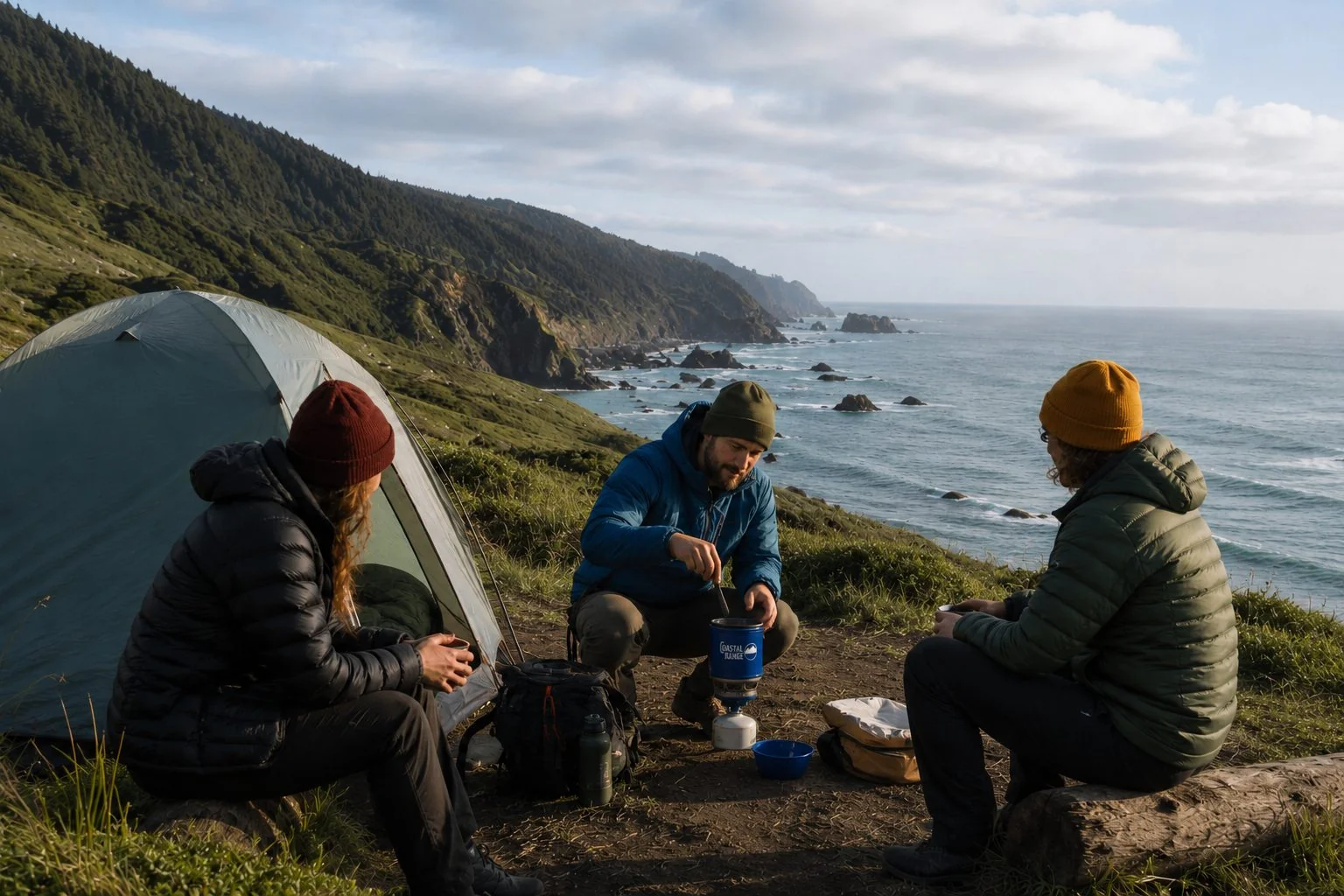
Adam bought the Flash for £130 and took it on a 90-day hiking and camping trip around Quebec, including the Laurentides, Saguenay and the Gulf of St Lawrence. Coffee was its main job, along with water for straightforward camp meals. The cup, burner connection and stabilizer finished the trip intact; the igniter was the part that let it down.
The Backpacker cost US$149 plus import taxes and spent a week hiking and camping in the Lake District. It supplied hot water for a family of four, with porridge, dehydrated meals and coffee making up most of the work. Adam also fried an egg in a small titanium skillet using the supplied supports.
You can read the full Jetboil Flash review and Coastal Range Backpacker review for the trip notes and scoring.
What goes in the rucksack
The Backpacker wins on listed weight and pot space. Even before adding the Flash's stabilizer, there's a 111 g difference between the systems. Include those legs and the gap becomes 138 g, with the Backpacker's towel still to add. We'd happily carry that larger pot for two people, especially when it also takes a 230 g canister inside.
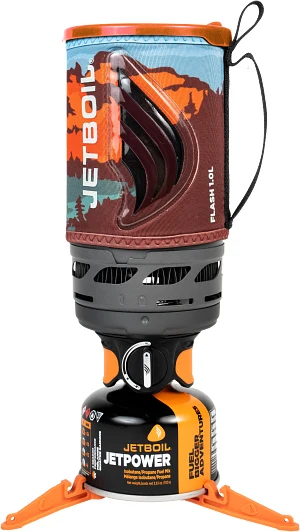
The Flash makes a narrower, taller package. Its 100 g canister, burner and orange stabilizer all fit inside the one-litre cup, with the lid and bottom cover closing the kit. Once you know the arrangement, putting it away is quick. Pack the pieces carelessly and they can rattle as you walk.
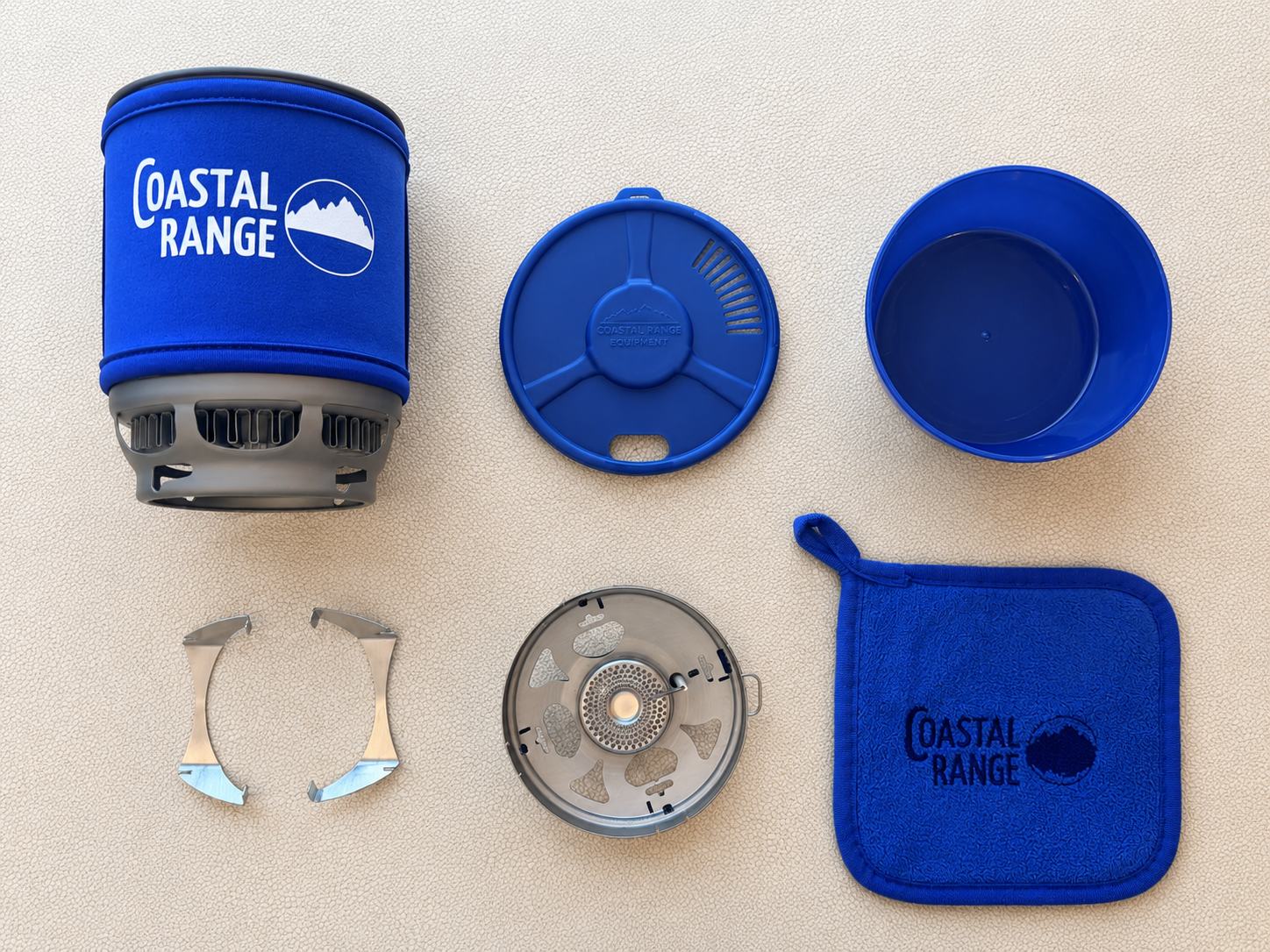
The Backpacker is wider and shorter. Its bowl protects the heat exchanger underneath, while the supplied cloth wraps the burner to stop it scratching the pot. We liked having the supports included and stored with everything else. Both are tidy kits; the Backpacker gives more space to the pot and fuel without adding weight.
Coffee and hot water on the trail
The Flash was easy to like on the Quebec trip. A coffee-sized amount of water often boiled in about 100 seconds in favourable conditions. The indicator on the sleeve changes colour as the water heats, so we could get the mug ready without repeatedly lifting the lid. For a short stop, there wasn't much waiting around.
Jetboil's published half-litre figure is 120 seconds, averaged over the life of a canister. Coastal Range publishes about two and a half minutes for the same volume. The Backpacker also felt quick in use: repeated checks with 500 mL starting at 10°C took around two minutes 20 seconds in calm conditions.
We wouldn't choose between them over a small difference in the wait for coffee. For one person, the Flash is a convenient routine. For two people waiting for drinks and breakfast, we'd rather have the Backpacker's extra pot space. Preparing water for four still meant multiple batches, so we'd buy it as a useful shared hiking stove rather than expect it to feed a family all at once.
The Backpacker used roughly 4-5 g of fuel per 500 mL boil in favourable conditions. Its heat exchanger and the Flash's FluxRing both keep the flame close to the pot. That arrangement works well for repeated hot drinks and dehydrated meals, which is where we'd use either stove most.
The hot-pot annoyances
The Backpacker's cozy was our biggest complaint. Immediately after a hard boil, it became too hot to hold comfortably with bare hands. That is irritating on a stove whose main job ends with picking up a hot pot and pouring. We'd give it time to cool enough to handle, but we'd much rather the insulation did a better job in the first place.
The Flash's sleeve was easier to live with, and the heat indicator earned its place. We did have trouble with the lid under a vigorous rolling boil: steam could soften it and make it lift. Turning the burner off promptly saved having the lid move about while the water kept boiling.
We also preferred pouring into a separate mug. Drinking very hot coffee through the Flash lid's spout was an easy way to burn our lips. A mug adds something to pack, but makes the drink more enjoyable. The Backpacker's bowl and strainer lid are useful extras, especially when sharing the kit.
Porridge, pasta and a frying pan
We'd keep the Flash's menu fairly short: water for coffee, tea, noodles and meals that rehydrate in their own pouch. Finding a steady low flame is fiddly, and the narrow cup is awkward to stir and clean when food sticks. A fast water boiler soon feels less convenient when dinner has caught on the bottom.
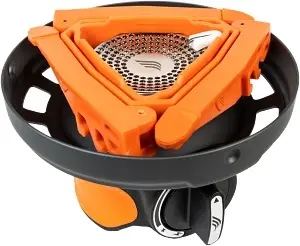
The Backpacker gives you more options, but cooking in its own pot still takes attention. Porridge needed regular stirring. Chilli and cheesy pasta could scorch over the hot spot in the middle, while the useful flame adjustment occupied a short stretch between too much heat and off.
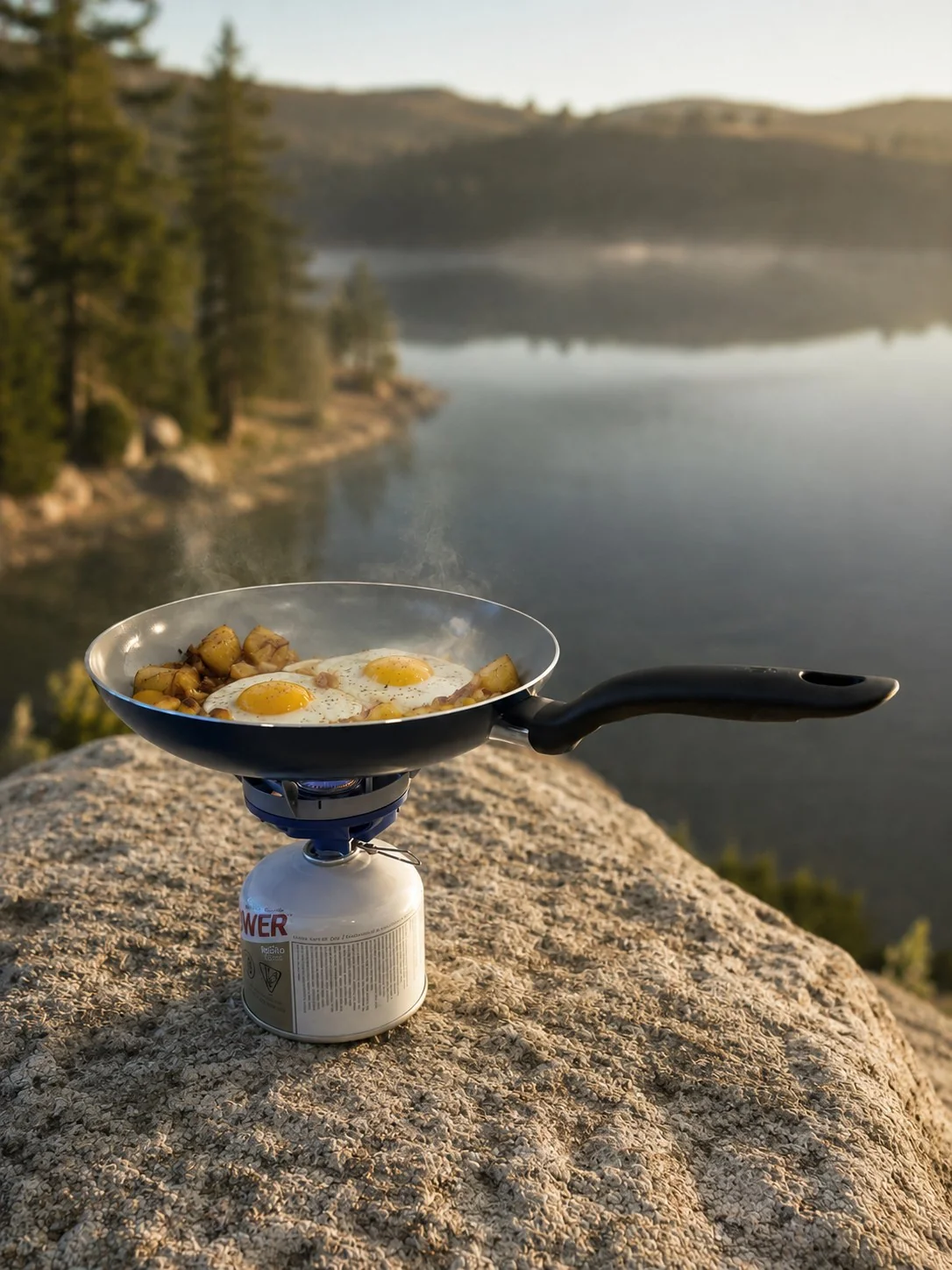
The included supports are the reason we'd pick the Backpacker if we wanted to fry something occasionally. They worked with a small titanium skillet for an egg. The pan could slide, though, so we kept an eye on it. We'd stay with small cookware; Adam wouldn't use a pan larger than about eight or nine inches on those supports.
For a walking trip with the odd cooked breakfast, that flexibility is welcome. For fresh meals every night, we'd choose a wider, steadier setup with finer flame control. Our camping stove buying guide goes through the different formats. Neither of these would persuade us to give up a stove we already enjoy simmering on.
Wind, stability and cold mornings
Both pots lock onto their burners, which keeps the vessel from sliding off during an ordinary boil. The complete stove still sits on top of a fuel canister. A locked pot can topple with the rest of the assembly, so a level, non-combustible spot is worth finding before lighting either one.
We used the orange stabilizer with the Flash every time. The Backpacker doesn't include canister legs and felt top-heavy on uneven rocks. We'd be especially deliberate about where it goes when cooking around children or passing feet.
Light breezes were manageable with both systems. Stronger wind slowed the Backpacker, and an exposed ridge could make the Flash work much harder too. We'd move to a sheltered outdoor spot rather than wrap an improvised windscreen around the canister, where trapped heat can overheat the fuel.
Neither stove has a pressure regulator. The Backpacker's output softened near freezing and as the canister emptied. For cold-weather trips, we'd give fuel delivery more thought than the quickest advertised boil time. These upright systems are at their most convenient when they have enough canister pressure to run properly.
When the igniter stops cooperating
The Flash's ignition became unreliable over the 90-day trip. Sometimes it took several attempts; sometimes it refused. We carried on using the burner with a separate lighter. The cup, connection and stabilizer stayed sound, but having to reach for a lighter took away some of the convenience we'd paid for.
The Backpacker lit with one press throughout its week in the Lake District. Its valve stayed smooth, the threads met the canisters cleanly and the pot didn't warp. We'd still keep a lighter in the cooking kit with either stove. It takes very little space and lets breakfast carry on when the built-in spark gives up.
For cleaning after a boilover or working through ignition and weak-flame problems, see our camping stove care guide.
Which we'd pack
For two hikers sharing, we'd take the Backpacker. The larger pot, low system weight and room for a 230 g canister make it a useful kit for hot drinks and add-water meals. Its supports also give us the option of a small frying pan. The hot cozy is the part we'd most like changed.
For solo coffee stops and a simple meal routine, the Flash remains our pick. We liked the locking cup, sleeve and heat indicator over a long trip. We'd take its stabilizer and a separate lighter, then use it for what it does well: getting water hot quickly and packing away neatly.
If the lowest weight is your priority, choose the Backpacker even for solo use. The Flash doesn't recover its weight disadvantage when you're cooking for one. Its appeal is in the handling and routine, while Coastal Range gives you more pot for fewer grams.
We'd keep a working Flash if its cup and packing already suit the way we eat. We'd consider the Backpacker if we wanted to share a larger pot or reduce carried weight. For a broader camp kitchen, our best camping stoves guide also covers the two-burner Genesis and Everest.
Sources and updates
Full reviews and specifications
The recommendations draw on our 90-day Flash review and one-week Backpacker review. Published weights, capacities, packing details and boil figures checked on 3 November 2026: Jetboil Flash 1.0L and Coastal Range Backpacker.