The Jetboil Flash is our pick for solo coffee and add-water meals, the Coastal Range Backpacker makes more sense for two hikers sharing a stove, and the Jetboil Genesis is the one we'd choose for cooking proper campsite dinners. The Camp Chef Everest 2X earns its place when you want fierce heat, heavy pans and better protection from a breeze.
Coffee outside the tent is a fairly easy job for a stove. Frying breakfast while keeping a pot of water on the go asks a bit more of it. And a two-burner setup that makes dinner easy at a campsite is going to feel rather less welcome halfway up a hill. We've used all four stoves in this guide, so we've split them into the ones we'd carry for hot drinks and simple trail meals, and the ones we'd pack in the car for cooking.
The quick picks
| Your trip | Our pick | Why we'd choose it | The compromise |
|---|---|---|---|
| Solo hiking, coffee and dehydrated meals | Jetboil Flash 1.0L | Quick boils and a tidy, self-contained kit | Poor simmer control; our igniter failed |
| Two hikers sharing hot drinks and add-water meals | Coastal Range Backpacker | A larger 1.2 L pot in a light system | Hot cozy and a concentrated flame |
| Couples or groups cooking from the car | Jetboil Genesis Basecamp System | The best low-flame control here, with cookware that packs together | Wind protection is fiddly and underwhelming |
| Campsite cooking with big pots and heavy pans | Camp Chef Everest 2X | Powerful burners, a broad grate and useful wind panels | Bulky to carry; low heat needs attention |
Where we've used them
Adam bought all four stoves. The Flash came on a 90-day hiking trip in Quebec, mostly making coffee and heating water. The Backpacker spent a week in the Lake District, where we used it while feeding a family of four. The Genesis has had about three years of use across Europe and Canada, including festivals and beach stops while sailing. We've owned the Everest for roughly three years too, using it on eight or nine vehicle-supported camping trips in cold, windy and higher-altitude conditions.
On foot, we want the stove to pack away easily and get a drink made without much fuss. At a campsite, we're happier carrying more if it means we can use a decent pan, turn the heat down and cook two things at once.
Water-boiling systems for backpacking
If most of your meals begin with pouring hot water into a pouch, an integrated system is a convenient way to travel. The burner and heat-exchanger pot work together, and the pieces nest inside the pot afterwards. Both of these are good at getting the water ready. Put porridge or a thick sauce directly over the flame and you'll have more work to do.
Jetboil Flash 1.0L: our pick for solo coffee and simple meals
The Flash was easy to get along with over those 90 days in Quebec. Stop somewhere level, fit the stabilizer, lock on the cup and put the water on. A coffee-sized amount was often ready in around 100 seconds in favourable conditions. The thermal indicator was handy when we were busy with the rest of breakfast.
That speed suits the way we used it. Coffee, a hot drink later in the day and a meal needing boiling water are all easy jobs for the Flash. Its one-litre cup keeps the package compact, with room inside for the burner, stabilizer and a 100 g fuel canister. We liked being able to put the whole lot away in one cup, especially when packing up in the morning.
Jetboil lists the system at 371 g, plus 27 g for the stabilizer. We'd carry the stabilizer: the assembled stove is tall and top-heavy. The Backpacker below has a larger pot and a lower listed system weight. We'd still be happy carrying the Flash for solo coffee stops, though we'd look at the Backpacker if we were trying to trim the pack weight.
Cooking in the cup is where we stopped enjoying it so much. The useful low-flame range is narrow, and food can catch before you've found a comfortable simmer. We'd happily pack it for coffee and dehydrated dinners. We'd choose something else for frying or an evening meal that needs a sauce gently bubbling away.
The igniter also became unreliable during the trip, and the lid could lift or soften under a rolling boil. We preferred pouring into a separate mug rather than drinking through the hot spout. Light breezes were manageable, but exposed ridges slowed it down. Once the igniter started playing up, we used a separate lighter and carried on making coffee.
Coastal Range Backpacker: the better fit for two hikers sharing
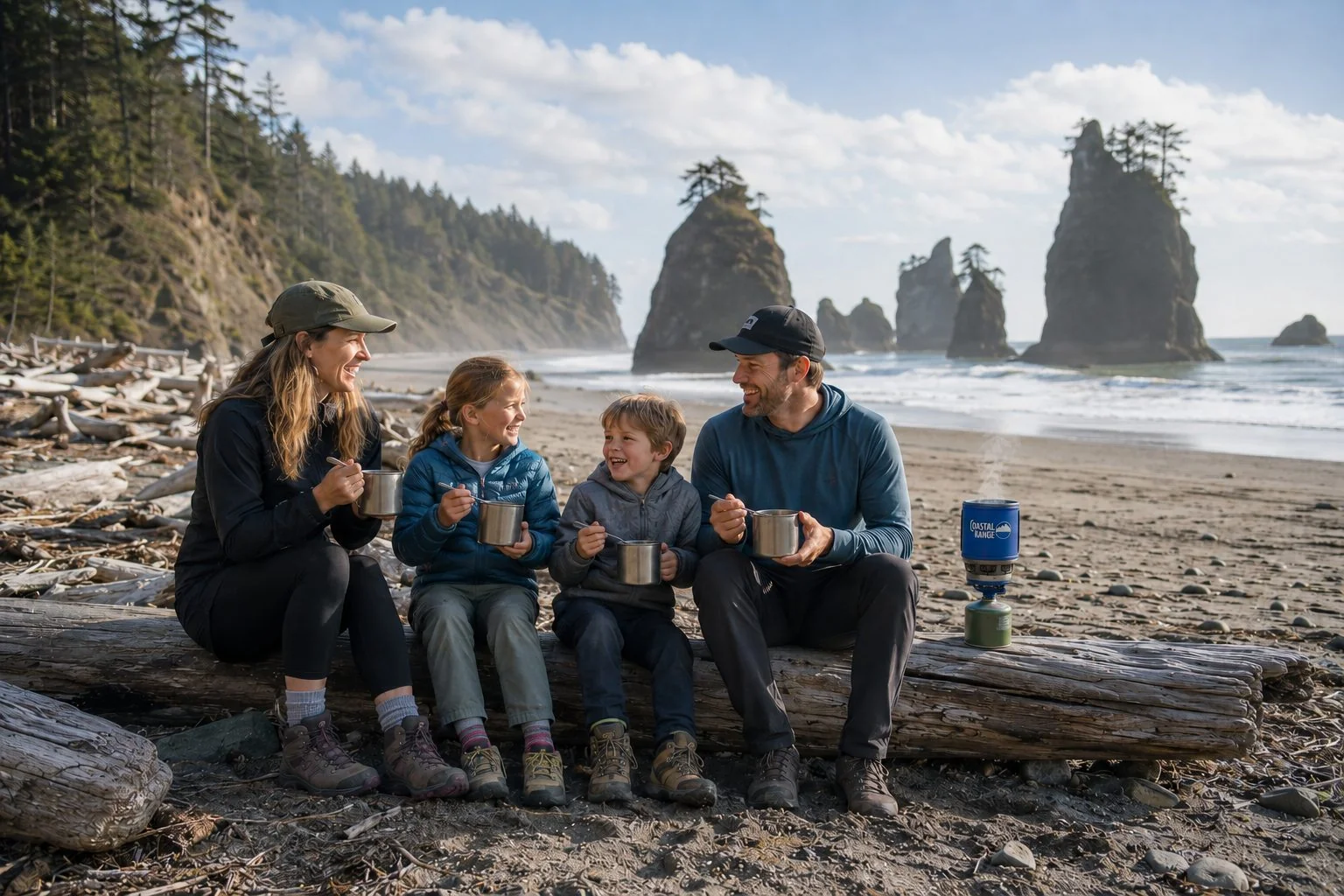
The Backpacker starts to look tempting when there are two of you waiting for a drink. Its 1.2 L pot offers more room than the Flash, while the listed 260 g system weight includes the pot, burner, lid, bowl and pan supports. It also packs with either a 100 g or 230 g threaded fuel canister inside. There's a lot to like there if you're sharing the cooking kit between two rucksacks.
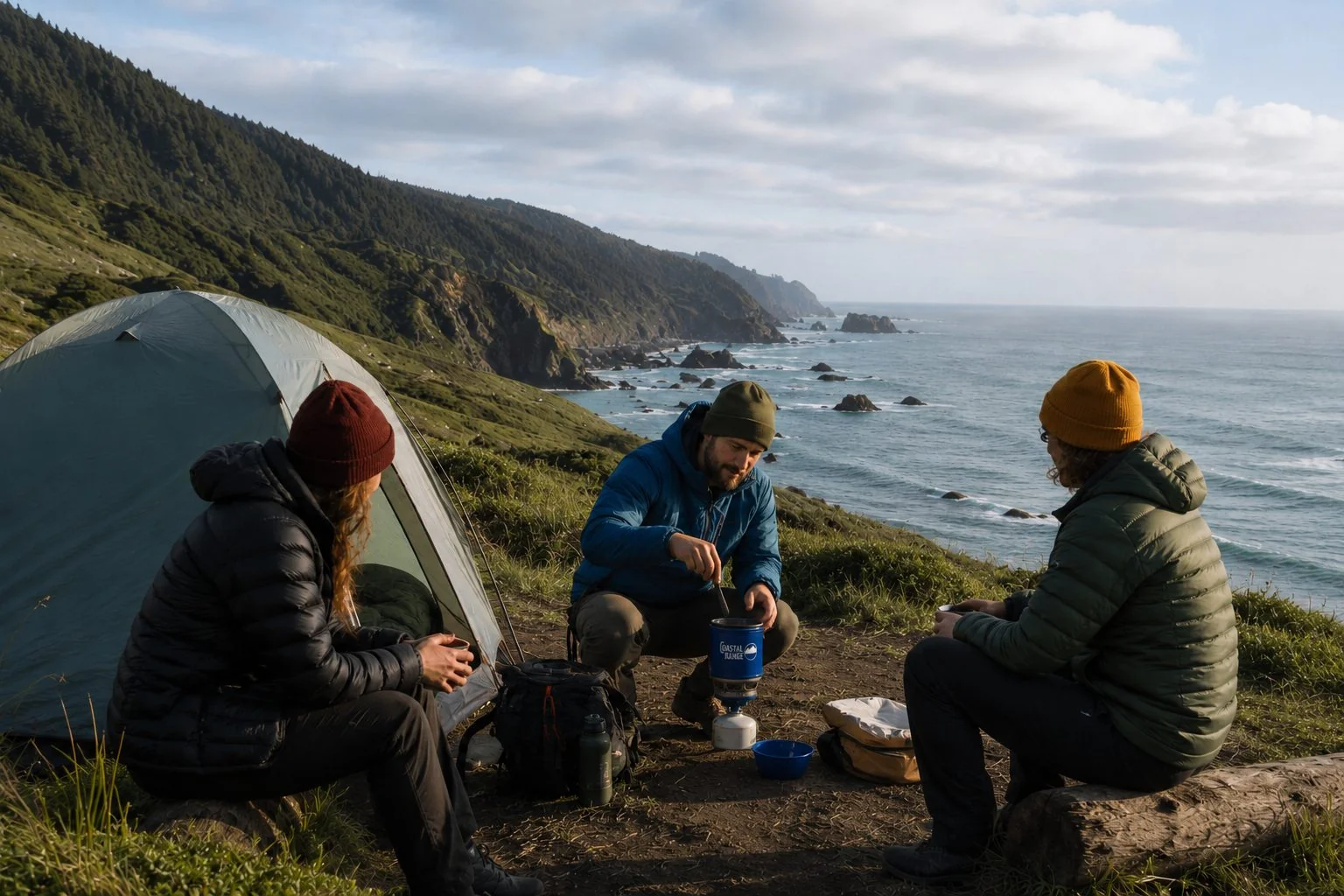
During our week in the Lake District, repeated boils of 500 mL of water starting at 10°C took around two minutes 20 seconds in calm conditions. Preparing food for four still meant working in batches. The pot was useful for serving two at a time, which is why we'd choose it for a couple rather than buy it expecting a family kitchen.
It has more flexibility than the Flash's cup-focused arrangement. We used the supplied supports with a small titanium skillet and fried an egg. The pan could slide around more easily than the fitted pot, though, so we had to keep an eye on it.
Thicker food also exposed the concentrated flame. Chilli and cheesy pasta could scorch in the middle, while porridge needed stirring and attention. For a pair whose usual dinner comes from adding hot water, we'd take it happily. For two people planning to cook fresh meals every night, we'd want a stove with better low-heat control and more secure pan support.
Our biggest irritation was the cozy getting uncomfortably hot straight after a hard boil. The tall setup also needs a level spot, and no canister legs are supplied. Wind extended the boil time, while output softened near freezing or with a low canister. The ignition worked throughout the week. The light weight and extra pot space made it worth carrying, even though pouring straight after a boil was awkward.
Two-burner stoves for cooking meals at camp
If we're taking the car, we like having room for a frying pan and a pot at the same time. It makes a cooked breakfast easier, and we can get dinner going without constantly taking one thing off to heat another. The Genesis and Everest both give you that space. The bigger difference comes when you turn the heat down.
Jetboil Genesis: our first choice for campsite meals
The Genesis is the one we most enjoy cooking on. Its controls give you four full turns of adjustment, with a useful low flame for sauces, porridge and food that needs a little time. After about three years of using it, that control is still the feature we appreciate most.
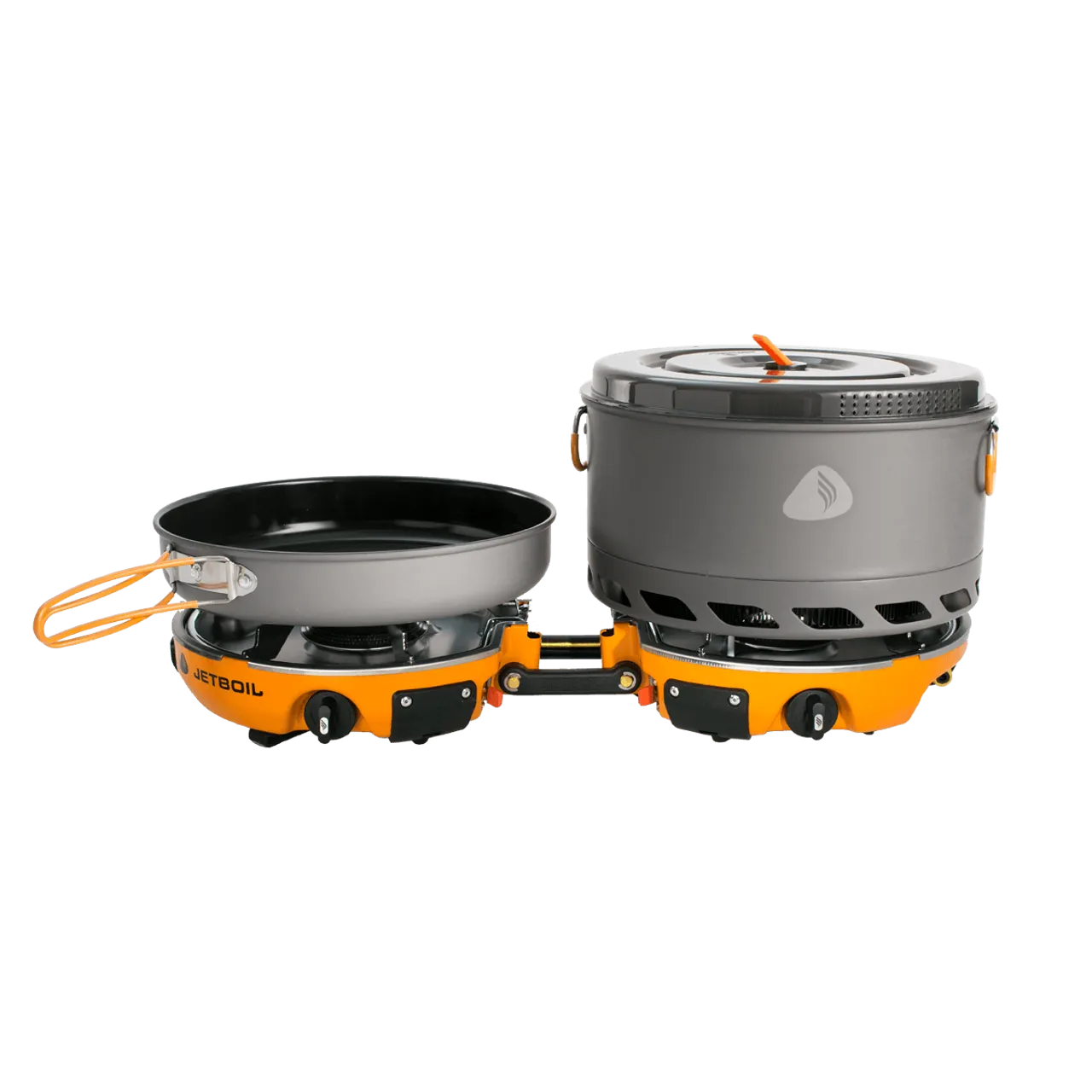
The complete Basecamp System comes with a five-litre FluxPot and a ten-inch ceramic-coated pan. Both fit on the stove together, and the wide supports keep them steady. We've fed groups of up to eight by planning the cooking and working in batches. For a couple, there's plenty of scope to make a proper meal without constantly swapping the only pan around.
It's also a neatly arranged kit. The folding stove nests inside the pot, the pan closes the stack and the bag keeps it together. We like having the stove and pans together in one bag rather than finding separate spaces for them in the car. Jetboil's listed 4.1 kg includes the stove, pot and pan, and excludes the regulator, windscreen and carry bag.
Each burner is rated at 10,000 BTU per hour. That's half the Everest's rating, yet we'd choose the Genesis for rice, sauces and a breakfast requiring gentle heat. The extra control saves a lot of hovering over the pan.
Wind is its weak point. The burners are exposed, and we found the windscreen clips fiddly for the protection they delivered. Both igniters failed early, grease collects around the burner wells and hinge, and the plastic lid warped after flame reached beyond the cookware. The core stove has kept working, and we'd buy it again, but we'd plan the camp kitchen around a sheltered outdoor cooking spot.
Camp Chef Everest 2X: the pick for high heat and heavy cookware
The Everest suits a different sort of cooking. Its two 20,000 BTU-per-hour burners deliver plenty of heat, and both ran hard together without a noticeable drop in output. It has no trouble getting a big pot of water or a heavy cast-iron pan hot.
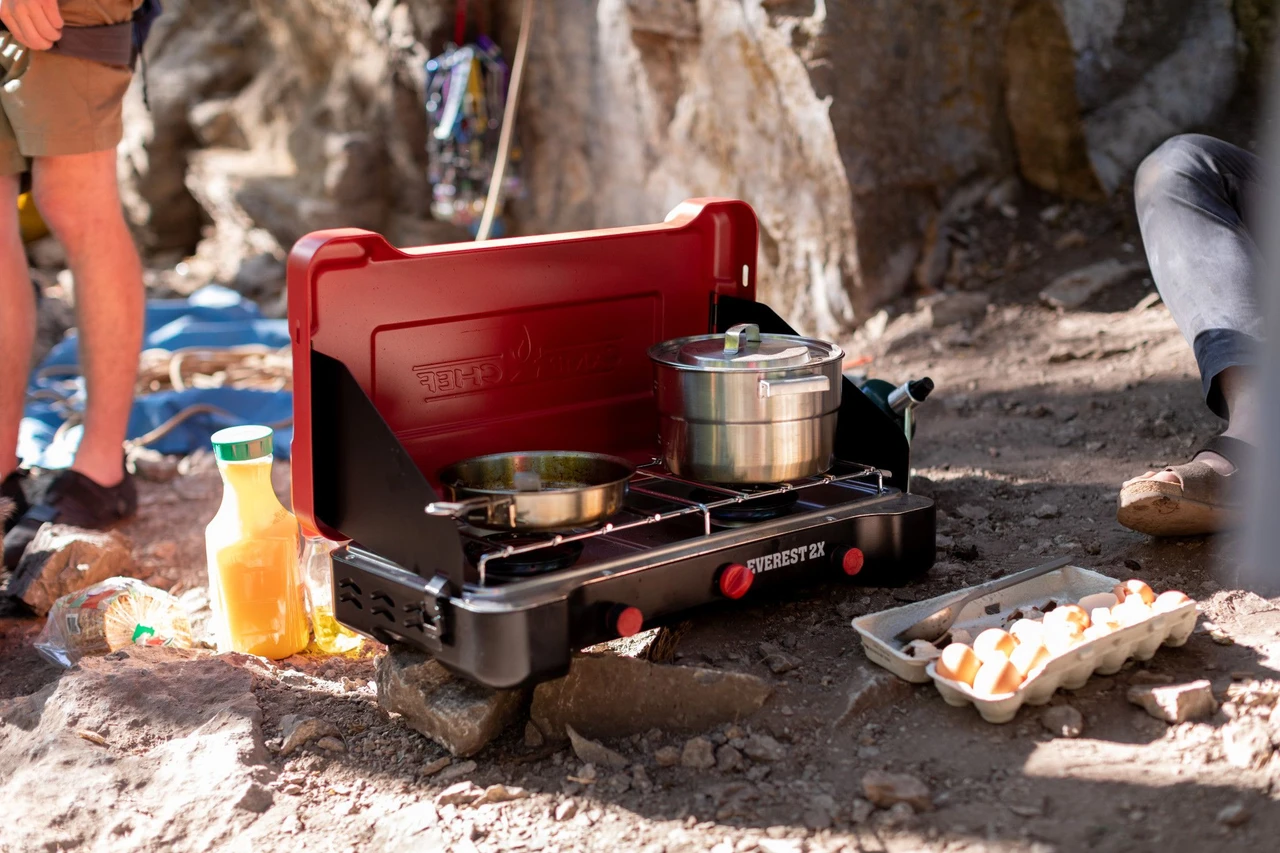
Heavy pans sit securely on the broad grate. Two ten-inch pans fit side by side, though handles need arranging, and the deep lid and side panels do a better job of sheltering the flames than the Genesis setup. Moderate gusts were manageable on our camping trips. In stronger wind, performance still dropped.
We'd take it for searing food in cast iron or getting a big pan hot quickly. Turning it down is more fiddly. A small adjustment can take the flame from too much heat to out altogether. Thin pans develop a central hot spot, so pancakes, rice and sauces need more attention. Heavy cookware helps spread the heat, but the Genesis remains our preference for a gentle simmer.
At about 5.4 kg for the stove, with cookware to pack separately, the Everest belongs in the car. The suitcase shape is easy enough to stow, but you do notice how much room it takes up. Over roughly three years, ours developed play in the latch and hinges, scorched and flaking paint, and some surface rust after damp storage. The igniter also gave up early. The burners kept doing their job.
If you've already got pans you like and want plenty of heat, we'd go for the Everest. If you're buying the whole kitchen and like cooking meals that need a gentle simmer, we'd choose the Genesis.
Choosing for the way you camp
For solo backpacking, we'd choose the Flash for a simple hot-water menu. It packs neatly and made coffee quickly throughout a long trip. If shaving weight is the priority, the Backpacker's lower listed weight deserves a look even when you're travelling alone. Remember to count the fuel and any extra cookware in the bag as well.
For a hiking couple, we'd lean towards the Backpacker. Sharing the larger pot is convenient, particularly when both meals need hot water. We'd be happy with it for a week of dehydrated dinners. If we were frying and simmering every evening, we'd soon get tired of watching for burnt food and pans slipping on the supports.
For a couple cooking from the car, the Genesis would be our choice. Its low-heat control and nesting cookware make it pleasant to use and pack. For bigger breakfasts, heavy pans and a breezier campsite, we'd favour the Everest. Our Genesis versus Everest comparison goes further into the cooking and packing differences.
Fuel is part of that decision. The Flash and Backpacker use threaded backpacking gas canisters. The two campsite stoves use propane cylinders with their specified connections. Camp Chef currently lists the US Everest 2X as for US sale and use only, so readers buying elsewhere should choose an appropriate local-market setup.
We'd put a separate lighter in the kit with any of these. Three of our four stoves developed ignition problems, and carrying one was easier than letting a failed spark dictate breakfast. Give an upright canister system a stable, level, non-combustible surface, and never wrap the canister in an improvised windscreen. Cook outdoors, away from tents and other enclosed spaces.
For more on the different stove types, fuel and cookware, see how to choose a camping stove. Once you've bought one, our stove care guide covers boilovers, weak flames, ignition problems and storage.
Sources and updates
Reviews and specifications
Full trip notes and verdicts are in the four reviews linked above. Specifications checked on 3 November 2026: Jetboil Flash 1.0L, Coastal Range Backpacker, Jetboil Genesis Basecamp System and Camp Chef Everest 2X. Listed weights exclude fuel.
For a full campsite setup, our best car camping gear guide brings together the beds, tent, chairs and kitchen kit we would pack.