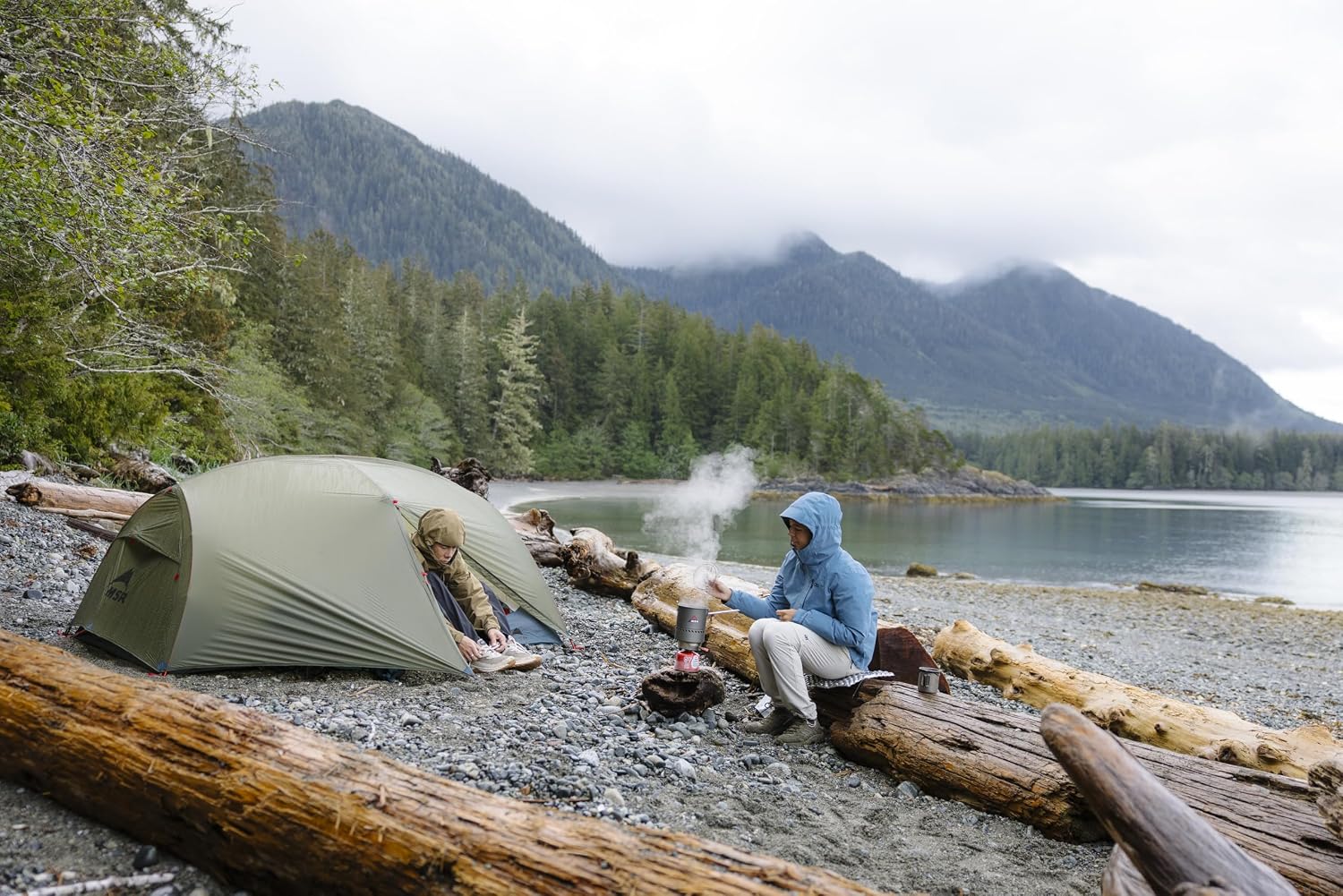
The Big Agnes Copper Spur UL2 and MSR Hubba Hubba HD 2 both give you two doors, proper sitting room and a freestanding pitch in a tent you can carry between camps. But the Copper Spur is lighter and cost us more, while the MSR has a heavier floor and a more enclosed inner. So is the lighter tent worth paying more for, or would we rather carry the extra weight?
We spent about two weeks with each in Quebec's Hautes-Gorges national park, using the Copper Spur mostly solo and sharing the Hubba Hubba on most nights. Rain, soggy pitches and some very unwelcome wind gave us plenty to work with. Here's how we'd choose between them for a solo trip, two wide sleeping mats and a forecast we'd rather not see.
Copper Spur vs Hubba Hubba at a glance
| Detail | Big Agnes Copper Spur UL2 | MSR Hubba Hubba HD 2 |
|---|---|---|
| Our choice for | Spacious solo camping on sheltered three-season trips | Two wide mats and colder, wetter trips |
| Version reviewed | Orange HyperBead UL2 | HD 2 with mostly solid inner |
| Test period | About two weeks in Quebec, mostly solo | 14 spring nights in Quebec, mostly shared |
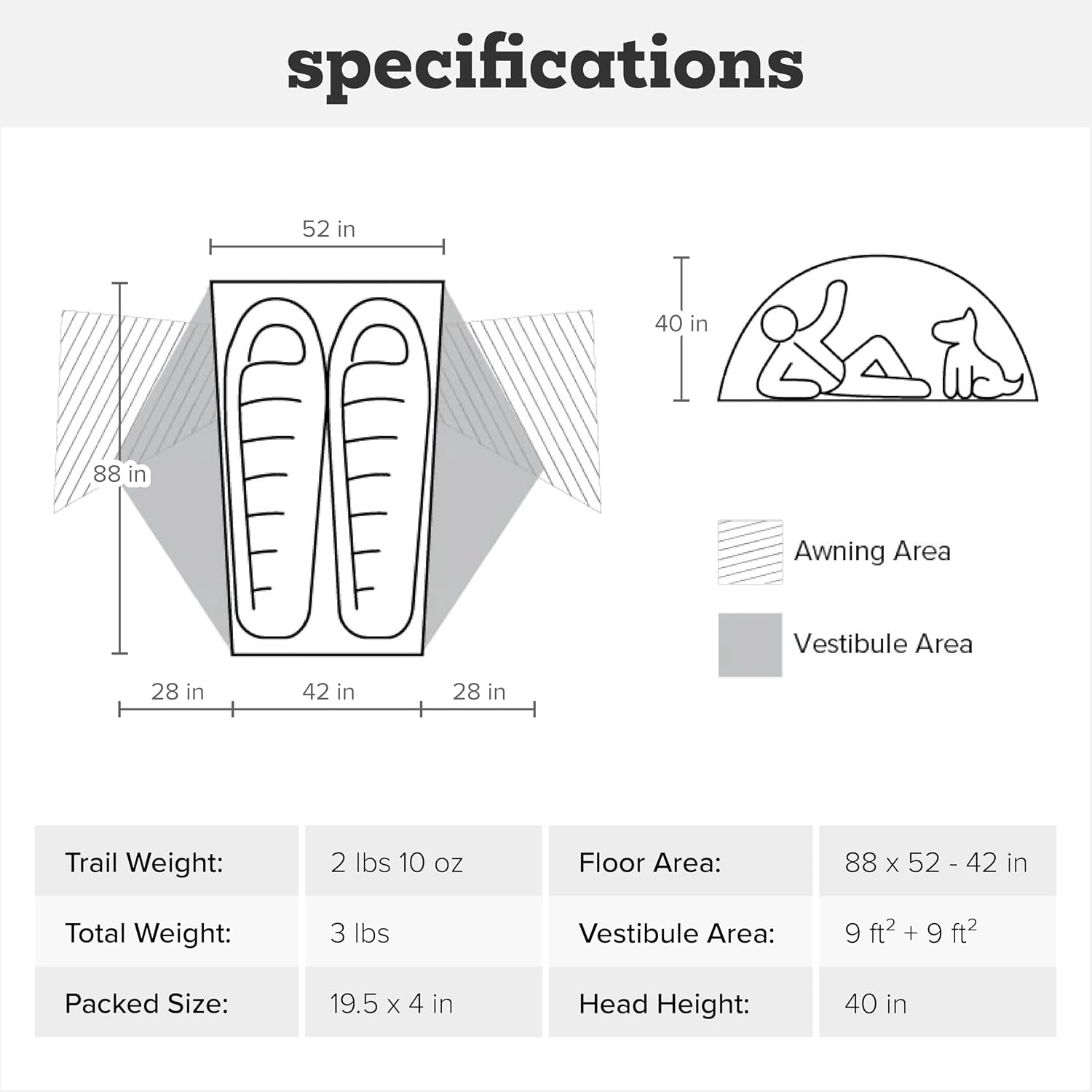
| Published packaged weight | 1.36 kg | 1.80 kg |
| Published minimum/trail weight | 1.19 kg | 1.61 kg |
| Floor length | 224 cm / 88 in | 224 cm / 88 in |
| Floor width | 132 cm at head, tapering to 107 cm at feet | 132 cm throughout |
| Two rectangular 25-inch mats | Won't fit side by side at the foot end | Fit without overlap |
| Peak height | 102 cm / 40 in | 102 cm / 40 in |
| Doors and vestibules | Two of each; awning-style vestibule doors | Two of each; rain gutters at the fly doors |
| Published packed size | 50 x 10 cm | 58 x 13 cm |
| Our review score | 4.1 / 5 | 4.5 / 5 |
The tents we've been camping in
Adam bought the orange HyperBead Copper Spur UL2 for US$599.95 and used it for about two weeks in Quebec's Parc national des Hautes-Gorges-de-la-Rivière-Malbaie. Most nights were solo, with a few shared with a partner. Rain, humid nights and strong wind gave it plenty to deal with.
Gear Reviews bought the Hubba Hubba HD 2 for US$449. Adam used it for 14 spring nights in the same national park, generally with a second person. That included saturated ground, prolonged rain and a valley gale that sent a camp chair into the woods.
We're comparing the HyperBead Copper Spur UL2 and the Hubba Hubba HD 2 here. The more mesh-heavy Hubba Hubba LT is a different tent. Our full Copper Spur review and Hubba Hubba HD 2 review cover the individual trips.
One wide mat or two
The Copper Spur feels generous when there's one person inside. Adam is six feet tall and could sit up, change clothes and lie straight without his sleeping bag brushing the end mesh. One rectangular 25-inch mat leaves a useful strip of floor beside it for clothing and whatever has escaped the pockets. We like having that room after a day walking, especially when rain keeps us inside.
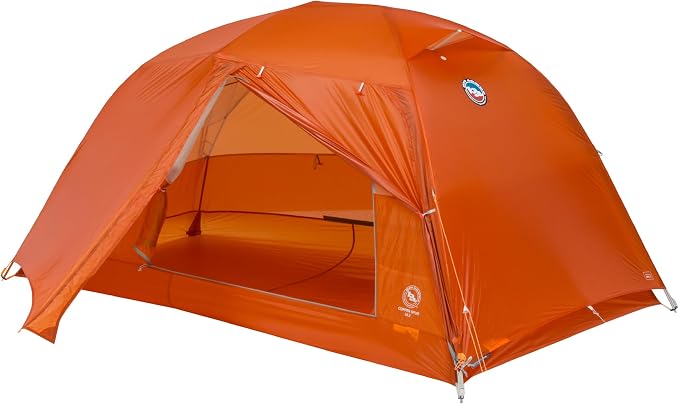
Adding a second wide mat changes things. The Copper Spur is 52 inches across at the head but narrows to 42 inches at the feet. Two rectangular 25-inch mats need 50 inches all the way down. They overlap at the narrow end. Two standard 20-inch mats fit, but sharing still loses much of the spacious feel we enjoy alone.
The Hubba Hubba keeps its 52-inch width from head to foot. Two rectangular 25-inch mats lay side by side without overlap, and neither sleeper had to take the narrower end. We'd choose it for a couple who both value a wide bed. There's no bedding puzzle to solve before getting comfortable.
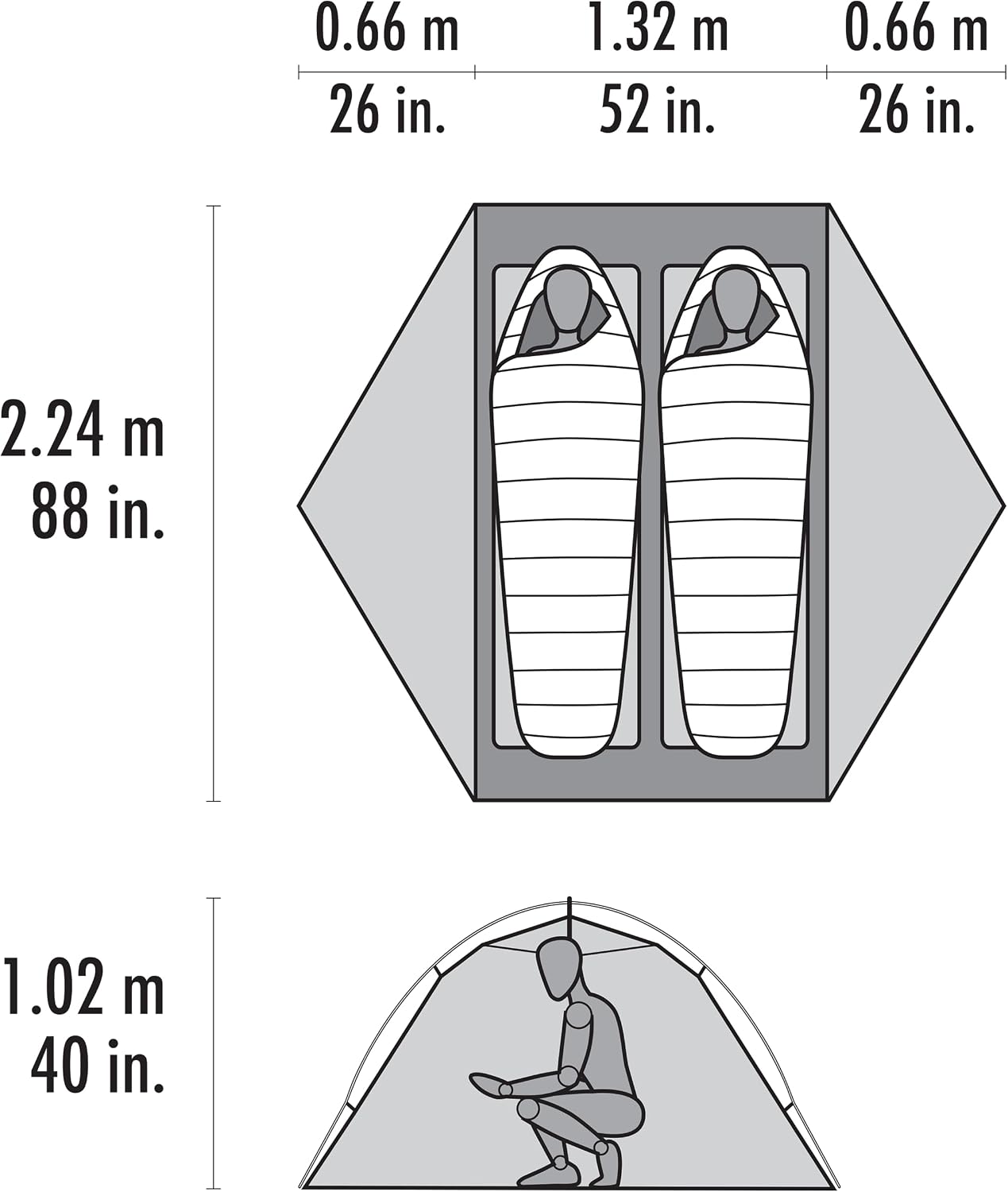
Both list a 40-inch peak height. In the MSR, the cross pole and upright walls spread that space well enough for two adults to sit up and organise their things. The Copper Spur's tall walls are enjoyable too, particularly alone. We'd judge these interiors by the floor shape and the mats going into them, rather than the matching height figures.
The weight on the walk
The Copper Spur's published packaged weight is 1.36 kg against the MSR's 1.80 kg. That's a 440 g saving, which is easy to appreciate when one person carries the whole shelter. It's a strong reason we'd pick the Copper Spur for solo trips where the campsite is sheltered.
Adam's Copper Spur setup came to about 1.42 kg with a cut-to-size Tyvek groundsheet, stakes and lines. He left the extra stuff sacks behind and swapped some stakes for sturdier MSR Groundhogs. The groundsheet itself weighed about 150 g. The Hubba Hubba's complete tent weighed about 1.8 kg in our test; the optional footprint is another item to allow for if you take it.
Sharing the MSR spreads the load. Splitting the inner and poles from the fly and stakes made it an easy burden to justify for two people. We'd be less keen on carrying all of it alone on a long, fair-weather walk. We'd be much happier carrying it for two people who will use the rectangular floor every night.
The Copper Spur also packs shorter, at a published 50 cm against the Hubba Hubba's 58 cm. Pole length is the awkward part when fitting either into a smaller rucksack. The MSR's side-loading roll-top bag is particularly pleasant at pack-up: lay the components in, roll and compress. A less-than-perfect fold doesn't become a wrestling match.
Pitching at the end of the day
Neither gave us a complicated setup. The Copper Spur took about three or four minutes alone, helped by orange-to-orange and grey-to-grey fittings. The Hubba Hubba's first pitch was under five minutes and came down to about three with practice. Its symmetrical layout saves hunting for the right end.
Freestanding frames were useful on rock and root-heavy ground. We could erect the inner, move it into position and then work out the best anchors. The vestibules and guylines still needed securing. For the MSR, the eight supplied Mini-Groundhogs worked in ordinary forest soil; softer riverside moss benefited from larger stakes.
We'd pay more attention to rain during setup than to a minute's difference in pitching time. The Hubba Hubba's inner goes up before its fly, leaving the bedroom exposed in a downpour. Draping the fly over the body while connecting the poles kept most water out, but it was an awkward job. The Copper Spur's normal pitch also leaves the inner exposed before the fly goes on. Big Agnes offers a Fast Fly arrangement with its compatible footprint, sold separately. Adam's homemade Tyvek sheet was ground protection, not that Fast Fly kit.
The night we'd rather spend in the MSR
The Copper Spur's roughest night was miserable. Ventusky showed gusts above 40 mph during the stay. The walls bowed inward over Adam and the fly flapped hard enough to keep him awake. It survived without a broken pole, but we wouldn't choose it for regular exposed camping on the strength of that experience.
The Hubba Hubba gave us a much calmer place to sleep during its valley gale. With the extra guylines deployed, the DAC poles flexed and returned to shape while the inner stayed settled. We'd take the HD for a cold, wet trip where sheltered pitches may be hard to find. We'd still use the guy points and choose the ground carefully.
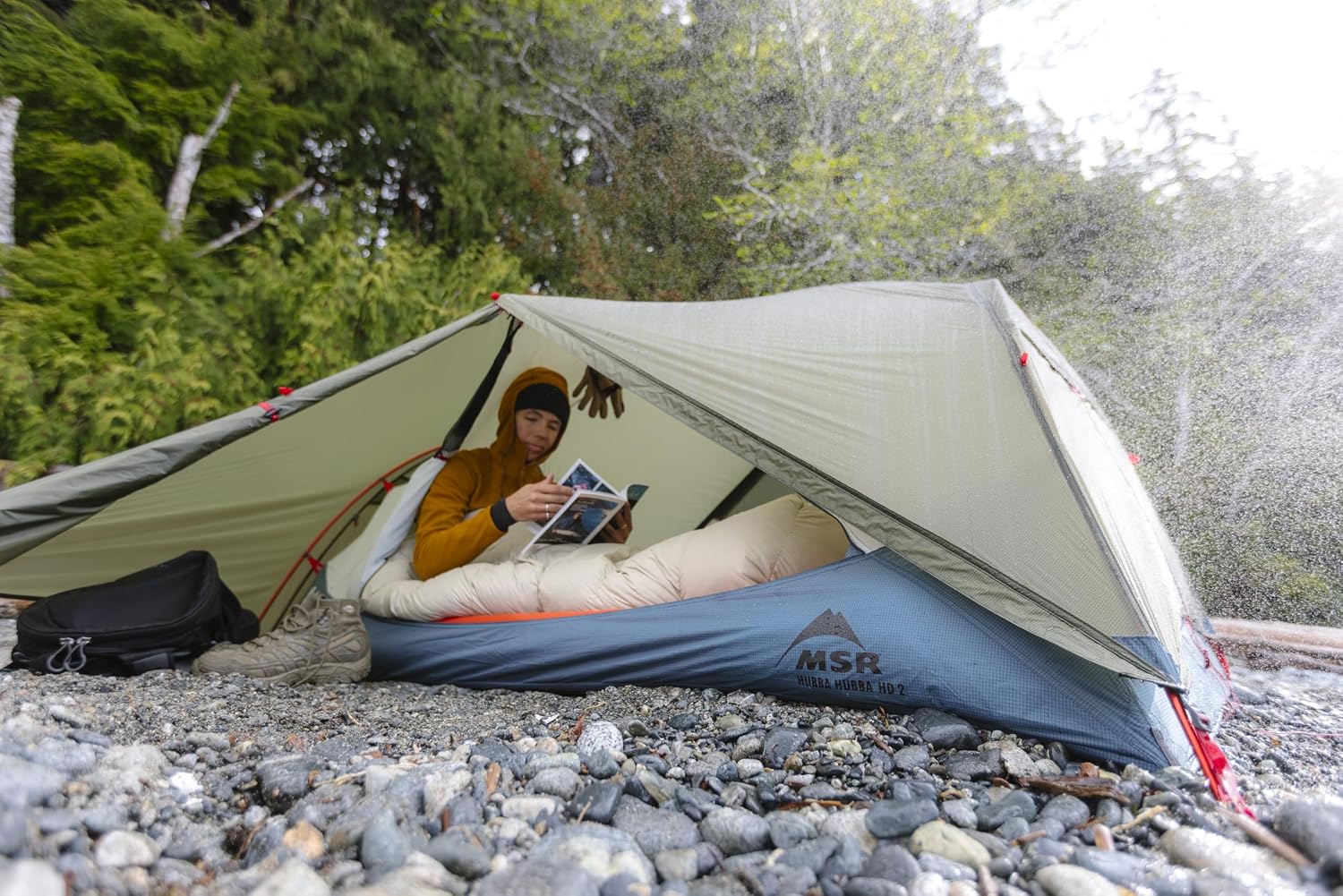
In prolonged rain, the MSR's bathtub floor stayed dry over saturated, muddy ground. Its fly held clear of the inner without needing adjustment through the night. The rain gutters at the doors also reduced drips onto bedding when getting in and out.
The Copper Spur kept external rain out, but heavy drops hitting the fly knocked condensation loose from underneath it. That sent droplets into the inner and made it feel as though it was raining inside. Water also pooled on a flatter part of the roof. We had to keep the fly evenly tensioned and clear of the mesh.
MSR lists a 3000 mm waterproof rating for its fly and 6000 mm for the floor, against Big Agnes' 1500 mm rating for the Copper Spur's fly and floor. For a wet forecast, we'd take the HD. It kept us dry and settled through unpleasant weather, while the Copper Spur needed more attention and was much noisier in strong wind.
Cold nights and summer ventilation
The mostly solid Hubba Hubba inner cut drafts on nights in the low 30s Fahrenheit, around freezing. That made sitting and sleeping inside more comfortable. We kept the kickstand fly vents open when possible, and condensation remained minor during the cool spring test.
For warm-weather use, we'd rather have the Copper Spur's mesh. Rolling its fly back let plenty of air through on hotter days. The roof vent helped on cool, humid nights, and opening the vestibule doors partly when dry improved airflow. It was an airy place to spend time when the weather behaved.
We'd favour the MSR's enclosed inner for chilly shoulder-season camping and the Copper Spur for sheltered summer trips. The HD's draft protection would be less welcome on a still, humid night. We'd avoid buying that extra enclosure if most of our camping happens in the heat.
Doors, pockets and a porch for coffee
Both tents give each sleeper a door and a vestibule. Getting out in the night doesn't mean climbing over a partner, and muddy boots can stay under cover outside the bedroom. Each MSR vestibule held a 65-litre pack and footwear while leaving a way through. The Copper Spur also had useful covered storage on both sides.
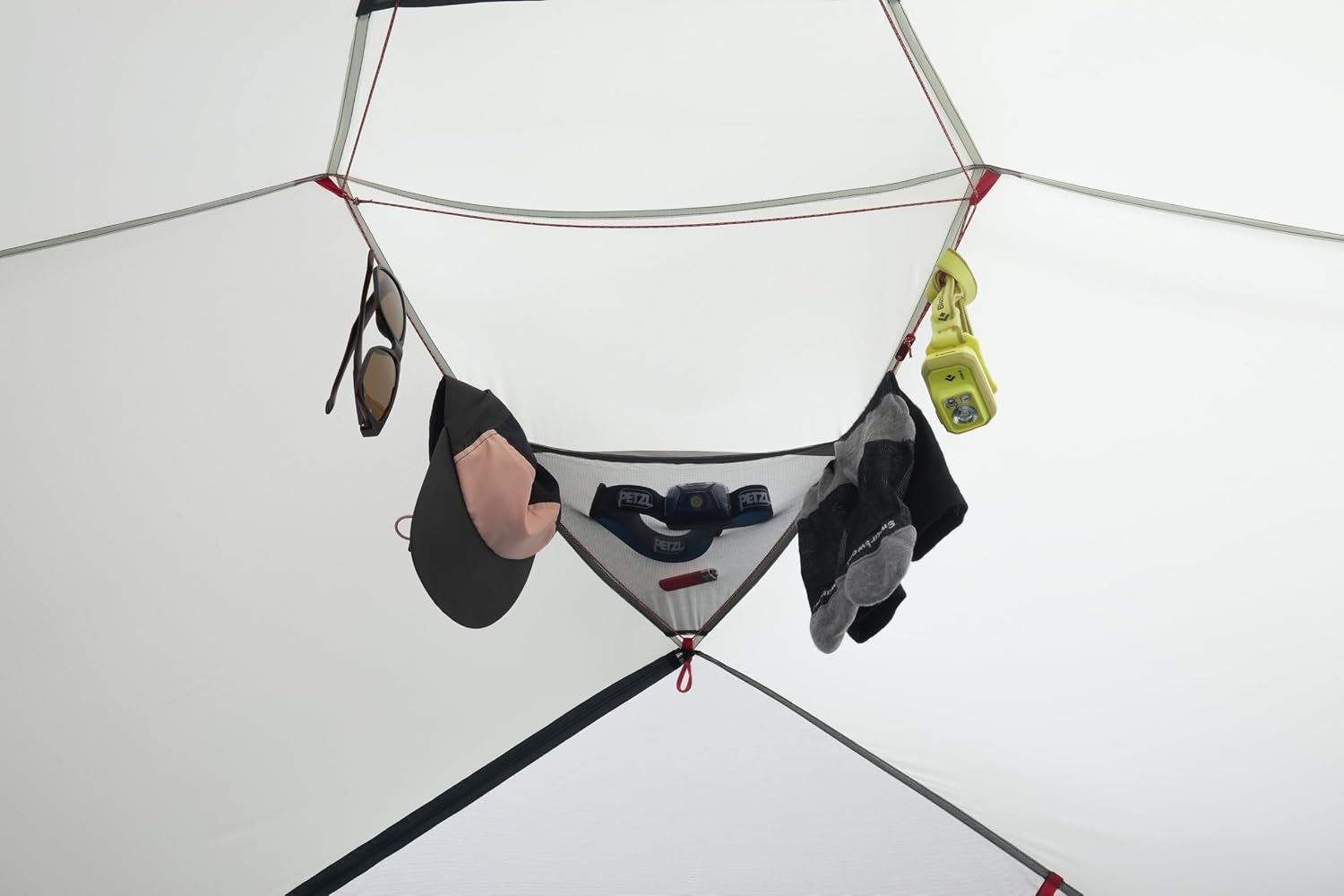
We liked the storage in both. Big Agnes' large ceiling pocket and smaller head-end pockets kept loose kit off the floor and phones and headlamps within reach. MSR's broad end pockets swallowed spare layers and other clutter, with overhead lofts and a clothesline for damp socks. Neither left us balancing all our small belongings beside a sleeping mat.
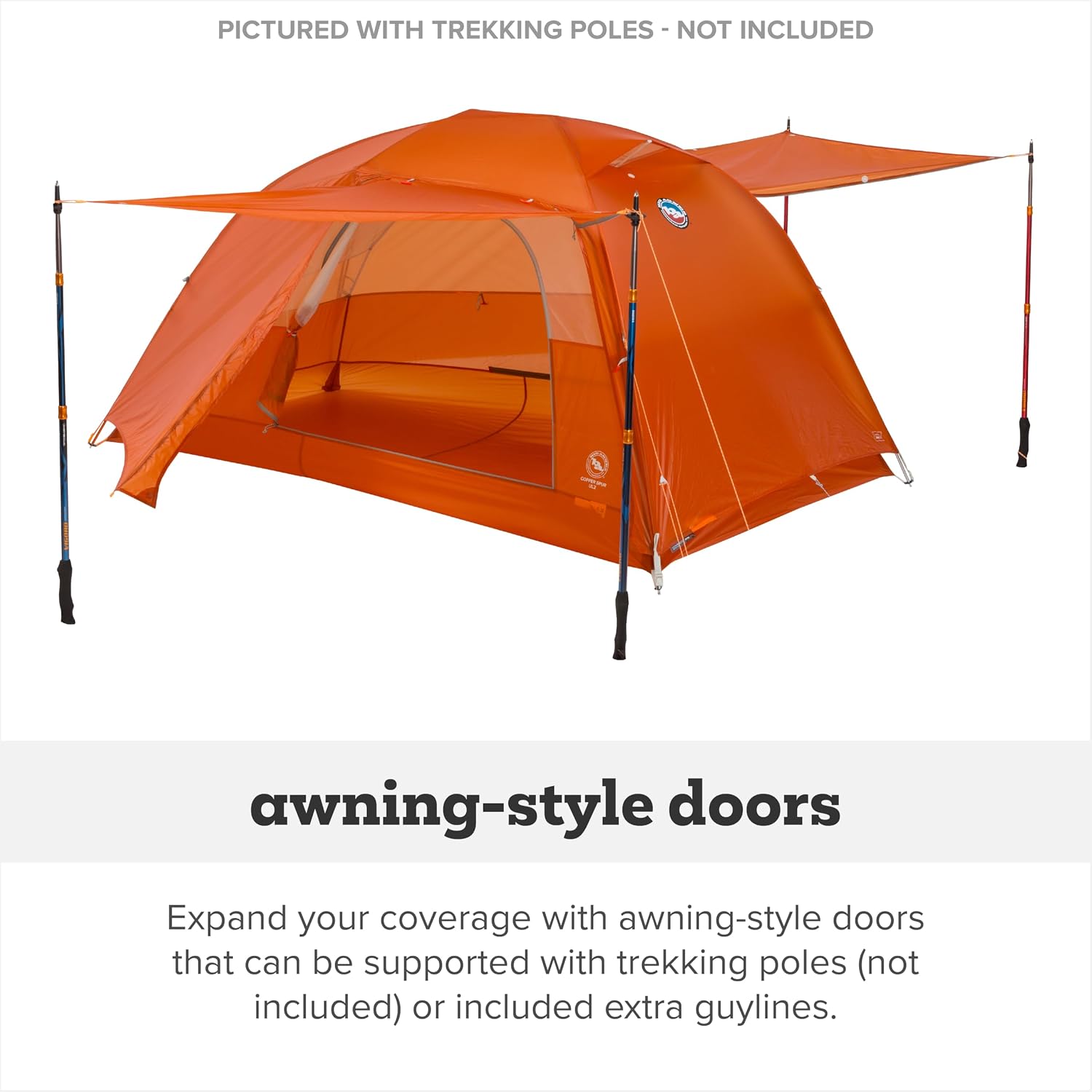
The Copper Spur's awning is the feature we'd miss in the MSR. Prop the vestibule doors up with trekking poles and extra lines and there's a covered place to sit with coffee, watch the view or get some shade. The poles are extra equipment, so it's most appealing if they're already coming on the walk. We particularly enjoyed it solo, with room to sit inside and look out.
Thin fabric and everyday care
The Copper Spur's HyperBead fly and floor use 15D nylon with 20D ripstop reinforcement. They feel thin enough that we're careful with the pitching surface and the mesh. Adam used his US$5 Tyvek groundsheet every night. We'd be willing to carry that protection under a tent costing nearly US$600.
The MSR uses a 20D fly and 30D floor. After 14 nights, its floor, clips, pole hubs and fly showed no meaningful wear, the zips were smooth and the coatings were intact. The optional footprint was useful on abrasive ground, but the floor didn't make it feel necessary on an ordinary forest pitch.
We'd choose the MSR if we'd rather carry a heavier floor than spend every pitch worrying about thin fabric. With either tent, we'd clear sharp debris, keep grit out of the zips and dry the fly before storing it. Our tent care guide covers cleaning, pole care and repairs.
Which we'd buy
For one person on sheltered three-season trips, we'd buy the Copper Spur UL2. Its lighter packed weight, generous solo room, open mesh and awning make it enjoyable to carry and spend time in. We'd use a wide mat, enjoy the space beside it and put effort into finding a pitch out of strong wind.
For two people with wide mats, or colder and wetter trips, we'd buy the Hubba Hubba HD 2. The rectangular floor solves the bedding squeeze, and its solid inner and calmer behaviour in rough weather made it the tent we preferred sharing. We'd accept the 440 g difference in published packaged weight.
The US$449 we paid for the MSR was also less than the Copper Spur's US$599.95 purchase price. For our shared trips, that was a good result: the tent we preferred living in cost us less. For solo summer use, we'd still spend more on the Copper Spur to save weight and have its airy interior. The MSR earns our higher overall score, but we wouldn't carry its extra bulk just to sleep alone on a quiet, warm night.
If you're choosing bedding at the same time, our Exped Ultra 6.5R vs NEMO Roamer comparison looks at a backpacking mat and a much bulkier campsite mattress. For vehicle-supported holidays with standing room and a bigger porch, see the Wawona 6 review.
Sources and updates
Reviews and specifications
Our recommendations draw on the two-week Copper Spur UL2 review and 14-night Hubba Hubba HD 2 review. Construction and feature details checked on 3 November 2026 against Big Agnes' HyperBead Copper Spur UL2 and MSR's Hubba Hubba HD 2. Dimensions and published weights are shown in the table; the carried Copper Spur setup is described separately above.
Our wind and rain pitching guide explains how to control the fly, anchor the frame and keep the inner dry.