A down jacket can be a lovely thing to pull on when you stop for lunch. Ten minutes later, trudging back uphill, you can be desperate to get it off. Meanwhile, the synthetic jacket beside it in the shop promises warmth when wet, but takes up more room in your rucksack. Choosing between them gets easier once you think about when you'll wear the thing, rather than which filling sounds more impressive.
We've enjoyed the very light, very warm Rab Mythic G on cold Alpine evenings, and appreciated synthetic insulation through damp camping nights in the Marmot Wraptor. Both earned their place. Here's how we'd choose between the two fillings for jackets and sleeping bags.
Down or synthetic: the quick choice
Choose down when you want lots of warmth for little weight and pack space, and can keep it dry. Choose synthetic when frequent dampness, easier drying and a lower purchase price take priority. For a jacket you'll wear while working hard, look specifically for active insulation with breathable fabrics. A thick synthetic belay jacket can make you just as hot on a climb as a down puffer. [1] [2]
| Your main use | We'd choose | Why |
|---|---|---|
| Cold camps, long rests and a small backpack | Down | High warmth for low carried weight and bulk. |
| Damp, stop-start days with little drying time | Synthetic | Retains useful insulation when damp and dries more readily. |
| Sustained uphill walking | A light active synthetic layer or fleece | Less insulation and better airflow while you're generating heat. |
| A sleeping bag for multi-day backpacking | Down, protected in a dry bag | More room left for everything else you need to carry. |
| Car camping on a tighter budget | Synthetic | Extra packed bulk is easier to accommodate beside the car. |
If what you already own is warm enough, dries in time for your next outing and fits comfortably, we'd keep using it. Replacing a perfectly good jacket to save a handful of grams is an expensive way to rearrange your kit cupboard.
Warmth, fill power and the finished jacket
Down is the soft, fluffy insulation beneath a duck's or goose's outer feathers. Its clusters spread out and hold air. Synthetic insulation uses manufactured fibres, commonly polyester, to do the same job. Both slow the loss of body heat; the amount of trapped air and how well the garment holds it around you determine much of the warmth. [3] [4]
Good down is particularly efficient for its weight. That's why it appeals when you're packing a warm layer for cold evenings but carrying it all day. In our Mythic G review, Adam was comfortable standing around at about -8°C in a jacket listed at 277g in medium. He wore it almost daily for four months in Megève. The night-time piste-basher ride, with everyone else getting cold while he enjoyed his vin chaud, was a fairly convincing sales pitch.
The big fill-power number describes how much space a given weight of down occupies in a standard test. Higher numbers mean more loft for that weight. They don't tell you how much filling is inside the jacket. You need the fill weight for that, along with the jacket's length, construction and fit. A generously filled 700FP coat can be warmer than a thin 900FP layer. [5]
We'd compare complete jackets intended for the same job. Look at the hood, collar and coverage as well as the filling. Paying for very high fill power makes most sense when you're making use of the weight saving. Our fill power versus fill weight guide goes further into the numbers.
Rain, dampness and hydrophobic down
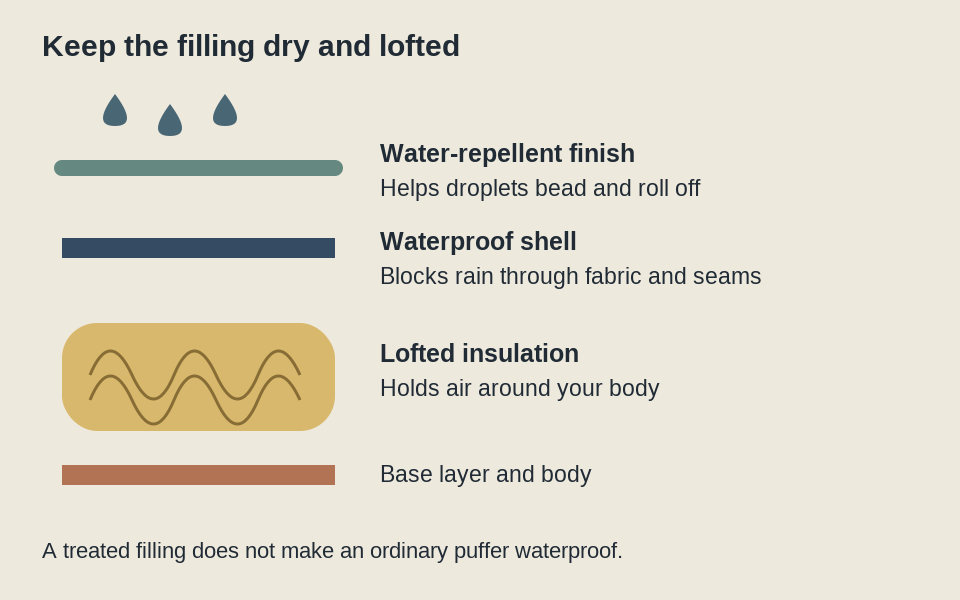
Once down gets thoroughly wet, the clusters stick together and lose the loft that holds warm air. Drying it properly takes time. Synthetic fibres absorb less moisture and keep more useful insulation in damp conditions, then dry faster. For repeated wet outings with nowhere warm to spread your kit, we'd favour synthetic. [6] [7]
That includes moisture from inside your clothing. Sweat beneath a waterproof can be just as unwelcome as drizzle coming through the outer layer. If your jacket regularly ends the day damp around the back and shoulders, easier drying is a benefit you'll use often.
Hydrophobic down has a water-repellent treatment applied to the filling to help it resist dampness and stay lofted. It's useful extra protection. Waterproofing still has to come from the garment's outer construction: treated down doesn't seal the seams or stop rain passing through an ordinary puffer's shell. [6]
The DWR finish on the outside is another separate treatment. In the Mythic G, dry falling snow beaded off, while wet sleet saturated the thin outer fabric quickly. Adam put a waterproof over it. We'd do the same with an ordinary synthetic puffer in sustained rain: its damp-weather tolerance gives you more usable warmth, while a shell keeps the rain off. Our waterproof ratings guide explains the difference between a repellent finish and a waterproof barrier.
Walking uphill and standing around need different layers
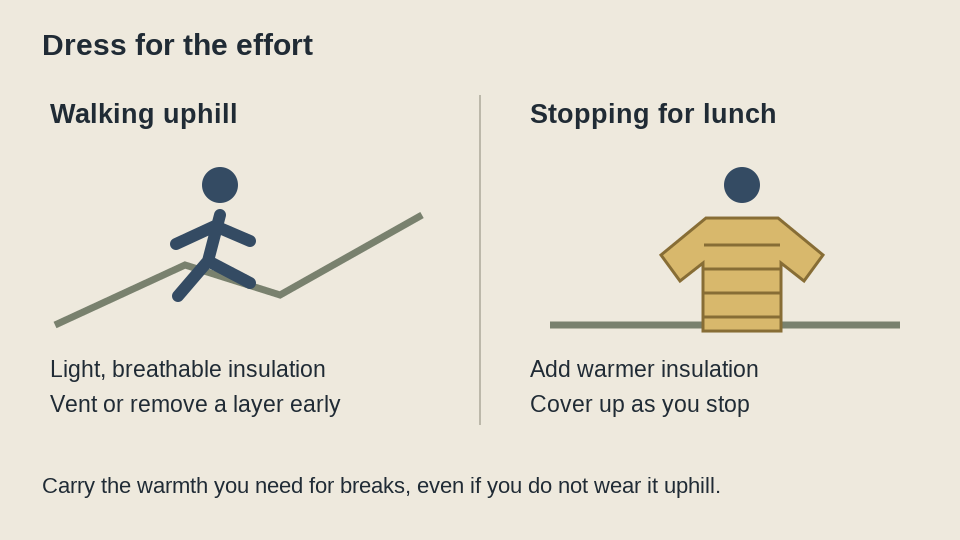
The Mythic G's warmth was excellent outside a restaurant. Walking home up a steep, icy hill at about -5°C, Adam was boiling within ten minutes, despite wearing only a merino base layer underneath. On energetic walks, it made much more sense in his pack until he stopped.
We'd make that distinction before choosing the filling. A jacket for lunch stops needs to hold plenty of heat once you've stopped producing so much of it. A layer you leave on during a climb needs to let excess heat and moisture escape. Rab separates synthetic jackets into active and static designs for this reason, with breathable fabrics forming part of the active system. [2]
A synthetic label by itself doesn't tell you which you're getting. Thick insulation behind a wind-resistant shell is well suited to standing around in the cold; it can feel stifling on a climb. Look for the intended activity, fabric breathability and the amount of insulation, rather than assuming every synthetic jacket is a hiking midlayer.
For a cold walk with a long uphill approach and a chilly lunch stop, we'd often carry two quite different layers: a fleece or light active jacket for moving, then a warmer puffer to pull over it when stopping. You get to enjoy lunch without wearing your warmest coat all the way up to it.
For sleeping bags, compare the comfort rating first
The same weight-versus-moisture decision carries over to sleeping bags. Down is attractive when the bag has to disappear into a walking pack. Synthetic is easier to live with when dampness and purchase price take priority, especially if you're camping beside the car. [7]
Start with the comfort rating you need, then compare the weight and packed size of bags offering that level of warmth. Comparing a lightweight summer down bag with a much warmer synthetic winter bag tells you very little about the filling. Our sleeping-bag temperature ratings guide explains comfort, limit and extreme, and our mat R-value guide covers the insulation underneath you.
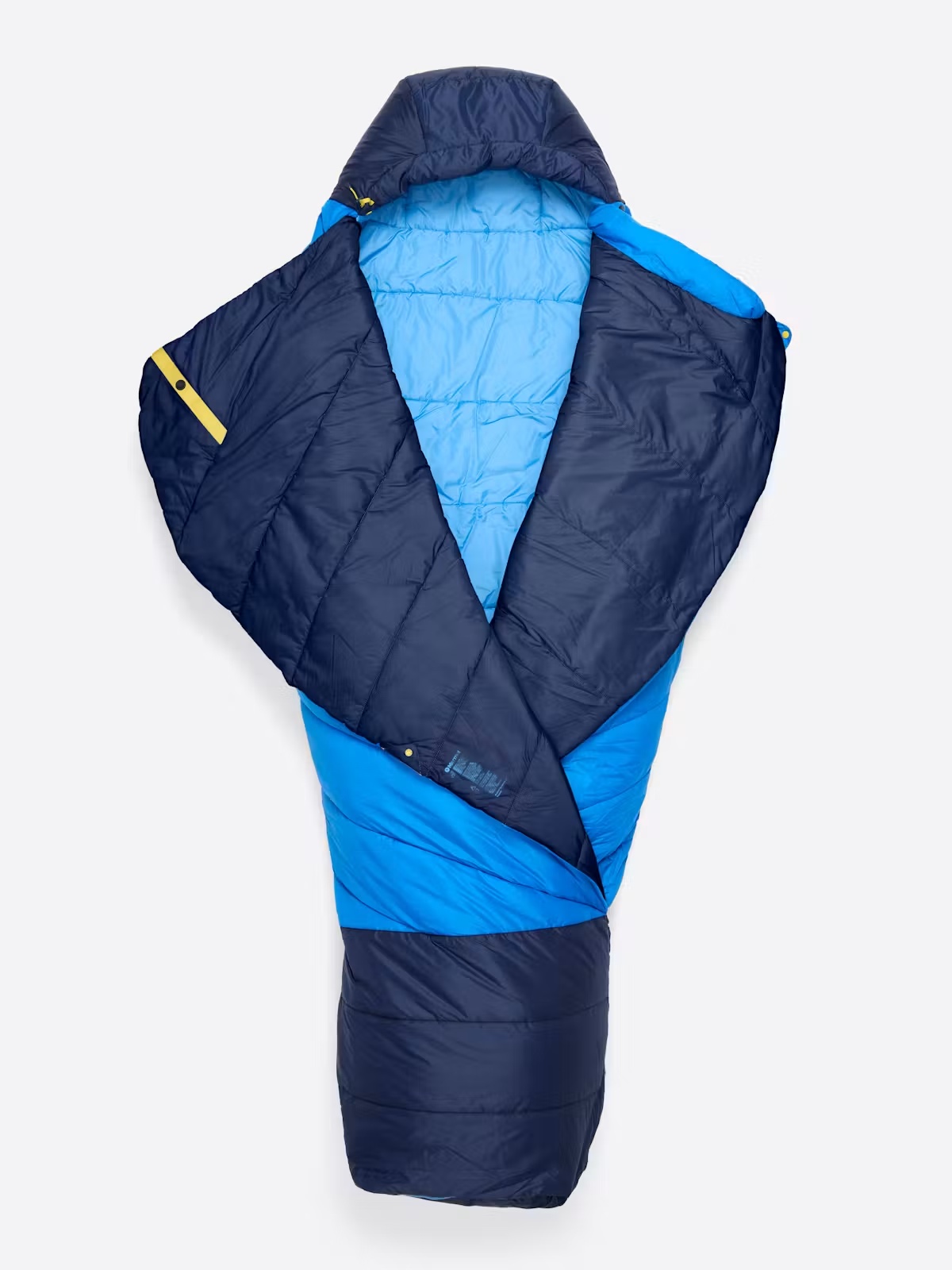
The Marmot Wraptor 30 Synthetic stayed warm through condensation, damp mornings and salt air during Adam's 90 camping nights in Quebec and further boat use. Around 4°C was his relaxed sweet spot. Near freezing, rolling hard could lift the overlapping flaps and admit a draft. The filling coped with dampness; the closure affected how comfortable the night felt.
We'd protect either filling in a properly closed dry bag during transport, and air the sleeping bag when there's a dry opportunity. Even with synthetic, climbing into dry bedding is a much nicer end to the day.
Pack space and the price of saving it
Down generally packs smaller and weighs less than synthetic at a comparable warmth level. On a long walking trip, that can free up a useful amount of rucksack space. For a bag that travels from the car boot to the tent, we'd be much less interested in paying extra for compactness. [8]
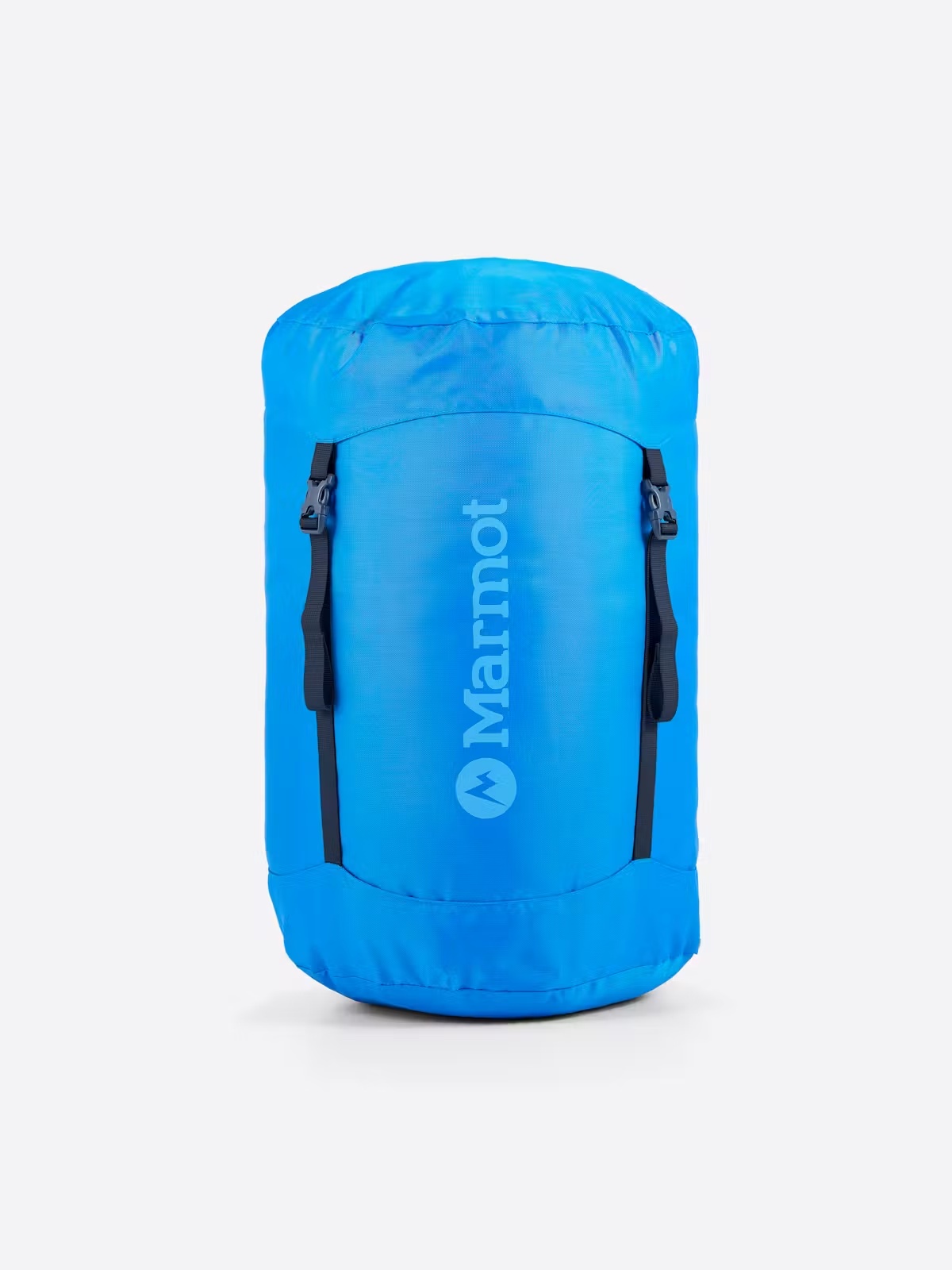
The Wraptor illustrates the bulky end of the choice. At roughly 1.24kg, with a listed 19 x 41cm compression sack, it occupied a substantial chunk of Adam's pack. He liked its comfort and damp-weather performance, but would choose the down version for long-distance backpacking to reduce bulk. We'd make the same trade for a trip where everything has to be carried.
Synthetic usually costs less, although technical fabrics and specialised construction can still make a synthetic jacket expensive. Lower-fill-power down is another option when you want down's packing advantages without paying for the highest numbers. [8]
Adam paid €550 on sale for the Mythic G. He felt the warmth and low weight justified it for his use, but wanted a tougher coat when saving grams wasn't the priority. We'd spend for weight savings on equipment we carry far and use often. A warm, comfortable jacket with a little more heft leaves more money for the trip itself.
The fabric and fit deserve a look too
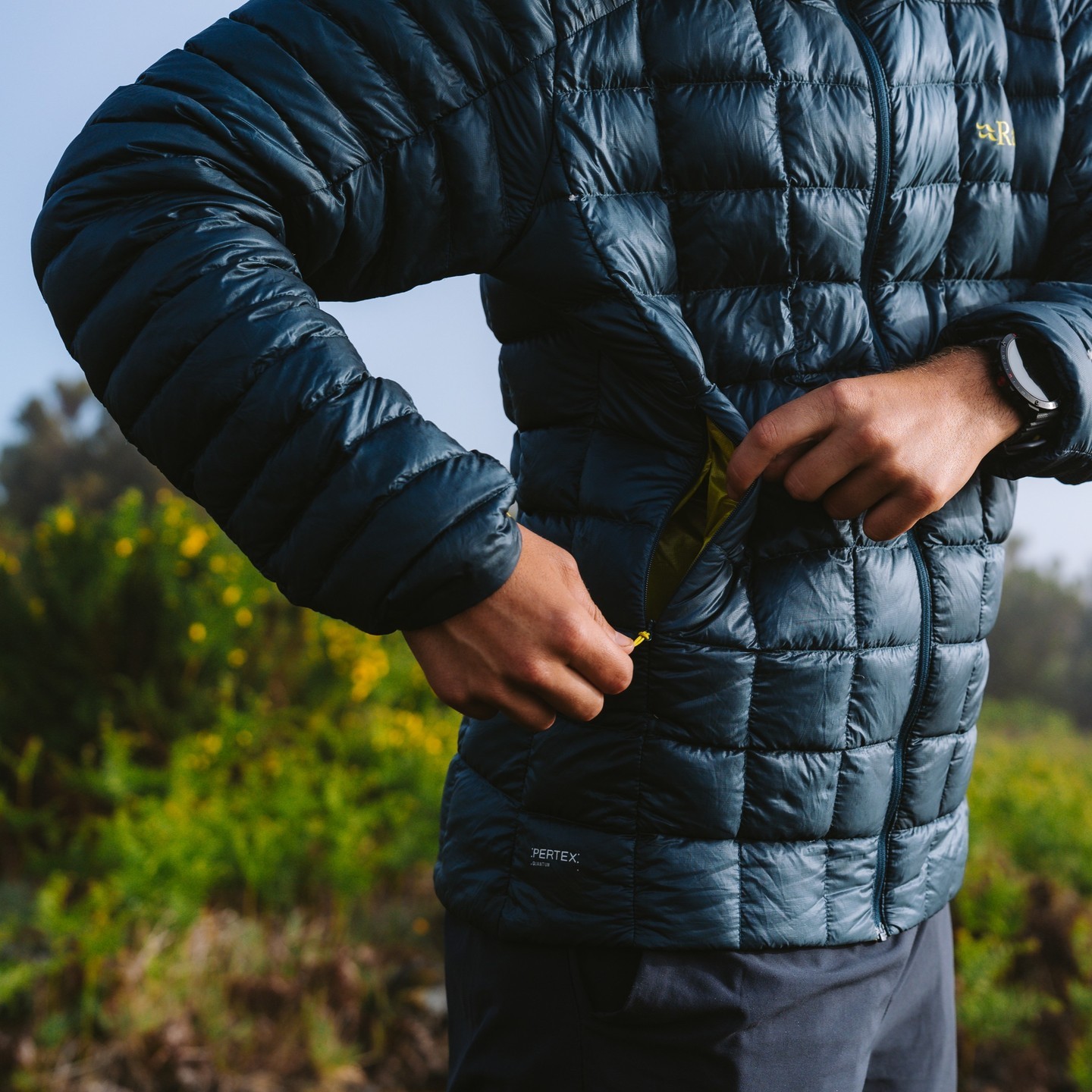
Ultralight fabrics can make a jacket feel delicate whichever insulation is inside. The Mythic G's 7D nylon had Adam watching rough chair backs, ski edges and branches throughout the season. It finished without tears or unusual feather loss, but the worry was his biggest irritation. We'd look for a tougher face fabric for scrubby routes and everyday rough treatment.
A tear behaves differently depending on the filling. Loose down can escape through the hole. Synthetic sheet insulation stays together more readily, so a small snag is less likely to leave you shedding filling. That advantage comes from the insulation's structure, rather than the outer fabric becoming tougher. [1]
Try a jacket on with the layers you'll wear underneath, reach forward and raise your arms. It needs room for the insulation to loft without pulling across the shoulders. Then try your shell over it if that's part of the plan. In medium, Adam could wear a mid-weight fleece beneath the Mythic G and a waterproof above it comfortably. That was much more useful than buying an impressive specification in the wrong fit.
Washing, drying and keeping the loft
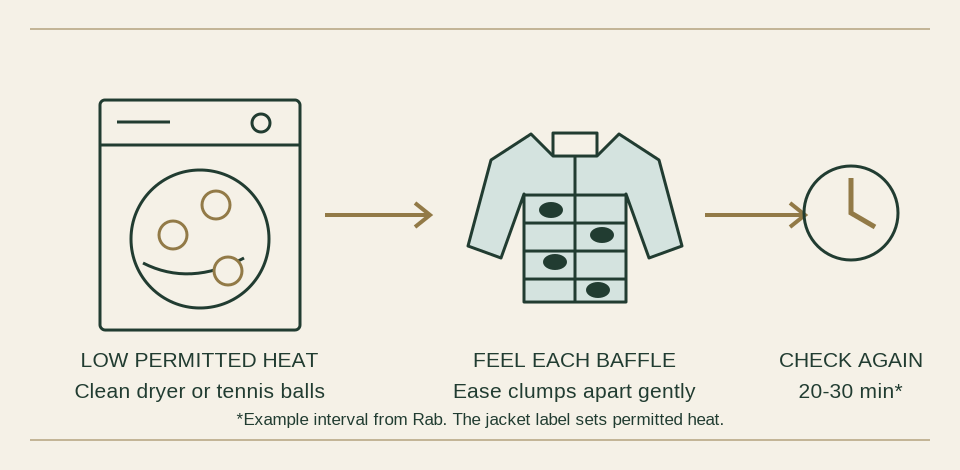
Synthetic is generally the easier option for frequent cleaning and quick drying. Down needs more patience after a wash: the outer fabric can feel dry while damp clumps remain inside. Rab recommends checking the baffles regularly during permitted tumble drying and redistributing the filling as it dries. [9]
Adam washed the Mythic G once at the end of the season with a down-specific wash, then spent several hours drying it on low heat with tennis balls. It returned to its original puffiness. That's manageable at home; it's a less appealing job when you're travelling again in the morning.
Use the cleaning product, wash setting and drying method specified for the item. Our guides to washing a down jacket and washing a sleeping bag cover doses, handling wet insulation and checking for remaining clumps. At home, keep sleeping bags completely dry and loose in a large storage sack. Therm-a-Rest gives that advice for both down and synthetic bags. [10]
Good down has a long useful life with care. Synthetic insulation can gradually lose loft through repeated compression, wear and poor storage, so we'd avoid leaving either type squeezed into its smallest sack between trips. Norrøna also recommends drying synthetic garments thoroughly and repairing small tears before they grow. [1] [4]
Animal welfare and recycled materials
If you want to avoid animal-derived filling, choose synthetic. For down, look for traceable sourcing such as the Responsible Down Standard. RDS prohibits live plucking and force-feeding and uses third-party auditing through the supply chain. It's an animal-welfare and sourcing standard; fill power describes a different property. [11]
Recycled options exist for both fillings. Patagonia uses reclaimed down as well as recycled polyester insulation, for example. Check which components a recycled-content claim covers: filling, shell and lining are separate parts of the product. [3]
We'd also look at repair support and how long we're likely to use the item. A jacket you can wash, patch and keep wearing is a more useful purchase than one you replace because it's awkward to care for or wrong for most of your outings.
| On the label | What to check |
|---|---|
| RDS-certified down | Animal welfare and certified chain of custody. |
| Recycled down | Reclaimed filling, plus its fill power and quantity. |
| Recycled synthetic insulation | The stated recycled percentage of the filling. |
| Recycled fabric | Whether the claim covers the shell, lining or both. |
Sources and further reading
Manufacturer guidance and field reviews
Technical guidance checked on 9 November 2026. Jacket and sleeping-bag observations come from the linked Mythic G and Wraptor field reviews.
- Rab: choosing down or synthetic insulation
- Rab: choosing active and static synthetic jackets
- Patagonia: natural down, synthetic insulation and recycled fillings
- Norrøna: synthetic insulation, construction and longevity
- Rab: down fill power
- Rab: hydrophobic down and wet conditions
- Sea to Summit: down and synthetic sleeping bags
- Cascade Designs: down and synthetic sleeping-bag weight and price
- Rab: washing and drying a down jacket
- Therm-a-Rest: down and synthetic sleeping-bag care and storage
- Textile Exchange: Responsible Down Standard
For dampness beneath the outer shell, our guide to getting wet inside a waterproof jacket covers sweat, condensation, wetting out and leaks.