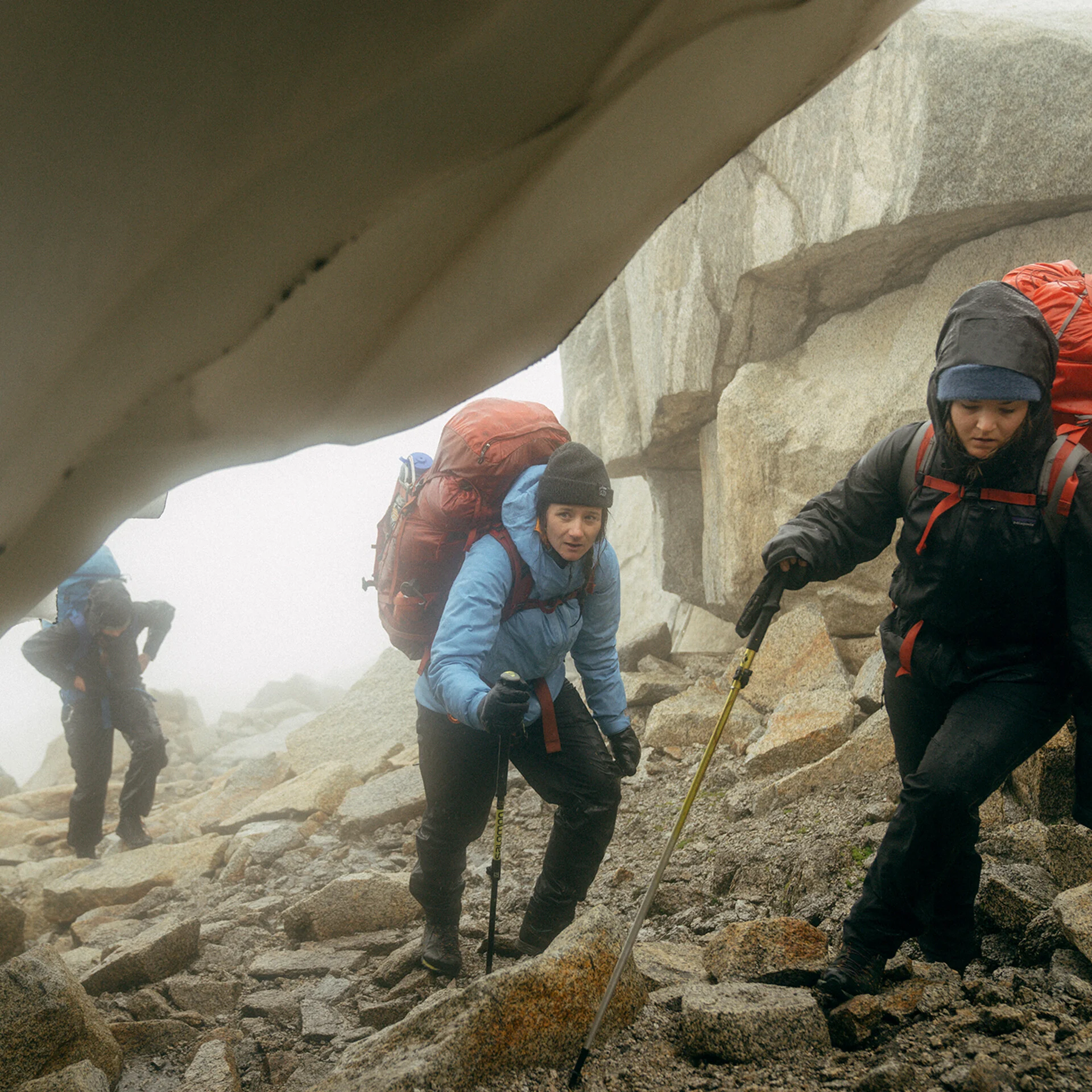
You're comparing two waterproof jackets. One says 10,000mm, another says 20,000mm, and both promise to keep the rain out. Meanwhile, the tent you've been eyeing has a much lower number. It looks as though someone has misplaced a zero.
The figures make more sense once you separate water pressure from rainfall, and fabric from the finished piece of kit. We'd use the rating to help choose a jacket or tent, then look closely at the seams, fit and features we'll live with when the weather turns.
What 10,000mm and 20,000mm mean
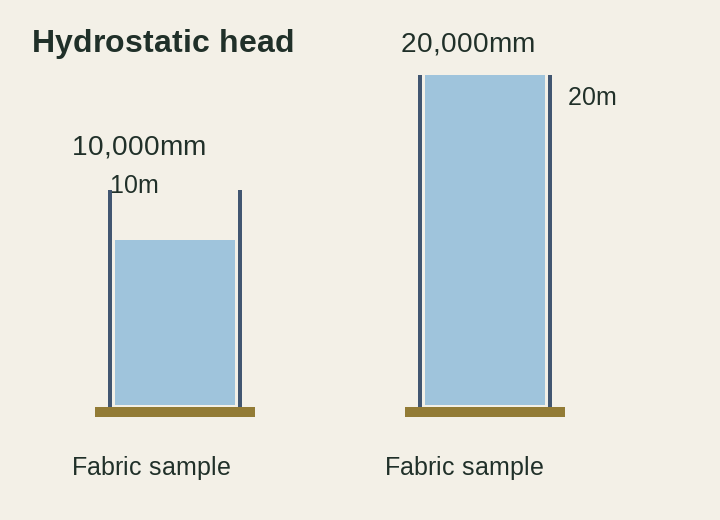
A waterproof rating in millimetres describes a fabric's resistance to water pressure, expressed as an equivalent column of water. A 10,000mm rating corresponds to a 10m column; 20,000mm corresponds to 20m. Under comparable test conditions, the higher figure means greater resistance to water penetration. This is called hydrostatic head, often shortened to HH. [1] [2]
It isn't a weather forecast or a count of the rain the jacket can absorb. Nor does 20,000mm mean twice as many dry hours as 10,000mm. The figure describes pressure resistance in the test.
| Label | Equivalent water-column height | What to compare next |
|---|---|---|
| 1,500mm | 1.5m | The tent fabric's job, construction and condition |
| 10,000mm / 10K | 10m | Jacket construction, ventilation and intended activity |
| 20,000mm / 20K | 20m | The same details, plus comparable test information |
| 30,000mm / 30K | 30m | Whether the whole garment suits the trip and price |
How the fabric test works
The picture to have in your head is a piece of fabric held beneath a column of water. A taller column puts more pressure on it. Laboratory equipment can apply that pressure without needing a tower beside the workbench. MSR describes a test that increases pressure until three drops pass through the sample. [2]
ISO 811 is one recognised hydrostatic-pressure method for testing fabrics. Other methods exist: ISO 1420, for example, covers coated fabrics exposed to a specified pressure for a fixed time. We'd compare the method and sample condition when manufacturers provide them, particularly if two close figures are driving an expensive decision. [1] [8]
That also explains why the label is a fabric specification rather than a full account of a jacket. A sample in a tester has no hood opening, front zip or cuff. Those parts need their own protection in the finished garment.
Choosing between a 10K and 20K jacket
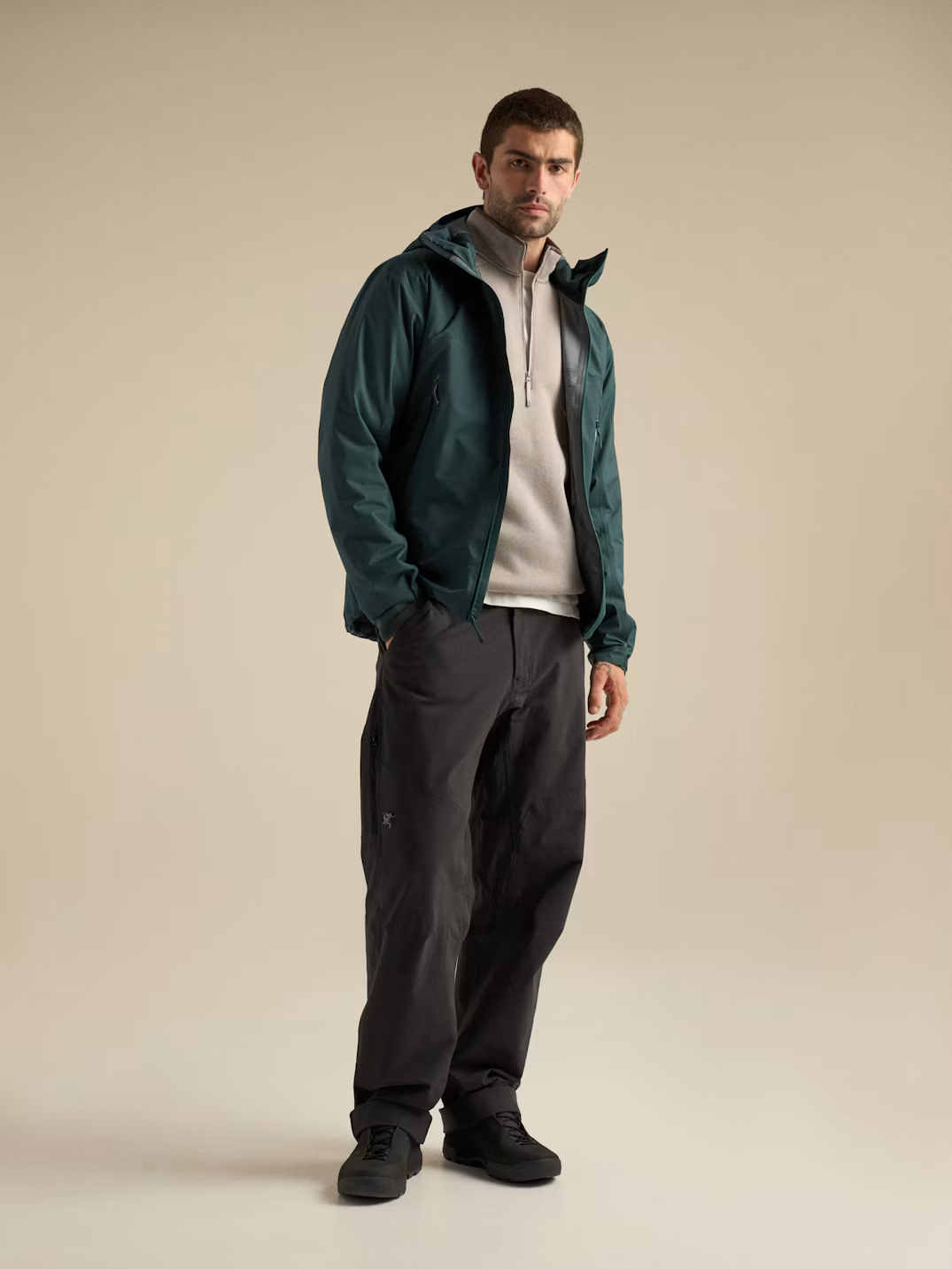
A higher HH gives more pressure resistance when the fabrics are tested the same way. For long wet hill days, we'd want that alongside a secure hood, properly protected seams and closures, enough sleeve coverage and room for the layers underneath.
But we wouldn't reject a jacket on a 10K figure alone. Rab's Kinetic 2.0 is specified at 10,000mm and is designed around stretch and moving comfort. Its Firewall is specified at 20,000mm, with a different fabric and feature set. Compare their fit, fabric feel and ventilation alongside the waterproof figure. [4] [5]
A short walk with a shell in reserve gives us different priorities from a loaded day on an exposed ridge. For the first, we'd prioritise packed size and comfortable movement. For the second, we'd spend more attention on coverage, robust construction and ventilation we can use while keeping rain out.
Try it on with the fleece you'll wear. Turn your head with the hood up, reach forward and raise your arms. A high-rated fabric won't stop water entering a loose neck opening, and a restrictive jacket is tiresome long before you reach the end of the walk.
2-layer, 2.5-layer and 3-layer construction
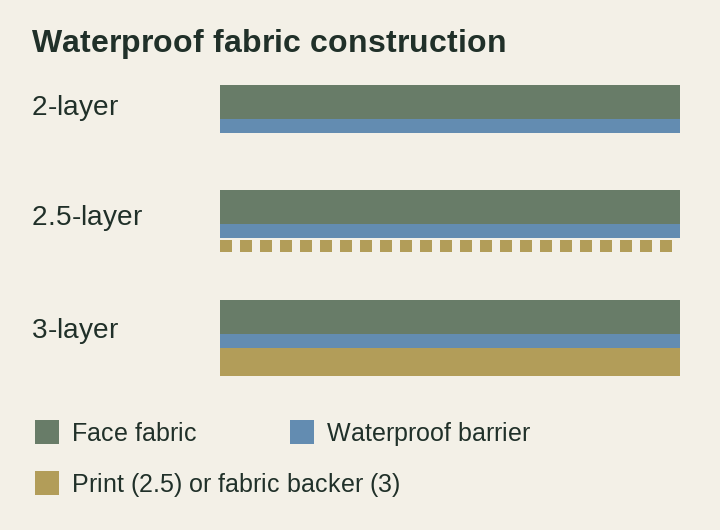
Layer count describes how the waterproof fabric is put together. A 2-layer fabric combines the face fabric with its waterproof barrier. In a 2.5-layer fabric, a light coating or print protects the inside. A 3-layer fabric bonds an inner woven or knitted backer to the membrane as well. The layers form the fabric you handle, rather than three loose jackets worn together. [10]
That inside surface is worth feeling in a shop. A backer sits between you and the membrane, and its texture affects comfort at the neck and wrists. Lightweight constructions save packing space; more protective construction gives designers another way to build a shell for regular use under a pack.
Layer count and hydrostatic head are separate specifications. Rab's 2.5-layer Downpour and 3-layer Firewall both list 20,000mm. The shared rating tells you about water-pressure resistance; the construction helps explain differences in feel, weight and intended use. [5] [12]
The seams and openings finish the job
Water needs only one route through a garment. Stitching joins panels but also makes holes in the fabric, so a waterproof jacket needs those joins protected. GORE-TEX tests finished garments in a rain room, with conditions ranging from drizzle to wind-driven rain. That goes beyond testing a square of fabric. [11]
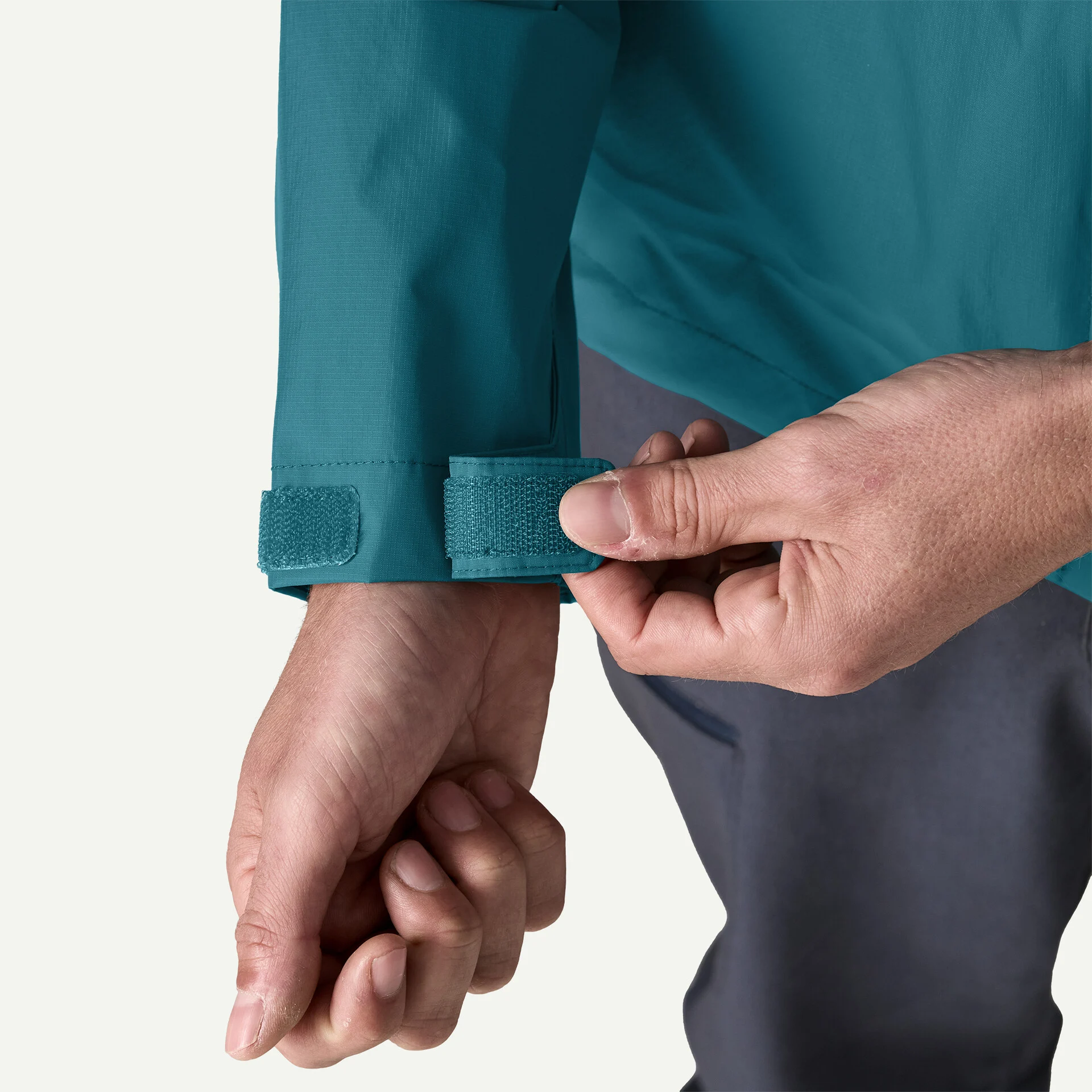
Look inside the jacket along the shoulders, hood and sleeves. On a taped design, check for lifting edges or loose sections. Outside, examine the main zip's protection and how the hood closes around your face. Zip it up and turn your head: the hood should follow without pulling the opening across your eyes.
Check the cuffs and hem with your pack on as well. You need enough adjustment to close gaps without restricting movement. In persistent rain, those details save you from water trickling down a sleeve or entering at the collar while the fabric itself is doing its job.
Waterproofness and breathability are different numbers
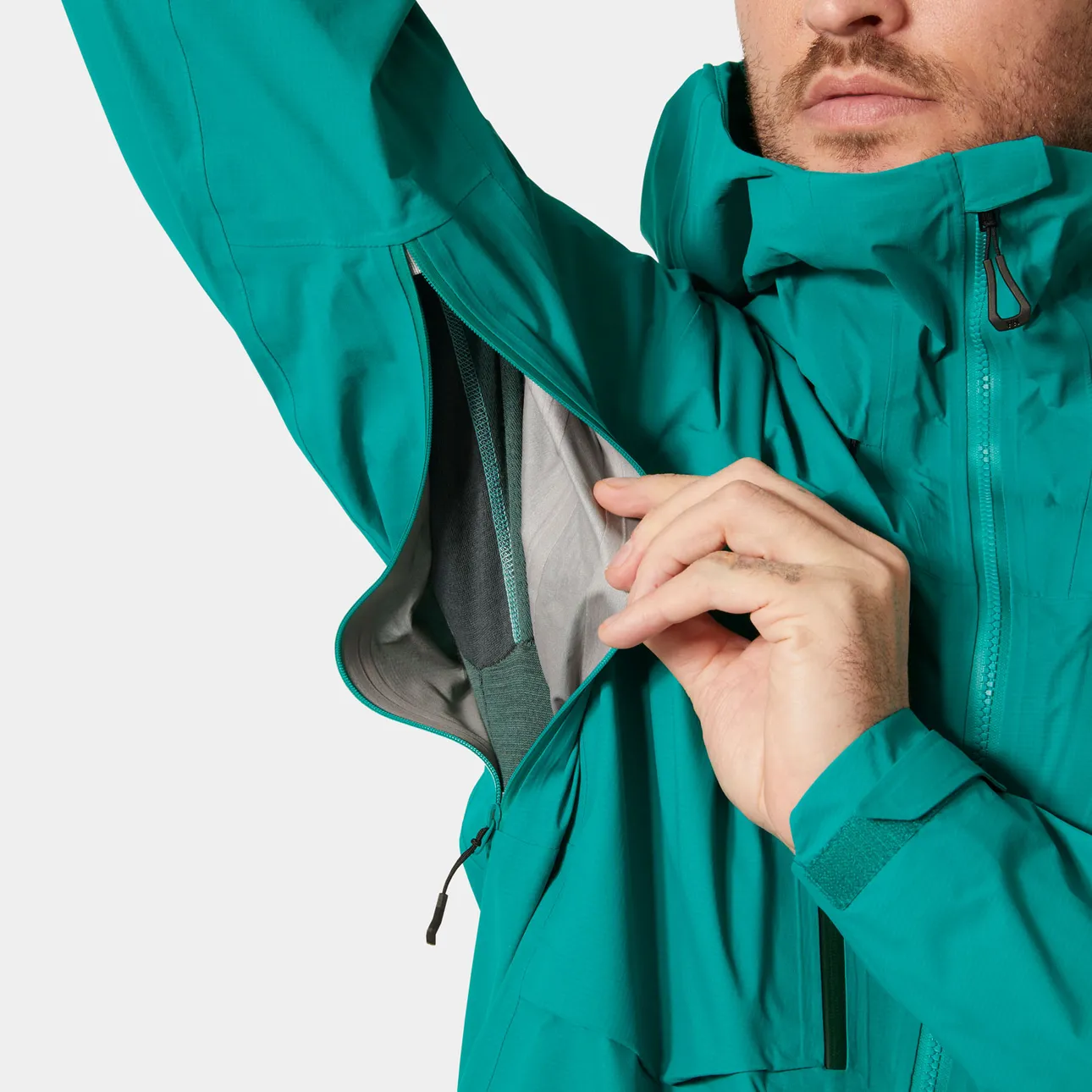
A label such as 20K/20K usually pairs waterproofness with a breathability figure. Check the units rather than assuming both halves mean the same thing. On Rab's Firewall, for example, 20,000mm is hydrostatic head and 20,000g/m²/24 hours is its published moisture-vapour transmission rate, or MVTR. [5]
MVTR describes moisture-vapour transmission; the millimetre figure describes resistance to liquid water pressure. You'll also encounter RET, a measure of resistance to evaporative heat transfer, where lower values indicate less resistance. Compare like methods and units before deciding which fabric breathes better. [9]
On the hill, ventilation deserves as much attention as a laboratory figure. A front zip you can open slightly and useful underarm vents give you ways to release heat. In our Arc'teryx Beta SL review, Andy found the pit zips useful on loaded climbs. He still generated heat, but could let some of it out.
Wetting out and leaking feel similar, but need different fixes
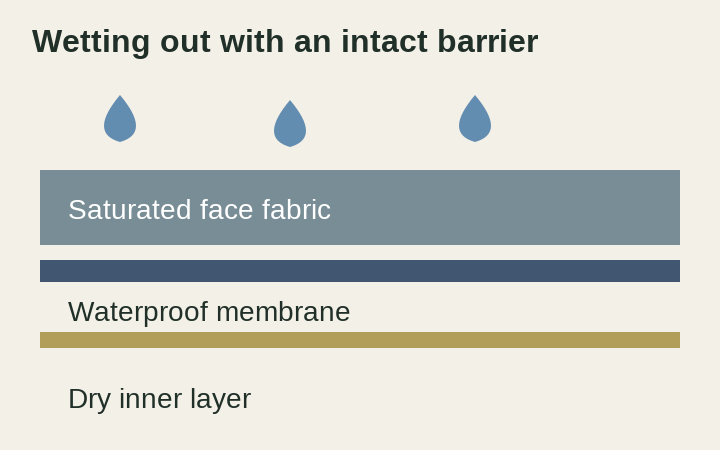
Water beading on the outside comes from the durable water repellent finish, or DWR. The waterproof membrane sits beneath the face fabric. When the outer fabric loses its beading and darkens with water, that's wetting out. GORE-TEX explains that the membrane can remain waterproof while the saturated exterior leaves the garment feeling cold and clammy. [3]
We saw that distinction in the Beta SL. Its shoulders wetted out beneath the rucksack straps, while Andy's underlying layers stayed dry through the sleet. The wet outer fabric felt different from water reaching the fleece underneath.
For a jacket that's stopped beading, cleaning and restoring the finish is the sensible first job. Our GORE-TEX care guide covers the wash, drying and reproofing steps. Adding surface repellency won't mend a torn membrane or failed seam tape, so inspect those if water keeps appearing in the same place.
Why a tent can have a much lower rating
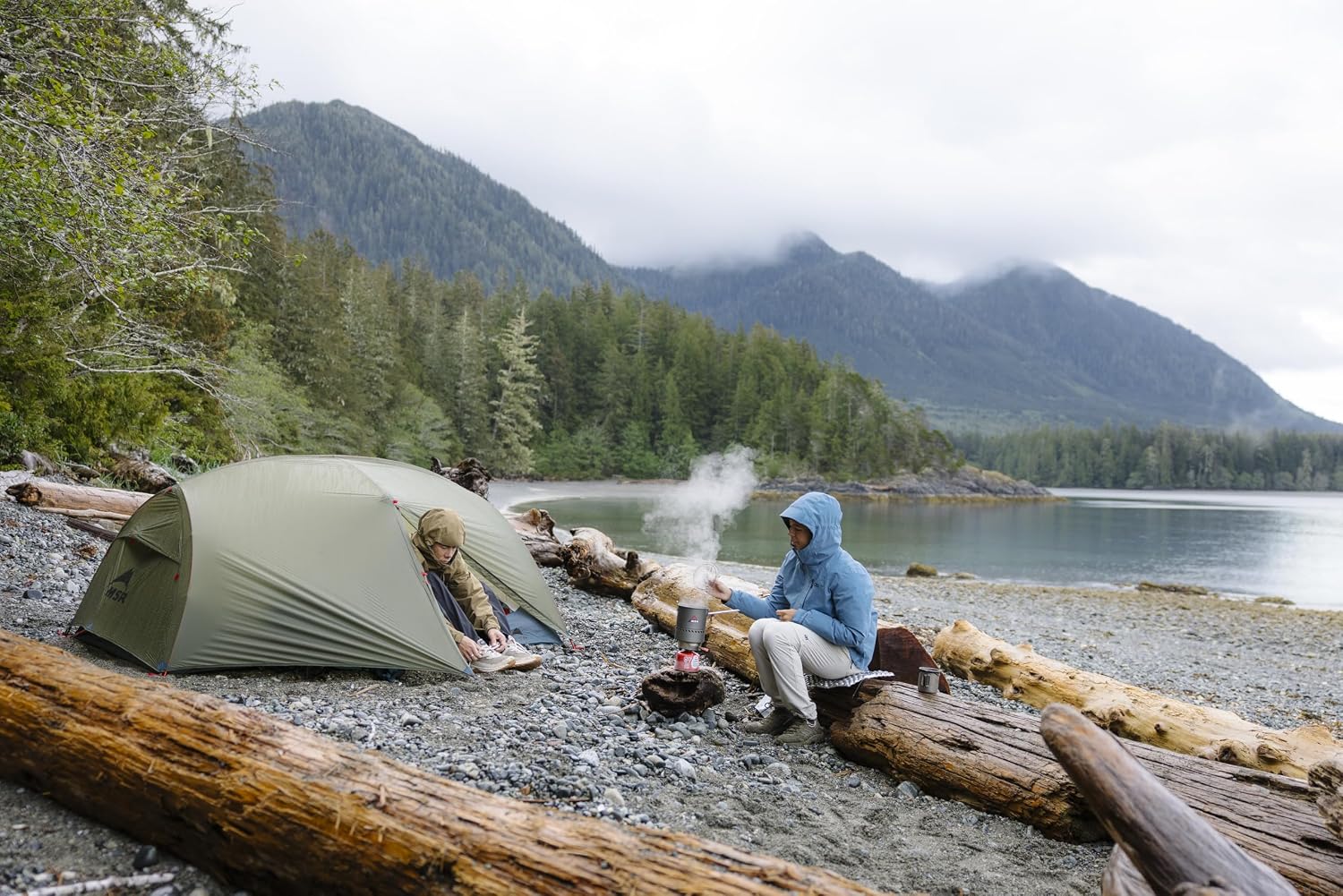
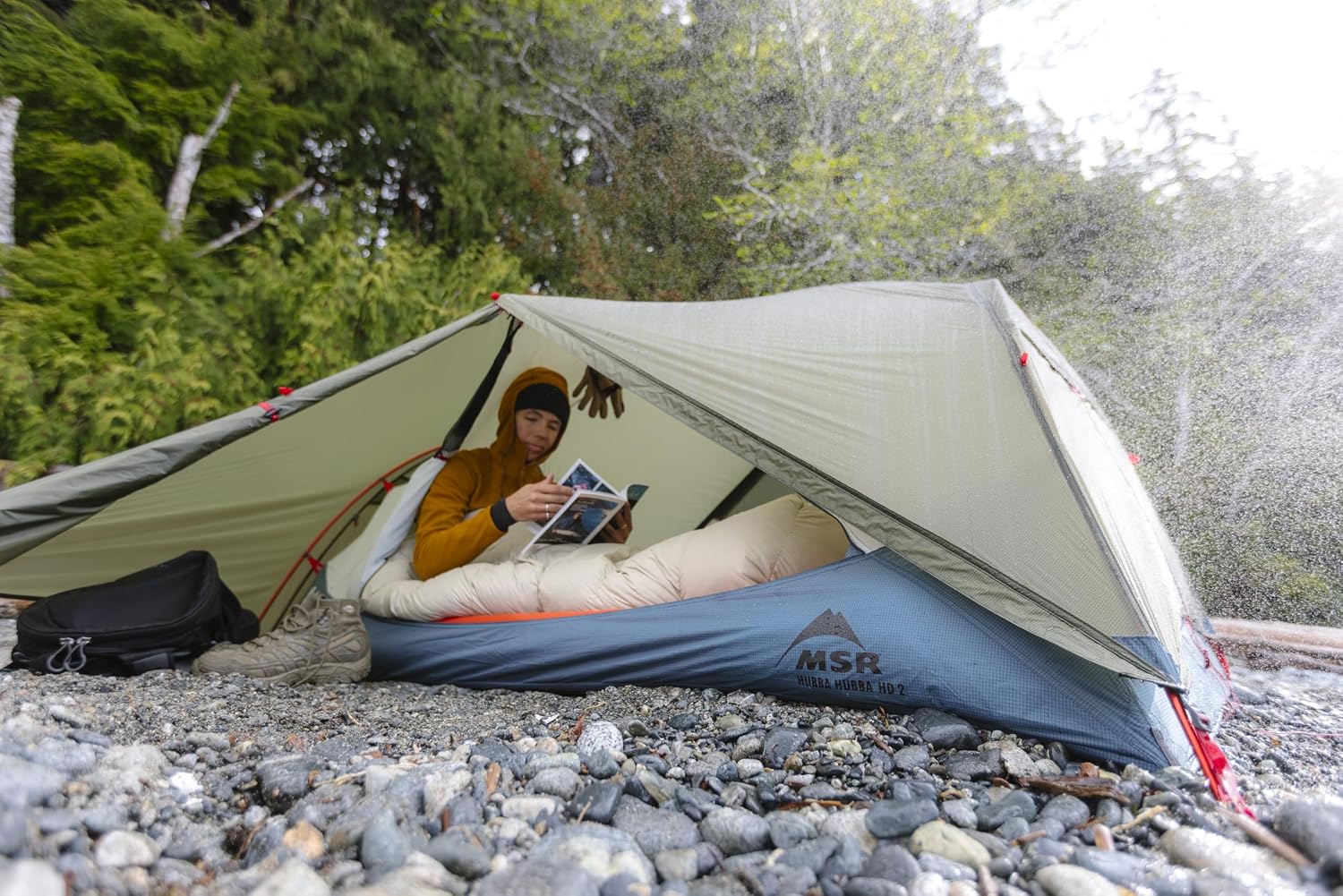
A tent fly and a waterproof jacket have different jobs. The fly hangs over a shelter and sheds water; a jacket moves with your body and has cuffs, a collar and a large front opening. A tent floor has another job again, sitting between you and wet ground.
MSR gives an example of a tent using a 1,200mm fly and 3,000mm floor. It chooses the combination around weight, waterproofness and durability. That is why we'd read the fly and floor specifications separately, rather than apply a jacket shopping threshold to the whole tent. [2]
For a tent, we'd also inspect seam treatment, the bathtub floor and door layout, then consider how easily we can pitch it taut in bad weather. A fly pressed against the inner or a door opened straight into driving rain can make the night wetter without changing the fabric's lab rating.
Our wet-weather pitching guide covers that part of the job. The Copper Spur UL2 versus Hubba Hubba HD 2 comparison also looks at the practical pitching and shelter differences we'd weigh alongside the specifications.
When the inside is damp
Look for the pattern before buying a replacement. A repeatable wet patch beside a damaged seam calls for a different response from general clamminess after a steep climb. Check openings and fabric damage, consider how much heat you've been producing, and inspect the face fabric's beading.
In a tent, moisture on the underside of the fly can be condensation. MSR's explanation of double-wall tents separates the waterproof fly from the breathable inner and stresses ventilation and a well-tensioned pitch. A higher hydrostatic-head number won't remove the moisture produced inside the shelter. [6]
Care changes the comparison over time, too. Dry a tent fully before storing it. MSR explains that prolonged damp storage can break down waterproof coatings through hydrolysis. A sticky, deteriorating coating needs more attention than a fresh coat of water-repellent spray. Our tent care guide covers inspection and storage. [7]
How we'd use the rating in a buying decision
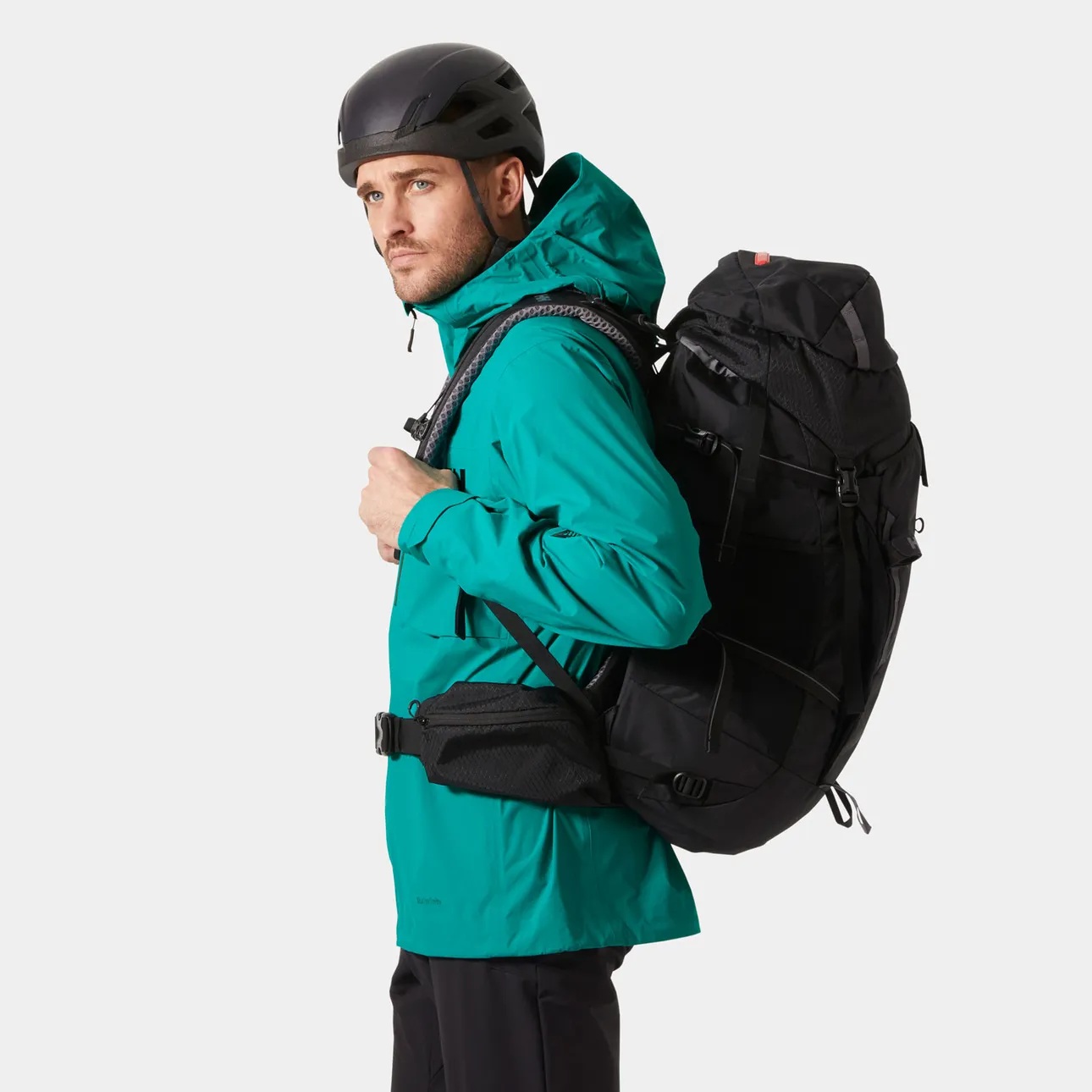
Read the millimetre figure first, then ask what the fabric is doing. On a jacket, compare coverage, sealed construction, fit, ventilation, weight and the sort of rain you'll keep walking through. On a tent, separate fly and floor ratings and look at the pitch, seams and shelter design.
When those details are comparable, more pressure resistance is useful. When they aren't, we wouldn't let one large number choose the kit. Our waterproof jacket roundup brings the features and field observations together.
And if the specification says IP67 or IP68, you're reading a different system. Our IP ratings guide covers electronics, splashes and submersion. A fabric's 20m-equivalent water column isn't a 20m diving rating for anything made from it.
Sources and further reading
Standards and manufacturer guidance
Technical sources checked on 9 November 2026.
- ISO 811: fabric hydrostatic-pressure testing
- MSR: tent fabrics and waterproof ratings
- GORE-TEX: durable water repellent finishes
- Rab: Kinetic 2.0 fabric specifications
- Rab: Firewall fabric specifications
- MSR: single-wall and double-wall tents
- MSR: keeping a tent clean and dry
- ISO 1420: coated-fabric water-penetration testing
- ISO 11092: thermal and water-vapour resistance
- Rab: waterproof fabric construction
- GORE-TEX: finished garment testing
- Rab: Downpour fabric specifications
If your clothing is damp beneath a shell, our waterproof jacket troubleshooting guide helps work out whether to change layers, restore surface beading or arrange repair.