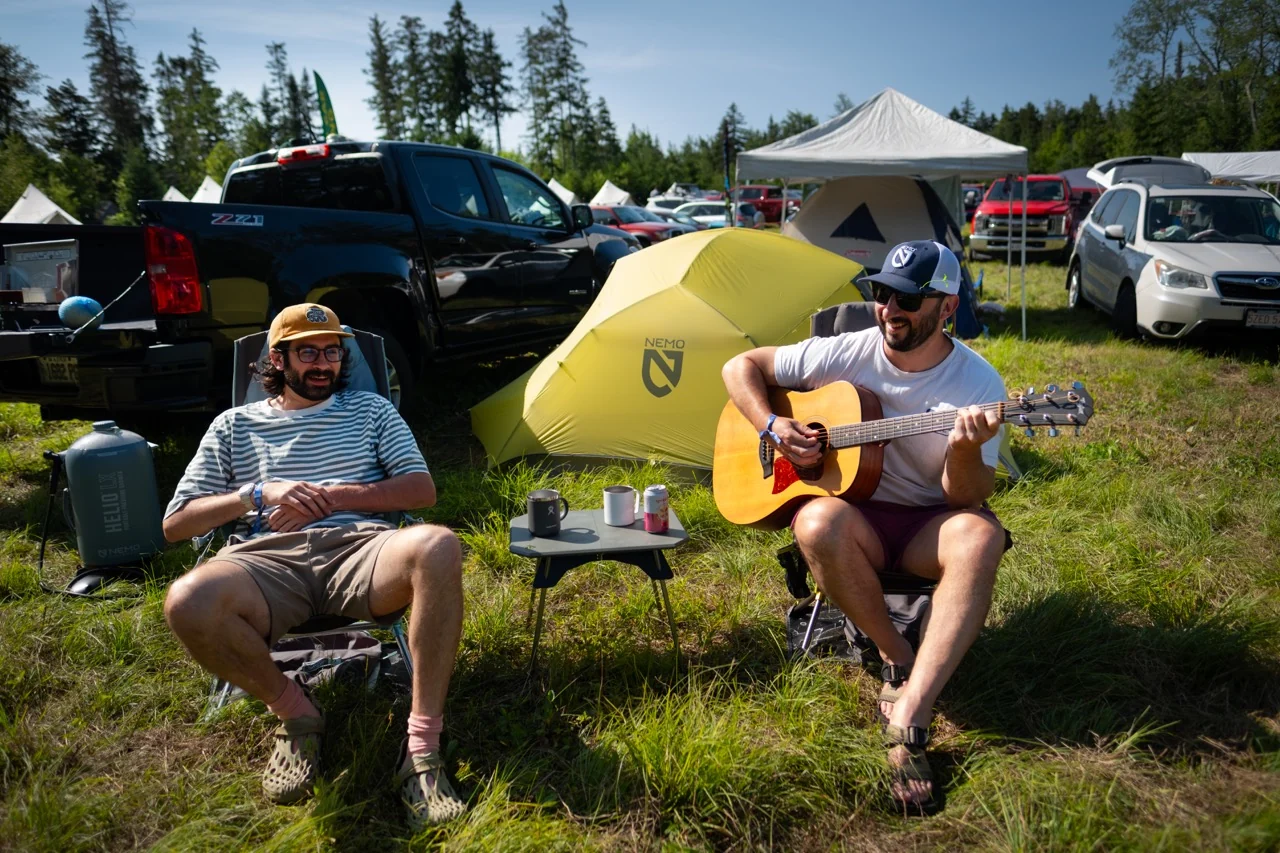
For a comfortable car camp, we'd put the money into a good bed first, then somewhere roomy to sleep and a stove we enjoy cooking on. The NEMO Roamer, The North Face Wawona 6 and Jetboil Genesis are the three we'd build around. Add the Stargaze EVO-X if long evenings in a chair are part of the plan, or the YETI Trailhead Field Chair if you want something easier to carry and get out of.
Having the car nearby lets you bring a few comforts that would be miserable to carry in a rucksack. A thick mattress, room to stand up and a proper frying pan can make staying out for a week much more appealing. There's still a limit to what fits in the boot, though. Two big chairs, two rolled mattresses and a loaded cool box eat up space quickly.
These are our picks from seven full reviews, covering the tent, bed, seating, cold food storage and cooking.
The gear we'd choose
| For the camp | Our pick | What we like | What gets annoying |
|---|---|---|---|
| A roomy family tent | The North Face Wawona 6 | Standing room and a huge porch | Slow to pitch alone; roomy for four, tight for six |
| A bed for longer stays | NEMO Roamer | Thick, quiet support; two Singles link together | Price and rolled size |
| An evening recliner | NEMO Stargaze EVO-X | A suspended seat that swings and reclines | Big bag; cup holders move with the seat |
| A chair for eating and getting up often | YETI Trailhead Field Chair | Steady, upright and easy to carry from the car | No armrests or included cup holder |
| Keeping supplies cold at a fixed camp | YETI Tundra 65 | Days of ice retention and a tough shell | Heavy enough to need two people when loaded |
| Cooking dinner from scratch | Jetboil Genesis Basecamp System | Good simmer control and nesting cookware | Fiddly windscreen and failed igniters |
| Big pans and high heat | Camp Chef Everest 2X | Powerful burners and useful wind panels | Touchy low heat and a bulky case |
Sleeping space and a comfortable bed
The North Face Wawona 6: the tent for staying a while
We lived in the Wawona for 30 consecutive nights in Cornwall, with two adults and two young children. Adam paid £300 for it. By the end of a month, the feature we most appreciated was the huge front vestibule. Boots, bags and a pushchair had somewhere to go without taking over the sleeping area. We could pull chairs under cover when the weather turned, too.
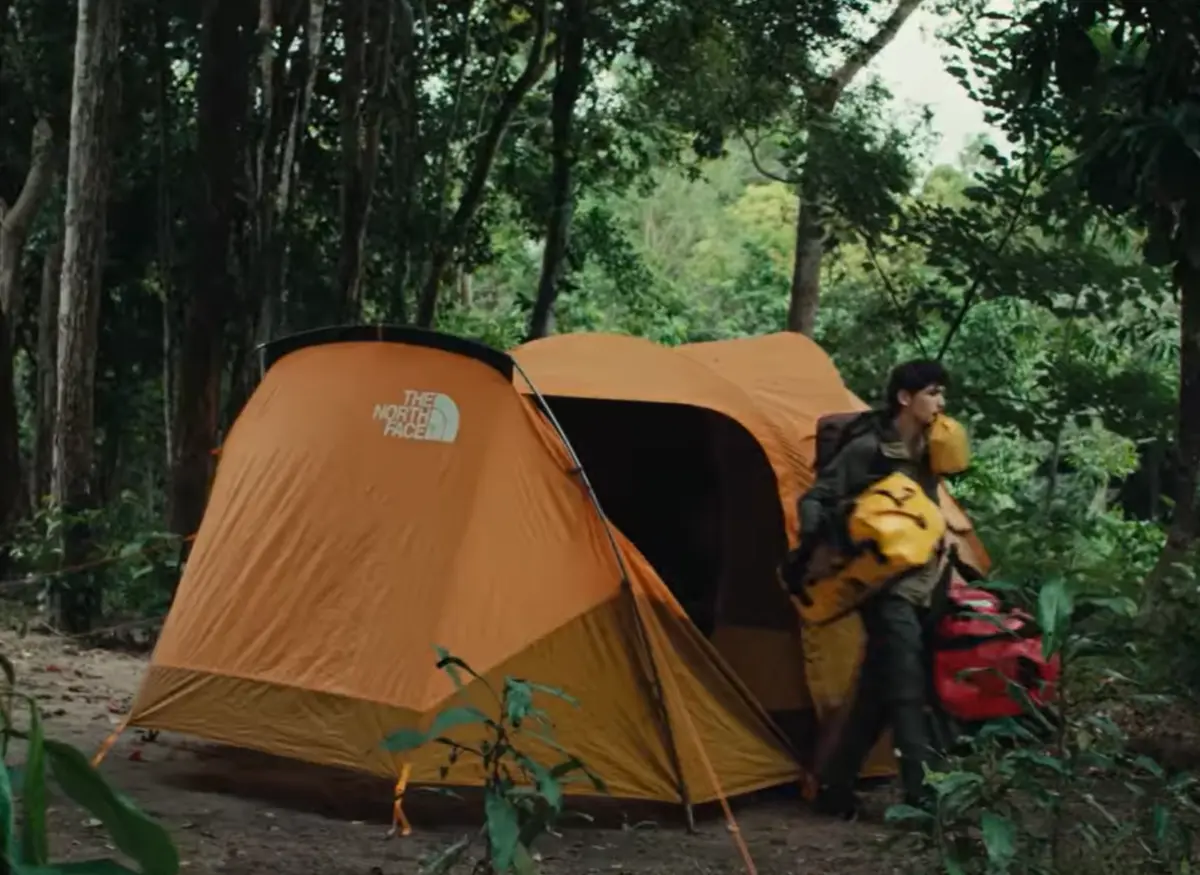
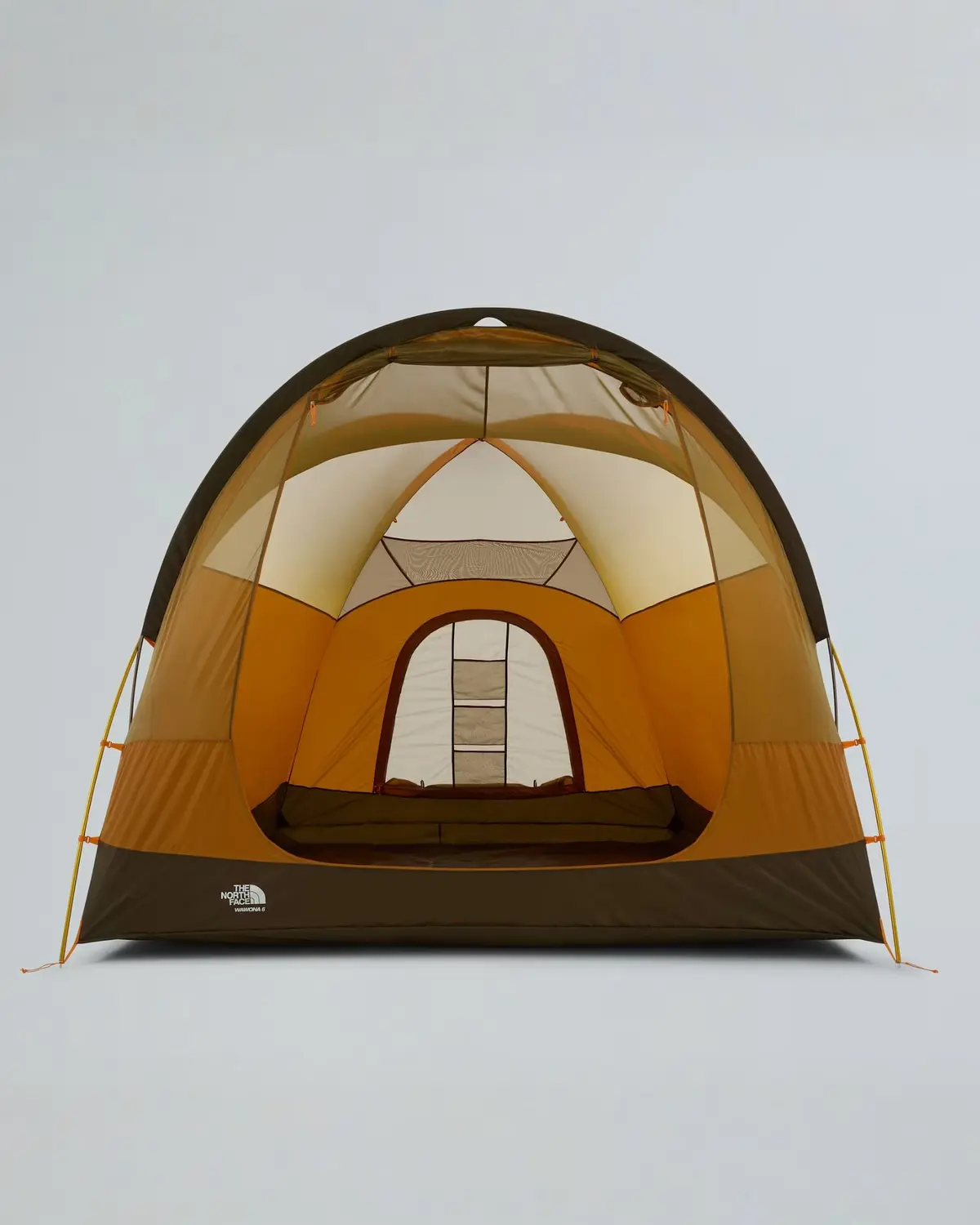
Inside, there's enough height to stand up and enough room for a family of four to spread out. Getting dressed or sorting the children's things is easier when you aren't doing it bent double over somebody else's bed. The North Face gives the floor area as 8 m², with another 4.2 m² in the front vestibule. You need a decent-sized pitch for the whole thing.
We'd treat the six-person label as sleeping capacity for a close-packed group. With four of us, it felt generous and usable. For a couple staying for a week or more, we'd happily take the extra room. Six people, their bedding and a pile of holiday gear would be a much less relaxing arrangement.
The mesh and large doors were welcome during our heatwave. Condensation was essentially absent, and the sleeping area stayed dry through a spell of heavy rain. In strong wind, the DAC MX poles and guylines kept it feeling secure. We replaced the basic supplied stakes with stronger ones.
Pitching is the chore. The long main poles can snag in their sleeves when you're doing it alone, and the porch needs its own pole, stakes and tensioning. With two people who know the sequence, we were generally looking at ten to fifteen minutes. That's fine for a longer stay. We'd get tired of it on a trip where we moved every morning.
The tent showed no meaningful wear after our month in it. It's the roomy option we'd take for a family summer camp, provided the pitch has space for the porch and guylines. For freezing weather, we'd want something less drafty than this mesh-heavy design.
NEMO Roamer: the upgrade we'd make to the bed
The Roamer would be our first purchase here if our existing tent was fine but we kept waking up sore. We bought two regular Singles for US$259.95 each and slept on them for 90 straight nights around Quebec. Most moves were by car, with some longer hiking and bike-trailer approaches. Both of us sleep on our sides and fronts, and neither of us ended up with a hip or shoulder pressing through to the ground.
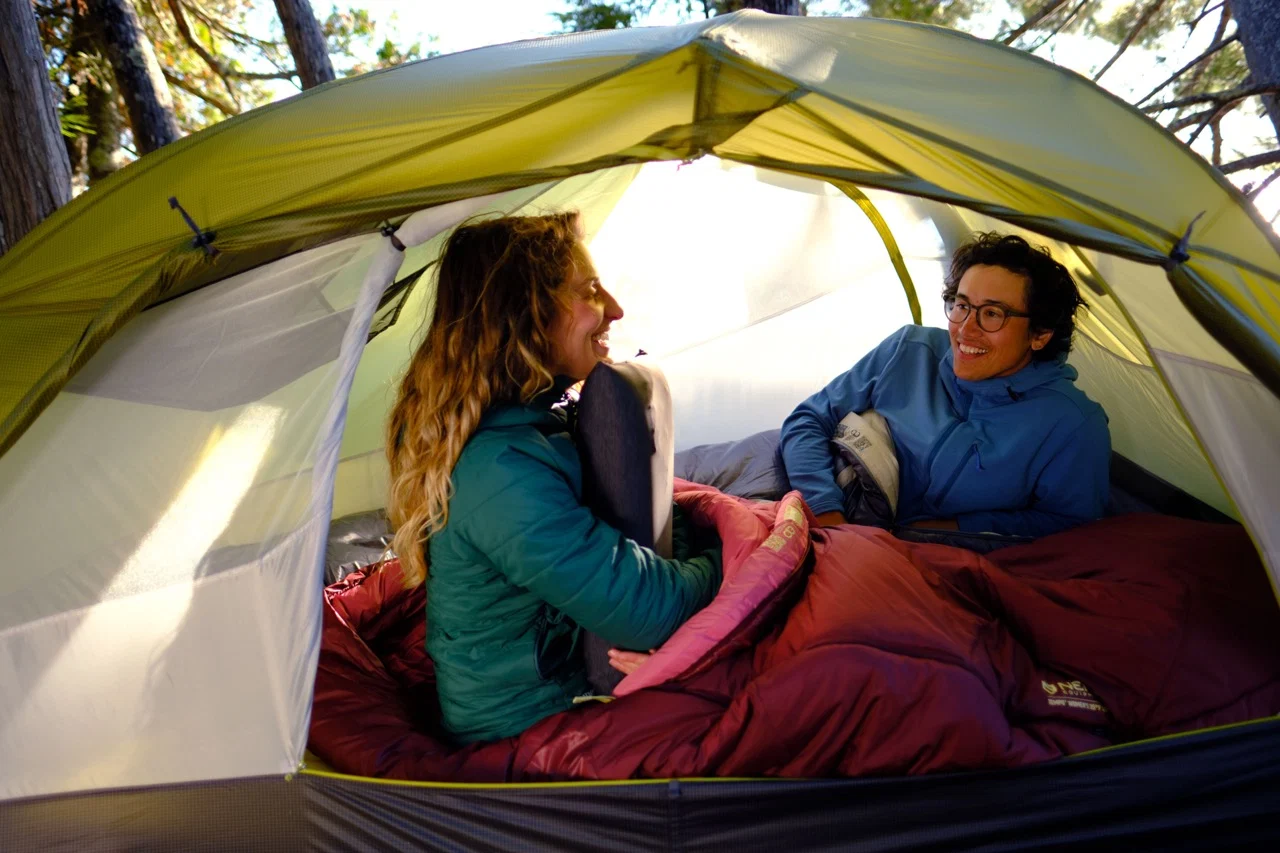
There's four inches of foam-backed support beneath you, with much less bounce than a basic air bed. The top is soft and quiet, so rolling over doesn't come with a loud rustle. We preferred letting a little air out after lying down. Fully firm was more mattress than we needed; a few taps on the adjustment button let our hips settle comfortably.
Two Singles were a good arrangement for us. The side toggles kept them together, and each person could choose their own firmness. We could feel the seam between them, but never woke up in a widening gap. If you share a bed with someone who likes a very different amount of support, having two valves is useful.
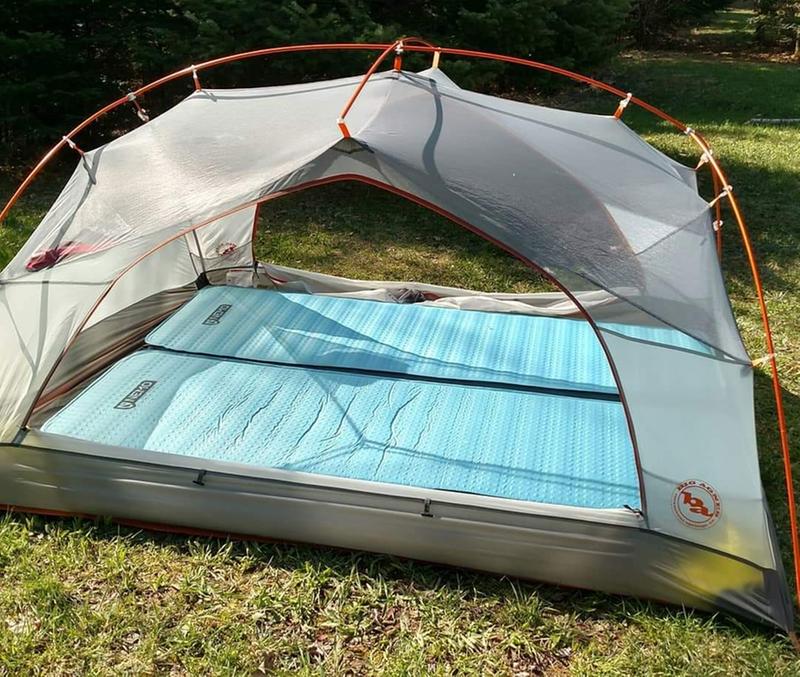
Our nights ranged from 18°C down to 1°C, and we never felt cold coming up through the mattresses. Neither mat leaked overnight or developed a puncture over those three months. Opening the intake and leaving them for ten to fifteen minutes did most of the inflation; another two or three pump-sack fills finished the job.
They're still big rolls to put in the car, especially as a pair. Packing takes some kneeling and squeezing, even though the dump valve lets the air out quickly. At home, you'll also want somewhere to store them unrolled with the valves open. For us, that inconvenience is easier to accept than three months of poor sleep.
For trips where the mat has to go in a rucksack, our Roamer and Exped Ultra 6.5R comparison goes through what you give up to carry less.
Two chairs for different sorts of sitting
We used both of these over three months of car camping around Quebec. They're quick to open and steady on the ground we camped on, but we reach for them for different reasons. The NEMO is where we want to spend an evening. The YETI is easier to carry around and more convenient when we're eating or getting up every few minutes.
NEMO Stargaze EVO-X: the one for leaning back
The Stargaze is the most comfortable camp chair we've used. Its sling supports us without a metal bar digging into the backs of our thighs, and the headrest meets our heads when we lean back. Shift your weight and the whole seat reclines. There's a gentle swing as well, which is very easy to get used to once the jobs around camp are done.
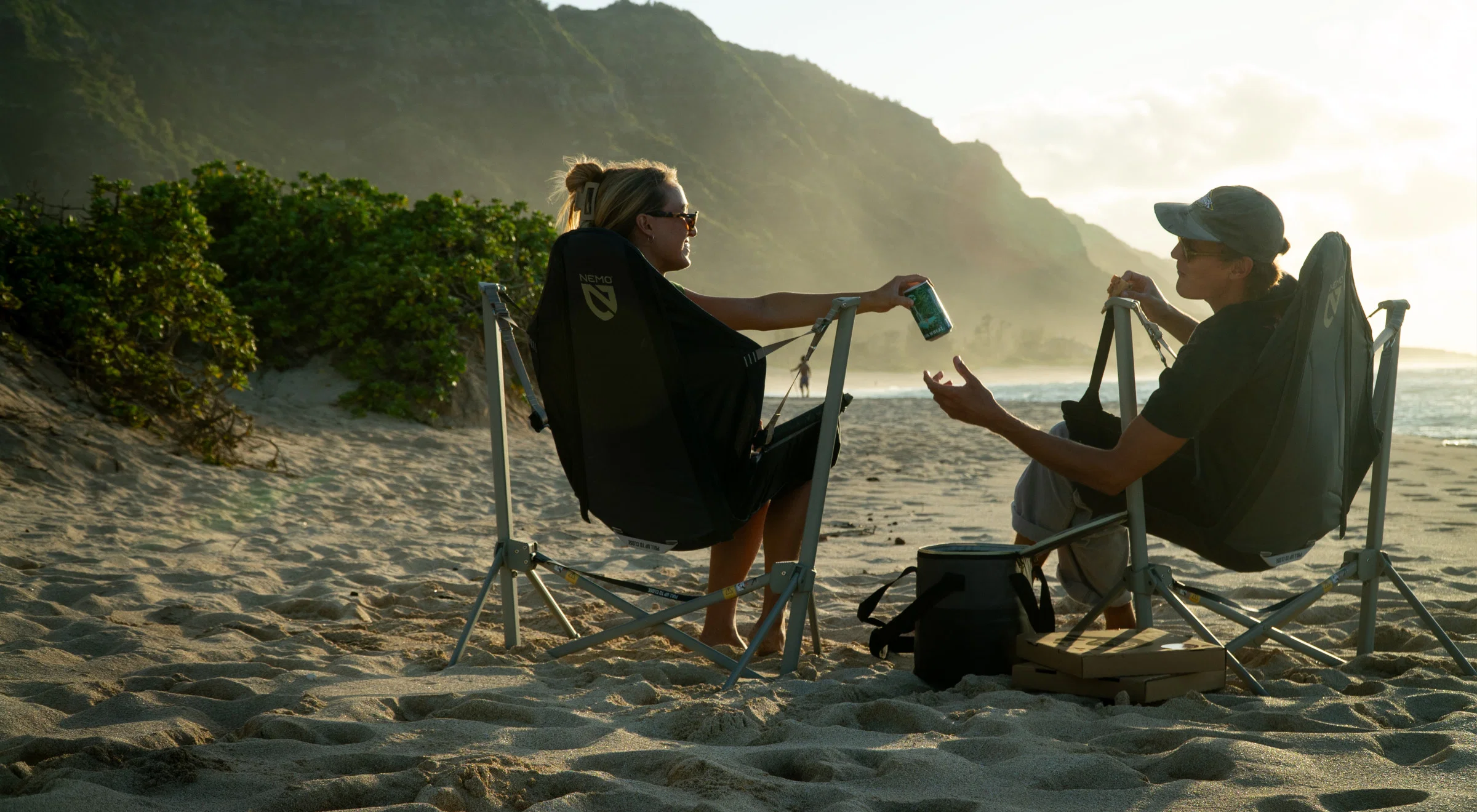
The EVO-X opens in about five seconds. Pull it from the bag, open the steel frame and sit down. There are no separate poles to assemble or bits of seat fabric to stretch into place. The wide stance and six ground contact points stayed steady on uneven dirt, sand and sloped grass, even while the sling moved above them.
Adam paid US$179.95 and spent hundreds of hours in it over those three months. We'd buy it again for car camping. We would also leave space for it before loading the rest of the car, because the packed chair is roughly the size of a small golf bag and weighs nearly 15 lb. The shoulder strap helps with the walk from the boot to the pitch. We don't enjoy carrying it much further.
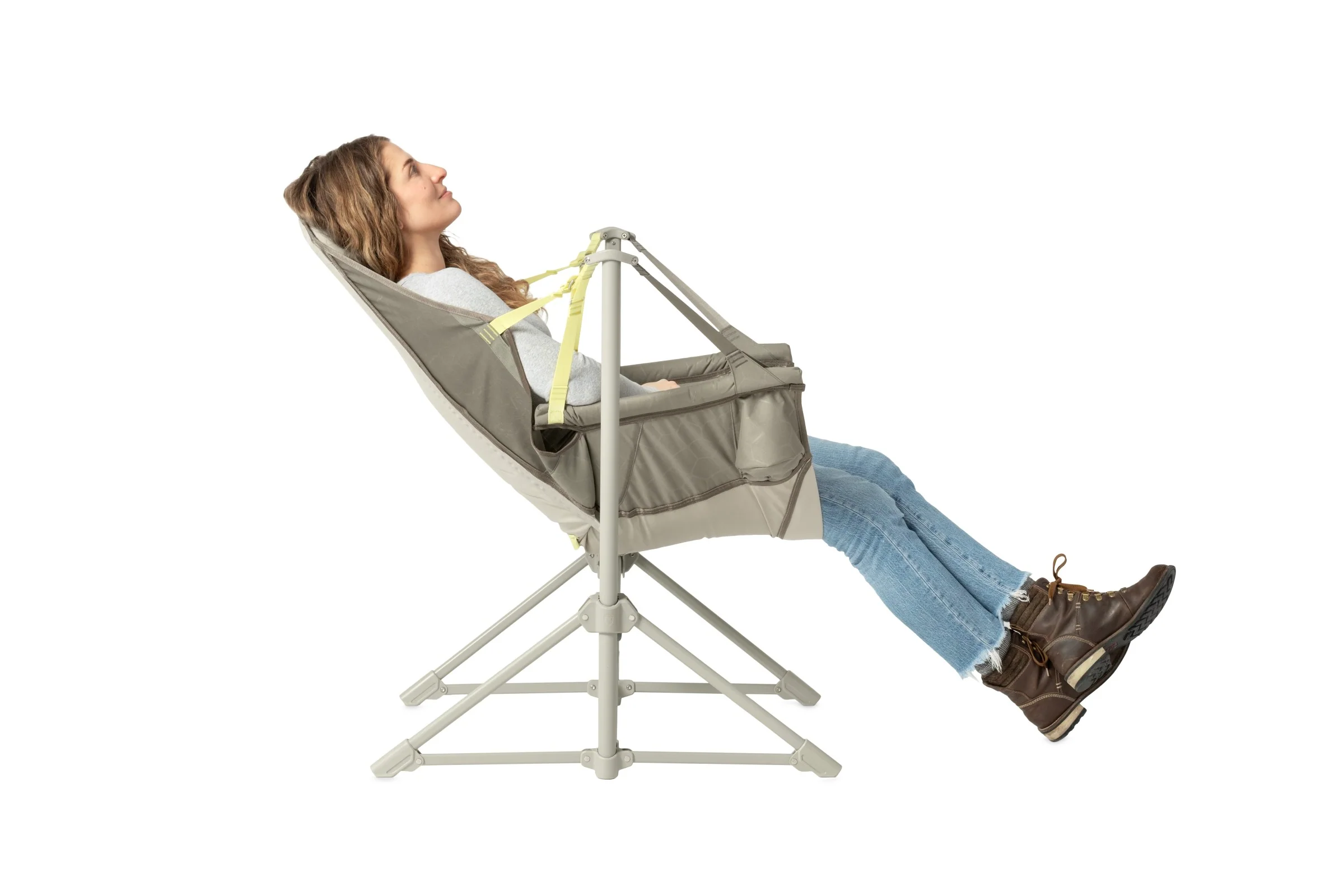
The two cup holders move with the sling, which is a poor place for an open drink when you stand up. We use a capped bottle in them and put an open cup somewhere else before getting out. At full recline, we kept wishing we could put our feet up as well.
If the chair will live beside the tent for several days, the comfort is worth the packing space to us. If we're already struggling to close the boot, this is one of the first bulky extras we'd reconsider.
YETI Trailhead Field Chair: easier to carry, easier to get up
The Field Chair is the slimmer, simpler seat of the two. It opens in seconds, gives us a supportive upright position and is high enough that we can stand without hauling ourselves out of a deep sling. We liked that when we were going between our chair, the stove and the car.
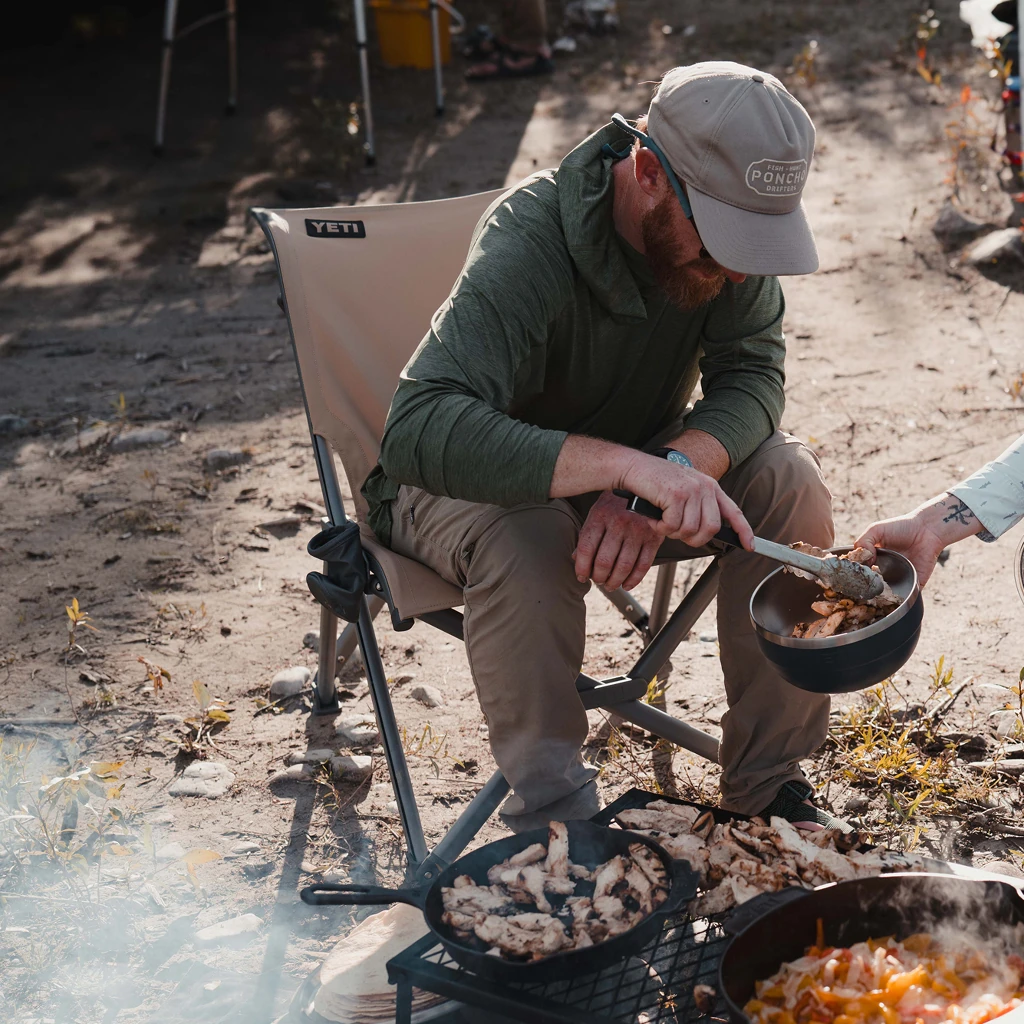
At about 9.3 lb, it's easier to move than the Stargaze. The bag deserves some credit: its wide padded strap spreads the load over a shoulder, leaving our hands free for other things. It packs into a long, narrow bundle and goes back into the bag without a fight. Short walks to a picnic spot or a different place around camp are no bother.
The broad feet stayed planted on soft sand, damp grass and uneven dirt. After three months, the frame was still tight and the seat hadn't sagged. The fabric felt supportive against our backs, although it was warmer than mesh on humid days.
What we missed was somewhere to rest our arms. After a couple of hours, we found ourselves shifting around with our hands in our lap. We also paid US$225 and still had to contemplate another US$20 for the optional cup holder. We didn't buy it, and spent the trip putting our drink on the ground.
We'd pick the Field Chair for sitting up to eat, moving between spots and getting in and out regularly. For settling back all evening, we'd take the NEMO. Our Stargaze versus Trailhead Field Chair comparison covers both in more detail.
Keeping food cold and cooking dinner
YETI Tundra 65: a cool box we'd leave at camp
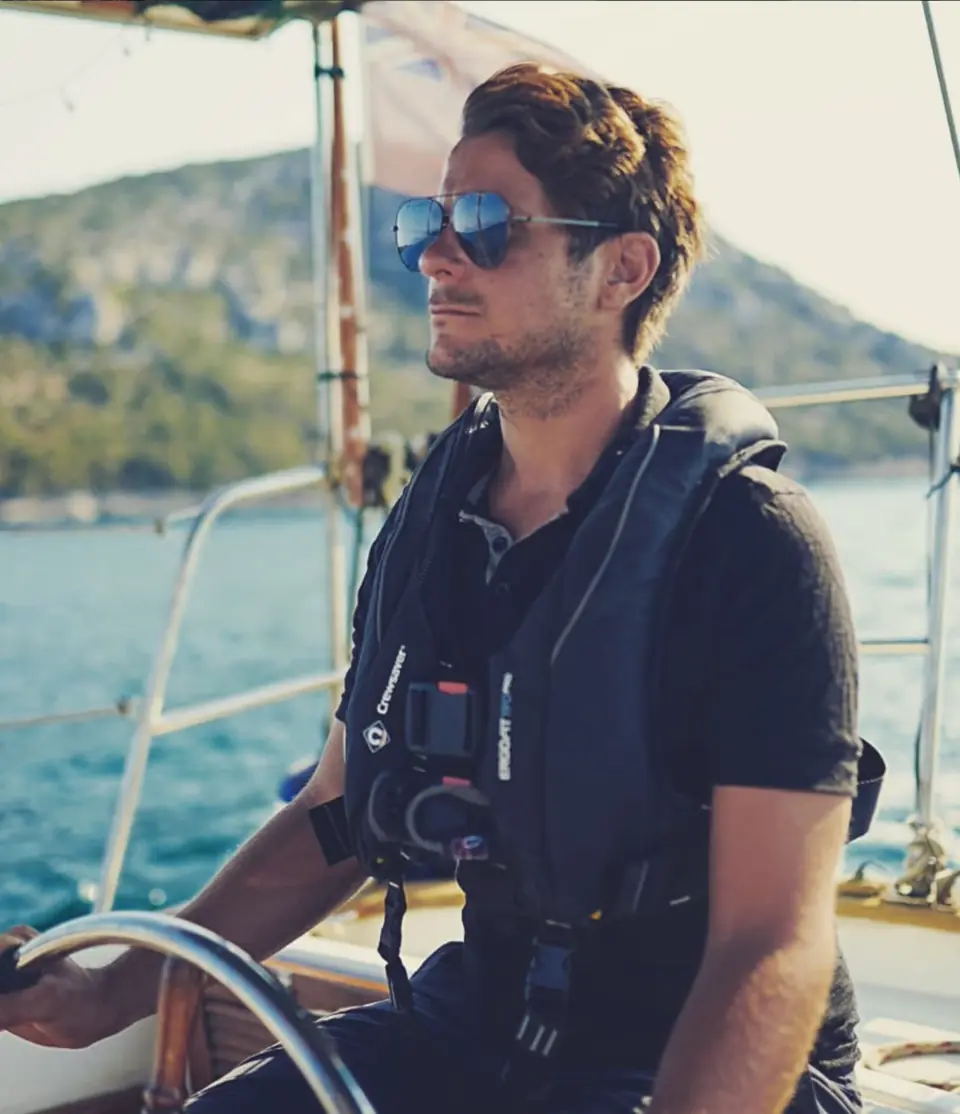
The Tundra earns its space when you can unload it and leave it there. Adam paid £350 for ours and used it through a Mediterranean sailing summer, with temperatures reaching 40°C. Pre-chilling it, packing plenty of ice and keeping it shaded gave us five to six days of useful ice. It also survived boats, rocky beaches, salt and sand with scuffs rather than broken parts.
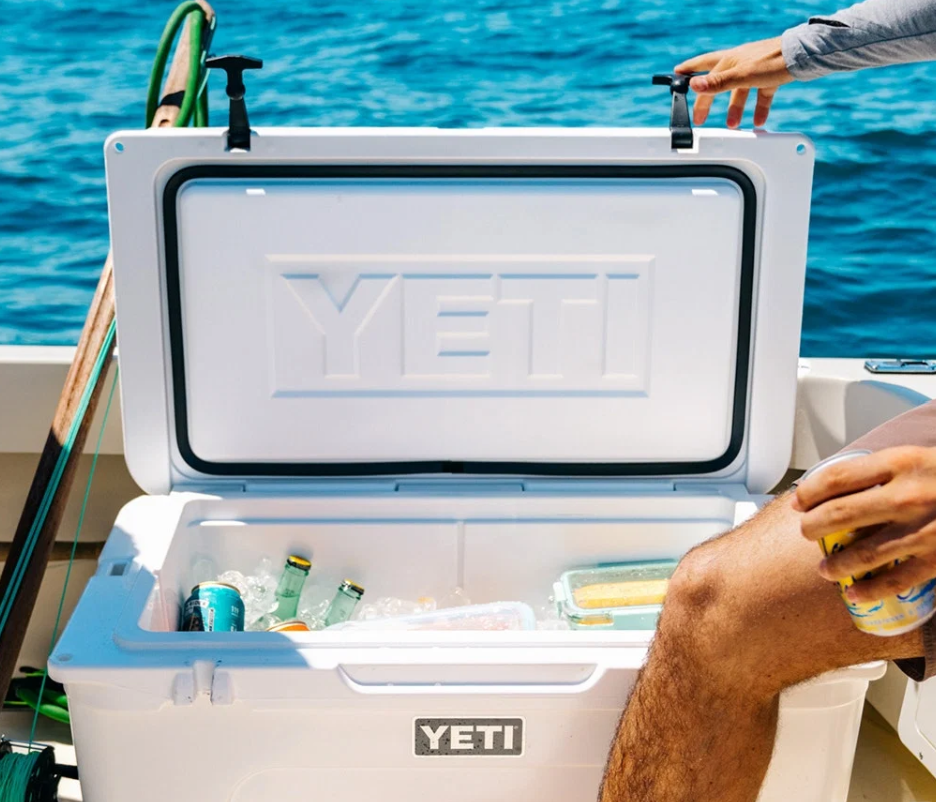
We'd use it at a car camp for the same reasons we liked having it aboard: thick insulation, dependable latches and a shell we don't have to fuss over. The basket keeps things above the meltwater, the drain makes emptying it easy, and the rubber feet keep the box from sliding around in the car.
The weight is the problem. It's about 13.7 kg empty, and ours could reach 40-45 kg with ice, food and drinks. Two people can carry it by the rope handles, but hauling it across a beach soon took the shine off owning it. There are no wheels. We'd want it close to where the car is parked, especially when full.
Don't plan your shopping around the number 65. That is the model name, and thick insulated walls take up a lot of the outside footprint. Once we allowed for ice, it held food for two people for four to five days, or a family of four for a weekend. Tall bottles needed to lie down, and buried food meant rummaging.
We pre-chilled ours overnight, used a solid ice block underneath and filled the gaps with cubes. YETI recommends roughly two parts ice to one part contents, which leaves much less room for food than the empty box suggests. Keep a thermometer with perishables; remaining ice alone doesn't tell you the temperature of everything inside.
For a fixed camp, we'd take the durability and insulation. For a quick picnic or a long walk from the parking area, we'd want something much easier to lift.
Jetboil Genesis: our pick for cooking meals
The Genesis is the stove we'd take when dinner involves frying one thing and gently simmering another. Its valves give you four full turns of adjustment, with enough low-flame control for sauces, rice and porridge. We've used it for about three years across Europe and Canada, including festivals and beach stops while sailing.
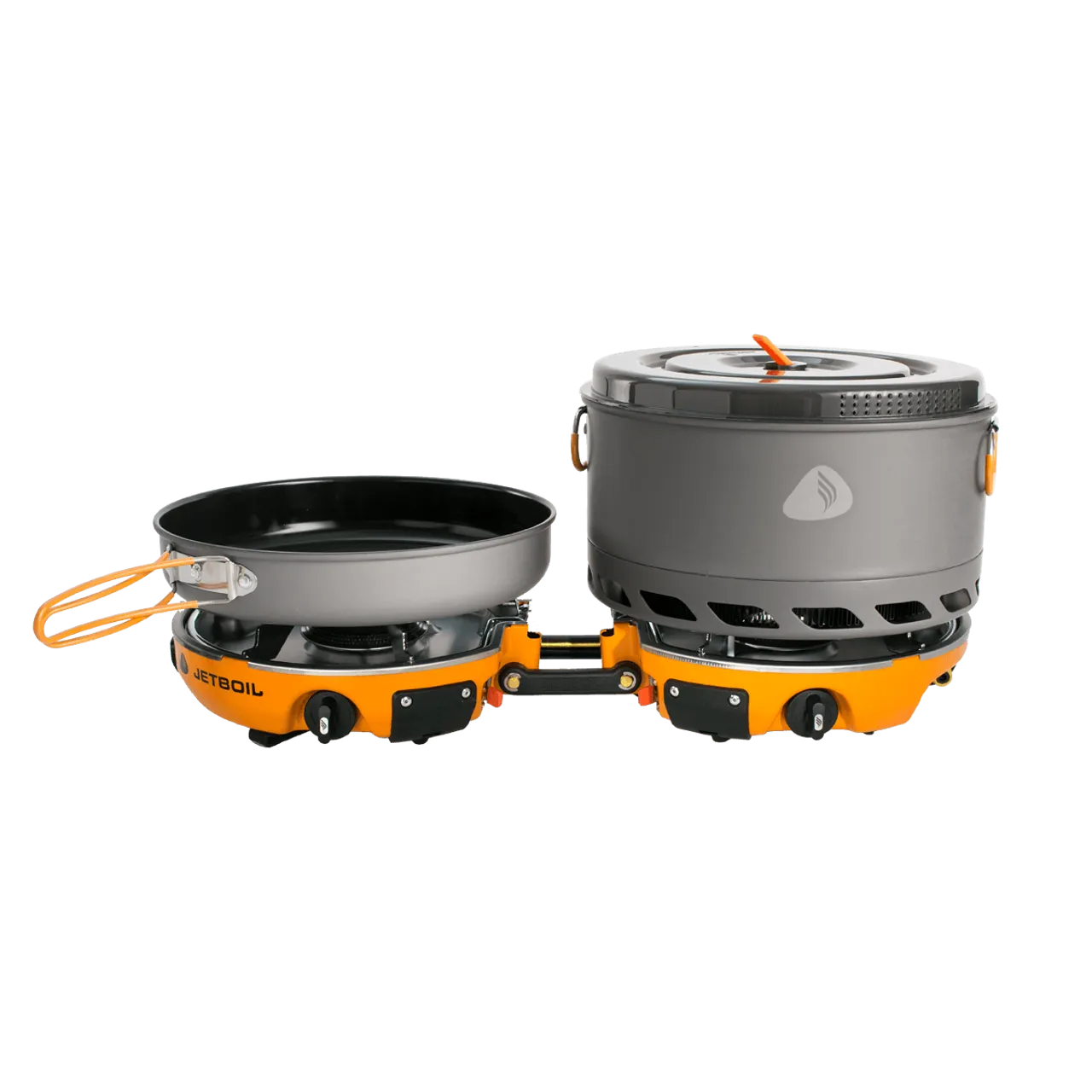
The complete Basecamp System includes a five-litre pot and ten-inch ceramic-coated pan. They fit on the two burners together, and the supports feel steady beneath them. We've cooked for groups of up to eight by planning the meal and working in batches. For two people, having both pans available makes dinner easy to organise.
When it's time to leave, the folding stove nests inside the pot and the pan closes the stack. We like having the cooking kit together in one bag. The system's listed 4.1 kg includes the stove and cookware, but leaves out the regulator, windscreen and bag.
The windscreen is fiddly and doesn't shelter the burners as well as we'd like. Both igniters failed early, so a separate lighter has become part of the kit. Grease also finds its way into the burner wells and hinge. The burners and controls have kept working, and the low-heat control is good enough that we'd buy the stove again.
Adam paid US$337.49 for the complete system. If you're putting a camp kitchen together and want the pot and pan included, it's a tidy way to do it. We'd set it up in a sheltered outdoor spot, away from the tent and its porch.
Camp Chef Everest 2X: for high heat and heavy pans
The Everest is the one we'd choose for a cast-iron breakfast or getting a large pot hot quickly. Both 20,000 BTU-per-hour burners can run hard together, and the broad grate supports heavy pans well. Two ten-inch pans fit side by side, with a little thought about where their handles go.
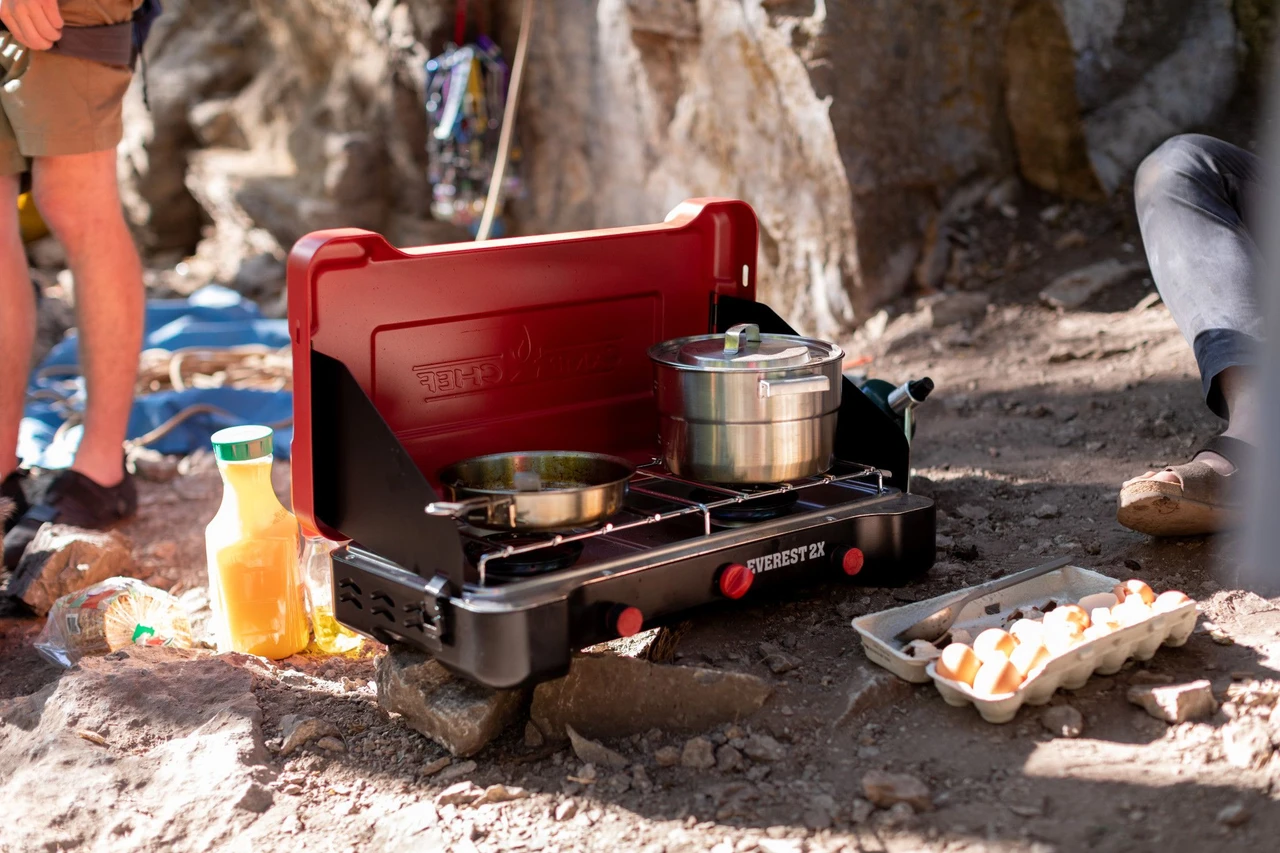
We've owned ours for about three years and used it on eight or nine camping trips, including cold weather, moderate wind and higher-altitude cooking. The deep lid and side panels do a better job of sheltering the flames than the Genesis windscreen. It's been a useful stove on breezier pitches.
Gentle heat takes more attention. Turn the knob a little too far and the flame can go from too high to out. Thin pans also develop a hot spot in the middle. We'd rather use the Genesis for a sauce that needs to sit quietly while we do something else; the Everest suits a meal where we want plenty of heat under a heavier pan.
Adam paid US$194.18 for the stove. You'll need to pack your own cookware, and the case alone is about 5.4 kg. Ours has developed some latch and hinge play, scorched paint and surface rust after damp storage. The igniter gave up early too. The burners have kept working, which is why we still take it camping.
Camp Chef lists the US Everest 2X for US sale and use only. If you're buying elsewhere, choose a stove and fuel connection intended for your market.
For the full choice between these two, see our Genesis and Everest comparison. Our camping stove roundup also includes smaller systems for trips on foot.
What we'd pack for different trips
For a longer family stay, we'd start with the Wawona and comfortable beds for each person. Measure the mats against the tent floor before buying the whole sleeping setup. Keep space at the door for getting in and out, and allow for the Wawona's porch when booking a pitch. The Genesis would be our stove choice for cooking varied meals, with the Tundra added if we're storing enough food to justify moving it.
For a couple staying several nights, the linked Roamers and two Stargazes would be our comfort purchases. The Wawona is indulgently roomy for two, so we'd keep an existing tent if we were happy in it. We'd also choose one stove. The Genesis suits the way we like to cook; the Everest makes more sense if we already have heavy pans and expect to use them.
For moving camp every day, we'd cut down on the big, slow pieces. We wouldn't enjoy pitching the Wawona every evening. The Field Chair is easier to move than the Stargaze, and we'd think carefully before taking a loaded Tundra in and out of the boot at every stop. A comfortable fixed camp and an easy touring setup ask for different amounts of furniture.
We'd lay out the large bags before packing the car: tent, mattresses, chairs, cool box and stove. The chairs and rolled beds take more room than you might expect, and the Tundra needs to be accessible without unloading everything else. If space runs out, we'd keep the comfortable bed and remove a bulky extra first.
How long we've used this gear
| Gear | Time in use | Review score |
|---|---|---|
| Wawona 6 | 30 consecutive family nights in Cornwall, mostly in a heatwave | 4.3 / 5 |
| Roamer | 90 consecutive nights in Quebec, from 18°C down to 1°C | 4.8 / 5 |
| Stargaze EVO-X | Three months of Quebec car camping; hundreds of hours seated | 4.5 / 5 |
| Trailhead Field Chair | Three months of Quebec car camping on sand, dirt and grass | 4.2 / 5 |
| Tundra 65 | A Mediterranean sailing summer, with heat reaching 40°C | 4.0 / 5 |
| Genesis Basecamp | About three years across Europe and Canada | 4.4 / 5 |
| Everest 2X | Eight or nine camping trips over about three years | 4.1 / 5 |
For keeping the kit in good shape between trips, we've also got guides to tent care, finding and repairing a mat puncture and looking after a camping stove.
Sources and updates
Full reviews and product details
The seven full reviews are linked beside each recommendation. Product details checked on 3 November 2026: Wawona 6, Roamer, Stargaze EVO-X, Trailhead Field Chair, Tundra 65, Genesis Basecamp System and Everest 2X.